
Browse by Genre
Industrial Music / Industrial Metal / Aggro Industrial / Electro Metal
Industrial Noise / Power Noise / Harsh Noise
Synth Pop / Electro Pop / Synth-Electronica
Techno / Trance / Goa / Drum'n'Bass / Jungle / Tribal / Trip-Hop
Ambient / Electronica / Ethereal / Dub / Soundscapes / Abstract
Experimental / Avantgarde / Weird & Wired / Glitch / Noise / Field Recording
Dark / Gothic / Wave / New Wave / Dark Wave / Industrial Gothic
New Music / Downtown / Avantgarde Jazz / New Classical / World
Search Reviews
Music Reviews
Félicia Atkinson & Christina Vantzou: Reflections Vol. 3: Water Poems
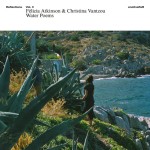
Artist: Félicia Atkinson & Christina Vantzou (@)
Title: Reflections Vol. 3: Water Poems
Format: LP
Label: RVNG Intl. (@)
Rated:

Title: Reflections Vol. 3: Water Poems
Format: LP
Label: RVNG Intl. (@)
Rated:
Reflections Vol. 3: Water Poems arrives like a sealed bottle drifting through a world that has forgotten how to open things gently. Inside, Félicia Atkinson and Christina Vantzou don’t really collaborate in the usual sense. They interlace tides. Two coastal minds exchanging weather reports in a language made of breath, pause, and half-erased ink.
Released on RVNG Intl., the third installment of the "Reflections" series behaves less like an album and more like a slowly dissolving ritual object. It refuses the basic social contract of songs: no hooks, no obvious arrival points, no polite introductions. Just immersion, immediate and slightly disorienting, like stepping into water that remembers your name before you do.
The sea here is not metaphor in the decorative sense. It is infrastructure. It supports everything, leaks into everything, occasionally replaces everything. Voices don’t narrate; they hover, as if language itself had become porous and forgot where sentences end. Spoken fragments drift in close-mic intimacy, then dissolve into electro-acoustic mist, as if grammar had been left out overnight to rust in salt air.
Musically, the record moves through chamber-like pianism, vibraphone shimmer, field recordings, Mellotron haze, and low-pressure synth textures that feel less composed than discovered. Tracks such as “Film Still / The Sea” don’t open doors so much as submerge them. Even the more structured passages behave like they are temporarily borrowing form, planning to give it back later.
There’s a quiet tension running through it: Atkinson’s long-standing interest in language as tactile material meets Vantzou’s cinematic sense of suspended time. One tends to speak in fragments that feel like thoughts still drying; the other frames silence with a precision that makes it feel almost architectural. Together, they build something that resembles a shared hallucination with excellent acoustics.
The record was shaped across Hydra, Rome, and Normandy, and those locations are not romantic backdrop trivia. They function more like geological co-authors. Stone, salt, and altitude seep into the mix, as if the environments refused to stay outside the microphones. Even the pacing feels tidal: expansion, withdrawal, return, hesitation.
Guest contributions, including John Also Bennett on the closing piece “Scorpio Purple Skies”, add a final stretch of cosmic drift, where the ocean seems to briefly remember it might also be a sky in disguise. Nothing resolves. It just deepens.
There is also an ecological undercurrent that never becomes sermon. It sits underneath the sound like submerged debris that still somehow shapes the current. The gesture toward conservation feels less like messaging and more like attention itself turned into ethics: listening as responsibility, perception as a fragile form of care.
In the end, "Water Poems" doesn’t offer clarity. It offers pressure and suspension. The kind of listening state where time stops behaving and starts leaking. A record that doesn’t ask to be understood, only entered - and then left slightly changed, like skin after too long in seawater.
Released on RVNG Intl., the third installment of the "Reflections" series behaves less like an album and more like a slowly dissolving ritual object. It refuses the basic social contract of songs: no hooks, no obvious arrival points, no polite introductions. Just immersion, immediate and slightly disorienting, like stepping into water that remembers your name before you do.
The sea here is not metaphor in the decorative sense. It is infrastructure. It supports everything, leaks into everything, occasionally replaces everything. Voices don’t narrate; they hover, as if language itself had become porous and forgot where sentences end. Spoken fragments drift in close-mic intimacy, then dissolve into electro-acoustic mist, as if grammar had been left out overnight to rust in salt air.
Musically, the record moves through chamber-like pianism, vibraphone shimmer, field recordings, Mellotron haze, and low-pressure synth textures that feel less composed than discovered. Tracks such as “Film Still / The Sea” don’t open doors so much as submerge them. Even the more structured passages behave like they are temporarily borrowing form, planning to give it back later.
There’s a quiet tension running through it: Atkinson’s long-standing interest in language as tactile material meets Vantzou’s cinematic sense of suspended time. One tends to speak in fragments that feel like thoughts still drying; the other frames silence with a precision that makes it feel almost architectural. Together, they build something that resembles a shared hallucination with excellent acoustics.
The record was shaped across Hydra, Rome, and Normandy, and those locations are not romantic backdrop trivia. They function more like geological co-authors. Stone, salt, and altitude seep into the mix, as if the environments refused to stay outside the microphones. Even the pacing feels tidal: expansion, withdrawal, return, hesitation.
Guest contributions, including John Also Bennett on the closing piece “Scorpio Purple Skies”, add a final stretch of cosmic drift, where the ocean seems to briefly remember it might also be a sky in disguise. Nothing resolves. It just deepens.
There is also an ecological undercurrent that never becomes sermon. It sits underneath the sound like submerged debris that still somehow shapes the current. The gesture toward conservation feels less like messaging and more like attention itself turned into ethics: listening as responsibility, perception as a fragile form of care.
In the end, "Water Poems" doesn’t offer clarity. It offers pressure and suspension. The kind of listening state where time stops behaving and starts leaking. A record that doesn’t ask to be understood, only entered - and then left slightly changed, like skin after too long in seawater.
Uhushuhu feat. Prorok: To Those Lost in the Woods
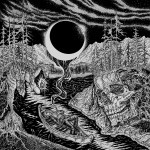
Artist: Uhushuhu feat. Prorok (@)
Title: To Those Lost in the Woods
Format: CD + Download
Label: Owl Totem Recordings (@)
Rated:
Title: To Those Lost in the Woods
Format: CD + Download
Label: Owl Totem Recordings (@)
Rated:
Wow! It's been ages since I've heard anything from Uhushuhu, formerly of St. Petersburg, Russia, now located now in Dilijan, Armenia, for obvious reasons. Way back when Uhushuhu was one of the prominent luminaries on the marvelous Russian label, Zhelezobeton, run by Artem O. At this point in time the Uhushuhu project consists of Pavel Dombrovsky – lyrics, guitars, bass, melodica, drums, synthesizers, field recordings, samples, mixing; D. Rylov (Prorok) – spoken word, vocal processing; Dmitry N. Shilov (Neznamo) – bass , synthesizers; K. Borozda – guitar. Being out of the Uhushuhu loop for so long, I really didn't know what to expect. The artist(s) describe 'To Those Lost in the Woods' as "A tense musical and poetic journey through the night." Opening track, "How Mine Smothers in You" begins with an ominous atmosphere, and then a spoken word voice-over in Russian. Fortunately Uhushuhu provides an English translation on their Bandcamp site. It's quite poetic but also quite dark, and too lengthy to quote much of it here but the first stanza should give you a taste.
"How mine in you smolders in a northwesterly wind,
How the dead at morning no longer begin,
How puddles hold water, how milk fills a dish,
How firewood flames, how butterflies wish.
So the leaves, so the sand,
So a god grown tired of his plan.
So a stream through the trees does it go,
Filling furrows where buckwheat will grow."
While the first track is primarily atmospheric, "Soil" has a repeating bass or low guitar line with sustained synth string pad. It sounds like something out of a Twin Peaks soundtrack. Once again there is a Russian voice-over. The gloominess is palpable and pervasive. In the middle a riffing saxophone emerges. Perfect. Color me impressed. NeXT, we're headed "Down The River" with a broader musical palette on this one. Again there is a Russian recitation, but the music is more like hypnotic ambient krautrock. "Foliage" sounds like it was based on a folk tune and has a kind of Slavic melody to it. I don't know why this one has me thinking of Mortiis, but it does.
We are back in dark ambient territory on "Ryba," and yes, there is another Russian recitation. They're beginning to grow on me and sort of add a documentary cinematic touch. "After a Beetle" is industrial dark ambient with ritual acoustic percussion (some sort of hand drums) and a distant flute. I can picture sullen men in a circle with painted faces perhaps imbibing some sort of psychedelic brew. What strange ceremonial ritual is taking place? Inquiring minds want to know! Whew! After all that I'm ready to "Fall Asleep," the title of the final track on the album. Uhushuhu is back to a more melodic format on this one with a repeating guitar figure in the forefront. It's kind of bittersweet and dream-like. Nice, and the perfect way to end this extraordinary album. Another one mastered to perfection by Peter Andersson. Although it helps, I don't think you have to understand Russian to appreciate 'To Those Lost in the Woods' A surprisingly delightful work, in the darkest of of ways.
"How mine in you smolders in a northwesterly wind,
How the dead at morning no longer begin,
How puddles hold water, how milk fills a dish,
How firewood flames, how butterflies wish.
So the leaves, so the sand,
So a god grown tired of his plan.
So a stream through the trees does it go,
Filling furrows where buckwheat will grow."
While the first track is primarily atmospheric, "Soil" has a repeating bass or low guitar line with sustained synth string pad. It sounds like something out of a Twin Peaks soundtrack. Once again there is a Russian voice-over. The gloominess is palpable and pervasive. In the middle a riffing saxophone emerges. Perfect. Color me impressed. NeXT, we're headed "Down The River" with a broader musical palette on this one. Again there is a Russian recitation, but the music is more like hypnotic ambient krautrock. "Foliage" sounds like it was based on a folk tune and has a kind of Slavic melody to it. I don't know why this one has me thinking of Mortiis, but it does.
We are back in dark ambient territory on "Ryba," and yes, there is another Russian recitation. They're beginning to grow on me and sort of add a documentary cinematic touch. "After a Beetle" is industrial dark ambient with ritual acoustic percussion (some sort of hand drums) and a distant flute. I can picture sullen men in a circle with painted faces perhaps imbibing some sort of psychedelic brew. What strange ceremonial ritual is taking place? Inquiring minds want to know! Whew! After all that I'm ready to "Fall Asleep," the title of the final track on the album. Uhushuhu is back to a more melodic format on this one with a repeating guitar figure in the forefront. It's kind of bittersweet and dream-like. Nice, and the perfect way to end this extraordinary album. Another one mastered to perfection by Peter Andersson. Although it helps, I don't think you have to understand Russian to appreciate 'To Those Lost in the Woods' A surprisingly delightful work, in the darkest of of ways.
Anthéne: Air Signs
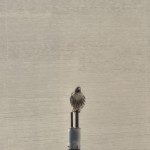
'Air Signs' is the latest album by ambient music artist Brad Deschamps of Toronto, Canada, who has a slew of previous releases going back to 2015 under the name of Anthéne. The pieces on 'Air Signs' are based on fairly minimal guitar loops with overlapping swells and melodies. Inspired by the hawk on the cover, which landed right outside the window at his workplace in a hectic area of downtown Toronto, the pieces are light and airy, reflecting the stillness of our natural surroundings in the midst of human made chaos. This is classics ambient at its best; calm, peaceful, minimal. This is absolutely what ambient music creator Brian Eno envisioned when he first set out to do ambient music; minimal, unobtrusive, background "wallpaper music." There are only six tracks on the album, and all of them under 8 minutes each, the longest being the title track at 7:30. There is a hint of wistfulness in some of the compositions such as "thorns," but there is no over-arching melancholy or sadness.
For those interested in the technical aspects, the guitar loops on the album are mostly processed with a Chase Bliss Lossy pedal as well as a Vongon Paragraphs filter both creating unusual tones, overtones and artifacts. There is also heavy use of a Maneco 16 second delay for lo-fi forward and reversed loops. The album was mastered by Peter Andersson, who you might know from Raison D'être, Stratvm Terror, Necrophorus, Atomine Elektrine, and other music projects. One aspect I particularly like on this album is the use (but not overuse) of backwards guitar, most noticeably on the fifth track, "all a blur." Whether you're looking for music for meditation, or a soundtrack to watch the world go by, "Air Signs" definitely fits the bill.
For those interested in the technical aspects, the guitar loops on the album are mostly processed with a Chase Bliss Lossy pedal as well as a Vongon Paragraphs filter both creating unusual tones, overtones and artifacts. There is also heavy use of a Maneco 16 second delay for lo-fi forward and reversed loops. The album was mastered by Peter Andersson, who you might know from Raison D'être, Stratvm Terror, Necrophorus, Atomine Elektrine, and other music projects. One aspect I particularly like on this album is the use (but not overuse) of backwards guitar, most noticeably on the fifth track, "all a blur." Whether you're looking for music for meditation, or a soundtrack to watch the world go by, "Air Signs" definitely fits the bill.
Stabbed by Prongs: Static Skin
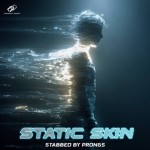
Artist: Stabbed by Prongs (@)
Title: Static Skin
Format: Download Only (MP3 + Lossless)
Label: self-released
Rated:

Title: Static Skin
Format: Download Only (MP3 + Lossless)
Label: self-released
Rated:
There is a long tradition in industrial music of treating human relationships as collateral damage. Machines grind, cities decay, systems collapse, and somewhere in the background a couple is having a very bad conversation under fluorescent lighting. "Static Skin", the second full-length release from Stabbed By Prongs, turns that perspective inside out. The machinery remains, humming ominously beneath the surface, but the real fractures occur between people.
Stabbed By Prongs is the studio project of Buffalo-based musician and producer Craig Drabik. After years spent playing in various bands before stepping away from music, he returned to creative work during the pandemic, channeling both personal reflection and the broader social unease of the period into a dark electronic project. While the DNA of industrial heavyweights and 1990s electronic acts remains present, "Static Skin" feels less like an exercise in genre revival and more like an attempt to explore emotional vulnerabilities through mechanical means.
The album thrives on contrast. EBM-driven percussion collides with electro textures, industrial grit meets moments of unexpected warmth, and a rotating cast of vocalists continually shifts the emotional perspective. Rather than presenting a single narrator, the record unfolds like a collection of interconnected viewpoints, each illuminating a different facet of intimacy, insecurity, longing, or disillusionment.
Opening track "Corpus" establishes the album's psychological territory immediately. Beneath its darkly seductive atmosphere lies a portrait of uncertainty and self-doubt. The music projects strength while simultaneously revealing the cracks underneath, creating a tension that becomes one of the album's defining characteristics.
"Another Realm" follows with a more melancholic tone, exploring emotional distance in an age where communication has never been easier and genuine connection often feels strangely elusive. The track captures the peculiar loneliness of trying to maintain closeness across invisible barriers, transforming digital-era intimacy into something both hopeful and fragile.
One of the album's greatest strengths is its use of multiple vocalists. Returning collaborators Ry White, Andy Breton, Kimberly Kornmeier, and Lail Brown each bring distinct personalities to the material, while Gabrielle Emerson's contribution adds a fresh dimension. Their varied performances prevent the album from becoming emotionally monochromatic, allowing each track to occupy its own psychological landscape.
The expansive "Pyromancer" provides one of the record's most intriguing detours. Moving away from straightforward industrial aggression, it drifts into a hypnotic electro-trip-hop environment where atmosphere becomes as important as rhythm. The track unfolds gradually, less interested in immediate impact than in creating a slow-burning sense of immersion.
Elsewhere, "Violent Delights" examines the corrosive dynamics of manipulation and emotional control. Rather than depicting conflict as explosive drama, the song presents it as something methodical and consuming, a process that quietly reshapes ident. The longing expressed here is not entirely comforting; it exists alongside the risk of losing oneself in another person. That ambiguity gives the finale its power. The album repeatedly returns to the idea that intimacy can be both refuge and threat, sanctuary and erosion.
What makes "Static Skin" particularly effective is its refusal to choose between emotional honesty and dancefloor energy. The rhythms remain kinetic, often forceful, yet the record's real momentum comes from its exploration of human connection. Every beat seems to push outward while every lyric pulls inward.
The result is an album that understands a curious truth about industrial and dark electronic music: beneath the machinery, beneath the distortion, beneath the synthetic surfaces, there is often a deeply human concern. "Static Skin" embraces that contradiction. It is an album of hard edges surrounding fragile emotions, a collection of songs where movement and introspection coexist without cancelling one another out.
Rather than merely revisiting the sounds of classic industrial and electro traditions, Stabbed By Prongs uses them as a framework for examining contemporary anxieties about identity, trust, and connection. The record leaves behind a lingering impression that the most complex systems are not technological at all, but emotional. Those systems are messy, unpredictable, and prone to failure. They are also the reason albums like "Static Skin" resonate long after the final beat fades.
Stabbed By Prongs is the studio project of Buffalo-based musician and producer Craig Drabik. After years spent playing in various bands before stepping away from music, he returned to creative work during the pandemic, channeling both personal reflection and the broader social unease of the period into a dark electronic project. While the DNA of industrial heavyweights and 1990s electronic acts remains present, "Static Skin" feels less like an exercise in genre revival and more like an attempt to explore emotional vulnerabilities through mechanical means.
The album thrives on contrast. EBM-driven percussion collides with electro textures, industrial grit meets moments of unexpected warmth, and a rotating cast of vocalists continually shifts the emotional perspective. Rather than presenting a single narrator, the record unfolds like a collection of interconnected viewpoints, each illuminating a different facet of intimacy, insecurity, longing, or disillusionment.
Opening track "Corpus" establishes the album's psychological territory immediately. Beneath its darkly seductive atmosphere lies a portrait of uncertainty and self-doubt. The music projects strength while simultaneously revealing the cracks underneath, creating a tension that becomes one of the album's defining characteristics.
"Another Realm" follows with a more melancholic tone, exploring emotional distance in an age where communication has never been easier and genuine connection often feels strangely elusive. The track captures the peculiar loneliness of trying to maintain closeness across invisible barriers, transforming digital-era intimacy into something both hopeful and fragile.
One of the album's greatest strengths is its use of multiple vocalists. Returning collaborators Ry White, Andy Breton, Kimberly Kornmeier, and Lail Brown each bring distinct personalities to the material, while Gabrielle Emerson's contribution adds a fresh dimension. Their varied performances prevent the album from becoming emotionally monochromatic, allowing each track to occupy its own psychological landscape.
The expansive "Pyromancer" provides one of the record's most intriguing detours. Moving away from straightforward industrial aggression, it drifts into a hypnotic electro-trip-hop environment where atmosphere becomes as important as rhythm. The track unfolds gradually, less interested in immediate impact than in creating a slow-burning sense of immersion.
Elsewhere, "Violent Delights" examines the corrosive dynamics of manipulation and emotional control. Rather than depicting conflict as explosive drama, the song presents it as something methodical and consuming, a process that quietly reshapes ident. The longing expressed here is not entirely comforting; it exists alongside the risk of losing oneself in another person. That ambiguity gives the finale its power. The album repeatedly returns to the idea that intimacy can be both refuge and threat, sanctuary and erosion.
What makes "Static Skin" particularly effective is its refusal to choose between emotional honesty and dancefloor energy. The rhythms remain kinetic, often forceful, yet the record's real momentum comes from its exploration of human connection. Every beat seems to push outward while every lyric pulls inward.
The result is an album that understands a curious truth about industrial and dark electronic music: beneath the machinery, beneath the distortion, beneath the synthetic surfaces, there is often a deeply human concern. "Static Skin" embraces that contradiction. It is an album of hard edges surrounding fragile emotions, a collection of songs where movement and introspection coexist without cancelling one another out.
Rather than merely revisiting the sounds of classic industrial and electro traditions, Stabbed By Prongs uses them as a framework for examining contemporary anxieties about identity, trust, and connection. The record leaves behind a lingering impression that the most complex systems are not technological at all, but emotional. Those systems are messy, unpredictable, and prone to failure. They are also the reason albums like "Static Skin" resonate long after the final beat fades.
Dwson: Nothing To Lose
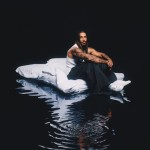
Nothing To Lose feels like the moment a producer known for speaking in whispers decides he has something worth saying out loud.
For more than a decade, Dwson has occupied a fascinating corner of South African electronic music. Emerging from Cape Town's vibrant house scene, he built his reputation not through oversized drops or festival theatrics, but through patience, atmosphere, and an instinctive understanding of emotional space. His tracks often seemed less interested in making crowds explode than in making them feel something. A dangerous habit in dance music, where subtlety is frequently treated as a software malfunction.
With "Nothing To Lose", his sixth album, that emotional tendency remains intact, but the frame has widened considerably. Where previous records often allowed vocals to appear as occasional visitors, here they become permanent residents. Nearly every track is built around singers, collaborators, and songcraft, creating a record that draws as much from contemporary R&B as from deep house traditions. Rather than abandoning the club, Dwson simply invites more people into it.
The most striking achievement of the album is its sense of continuity. Despite its long guest list, featuring voices such as Ziyon, Liv East, Ammo Moses, Lusanda, Ason, Unwnd, and others, the record never feels like a compilation of disconnected collaborations. It unfolds more like a late-night drive through a city that gradually empties as the hours pass. Streetlights blur. Conversations become quieter. Thoughts become louder. The destination matters less than the movement itself.
Tracks such as "Selfish", "Sense" and "Riptide" demonstrate Dwson's gift for restraint. The arrangements rarely rush toward climaxes. Instead, they breathe. Layers appear and disappear with the confidence of someone who understands that groove is often more persuasive than spectacle. Many producers decorate their tracks until they resemble overfurnished apartments. Dwson, by contrast, leaves enough empty space for the listener's own memories to move in.
There is also a noticeable warmth throughout the album. Not nostalgia exactly, though echoes of early-2000s R&B occasionally drift through the mix like familiar scents from another room. Rather, it is the warmth of maturity. Dwson seems less concerned with proving his technical abilities than with communicating feeling. The result is music that frequently lands somewhere between the dancefloor and the diary.
The recurring presence of Unwnd is particularly important in shaping the album's identity. These collaborations provide some of the record's most intimate moments, introducing a youthful vulnerability that complements Dwson's polished production. Elsewhere, veterans such as Ziyon help connect different generations of South African soul and house music, creating a subtle dialogue between the genre's past and future.
One of the album's underlying themes appears to be reinvention. Not the dramatic kind celebrated in marketing campaigns, but the quieter version that occurs when an artist stops worrying about expectations and begins following curiosity instead. The title itself suggests risk, yet the music sounds remarkably comfortable in its own skin. Dwson is not leaping into the unknown; he is finally allowing listeners to see more of the landscape he has been exploring all along.
By the time the closing stretch arrives, particularly through tracks like "New Day" and "Shadows", the album achieves something increasingly rare: it feels complete. Not because every question has been answered, but because the journey has been allowed to unfold at its own pace. In an era dominated by playlists, algorithms, and attention spans measured in microscopic units, "Nothing To Lose" still believes in the album as a destination.
Ultimately, this is not a record about losing anything. It is about expansion. About a producer stepping beyond the elegant boundaries he once drew for himself and discovering that the horizon had been wider all along. Dwson's deep-house roots remain firmly planted, but new branches reach toward soul, R&B, and contemporary songwriting. The tree has grown taller. The roots, thankfully, are still visible.
For more than a decade, Dwson has occupied a fascinating corner of South African electronic music. Emerging from Cape Town's vibrant house scene, he built his reputation not through oversized drops or festival theatrics, but through patience, atmosphere, and an instinctive understanding of emotional space. His tracks often seemed less interested in making crowds explode than in making them feel something. A dangerous habit in dance music, where subtlety is frequently treated as a software malfunction.
With "Nothing To Lose", his sixth album, that emotional tendency remains intact, but the frame has widened considerably. Where previous records often allowed vocals to appear as occasional visitors, here they become permanent residents. Nearly every track is built around singers, collaborators, and songcraft, creating a record that draws as much from contemporary R&B as from deep house traditions. Rather than abandoning the club, Dwson simply invites more people into it.
The most striking achievement of the album is its sense of continuity. Despite its long guest list, featuring voices such as Ziyon, Liv East, Ammo Moses, Lusanda, Ason, Unwnd, and others, the record never feels like a compilation of disconnected collaborations. It unfolds more like a late-night drive through a city that gradually empties as the hours pass. Streetlights blur. Conversations become quieter. Thoughts become louder. The destination matters less than the movement itself.
Tracks such as "Selfish", "Sense" and "Riptide" demonstrate Dwson's gift for restraint. The arrangements rarely rush toward climaxes. Instead, they breathe. Layers appear and disappear with the confidence of someone who understands that groove is often more persuasive than spectacle. Many producers decorate their tracks until they resemble overfurnished apartments. Dwson, by contrast, leaves enough empty space for the listener's own memories to move in.
There is also a noticeable warmth throughout the album. Not nostalgia exactly, though echoes of early-2000s R&B occasionally drift through the mix like familiar scents from another room. Rather, it is the warmth of maturity. Dwson seems less concerned with proving his technical abilities than with communicating feeling. The result is music that frequently lands somewhere between the dancefloor and the diary.
The recurring presence of Unwnd is particularly important in shaping the album's identity. These collaborations provide some of the record's most intimate moments, introducing a youthful vulnerability that complements Dwson's polished production. Elsewhere, veterans such as Ziyon help connect different generations of South African soul and house music, creating a subtle dialogue between the genre's past and future.
One of the album's underlying themes appears to be reinvention. Not the dramatic kind celebrated in marketing campaigns, but the quieter version that occurs when an artist stops worrying about expectations and begins following curiosity instead. The title itself suggests risk, yet the music sounds remarkably comfortable in its own skin. Dwson is not leaping into the unknown; he is finally allowing listeners to see more of the landscape he has been exploring all along.
By the time the closing stretch arrives, particularly through tracks like "New Day" and "Shadows", the album achieves something increasingly rare: it feels complete. Not because every question has been answered, but because the journey has been allowed to unfold at its own pace. In an era dominated by playlists, algorithms, and attention spans measured in microscopic units, "Nothing To Lose" still believes in the album as a destination.
Ultimately, this is not a record about losing anything. It is about expansion. About a producer stepping beyond the elegant boundaries he once drew for himself and discovering that the horizon had been wider all along. Dwson's deep-house roots remain firmly planted, but new branches reach toward soul, R&B, and contemporary songwriting. The tree has grown taller. The roots, thankfully, are still visible.