
Browse by Genre
Industrial Music / Industrial Metal / Aggro Industrial / Electro Metal
Industrial Noise / Power Noise / Harsh Noise
Synth Pop / Electro Pop / Synth-Electronica
Techno / Trance / Goa / Drum'n'Bass / Jungle / Tribal / Trip-Hop
Ambient / Electronica / Ethereal / Dub / Soundscapes / Abstract
Experimental / Avantgarde / Weird & Wired / Glitch / Noise / Field Recording
Dark / Gothic / Wave / New Wave / Dark Wave / Industrial Gothic
New Music / Downtown / Avantgarde Jazz / New Classical / World
Search Reviews
Music Reviews
R4: Blue / Green / Purple
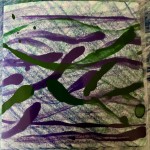
Artist: R4 (@)
Title: Blue / Green / Purple
Format: 3" Mini CD
Label: Fusion Audio Recordings (@)
Rated:
Title: Blue / Green / Purple
Format: 3" Mini CD
Label: Fusion Audio Recordings (@)
Rated:
R4 has been around for a long time and I have really enjoyed his ability to merge ambience with noise. R4 is the work of one Barry Sheffel, who is also the man behind the Fusion Audio Recordings label. He had dropped off the face of the earth for a while, but he is back with a lot of new work, of which this is one. The label describes this simply as “Noise and quirky, leftfield electronics. Recorded in 2021. This is the second in series of mini CDRs.”
This disc consists of two tracks. We kick it off with “Traffik,” which is a short track of noise with a psychedelic feel. Lots of analogue noises and static, with a whimsical quality. It’s almost like he took honking cars and inserted them into road noise and theremin-like noises. “Two Point Seven Degrees Celcius” closes it out with a 17 minute track that really leans into the electronic noise with analog warbling, stuttering electronics, and shortwave radio transmission noises. There is a lot going on here that keeps it moving, and the music is layered in such a way as to continually build in both complexity and intensity. It ends quietly and deliberately, pulling you in, as it unravels in complexity to a static noise drone and then to quiet bass rumble. Nicely done.
This disc, along with his other recent output, such as “Rainmaker” on Inner Demons Records, show that R4 is in fine form and continues to produce noise music that is engaging and inventive. The 3 inch format really highlights R4’s work, with just enough length to construct a good track but not so long that it gets tiresome. Really solid noise. This album weighs in at just over 21 minutes and is limited to 15 copies, so get it while you can.
This disc consists of two tracks. We kick it off with “Traffik,” which is a short track of noise with a psychedelic feel. Lots of analogue noises and static, with a whimsical quality. It’s almost like he took honking cars and inserted them into road noise and theremin-like noises. “Two Point Seven Degrees Celcius” closes it out with a 17 minute track that really leans into the electronic noise with analog warbling, stuttering electronics, and shortwave radio transmission noises. There is a lot going on here that keeps it moving, and the music is layered in such a way as to continually build in both complexity and intensity. It ends quietly and deliberately, pulling you in, as it unravels in complexity to a static noise drone and then to quiet bass rumble. Nicely done.
This disc, along with his other recent output, such as “Rainmaker” on Inner Demons Records, show that R4 is in fine form and continues to produce noise music that is engaging and inventive. The 3 inch format really highlights R4’s work, with just enough length to construct a good track but not so long that it gets tiresome. Really solid noise. This album weighs in at just over 21 minutes and is limited to 15 copies, so get it while you can.
Passepartout Duo: Pieces from Places
Artist: Passepartout Duo (@)
Title: Pieces from Places
Format: Flexidisc + Download
Label: self-released
Rated:

Title: Pieces from Places
Format: Flexidisc + Download
Label: self-released
Rated:
There are artists who tour. Then there are artists who simply relocate their nervous system every few months and call it a life. Passepartout Duo belong firmly to the second category.
For nearly a decade, Nicoletta Favari and Christopher Salvito have treated geography as both instrument and accomplice. No permanent studio, no fixed coordinates. Just wires, wood, metal, circuits, and whatever room happens to resonate that week. Pieces from Places is less an album than a cartographic diary: twelve tracks released monthly, each stamped with a city but resistant to postcard nostalgia.
If you’ve followed their trajectory through Argot or the Central Asia train-born Vis-à-Vis, you’ll recognize the method: self-built synthesizers, DIY percussion, and an almost athletic choreography of shared instruments. They often play what is effectively one device together, like two operators piloting the same spacecraft. It should look impractical. It sounds inevitable.
What changes here is the framing. Each track is a location, but the music refuses tourism. “From Taipei” carries a humid patience, tones hovering as if unsure whether to condense into rhythm. “From Belgrade” snaps into a compact urban pulse, concise and alert. “From Fes” seems to listen more than it speaks, letting percussive fragments ricochet in imagined corridors. “From Trondheim” feels slowed by winter light, a kind of suspended breath rendered in circuitry.
The grooves remain slightly asymmetrical, that characteristic off-kilter propulsion that makes you question your own internal metronome. Over it, their synth lines glow rather than blaze. There is warmth, but it is engineered warmth, coaxed out of handmade machines that never quite behave like commercial gear. One suspects that unpredictability is the point.
“From Chengdu”, the longest piece, stretches the concept. It unfolds gradually, as if mapping a walk rather than a skyline. Motifs emerge, dissolve, reappear altered. The duo’s long experience of near-continuous travel since 2015 has sharpened their sense of structure: these are miniatures, yes, but rarely sketches. Even the shortest track, “From Rauma,” feels finished, like a haiku written in voltage.
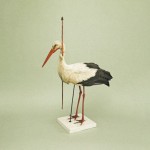
The artwork’s reference to the Rostocker Pfeilstorch, the stork discovered with an African arrow lodged in its neck, is not subtle. Migration leaves marks. Movement is proof, but also wound. Passepartout Duo seem aware of both sides. Their music does not romanticize travel; it documents its friction. Airports, residencies, temporary studios, borrowed rooms. Inspiration is negotiated, not harvested.
There is also a quiet technological subtext. Their collaboration with KOMA Elektronik on the Chromaplane hints at a philosophy: instruments are not sacred relics but evolving organisms. In Pieces from Places, you hear that ethos everywhere. Sound is built, adapted, reconfigured. Nothing is static except the listener’s assumption that it might be.
This interesting project seems to refuse to anchor identity to a single sonic homeland. The language they speak is unmistakably theirs, yet geographically unplaceable. It absorbs atmosphere without mimicking it. No field recordings of obvious street noise. No easy exoticism. Just two people listening hard to where they are, then translating that attention into rhythm and timbre.
Releasing it monthly was a clever constraint. It mirrors their lifestyle: episodic, anticipatory, slightly unstable. By the end of the twelve pieces, you do not feel like you have traveled the world. You feel like you have shared a method of being in it.
And in an era when “global” often means algorithmic flattening, there is something almost defiant about this approach. Two humans, a handful of homemade machines, and a stubborn commitment to listening. It should not be radical. Yet here we are.
Pieces from Places does not ask where home is. It suggests that home might simply be the act of paying attention together. For a duo perpetually in transit, that is a surprisingly grounded conclusion.
For nearly a decade, Nicoletta Favari and Christopher Salvito have treated geography as both instrument and accomplice. No permanent studio, no fixed coordinates. Just wires, wood, metal, circuits, and whatever room happens to resonate that week. Pieces from Places is less an album than a cartographic diary: twelve tracks released monthly, each stamped with a city but resistant to postcard nostalgia.
If you’ve followed their trajectory through Argot or the Central Asia train-born Vis-à-Vis, you’ll recognize the method: self-built synthesizers, DIY percussion, and an almost athletic choreography of shared instruments. They often play what is effectively one device together, like two operators piloting the same spacecraft. It should look impractical. It sounds inevitable.
What changes here is the framing. Each track is a location, but the music refuses tourism. “From Taipei” carries a humid patience, tones hovering as if unsure whether to condense into rhythm. “From Belgrade” snaps into a compact urban pulse, concise and alert. “From Fes” seems to listen more than it speaks, letting percussive fragments ricochet in imagined corridors. “From Trondheim” feels slowed by winter light, a kind of suspended breath rendered in circuitry.
The grooves remain slightly asymmetrical, that characteristic off-kilter propulsion that makes you question your own internal metronome. Over it, their synth lines glow rather than blaze. There is warmth, but it is engineered warmth, coaxed out of handmade machines that never quite behave like commercial gear. One suspects that unpredictability is the point.
“From Chengdu”, the longest piece, stretches the concept. It unfolds gradually, as if mapping a walk rather than a skyline. Motifs emerge, dissolve, reappear altered. The duo’s long experience of near-continuous travel since 2015 has sharpened their sense of structure: these are miniatures, yes, but rarely sketches. Even the shortest track, “From Rauma,” feels finished, like a haiku written in voltage.
The artwork’s reference to the Rostocker Pfeilstorch, the stork discovered with an African arrow lodged in its neck, is not subtle. Migration leaves marks. Movement is proof, but also wound. Passepartout Duo seem aware of both sides. Their music does not romanticize travel; it documents its friction. Airports, residencies, temporary studios, borrowed rooms. Inspiration is negotiated, not harvested.
There is also a quiet technological subtext. Their collaboration with KOMA Elektronik on the Chromaplane hints at a philosophy: instruments are not sacred relics but evolving organisms. In Pieces from Places, you hear that ethos everywhere. Sound is built, adapted, reconfigured. Nothing is static except the listener’s assumption that it might be.
This interesting project seems to refuse to anchor identity to a single sonic homeland. The language they speak is unmistakably theirs, yet geographically unplaceable. It absorbs atmosphere without mimicking it. No field recordings of obvious street noise. No easy exoticism. Just two people listening hard to where they are, then translating that attention into rhythm and timbre.
Releasing it monthly was a clever constraint. It mirrors their lifestyle: episodic, anticipatory, slightly unstable. By the end of the twelve pieces, you do not feel like you have traveled the world. You feel like you have shared a method of being in it.
And in an era when “global” often means algorithmic flattening, there is something almost defiant about this approach. Two humans, a handful of homemade machines, and a stubborn commitment to listening. It should not be radical. Yet here we are.
Pieces from Places does not ask where home is. It suggests that home might simply be the act of paying attention together. For a duo perpetually in transit, that is a surprisingly grounded conclusion.
Carlos Giffoni: Pendulum

There are albums that stay politely in one place, and then there is "Pendulum", which seems physically incapable of standing still. Conceived in California, completed in fragments across continents, mixed in Japan, designed in Australia, and finally released by Room40, this record travels more than most of us manage in a year. Fittingly, it is obsessed with motion.
Carlos Giffoni has never been a static figure. Born in Venezuela, long based in the United States, he has moved through noise, electronics, and cross-genre collaborations with a restless curiosity. With "Pendulum", he frames that restlessness as structure. The swinging arc becomes both metaphor and method. Tracks were recorded between 2024 and 2025, sent outward to collaborators, returned, reshaped, then dispatched again for mixing by Jim O’Rourke. The music’s geography mirrors its conceptual core: departure and return, tension and release.
The title track, featuring Greg Kelley, opens with brevity and focus. At just over two minutes, it sketches the album’s premise rather than declaring it. There is a tautness to the sound, a sense of suspended mass waiting to swing. "Dermis", with Mabe Fratti, moves inward. Textures feel close to the surface, almost tactile, as if sound were pressed directly against skin. Giffoni avoids grand gestures. Instead, he lets the collaboration breathe in layered restraint.
"The Past Beyond" expands the field. It stretches into a more spacious environment, where subtle electronic currents ripple beneath an austere melodic presence. Time here feels elastic. The pendulum is not merely oscillating; it is stretching the distance between its extremes.
"Beam", featuring Zola Jesus, introduces a sharper beam of light through the album’s otherwise muted palette. Her presence does not dominate; it refracts. The track carries a faint dramatic undercurrent, yet remains controlled, resisting the temptation to erupt. It is tension contained rather than tension discharged.
On "Axis", with Ben Chasny, the motion becomes more rotational. Layers interlock, circling a central pivot. The piece unfolds with a quiet authority, allowing repetition to accumulate weight rather than drift into complacency. "Dos", featuring Lea Bertucci, shifts the texture again, introducing a denser, breath-infused dimension. Air moves audibly through the composition, grounding the abstraction in physical gesture.
The shorter "Thorn" feels like a compressed pulse, a reminder that movement can also sting. Then comes "Whirlwind", featuring Iggor Cavalera. As the title implies, it intensifies the album’s kinetic theme. Yet even here, Giffoni does not indulge in chaos for its own sake. The energy is directed, spiraling rather than scattering.
What holds "Pendulum" together is not stylistic uniformity but balance. Each collaboration introduces a distinct timbral character, yet Giffoni’s sensibility anchors the whole. The production, shaped and clarified by O’Rourke’s mixing, gives the album a coherence that belies its geographic and collaborative sprawl.
Conceptually, the record suggests that movement is not merely physical but existential. The pendulum swings because it must. The world rotates without asking our permission. Giffoni frames this inevitability not as anxiety but as rhythm. There is a quiet acceptance here, even a subtle humor in the idea that the music has traveled the globe simply to land in your ears. Target acquired.
If the album has a thesis, it is this: stability is temporary, and that is not a problem. Motion generates meaning. By the time "Pendulum" completes its arc, one realizes it has not truly stopped. It has only reached the point where the swing reverses direction.
Carlos Giffoni has never been a static figure. Born in Venezuela, long based in the United States, he has moved through noise, electronics, and cross-genre collaborations with a restless curiosity. With "Pendulum", he frames that restlessness as structure. The swinging arc becomes both metaphor and method. Tracks were recorded between 2024 and 2025, sent outward to collaborators, returned, reshaped, then dispatched again for mixing by Jim O’Rourke. The music’s geography mirrors its conceptual core: departure and return, tension and release.
The title track, featuring Greg Kelley, opens with brevity and focus. At just over two minutes, it sketches the album’s premise rather than declaring it. There is a tautness to the sound, a sense of suspended mass waiting to swing. "Dermis", with Mabe Fratti, moves inward. Textures feel close to the surface, almost tactile, as if sound were pressed directly against skin. Giffoni avoids grand gestures. Instead, he lets the collaboration breathe in layered restraint.
"The Past Beyond" expands the field. It stretches into a more spacious environment, where subtle electronic currents ripple beneath an austere melodic presence. Time here feels elastic. The pendulum is not merely oscillating; it is stretching the distance between its extremes.
"Beam", featuring Zola Jesus, introduces a sharper beam of light through the album’s otherwise muted palette. Her presence does not dominate; it refracts. The track carries a faint dramatic undercurrent, yet remains controlled, resisting the temptation to erupt. It is tension contained rather than tension discharged.
On "Axis", with Ben Chasny, the motion becomes more rotational. Layers interlock, circling a central pivot. The piece unfolds with a quiet authority, allowing repetition to accumulate weight rather than drift into complacency. "Dos", featuring Lea Bertucci, shifts the texture again, introducing a denser, breath-infused dimension. Air moves audibly through the composition, grounding the abstraction in physical gesture.
The shorter "Thorn" feels like a compressed pulse, a reminder that movement can also sting. Then comes "Whirlwind", featuring Iggor Cavalera. As the title implies, it intensifies the album’s kinetic theme. Yet even here, Giffoni does not indulge in chaos for its own sake. The energy is directed, spiraling rather than scattering.
What holds "Pendulum" together is not stylistic uniformity but balance. Each collaboration introduces a distinct timbral character, yet Giffoni’s sensibility anchors the whole. The production, shaped and clarified by O’Rourke’s mixing, gives the album a coherence that belies its geographic and collaborative sprawl.
Conceptually, the record suggests that movement is not merely physical but existential. The pendulum swings because it must. The world rotates without asking our permission. Giffoni frames this inevitability not as anxiety but as rhythm. There is a quiet acceptance here, even a subtle humor in the idea that the music has traveled the globe simply to land in your ears. Target acquired.
If the album has a thesis, it is this: stability is temporary, and that is not a problem. Motion generates meaning. By the time "Pendulum" completes its arc, one realizes it has not truly stopped. It has only reached the point where the swing reverses direction.
Androctonyx: Respawning as a Pearl
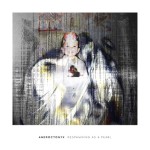
Artist: Androctonyx
Title: Respawning as a Pearl
Format: Download Only (MP3 + Lossless)
Label: Adventurous Music (@)
Rated:

Title: Respawning as a Pearl
Format: Download Only (MP3 + Lossless)
Label: Adventurous Music (@)
Rated:
There is a certain ambition in naming your debut "Respawning as a Pearl". It suggests death, irritation, pressure, rebirth, and at least one philosophical footnote. Subtle it is not. Fortunately, Androctonyx does not aim for subtlety. He aims for transformation.
Behind the alias stands Lucas Gendre, born in the south of France, initially trained in film and philosophy before redirecting his attention toward what he calls power ambient. That background matters. You can hear cinema in the spatial scale of this record, and philosophy in its insistence on becoming rather than being. The album draws from post-cyberpunk atmospheres reminiscent of "Blame!" and from the ancient Gnostic poem “The Hymn of the Pearl”. High-tech dystopia meets early Christian mysticism. Marseille to Mesopotamia, via MAX/MSP.
The premise alone could collapse under its own weight. It does not, largely because the music was created in a single improvised take. That decision keeps the project from turning into conceptual homework. Instead, it breathes, glitches, falters, and surges forward as if discovering itself in real time.
The four-part structure unfolds as a gradual crystallization. Part 1 begins in instability. Electronic debris flickers at the edges. Malfunctioning MAX/MSP processes sputter and recalibrate. Rather than polishing these glitches away, Gendre leans into them. Failure becomes generative. The sound feels raw, unstable, almost embryonic.
By Part 2, shimmering waves emerge, often resembling altered pipe-organ tones stretched beyond liturgical decorum. These are not churchly harmonies meant to soothe. They vibrate with tension, as if the sacred had been routed through damaged circuitry. Layers accumulate slowly, each frequency pressing against the next, building density without resorting to percussive drama.
Part 3 deepens the immersion. Here, the “pearl” metaphor becomes more convincing. The music thickens, its surfaces iridescent but not smooth. Dopaminergic bursts, to borrow the album’s own language, manifest as sudden intensifications in the harmonic field. The listener is drawn into a zone where saturation borders on overload, yet never tips into noise for its own sake. There is intention behind the excess.
The final and longest section, Part 4, feels like emergence. Not triumphant, not euphoric in a simplistic way, but expanded. The earlier glitches seem subsumed into a broader, more coherent flow. The arc is subtle yet perceptible: from malfunction to bloom. From mud to nacre. The transformation is neither clean nor complete, which makes it believable.
The mastering by Lawrence English adds a final layer of authority. The low frequencies carry weight without becoming opaque, while higher textures retain their shimmer. The result is immersive but not suffocating.
What distinguishes "Respawning as a Pearl" from the endless tide of ambient releases is its sense of risk. The improvisational core means there are moments that feel exposed, almost precarious. That vulnerability aligns with the album’s thematic focus on early-stage transformation. This is not the polished gem displayed in a velvet case. It is the irritant lodged in flesh, the slow accretion around it, the discomfort that precedes form.
Gendre’s philosophical background surfaces not through explicit references but through structure. The album treats identity as process. Sound is not fixed material but evolving state. The cybernetic and the mystical are not opposites here; they are parallel metaphors for transcendence through rupture.
As a debut, it is remarkably assured without being rigid. It does not try to impress with complexity for its own sake. Instead, it commits to duration, saturation, and the patient unfolding of texture. The result is intimate yet expansive, meditative yet charged.
Some pearls are cultivated under controlled conditions. This one feels grown in storm water, imperfect and luminous.
Behind the alias stands Lucas Gendre, born in the south of France, initially trained in film and philosophy before redirecting his attention toward what he calls power ambient. That background matters. You can hear cinema in the spatial scale of this record, and philosophy in its insistence on becoming rather than being. The album draws from post-cyberpunk atmospheres reminiscent of "Blame!" and from the ancient Gnostic poem “The Hymn of the Pearl”. High-tech dystopia meets early Christian mysticism. Marseille to Mesopotamia, via MAX/MSP.
The premise alone could collapse under its own weight. It does not, largely because the music was created in a single improvised take. That decision keeps the project from turning into conceptual homework. Instead, it breathes, glitches, falters, and surges forward as if discovering itself in real time.
The four-part structure unfolds as a gradual crystallization. Part 1 begins in instability. Electronic debris flickers at the edges. Malfunctioning MAX/MSP processes sputter and recalibrate. Rather than polishing these glitches away, Gendre leans into them. Failure becomes generative. The sound feels raw, unstable, almost embryonic.
By Part 2, shimmering waves emerge, often resembling altered pipe-organ tones stretched beyond liturgical decorum. These are not churchly harmonies meant to soothe. They vibrate with tension, as if the sacred had been routed through damaged circuitry. Layers accumulate slowly, each frequency pressing against the next, building density without resorting to percussive drama.
Part 3 deepens the immersion. Here, the “pearl” metaphor becomes more convincing. The music thickens, its surfaces iridescent but not smooth. Dopaminergic bursts, to borrow the album’s own language, manifest as sudden intensifications in the harmonic field. The listener is drawn into a zone where saturation borders on overload, yet never tips into noise for its own sake. There is intention behind the excess.
The final and longest section, Part 4, feels like emergence. Not triumphant, not euphoric in a simplistic way, but expanded. The earlier glitches seem subsumed into a broader, more coherent flow. The arc is subtle yet perceptible: from malfunction to bloom. From mud to nacre. The transformation is neither clean nor complete, which makes it believable.
The mastering by Lawrence English adds a final layer of authority. The low frequencies carry weight without becoming opaque, while higher textures retain their shimmer. The result is immersive but not suffocating.
What distinguishes "Respawning as a Pearl" from the endless tide of ambient releases is its sense of risk. The improvisational core means there are moments that feel exposed, almost precarious. That vulnerability aligns with the album’s thematic focus on early-stage transformation. This is not the polished gem displayed in a velvet case. It is the irritant lodged in flesh, the slow accretion around it, the discomfort that precedes form.
Gendre’s philosophical background surfaces not through explicit references but through structure. The album treats identity as process. Sound is not fixed material but evolving state. The cybernetic and the mystical are not opposites here; they are parallel metaphors for transcendence through rupture.
As a debut, it is remarkably assured without being rigid. It does not try to impress with complexity for its own sake. Instead, it commits to duration, saturation, and the patient unfolding of texture. The result is intimate yet expansive, meditative yet charged.
Some pearls are cultivated under controlled conditions. This one feels grown in storm water, imperfect and luminous.
Rytis Mažulis: Tempered Tempus
Artist: Rytis Mažulis
Title: Tempered Tempus
Format: CD + Download
Label: Music Information Centre Lithuania (@)
Rated:
Title: Tempered Tempus
Format: CD + Download
Label: Music Information Centre Lithuania (@)
Rated:
There are composers who try to fill the world with sound, and then there is Rytis Mazulis, who calmly takes a single semitone, places it under a microscope, and proceeds to dissect it as if time itself were a specimen slide. "Tempered Tempus", released by Music Information Centre Lithuania, is less an album than a controlled experiment in perception. Two pieces, just under an hour in total, and enough micro-intervallic tension to make your inner ear question its own career choices.
Mazulis has spent decades refining what is often described as radical minimalism, though “minimal” feels misleading. There is nothing sparse about the psychological density of this music. Born in 1961, trained under Julius Juzeliunas, later head of the Composition Department at the Lithuanian Academy of Music and Theatre, and recipient of the Lithuanian National Culture and Arts Prize, Mazulis has built a reputation not by multiplying materials but by restricting them until they combust. His work has long circulated internationally, yet this is the first portrait album issued in Lithuania since the late 1990s, marking the beginning of a two-part cycle. The timing feels deliberate, almost defiant.
Schisma (2007) is the first incision. The title refers both to the acoustical term for a minute interval in tuning systems and to the idea of a split, a fracture. The half-tone is divided into the smallest audible units; time follows suit. The result is a polyphonic micro-canon for cello and fourteen virtual instruments, each operating at its own slightly divergent tempo. The performer, Anton Lukoszevieze, stands at the centre of this vortex, bow in hand, threading a “melody” that feels increasingly unstable as its harmonic ground dissolves into hairline cracks.
Listening to "Schisma" is uncannily clinical. The texture resembles a diagnostic procedure for the brain’s tolerance of ambiguity. Intervals hover in the uneasy space between consonance and abrasion. The canon is strict, but its strictness produces vertigo. One becomes aware not of thematic development in any conventional sense, but of microscopic displacements accumulating over time. The piece does not shout; it insists. It demands a specific kind of attention, one that accepts multipolarity as a basic condition. Endurance is required, but not as punishment. More as initiation.
If "Schisma" is about fracture, Solipse (2018) turns inward. Commissioned for the Tectonics Festival in Glasgow and dedicated to Lukoszevieze, it is conceived for cello and phonogram, the electronic layer realised in collaboration with Julius Aglinskas. Here, micro-intervals are arranged according to a statistically derived arithmetic progression. That sounds dry. It is not. The gradual expansion of pitch space creates a slow, hypnotic drift, as if the music were exhaling in increments too subtle to measure without instruments.
The title suggests solipsism, and indeed the piece feels monistic: a single consciousness unfolding within itself. The cello line interacts with its pre-recorded double in a dialogue that never quite becomes a duet. Instead, it is a mirroring process, slightly misaligned, producing a shimmering hyper-dissonance. Mazulis’ frequent use of computer technology underlines the repetitive principle, yet the live instrument keeps the texture alive, imperfect, almost vulnerable. The transformation is glacial, but it is real. By the end, one’s sense of temporal proportion has shifted, quietly but irrevocably.
Lukoszevieze proves an ideal interpreter. Founder of the experimental ensemble Apartment House and a longstanding advocate of contemporary repertoire, he approaches Mazulis’ demands not as exotic challenges but as natural extensions of musical practice. His tone remains focused even when the harmonic field fractures into microtonal dust. The recording, made at the Music Innovation Studies Centre in Vilnius, captures this balance between austerity and organic resonance with remarkable clarity.
Recent events underscore Mazulis’ continued relevance: a new version of "Canon Mensurabilis" premiered at the 2025 Huddersfield Contemporary Music Festival, and a nomination for the Prince Pierre of Monaco Foundation’s Musical Composition Prize places him firmly within a broader European conversation. What distinguishes him, however, is not institutional recognition but consistency of vision. Few composers pursue a single idea so relentlessly without collapsing into self-parody.
"Tempered Tempus" does not offer comfort listening. It is precise, ascetic, and occasionally unnerving. Yet within its narrow parameters lies a strangely expansive experience. By subdividing pitch and time to near-absurd degrees, Mazulis opens a space where perception itself becomes audible. The album feels like a study in limits, and in the quiet ecstasy that can emerge when those limits are accepted rather than denied.
One finishes the disc slightly altered, as if the internal clock had been recalibrated by a patient, uncompromising hand. Not many records can claim that. Fewer still would dare try.
Mazulis has spent decades refining what is often described as radical minimalism, though “minimal” feels misleading. There is nothing sparse about the psychological density of this music. Born in 1961, trained under Julius Juzeliunas, later head of the Composition Department at the Lithuanian Academy of Music and Theatre, and recipient of the Lithuanian National Culture and Arts Prize, Mazulis has built a reputation not by multiplying materials but by restricting them until they combust. His work has long circulated internationally, yet this is the first portrait album issued in Lithuania since the late 1990s, marking the beginning of a two-part cycle. The timing feels deliberate, almost defiant.
Schisma (2007) is the first incision. The title refers both to the acoustical term for a minute interval in tuning systems and to the idea of a split, a fracture. The half-tone is divided into the smallest audible units; time follows suit. The result is a polyphonic micro-canon for cello and fourteen virtual instruments, each operating at its own slightly divergent tempo. The performer, Anton Lukoszevieze, stands at the centre of this vortex, bow in hand, threading a “melody” that feels increasingly unstable as its harmonic ground dissolves into hairline cracks.
Listening to "Schisma" is uncannily clinical. The texture resembles a diagnostic procedure for the brain’s tolerance of ambiguity. Intervals hover in the uneasy space between consonance and abrasion. The canon is strict, but its strictness produces vertigo. One becomes aware not of thematic development in any conventional sense, but of microscopic displacements accumulating over time. The piece does not shout; it insists. It demands a specific kind of attention, one that accepts multipolarity as a basic condition. Endurance is required, but not as punishment. More as initiation.
If "Schisma" is about fracture, Solipse (2018) turns inward. Commissioned for the Tectonics Festival in Glasgow and dedicated to Lukoszevieze, it is conceived for cello and phonogram, the electronic layer realised in collaboration with Julius Aglinskas. Here, micro-intervals are arranged according to a statistically derived arithmetic progression. That sounds dry. It is not. The gradual expansion of pitch space creates a slow, hypnotic drift, as if the music were exhaling in increments too subtle to measure without instruments.
The title suggests solipsism, and indeed the piece feels monistic: a single consciousness unfolding within itself. The cello line interacts with its pre-recorded double in a dialogue that never quite becomes a duet. Instead, it is a mirroring process, slightly misaligned, producing a shimmering hyper-dissonance. Mazulis’ frequent use of computer technology underlines the repetitive principle, yet the live instrument keeps the texture alive, imperfect, almost vulnerable. The transformation is glacial, but it is real. By the end, one’s sense of temporal proportion has shifted, quietly but irrevocably.
Lukoszevieze proves an ideal interpreter. Founder of the experimental ensemble Apartment House and a longstanding advocate of contemporary repertoire, he approaches Mazulis’ demands not as exotic challenges but as natural extensions of musical practice. His tone remains focused even when the harmonic field fractures into microtonal dust. The recording, made at the Music Innovation Studies Centre in Vilnius, captures this balance between austerity and organic resonance with remarkable clarity.
Recent events underscore Mazulis’ continued relevance: a new version of "Canon Mensurabilis" premiered at the 2025 Huddersfield Contemporary Music Festival, and a nomination for the Prince Pierre of Monaco Foundation’s Musical Composition Prize places him firmly within a broader European conversation. What distinguishes him, however, is not institutional recognition but consistency of vision. Few composers pursue a single idea so relentlessly without collapsing into self-parody.
"Tempered Tempus" does not offer comfort listening. It is precise, ascetic, and occasionally unnerving. Yet within its narrow parameters lies a strangely expansive experience. By subdividing pitch and time to near-absurd degrees, Mazulis opens a space where perception itself becomes audible. The album feels like a study in limits, and in the quiet ecstasy that can emerge when those limits are accepted rather than denied.
One finishes the disc slightly altered, as if the internal clock had been recalibrated by a patient, uncompromising hand. Not many records can claim that. Fewer still would dare try.