
Saturday, October 3, 2026
Browse by Genre
Industrial Music / Industrial Metal / Aggro Industrial / Electro Metal
Industrial Noise / Power Noise / Harsh Noise
Synth Pop / Electro Pop / Synth-Electronica
Techno / Trance / Goa / Drum'n'Bass / Jungle / Tribal / Trip-Hop
Ambient / Electronica / Ethereal / Dub / Soundscapes / Abstract
Experimental / Avantgarde / Weird & Wired / Glitch / Noise / Field Recording
Dark / Gothic / Wave / New Wave / Dark Wave / Industrial Gothic
New Music / Downtown / Avantgarde Jazz / New Classical / World
Search Reviews
Music Reviews
Wallmart: Food Desert Created By Neighborhood Gentrification

Artist: Wallmart (@)
Title: Food Desert Created By Neighborhood Gentrification
Format: Download Only (MP3 + Lossless)
Label: Inner Demons Records
Rated:

Title: Food Desert Created By Neighborhood Gentrification
Format: Download Only (MP3 + Lossless)
Label: Inner Demons Records
Rated:
The Discogs entry for this artist has several aliases, including: 69, Destroy Date, E.J. Vodka, Edward Giles, and Unknown Hierarchy. Edward Giles is a member of +DOG+, among many others. Now let's talk a bit about the title for a moment. "Food Desert Created By Neighborhood Gentrification" is a real thing, so although many completely disregard noise, I figure any attention we can get to such issues is worthwhile. The liner notes state that "WALLMART "Food Desert" is a new fifteen plus HNW track about an old subject. While the need for commercial property starts to diminish as retail shopping goes online. Many smaller "brick & mortar stores" have suffered the impact of the "big box" model of retail. The seemingly lower prices are never offset by the loss of local businesses that have shuttered their doors as commercial property developers continue to buy up neglected, underutilized land to create "food deserts" that lower income shoppers cannot access or afford." I have personally seen such food deserts in my work, so all I can say is "preach, brother." As for Wallmart? No bonus points for figuring out what we are in for here, so let's get past the geriatric greeter and see what the people in the blue vests have on sale today.
As you may have figured out based on the name and the fact that it's being released by Inner Demons Records, this is some heavy harsh noise wall. Over fifteen and a half minutes, the track grinds and stutters away in a cacophony of electronic noise. There is a lot going on in the track with a nice bass undercurrent to keep everything grounded. At the end, it cuts out to some hum and a brief news report about a store closure.
Overall, this is some nice wall of noise with a socially conscious point that one would be hard pressed to oppose. I am not the biggest fan of harsh noise wall (I prefer the "everything including the kitchen sink" variety of noise), but I found this to be engaging. This album weighs in at just over 15 minutes.
As you may have figured out based on the name and the fact that it's being released by Inner Demons Records, this is some heavy harsh noise wall. Over fifteen and a half minutes, the track grinds and stutters away in a cacophony of electronic noise. There is a lot going on in the track with a nice bass undercurrent to keep everything grounded. At the end, it cuts out to some hum and a brief news report about a store closure.
Overall, this is some nice wall of noise with a socially conscious point that one would be hard pressed to oppose. I am not the biggest fan of harsh noise wall (I prefer the "everything including the kitchen sink" variety of noise), but I found this to be engaging. This album weighs in at just over 15 minutes.
Fail: Live at Denver Noise Fest 2026

Artist: Fail
Title: Live at Denver Noise Fest 2026
Format: Download Only (MP3 + Lossless)
Label: Inner Demons Records
Rated:
Title: Live at Denver Noise Fest 2026
Format: Download Only (MP3 + Lossless)
Label: Inner Demons Records
Rated:
I’m sure that by now you are familiar with Dan Fox, the hardest working man in noise. He records under a host of names, including This is What I Hear When You Talk, Fail, and Loss, to begin with, as well as being the driving force behind Inner Demons Records. Fail is nice, harsh noise, so let’s dive in and see what this sounds like live.
This album consists of one 16 minute track, "Live at Denver Noise Fest 2026." It kicks off a bit subdued, with some slight crackling, but then kicks into a bit noisier section. This track runs like a roller coaster, alternating with soothing noise and harshness. There are moments of high pitched squeals and analog noises and other moments of low seismic rumbles. There are quiet moments where it almost feels like it is ending, only to suddenly blast the listener with harsh noise. There is a lot going on here, so if you like your noise with a lot of variety, this is definitely one to check out. This also solidifies the fact that if you ever have a chance to see any of Fox's projects live, it will be well worth your while.
This album consists of one 16 minute track, "Live at Denver Noise Fest 2026." It kicks off a bit subdued, with some slight crackling, but then kicks into a bit noisier section. This track runs like a roller coaster, alternating with soothing noise and harshness. There are moments of high pitched squeals and analog noises and other moments of low seismic rumbles. There are quiet moments where it almost feels like it is ending, only to suddenly blast the listener with harsh noise. There is a lot going on here, so if you like your noise with a lot of variety, this is definitely one to check out. This also solidifies the fact that if you ever have a chance to see any of Fox's projects live, it will be well worth your while.
Noise Hangover, Fail, and Platonoff: Global Delirium
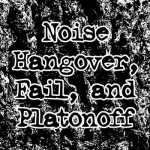
Artist: Noise Hangover, Fail, and Platonoff
Title: Global Delirium
Format: Download Only (MP3 + Lossless)
Label: Inner Demons Records
Rated:
Title: Global Delirium
Format: Download Only (MP3 + Lossless)
Label: Inner Demons Records
Rated:
This is quite the set of heavyweights on this release. Noise Hangover hails from Russia, and despite the funny name, this is some serious noise. I don’t know much about the artist, but I have yet to hear a Noise Hangover release that I did not enjoy. Fail is the work of Dan Fox, the hardest working man in noise. He also records under a host of names, including This is What I Hear When You Talk, Fail, Loss, as well as being the driving force behind Inner Demons Records. Platonoff hails from Saint Petersburg, Russia, and has also put out a steady stream of excellent noise discs on Inner Demons. With this roster, I am expecting some good noise, so let’s dive in.
Noise Hangover lays down some thick, heavy, constantly evolving drone. Layers and layers of drone. This would be in the same vein as Troum, but if Troum is a dream, this is not quite a nightmare, but rather a dream from which you awake with a sense of unease. Really solid.
Fail brings the noise with digital noise that sounds like malfunctioning kids toys thrown into a cement mixer. There is a lot going on here, and Fail keeps changing things up to keep it all interesting. This is a fun ride, as expected of Fail.
Platonoff closes it off with the machinelike noise that I have come to expect from this artist. This is a bit more chaotic than previous works I have heard, with the clanking metal combined with squiggly electronic noise. Out of the three, this feels the most harsh.
As expected, all of the artists brought their A game to the split. This would be a fantastic show to see live, and all of the artists are in top form. If you like any of the artists, or just like solid noise and drone, this is well worth picking up. This album weighs in at around 39 minutes.
Noise Hangover lays down some thick, heavy, constantly evolving drone. Layers and layers of drone. This would be in the same vein as Troum, but if Troum is a dream, this is not quite a nightmare, but rather a dream from which you awake with a sense of unease. Really solid.
Fail brings the noise with digital noise that sounds like malfunctioning kids toys thrown into a cement mixer. There is a lot going on here, and Fail keeps changing things up to keep it all interesting. This is a fun ride, as expected of Fail.
Platonoff closes it off with the machinelike noise that I have come to expect from this artist. This is a bit more chaotic than previous works I have heard, with the clanking metal combined with squiggly electronic noise. Out of the three, this feels the most harsh.
As expected, all of the artists brought their A game to the split. This would be a fantastic show to see live, and all of the artists are in top form. If you like any of the artists, or just like solid noise and drone, this is well worth picking up. This album weighs in at around 39 minutes.
Russell Haswell: LET IT GO

There is something almost indecently appropriate about calling a Russell Haswell album "LET IT GO". After twenty-five years of making computers, machinery, synthesisers and recording technology behave badly in public, one suspects the title is less an instruction than a diagnosis. Let the signal go. Let the feedback go. Let the carefully organised civilisation go. Let the software have its little nervous breakdown in peace.
Haswell has been one of the more persistent troublemakers in British experimental electronics since the late 1990s, emerging from Coventry with an approach to sound that has always treated technology less as a neutral tool than as an unruly collaborator. His early work on the Mego label established an interest in computer-generated sound, electroacoustic abrasion and the productive possibilities of things refusing to behave. A quarter of a century later, "LET IT GO" arrives in a world that has become considerably better at malfunctioning without any assistance from him.
The album's premise is consequently darker than its title suggests. Haswell's long fascination with the dystopian imagination of 1970s and 1980s cinema has become awkwardly literal: surveillance, algorithmic control, political violence, media distortion and technological acceleration no longer require a science-fiction soundtrack because reality has apparently decided to provide one. Yet "LET IT GO" does not become a miserable exercise in sonic doom. That would be far too easy. Instead, Haswell responds with something more mischievous: a record that keeps changing its mind about what kind of monster it wants to be.
"Exit Downwards" establishes the basic conditions. Rhythmic impulses appear through layers of electronic grime, metallic resonance and unstable processing, suggesting techno after several consecutive nights without sleep. There is movement, but it is never entirely trustworthy. The groove seems to have been assembled by someone who understands dance music perfectly and then deliberately removed the instruction manual.
The two "Fall" pieces move deeper into abstraction. Their rapidly fluctuating pitches have a distinctly physical quality, as though sound were being stretched until its molecular structure became audible. Haswell's use of contemporary GRM processing during his residency at Bergen's Centre for Electronic Arts connects these pieces to the more volatile end of electronic composition, particularly the unstable pitch worlds associated with late Xenakis. But the result isn't academic reverence. These are sounds with their shoelaces deliberately tied together. And this is where "LET IT GO" becomes more interesting than a straightforward noise record.
Haswell understands that violence in sound is most effective when it is placed against something comparatively delicate. "The anxieties of our time" is built around jagged rhythmic movement, but melodic suggestions keep surfacing inside it, almost indecently pretty. The contradiction matters. Anxiety is rarely a continuous scream. More often it is the strange ability to notice that the coffee tastes good while civilisation is visibly on fire.
"Curated narrative" then seems to question the very mechanisms through which we are encouraged to understand what is happening around us. The title carries a quiet suspicion of the stories we are fed, while the music refuses to provide a reassuring alternative explanation. Haswell doesn't replace one narrative with another. He leaves the machinery exposed.
That refusal is central to the album. It is tempting to describe "LET IT GO" as a dystopian soundtrack, but that would make it sound more orderly than it actually is. Haswell is interested in systems that generate unexpected consequences. His music behaves like a machine whose internal logic can be understood only after it has already produced the result.
"Stress Testing" is perhaps the clearest example. The rhythmic energy becomes more insistent, recalling the physical drive of rave music without ever settling comfortably into it. There are traces of Detroit techno's repetition and the harder, more metallic electronic traditions associated with Birmingham, but they are treated as raw material rather than genre signposts. The pulse is there to be dismantled.
Then comes "Thu 25 Dec 2025", one of the album's strangest pieces. The title is wonderfully mundane: Christmas Day, after lunch, walking home alone through Glasgow. There is something almost comically British about producing a six-minute electronic drone out of the emotional residue of that particular afternoon. Yet the method behind it is anything but trivial. The piece follows a random-walk process, allowing each sonic movement to wander unpredictably from the previous one.
It sounds, appropriately enough, like being trapped inside a thought that has forgotten where it was going.
The track's importance lies in its patience. After the rhythmic abrasions surrounding it, the drone creates an ambiguous zone in which nothing seems to happen while everything continues to shift. Haswell has always understood that repetition need not mean stasis. Here, repetition becomes uncertainty.
"To be so for real" brings back the physical pressure, while "Always check their instagram [2026 wavecycle rmx]" takes the album's hostility toward contemporary media culture to an almost beautifully petty extreme. The title is already enough to make anyone who has spent five minutes scrolling through social media feel spiritually exhausted. Musically, the track turns that exhaustion into an extended assault of electronic density. The joke is that the supposedly frictionless world of infinite scrolling has produced a piece of music that makes you want to throw the phone into the sea.
Possibly the most useful social-media detox available in under nine minutes.
But Haswell's sense of humour prevents the record from becoming sanctimonious. There is anger here, certainly, but also absurdity. He understands that technological dystopia is not merely frightening. It is often ridiculous. Machines have become increasingly sophisticated, humans increasingly dependent upon them, and somewhere along the way we decided that asking an algorithm to generate a picture of a medieval knight eating spaghetti was a sensible use of civilisation's accumulated knowledge.
"LET IT GO" is not nostalgic for a cleaner technological past, either. The equipment list alone reads like a small electronic-musical ecosystem, combining modular systems, software, processing tools and various pieces of analogue and obsolete technology. Haswell's practice has always involved negotiating between these worlds rather than choosing one. The computer isn't the enemy. Neither is the synthesizer. The problem is what happens when systems become so pervasive that we forget they are systems at all. And then, after all this machinery, Haswell gives us "There's always a bit of light somewhere".
At thirteen minutes, the closing track is almost an act of mercy. High tones hover and circulate in a slowly changing field, creating a curious sensation of suspension. It is not exactly peaceful. Haswell has not suddenly discovered wellness podcasts. The tension remains, but it has been stripped of its immediate aggression. The sound seems to exist in a space where catastrophe has temporarily stopped shouting. The title could easily have become sentimental. It doesn't. The light isn't presented as salvation. It is simply there. That distinction makes the ending surprisingly affecting.
"LET IT GO" therefore works because its political dimension never overwhelms its musical intelligence. The album certainly reflects an era of instability, but Haswell does not need to attach a slogan to every oscillator. The politics are embedded in the behaviour of the sound itself: instability, overload, repetition, disruption, surveillance-like persistence, sudden rupture, moments of escape.
There is also something admirable in the fact that, after decades of experimental electronic music, Haswell still seems genuinely interested in what technology can do when pushed beyond polite functionality. He isn't using machinery to imitate conventional instruments. He is asking machinery to reveal its own peculiar personality, including the bits manufacturers would probably prefer nobody noticed.
The result is an album that refuses to be comfortably categorised. It can be rhythmic without being dance music, noisy without becoming a mere wall of aggression, abstract without losing physical presence, and ambient without turning into wallpaper for expensive Scandinavian furniture.
Most importantly, "LET IT GO" doesn't pretend that resistance has to sound heroic.
Sometimes resistance sounds like a broken machine.
Sometimes it sounds like a rave remembered incorrectly.
Sometimes it is a random walk through Glasgow on Christmas Day.
Sometimes it is nine minutes of electronic abuse directed at Instagram. And sometimes, after all the circuitry has overheated, it is simply a high tone hanging in the dark, quietly refusing to disappear.
Haswell has spent twenty-five years listening to the future arrive. It turns out the future was considerably less futuristic than advertised, and much messier. "LET IT GO" doesn't offer a way out. It does something more useful: it turns the mess into material, shakes it until unexpected shapes emerge, and reminds us that even inside a malfunctioning system, there are still sounds nobody has programmed yet.
Haswell has been one of the more persistent troublemakers in British experimental electronics since the late 1990s, emerging from Coventry with an approach to sound that has always treated technology less as a neutral tool than as an unruly collaborator. His early work on the Mego label established an interest in computer-generated sound, electroacoustic abrasion and the productive possibilities of things refusing to behave. A quarter of a century later, "LET IT GO" arrives in a world that has become considerably better at malfunctioning without any assistance from him.
The album's premise is consequently darker than its title suggests. Haswell's long fascination with the dystopian imagination of 1970s and 1980s cinema has become awkwardly literal: surveillance, algorithmic control, political violence, media distortion and technological acceleration no longer require a science-fiction soundtrack because reality has apparently decided to provide one. Yet "LET IT GO" does not become a miserable exercise in sonic doom. That would be far too easy. Instead, Haswell responds with something more mischievous: a record that keeps changing its mind about what kind of monster it wants to be.
"Exit Downwards" establishes the basic conditions. Rhythmic impulses appear through layers of electronic grime, metallic resonance and unstable processing, suggesting techno after several consecutive nights without sleep. There is movement, but it is never entirely trustworthy. The groove seems to have been assembled by someone who understands dance music perfectly and then deliberately removed the instruction manual.
The two "Fall" pieces move deeper into abstraction. Their rapidly fluctuating pitches have a distinctly physical quality, as though sound were being stretched until its molecular structure became audible. Haswell's use of contemporary GRM processing during his residency at Bergen's Centre for Electronic Arts connects these pieces to the more volatile end of electronic composition, particularly the unstable pitch worlds associated with late Xenakis. But the result isn't academic reverence. These are sounds with their shoelaces deliberately tied together. And this is where "LET IT GO" becomes more interesting than a straightforward noise record.
Haswell understands that violence in sound is most effective when it is placed against something comparatively delicate. "The anxieties of our time" is built around jagged rhythmic movement, but melodic suggestions keep surfacing inside it, almost indecently pretty. The contradiction matters. Anxiety is rarely a continuous scream. More often it is the strange ability to notice that the coffee tastes good while civilisation is visibly on fire.
"Curated narrative" then seems to question the very mechanisms through which we are encouraged to understand what is happening around us. The title carries a quiet suspicion of the stories we are fed, while the music refuses to provide a reassuring alternative explanation. Haswell doesn't replace one narrative with another. He leaves the machinery exposed.
That refusal is central to the album. It is tempting to describe "LET IT GO" as a dystopian soundtrack, but that would make it sound more orderly than it actually is. Haswell is interested in systems that generate unexpected consequences. His music behaves like a machine whose internal logic can be understood only after it has already produced the result.
"Stress Testing" is perhaps the clearest example. The rhythmic energy becomes more insistent, recalling the physical drive of rave music without ever settling comfortably into it. There are traces of Detroit techno's repetition and the harder, more metallic electronic traditions associated with Birmingham, but they are treated as raw material rather than genre signposts. The pulse is there to be dismantled.
Then comes "Thu 25 Dec 2025", one of the album's strangest pieces. The title is wonderfully mundane: Christmas Day, after lunch, walking home alone through Glasgow. There is something almost comically British about producing a six-minute electronic drone out of the emotional residue of that particular afternoon. Yet the method behind it is anything but trivial. The piece follows a random-walk process, allowing each sonic movement to wander unpredictably from the previous one.
It sounds, appropriately enough, like being trapped inside a thought that has forgotten where it was going.
The track's importance lies in its patience. After the rhythmic abrasions surrounding it, the drone creates an ambiguous zone in which nothing seems to happen while everything continues to shift. Haswell has always understood that repetition need not mean stasis. Here, repetition becomes uncertainty.
"To be so for real" brings back the physical pressure, while "Always check their instagram [2026 wavecycle rmx]" takes the album's hostility toward contemporary media culture to an almost beautifully petty extreme. The title is already enough to make anyone who has spent five minutes scrolling through social media feel spiritually exhausted. Musically, the track turns that exhaustion into an extended assault of electronic density. The joke is that the supposedly frictionless world of infinite scrolling has produced a piece of music that makes you want to throw the phone into the sea.
Possibly the most useful social-media detox available in under nine minutes.
But Haswell's sense of humour prevents the record from becoming sanctimonious. There is anger here, certainly, but also absurdity. He understands that technological dystopia is not merely frightening. It is often ridiculous. Machines have become increasingly sophisticated, humans increasingly dependent upon them, and somewhere along the way we decided that asking an algorithm to generate a picture of a medieval knight eating spaghetti was a sensible use of civilisation's accumulated knowledge.
"LET IT GO" is not nostalgic for a cleaner technological past, either. The equipment list alone reads like a small electronic-musical ecosystem, combining modular systems, software, processing tools and various pieces of analogue and obsolete technology. Haswell's practice has always involved negotiating between these worlds rather than choosing one. The computer isn't the enemy. Neither is the synthesizer. The problem is what happens when systems become so pervasive that we forget they are systems at all. And then, after all this machinery, Haswell gives us "There's always a bit of light somewhere".
At thirteen minutes, the closing track is almost an act of mercy. High tones hover and circulate in a slowly changing field, creating a curious sensation of suspension. It is not exactly peaceful. Haswell has not suddenly discovered wellness podcasts. The tension remains, but it has been stripped of its immediate aggression. The sound seems to exist in a space where catastrophe has temporarily stopped shouting. The title could easily have become sentimental. It doesn't. The light isn't presented as salvation. It is simply there. That distinction makes the ending surprisingly affecting.
"LET IT GO" therefore works because its political dimension never overwhelms its musical intelligence. The album certainly reflects an era of instability, but Haswell does not need to attach a slogan to every oscillator. The politics are embedded in the behaviour of the sound itself: instability, overload, repetition, disruption, surveillance-like persistence, sudden rupture, moments of escape.
There is also something admirable in the fact that, after decades of experimental electronic music, Haswell still seems genuinely interested in what technology can do when pushed beyond polite functionality. He isn't using machinery to imitate conventional instruments. He is asking machinery to reveal its own peculiar personality, including the bits manufacturers would probably prefer nobody noticed.
The result is an album that refuses to be comfortably categorised. It can be rhythmic without being dance music, noisy without becoming a mere wall of aggression, abstract without losing physical presence, and ambient without turning into wallpaper for expensive Scandinavian furniture.
Most importantly, "LET IT GO" doesn't pretend that resistance has to sound heroic.
Sometimes resistance sounds like a broken machine.
Sometimes it sounds like a rave remembered incorrectly.
Sometimes it is a random walk through Glasgow on Christmas Day.
Sometimes it is nine minutes of electronic abuse directed at Instagram. And sometimes, after all the circuitry has overheated, it is simply a high tone hanging in the dark, quietly refusing to disappear.
Haswell has spent twenty-five years listening to the future arrive. It turns out the future was considerably less futuristic than advertised, and much messier. "LET IT GO" doesn't offer a way out. It does something more useful: it turns the mess into material, shakes it until unexpected shapes emerge, and reminds us that even inside a malfunctioning system, there are still sounds nobody has programmed yet.
Sun Ra | Merzbow: Strange City (10th anniversary edition)
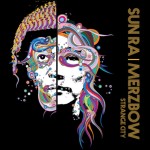
Artist: Sun Ra | Merzbow
Title: Strange City (10th anniversary edition)
Format: CD x 2 (double CD)
Label: Cold Spring (@)
Rated:

Title: Strange City (10th anniversary edition)
Format: CD x 2 (double CD)
Label: Cold Spring (@)
Rated:
There are collaborations that make perfect sense on paper, collaborations that seem designed by an algorithm after being fed the words "legendary", "experimental" and "unlikely". Then there is "Strange City", which belongs to the more entertaining category of ideas that sound both completely inevitable and faintly illegal. Sun Ra and Merzbow.
One spent his life insisting that earthly categories were insufficient for understanding music, identity and existence. The other spent more than four decades demonstrating that earthly categories were also insufficient for understanding what constitutes an acceptable volume level. That they never actually met is, therefore, less a problem than an invitation to science fiction.
Originally issued by Cold Spring in 2016, "Strange City" now returns in an expanded 2CD edition that finally gathers material previously divided between the CD and LP editions. The new edition also adds “Granular Jazz Part 5”, originally made for Stuart Maconie's "Freak Zone" on BBC 6 Music. The result is roughly 104 minutes of music, which is enough time for several philosophical crises, one meal and at least two reconsiderations of your relationship with your neighbours.
The underlying concept is deceptively simple. Masami Akita, the Tokyo-based musician known as Merzbow, was given access to recordings from Sun Ra's archive, particularly material connected with "The Magic City" and "Strange Strings". Rather than presenting these recordings as sacred historical artefacts, he subjects them to his own vocabulary: distortion, feedback, electronic abrasion, loops, granular processing and vast accumulations of sound.
This is not a remix in the conventional sense. It is closer to archaeological vandalism. And I mean that as a compliment.
The opening of “Livid Sun Loop” is perhaps the best place to understand the operation. Fragments of Sun Ra's horns, drums and ensemble emerge sufficiently clearly to establish a recognisable musical past. Then Merzbow begins applying pressure. The original material is stretched, submerged, pulverised and periodically allowed to surface again, like something trapped underneath an industrial machine that has developed an interest in free jazz.
The crucial point is that Sun Ra does not completely disappear. That has been the source of some disagreement around the record since its original release. Some critics felt that Akita's noise overwhelms the source material to the point where the supposed collaboration becomes essentially another Merzbow record. Others have heard precisely the opposite phenomenon: Sun Ra's rhythmic and cosmic logic surviving underneath the violence, providing a hidden skeleton for the apparent chaos. Both interpretations contain some truth. But the ambiguity is exactly what makes "Strange City" work.
Sun Ra's music was never simply “jazz” in the tidy historical sense. His Arkestra could use swing, free improvisation, electronics, ritual, repetition and theatricality without asking permission from genre historians. His cosmic mythology was not merely eccentric decoration either. It gave him a way of imagining music as something capable of escaping the social and aesthetic limitations imposed upon it.
Merzbow's approach is similarly uncompromising, although his chosen vehicle is noise. So the real meeting point is not instrumentation.
It is "cosmology".
Sun Ra imagined music escaping Earth. Merzbow makes Earth itself sound as though it has malfunctioned.
“Livid Sun Loop” consequently feels less like jazz being covered in noise than like a recording being exposed to an entirely different physical environment. The horns are no longer simply horns. Percussion becomes rhythmic debris. Frequencies acquire mass. The music seems to stop obeying the ordinary relationship between foreground and background.
This is especially effective because Merzbow is not simply turning a knob marked "LOUD" and going home.
There is architecture underneath the brutality. The noise shifts in density and frequency. Rhythmic fragments recur. High frequencies sharpen the surface while lower registers provide weight. Layers accumulate and separate. After sufficient exposure, the ear begins to identify patterns inside what initially seemed like undifferentiated destruction. This phenomenon has been noted repeatedly in earlier assessments of the album: prolonged listening changes the listener's relationship with the noise, making its internal movement increasingly perceptible. In other words, Merzbow eventually teaches your ears to live in the disaster. Human civilisation has achieved stranger things, admittedly.
The first disc's second piece, “Granular Jazz Part 2”, pushes the relationship further. It is less concerned with the initial shock of impact and more interested in what happens after the original jazz material has been thoroughly contaminated. Sun Ra's presence becomes spectral rather than obvious, appearing through rhythmic suggestions, fragments of timbre and fleeting instrumental shapes.
This is where the title "Strange City" starts to feel particularly appropriate. A city is recognisable through patterns: roads, buildings, voices, traffic, repetition. Destroy those patterns and the city becomes noise. Yet even inside the noise, traces of the original organisation remain.
Merzbow does something similar to Sun Ra. He destroys the city without completely erasing its map.
The newly collected "Granular Jazz Parts 1–4" deepen this process. “Part 1” establishes a more gradual transformation, while “Part 3” becomes considerably more turbulent. “Part 4”, by contrast, is fascinating because it reduces the obvious violence and allows atmosphere to take over. Earlier criticism has recognised this relative restraint as one of the album's most striking moments.
It is tempting to call this the “quiet” section. That would be misleading.
Merzbow quiet is roughly equivalent to being trapped inside a malfunctioning aircraft engine that has recently discovered minimalism. But proportion matters. After enormous stretches of density, even a modest reduction in pressure becomes almost melodic. The ear recalibrates itself. Space acquires drama.
This is one of the album's most sophisticated characteristics: "volume is not its only weapon".
The newly restored sequence also makes more sense as a whole than the original split-format presentation. The 2016 edition had different music on CD and LP, partly because the extreme durations imposed practical limitations on vinyl mastering. This reissue removes that artificial division and allows the entire project to be heard as a single body. That matters.
"Strange City" is fundamentally about transformation over time. Its enormous durations are not an inconvenience to be overcome but part of the composition's physical logic. A three-minute version would be almost meaningless. The music needs time to become familiar enough for its internal relationships to reveal themselves. And this is where Sun Ra's presence becomes stranger. The longer you listen, the less useful it becomes to ask where Sun Ra ends and Merzbow begins.
At first, you hear a Sun Ra fragment being attacked by Merzbow. Then you hear Merzbow surrounding Sun Ra. Eventually you hear neither. You hear "Strange City".
That distinction is important because the record's greatest success is not preservation. It is transformation. Sun Ra is not being respectfully framed behind museum glass. He is being put through the machine. There is something beautifully appropriate about that. Sun Ra himself was a master of transformation, constantly reinventing his ensemble, his identity, his mythology and his conception of what music could contain. His archive is therefore being treated not as a mausoleum but as raw material. Even the historical gap becomes productive.
Sun Ra died in 1993. Merzbow's "Strange City" sessions took place in Tokyo in 2016. The two musicians belong to different generations, different scenes and radically different technological environments. Yet the album makes that distance feel less like an obstacle than an additional compositional layer.
Time becomes another effect pedal. The bonus “Granular Jazz Part 5”, brief at just two minutes, is almost comically short beside the other pieces. It works as a kind of epilogue, though its existence also reinforces the archival character of this edition. The main body is immense; the final fragment feels like one last transmission picked up from the wrong frequency.
That is perhaps the best way to understand "Strange City". Not as a collaboration between two musicians who never collaborated. Not even as a remix project.
But as a "conversation between two ideas about what sound can become".
Sun Ra supplies the extraterrestrial imagination, the rhythmic intelligence, the sense that jazz might be something much larger than its earthly genealogy.
Merzbow supplies the force necessary to make that imagination physically uncomfortable. One points toward Saturn. The other blows up the launchpad.
The astonishing thing is that the rocket still gets somewhere.
There are moments here when the jazz material is so thoroughly buried that one might reasonably wonder whether the Sun Ra connection has become merely conceptual. That criticism remains valid, particularly for listeners expecting a more balanced dialogue. Earlier reviews have disagreed sharply on precisely this question. But perhaps balance would have been the wrong objective. A balanced Sun Ra/Merzbow record would be considerably less interesting.
The imbalance is the event.
The source material survives not by remaining intact but by being damaged, displaced and forced into another language. That is why the occasional appearance of a horn, rhythm or vocal texture can feel almost miraculous. It is not nostalgia. It is evidence. Something was here. Something is still here. And it has been through hell.
"Strange City" is therefore a peculiar kind of archival release: one that does not merely preserve the past but subjects it to another future. Sun Ra's cosmic jazz is not reconstructed. It is reimagined through one of the most extreme sonic practices of the modern era.
The result is abrasive, excessive, occasionally absurd and frequently magnificent. It is also oddly moving. Not because Merzbow makes Sun Ra sound beautiful. Because, underneath all that electronic violence, Sun Ra still sounds like someone trying to get a message through. Perhaps that is the real collaboration. One musician sends a transmission from Saturn. Another fills the channel with static. And somehow, against all reasonable expectations, the message survives.
I actually had the chance to experience this strange beast in the flesh in Manchester in 2016, around the time the material was being presented live. I still remember the sheer physical impact of it. This wasn't simply something you listened to; it seemed to arrive as a weather system with a personal grudge. The room was being hit by wave after wave of noise, with Merzbow's machinery turning the remnants of Sun Ra's cosmic jazz into something vast, metallic and almost aggressively corporeal. I distinctly remember looking around and wondering whether everybody else was experiencing the same thing or whether my ears had already resigned from their employment. There were, inevitably, people joking about their ears bleeding, but the joke contained an uncomfortable amount of truth: the sound was so intense that hearing became a physical activity, something involving the entire body rather than just the supposedly convenient organs on either side of the head. It was awesome, ridiculous and slightly terrifying, which seems an entirely appropriate description of a Sun Ra/Merzbow encounter. Listening to Strange City again now, almost a decade later, brings back that sensation with surprising force. The record may be archival, but its impact remains stubbornly present tense.
One spent his life insisting that earthly categories were insufficient for understanding music, identity and existence. The other spent more than four decades demonstrating that earthly categories were also insufficient for understanding what constitutes an acceptable volume level. That they never actually met is, therefore, less a problem than an invitation to science fiction.
Originally issued by Cold Spring in 2016, "Strange City" now returns in an expanded 2CD edition that finally gathers material previously divided between the CD and LP editions. The new edition also adds “Granular Jazz Part 5”, originally made for Stuart Maconie's "Freak Zone" on BBC 6 Music. The result is roughly 104 minutes of music, which is enough time for several philosophical crises, one meal and at least two reconsiderations of your relationship with your neighbours.
The underlying concept is deceptively simple. Masami Akita, the Tokyo-based musician known as Merzbow, was given access to recordings from Sun Ra's archive, particularly material connected with "The Magic City" and "Strange Strings". Rather than presenting these recordings as sacred historical artefacts, he subjects them to his own vocabulary: distortion, feedback, electronic abrasion, loops, granular processing and vast accumulations of sound.
This is not a remix in the conventional sense. It is closer to archaeological vandalism. And I mean that as a compliment.
The opening of “Livid Sun Loop” is perhaps the best place to understand the operation. Fragments of Sun Ra's horns, drums and ensemble emerge sufficiently clearly to establish a recognisable musical past. Then Merzbow begins applying pressure. The original material is stretched, submerged, pulverised and periodically allowed to surface again, like something trapped underneath an industrial machine that has developed an interest in free jazz.
The crucial point is that Sun Ra does not completely disappear. That has been the source of some disagreement around the record since its original release. Some critics felt that Akita's noise overwhelms the source material to the point where the supposed collaboration becomes essentially another Merzbow record. Others have heard precisely the opposite phenomenon: Sun Ra's rhythmic and cosmic logic surviving underneath the violence, providing a hidden skeleton for the apparent chaos. Both interpretations contain some truth. But the ambiguity is exactly what makes "Strange City" work.
Sun Ra's music was never simply “jazz” in the tidy historical sense. His Arkestra could use swing, free improvisation, electronics, ritual, repetition and theatricality without asking permission from genre historians. His cosmic mythology was not merely eccentric decoration either. It gave him a way of imagining music as something capable of escaping the social and aesthetic limitations imposed upon it.
Merzbow's approach is similarly uncompromising, although his chosen vehicle is noise. So the real meeting point is not instrumentation.
It is "cosmology".
Sun Ra imagined music escaping Earth. Merzbow makes Earth itself sound as though it has malfunctioned.
“Livid Sun Loop” consequently feels less like jazz being covered in noise than like a recording being exposed to an entirely different physical environment. The horns are no longer simply horns. Percussion becomes rhythmic debris. Frequencies acquire mass. The music seems to stop obeying the ordinary relationship between foreground and background.
This is especially effective because Merzbow is not simply turning a knob marked "LOUD" and going home.
There is architecture underneath the brutality. The noise shifts in density and frequency. Rhythmic fragments recur. High frequencies sharpen the surface while lower registers provide weight. Layers accumulate and separate. After sufficient exposure, the ear begins to identify patterns inside what initially seemed like undifferentiated destruction. This phenomenon has been noted repeatedly in earlier assessments of the album: prolonged listening changes the listener's relationship with the noise, making its internal movement increasingly perceptible. In other words, Merzbow eventually teaches your ears to live in the disaster. Human civilisation has achieved stranger things, admittedly.
The first disc's second piece, “Granular Jazz Part 2”, pushes the relationship further. It is less concerned with the initial shock of impact and more interested in what happens after the original jazz material has been thoroughly contaminated. Sun Ra's presence becomes spectral rather than obvious, appearing through rhythmic suggestions, fragments of timbre and fleeting instrumental shapes.
This is where the title "Strange City" starts to feel particularly appropriate. A city is recognisable through patterns: roads, buildings, voices, traffic, repetition. Destroy those patterns and the city becomes noise. Yet even inside the noise, traces of the original organisation remain.
Merzbow does something similar to Sun Ra. He destroys the city without completely erasing its map.
The newly collected "Granular Jazz Parts 1–4" deepen this process. “Part 1” establishes a more gradual transformation, while “Part 3” becomes considerably more turbulent. “Part 4”, by contrast, is fascinating because it reduces the obvious violence and allows atmosphere to take over. Earlier criticism has recognised this relative restraint as one of the album's most striking moments.
It is tempting to call this the “quiet” section. That would be misleading.
Merzbow quiet is roughly equivalent to being trapped inside a malfunctioning aircraft engine that has recently discovered minimalism. But proportion matters. After enormous stretches of density, even a modest reduction in pressure becomes almost melodic. The ear recalibrates itself. Space acquires drama.
This is one of the album's most sophisticated characteristics: "volume is not its only weapon".
The newly restored sequence also makes more sense as a whole than the original split-format presentation. The 2016 edition had different music on CD and LP, partly because the extreme durations imposed practical limitations on vinyl mastering. This reissue removes that artificial division and allows the entire project to be heard as a single body. That matters.
"Strange City" is fundamentally about transformation over time. Its enormous durations are not an inconvenience to be overcome but part of the composition's physical logic. A three-minute version would be almost meaningless. The music needs time to become familiar enough for its internal relationships to reveal themselves. And this is where Sun Ra's presence becomes stranger. The longer you listen, the less useful it becomes to ask where Sun Ra ends and Merzbow begins.
At first, you hear a Sun Ra fragment being attacked by Merzbow. Then you hear Merzbow surrounding Sun Ra. Eventually you hear neither. You hear "Strange City".
That distinction is important because the record's greatest success is not preservation. It is transformation. Sun Ra is not being respectfully framed behind museum glass. He is being put through the machine. There is something beautifully appropriate about that. Sun Ra himself was a master of transformation, constantly reinventing his ensemble, his identity, his mythology and his conception of what music could contain. His archive is therefore being treated not as a mausoleum but as raw material. Even the historical gap becomes productive.
Sun Ra died in 1993. Merzbow's "Strange City" sessions took place in Tokyo in 2016. The two musicians belong to different generations, different scenes and radically different technological environments. Yet the album makes that distance feel less like an obstacle than an additional compositional layer.
Time becomes another effect pedal. The bonus “Granular Jazz Part 5”, brief at just two minutes, is almost comically short beside the other pieces. It works as a kind of epilogue, though its existence also reinforces the archival character of this edition. The main body is immense; the final fragment feels like one last transmission picked up from the wrong frequency.
That is perhaps the best way to understand "Strange City". Not as a collaboration between two musicians who never collaborated. Not even as a remix project.
But as a "conversation between two ideas about what sound can become".
Sun Ra supplies the extraterrestrial imagination, the rhythmic intelligence, the sense that jazz might be something much larger than its earthly genealogy.
Merzbow supplies the force necessary to make that imagination physically uncomfortable. One points toward Saturn. The other blows up the launchpad.
The astonishing thing is that the rocket still gets somewhere.
There are moments here when the jazz material is so thoroughly buried that one might reasonably wonder whether the Sun Ra connection has become merely conceptual. That criticism remains valid, particularly for listeners expecting a more balanced dialogue. Earlier reviews have disagreed sharply on precisely this question. But perhaps balance would have been the wrong objective. A balanced Sun Ra/Merzbow record would be considerably less interesting.
The imbalance is the event.
The source material survives not by remaining intact but by being damaged, displaced and forced into another language. That is why the occasional appearance of a horn, rhythm or vocal texture can feel almost miraculous. It is not nostalgia. It is evidence. Something was here. Something is still here. And it has been through hell.
"Strange City" is therefore a peculiar kind of archival release: one that does not merely preserve the past but subjects it to another future. Sun Ra's cosmic jazz is not reconstructed. It is reimagined through one of the most extreme sonic practices of the modern era.
The result is abrasive, excessive, occasionally absurd and frequently magnificent. It is also oddly moving. Not because Merzbow makes Sun Ra sound beautiful. Because, underneath all that electronic violence, Sun Ra still sounds like someone trying to get a message through. Perhaps that is the real collaboration. One musician sends a transmission from Saturn. Another fills the channel with static. And somehow, against all reasonable expectations, the message survives.
I actually had the chance to experience this strange beast in the flesh in Manchester in 2016, around the time the material was being presented live. I still remember the sheer physical impact of it. This wasn't simply something you listened to; it seemed to arrive as a weather system with a personal grudge. The room was being hit by wave after wave of noise, with Merzbow's machinery turning the remnants of Sun Ra's cosmic jazz into something vast, metallic and almost aggressively corporeal. I distinctly remember looking around and wondering whether everybody else was experiencing the same thing or whether my ears had already resigned from their employment. There were, inevitably, people joking about their ears bleeding, but the joke contained an uncomfortable amount of truth: the sound was so intense that hearing became a physical activity, something involving the entire body rather than just the supposedly convenient organs on either side of the head. It was awesome, ridiculous and slightly terrifying, which seems an entirely appropriate description of a Sun Ra/Merzbow encounter. Listening to Strange City again now, almost a decade later, brings back that sensation with surprising force. The record may be archival, but its impact remains stubbornly present tense.