
Saturday, October 3, 2026
Browse by Genre
Industrial Music / Industrial Metal / Aggro Industrial / Electro Metal
Industrial Noise / Power Noise / Harsh Noise
Synth Pop / Electro Pop / Synth-Electronica
Techno / Trance / Goa / Drum'n'Bass / Jungle / Tribal / Trip-Hop
Ambient / Electronica / Ethereal / Dub / Soundscapes / Abstract
Experimental / Avantgarde / Weird & Wired / Glitch / Noise / Field Recording
Dark / Gothic / Wave / New Wave / Dark Wave / Industrial Gothic
New Music / Downtown / Avantgarde Jazz / New Classical / World
Search Reviews
Music Reviews
IRM: Anthology


There are bands for whom the word “anthology” suggests a dignified procession through the past, perhaps with a tasteful booklet and several paragraphs about artistic development. IRM have never been particularly interested in dignity. Their history is populated by crucifixions, blind men being killed, nooses, young men, nigredo, inner phobias and various other cheerful invitations to spend an afternoon reconsidering the human condition. So "Anthology", originally assembled in 2012 and now reissued by Zoharum, is less a retrospective album than a reasonably well-organised tour through one of Sweden’s more uncompromising industrial nightmares.
Formed in Norrköping in the late 1990s by Erik Jarl and Martin Bladh, IRM emerged from the power-electronics and death-industrial underground around the time when Cold Meat Industry was providing a particularly hospitable environment for people who believed that music could still be used to make the listener physically uncomfortable. Mikael Oretoft joined as a permanent third member in 2007, expanding the project beyond its original configuration. Over the years, IRM gradually moved away from the relatively direct violence of their early work towards more elaborate structures and a broader range of sound sources, eventually arriving at the conceptual trilogy that began with "Indications of Nigredo", continued through "ORDER4" and concluded with "Closure…" in 2014.
That trajectory is already audible on "Anthology", which is why the collection remains considerably more interesting than its title might suggest. The first disc gathers studio recordings originally scattered across smaller releases and compilations, while the second collects live material from performances between 2002 and 2011. The result is not chronological autobiography but a deliberately shaped argument. The live disc in particular was rearranged and remixed rather than simply dumped into chronological order, turning several years of performances into a continuous sequence. The old "Noise Receptor" review of the original edition rightly identified this as an important distinction: "Anthology" is not merely a box in which IRM put whatever they found underneath the bed.
The opening “Order” immediately establishes the peculiar IRM balance between repetition and instability. The rhythm is insistent without becoming conventionally danceable, the electronics have a physical density that seems almost architectural, and Bladh’s voice arrives not as a conventional vocal presence but as another abrasive material inside the construction. This is one of the characteristics that made IRM stand apart from much of the more primitive power-electronics vocabulary of their era. Their work could be extremely harsh, but the harshness was rarely the whole point. There was always a concern with structure, atmosphere and psychological suggestion beneath the surface brutality.
“Like Hearts” and the twelve-minute “Purple Screen” extend that tension. Particularly in the longer piece, IRM demonstrate that repetition need not mean stasis. Sounds accumulate, mutate and acquire different weights, while the sensation of pressure is maintained without requiring the obvious escalation that so much noise-based music treats as compulsory. It is a useful reminder that volume and intensity are not synonyms. Sometimes the more unpleasant thing is to keep a sound in exactly the wrong place for exactly the right amount of time.
Then come the four “Study For A Crucifixion” pieces, and the title is already doing some of the work that IRM’s music prefers to leave unfinished. These tracks belong to the project's more abrasive vocabulary, where mechanical pulses, harsh electronic matter and Bladh's confrontational delivery create something closer to ritualised psychological theatre than to a collection of songs. The material was recorded years before some of its eventual publication, and that temporal distance adds an odd quality to the sequence. It sounds both historically rooted in early industrial music and strangely resistant to becoming a historical artefact.
That resistance is important because IRM's influences were never limited to musical predecessors. Martin Bladh's artistic practice has always crossed between music, visual art, film, writing and performance, and his work has drawn on figures including Francis Bacon, Rudolf Schwarzkogler and Yukio Mishima. The relationship between image, bodily vulnerability and psychological extremity therefore isn't an accessory attached to the music after the fact. It is part of the project's basic vocabulary.
The middle stretch, with “The Cult Of The Young Man”, “Kill The Blind”, “Strictly Platonic”, “Noose Of Silver”, “Euphoria (Rebirth)” and “Human Substance”, provides perhaps the clearest demonstration of IRM's ability to make repetition feel disturbingly purposeful. “The Cult Of The Young Man” is especially effective because its heavy pulse does not produce the reassuring catharsis that industrial music occasionally promises. Instead, the track keeps circling its central gesture, as though the mechanism itself were more important than the destination. The material from the "Nihil" compilation represented much of IRM's severe early period, and contemporary commentary on "Anthology" identified these tracks as among the clearest evidence of the project's ability to combine clinical repetition with genuinely oppressive weight.
Yet "Anthology" becomes more compelling when it starts showing cracks in that earlier formula. “Inner Phobia” and “Janus Introduction” feel less concerned with simply delivering impact, while “Here Are The Young Men” and the second appearance of “The Cult Of The Young Man” begin to suggest a vocabulary in transition. This is where the later IRM becomes visible: less interested in the blunt mechanics of power electronics, more willing to let spaces between sounds become active components of the composition.
That development would eventually become much more pronounced on "ORDER" and "Closure…", where IRM introduced increasingly unconventional structures and a wider variety of instruments and sound sources. "Anthology" consequently works almost like a geological section. Different layers of the project remain visible instead of being polished into a single, supposedly definitive identity.
The second disc changes the perspective considerably. Studio IRM can feel meticulously arranged and heavily controlled; live IRM sounds as though the machinery has been given permission to develop its own opinions. The performances retain the band's recognisable vocabulary but introduce more urgency, instability and variation. Bladh's voice becomes particularly important here. In the studio it can function as a severe compositional element, whereas live it seems to acquire a more unpredictable physical presence, as if the person producing the sound has become increasingly irritated by the fact that microphones exist.
“Aktion Anathem”, “Medley For A Hanging” and “Stage Of Crucifixion” preserve that sense of confrontation, but the real revelation comes towards the end. “Nigredo Indicator:2” and the various “Order Variation” pieces strip the material back and expose another side of IRM, one less dependent on the expected vocabulary of industrial aggression. The repetition becomes more abstract, the textures more spacious, and the distinction between composition and live manipulation increasingly uncertain.
And then there is “Sebastian”, the final track, which remains one of the most peculiar and effective pieces in the collection. Rather than closing with a grand final assault, it reduces the means considerably. Repetitive dissonant piano tones and agonised vocals create an atmosphere that is almost skeletal. The old review of "Anthology" singled it out for precisely this reason, describing it as an exceptional example of IRM's live minimalism. The assessment still makes sense because the track demonstrates something that can easily disappear beneath the genre's more spectacular surfaces: IRM were often more frightening when they stopped trying to sound frightening.
This is also why the reissue matters beyond simple archival housekeeping. IRM ceased performing live several years ago, and although the project continued to leave behind substantial studio work, the period documented here captures an important stage in the transformation from a relatively orthodox power-electronics unit into something considerably stranger. The later material would ultimately push that development so far that, after "Closure…", the band decided to retire the IRM name rather than continue without a convincing way forward.
Zoharum's presentation is suitably excessive without being entirely pointless. The regular edition comes as a double CD with booklet, while the collector's version expands into an engraved wooden box containing postcards, stickers, poster, badges and a bag reproducing the cover imagery. It is exactly the kind of packaging that makes the practical question “where am I supposed to put all this?” temporarily inseparable from the artistic question “why does an album need all this?”. In IRM's case, the answer is that Bladh's visual work has always been inseparable from the project's identity. The images are not merely merchandise surrounding the music. They belong to the same larger aesthetic system.
The remastering by Peter Andersson also serves a useful purpose. It does not magically turn thirty-year-old industrial recordings into pristine audiophile objects, because doing that would rather defeat the point. Instead, the restored presentation allows the different textures, frequencies and layers to register more clearly, which becomes particularly valuable when moving between the studio and live material.
Ultimately, "Anthology" is valuable because it refuses to turn IRM's history into a clean narrative. There is no convenient progression from primitive noise to enlightened experimentation. The earlier violence remains compelling; the later abstraction does not invalidate it; the live recordings complicate both. What emerges is a portrait of three musicians repeatedly testing how much structure can be extracted from extremity before the whole thing collapses into pure sensation.
The album's greatest achievement, then, is not that it sounds old-fashioned or timeless. It sounds specific. It belongs to a particular Swedish industrial culture, to a particular generation of power electronics, to a particular artistic relationship between sound, body and image. But it also contains enough compositional intelligence to resist being sealed inside that context. The machinery still runs, even if the factory closed years ago.
And perhaps that is the most appropriate way to approach IRM now. Not as a museum specimen from the heroic age of power electronics, nor as a relic to be praised simply because it survived, but as a body of work that understood something rather uncomfortable about extreme music: brutality becomes much more interesting when it has an architecture. "Anthology" lets us walk through that architecture without pretending it was ever designed for tourists.
Formed in Norrköping in the late 1990s by Erik Jarl and Martin Bladh, IRM emerged from the power-electronics and death-industrial underground around the time when Cold Meat Industry was providing a particularly hospitable environment for people who believed that music could still be used to make the listener physically uncomfortable. Mikael Oretoft joined as a permanent third member in 2007, expanding the project beyond its original configuration. Over the years, IRM gradually moved away from the relatively direct violence of their early work towards more elaborate structures and a broader range of sound sources, eventually arriving at the conceptual trilogy that began with "Indications of Nigredo", continued through "ORDER4" and concluded with "Closure…" in 2014.
That trajectory is already audible on "Anthology", which is why the collection remains considerably more interesting than its title might suggest. The first disc gathers studio recordings originally scattered across smaller releases and compilations, while the second collects live material from performances between 2002 and 2011. The result is not chronological autobiography but a deliberately shaped argument. The live disc in particular was rearranged and remixed rather than simply dumped into chronological order, turning several years of performances into a continuous sequence. The old "Noise Receptor" review of the original edition rightly identified this as an important distinction: "Anthology" is not merely a box in which IRM put whatever they found underneath the bed.
The opening “Order” immediately establishes the peculiar IRM balance between repetition and instability. The rhythm is insistent without becoming conventionally danceable, the electronics have a physical density that seems almost architectural, and Bladh’s voice arrives not as a conventional vocal presence but as another abrasive material inside the construction. This is one of the characteristics that made IRM stand apart from much of the more primitive power-electronics vocabulary of their era. Their work could be extremely harsh, but the harshness was rarely the whole point. There was always a concern with structure, atmosphere and psychological suggestion beneath the surface brutality.
“Like Hearts” and the twelve-minute “Purple Screen” extend that tension. Particularly in the longer piece, IRM demonstrate that repetition need not mean stasis. Sounds accumulate, mutate and acquire different weights, while the sensation of pressure is maintained without requiring the obvious escalation that so much noise-based music treats as compulsory. It is a useful reminder that volume and intensity are not synonyms. Sometimes the more unpleasant thing is to keep a sound in exactly the wrong place for exactly the right amount of time.
Then come the four “Study For A Crucifixion” pieces, and the title is already doing some of the work that IRM’s music prefers to leave unfinished. These tracks belong to the project's more abrasive vocabulary, where mechanical pulses, harsh electronic matter and Bladh's confrontational delivery create something closer to ritualised psychological theatre than to a collection of songs. The material was recorded years before some of its eventual publication, and that temporal distance adds an odd quality to the sequence. It sounds both historically rooted in early industrial music and strangely resistant to becoming a historical artefact.
That resistance is important because IRM's influences were never limited to musical predecessors. Martin Bladh's artistic practice has always crossed between music, visual art, film, writing and performance, and his work has drawn on figures including Francis Bacon, Rudolf Schwarzkogler and Yukio Mishima. The relationship between image, bodily vulnerability and psychological extremity therefore isn't an accessory attached to the music after the fact. It is part of the project's basic vocabulary.
The middle stretch, with “The Cult Of The Young Man”, “Kill The Blind”, “Strictly Platonic”, “Noose Of Silver”, “Euphoria (Rebirth)” and “Human Substance”, provides perhaps the clearest demonstration of IRM's ability to make repetition feel disturbingly purposeful. “The Cult Of The Young Man” is especially effective because its heavy pulse does not produce the reassuring catharsis that industrial music occasionally promises. Instead, the track keeps circling its central gesture, as though the mechanism itself were more important than the destination. The material from the "Nihil" compilation represented much of IRM's severe early period, and contemporary commentary on "Anthology" identified these tracks as among the clearest evidence of the project's ability to combine clinical repetition with genuinely oppressive weight.
Yet "Anthology" becomes more compelling when it starts showing cracks in that earlier formula. “Inner Phobia” and “Janus Introduction” feel less concerned with simply delivering impact, while “Here Are The Young Men” and the second appearance of “The Cult Of The Young Man” begin to suggest a vocabulary in transition. This is where the later IRM becomes visible: less interested in the blunt mechanics of power electronics, more willing to let spaces between sounds become active components of the composition.
That development would eventually become much more pronounced on "ORDER" and "Closure…", where IRM introduced increasingly unconventional structures and a wider variety of instruments and sound sources. "Anthology" consequently works almost like a geological section. Different layers of the project remain visible instead of being polished into a single, supposedly definitive identity.
The second disc changes the perspective considerably. Studio IRM can feel meticulously arranged and heavily controlled; live IRM sounds as though the machinery has been given permission to develop its own opinions. The performances retain the band's recognisable vocabulary but introduce more urgency, instability and variation. Bladh's voice becomes particularly important here. In the studio it can function as a severe compositional element, whereas live it seems to acquire a more unpredictable physical presence, as if the person producing the sound has become increasingly irritated by the fact that microphones exist.
“Aktion Anathem”, “Medley For A Hanging” and “Stage Of Crucifixion” preserve that sense of confrontation, but the real revelation comes towards the end. “Nigredo Indicator:2” and the various “Order Variation” pieces strip the material back and expose another side of IRM, one less dependent on the expected vocabulary of industrial aggression. The repetition becomes more abstract, the textures more spacious, and the distinction between composition and live manipulation increasingly uncertain.
And then there is “Sebastian”, the final track, which remains one of the most peculiar and effective pieces in the collection. Rather than closing with a grand final assault, it reduces the means considerably. Repetitive dissonant piano tones and agonised vocals create an atmosphere that is almost skeletal. The old review of "Anthology" singled it out for precisely this reason, describing it as an exceptional example of IRM's live minimalism. The assessment still makes sense because the track demonstrates something that can easily disappear beneath the genre's more spectacular surfaces: IRM were often more frightening when they stopped trying to sound frightening.
This is also why the reissue matters beyond simple archival housekeeping. IRM ceased performing live several years ago, and although the project continued to leave behind substantial studio work, the period documented here captures an important stage in the transformation from a relatively orthodox power-electronics unit into something considerably stranger. The later material would ultimately push that development so far that, after "Closure…", the band decided to retire the IRM name rather than continue without a convincing way forward.
Zoharum's presentation is suitably excessive without being entirely pointless. The regular edition comes as a double CD with booklet, while the collector's version expands into an engraved wooden box containing postcards, stickers, poster, badges and a bag reproducing the cover imagery. It is exactly the kind of packaging that makes the practical question “where am I supposed to put all this?” temporarily inseparable from the artistic question “why does an album need all this?”. In IRM's case, the answer is that Bladh's visual work has always been inseparable from the project's identity. The images are not merely merchandise surrounding the music. They belong to the same larger aesthetic system.
The remastering by Peter Andersson also serves a useful purpose. It does not magically turn thirty-year-old industrial recordings into pristine audiophile objects, because doing that would rather defeat the point. Instead, the restored presentation allows the different textures, frequencies and layers to register more clearly, which becomes particularly valuable when moving between the studio and live material.
Ultimately, "Anthology" is valuable because it refuses to turn IRM's history into a clean narrative. There is no convenient progression from primitive noise to enlightened experimentation. The earlier violence remains compelling; the later abstraction does not invalidate it; the live recordings complicate both. What emerges is a portrait of three musicians repeatedly testing how much structure can be extracted from extremity before the whole thing collapses into pure sensation.
The album's greatest achievement, then, is not that it sounds old-fashioned or timeless. It sounds specific. It belongs to a particular Swedish industrial culture, to a particular generation of power electronics, to a particular artistic relationship between sound, body and image. But it also contains enough compositional intelligence to resist being sealed inside that context. The machinery still runs, even if the factory closed years ago.
And perhaps that is the most appropriate way to approach IRM now. Not as a museum specimen from the heroic age of power electronics, nor as a relic to be praised simply because it survived, but as a body of work that understood something rather uncomfortable about extreme music: brutality becomes much more interesting when it has an architecture. "Anthology" lets us walk through that architecture without pretending it was ever designed for tourists.
Makes My Blood Dance: #Z3R0 2 LGHT $P33D!
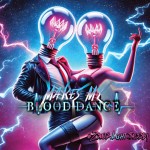
Artist: Makes My Blood Dance (@)
Title: #Z3R0 2 LGHT $P33D!
Format: CD & 12" + Download
Label: Metropolis (@)
Rated:

Title: #Z3R0 2 LGHT $P33D!
Format: CD & 12" + Download
Label: Metropolis (@)
Rated:
There are bands that blend genres because they cannot decide what they want to be, and then there are bands that do it because deciding would be terribly boring. New York's Makes My Blood Dance belong firmly to the second category. On their debut album "#Z3R0 2 LGHT $P33D!", electro, goth, metal, industrial funk and disco are thrown into the same room and somehow emerge looking like they had planned the meeting all along.
The band's formula is deceptively simple: serrated guitars, synthetic rhythms, heavy bass and vocals capable of moving from theatrical grandeur to intimate seduction. But the real trick is the rhythmic architecture. MMBD understand that darkness becomes considerably more effective when it can dance. “Time And A Place” establishes this immediately, balancing melancholic reflection with a beat that refuses to sit quietly in the corner. The song's sense of longing is wrapped in something almost club-oriented, creating a curious tension between vulnerability and propulsion.
“Black Summer” and “Impossible Odds” push further towards the industrial-metal side, where distorted guitars and electronic pulses collide without either element being reduced to decoration. The production by Bret “Epic” Mazur and Mikal Blue keeps the record polished and forceful, but there is enough contrast between the tracks to prevent the album becoming one extended wall of synthetic testosterone.
“Your Little Hand In Mine” introduces a more sensual dimension, while “Heavy Metal Armour” is considerably less interested in subtlety. The title alone apparently decided that subtlety had already been adequately represented elsewhere. Yet beneath the oversized gestures, MMBD have a good instinct for hooks, repetition and theatrical pacing. Their music is clearly designed with performance in mind, and the songs often feel as though they are already illuminated by strobes.
The most intriguing detour is “Lately”, a reworking of Macy Gray's song featuring Gray herself. Turning a soul-pop composition into industrial funk could easily have become an exercise in unnecessary violence, but MMBD preserve the emotional centre while surrounding it with harder electronic and rhythmic contours. Gray's unmistakable voice provides an important contrast to EV0's more dramatic delivery, making the track feel less like a novelty collaboration and more like an encounter between two different musical worlds.
Elsewhere, “Forget To Let It In” and “Invisible Friend” reveal a slightly more melodic side, suggesting that beneath the band's deliberately exaggerated visual and sonic identity there is a genuine interest in atmosphere. “Spin You Around” then brings the dance impulse back to the foreground, before the EDM remix of “Time And A Place” closes the album by making explicit what the rest of the record has been quietly insisting upon: these songs are built to move people physically as much as emotionally.
That is perhaps the key to understanding MMBD. Calling them “electro-goth” or “disco-metal” is useful only until the music starts playing. Their real territory lies somewhere between the nightclub, the metal venue and the theatrical stage, a place where a bass drum can be both a club pulse and a rock weapon. Their live aesthetic, with its carefully constructed visuals and ritualistic presentation, reinforces this sense that the songs are components of a larger spectacle rather than isolated recordings.
There is certainly an element of excess here. The band is not frightened of melodrama, grand gestures or titles written as though a keyboard had been left alone with a teenager's password generator. But excess is not necessarily a flaw when it is understood as part of the language. MMBD know that gothic culture has always contained a strange relationship between sincerity and spectacle, and they exploit that contradiction rather effectively.
What makes "#Z3R0 2 LGHT $P33D!" more than a collection of stylistic references is its consistency of purpose. The album wants darkness without austerity, heaviness without abandoning the dance floor, and theatricality without losing the songs underneath the costumes. It occasionally comes close to overplaying its hand, but that is preferable to sounding timid. A band calling itself Makes My Blood Dance has presumably accepted certain responsibilities.
The strongest moments arrive when the genres stop behaving like separate ingredients. Guitars become rhythmic machinery, synths become atmosphere, bass becomes physical pressure and the voice becomes both narrator and performer. The resulting sound is glossy, muscular and knowingly dramatic, but there is enough emotional uncertainty beneath the surface to keep it from becoming mere spectacle.
"#Z3R0 2 LGHT $P33D!" is therefore less a declaration that goth has discovered the dance floor than a reminder that the two were never really strangers. It is music for the moment when the apocalypse gets bored with being apocalyptic and decides to put on better clothes.
Human civilisation may be collapsing. At least someone remembered to bring the synthesizers.
The band's formula is deceptively simple: serrated guitars, synthetic rhythms, heavy bass and vocals capable of moving from theatrical grandeur to intimate seduction. But the real trick is the rhythmic architecture. MMBD understand that darkness becomes considerably more effective when it can dance. “Time And A Place” establishes this immediately, balancing melancholic reflection with a beat that refuses to sit quietly in the corner. The song's sense of longing is wrapped in something almost club-oriented, creating a curious tension between vulnerability and propulsion.
“Black Summer” and “Impossible Odds” push further towards the industrial-metal side, where distorted guitars and electronic pulses collide without either element being reduced to decoration. The production by Bret “Epic” Mazur and Mikal Blue keeps the record polished and forceful, but there is enough contrast between the tracks to prevent the album becoming one extended wall of synthetic testosterone.
“Your Little Hand In Mine” introduces a more sensual dimension, while “Heavy Metal Armour” is considerably less interested in subtlety. The title alone apparently decided that subtlety had already been adequately represented elsewhere. Yet beneath the oversized gestures, MMBD have a good instinct for hooks, repetition and theatrical pacing. Their music is clearly designed with performance in mind, and the songs often feel as though they are already illuminated by strobes.
The most intriguing detour is “Lately”, a reworking of Macy Gray's song featuring Gray herself. Turning a soul-pop composition into industrial funk could easily have become an exercise in unnecessary violence, but MMBD preserve the emotional centre while surrounding it with harder electronic and rhythmic contours. Gray's unmistakable voice provides an important contrast to EV0's more dramatic delivery, making the track feel less like a novelty collaboration and more like an encounter between two different musical worlds.
Elsewhere, “Forget To Let It In” and “Invisible Friend” reveal a slightly more melodic side, suggesting that beneath the band's deliberately exaggerated visual and sonic identity there is a genuine interest in atmosphere. “Spin You Around” then brings the dance impulse back to the foreground, before the EDM remix of “Time And A Place” closes the album by making explicit what the rest of the record has been quietly insisting upon: these songs are built to move people physically as much as emotionally.
That is perhaps the key to understanding MMBD. Calling them “electro-goth” or “disco-metal” is useful only until the music starts playing. Their real territory lies somewhere between the nightclub, the metal venue and the theatrical stage, a place where a bass drum can be both a club pulse and a rock weapon. Their live aesthetic, with its carefully constructed visuals and ritualistic presentation, reinforces this sense that the songs are components of a larger spectacle rather than isolated recordings.
There is certainly an element of excess here. The band is not frightened of melodrama, grand gestures or titles written as though a keyboard had been left alone with a teenager's password generator. But excess is not necessarily a flaw when it is understood as part of the language. MMBD know that gothic culture has always contained a strange relationship between sincerity and spectacle, and they exploit that contradiction rather effectively.
What makes "#Z3R0 2 LGHT $P33D!" more than a collection of stylistic references is its consistency of purpose. The album wants darkness without austerity, heaviness without abandoning the dance floor, and theatricality without losing the songs underneath the costumes. It occasionally comes close to overplaying its hand, but that is preferable to sounding timid. A band calling itself Makes My Blood Dance has presumably accepted certain responsibilities.
The strongest moments arrive when the genres stop behaving like separate ingredients. Guitars become rhythmic machinery, synths become atmosphere, bass becomes physical pressure and the voice becomes both narrator and performer. The resulting sound is glossy, muscular and knowingly dramatic, but there is enough emotional uncertainty beneath the surface to keep it from becoming mere spectacle.
"#Z3R0 2 LGHT $P33D!" is therefore less a declaration that goth has discovered the dance floor than a reminder that the two were never really strangers. It is music for the moment when the apocalypse gets bored with being apocalyptic and decides to put on better clothes.
Human civilisation may be collapsing. At least someone remembered to bring the synthesizers.
Negative Agent: Terminal Days
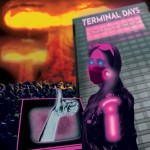
Industrial music has always had an awkward relationship with the future. It spent decades warning us about surveillance, corporate power, dehumanization and technological dependency, only to discover that reality was taking notes. "Terminal Days", the debut album from New York's Negative Agent, arrives in a political and cultural climate where dystopian fiction increasingly resembles yesterday's news feed. Rather than offering detached science fiction, Brian Stillman channels that uncomfortable overlap into an album that refuses neutrality. It is loud, confrontational, often sarcastic, and entirely unconcerned with appearing diplomatic.
Stillman is hardly a newcomer to the industrial underground. Having been immersed in New York's goth and industrial scene since the early 1990s and co-running the long-lived Contempt club night for over a decade, he understands that industrial music was never merely about distorted drum machines or intimidating aesthetics. At its strongest, it has always weaponized rhythm against complacency, from the mechanized assaults of Ministry and Front Line Assembly to the metallic futurism of Fear Factory and the post-punk fury of Killing Joke. "Terminal Days" consciously places itself within that lineage while updating its targets for the algorithmic age.
The album opens with "Mind Wipe", immediately establishing its central anxiety: the gradual replacement of human agency by data extraction, artificial intelligence, corporate manipulation and endless digital mediation. The lyrics could easily collapse under the weight of their own outrage, yet Stillman avoids turning the song into a lecture by wrapping every accusation inside muscular riffs, tightly programmed electronics and memorable hooks. The anger is genuine, but so is the craftsmanship.
That balance continues throughout the record. "Pain Control" shifts its attention toward systemic inequality and political corruption, combining relentless guitars with pounding electronic percussion that recalls the dancefloor instincts of classic electro-industrial. One of the album's strengths is its refusal to separate protest from pleasure. These songs are built to move bodies as much as consciences. Humans have always coped with catastrophe by dancing. Sometimes history resembles an apocalypse with surprisingly good bass response.
The title track, "Terminal Days", arguably represents the album's conceptual centre. Here the recurring themes of technological alienation, algorithmic control and cultural erosion merge into imagery that feels simultaneously cyberpunk and painfully contemporary. Rather than relying on futuristic fantasy, the song describes a world where creativity itself risks becoming another commodity to be mined, optimized and monetized. The production reinforces this tension beautifully, layering grinding guitars with nervous synthesizers and glitch-like textures that never overwhelm the songs themselves.
Perhaps the album's most provocative moment arrives with "Fascist Beatdown". Its deliberately blunt title leaves little room for interpretative gymnastics, and its tongue-in-cheek swagger injects a welcome dose of black humour into otherwise bleak subject matter. Industrial has often flirted with authoritarian imagery in deliberately ambiguous ways, sometimes to uncomfortable effect. Negative Agent rejects ambiguity entirely, opting instead for open confrontation wrapped inside a chorus designed for sweaty clubs rather than academic debates.
Elsewhere, "Boot Licker" examines the psychology of complicity rather than overt oppression, suggesting that authoritarian systems survive not only through power but through ordinary acts of surrender. Meanwhile "Dead in Berlin" broadens the album's narrative scope, drawing on Cold War iconography and espionage cinema to create one of the record's most atmospheric pieces. Echoes of David Bowie and Brian Eno hover over its rain-soaked streets without becoming empty nostalgia, transforming Berlin into both a physical city and a metaphor for fractured identities.
Musically, "Terminal Days" rarely tries to reinvent industrial metal. Instead, it refines familiar vocabulary with conviction and attention to dynamics. Thick guitar walls collide with precise electronic programming, while guest appearances from Steve Wiener and Greg Schwan add subtle variation without distracting from Stillman's singular vision. The closing Voidscan remix of "Fascist Beatdown" naturally shifts the emphasis toward club functionality, reminding listeners that resistance occasionally wears combat boots and occasionally dancing shoes.
What ultimately separates "Terminal Days" from many overtly political records is its awareness that outrage alone rarely produces memorable music. Stillman understands pacing, melody and texture. Even when the lyrics deliver uncompromising criticism of surveillance capitalism, authoritarian politics or technological evangelism, the compositions remain engaging as songs rather than functioning solely as ideological pamphlets.
Whether one shares every political conclusion is almost beside the point. The album succeeds because it captures an emotional landscape familiar to many contemporary listeners: exhaustion, disbelief, anger, dark humour and the stubborn refusal to surrender completely. Its vision of America may be bleak, but beneath the distortion lies an insistence that speaking out still matters, even when the machines seem to be winning.
"Terminal Days" is not interested in comforting anyone. It is interested in shaking shoulders, rattling speakers and reminding listeners that industrial music was never supposed to provide safe spaces. It was built to make comfortable people uncomfortable, and uncomfortable people feel a little less alone. On that front, Negative Agent's debut lands with impressive force.
Stillman is hardly a newcomer to the industrial underground. Having been immersed in New York's goth and industrial scene since the early 1990s and co-running the long-lived Contempt club night for over a decade, he understands that industrial music was never merely about distorted drum machines or intimidating aesthetics. At its strongest, it has always weaponized rhythm against complacency, from the mechanized assaults of Ministry and Front Line Assembly to the metallic futurism of Fear Factory and the post-punk fury of Killing Joke. "Terminal Days" consciously places itself within that lineage while updating its targets for the algorithmic age.
The album opens with "Mind Wipe", immediately establishing its central anxiety: the gradual replacement of human agency by data extraction, artificial intelligence, corporate manipulation and endless digital mediation. The lyrics could easily collapse under the weight of their own outrage, yet Stillman avoids turning the song into a lecture by wrapping every accusation inside muscular riffs, tightly programmed electronics and memorable hooks. The anger is genuine, but so is the craftsmanship.
That balance continues throughout the record. "Pain Control" shifts its attention toward systemic inequality and political corruption, combining relentless guitars with pounding electronic percussion that recalls the dancefloor instincts of classic electro-industrial. One of the album's strengths is its refusal to separate protest from pleasure. These songs are built to move bodies as much as consciences. Humans have always coped with catastrophe by dancing. Sometimes history resembles an apocalypse with surprisingly good bass response.
The title track, "Terminal Days", arguably represents the album's conceptual centre. Here the recurring themes of technological alienation, algorithmic control and cultural erosion merge into imagery that feels simultaneously cyberpunk and painfully contemporary. Rather than relying on futuristic fantasy, the song describes a world where creativity itself risks becoming another commodity to be mined, optimized and monetized. The production reinforces this tension beautifully, layering grinding guitars with nervous synthesizers and glitch-like textures that never overwhelm the songs themselves.
Perhaps the album's most provocative moment arrives with "Fascist Beatdown". Its deliberately blunt title leaves little room for interpretative gymnastics, and its tongue-in-cheek swagger injects a welcome dose of black humour into otherwise bleak subject matter. Industrial has often flirted with authoritarian imagery in deliberately ambiguous ways, sometimes to uncomfortable effect. Negative Agent rejects ambiguity entirely, opting instead for open confrontation wrapped inside a chorus designed for sweaty clubs rather than academic debates.
Elsewhere, "Boot Licker" examines the psychology of complicity rather than overt oppression, suggesting that authoritarian systems survive not only through power but through ordinary acts of surrender. Meanwhile "Dead in Berlin" broadens the album's narrative scope, drawing on Cold War iconography and espionage cinema to create one of the record's most atmospheric pieces. Echoes of David Bowie and Brian Eno hover over its rain-soaked streets without becoming empty nostalgia, transforming Berlin into both a physical city and a metaphor for fractured identities.
Musically, "Terminal Days" rarely tries to reinvent industrial metal. Instead, it refines familiar vocabulary with conviction and attention to dynamics. Thick guitar walls collide with precise electronic programming, while guest appearances from Steve Wiener and Greg Schwan add subtle variation without distracting from Stillman's singular vision. The closing Voidscan remix of "Fascist Beatdown" naturally shifts the emphasis toward club functionality, reminding listeners that resistance occasionally wears combat boots and occasionally dancing shoes.
What ultimately separates "Terminal Days" from many overtly political records is its awareness that outrage alone rarely produces memorable music. Stillman understands pacing, melody and texture. Even when the lyrics deliver uncompromising criticism of surveillance capitalism, authoritarian politics or technological evangelism, the compositions remain engaging as songs rather than functioning solely as ideological pamphlets.
Whether one shares every political conclusion is almost beside the point. The album succeeds because it captures an emotional landscape familiar to many contemporary listeners: exhaustion, disbelief, anger, dark humour and the stubborn refusal to surrender completely. Its vision of America may be bleak, but beneath the distortion lies an insistence that speaking out still matters, even when the machines seem to be winning.
"Terminal Days" is not interested in comforting anyone. It is interested in shaking shoulders, rattling speakers and reminding listeners that industrial music was never supposed to provide safe spaces. It was built to make comfortable people uncomfortable, and uncomfortable people feel a little less alone. On that front, Negative Agent's debut lands with impressive force.
Electric Six: I Shall Exterminate Everything Around Me That Restricts Me From Being The Master (2026 Remaster)
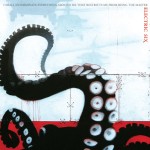
Artist: Electric Six (@)
Title: I Shall Exterminate Everything Around Me That Restricts Me From Being The Master (2026 Remaster)
Format: LP
Label: Metropolis (@)
Rated:
Title: I Shall Exterminate Everything Around Me That Restricts Me From Being The Master (2026 Remaster)
Format: LP
Label: Metropolis (@)
Rated:
Some albums age like fine wine. Others age like a forgotten cheeseburger under the back seat of a tour van. And then there are Electric Six records, which somehow manage to remain exactly as gloriously ridiculous as the day they were conceived. They exist outside the normal laws of musical entropy, trapped in a parallel universe where disco, garage rock, glam, punk, arena hooks and absurdist comedy all signed a legally dubious coexistence agreement.
Originally released in 2007, "I Shall Exterminate Everything Around Me That Restricts Me From Being The Master" arrived during a particularly prolific period for the Detroit collective. By then, many listeners still associated Electric Six almost exclusively with the twin cultural detonations of "Danger! High Voltage" and "Gay Bar", assuming the band had already played every card in its deck of innuendo, satire and dancefloor mayhem. Instead, Dick Valentine and company quietly continued building one of alternative rock's most consistently entertaining catalogues, releasing albums at a pace that suggested sleep was an optional lifestyle choice.
This remastered edition, finally making its debut on vinyl as an expanded double LP through Metropolis Records, does more than simply polish an old favourite. It reminds us that the record occupied a fascinating position in the band's evolution. The novelty factor that many critics insisted upon had already worn off. What's left is a band remarkably comfortable with its own contradictions.
Electric Six have always been difficult to categorise, largely because they seem determined to sabotage any attempt at doing so. They can sound like a glam-rock revue interrupted by a post-punk DJ, a garage band accidentally wandering into Studio 54, or Devo after spending too much time watching late-night infomercials. Their songs frequently begin as one genre before gleefully abandoning it halfway through, as though stylistic consistency were an embarrassing social convention best ignored.
The title itself feels like performance art disguised as megalomania. It is hilariously overblown, yet oddly revealing. Beneath the comic excess lies a recurring fascination with power, identity, consumer culture and self-mythologising. Valentine's lyrics often resemble the ramblings of a charismatic salesman who's simultaneously trying to recruit you into a cult and sell you discounted household appliances. The joke, however, is usually aimed at the narrator himself.
Musically, the album rarely stays still long enough to become predictable. "It's Showtime!" opens like the curtains rising on a gloriously chaotic cabaret before "Down at McDonellzzz" launches into one of the band's trademark collisions between infectious hooks and deliciously juvenile social commentary. "Dance Pattern" and "Rip It!" continue the momentum with rhythms seemingly engineered for awkward dancing, while "Feed My Fuckin' Habit" compresses reckless energy into barely two minutes without ever feeling rushed.
Elsewhere, "When I Get To The Green Building" reveals a surprisingly melodic core beneath the band's perpetual smirk, hinting that Electric Six could probably write straightforward radio-friendly rock if they weren't having far too much fun derailing expectations. "Dirty Looks" closes the original sequence on an unexpectedly triumphant note, its expansive arrangement demonstrating that beneath all the jokes lies a band with an instinctive understanding of dynamics and structure.
That has always been Electric Six's secret weapon. It is easy to laugh with them. It is much harder to notice how carefully these songs are assembled. The humour works because the musicianship never feels disposable. The grooves genuinely groove, the riffs remain satisfyingly sharp, and Valentine's theatrical vocal delivery possesses impeccable comic timing without sacrificing musicality.
The bonus material adds welcome perspective rather than functioning as mere archival filler. The cover of Harry Nilsson's "One" transforms melancholic introspection into something rougher and more muscular without completely abandoning the song's loneliness. It illustrates one of the band's recurring talents: appropriating familiar material while making it sound unmistakably like an Electric Six performance rather than a respectful museum exhibit. The demos and remix similarly offer enjoyable glimpses into the creative machinery without diminishing the polished absurdity of the finished record.
The remaster itself avoids the common temptation of confusing loudness with improvement. Instead, instruments enjoy greater separation, bass lines carry more physical weight, and the layered guitars breathe with renewed clarity. The result preserves the album's raw exuberance while allowing its surprisingly intricate arrangements to emerge more naturally.
Nearly two decades later, "I Shall Exterminate Everything Around Me That Restricts Me From Being The Master" feels less like a relic and more like evidence that irony and sincerity never needed to be sworn enemies. Electric Six understand that humour ages best when built upon genuine craftsmanship rather than disposable punchlines. Their music laughs at rock's inflated ego while simultaneously embracing every glorious excess the genre has to offer.
Perhaps that explains why this album continues to resonate. In an era increasingly obsessed with carefully curated authenticity, Electric Six remain magnificently artificial, cartoonishly excessive and joyfully impossible to pin down. They remind us that intelligence need not wear a serious face, and that sometimes the quickest route to saying something truthful is through a joke delivered at full volume under a mirror ball.
Not every band can make disco-punk sound like both a party and an existential crisis. Electric Six have been doing exactly that for three decades, and judging by this vibrant remaster, they still haven't exhausted the wonderfully absurd possibilities of the formula. Some restrictions, thankfully, were never meant to survive.
Originally released in 2007, "I Shall Exterminate Everything Around Me That Restricts Me From Being The Master" arrived during a particularly prolific period for the Detroit collective. By then, many listeners still associated Electric Six almost exclusively with the twin cultural detonations of "Danger! High Voltage" and "Gay Bar", assuming the band had already played every card in its deck of innuendo, satire and dancefloor mayhem. Instead, Dick Valentine and company quietly continued building one of alternative rock's most consistently entertaining catalogues, releasing albums at a pace that suggested sleep was an optional lifestyle choice.
This remastered edition, finally making its debut on vinyl as an expanded double LP through Metropolis Records, does more than simply polish an old favourite. It reminds us that the record occupied a fascinating position in the band's evolution. The novelty factor that many critics insisted upon had already worn off. What's left is a band remarkably comfortable with its own contradictions.
Electric Six have always been difficult to categorise, largely because they seem determined to sabotage any attempt at doing so. They can sound like a glam-rock revue interrupted by a post-punk DJ, a garage band accidentally wandering into Studio 54, or Devo after spending too much time watching late-night infomercials. Their songs frequently begin as one genre before gleefully abandoning it halfway through, as though stylistic consistency were an embarrassing social convention best ignored.
The title itself feels like performance art disguised as megalomania. It is hilariously overblown, yet oddly revealing. Beneath the comic excess lies a recurring fascination with power, identity, consumer culture and self-mythologising. Valentine's lyrics often resemble the ramblings of a charismatic salesman who's simultaneously trying to recruit you into a cult and sell you discounted household appliances. The joke, however, is usually aimed at the narrator himself.
Musically, the album rarely stays still long enough to become predictable. "It's Showtime!" opens like the curtains rising on a gloriously chaotic cabaret before "Down at McDonellzzz" launches into one of the band's trademark collisions between infectious hooks and deliciously juvenile social commentary. "Dance Pattern" and "Rip It!" continue the momentum with rhythms seemingly engineered for awkward dancing, while "Feed My Fuckin' Habit" compresses reckless energy into barely two minutes without ever feeling rushed.
Elsewhere, "When I Get To The Green Building" reveals a surprisingly melodic core beneath the band's perpetual smirk, hinting that Electric Six could probably write straightforward radio-friendly rock if they weren't having far too much fun derailing expectations. "Dirty Looks" closes the original sequence on an unexpectedly triumphant note, its expansive arrangement demonstrating that beneath all the jokes lies a band with an instinctive understanding of dynamics and structure.
That has always been Electric Six's secret weapon. It is easy to laugh with them. It is much harder to notice how carefully these songs are assembled. The humour works because the musicianship never feels disposable. The grooves genuinely groove, the riffs remain satisfyingly sharp, and Valentine's theatrical vocal delivery possesses impeccable comic timing without sacrificing musicality.
The bonus material adds welcome perspective rather than functioning as mere archival filler. The cover of Harry Nilsson's "One" transforms melancholic introspection into something rougher and more muscular without completely abandoning the song's loneliness. It illustrates one of the band's recurring talents: appropriating familiar material while making it sound unmistakably like an Electric Six performance rather than a respectful museum exhibit. The demos and remix similarly offer enjoyable glimpses into the creative machinery without diminishing the polished absurdity of the finished record.
The remaster itself avoids the common temptation of confusing loudness with improvement. Instead, instruments enjoy greater separation, bass lines carry more physical weight, and the layered guitars breathe with renewed clarity. The result preserves the album's raw exuberance while allowing its surprisingly intricate arrangements to emerge more naturally.
Nearly two decades later, "I Shall Exterminate Everything Around Me That Restricts Me From Being The Master" feels less like a relic and more like evidence that irony and sincerity never needed to be sworn enemies. Electric Six understand that humour ages best when built upon genuine craftsmanship rather than disposable punchlines. Their music laughs at rock's inflated ego while simultaneously embracing every glorious excess the genre has to offer.
Perhaps that explains why this album continues to resonate. In an era increasingly obsessed with carefully curated authenticity, Electric Six remain magnificently artificial, cartoonishly excessive and joyfully impossible to pin down. They remind us that intelligence need not wear a serious face, and that sometimes the quickest route to saying something truthful is through a joke delivered at full volume under a mirror ball.
Not every band can make disco-punk sound like both a party and an existential crisis. Electric Six have been doing exactly that for three decades, and judging by this vibrant remaster, they still haven't exhausted the wonderfully absurd possibilities of the formula. Some restrictions, thankfully, were never meant to survive.
PIG: Hurt People Hurt

There are artists who mellow with age, embracing understatement, tasteful restraint, and the occasional acoustic guitar. Raymond Watts has apparently looked at that trajectory, laughed, and set another amplifier on fire. More than four decades after helping shape industrial music through PIG, KMFDM, Schaft and countless collaborations, Watts remains gloriously committed to excess. Thankfully, "Hurt People Hurt" proves that excess, when handled by someone who actually knows what they're doing, can still feel like an art form rather than a personality disorder.
Watts has always occupied a peculiar corner of industrial rock. While many of his contemporaries leaned into dystopian severity or mechanical aggression, PIG injected cabaret, glam, black humour and unapologetic sensuality into the machine. His records have often resembled decadent theatres where metal riffs, electronic programming and theatrical vocals coexist like aristocrats drinking champagne during the apocalypse. "Hurt People Hurt" continues that lineage while sounding remarkably energized rather than nostalgic.
The partnership with longtime collaborator Jim Davies once again pays dividends. Davies, whose résumé includes The Prodigy and Pitchshifter, understands how to construct riffs and electronic frameworks that remain muscular without becoming predictable. The production is dense but never suffocating, allowing guitars, synthetic textures and Watts' unmistakable voice to wrestle for attention without reducing everything to an undifferentiated wall of distortion. Industrial music often mistakes loudness for impact. This album remembers that contrast can be far more violent than constant volume.
Opening with "Tosca's Kiss", inspired by Watts' enduring fascination with opera, the record immediately establishes its taste for melodrama. Not melodrama as empty spectacle, but as emotional amplification, where desire, decay and theatricality become inseparable. It feels less like quoting classical music than adopting opera's emotional architecture: everything is heightened because moderation has already left the building.
Elsewhere, "Sex & Suicide" balances obsession and vulnerability beneath its provocative title, revealing that Watts remains more interested in psychological tension than simple shock value. Even when the lyrics flirt with grotesque imagery or decadent fantasy, they rarely become caricatures. There is always an undercurrent of loneliness beneath the leather and latex, an awareness that performance often hides wounds rather than confidence.
The title track encapsulates one of the album's central ideas. Rather than presenting cruelty as abstract evil, it reflects on cycles of damage that reproduce themselves. Watts never slips into moralising, preferring ambiguity over easy conclusions. Pain here is contagious, seductive, marketable, even entertaining. Human beings have always been remarkably efficient at turning trauma into both identity and spectacle. Social media merely gave the circus better lighting.
Musically, "Hurt People Hurt" thrives on movement. Tracks such as "Monkey See Monkey Do" and "Quid Pro Quo" pulse with dancefloor instincts inherited from electro-industrial and EBM traditions, while "Scars" and "Ruins" reveal a more reflective atmosphere without sacrificing momentum. The closing "The Reaper's Lament" provides an appropriately cinematic conclusion, allowing the record to dissolve into something resembling exhausted triumph rather than nihilistic collapse.
One of the album's greatest strengths is its refusal to chase contemporary trends. There are flashes of modern production aesthetics, certainly, but Watts isn't attempting to reinvent industrial music for streaming algorithms or TikTok attention spans. Instead, he sharpens a language he has spent decades refining. That confidence gives the record a refreshing authenticity. It sounds like an artist interested in making "his" next album, not someone desperately auditioning for relevance.
If there is any criticism to be made, it is that listeners unfamiliar with PIG may occasionally wish for moments of greater restraint. Watts rarely believes a chorus cannot become bigger, stranger or more flamboyant. Then again, asking Raymond Watts to be subtle is rather like asking a cathedral gargoyle to smile politely for a passport photo. It misses the point entirely.
"Hurt People Hurt" ultimately succeeds because it understands a paradox that has always defined PIG: darkness can be irresistibly entertaining without becoming superficial, and theatricality can reveal uncomfortable truths precisely because it exaggerates them. Beneath the swagger, the hooks and the gloriously overdriven machinery lies an album about fractured identities, compulsive desires and the strange resilience of damaged people who continue dancing anyway.
Not every wound heals. Some become songs. Raymond Watts has spent decades proving that those songs can still bite.
Watts has always occupied a peculiar corner of industrial rock. While many of his contemporaries leaned into dystopian severity or mechanical aggression, PIG injected cabaret, glam, black humour and unapologetic sensuality into the machine. His records have often resembled decadent theatres where metal riffs, electronic programming and theatrical vocals coexist like aristocrats drinking champagne during the apocalypse. "Hurt People Hurt" continues that lineage while sounding remarkably energized rather than nostalgic.
The partnership with longtime collaborator Jim Davies once again pays dividends. Davies, whose résumé includes The Prodigy and Pitchshifter, understands how to construct riffs and electronic frameworks that remain muscular without becoming predictable. The production is dense but never suffocating, allowing guitars, synthetic textures and Watts' unmistakable voice to wrestle for attention without reducing everything to an undifferentiated wall of distortion. Industrial music often mistakes loudness for impact. This album remembers that contrast can be far more violent than constant volume.
Opening with "Tosca's Kiss", inspired by Watts' enduring fascination with opera, the record immediately establishes its taste for melodrama. Not melodrama as empty spectacle, but as emotional amplification, where desire, decay and theatricality become inseparable. It feels less like quoting classical music than adopting opera's emotional architecture: everything is heightened because moderation has already left the building.
Elsewhere, "Sex & Suicide" balances obsession and vulnerability beneath its provocative title, revealing that Watts remains more interested in psychological tension than simple shock value. Even when the lyrics flirt with grotesque imagery or decadent fantasy, they rarely become caricatures. There is always an undercurrent of loneliness beneath the leather and latex, an awareness that performance often hides wounds rather than confidence.
The title track encapsulates one of the album's central ideas. Rather than presenting cruelty as abstract evil, it reflects on cycles of damage that reproduce themselves. Watts never slips into moralising, preferring ambiguity over easy conclusions. Pain here is contagious, seductive, marketable, even entertaining. Human beings have always been remarkably efficient at turning trauma into both identity and spectacle. Social media merely gave the circus better lighting.
Musically, "Hurt People Hurt" thrives on movement. Tracks such as "Monkey See Monkey Do" and "Quid Pro Quo" pulse with dancefloor instincts inherited from electro-industrial and EBM traditions, while "Scars" and "Ruins" reveal a more reflective atmosphere without sacrificing momentum. The closing "The Reaper's Lament" provides an appropriately cinematic conclusion, allowing the record to dissolve into something resembling exhausted triumph rather than nihilistic collapse.
One of the album's greatest strengths is its refusal to chase contemporary trends. There are flashes of modern production aesthetics, certainly, but Watts isn't attempting to reinvent industrial music for streaming algorithms or TikTok attention spans. Instead, he sharpens a language he has spent decades refining. That confidence gives the record a refreshing authenticity. It sounds like an artist interested in making "his" next album, not someone desperately auditioning for relevance.
If there is any criticism to be made, it is that listeners unfamiliar with PIG may occasionally wish for moments of greater restraint. Watts rarely believes a chorus cannot become bigger, stranger or more flamboyant. Then again, asking Raymond Watts to be subtle is rather like asking a cathedral gargoyle to smile politely for a passport photo. It misses the point entirely.
"Hurt People Hurt" ultimately succeeds because it understands a paradox that has always defined PIG: darkness can be irresistibly entertaining without becoming superficial, and theatricality can reveal uncomfortable truths precisely because it exaggerates them. Beneath the swagger, the hooks and the gloriously overdriven machinery lies an album about fractured identities, compulsive desires and the strange resilience of damaged people who continue dancing anyway.
Not every wound heals. Some become songs. Raymond Watts has spent decades proving that those songs can still bite.