
Browse by Genre
Industrial Music / Industrial Metal / Aggro Industrial / Electro Metal
Industrial Noise / Power Noise / Harsh Noise
Synth Pop / Electro Pop / Synth-Electronica
Techno / Trance / Goa / Drum'n'Bass / Jungle / Tribal / Trip-Hop
Ambient / Electronica / Ethereal / Dub / Soundscapes / Abstract
Experimental / Avantgarde / Weird & Wired / Glitch / Noise / Field Recording
Dark / Gothic / Wave / New Wave / Dark Wave / Industrial Gothic
New Music / Downtown / Avantgarde Jazz / New Classical / World
Search Reviews
Music Reviews
Dina Summer: Girls Gang

Artist: Dina Summer (@)
Title: Girls Gang
Format: LP
Label: Iptamenos Discos (@)
Rated:

Buy from HERE
Title: Girls Gang
Format: LP
Label: Iptamenos Discos (@)
Rated:
Buy from HERE
In a world of relentless neon lights and pulsing beats, "Girls Gang" by Dina Summer arrives like a gang of leather-clad rebels strutting onto a deserted dance floor, ready to claim it as their own. A Berlin-based trio blending the dark allure of disco with the grit of EBM (electronic body music), Dina Summer is the brainchild of Frittenbude's Kalipo and the DJ/producer duo Local Suicide. With this sophomore effort, they’ve crafted an album that struts, snarls, and shimmers, taking their "dark disco meets EBM" ethos into uncharted terrain.
If their 2022 debut "Rimini" was a glitzy night out drenched in retro Italo vibes, "Girls Gang" feels like the afterparty where the drinks are stronger, the lights dimmer, and the conversations tinged with existential flair. This album doesn’t just expand their sound - it deconstructs and reimagines it, drawing from new wave, post-punk, and synth-pop without ever losing its sweaty, dancefloor-ready core.
The title track, "Girls Gang", kicks things off with a swagger that could soundtrack a feminist heist movie - imagine Debbie Harry teaming up with Siouxsie Sioux in an underground Berlin club. Meanwhile, "Schall & Rauch" (Smoke and Mirrors) rides a hypnotic bassline straight into the heart of EBM territory, as if Front 242 decided to join the disco revolution.
"Nothing to Hide" slows the pace but deepens the mood with a lush interplay of synth arpeggios and yearning vocals, conjuring comparisons to Depeche Mode’s more introspective moments. And then there’s "Alien", a haunting ode to outsiderhood that drapes its themes in a cloak of shimmering synths and plaintive melodies, recalling the bittersweet melancholy of The Cure.
The standout, "Promise Me", features contributions from Curses and Joshua Murphy, melding nostalgia with impermanence. Its cinematic arrangement builds and releases tension like the soundtrack to a noir-tinged space opera. "Halkidiki", named after the Greek peninsula, provides a brief sun-drenched respite - a postcard from the past with echoes of Moroder’s golden age.
"Girls Gang" isn’t just a collection of tracks; it’s a manifesto of empowerment, nostalgia, and rebellion. By blending genres with finesse and maintaining a club-ready pulse, Dina Summer delivers an album that’s both intellectually rich and viscerally satisfying. Whether you’re a seasoned disciple of dark disco or just looking for the perfect soundtrack to a noir-themed soirée, "Girls Gang" demands your attention.
So put on your best leather jacket, step into the smoky haze, and let Dina Summer remind you why we dance in the dark.
If their 2022 debut "Rimini" was a glitzy night out drenched in retro Italo vibes, "Girls Gang" feels like the afterparty where the drinks are stronger, the lights dimmer, and the conversations tinged with existential flair. This album doesn’t just expand their sound - it deconstructs and reimagines it, drawing from new wave, post-punk, and synth-pop without ever losing its sweaty, dancefloor-ready core.
The title track, "Girls Gang", kicks things off with a swagger that could soundtrack a feminist heist movie - imagine Debbie Harry teaming up with Siouxsie Sioux in an underground Berlin club. Meanwhile, "Schall & Rauch" (Smoke and Mirrors) rides a hypnotic bassline straight into the heart of EBM territory, as if Front 242 decided to join the disco revolution.
"Nothing to Hide" slows the pace but deepens the mood with a lush interplay of synth arpeggios and yearning vocals, conjuring comparisons to Depeche Mode’s more introspective moments. And then there’s "Alien", a haunting ode to outsiderhood that drapes its themes in a cloak of shimmering synths and plaintive melodies, recalling the bittersweet melancholy of The Cure.
The standout, "Promise Me", features contributions from Curses and Joshua Murphy, melding nostalgia with impermanence. Its cinematic arrangement builds and releases tension like the soundtrack to a noir-tinged space opera. "Halkidiki", named after the Greek peninsula, provides a brief sun-drenched respite - a postcard from the past with echoes of Moroder’s golden age.
"Girls Gang" isn’t just a collection of tracks; it’s a manifesto of empowerment, nostalgia, and rebellion. By blending genres with finesse and maintaining a club-ready pulse, Dina Summer delivers an album that’s both intellectually rich and viscerally satisfying. Whether you’re a seasoned disciple of dark disco or just looking for the perfect soundtrack to a noir-themed soirée, "Girls Gang" demands your attention.
So put on your best leather jacket, step into the smoky haze, and let Dina Summer remind you why we dance in the dark.
Dual Analog: The Wheel


With "The Wheel", Dual Analog delivers an existential sonic saga, plunging us headfirst into the ceaseless cycle of samsara. This second studio album is not just a collection of tracks - it’s a dark meditation on futility, redemption, and the eternal repetition of one’s mistakes. Anchored in the Buddhist concept of the dharma chakra, the album spins a narrative as heavy as its brooding soundscapes.
Dual Analog, composed of Chip Roberts (guitar, vocals) and Kurtis Skinner (keys, synths, bass), have always leaned into the shadowy corners of electronic rock, but "The Wheel" sees them carving deeper trenches into despair and catharsis. Think Nine Inch Nails in a cosmic dialogue with Porcupine Tree, sipping dark brews of post-rock melancholy and industrial grit.
The opening track, "Painted Faces", sets the tone with its menacing guitar riff and ethereal synth layers, evoking a sense of foreboding as it builds into a hypnotic, almost trance-like rhythm. Roberts’ vocals, raw and weathered, seem less like singing and more like a confession shouted into the void.
"Dharmachakra" stands out as a centerpiece - not only thematically but sonically. Its churning bassline and icy synth textures feel like the turning of the titular wheel itself, a relentless motion that pulls the listener deeper into the narrative of existential repetition. The track could sit comfortably next to something from Tool’s "10,000 Days", though with a synth-forward approach that adds a distinct electronic pulse.
The middle of the album - "Reborn" and "Caverns of the Mind" - offers some of the record’s most introspective moments. In "Reborn", Roberts’ nihilistic lyrics (“I die to repeat, the wheel spins my defeat”) are delivered over Skinner’s glacial synth beds, creating an atmosphere that’s as beautiful as it is unsettling. Meanwhile, "Caverns of the Mind" feels like an instrumental descent into Hades, with its extended-range guitar lines carving through layers of reverb and delay.
The album’s climax arrives with "Great Cold Hell" and "Ceremony". The former is an industrial-rock behemoth that wouldn’t feel out of place on a mid-2000s Marilyn Manson record, while the latter offers a surprising moment of fragile beauty amidst the darkness, its piano and vocal interplay reminiscent of late-era David Bowie ("Blackstar" comes to mind).
Finally, the title track, "The Wheel", serves as both an ending and a beginning. Its cyclical structure mirrors the album’s conceptual theme - rising, falling, and ultimately circling back on itself. It’s a masterclass in tension and release, leaving the listener with a sense of unresolved catharsis.
Mixed and mastered by a trio of sonic alchemists - Elliot James Mulhern, Austin Leeds, and Gosteffects - the production is as meticulous as the themes are sprawling. Every note, every texture, feels intentional, designed to immerse the listener in the album’s bleak yet captivating world.
As the wheel turns, so too does the music, endlessly looping in the listener’s mind - a reminder that even in despair, there is a strange and haunting beauty.
Dual Analog, composed of Chip Roberts (guitar, vocals) and Kurtis Skinner (keys, synths, bass), have always leaned into the shadowy corners of electronic rock, but "The Wheel" sees them carving deeper trenches into despair and catharsis. Think Nine Inch Nails in a cosmic dialogue with Porcupine Tree, sipping dark brews of post-rock melancholy and industrial grit.
The opening track, "Painted Faces", sets the tone with its menacing guitar riff and ethereal synth layers, evoking a sense of foreboding as it builds into a hypnotic, almost trance-like rhythm. Roberts’ vocals, raw and weathered, seem less like singing and more like a confession shouted into the void.
"Dharmachakra" stands out as a centerpiece - not only thematically but sonically. Its churning bassline and icy synth textures feel like the turning of the titular wheel itself, a relentless motion that pulls the listener deeper into the narrative of existential repetition. The track could sit comfortably next to something from Tool’s "10,000 Days", though with a synth-forward approach that adds a distinct electronic pulse.
The middle of the album - "Reborn" and "Caverns of the Mind" - offers some of the record’s most introspective moments. In "Reborn", Roberts’ nihilistic lyrics (“I die to repeat, the wheel spins my defeat”) are delivered over Skinner’s glacial synth beds, creating an atmosphere that’s as beautiful as it is unsettling. Meanwhile, "Caverns of the Mind" feels like an instrumental descent into Hades, with its extended-range guitar lines carving through layers of reverb and delay.
The album’s climax arrives with "Great Cold Hell" and "Ceremony". The former is an industrial-rock behemoth that wouldn’t feel out of place on a mid-2000s Marilyn Manson record, while the latter offers a surprising moment of fragile beauty amidst the darkness, its piano and vocal interplay reminiscent of late-era David Bowie ("Blackstar" comes to mind).
Finally, the title track, "The Wheel", serves as both an ending and a beginning. Its cyclical structure mirrors the album’s conceptual theme - rising, falling, and ultimately circling back on itself. It’s a masterclass in tension and release, leaving the listener with a sense of unresolved catharsis.
Mixed and mastered by a trio of sonic alchemists - Elliot James Mulhern, Austin Leeds, and Gosteffects - the production is as meticulous as the themes are sprawling. Every note, every texture, feels intentional, designed to immerse the listener in the album’s bleak yet captivating world.
As the wheel turns, so too does the music, endlessly looping in the listener’s mind - a reminder that even in despair, there is a strange and haunting beauty.
EHB: Fragments de sables ?mouvants
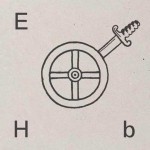
"Fragments de sables émouvants" is a sonic excavation, a descent into Emmanuel Hubaut's subconscious - a landscape of shifting dunes, haunting echoes, and eerie beauty. EHB, the solo project of French musician Emmanuel Hubaut, builds on his legacy of post-punk theatrics (Les Tétines Noires), dada-industrial experimentation (LTNo), and irreverent absurdism (Pest Modern). Yet here, Hubaut ventures deeper, crafting an otherworldly experience that feels as intimate as it does alien.
The opening track, "Abime d’artifices", sets the tone: a desolate drone punctuated by faint pulses and textures that shimmer like mirages. It’s as if the listener is trapped in a windswept cavern, the sound swirling unpredictably. This spectral atmosphere recalls the work of Nurse With Wound or the experimental minimalism of Tim Hecker, but with an unmistakable theatrical flair that only Hubaut could bring.
From there, the album unfolds like a surrealistic map. Tracks like "Tumus et amanites" and "Ivresse en eaux céladon" play with brevity, presenting sonic haikus - distilled moments that evoke peculiar textures and emotions. In contrast, "Immersion karstique" and "Exsurgences" delve into extended meditations, their layers of drone, noise, and organic instrumentation building tension and release in unpredictable ways.
There’s a tactile quality to the sounds here - Hubaut’s fascination with natural phenomena is evident in titles referencing stalactites, dolines, and troglodytes, and his compositions echo the textures of stone, water, and decay. These tracks seem less composed than unearthed, as though Hubaut were merely revealing the strange frequencies that always existed just beneath the surface.
Despite the album's solitary feel, Hubaut enlists collaborators to great effect. Filomena Nightingale’s ethereal vocals on "Stalactites" and "Doline d’Arques-en-cils" add a spectral, otherworldly quality, while Jean-François Kubi’s saxophone on "Amatombe" is a revelation - a wailing, fractured melody that cuts through the ambient murk like a cry for help in the void. These contributions feel less like additions and more like spectral presences haunting Hubaut’s sonic terrain.
What genre is this? Hubaut evades classification, dancing between drone, noise, and musique concrète with hints of his post-punk roots glinting like shards of obsidian. Comparisons could be drawn to the eerie, ritualistic work of Coil or the dark minimalism of Deathprod, but Hubaut’s sense of play - his theatrical sensibility and absurdist humor - set him apart. Even in its darkest moments, "Fragments de sables émouvants" is never self-serious; it feels more like a surrealist sandbox than a somber sermon.
The album’s physical form - a hand-numbered, 66-copy CD edition with artwork by PFL based on a Georges Hubaut drawing - cements its status as both a collector’s item and a statement of intent. The visual component complements the auditory one, drawing listeners into Hubaut’s peculiar artistic world, where sound and image merge into an inseparable whole.
The titles of Hubaut’s upcoming live performances hint at the broader artistic project he’s crafting. Whether soundtracking avant-garde cabarets or puppet-filled theatrical spectacles, it’s clear Hubaut doesn’t see his music as merely an auditory experience but as part of a larger, immersive world. One can only imagine how tracks like "Troglomites" or "Souleur de profundis" will translate to a live setting, where Hubaut’s theatrical instincts and sonic experiments can truly run wild.
The opening track, "Abime d’artifices", sets the tone: a desolate drone punctuated by faint pulses and textures that shimmer like mirages. It’s as if the listener is trapped in a windswept cavern, the sound swirling unpredictably. This spectral atmosphere recalls the work of Nurse With Wound or the experimental minimalism of Tim Hecker, but with an unmistakable theatrical flair that only Hubaut could bring.
From there, the album unfolds like a surrealistic map. Tracks like "Tumus et amanites" and "Ivresse en eaux céladon" play with brevity, presenting sonic haikus - distilled moments that evoke peculiar textures and emotions. In contrast, "Immersion karstique" and "Exsurgences" delve into extended meditations, their layers of drone, noise, and organic instrumentation building tension and release in unpredictable ways.
There’s a tactile quality to the sounds here - Hubaut’s fascination with natural phenomena is evident in titles referencing stalactites, dolines, and troglodytes, and his compositions echo the textures of stone, water, and decay. These tracks seem less composed than unearthed, as though Hubaut were merely revealing the strange frequencies that always existed just beneath the surface.
Despite the album's solitary feel, Hubaut enlists collaborators to great effect. Filomena Nightingale’s ethereal vocals on "Stalactites" and "Doline d’Arques-en-cils" add a spectral, otherworldly quality, while Jean-François Kubi’s saxophone on "Amatombe" is a revelation - a wailing, fractured melody that cuts through the ambient murk like a cry for help in the void. These contributions feel less like additions and more like spectral presences haunting Hubaut’s sonic terrain.
What genre is this? Hubaut evades classification, dancing between drone, noise, and musique concrète with hints of his post-punk roots glinting like shards of obsidian. Comparisons could be drawn to the eerie, ritualistic work of Coil or the dark minimalism of Deathprod, but Hubaut’s sense of play - his theatrical sensibility and absurdist humor - set him apart. Even in its darkest moments, "Fragments de sables émouvants" is never self-serious; it feels more like a surrealist sandbox than a somber sermon.
The album’s physical form - a hand-numbered, 66-copy CD edition with artwork by PFL based on a Georges Hubaut drawing - cements its status as both a collector’s item and a statement of intent. The visual component complements the auditory one, drawing listeners into Hubaut’s peculiar artistic world, where sound and image merge into an inseparable whole.
The titles of Hubaut’s upcoming live performances hint at the broader artistic project he’s crafting. Whether soundtracking avant-garde cabarets or puppet-filled theatrical spectacles, it’s clear Hubaut doesn’t see his music as merely an auditory experience but as part of a larger, immersive world. One can only imagine how tracks like "Troglomites" or "Souleur de profundis" will translate to a live setting, where Hubaut’s theatrical instincts and sonic experiments can truly run wild.
N?IR: The Best of the Remixes

Artist: N?IR (@)
Title: The Best of the Remixes
Format: Download Only (MP3 + Lossless)
Label: Metropolis (@)
Rated:
Title: The Best of the Remixes
Format: Download Only (MP3 + Lossless)
Label: Metropolis (@)
Rated:
If you’ve ever wondered what happens when dark romanticism steps onto a neon-lit dance floor, "The Best of the Remixes" by NØIR delivers the answer with a sultry, synthesizer-infused smirk. This collection takes the band’s signature moody allure and runs it through the kaleidoscopic lenses of some of the best remixers in the darkwave, industrial, and electronic scenes. The result? A shadowy yet irresistibly danceable anthology that feels like a love letter to their fans and a testament to the project’s evolving versatility.
Led by Athan Maroulis - whose velvety, cinematic vocals have graced projects like Spahn Ranch and Black Tape for a Blue Girl - NØIR is not so much a band as a shifting constellation of creative forces. Collaborators like Erik Gustafson (Adoration Destroyed) and Kai Irina Hahn (The Sedona Effect) add depth and dimension to a sound that WhiteLight/WhiteHeat aptly described as “dark romanticism chanting over shining electronic engines”. This remix collection takes that engine, revs it up, and lets it roar.
The tracklist is a who's-who of remix talent. Assemblage 23 kicks things off with a driving, sleek reinterpretation of “My Dear”, transforming its simmering melancholy into a pulsing anthem that practically demands a fog machine and strobe lights. Bestial Mouths takes “Same Old Madness” and strips it to the bone, rebuilding it as an eerie, chaotic waltz of fragmented vocals and jagged beats. Meanwhile, Paradox Obscur’s remix of “Fallen” injects a hypnotic groove that feels as if it’s been plucked straight from an intergalactic cabaret.
But this isn’t just a remix album - it’s a celebration of NØIR’s genre-blending spirit. "The Best of the Remixes" serves as both a retrospective and a reinvention, with tracks like “Back to Nature” receiving fresh life through Flesh Field’s razor-sharp beats and cyberpunk flourishes. Each remix highlights a different facet of NØIR’s sound, from the ethereal to the industrial, the romantic to the ominous.
There’s a sense of playful irreverence here, too. You can almost hear the smirk in "The Rain Within"’s take on “The Burning Bridge”, as soaring synths and cinematic drama lend the track a touch of 1980s excess. Similarly, "Dead Voices on Air" turns “The Voyeurs” into a haunting, ambient soundscape that feels like it was recorded in a ghostly cathedral.
For long-time fans, this collection is a thrilling ride through alternate dimensions of NØIR’s songs, a “what if” experiment executed with flair. For newcomers, it’s a tantalizing gateway into the band’s smoky, sensual universe - a place where darkwave meets the avant-garde and the dance floor collides with the void.
Led by Athan Maroulis - whose velvety, cinematic vocals have graced projects like Spahn Ranch and Black Tape for a Blue Girl - NØIR is not so much a band as a shifting constellation of creative forces. Collaborators like Erik Gustafson (Adoration Destroyed) and Kai Irina Hahn (The Sedona Effect) add depth and dimension to a sound that WhiteLight/WhiteHeat aptly described as “dark romanticism chanting over shining electronic engines”. This remix collection takes that engine, revs it up, and lets it roar.
The tracklist is a who's-who of remix talent. Assemblage 23 kicks things off with a driving, sleek reinterpretation of “My Dear”, transforming its simmering melancholy into a pulsing anthem that practically demands a fog machine and strobe lights. Bestial Mouths takes “Same Old Madness” and strips it to the bone, rebuilding it as an eerie, chaotic waltz of fragmented vocals and jagged beats. Meanwhile, Paradox Obscur’s remix of “Fallen” injects a hypnotic groove that feels as if it’s been plucked straight from an intergalactic cabaret.
But this isn’t just a remix album - it’s a celebration of NØIR’s genre-blending spirit. "The Best of the Remixes" serves as both a retrospective and a reinvention, with tracks like “Back to Nature” receiving fresh life through Flesh Field’s razor-sharp beats and cyberpunk flourishes. Each remix highlights a different facet of NØIR’s sound, from the ethereal to the industrial, the romantic to the ominous.
There’s a sense of playful irreverence here, too. You can almost hear the smirk in "The Rain Within"’s take on “The Burning Bridge”, as soaring synths and cinematic drama lend the track a touch of 1980s excess. Similarly, "Dead Voices on Air" turns “The Voyeurs” into a haunting, ambient soundscape that feels like it was recorded in a ghostly cathedral.
For long-time fans, this collection is a thrilling ride through alternate dimensions of NØIR’s songs, a “what if” experiment executed with flair. For newcomers, it’s a tantalizing gateway into the band’s smoky, sensual universe - a place where darkwave meets the avant-garde and the dance floor collides with the void.
Plaster: Obscura

In "Obscura", Plaster’s Gianclaudio Hashem Moniri crafts a labyrinth of sound, weaving the threads of protest, memory, and a profound exploration of the feminine archetype. This album, its fifth studio release, stands as both a personal and political statement, inspired in part by the tragic death of Mahsa Amini and the subsequent Iranian protests. It is a visceral testament to the strength, fragility, and duality of the feminine experience, a sonic tapestry imbued with empathy, rage, and resolve.
Split into two parts - "Alpha" and "Omega" - the 15 tracks offer a journey through light and shadow, birth and closure. Each piece carries a deliberate weight, asking listeners not to merely hear but to immerse themselves in a profound auditory narrative. This isn’t background music for idle moments; it’s an opus designed to command attention and reflection.
The album opens with "Macte Animo!", a bold invocation that introduces "Alpha" with cinematic grandeur. Textural drones and granular synths expand and contract, like a breathing entity pulling you into its orbit. The title track, “Obscura”, stands out as an intricate, deeply atmospheric composition. It layers nuanced textures, pulsating rhythms, and fragmented melodies, creating a hypnotic interplay between tension and release. The track feels like a descent into hidden depths, its deliberate pacing building an almost meditative intensity.
Vocals take center stage in tracks like "Nec Spe, Nec Metu" and "Numera Stellas", where Valeria Svizzeri’s ethereal voice becomes an instrument of its own, conveying not only lyrics but emotional landscapes. "Interfector", with its spoken-word poetry interpreted by Gianfranco Miranda and Maria Giulia Ciucci, merges prose with sound design in a way that feels almost ceremonial, offering a moment of pause and introspection.
The second half, "Omega", is where the narrative deepens. Tracks like "Dux Femina Facti" and "Mater Dolorosa" channel a sense of defiance and grief, balancing intricate soundscapes with raw emotional resonance. "Gutta Cavat Lapidem" feels like a mantra - its rhythmic persistence embodying the album’s theme of resilience and the slow erosion of oppressive structures. Closing with "Ibi Deficit Orbis", the record fades not into resolution, but into a meditative stillness, leaving the listener suspended in its echoes.
Moniri’s evolution as a composer is palpable here. While "Obscura" retains Plaster’s signature sound - precise, atmospheric, and cerebral - it also introduces new elements: poetry, distorted guitars, and vocals as focal points. This progression doesn’t feel like a departure but a deepening, a return to early experimentalism filtered through the lens of years of refinement.
The physical release - a limited edition of 22 printed canvases, symbolizing Mahsa Amini’s age - underscores the album’s dedication to her memory and its grounding in real-world struggles. It is not merely an album but an act of remembrance, a eulogy set to sound.
"Obscura" is a masterwork of electronic sound design and narrative composition, a record that lingers long after the final notes fade. Its layers unfold with each listen, revealing a kaleidoscope of emotions and ideas. Playful in its details, devastating in its depth, and always thought-provoking, this is an album that insists on engagement. Moniri has not just pushed his boundaries with "Obscura" - he has redefined them.
Split into two parts - "Alpha" and "Omega" - the 15 tracks offer a journey through light and shadow, birth and closure. Each piece carries a deliberate weight, asking listeners not to merely hear but to immerse themselves in a profound auditory narrative. This isn’t background music for idle moments; it’s an opus designed to command attention and reflection.
The album opens with "Macte Animo!", a bold invocation that introduces "Alpha" with cinematic grandeur. Textural drones and granular synths expand and contract, like a breathing entity pulling you into its orbit. The title track, “Obscura”, stands out as an intricate, deeply atmospheric composition. It layers nuanced textures, pulsating rhythms, and fragmented melodies, creating a hypnotic interplay between tension and release. The track feels like a descent into hidden depths, its deliberate pacing building an almost meditative intensity.
Vocals take center stage in tracks like "Nec Spe, Nec Metu" and "Numera Stellas", where Valeria Svizzeri’s ethereal voice becomes an instrument of its own, conveying not only lyrics but emotional landscapes. "Interfector", with its spoken-word poetry interpreted by Gianfranco Miranda and Maria Giulia Ciucci, merges prose with sound design in a way that feels almost ceremonial, offering a moment of pause and introspection.
The second half, "Omega", is where the narrative deepens. Tracks like "Dux Femina Facti" and "Mater Dolorosa" channel a sense of defiance and grief, balancing intricate soundscapes with raw emotional resonance. "Gutta Cavat Lapidem" feels like a mantra - its rhythmic persistence embodying the album’s theme of resilience and the slow erosion of oppressive structures. Closing with "Ibi Deficit Orbis", the record fades not into resolution, but into a meditative stillness, leaving the listener suspended in its echoes.
Moniri’s evolution as a composer is palpable here. While "Obscura" retains Plaster’s signature sound - precise, atmospheric, and cerebral - it also introduces new elements: poetry, distorted guitars, and vocals as focal points. This progression doesn’t feel like a departure but a deepening, a return to early experimentalism filtered through the lens of years of refinement.
The physical release - a limited edition of 22 printed canvases, symbolizing Mahsa Amini’s age - underscores the album’s dedication to her memory and its grounding in real-world struggles. It is not merely an album but an act of remembrance, a eulogy set to sound.
"Obscura" is a masterwork of electronic sound design and narrative composition, a record that lingers long after the final notes fade. Its layers unfold with each listen, revealing a kaleidoscope of emotions and ideas. Playful in its details, devastating in its depth, and always thought-provoking, this is an album that insists on engagement. Moniri has not just pushed his boundaries with "Obscura" - he has redefined them.