
Browse by Genre
Industrial Music / Industrial Metal / Aggro Industrial / Electro Metal
Industrial Noise / Power Noise / Harsh Noise
Synth Pop / Electro Pop / Synth-Electronica
Techno / Trance / Goa / Drum'n'Bass / Jungle / Tribal / Trip-Hop
Ambient / Electronica / Ethereal / Dub / Soundscapes / Abstract
Experimental / Avantgarde / Weird & Wired / Glitch / Noise / Field Recording
Dark / Gothic / Wave / New Wave / Dark Wave / Industrial Gothic
New Music / Downtown / Avantgarde Jazz / New Classical / World
Search Reviews
Music Reviews
Fiesta Alba: Drops Of Sunshine In The City Of Spectres

Artist: Fiesta Alba (@)
Title: Drops Of Sunshine In The City Of Spectres
Format: CD EP
Label: neontaster multimedia dept./Altipiani
Rated:

Title: Drops Of Sunshine In The City Of Spectres
Format: CD EP
Label: neontaster multimedia dept./Altipiani
Rated:
There are records that politely ask for your attention, and there are records that grab you by the sleeve, point toward a city in flames, then insist you dance through it without losing your sense of direction. "Drops Of Sunshine In The City Of Spectres" belongs firmly to the latter category. It is restless, argumentative, occasionally exhausting, and all the more compelling for refusing to simplify either its music or its worldview.
The Rome-based collective has been cultivating an idiosyncratic vocabulary since their self-titled debut, one that was considerably expanded on last year's "Pyrotechnic Babel". This new EP does not merely refine that formula. Instead, it fractures it into smaller particles and lets them collide. Math rock remains the gravitational centre, but its angular precision now shares space with drum'n'bass propulsion, electronic manipulation, Afrocentric rhythmic thinking, progressive architecture and fragments of spoken philosophy. It sounds like a crowded intersection where every traffic light has failed, yet somehow nobody crashes.
What makes Fiesta Alba particularly interesting is that complexity is never pursued as an intellectual trophy. Plenty of contemporary experimental rock projects seem convinced that confusing the listener is equivalent to challenging them. Fiesta Alba appear to understand the difference. Their music may be intricate, but every detour serves an expressive purpose. The dense rhythmic interplay, abrupt structural shifts and carefully layered textures all reinforce the emotional and political questions running beneath the surface.
The twin pieces "City Of Spectres II" and "City Of Spectres I" frame the EP with complementary perspectives. Rather than functioning as simple reprises, they illuminate the same landscape from different emotional angles. Drum'n'bass rhythms inject nervous momentum into the former, while the latter allows Alessandra Plini's measured vocal performance to articulate urban alienation with striking clarity. The city becomes more than a physical location. It is a psychological architecture built from surveillance, conformity and the slow erosion of individual thought. Yet sunlight persists, however briefly. The title's central metaphor never feels naïve because the optimism it offers is stubborn rather than triumphant.
"Inch By Inch" is arguably the emotional centrepiece. Diego Pandiscia delivers lyrics that refuse rhetorical shortcuts, his voice oscillating between theatrical abrasion and weary introspection. The repeated image of crawling through mud becomes an unsettling metaphor for societies that continue moving despite appearing trapped inside their own decay. The arrangement mirrors this condition beautifully, expanding from fragmented rhythmic cells into something unexpectedly lyrical without ever abandoning its underlying tension.
Perhaps the EP's most fascinating moment arrives with "Uncontacted". Inspired by isolated Amazonian communities, the track avoids the patronising temptation of musical exoticism. Instead, Tiziana Lo Conte performs in an invented language whose meaning lies not in literal translation but in pure vocal presence. Her voice becomes another instrument navigating the constantly shifting relationship between electronics, progressive structures and intricate rhythmic patterns. It is less about representing another culture than questioning our own obsession with categorising everything that remains beyond immediate comprehension.
Then comes "Kinder Egg Surprise", available only on the physical edition, where Fiesta Alba venture into particularly provocative territory. By introducing an AI-generated voice alongside sampled reflections associated with Slavoj iek, the band deliberately blurs boundaries between authenticity and simulation. Rather than celebrating technology or condemning it outright, they treat artificial intelligence as another cultural material to interrogate. Set against an infectious techno-funk pulse, the track delivers one of the EP's sharpest critiques of consumerism with an almost mischievous sense of humour. It asks what surprise modern society really hides inside its brightly wrapped promises. The answer, unsurprisingly, is less a toy than a mirror.
Musically, the record's greatest strength lies in its refusal to fetishise hybridity. The influences are audible, from the rhythmic elasticity of "Battles" to the fearless structural imagination of King Crimson, from the communal pulse of Sons of Kemet to echoes of Steve Reich and Fela Kuti. Yet these references function as ingredients rather than destinations. Fiesta Alba are not assembling a collage of admired predecessors. They are constructing a language that belongs to the peculiar realities they wish to confront.
For all its political urgency, "Drops Of Sunshine In The City Of Spectres" never becomes doctrinaire. It understands that resistance also requires imagination, irony and moments of genuine beauty. Even the band's recurring lucha libre imagery embodies this balance, suggesting that masks can conceal identities but also empower them. Sometimes survival itself becomes a performance, though hopefully with fewer flying elbows than professional wrestling usually demands.
At just over twenty minutes, the EP ends before its ideas have exhausted themselves. That brevity feels intentional. These are not definitive answers to a fractured world, but dispatches from within it. Fiesta Alba remind us that even in cities populated by spectres, sunlight does not disappear. It arrives in brief flashes, reflected off broken surfaces, demanding that we notice it before the next shadow falls.
The Rome-based collective has been cultivating an idiosyncratic vocabulary since their self-titled debut, one that was considerably expanded on last year's "Pyrotechnic Babel". This new EP does not merely refine that formula. Instead, it fractures it into smaller particles and lets them collide. Math rock remains the gravitational centre, but its angular precision now shares space with drum'n'bass propulsion, electronic manipulation, Afrocentric rhythmic thinking, progressive architecture and fragments of spoken philosophy. It sounds like a crowded intersection where every traffic light has failed, yet somehow nobody crashes.
What makes Fiesta Alba particularly interesting is that complexity is never pursued as an intellectual trophy. Plenty of contemporary experimental rock projects seem convinced that confusing the listener is equivalent to challenging them. Fiesta Alba appear to understand the difference. Their music may be intricate, but every detour serves an expressive purpose. The dense rhythmic interplay, abrupt structural shifts and carefully layered textures all reinforce the emotional and political questions running beneath the surface.
The twin pieces "City Of Spectres II" and "City Of Spectres I" frame the EP with complementary perspectives. Rather than functioning as simple reprises, they illuminate the same landscape from different emotional angles. Drum'n'bass rhythms inject nervous momentum into the former, while the latter allows Alessandra Plini's measured vocal performance to articulate urban alienation with striking clarity. The city becomes more than a physical location. It is a psychological architecture built from surveillance, conformity and the slow erosion of individual thought. Yet sunlight persists, however briefly. The title's central metaphor never feels naïve because the optimism it offers is stubborn rather than triumphant.
"Inch By Inch" is arguably the emotional centrepiece. Diego Pandiscia delivers lyrics that refuse rhetorical shortcuts, his voice oscillating between theatrical abrasion and weary introspection. The repeated image of crawling through mud becomes an unsettling metaphor for societies that continue moving despite appearing trapped inside their own decay. The arrangement mirrors this condition beautifully, expanding from fragmented rhythmic cells into something unexpectedly lyrical without ever abandoning its underlying tension.
Perhaps the EP's most fascinating moment arrives with "Uncontacted". Inspired by isolated Amazonian communities, the track avoids the patronising temptation of musical exoticism. Instead, Tiziana Lo Conte performs in an invented language whose meaning lies not in literal translation but in pure vocal presence. Her voice becomes another instrument navigating the constantly shifting relationship between electronics, progressive structures and intricate rhythmic patterns. It is less about representing another culture than questioning our own obsession with categorising everything that remains beyond immediate comprehension.
Then comes "Kinder Egg Surprise", available only on the physical edition, where Fiesta Alba venture into particularly provocative territory. By introducing an AI-generated voice alongside sampled reflections associated with Slavoj iek, the band deliberately blurs boundaries between authenticity and simulation. Rather than celebrating technology or condemning it outright, they treat artificial intelligence as another cultural material to interrogate. Set against an infectious techno-funk pulse, the track delivers one of the EP's sharpest critiques of consumerism with an almost mischievous sense of humour. It asks what surprise modern society really hides inside its brightly wrapped promises. The answer, unsurprisingly, is less a toy than a mirror.
Musically, the record's greatest strength lies in its refusal to fetishise hybridity. The influences are audible, from the rhythmic elasticity of "Battles" to the fearless structural imagination of King Crimson, from the communal pulse of Sons of Kemet to echoes of Steve Reich and Fela Kuti. Yet these references function as ingredients rather than destinations. Fiesta Alba are not assembling a collage of admired predecessors. They are constructing a language that belongs to the peculiar realities they wish to confront.
For all its political urgency, "Drops Of Sunshine In The City Of Spectres" never becomes doctrinaire. It understands that resistance also requires imagination, irony and moments of genuine beauty. Even the band's recurring lucha libre imagery embodies this balance, suggesting that masks can conceal identities but also empower them. Sometimes survival itself becomes a performance, though hopefully with fewer flying elbows than professional wrestling usually demands.
At just over twenty minutes, the EP ends before its ideas have exhausted themselves. That brevity feels intentional. These are not definitive answers to a fractured world, but dispatches from within it. Fiesta Alba remind us that even in cities populated by spectres, sunlight does not disappear. It arrives in brief flashes, reflected off broken surfaces, demanding that we notice it before the next shadow falls.
Zlatko Kaučič & Francesco Cigana: Kako Klicati Zmaja

Artist: Zlatko Kaučič & Francesco Cigana
Title: Kako Klicati Zmaja
Format: CD + Download
Label: Dissipatio (@)
Rated:
Title: Kako Klicati Zmaja
Format: CD + Download
Label: Dissipatio (@)
Rated:
Zlatko Kaui has spent decades proving that percussion is far more than a keeper of rhythm. The Slovenian drummer and educator has become one of the defining figures of European free improvisation, collaborating with artists across jazz, contemporary composition and experimental music while mentoring generations of younger musicians through workshops and creative education. His playing has always balanced explosive spontaneity with an almost childlike curiosity about sound itself. On "Kako Klicati Zmaja" ("How to Call the Dragon"), recorded live in Padua alongside Italian percussionist Francesco Cigana, that curiosity becomes the album's true protagonist.
The title draws from a nineteenth-century account of the "Pozoj", a dragon-like creature from Slavic folklore hidden beneath marshes, churches and castles, awakened only through repeated rituals until it finally emerges from the earth. It is an inspired metaphor for improvised music. Nothing is summoned by force. The performers circle an invisible presence, listening, waiting, nudging it toward the surface until the music decides it is ready to reveal itself.
The instrumentation appears deceptively limited: drums, percussion, found objects and assorted sonic debris. In practice, the palette is astonishingly broad. Kaui and Cigana treat every surface as a possible storyteller. Skins rumble, metals shimmer, wooden objects crackle, and unidentified noises wander through the stereo image like curious animals investigating unfamiliar territory. At times it becomes difficult to distinguish intentional gesture from happy accident, which is precisely where the album finds much of its charm.
Each track pairs a Slovenian and an Italian word, suggesting dialogues rather than translations: "sentiero+uho", "fiamma+oko", "scrivere+govoriti". Paths meet ears, flames encounter eyes, writing converses with speech. These titles quietly reflect the music itself, where two musicians communicate through parallel languages without ever seeking perfect symmetry. Rather than mirroring one another, they construct an ecosystem in which every gesture alters the landscape for the next.
There is remarkable discipline beneath the apparent freedom. European free improvisation is sometimes unfairly caricatured as a competition to discover who can frighten a cymbal most effectively. Here, restraint proves just as important as eruption. Short silences become structural beams, delicate textures interrupt dense percussive clusters, and rhythmic fragments emerge only to dissolve before they become predictable. Listening feels less like following compositions than observing weather systems that continuously reorganize themselves.
Cigana proves an ideal partner. His sensitivity prevents the performance from becoming a master-and-student narrative despite Kaui's legendary stature. Instead, their interaction resembles two seasoned explorers comparing maps that neither entirely trusts. One proposes a direction, the other quietly redraws the terrain.
The live recording contributes enormously to the experience. Audience presence remains discreet, yet the room itself becomes another resonating body. Every metallic vibration and wooden resonance acquires physical depth, reminding us that improvised music exists first as an event before becoming an object. You are not simply hearing percussion; you are hearing air being disturbed inside a shared space.
The dragon of the title never arrives in cinematic fashion. There is no climactic roar waiting at the album's conclusion. Instead, it appears in fleeting glimpses, hidden within unexpected resonances and sudden moments of collective intuition. Like the old legend, the ritual matters more than the capture.
"Kako Klicati Zmaja" ultimately celebrates listening as an act of creation. Kaui and Cigana demonstrate that improvisation is not about filling silence but negotiating with it, patiently uncovering forms already sleeping beneath the surface. By the time the final vibrations fade, the dragon has indeed emerged, though not as a beast to be conquered. It appears as something far rarer: a conversation so attentive that even ordinary objects begin speaking in forgotten languages.
The title draws from a nineteenth-century account of the "Pozoj", a dragon-like creature from Slavic folklore hidden beneath marshes, churches and castles, awakened only through repeated rituals until it finally emerges from the earth. It is an inspired metaphor for improvised music. Nothing is summoned by force. The performers circle an invisible presence, listening, waiting, nudging it toward the surface until the music decides it is ready to reveal itself.
The instrumentation appears deceptively limited: drums, percussion, found objects and assorted sonic debris. In practice, the palette is astonishingly broad. Kaui and Cigana treat every surface as a possible storyteller. Skins rumble, metals shimmer, wooden objects crackle, and unidentified noises wander through the stereo image like curious animals investigating unfamiliar territory. At times it becomes difficult to distinguish intentional gesture from happy accident, which is precisely where the album finds much of its charm.
Each track pairs a Slovenian and an Italian word, suggesting dialogues rather than translations: "sentiero+uho", "fiamma+oko", "scrivere+govoriti". Paths meet ears, flames encounter eyes, writing converses with speech. These titles quietly reflect the music itself, where two musicians communicate through parallel languages without ever seeking perfect symmetry. Rather than mirroring one another, they construct an ecosystem in which every gesture alters the landscape for the next.
There is remarkable discipline beneath the apparent freedom. European free improvisation is sometimes unfairly caricatured as a competition to discover who can frighten a cymbal most effectively. Here, restraint proves just as important as eruption. Short silences become structural beams, delicate textures interrupt dense percussive clusters, and rhythmic fragments emerge only to dissolve before they become predictable. Listening feels less like following compositions than observing weather systems that continuously reorganize themselves.
Cigana proves an ideal partner. His sensitivity prevents the performance from becoming a master-and-student narrative despite Kaui's legendary stature. Instead, their interaction resembles two seasoned explorers comparing maps that neither entirely trusts. One proposes a direction, the other quietly redraws the terrain.
The live recording contributes enormously to the experience. Audience presence remains discreet, yet the room itself becomes another resonating body. Every metallic vibration and wooden resonance acquires physical depth, reminding us that improvised music exists first as an event before becoming an object. You are not simply hearing percussion; you are hearing air being disturbed inside a shared space.
The dragon of the title never arrives in cinematic fashion. There is no climactic roar waiting at the album's conclusion. Instead, it appears in fleeting glimpses, hidden within unexpected resonances and sudden moments of collective intuition. Like the old legend, the ritual matters more than the capture.
"Kako Klicati Zmaja" ultimately celebrates listening as an act of creation. Kaui and Cigana demonstrate that improvisation is not about filling silence but negotiating with it, patiently uncovering forms already sleeping beneath the surface. By the time the final vibrations fade, the dragon has indeed emerged, though not as a beast to be conquered. It appears as something far rarer: a conversation so attentive that even ordinary objects begin speaking in forgotten languages.
Frank Meyer & Roman Leykam: Aural Documents

Artist: Frank Meyer & Roman Leykam
Title: Aural Documents
Format: CD + Download
Label: Frank Mark Arts (@)
Rated:
Title: Aural Documents
Format: CD + Download
Label: Frank Mark Arts (@)
Rated:
Frank Meyer and Roman Leykam have been working together for decades, yet what makes their partnership compelling is not familiarity but the opposite: an enduring willingness to surprise one another. Their collaborations have consistently occupied an elusive territory where ambient music, electroacoustic experimentation, free improvisation and abstract sound design intersect without feeling obliged to declare citizenship in any of those nations. "Aural Documents" continues that journey, presenting ten pieces recorded between 2022 and 2024 that treat sound less as a vehicle for melody than as evidence of a conversation unfolding in real time. Their long-running collaboration has gradually developed a distinctive language built on planned spontaneity, timbral exploration and an openness to unexpected detours.
The title is particularly apt. These are indeed documents, but not in the bureaucratic sense. They resemble field notes from expeditions into unstable sonic terrain, observations captured before anyone had the chance to translate them into something more conventional. Each track feels like an attempt to preserve a fleeting configuration of ideas rather than polish it into permanence.
From the opening "Different Angles", the duo establishes an aesthetic of perpetual negotiation. Guitar treatments, electronics and subtly shifting textures circle one another without obvious hierarchy. One instrument suggests a direction, another quietly questions it, until the music settles into a fragile equilibrium that remains wonderfully susceptible to collapse. It is improvisation understood not as virtuosic display but as collective listening.
This quality permeates "Memory Box" and "A Finer Point of Things", where small gestures accumulate into surprisingly rich architectures. Instead of dramatic developments, Meyer and Leykam favour gradual transformations. Sounds are introduced almost incidentally, altered almost imperceptibly, then quietly withdrawn before they become predictable. The effect resembles watching clouds reshape themselves: the movement is continuous, yet you only realise how much has changed after several minutes.
"Spirit of Contradiction" may be the album's unofficial manifesto. Rather than resolving opposing musical impulses, it lets them coexist. Ambient serenity rubs against nervous abstraction, harmonic warmth collides with abrasive textures, rhythmic suggestion appears only to evaporate moments later. Thankfully, contradiction remains far healthier in music than on social media, where it usually ends with someone typing entirely in capital letters.
Throughout the album, silence functions as an equal partner. "Renewal" and the beautifully titled "As Ice Dissolves Into Water" demonstrate remarkable patience, allowing resonance and decay to become compositional materials in their own right. Nothing feels hurried. Every pause carries structural importance, inviting listeners to hear not only what is played but also the acoustic space surrounding each event.
The closing sequence deepens this impression. "Exuberance" offers an almost mischievous burst of kinetic energy before "Prying Eyes", "A Wealth of Implications" and "Wavering Shadow" return to more introspective terrain. The latter, especially, feels like a landscape viewed at dusk, where familiar shapes gradually surrender their certainty and become something altogether more ambiguous. There are echoes of kosmische music, electroacoustic composition, ambient improvisation and experimental jazz, but these references remain peripheral rather than defining. Meyer and Leykam have reached a point where influences are fully metabolised, leaving behind a vocabulary that feels distinctly their own. Longtime followers of Frank Mark Arts will recognise familiar concerns, yet "Aural Documents" possesses a particular clarity and confidence that suggests two artists increasingly comfortable with leaving questions unanswered.
Ultimately, "Aural Documents" asks for a different mode of listening. It is less interested in memorable hooks than in attentive perception, less concerned with destinations than with the subtle shifts occurring along the way. These recordings preserve moments that could easily have vanished the instant they were created, reminding us that improvisation is not merely about invention. It is also about trust: trust in another musician, trust in uncertainty, and trust that even the most elusive sounds can leave remarkably durable traces in memory.
The title is particularly apt. These are indeed documents, but not in the bureaucratic sense. They resemble field notes from expeditions into unstable sonic terrain, observations captured before anyone had the chance to translate them into something more conventional. Each track feels like an attempt to preserve a fleeting configuration of ideas rather than polish it into permanence.
From the opening "Different Angles", the duo establishes an aesthetic of perpetual negotiation. Guitar treatments, electronics and subtly shifting textures circle one another without obvious hierarchy. One instrument suggests a direction, another quietly questions it, until the music settles into a fragile equilibrium that remains wonderfully susceptible to collapse. It is improvisation understood not as virtuosic display but as collective listening.
This quality permeates "Memory Box" and "A Finer Point of Things", where small gestures accumulate into surprisingly rich architectures. Instead of dramatic developments, Meyer and Leykam favour gradual transformations. Sounds are introduced almost incidentally, altered almost imperceptibly, then quietly withdrawn before they become predictable. The effect resembles watching clouds reshape themselves: the movement is continuous, yet you only realise how much has changed after several minutes.
"Spirit of Contradiction" may be the album's unofficial manifesto. Rather than resolving opposing musical impulses, it lets them coexist. Ambient serenity rubs against nervous abstraction, harmonic warmth collides with abrasive textures, rhythmic suggestion appears only to evaporate moments later. Thankfully, contradiction remains far healthier in music than on social media, where it usually ends with someone typing entirely in capital letters.
Throughout the album, silence functions as an equal partner. "Renewal" and the beautifully titled "As Ice Dissolves Into Water" demonstrate remarkable patience, allowing resonance and decay to become compositional materials in their own right. Nothing feels hurried. Every pause carries structural importance, inviting listeners to hear not only what is played but also the acoustic space surrounding each event.
The closing sequence deepens this impression. "Exuberance" offers an almost mischievous burst of kinetic energy before "Prying Eyes", "A Wealth of Implications" and "Wavering Shadow" return to more introspective terrain. The latter, especially, feels like a landscape viewed at dusk, where familiar shapes gradually surrender their certainty and become something altogether more ambiguous. There are echoes of kosmische music, electroacoustic composition, ambient improvisation and experimental jazz, but these references remain peripheral rather than defining. Meyer and Leykam have reached a point where influences are fully metabolised, leaving behind a vocabulary that feels distinctly their own. Longtime followers of Frank Mark Arts will recognise familiar concerns, yet "Aural Documents" possesses a particular clarity and confidence that suggests two artists increasingly comfortable with leaving questions unanswered.
Ultimately, "Aural Documents" asks for a different mode of listening. It is less interested in memorable hooks than in attentive perception, less concerned with destinations than with the subtle shifts occurring along the way. These recordings preserve moments that could easily have vanished the instant they were created, reminding us that improvisation is not merely about invention. It is also about trust: trust in another musician, trust in uncertainty, and trust that even the most elusive sounds can leave remarkably durable traces in memory.
Rapoon: :COLD WAR : drum'n'bass:
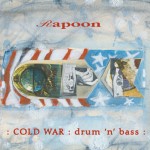
Some anniversaries are celebrated with nostalgia. Others return like unfinished business. Twenty-five years after "Cold War" first emerged from Robin Storey's inexhaustible imagination, its expanded resurrection feels less like an archival curiosity than an uncomfortable reminder that history possesses an alarming talent for recycling itself. Humanity, apparently convinced that every generation deserves its own geopolitical anxiety, continues to insist on sequels no one requested.
Since the late 1980s, following his departure from the pioneering industrial collective Zoviet France, Robin Storey has built Rapoon into one of experimental music's richest and most idiosyncratic universes. Rather than embracing the rigid aesthetics of industrial or ambient music, he developed an approach where looping structures, ethnographic echoes, ritual percussion and electronic manipulation coexist without hierarchy. His albums often resemble imagined geographies, places assembled from memory, myth and radio interference rather than any recognizable map.
Originally released in 2001, "Cold War" was something of an anomaly even within Rapoon's sprawling catalogue. At a time when drum'n'bass had already matured beyond its explosive beginnings, Storey appropriated its vocabulary without becoming indebted to it. The fractured breakbeats, muscular basslines and restless momentum never aimed for club functionality. Instead, they became another layer within his long-standing fascination with repetition, trance and cultural cross-pollination. Jungle rhythms collide with Middle Eastern melodic fragments, looping vocal traces and drifting atmospheres until genre itself becomes almost irrelevant.
Listening today, the original two discs remain remarkably resistant to dating. Tracks such as "Lunarists In The Jungle", "White Silence" or "Rubicon" unfold like unstable ecosystems where rhythm functions less as propulsion than as gravity. Beats constantly threaten to dominate before dissolving into clouds of processed voices, tribal percussion or ghostly drones. Every composition appears to negotiate between movement and suspension, refusing either complete stillness or straightforward momentum.
Storey's production remains wonderfully imperfect by contemporary standards. Rather than the immaculate precision that now defines so much electronic music, these pieces breathe through accumulated texture. Loops rub against one another, frequencies blur at the edges, and details emerge almost accidentally after repeated listens. The music feels assembled by sedimentation rather than engineering, each layer preserving traces of previous ones beneath its surface.
The newly added third disc avoids the common trap of anniversary editions becoming museum exhibitions. Rather than polishing old material into modern gloss, these reinterpretations extend the original ideas into today's fractured political landscape. "Another Thing Again" immediately establishes a broader, darker scale, while "Descended Across Europe" and "The Bomb Doors Are Open" resonate with an unease that contemporary listeners hardly need explained. Their power lies precisely in avoiding explicit commentary. Storey has always understood that suggestion ages far better than slogans.
One of Rapoon's greatest strengths has always been its ability to absorb influences without displaying them like collector's trophies. Dub, industrial, world music, ambient, techno, musique concrète and ritual percussion all appear throughout ":COLD WAR : drum'n'bass:", yet none remain in their original form. Everything passes through Storey's peculiar compositional metabolism until it belongs entirely to the Rapoon vocabulary.
There is also an understated sense of irony running beneath the record. Titles like "You've Been A Great Contestant...You've Won Nothing" or "The Soviet Pants" introduce flashes of absurd humour into an otherwise serious landscape. They serve as subtle reminders that political systems, ideologies and historical narratives often collapse under the weight of their own theatricality. Even catastrophe occasionally wears ill-fitting trousers.
What makes this expanded edition particularly valuable is that it highlights how prophetic Rapoon often appeared without ever attempting prophecy. Storey was never interested in predicting specific events. Instead, he explored recurring emotional climates: tension, displacement, uncertainty, resilience. Those conditions unfortunately remain as contemporary as ever.
Far from functioning as a nostalgic reissue, ":COLD WAR : drum'n'bass:" reveals an artist whose experiments have quietly outlived many of the genres they once intersected. Twenty-five years later, the rhythms still pulse with nervous energy, the atmospheres remain richly enigmatic, and the questions linger unresolved. The Cold War may have officially ended decades ago. Rapoon gently reminds us that the psychological climate surrounding it never really packed its bags.
Since the late 1980s, following his departure from the pioneering industrial collective Zoviet France, Robin Storey has built Rapoon into one of experimental music's richest and most idiosyncratic universes. Rather than embracing the rigid aesthetics of industrial or ambient music, he developed an approach where looping structures, ethnographic echoes, ritual percussion and electronic manipulation coexist without hierarchy. His albums often resemble imagined geographies, places assembled from memory, myth and radio interference rather than any recognizable map.
Originally released in 2001, "Cold War" was something of an anomaly even within Rapoon's sprawling catalogue. At a time when drum'n'bass had already matured beyond its explosive beginnings, Storey appropriated its vocabulary without becoming indebted to it. The fractured breakbeats, muscular basslines and restless momentum never aimed for club functionality. Instead, they became another layer within his long-standing fascination with repetition, trance and cultural cross-pollination. Jungle rhythms collide with Middle Eastern melodic fragments, looping vocal traces and drifting atmospheres until genre itself becomes almost irrelevant.
Listening today, the original two discs remain remarkably resistant to dating. Tracks such as "Lunarists In The Jungle", "White Silence" or "Rubicon" unfold like unstable ecosystems where rhythm functions less as propulsion than as gravity. Beats constantly threaten to dominate before dissolving into clouds of processed voices, tribal percussion or ghostly drones. Every composition appears to negotiate between movement and suspension, refusing either complete stillness or straightforward momentum.
Storey's production remains wonderfully imperfect by contemporary standards. Rather than the immaculate precision that now defines so much electronic music, these pieces breathe through accumulated texture. Loops rub against one another, frequencies blur at the edges, and details emerge almost accidentally after repeated listens. The music feels assembled by sedimentation rather than engineering, each layer preserving traces of previous ones beneath its surface.
The newly added third disc avoids the common trap of anniversary editions becoming museum exhibitions. Rather than polishing old material into modern gloss, these reinterpretations extend the original ideas into today's fractured political landscape. "Another Thing Again" immediately establishes a broader, darker scale, while "Descended Across Europe" and "The Bomb Doors Are Open" resonate with an unease that contemporary listeners hardly need explained. Their power lies precisely in avoiding explicit commentary. Storey has always understood that suggestion ages far better than slogans.
One of Rapoon's greatest strengths has always been its ability to absorb influences without displaying them like collector's trophies. Dub, industrial, world music, ambient, techno, musique concrète and ritual percussion all appear throughout ":COLD WAR : drum'n'bass:", yet none remain in their original form. Everything passes through Storey's peculiar compositional metabolism until it belongs entirely to the Rapoon vocabulary.
There is also an understated sense of irony running beneath the record. Titles like "You've Been A Great Contestant...You've Won Nothing" or "The Soviet Pants" introduce flashes of absurd humour into an otherwise serious landscape. They serve as subtle reminders that political systems, ideologies and historical narratives often collapse under the weight of their own theatricality. Even catastrophe occasionally wears ill-fitting trousers.
What makes this expanded edition particularly valuable is that it highlights how prophetic Rapoon often appeared without ever attempting prophecy. Storey was never interested in predicting specific events. Instead, he explored recurring emotional climates: tension, displacement, uncertainty, resilience. Those conditions unfortunately remain as contemporary as ever.
Far from functioning as a nostalgic reissue, ":COLD WAR : drum'n'bass:" reveals an artist whose experiments have quietly outlived many of the genres they once intersected. Twenty-five years later, the rhythms still pulse with nervous energy, the atmospheres remain richly enigmatic, and the questions linger unresolved. The Cold War may have officially ended decades ago. Rapoon gently reminds us that the psychological climate surrounding it never really packed its bags.
Oonagh Haines: Not Not Pretending


The title "Not Not Pretending" immediately announces its intentions by refusing to announce anything clearly at all. It is a phrase caught in a hall of mirrors, simultaneously denying and affirming itself, the linguistic equivalent of staring at your own reflection until it begins looking back with independent thoughts. Fittingly, Oonagh Haines' debut album inhabits precisely that territory: a place where sincerity and performance, intimacy and detachment, humour and melancholy continually exchange clothes.
Raised between London and Grand-Fort-Philippe near Dunkirk, Haines arrives at this debut by way of an unusually eclectic artistic path. Before embarking on her solo work, she performed in street bands, experimental pop duos, multimedia projects, and object theatre productions. Her background in visual arts and performance clearly informs the music. These songs do not simply unfold; they stage themselves. Every vocal inflection, every electronic texture, every carefully measured pause feels placed within an imagined scene whose boundaries remain intriguingly blurred.
The album sketches a nocturnal landscape populated by damaged romantics, cosmic drifters, accidental philosophers, and people attempting to navigate emotional vulnerability while maintaining at least a minimum level of irony. Which, admittedly, is one of the more common survival strategies of modern life.
Musically, Haines operates in a compelling intersection of deconstructed synth-pop, minimal wave, spoken-word performance, and experimental electronics. Comparisons to the cool detachment of early post-punk vocalists are understandable, but they only tell part of the story. Beneath the surface restraint lies a surprisingly tender emotional core. The distance is real, but so is the longing.
"Loaded Gun" opens the album with a darkly comic monologue that immediately establishes Haines' peculiar gift for balancing absurdity and discomfort. The song's narrator keeps a weapon by the bed, not for protection but to avoid the horror of social interaction. Beneath the deadpan humour lurks something recognisable: the anxiety of modern existence exaggerated just enough to become funny again. The production mirrors this tension, with electronic textures circling around the vocal like thoughts that refuse to settle.
The brilliant "Perfect Date" pushes this approach even further. A Ford Focus filled with candles, a burning car, declarations of romance delivered amid looming disaster. It plays like a parody of cinematic love stories while somehow remaining strangely romantic. Haines understands that desire is often ridiculous. The best relationships frequently begin with two people pretending not to be absurd while being profoundly absurd together.
Throughout the album, humour functions less as comic relief than as a way of approaching difficult subjects indirectly. "Kindness" appears deceptively simple, almost naïve in its catalogue of hopes for human connection. Yet its straightforwardness becomes radical in a cultural environment increasingly dominated by cynicism. The song quietly suggests that empathy, time, laughter, and affection might still be worthwhile ambitions. Revolutionary material, apparently.
Elsewhere, the record turns increasingly existential. "Dust" transforms natural cycles into a meditation on impermanence, linking bodies to leaves, ash, sand, and light. The imagery remains simple but effective, allowing the song to float between folk-like reflection and dreamlike abstraction. Haines avoids grand declarations. Instead, she observes transience with a mixture of curiosity and acceptance.
"Emptiness" and the two-part "Vacuum" sequence form the album's emotional centre. Here, Haines' detached vocal style becomes particularly effective. Rather than dramatizing absence, she inhabits it. The sparse electronic environments surrounding her voice create a sense of psychological space where memories, identities, and desires drift without clear anchoring points.
The recurring references to light, space, black holes, and cosmic distance might suggest a fascination with science-fiction imagery, but they function more as emotional metaphors. Haines seems less interested in outer space than in the vast interior distances people maintain from one another and from themselves. The vacuum is psychological before it is astronomical.
One of the album's greatest strengths is its handling of repetition. Electronic motifs return in altered forms, phrases echo across tracks, and emotional themes resurface from different angles. This creates a subtle sense of continuity without imposing a rigid narrative. The songs feel connected by atmosphere rather than storyline, as if documenting different rooms within the same dream.
The production deserves particular praise. Mixed by Renaud Carton and mastered by José Guerrero, the record achieves a delicate balance between clarity and ambiguity. The electronic elements never overwhelm the songs, nor do they settle into predictable patterns. Instead, they create shifting environments where Haines' voice can move between character, narrator, and confessor.
The closing "Meet Me" offers one of the album's most beautiful moments. Light becomes both destination and transformation. Identity becomes fluid. Conversation dissolves into smoke. The song leaves many questions unanswered, which feels entirely appropriate. Albums obsessed with certainty tend to age poorly. Albums comfortable with ambiguity often linger.
What makes "Not Not Pretending" particularly impressive as a debut is its confidence in incompleteness. Haines does not attempt to explain herself fully. She leaves gaps, contradictions, and unresolved tensions throughout the record. The result feels remarkably human. After all, most people spend their lives performing versions of themselves while simultaneously hoping someone will see through the performance.
The title turns out to be less paradoxical than it first appears. Haines is pretending, and she is not pretending. She is performing, but the emotions are real. She is detached, but deeply invested. She is ironic, yet sincere.
Like the best contemporary art-pop, "Not Not Pretending" understands that authenticity is rarely a matter of removing masks. More often, it emerges from choosing the right mask and wearing it honestly.
In a world increasingly addicted to declarations, Oonagh Haines offers something rarer: uncertainty rendered with elegance, humour, and considerable grace.
Raised between London and Grand-Fort-Philippe near Dunkirk, Haines arrives at this debut by way of an unusually eclectic artistic path. Before embarking on her solo work, she performed in street bands, experimental pop duos, multimedia projects, and object theatre productions. Her background in visual arts and performance clearly informs the music. These songs do not simply unfold; they stage themselves. Every vocal inflection, every electronic texture, every carefully measured pause feels placed within an imagined scene whose boundaries remain intriguingly blurred.
The album sketches a nocturnal landscape populated by damaged romantics, cosmic drifters, accidental philosophers, and people attempting to navigate emotional vulnerability while maintaining at least a minimum level of irony. Which, admittedly, is one of the more common survival strategies of modern life.
Musically, Haines operates in a compelling intersection of deconstructed synth-pop, minimal wave, spoken-word performance, and experimental electronics. Comparisons to the cool detachment of early post-punk vocalists are understandable, but they only tell part of the story. Beneath the surface restraint lies a surprisingly tender emotional core. The distance is real, but so is the longing.
"Loaded Gun" opens the album with a darkly comic monologue that immediately establishes Haines' peculiar gift for balancing absurdity and discomfort. The song's narrator keeps a weapon by the bed, not for protection but to avoid the horror of social interaction. Beneath the deadpan humour lurks something recognisable: the anxiety of modern existence exaggerated just enough to become funny again. The production mirrors this tension, with electronic textures circling around the vocal like thoughts that refuse to settle.
The brilliant "Perfect Date" pushes this approach even further. A Ford Focus filled with candles, a burning car, declarations of romance delivered amid looming disaster. It plays like a parody of cinematic love stories while somehow remaining strangely romantic. Haines understands that desire is often ridiculous. The best relationships frequently begin with two people pretending not to be absurd while being profoundly absurd together.
Throughout the album, humour functions less as comic relief than as a way of approaching difficult subjects indirectly. "Kindness" appears deceptively simple, almost naïve in its catalogue of hopes for human connection. Yet its straightforwardness becomes radical in a cultural environment increasingly dominated by cynicism. The song quietly suggests that empathy, time, laughter, and affection might still be worthwhile ambitions. Revolutionary material, apparently.
Elsewhere, the record turns increasingly existential. "Dust" transforms natural cycles into a meditation on impermanence, linking bodies to leaves, ash, sand, and light. The imagery remains simple but effective, allowing the song to float between folk-like reflection and dreamlike abstraction. Haines avoids grand declarations. Instead, she observes transience with a mixture of curiosity and acceptance.
"Emptiness" and the two-part "Vacuum" sequence form the album's emotional centre. Here, Haines' detached vocal style becomes particularly effective. Rather than dramatizing absence, she inhabits it. The sparse electronic environments surrounding her voice create a sense of psychological space where memories, identities, and desires drift without clear anchoring points.
The recurring references to light, space, black holes, and cosmic distance might suggest a fascination with science-fiction imagery, but they function more as emotional metaphors. Haines seems less interested in outer space than in the vast interior distances people maintain from one another and from themselves. The vacuum is psychological before it is astronomical.
One of the album's greatest strengths is its handling of repetition. Electronic motifs return in altered forms, phrases echo across tracks, and emotional themes resurface from different angles. This creates a subtle sense of continuity without imposing a rigid narrative. The songs feel connected by atmosphere rather than storyline, as if documenting different rooms within the same dream.
The production deserves particular praise. Mixed by Renaud Carton and mastered by José Guerrero, the record achieves a delicate balance between clarity and ambiguity. The electronic elements never overwhelm the songs, nor do they settle into predictable patterns. Instead, they create shifting environments where Haines' voice can move between character, narrator, and confessor.
The closing "Meet Me" offers one of the album's most beautiful moments. Light becomes both destination and transformation. Identity becomes fluid. Conversation dissolves into smoke. The song leaves many questions unanswered, which feels entirely appropriate. Albums obsessed with certainty tend to age poorly. Albums comfortable with ambiguity often linger.
What makes "Not Not Pretending" particularly impressive as a debut is its confidence in incompleteness. Haines does not attempt to explain herself fully. She leaves gaps, contradictions, and unresolved tensions throughout the record. The result feels remarkably human. After all, most people spend their lives performing versions of themselves while simultaneously hoping someone will see through the performance.
The title turns out to be less paradoxical than it first appears. Haines is pretending, and she is not pretending. She is performing, but the emotions are real. She is detached, but deeply invested. She is ironic, yet sincere.
Like the best contemporary art-pop, "Not Not Pretending" understands that authenticity is rarely a matter of removing masks. More often, it emerges from choosing the right mask and wearing it honestly.
In a world increasingly addicted to declarations, Oonagh Haines offers something rarer: uncertainty rendered with elegance, humour, and considerable grace.