
Browse by Genre
Industrial Music / Industrial Metal / Aggro Industrial / Electro Metal
Industrial Noise / Power Noise / Harsh Noise
Synth Pop / Electro Pop / Synth-Electronica
Techno / Trance / Goa / Drum'n'Bass / Jungle / Tribal / Trip-Hop
Ambient / Electronica / Ethereal / Dub / Soundscapes / Abstract
Experimental / Avantgarde / Weird & Wired / Glitch / Noise / Field Recording
Dark / Gothic / Wave / New Wave / Dark Wave / Industrial Gothic
New Music / Downtown / Avantgarde Jazz / New Classical / World
Search Reviews
Music Reviews
Steril / Latex: Essentiels

There was a time when electro did not ask for permission. It arrived in black vinyl, smelling faintly of smoke machines and futurism, and assumed your body would comply. "Essentiels" revisits that era without embalming it.
Michi Bormann, operating under the Latex and Steril aliases, has long occupied a specific corridor of European electronic music: sleek, slightly perverse, rhythmically insistent. Through releases on Muller Records and earlier outings on labels such as Gigolo and Lasergun, he carved out a sound that balanced cold machinery with nightclub pulse. This compilation gathers what are described as the “best tracks”, newly mastered and processed, which in practice means the chrome has been polished without removing the fingerprints.
The Latex material dominates the first stretch of the album, and it becomes clear quickly that Bormann understood the architecture of the dance floor. “Life on Earth” and “Latex Gloves” hinge on taut basslines and crisp, almost surgical drum programming. There is a precision here that avoids sterility. The grooves feel engineered but not inert. Repetition becomes propulsion rather than redundancy.
Titles like “Bio Metric” and “Remote Control” underline Bormann’s fascination with technology as both aesthetic and metaphor. These tracks carry the minimal discipline of classic electro while flirting with the decadent edge of early 2000s European club culture. Synth lines glide with a certain aerodynamic arrogance, never bloated, always streamlined. When melodies appear, they are functional, almost coded, as if designed to unlock muscle memory rather than sentiment.
“Rain in the Night” and “Love” reveal another facet. Beneath the rigid frameworks, there is a faint romantic undercurrent, though it is filtered through circuitry. Emotion is present, but it is expressed through modulation rather than confession. Bormann rarely indulges in overt drama. He prefers suggestion.
The repetition of “Remote Control” in two versions is not redundancy but a reminder of how elastic these structures are. Small shifts in processing alter the atmosphere significantly. The new mastering lends added depth and clarity, emphasizing low-end punch while sharpening the metallic edges. The tracks feel revitalized rather than refurbished.
The Steril selections close the compilation with a darker shade. “Grey”, “Orbital Bombardement”, and “White Dressed Domina” move closer to industrial territory. The rhythms hit harder, the textures feel more abrasive. Where Latex tends toward polished seduction, Steril leans into confrontation. Yet even here, the dance impulse remains intact. This is severity you can move to.
What makes "Essentiels" more than a nostalgic exercise is its coherence. Despite being drawn from different periods and aliases, the tracks share a distinct sonic identity. Bormann’s sense of economy stands out. He does not overcrowd his arrangements. Each element earns its position. The space between sounds becomes as important as the sounds themselves.
In the current landscape of hyper-saturated electronic releases, this compilation feels almost instructive. It demonstrates how minimal components, when assembled with conviction, can generate lasting impact. No excessive layering. No ornamental clutter. Just rhythm, tone, and a clear understanding of tension.
The limited vinyl edition underscores the record’s physical roots. These tracks were built for speakers that move air, for rooms that amplify bass into communal experience. Yet they also withstand solitary listening, revealing structural finesse beneath the surface sheen.
"Essentiels" does not attempt to rewrite history. It reframes it with sharper edges and renewed weight. The future that these tracks once imagined may have arrived in slightly altered form, but the pulse remains persuasive. Some machines age poorly. These still function, humming steadily, waiting for the next body on the floor.
Michi Bormann, operating under the Latex and Steril aliases, has long occupied a specific corridor of European electronic music: sleek, slightly perverse, rhythmically insistent. Through releases on Muller Records and earlier outings on labels such as Gigolo and Lasergun, he carved out a sound that balanced cold machinery with nightclub pulse. This compilation gathers what are described as the “best tracks”, newly mastered and processed, which in practice means the chrome has been polished without removing the fingerprints.
The Latex material dominates the first stretch of the album, and it becomes clear quickly that Bormann understood the architecture of the dance floor. “Life on Earth” and “Latex Gloves” hinge on taut basslines and crisp, almost surgical drum programming. There is a precision here that avoids sterility. The grooves feel engineered but not inert. Repetition becomes propulsion rather than redundancy.
Titles like “Bio Metric” and “Remote Control” underline Bormann’s fascination with technology as both aesthetic and metaphor. These tracks carry the minimal discipline of classic electro while flirting with the decadent edge of early 2000s European club culture. Synth lines glide with a certain aerodynamic arrogance, never bloated, always streamlined. When melodies appear, they are functional, almost coded, as if designed to unlock muscle memory rather than sentiment.
“Rain in the Night” and “Love” reveal another facet. Beneath the rigid frameworks, there is a faint romantic undercurrent, though it is filtered through circuitry. Emotion is present, but it is expressed through modulation rather than confession. Bormann rarely indulges in overt drama. He prefers suggestion.
The repetition of “Remote Control” in two versions is not redundancy but a reminder of how elastic these structures are. Small shifts in processing alter the atmosphere significantly. The new mastering lends added depth and clarity, emphasizing low-end punch while sharpening the metallic edges. The tracks feel revitalized rather than refurbished.
The Steril selections close the compilation with a darker shade. “Grey”, “Orbital Bombardement”, and “White Dressed Domina” move closer to industrial territory. The rhythms hit harder, the textures feel more abrasive. Where Latex tends toward polished seduction, Steril leans into confrontation. Yet even here, the dance impulse remains intact. This is severity you can move to.
What makes "Essentiels" more than a nostalgic exercise is its coherence. Despite being drawn from different periods and aliases, the tracks share a distinct sonic identity. Bormann’s sense of economy stands out. He does not overcrowd his arrangements. Each element earns its position. The space between sounds becomes as important as the sounds themselves.
In the current landscape of hyper-saturated electronic releases, this compilation feels almost instructive. It demonstrates how minimal components, when assembled with conviction, can generate lasting impact. No excessive layering. No ornamental clutter. Just rhythm, tone, and a clear understanding of tension.
The limited vinyl edition underscores the record’s physical roots. These tracks were built for speakers that move air, for rooms that amplify bass into communal experience. Yet they also withstand solitary listening, revealing structural finesse beneath the surface sheen.
"Essentiels" does not attempt to rewrite history. It reframes it with sharper edges and renewed weight. The future that these tracks once imagined may have arrived in slightly altered form, but the pulse remains persuasive. Some machines age poorly. These still function, humming steadily, waiting for the next body on the floor.
ükya: Soon Means Now


Time, according to ükya, is a flexible material. It stretches. It folds. It refuses to wait politely. "Soon Means Now" is not just a title; it is a small philosophical correction delivered with a trombone, a guitar, and a drum kit.
The Norwegian trio, who insist on keeping their initial letter modestly lowercase, return on Nakama Records with a follow-up to their debut "We Come for an Experience of Presence". That earlier statement already suggested a group suspicious of musical complacency. Here, Emil Bø, Kristian Enkerud Lien, and Michael Lee Sørenmo sharpen their inquiry into how structure and spontaneity can coexist without neutralizing each other.
Their chosen tools are deceptively traditional: trombone, guitar, drums. No electronics. No orchestral padding. Yet what they extract from this format feels anything but conventional. The trio’s interest in just intonation and European art music could easily have turned into academic stiffness. Instead, it becomes a living tension. Pitch is treated as something elastic. Harmony feels negotiated in real time rather than agreed upon in advance.
The track titles, a sequence of numerical codes, suggest diagrams rather than songs. “1.2.1”, “6.2.1”, “2.3.2”. They read like coordinates or fragments of a larger system. Listening through the album, it becomes clear that these numbers are not decoration. Each piece operates as a compact experiment in proportion and balance. Most tracks hover under three minutes, yet none feel incomplete. They function like distilled arguments, concise but not simplistic.
Bø’s trombone often carries the melodic contour, but rarely in a lyrical, romantic sense. Instead, it outlines microtonal arcs that lean slightly off center, creating a sense of gravitational pull. Lien’s guitar resists the temptation to fill space. At times it provides brittle harmonic scaffolding; at others, it fractures into sparse gestures that feel more like questions than statements. Sørenmo’s drumming is alert and economical, shaping dynamics with precision rather than volume.
What makes "Soon Means Now" compelling is the trio’s refusal to treat minimalism as austerity. There is energy here, even urgency. The shorter pieces flicker by like thoughts that demand immediate attention. The longer closing tracks, particularly “2.3.2”, “7.2”, and “1.1”, allow ideas to breathe and expand. In these stretches, the trio demonstrates how organized sound can remain porous, how a predefined framework can still leave room for surprise.
One senses that ükya’s engagement with just intonation is not a technical display but a perceptual exercise. Intervals rub against each other in subtle ways, producing overtones that feel slightly uncanny. The ear adjusts. What first seemed unstable gradually becomes coherent. The listener is recalibrated.
Recorded at Flerbruket and shaped with a clear, unvarnished mix, the album preserves the immediacy of three musicians negotiating form in real time. There is no excess gloss. Every breath through the trombone, every muted string vibration, every percussive shimmer remains tangible.
The broader Norwegian experimental scene has long balanced conceptual rigor with improvisational vitality. ükya belong squarely in that lineage, yet they avoid sounding derivative. Their music feels young without being naive, intellectual without becoming distant.
"Soon Means Now" ultimately proposes a modest but radical idea: that presence is not something to be achieved later. It is happening already, in the friction between planned structure and spontaneous gesture. The trio does not dramatize this insight. They articulate it, piece by piece, interval by interval.
In a culture that constantly postpones depth in favor of speed, ükya offer a subtle inversion. Soon is not later. It is here, vibrating slightly off pitch, waiting for you to listen closely enough.
The Norwegian trio, who insist on keeping their initial letter modestly lowercase, return on Nakama Records with a follow-up to their debut "We Come for an Experience of Presence". That earlier statement already suggested a group suspicious of musical complacency. Here, Emil Bø, Kristian Enkerud Lien, and Michael Lee Sørenmo sharpen their inquiry into how structure and spontaneity can coexist without neutralizing each other.
Their chosen tools are deceptively traditional: trombone, guitar, drums. No electronics. No orchestral padding. Yet what they extract from this format feels anything but conventional. The trio’s interest in just intonation and European art music could easily have turned into academic stiffness. Instead, it becomes a living tension. Pitch is treated as something elastic. Harmony feels negotiated in real time rather than agreed upon in advance.
The track titles, a sequence of numerical codes, suggest diagrams rather than songs. “1.2.1”, “6.2.1”, “2.3.2”. They read like coordinates or fragments of a larger system. Listening through the album, it becomes clear that these numbers are not decoration. Each piece operates as a compact experiment in proportion and balance. Most tracks hover under three minutes, yet none feel incomplete. They function like distilled arguments, concise but not simplistic.
Bø’s trombone often carries the melodic contour, but rarely in a lyrical, romantic sense. Instead, it outlines microtonal arcs that lean slightly off center, creating a sense of gravitational pull. Lien’s guitar resists the temptation to fill space. At times it provides brittle harmonic scaffolding; at others, it fractures into sparse gestures that feel more like questions than statements. Sørenmo’s drumming is alert and economical, shaping dynamics with precision rather than volume.
What makes "Soon Means Now" compelling is the trio’s refusal to treat minimalism as austerity. There is energy here, even urgency. The shorter pieces flicker by like thoughts that demand immediate attention. The longer closing tracks, particularly “2.3.2”, “7.2”, and “1.1”, allow ideas to breathe and expand. In these stretches, the trio demonstrates how organized sound can remain porous, how a predefined framework can still leave room for surprise.
One senses that ükya’s engagement with just intonation is not a technical display but a perceptual exercise. Intervals rub against each other in subtle ways, producing overtones that feel slightly uncanny. The ear adjusts. What first seemed unstable gradually becomes coherent. The listener is recalibrated.
Recorded at Flerbruket and shaped with a clear, unvarnished mix, the album preserves the immediacy of three musicians negotiating form in real time. There is no excess gloss. Every breath through the trombone, every muted string vibration, every percussive shimmer remains tangible.
The broader Norwegian experimental scene has long balanced conceptual rigor with improvisational vitality. ükya belong squarely in that lineage, yet they avoid sounding derivative. Their music feels young without being naive, intellectual without becoming distant.
"Soon Means Now" ultimately proposes a modest but radical idea: that presence is not something to be achieved later. It is happening already, in the friction between planned structure and spontaneous gesture. The trio does not dramatize this insight. They articulate it, piece by piece, interval by interval.
In a culture that constantly postpones depth in favor of speed, ükya offer a subtle inversion. Soon is not later. It is here, vibrating slightly off pitch, waiting for you to listen closely enough.
Televizyon: Mom! I'm Growing Up

Growing up is usually marketed as a clean upward trajectory. New shoes. New voice. Bigger rooms. "Mom! I’m Growing Up" politely disagrees. It suggests that growth is noisy, contradictory, occasionally absurd, and best handled with a drum kit nearby.
Televizyon, led by Turkish vocalist and electronic manipulator Sanem Kalfa, arrives on Sauajazz with a debut that feels less like a genre exercise and more like a well-calibrated identity crisis. And that is meant as praise. Kalfa, long embedded in the international jazz circuit and now operating out of Amsterdam, assembles a quartet that reads like a small summit meeting: Polish keyboard shapeshifter Marta Warelis, Norwegian bass cornerstone Ingebrigt Håker Flaten, and Korean rhythmic architect Sun-Mi Hong. Four distinct musical biographies. One shared appetite for dismantling categories.
The project’s conceptual seed is deceptively simple. Kalfa draws from the jingles and melodic fragments of Turkish television commercials from the 1980s, those bright, efficient earworms designed to sell detergent and optimism in under thirty seconds. Instead of parodying them, Televizyon stretches them. What happens when a commercial hook is given emotional depth? When nostalgia is filtered through improvisation? When irony decides to step aside and let sincerity try something dangerous?
“Basic Kneeds” opens with wiry momentum, Kalfa’s voice sliding between clarity and distortion, as if she is testing how much of herself she wants to reveal. Warelis’ organ and synth lines flicker between playful and slightly unhinged, while Håker Flaten and Hong lock into grooves that feel both grounded and ready to combust. The rhythm section is crucial here. Without it, the pop-adjacent melodies might float away. With it, they acquire teeth.
The brief title track “Televizyon” functions like a glitchy channel switch, a reminder of the project’s conceptual roots. Then the album pivots into its emotional core with “Mom! I’m Growing Up.” The song balances childlike directness with adult ambiguity. Kalfa’s vocal performance avoids theatricality; instead, she leans into vulnerability without turning it into spectacle. Growth here is not triumph. It is negotiation.
Throughout the record, the quartet flirts with alternative rock textures that might evoke bands operating at the more eccentric end of indie, yet everything remains anchored in an improviser’s mindset. Even the catchiest passages feel open-ended, as if they could fracture and reassemble at any moment. “Let Me Be Alone” and “IDKY” oscillate between intimacy and defiance, their structures sturdy enough to support melody but porous enough to let unpredictability seep through.
“Greed” sharpens the tone. The groove tightens, the electronics thicken, and Kalfa’s delivery acquires a pointed edge. It is here that Televizyon’s hybrid identity becomes most convincing. This is not jazz borrowing pop aesthetics for decoration. Nor is it indie rock dressed up in harmonic sophistication. It is a deliberate crossing, executed by musicians who understand both languages fluently and refuse to choose.
The production, captured at Wisseloord Studios and shaped by Alessandro Mazzieri alongside Kalfa, preserves a tactile immediacy. The electronics never overwhelm the human presence. Hong’s drumming remains vivid and alert. Håker Flaten’s bass provides a muscular through-line. Warelis navigates between organ warmth and synthetic sparkle with agile restraint.
By the time “I’ll Leave Now” closes the album, the title feels less like an exit and more like a declaration of autonomy. The journey through genres, eras, and emotional registers has not resolved into a neat statement. Instead, it leaves a residue of possibility.
What makes "Mom! I’m Growing Up" compelling is not its stylistic breadth alone, but its refusal to treat simplicity as naivety. Those commercial fragments from 1980s Turkish television become portals rather than punchlines. Kalfa and her collaborators recognize that memory, like music, can be both glossy and complicated.
Growing up, it turns out, is not about abandoning where you started. It is about re-sampling it, distorting it, and daring to sing it back in your own voice.
Televizyon, led by Turkish vocalist and electronic manipulator Sanem Kalfa, arrives on Sauajazz with a debut that feels less like a genre exercise and more like a well-calibrated identity crisis. And that is meant as praise. Kalfa, long embedded in the international jazz circuit and now operating out of Amsterdam, assembles a quartet that reads like a small summit meeting: Polish keyboard shapeshifter Marta Warelis, Norwegian bass cornerstone Ingebrigt Håker Flaten, and Korean rhythmic architect Sun-Mi Hong. Four distinct musical biographies. One shared appetite for dismantling categories.
The project’s conceptual seed is deceptively simple. Kalfa draws from the jingles and melodic fragments of Turkish television commercials from the 1980s, those bright, efficient earworms designed to sell detergent and optimism in under thirty seconds. Instead of parodying them, Televizyon stretches them. What happens when a commercial hook is given emotional depth? When nostalgia is filtered through improvisation? When irony decides to step aside and let sincerity try something dangerous?
“Basic Kneeds” opens with wiry momentum, Kalfa’s voice sliding between clarity and distortion, as if she is testing how much of herself she wants to reveal. Warelis’ organ and synth lines flicker between playful and slightly unhinged, while Håker Flaten and Hong lock into grooves that feel both grounded and ready to combust. The rhythm section is crucial here. Without it, the pop-adjacent melodies might float away. With it, they acquire teeth.
The brief title track “Televizyon” functions like a glitchy channel switch, a reminder of the project’s conceptual roots. Then the album pivots into its emotional core with “Mom! I’m Growing Up.” The song balances childlike directness with adult ambiguity. Kalfa’s vocal performance avoids theatricality; instead, she leans into vulnerability without turning it into spectacle. Growth here is not triumph. It is negotiation.
Throughout the record, the quartet flirts with alternative rock textures that might evoke bands operating at the more eccentric end of indie, yet everything remains anchored in an improviser’s mindset. Even the catchiest passages feel open-ended, as if they could fracture and reassemble at any moment. “Let Me Be Alone” and “IDKY” oscillate between intimacy and defiance, their structures sturdy enough to support melody but porous enough to let unpredictability seep through.
“Greed” sharpens the tone. The groove tightens, the electronics thicken, and Kalfa’s delivery acquires a pointed edge. It is here that Televizyon’s hybrid identity becomes most convincing. This is not jazz borrowing pop aesthetics for decoration. Nor is it indie rock dressed up in harmonic sophistication. It is a deliberate crossing, executed by musicians who understand both languages fluently and refuse to choose.
The production, captured at Wisseloord Studios and shaped by Alessandro Mazzieri alongside Kalfa, preserves a tactile immediacy. The electronics never overwhelm the human presence. Hong’s drumming remains vivid and alert. Håker Flaten’s bass provides a muscular through-line. Warelis navigates between organ warmth and synthetic sparkle with agile restraint.
By the time “I’ll Leave Now” closes the album, the title feels less like an exit and more like a declaration of autonomy. The journey through genres, eras, and emotional registers has not resolved into a neat statement. Instead, it leaves a residue of possibility.
What makes "Mom! I’m Growing Up" compelling is not its stylistic breadth alone, but its refusal to treat simplicity as naivety. Those commercial fragments from 1980s Turkish television become portals rather than punchlines. Kalfa and her collaborators recognize that memory, like music, can be both glossy and complicated.
Growing up, it turns out, is not about abandoning where you started. It is about re-sampling it, distorting it, and daring to sing it back in your own voice.
Cortex & Hedvig Mollestad: Did We Really?

There is a particular Nordic talent for making intensity sound clean. Not polite, not restrained. Clean. Like a knife you admire before realizing it’s very sharp.
With "Did We Really?", Cortex join forces with Hedvig Mollestad and decide, collectively, that subtlety is nice but velocity is more fun. Released on Sauajazz, the album documents a quintet that has already tested this material on stage, which means the chemistry here is not theoretical. It is road-tempered, slightly dangerous, and clearly enjoying itself.
Cortex, founded in 2007 by trumpeter Thomas Johansson, have long operated in that fertile zone where post-60s American avant-garde meets Scandinavian clarity. Don Cherry hovers somewhere in the background, not as a blueprint but as a spiritual nudge: stay open, stay curious, don’t build fences around your ideas. Groove matters. So does surprise.
Enter Hedvig Mollestad, Norway’s modern guitar hero, a player who can glide from lyrical spaciousness to full-tilt riff architecture without changing facial expression. Her musical lineage often gets triangulated between Terje Rypdal’s expansive tone and the muscle memory of heavy metal, and while those comparisons are convenient, they only hint at what she actually does: she bends electricity into narrative.
“Liminal” opens the record with coiled propulsion. Johansson’s trumpet slices through a tightly wound rhythm section of Ola Høyer on double bass and Dag Erik Knedal Andersen on drums, while Kristoffer Alberts’ saxophones weave in and out of the harmonic field like they’re testing the air pressure. Mollestad doesn’t immediately dominate. She infiltrates. When she locks in, the band thickens.
The pieces she composed, “Liquid Brains” and the title track, inject a particular elasticity into the album. The former has a mischievous pulse, as if fusion and punk briefly agreed to stop arguing and share a stage. The latter compresses urgency into a compact frame, posing its question not as existential dread but as a raised eyebrow: did we really just go there? Yes. And we’re going again.
Across “Twoface” and “HedTex”, the quintet demonstrates an almost athletic control of dynamics. They can sprint in tight formation, then suddenly dissolve into hushed exchanges where every cymbal shimmer and breath through brass feels consequential. This is where Cortex’s long-standing emphasis on interaction pays off. The band listens as aggressively as it plays.
“Snap” and “Elastics” lean into rhythmic agility, flirting with angular patterns that threaten to derail but never quite do. There is always a melodic thread anchoring the exploration. Even at their most abstract, they remain curiously accessible. You could call it genre-bending, but that makes it sound academic. This feels more like genre indifference.
The closing stretch, particularly “Hymans Porch”, allows the quintet to stretch out with measured confidence. Here the interplay becomes almost architectural. Themes rise, fracture, reassemble. Mollestad’s guitar alternates between luminous restraint and riff-driven insistence, while Johansson’s compositions reveal their structural intelligence. Everything feels deliberate without ever sounding stiff.
Technically, the record benefits from Bård Ingebrigtsen’s crisp recording and Fridtjof A. Lindeman’s mastering, which preserve both the bite and the air. Nothing is overpolished. The edges remain intact, which is exactly where this music lives.
If there is a central pleasure in "Did We Really?", it lies in its refusal to choose between sophistication and swagger. This is jazz with muscle tone. It respects the avant-garde but is not intimidated by it. It nods to history without reenacting it.
The album title reads like a retrospective question. Listening through it, though, the answer feels immediate. They did. And they meant to.
With "Did We Really?", Cortex join forces with Hedvig Mollestad and decide, collectively, that subtlety is nice but velocity is more fun. Released on Sauajazz, the album documents a quintet that has already tested this material on stage, which means the chemistry here is not theoretical. It is road-tempered, slightly dangerous, and clearly enjoying itself.
Cortex, founded in 2007 by trumpeter Thomas Johansson, have long operated in that fertile zone where post-60s American avant-garde meets Scandinavian clarity. Don Cherry hovers somewhere in the background, not as a blueprint but as a spiritual nudge: stay open, stay curious, don’t build fences around your ideas. Groove matters. So does surprise.
Enter Hedvig Mollestad, Norway’s modern guitar hero, a player who can glide from lyrical spaciousness to full-tilt riff architecture without changing facial expression. Her musical lineage often gets triangulated between Terje Rypdal’s expansive tone and the muscle memory of heavy metal, and while those comparisons are convenient, they only hint at what she actually does: she bends electricity into narrative.
“Liminal” opens the record with coiled propulsion. Johansson’s trumpet slices through a tightly wound rhythm section of Ola Høyer on double bass and Dag Erik Knedal Andersen on drums, while Kristoffer Alberts’ saxophones weave in and out of the harmonic field like they’re testing the air pressure. Mollestad doesn’t immediately dominate. She infiltrates. When she locks in, the band thickens.
The pieces she composed, “Liquid Brains” and the title track, inject a particular elasticity into the album. The former has a mischievous pulse, as if fusion and punk briefly agreed to stop arguing and share a stage. The latter compresses urgency into a compact frame, posing its question not as existential dread but as a raised eyebrow: did we really just go there? Yes. And we’re going again.
Across “Twoface” and “HedTex”, the quintet demonstrates an almost athletic control of dynamics. They can sprint in tight formation, then suddenly dissolve into hushed exchanges where every cymbal shimmer and breath through brass feels consequential. This is where Cortex’s long-standing emphasis on interaction pays off. The band listens as aggressively as it plays.
“Snap” and “Elastics” lean into rhythmic agility, flirting with angular patterns that threaten to derail but never quite do. There is always a melodic thread anchoring the exploration. Even at their most abstract, they remain curiously accessible. You could call it genre-bending, but that makes it sound academic. This feels more like genre indifference.
The closing stretch, particularly “Hymans Porch”, allows the quintet to stretch out with measured confidence. Here the interplay becomes almost architectural. Themes rise, fracture, reassemble. Mollestad’s guitar alternates between luminous restraint and riff-driven insistence, while Johansson’s compositions reveal their structural intelligence. Everything feels deliberate without ever sounding stiff.
Technically, the record benefits from Bård Ingebrigtsen’s crisp recording and Fridtjof A. Lindeman’s mastering, which preserve both the bite and the air. Nothing is overpolished. The edges remain intact, which is exactly where this music lives.
If there is a central pleasure in "Did We Really?", it lies in its refusal to choose between sophistication and swagger. This is jazz with muscle tone. It respects the avant-garde but is not intimidated by it. It nods to history without reenacting it.
The album title reads like a retrospective question. Listening through it, though, the answer feels immediate. They did. And they meant to.
Rushab Nandha: Tear
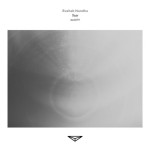
Artist: Rushab Nandha
Title: Tear
Format: Download Only (MP3 + Lossless)
Label: Dragon's Eye Recordings (@)
Rated:

Title: Tear
Format: Download Only (MP3 + Lossless)
Label: Dragon's Eye Recordings (@)
Rated:
Some records want to impress you. "Tear" wants to examine you under a microscope and see how much instability you can tolerate before calling it “experimental” and backing away slowly.
Released digitally on Dragon’s Eye Recordings, "Tear" finds Nairobi-based artist, producer, and mastering engineer Rushab Nandha operating less like a composer and more like a designer dismantling his own blueprints. He calls it an evolution of ideals, an exploration of elasticity, a study in fragility. This is not branding language. It is procedure. Every sound here feels as if it has been sanded down, stretched thin, and tested for tensile strength before being allowed to exist.
Nandha’s background in mastering is not incidental. You can hear the discipline. Frequencies are not merely arranged but calibrated. Nothing spills. Nothing blurs by accident. Even the softest gestures carry the quiet authority of someone who knows exactly how much pressure a waveform can withstand before it fractures. And fracture, here, is not catastrophe. It is form.
The opening title track, “Tear”, unfolds like a structural stress test. Textures hover in suspension, never fully collapsing, never resolving into the comfort of rhythm or melody. The piece breathes in a way that feels architectural, as if space itself were being measured and subtly bent. “Veil”, brief and almost evasive, operates as a hinge rather than an interlude, a thin membrane separating one state of listening from another.
Across “Amnesia” and “Womb”, Nandha pursues his long-standing fascination with relational dualities. Sounds that might initially register as oppositional, brittle versus warm, granular versus fluid, gradually reveal themselves as interdependent. He has a talent for making dissonance behave like a pact rather than a conflict. Elements lean against one another with improbable trust. The tension never shouts. It hums.
“Intra” and “Flame” push this approach further, reducing familiar sonic materials into near-abstractions. A tone that could have been harmonic becomes particulate. A percussive impulse dissolves into texture. It is as if the album is continuously asking how much identity a sound can lose before it becomes something else entirely. The answer seems to be: quite a lot, if you handle it carefully.
By the time “Flutter” arrives, the record has established its central proposition. Instability is not an error state. It is poise in motion. Nandha resists climax, resists the tidy resolution that would allow the listener to categorize and move on. Instead, he offers a series of delicate equilibria, each one balanced on the edge of collapse, each one refusing to fall.
There is a particular courage in this restraint. In an era where maximalism and immediacy dominate digital releases, "Tear" proceeds with patient understatement. It does not compete for attention. It assumes you are capable of sustained listening. That assumption alone feels radical.
As an artist grounded in the idea of complementary opposites, Nandha continues to investigate the hidden affinities between disparate sonic structures. Here, however, the investigation feels more distilled than ever. The album does not argue. It proposes. It sketches. It leaves white space where others would fill.
Fragility, in "Tear", is not decorative. It is structural. And if you give the record time, you begin to sense that what appears delicate is, in fact, rigorously composed. The unresolved is not a lack. It is the point.
Released digitally on Dragon’s Eye Recordings, "Tear" finds Nairobi-based artist, producer, and mastering engineer Rushab Nandha operating less like a composer and more like a designer dismantling his own blueprints. He calls it an evolution of ideals, an exploration of elasticity, a study in fragility. This is not branding language. It is procedure. Every sound here feels as if it has been sanded down, stretched thin, and tested for tensile strength before being allowed to exist.
Nandha’s background in mastering is not incidental. You can hear the discipline. Frequencies are not merely arranged but calibrated. Nothing spills. Nothing blurs by accident. Even the softest gestures carry the quiet authority of someone who knows exactly how much pressure a waveform can withstand before it fractures. And fracture, here, is not catastrophe. It is form.
The opening title track, “Tear”, unfolds like a structural stress test. Textures hover in suspension, never fully collapsing, never resolving into the comfort of rhythm or melody. The piece breathes in a way that feels architectural, as if space itself were being measured and subtly bent. “Veil”, brief and almost evasive, operates as a hinge rather than an interlude, a thin membrane separating one state of listening from another.
Across “Amnesia” and “Womb”, Nandha pursues his long-standing fascination with relational dualities. Sounds that might initially register as oppositional, brittle versus warm, granular versus fluid, gradually reveal themselves as interdependent. He has a talent for making dissonance behave like a pact rather than a conflict. Elements lean against one another with improbable trust. The tension never shouts. It hums.
“Intra” and “Flame” push this approach further, reducing familiar sonic materials into near-abstractions. A tone that could have been harmonic becomes particulate. A percussive impulse dissolves into texture. It is as if the album is continuously asking how much identity a sound can lose before it becomes something else entirely. The answer seems to be: quite a lot, if you handle it carefully.
By the time “Flutter” arrives, the record has established its central proposition. Instability is not an error state. It is poise in motion. Nandha resists climax, resists the tidy resolution that would allow the listener to categorize and move on. Instead, he offers a series of delicate equilibria, each one balanced on the edge of collapse, each one refusing to fall.
There is a particular courage in this restraint. In an era where maximalism and immediacy dominate digital releases, "Tear" proceeds with patient understatement. It does not compete for attention. It assumes you are capable of sustained listening. That assumption alone feels radical.
As an artist grounded in the idea of complementary opposites, Nandha continues to investigate the hidden affinities between disparate sonic structures. Here, however, the investigation feels more distilled than ever. The album does not argue. It proposes. It sketches. It leaves white space where others would fill.
Fragility, in "Tear", is not decorative. It is structural. And if you give the record time, you begin to sense that what appears delicate is, in fact, rigorously composed. The unresolved is not a lack. It is the point.