
Browse by Genre
Industrial Music / Industrial Metal / Aggro Industrial / Electro Metal
Industrial Noise / Power Noise / Harsh Noise
Synth Pop / Electro Pop / Synth-Electronica
Techno / Trance / Goa / Drum'n'Bass / Jungle / Tribal / Trip-Hop
Ambient / Electronica / Ethereal / Dub / Soundscapes / Abstract
Experimental / Avantgarde / Weird & Wired / Glitch / Noise / Field Recording
Dark / Gothic / Wave / New Wave / Dark Wave / Industrial Gothic
New Music / Downtown / Avantgarde Jazz / New Classical / World
Search Reviews
Music Reviews
Mikoo: It Floats
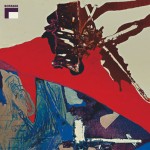
"It Floats" feels like a glass sphere drifting on dark water: luminous, fragile, deceptively simple, and hiding a whole meteorology inside. Mikoo, the Oslo-rooted ensemble orbiting drummer and composer Michaela Antalová, has always given the impression of a band thinking in multiple languages at once - rhythm, breath, texture, memory - but here they sound like they’ve agreed to speak in one shared dream. It’s their second album, built slowly over four years and across several cities, as if the music needed to accrue its own sediment before revealing its shape.
Antalová is at the center, not as a dictator of pulse but as a quiet engineer of gravity. Her drumming gives the music a sense of drifting momentum, like a tide deciding where it wants to break. Around her, the group folds itself with remarkable delicacy. Fredrik Rasten’s guitars shimmer like half-remembered folk songs turning toward abstraction. Vojtch Procházka’s organs and synths hum with a devotional patience, the kind that doesn’t require a church. Magnus Nergaard’s bass leans in and out of frame, more mood than anchor. And then there is Ina Sagstuen, whose voice carries the kind of emotional bandwidth that can make a line feel like an inheritance and a confession at the same time.
And inheritance is the album’s secret spine. Sagstuen’s lyrics rummage through everything passed down between generations: habits, myths, wounds that refuse to heal because no one dares to name them. There’s a feminist undercurrent that never shouts but slices cleanly, recalling how women have been written off as unstable, arcane, or dangerous - and how those old ghosts still pace the hallways of the present. The songs hover between vulnerability and resolve, like someone speaking quietly so you have to lean in.
The music mirrors this psychological archaeology. Some tracks clearly began as composed structures, while others feel like the moment a collective improvisation turns eerie and intentional, as if the band suddenly glimpsed the same image and followed it. This coexistence of meticulous craft and instinct gives the record its strange buoyancy. It really does float - not because it’s lightweight, but because it refuses to sink into a single genre. Indie pop dissolves into chamber minimalism, which mutates into something like folk stretched until it becomes vapor. Noise and rock haunt the edges, softening into colors rather than forms.
“Chased” unspools like a chase scene unfolding underwater, slow but relentless. “Three Scars” feels carved out of silence, each gesture carrying the weight of what is not said. “Everything Is Yelling Louder Than Me” is the closest the album comes to catharsis, though even here the eruption is subtle, like a whispered scream inside a cathedral. And “Bells”, barely two minutes long, closes the record with a small ritual, a soft ringing-out that feels like someone opening a window rather than shutting a door.
It helps that the album is wrapped in Dorothy Hood’s luminous artwork and shaped under the production guidance of Antalová and Kim Myhr, whose fingerprints you can sense in the balance between clarity and haze. The whole thing feels crafted with a patience almost unfashionable today: a willingness to wait for the music to reveal what it wants to become.
"It Floats" is an album about weight that refuses to be heavy, about history that still breathes down your neck, about emotional turbulence rendered with the precision of someone stitching a wound rather than pointing at it. It’s thoughtful, drifting, quietly radical. And somewhere in its currents, Mikoo seem to ask a question that lingers after the final notes fade: what parts of ourselves do we carry because they’re ours, and what parts because no one ever told us we could set them down?
Antalová is at the center, not as a dictator of pulse but as a quiet engineer of gravity. Her drumming gives the music a sense of drifting momentum, like a tide deciding where it wants to break. Around her, the group folds itself with remarkable delicacy. Fredrik Rasten’s guitars shimmer like half-remembered folk songs turning toward abstraction. Vojtch Procházka’s organs and synths hum with a devotional patience, the kind that doesn’t require a church. Magnus Nergaard’s bass leans in and out of frame, more mood than anchor. And then there is Ina Sagstuen, whose voice carries the kind of emotional bandwidth that can make a line feel like an inheritance and a confession at the same time.
And inheritance is the album’s secret spine. Sagstuen’s lyrics rummage through everything passed down between generations: habits, myths, wounds that refuse to heal because no one dares to name them. There’s a feminist undercurrent that never shouts but slices cleanly, recalling how women have been written off as unstable, arcane, or dangerous - and how those old ghosts still pace the hallways of the present. The songs hover between vulnerability and resolve, like someone speaking quietly so you have to lean in.
The music mirrors this psychological archaeology. Some tracks clearly began as composed structures, while others feel like the moment a collective improvisation turns eerie and intentional, as if the band suddenly glimpsed the same image and followed it. This coexistence of meticulous craft and instinct gives the record its strange buoyancy. It really does float - not because it’s lightweight, but because it refuses to sink into a single genre. Indie pop dissolves into chamber minimalism, which mutates into something like folk stretched until it becomes vapor. Noise and rock haunt the edges, softening into colors rather than forms.
“Chased” unspools like a chase scene unfolding underwater, slow but relentless. “Three Scars” feels carved out of silence, each gesture carrying the weight of what is not said. “Everything Is Yelling Louder Than Me” is the closest the album comes to catharsis, though even here the eruption is subtle, like a whispered scream inside a cathedral. And “Bells”, barely two minutes long, closes the record with a small ritual, a soft ringing-out that feels like someone opening a window rather than shutting a door.
It helps that the album is wrapped in Dorothy Hood’s luminous artwork and shaped under the production guidance of Antalová and Kim Myhr, whose fingerprints you can sense in the balance between clarity and haze. The whole thing feels crafted with a patience almost unfashionable today: a willingness to wait for the music to reveal what it wants to become.
"It Floats" is an album about weight that refuses to be heavy, about history that still breathes down your neck, about emotional turbulence rendered with the precision of someone stitching a wound rather than pointing at it. It’s thoughtful, drifting, quietly radical. And somewhere in its currents, Mikoo seem to ask a question that lingers after the final notes fade: what parts of ourselves do we carry because they’re ours, and what parts because no one ever told us we could set them down?
Snuffo: Embrace The Arts
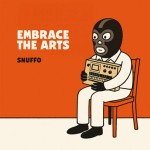
Artist: Snuffo
Title: Embrace The Arts
Format: Download Only (MP3 + Lossless)
Label: self-released
Rated:


Title: Embrace The Arts
Format: Download Only (MP3 + Lossless)
Label: self-released
Rated:
Snuffo’s Embrace The Arts arrives like a manifesto disguised as an LP, the kind of record that knows exactly what it wants yet behaves as if it stumbled into the room by coincidence. Benedikt Schmidt has been orbiting the fringes of club culture and experimental performance for years, sometimes as Snuffo, sometimes as half of Snuff Crew, sometimes as a novelist, sometimes as Cellarkalt’s wandering phantom. He seems constitutionally incapable of doing just one thing at a time, so it is almost touching that this album insists on a single radiant instruction: take art seriously because it is one of the few things that still takes you seriously in return.
The music itself feels like a diary kept during a heatwave, a stretch of Mallorca summer where machines sweat as much as people do. Schmidt recorded live in the studio, which here translates into a sense of breath and twitch and occasional lovely clumsiness. The ten tracks have that “I trusted my instincts before my brain even woke up” energy that often marks his best work. Pursuit of Happiness opens the circle with a playful tightness, the kind of track that smiles crookedly while pacing around the room. Escapist stretches out like a shadow at sunset, holding both melancholy and mischief in the same beat. Cosmic Intervention is more ascensional, a little cosmic disco, a little bunker techno, the sort of thing that could soundtrack a midnight revelation or a 4 a.m. mistake.
Even the shorter pieces feel like miniature sculptures. Dry Spell (Hang In There) sounds like someone knocking politely on the door of their own subconscious. Every Now and Then is all vapor trail and hesitation, a slow-motion pulse that refuses to resolve. And Rituals brings a low-burning momentum, as if the machines are performing their own rite and Schmidt is just there to keep the candles from tipping.
What sets the album apart is the way it wears its artistic convictions without becoming preachy. The tracks are playful, occasionally rough at the edges, unashamedly direct. They speak of doubt, stubbornness, imagination, and the impossible hope that art might still nudge the world sideways when nothing else seems to. Dissent in particular carries this spirit like a torch, a fizzing pulse wrapped in grit and gentle threat. Whims and Balm close the record with a sense of earned tenderness, small gestures offered after the storm.
Embrace The Arts is ultimately a snapshot of an artist who has spent decades learning that invention cannot be forced but it can be cultivated, like a stubborn plant that grows out of concrete simply because it damn well feels like it. Schmidt listens to his machines until they speak back, and what they tell him here is that joy and doubt and resistance can coexist inside a kick drum.
The music itself feels like a diary kept during a heatwave, a stretch of Mallorca summer where machines sweat as much as people do. Schmidt recorded live in the studio, which here translates into a sense of breath and twitch and occasional lovely clumsiness. The ten tracks have that “I trusted my instincts before my brain even woke up” energy that often marks his best work. Pursuit of Happiness opens the circle with a playful tightness, the kind of track that smiles crookedly while pacing around the room. Escapist stretches out like a shadow at sunset, holding both melancholy and mischief in the same beat. Cosmic Intervention is more ascensional, a little cosmic disco, a little bunker techno, the sort of thing that could soundtrack a midnight revelation or a 4 a.m. mistake.
Even the shorter pieces feel like miniature sculptures. Dry Spell (Hang In There) sounds like someone knocking politely on the door of their own subconscious. Every Now and Then is all vapor trail and hesitation, a slow-motion pulse that refuses to resolve. And Rituals brings a low-burning momentum, as if the machines are performing their own rite and Schmidt is just there to keep the candles from tipping.
What sets the album apart is the way it wears its artistic convictions without becoming preachy. The tracks are playful, occasionally rough at the edges, unashamedly direct. They speak of doubt, stubbornness, imagination, and the impossible hope that art might still nudge the world sideways when nothing else seems to. Dissent in particular carries this spirit like a torch, a fizzing pulse wrapped in grit and gentle threat. Whims and Balm close the record with a sense of earned tenderness, small gestures offered after the storm.
Embrace The Arts is ultimately a snapshot of an artist who has spent decades learning that invention cannot be forced but it can be cultivated, like a stubborn plant that grows out of concrete simply because it damn well feels like it. Schmidt listens to his machines until they speak back, and what they tell him here is that joy and doubt and resistance can coexist inside a kick drum.
Einmal Immer: s/t

Einmal Immer’s debut arrives like a treasure you were told did not exist, the kind of album whispered about by musicians who spend half their lives on stage and the other half dodging the idea of permanence. The trio from Bergen has been improvising together since 2013, but the road to a record was always treated as a philosophical booby trap. The tape, they feared, might tame the beast. Yet here it is, a full-length document of Espen Sommer Eide, Stephan Meidell, and Øyvind Hegg-Lunde in the act of remembering that spontaneity can survive the indignity of being pressed into wax.
Each member carries a long résumé in the borderlands of jazz, electronica, and sound art. Sommer Eide brings the crackling ghosts of his sample library and the ungovernable logic of the Buchla. Meidell’s baritone guitar slinks between chords, drones, and distorted mirages, as if trying to see how many different shapes a single instrument can pretend to be. Hegg-Lunde approaches percussion like a meteorologist with drumsticks, reading the air and humidity before striking anything. Together they form a living organism that constantly mutates, never quite repeating its own DNA.
The album opens with Black, a slow formation of electronic dust and guitar breath, the trio feeling its way forward like explorers descending into a cave with only the glow of malfunctioning headlamps. It is a patient introduction, neither shy nor aggressive, more like the clearing of a ritual space. White follows with an entirely different posture, filled with drifting harmonics and percussive spells that slap the air lightly, as if attempting to hypnotize it.
Cyan stands out as the album’s portal. You hear the Buchla at the outset, bubbling with the enthusiasm of a machine that has just woken from a decades-long nap. The track builds itself slowly, adding layers of guitar haze and a gently cycling drum pattern until it resembles a thought that has wandered off and found a more interesting life outside the skull. There is something oddly touching in how freely it unfolds, as if the trio were guiding the electrons rather than composing in any traditional sense.
Azure stretches the space even wider. It turns the ensemble into a drifting vessel, carried by Hegg-Lunde’s patient pulse and Meidell’s willingness to pull the guitar apart into shimmering filaments. Violet dives into stranger territory, full of twitching electronics and rhythms that seem to accelerate and decelerate based on pure instinct. Darkred ends the album on a heavier note, its textures darkening like a stormfront preparing to swallow the horizon.
Throughout the record you sense a recurring fascination with volatility. Colors shift, moods evaporate, ideas appear for a moment and then vanish as if embarrassed to overstay their welcome. The trio leans into unpredictability not as a gimmick but as a worldview. It fits their name too. Einmal Immer, once and forever. It suggests a paradox, the fragile moment and the infinite loop coexisting. That spirit shapes every track: brief flashes of intuition that manage to echo long after they end.
In the end, the record feels less like a debut and more like a field report from a world where improvisation is treated as a natural resource. They mine it with care, shaping it into structures that live and breathe rather than freeze or fossilize. It is an album that refuses to settle into any genre while somehow making all its hybrid mutabilities feel inevitable. A reminder that instability is not a flaw, but a method, and sometimes even a kind of joy.
Each member carries a long résumé in the borderlands of jazz, electronica, and sound art. Sommer Eide brings the crackling ghosts of his sample library and the ungovernable logic of the Buchla. Meidell’s baritone guitar slinks between chords, drones, and distorted mirages, as if trying to see how many different shapes a single instrument can pretend to be. Hegg-Lunde approaches percussion like a meteorologist with drumsticks, reading the air and humidity before striking anything. Together they form a living organism that constantly mutates, never quite repeating its own DNA.
The album opens with Black, a slow formation of electronic dust and guitar breath, the trio feeling its way forward like explorers descending into a cave with only the glow of malfunctioning headlamps. It is a patient introduction, neither shy nor aggressive, more like the clearing of a ritual space. White follows with an entirely different posture, filled with drifting harmonics and percussive spells that slap the air lightly, as if attempting to hypnotize it.
Cyan stands out as the album’s portal. You hear the Buchla at the outset, bubbling with the enthusiasm of a machine that has just woken from a decades-long nap. The track builds itself slowly, adding layers of guitar haze and a gently cycling drum pattern until it resembles a thought that has wandered off and found a more interesting life outside the skull. There is something oddly touching in how freely it unfolds, as if the trio were guiding the electrons rather than composing in any traditional sense.
Azure stretches the space even wider. It turns the ensemble into a drifting vessel, carried by Hegg-Lunde’s patient pulse and Meidell’s willingness to pull the guitar apart into shimmering filaments. Violet dives into stranger territory, full of twitching electronics and rhythms that seem to accelerate and decelerate based on pure instinct. Darkred ends the album on a heavier note, its textures darkening like a stormfront preparing to swallow the horizon.
Throughout the record you sense a recurring fascination with volatility. Colors shift, moods evaporate, ideas appear for a moment and then vanish as if embarrassed to overstay their welcome. The trio leans into unpredictability not as a gimmick but as a worldview. It fits their name too. Einmal Immer, once and forever. It suggests a paradox, the fragile moment and the infinite loop coexisting. That spirit shapes every track: brief flashes of intuition that manage to echo long after they end.
In the end, the record feels less like a debut and more like a field report from a world where improvisation is treated as a natural resource. They mine it with care, shaping it into structures that live and breathe rather than freeze or fossilize. It is an album that refuses to settle into any genre while somehow making all its hybrid mutabilities feel inevitable. A reminder that instability is not a flaw, but a method, and sometimes even a kind of joy.
The Dwarfs of East Agouza: Sasquatch Landslide
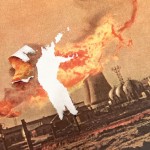
Artist: The Dwarfs of East Agouza
Title: Sasquatch Landslide
Format: LP
Label: Constellation Records (@)
Rated:
Title: Sasquatch Landslide
Format: LP
Label: Constellation Records (@)
Rated:
Trying to pin down The Dwarfs of East Agouza has always felt a bit like trying to photograph a lightning bolt while you’re riding a bicycle on gravel: the moment you think you’ve caught it, it’s already flickered into something else. With "Sasquatch Landslide", the Cairo-born trio leans even further into that joyful slipperiness. It’s their first outing for Constellation, and it arrives sounding as if someone threw free jazz, shaabi rhythms, krautrock repetition and a suitcase full of misbehaving spirits into a blender, but forgot to close the lid.
The three have been refining their telepathic chaos for over a decade now - Maurice Louca with his labyrinthine rhythmic sense, Sam Shalabi with his guitar that spirals like a possessed weather vane, and Alan Bishop with that blend of bass throb and sly wind-instrument mischief. The chemistry they’ve cultivated is the sort that doesn’t simply predict each other’s moves; it summons them from the ether.
On "Sasquatch Landslide", that chemistry feels especially combustible. The record comes at you like a dust storm that’s also somehow dancing.
“Swollen Thankles” wastes no time announcing the weather: a humid, twitching groove where everything seems slightly out of phase yet undeniably alive. The trio stretches rhythm like warm taffy - elastic, sticky, and just on the edge of snapping.
“Saber Tooth Millipede” slithers in next with a rhythm that feels like a crooked carnival ride engineered by an ecstatic arachnid. Shalabi’s guitar doesn’t so much solo as mutter, yelp and rear up on its hind legs. Louca’s loops keep tightening, then loosening, like a cosmic muscle trying to remember its stretching routine.
“Double Mothers” takes that energy and flips it sideways. Here the trio enters a state of semi-melodic delirium, the kind where you suddenly realize you’ve been nodding along to a pattern that technically doesn’t exist.
Then comes “Titular”, which could be described as trance music for people who find trance too polite. A long, slow immersion into a groove that feels perpetually on the verge of tripping over itself - yet it never falls. It’s a joyous tightrope walk over a pit of neon snakes.
“Neptune Anteater” is shorter, snappier, and somehow even stranger. Bishop’s lines move like a creature sniffing around for cosmic ants. A playful track, but with that undertone of unpredictability the Dwarfs wield like a second language.
The album’s longest piece, “A Body to Match”, is where things really shapeshift. Ten minutes of alchemical wandering: saxophone squawks half-human syllables, the guitars coil and uncoil, and the groove keeps mutating like a mirage trying out new outfits. It’s ecstatic, but from the inside - the kind of trance that makes you aware of your own pulse.
Closer “Goldfish Molasses” is sticky, viscous delirium. A slow-motion funk dragged through a dream-swamp, sweet and oddly luminous. It’s the most “what did I just listen to?” moment on the record, and the perfect curtain call.
Throughout "Sasquatch Landslide", the trio harnesses a peculiar form of blurriness - not vagueness, but saturation. A kind of sonic overgrowth where details multiply until they shimmer into a haze. Their improvisational logic isn’t about precision; it’s about velocity, risk, and a shared willingness to tumble headfirst into the unknown with a grin.
The album title fits like a glove: this is indeed a landslide, but one made of rhythm, distortion and hallucinatory momentum rather than mud and boulders. And the “Sasquatch” part? Well, if a giant, semi-mythical creature ever did decide to groove, it might sound exactly like this: blurry, massive, and - in its own deeply strange way - absolutely ecstatic.
"Sasquatch Landslide" is a reminder that otherness can be exhilarating, and that sometimes the best way to understand music is to stop trying to understand it at all. Just unfocus your ears, let the landslide roll over you, and enjoy the blur.
The three have been refining their telepathic chaos for over a decade now - Maurice Louca with his labyrinthine rhythmic sense, Sam Shalabi with his guitar that spirals like a possessed weather vane, and Alan Bishop with that blend of bass throb and sly wind-instrument mischief. The chemistry they’ve cultivated is the sort that doesn’t simply predict each other’s moves; it summons them from the ether.
On "Sasquatch Landslide", that chemistry feels especially combustible. The record comes at you like a dust storm that’s also somehow dancing.
“Swollen Thankles” wastes no time announcing the weather: a humid, twitching groove where everything seems slightly out of phase yet undeniably alive. The trio stretches rhythm like warm taffy - elastic, sticky, and just on the edge of snapping.
“Saber Tooth Millipede” slithers in next with a rhythm that feels like a crooked carnival ride engineered by an ecstatic arachnid. Shalabi’s guitar doesn’t so much solo as mutter, yelp and rear up on its hind legs. Louca’s loops keep tightening, then loosening, like a cosmic muscle trying to remember its stretching routine.
“Double Mothers” takes that energy and flips it sideways. Here the trio enters a state of semi-melodic delirium, the kind where you suddenly realize you’ve been nodding along to a pattern that technically doesn’t exist.
Then comes “Titular”, which could be described as trance music for people who find trance too polite. A long, slow immersion into a groove that feels perpetually on the verge of tripping over itself - yet it never falls. It’s a joyous tightrope walk over a pit of neon snakes.
“Neptune Anteater” is shorter, snappier, and somehow even stranger. Bishop’s lines move like a creature sniffing around for cosmic ants. A playful track, but with that undertone of unpredictability the Dwarfs wield like a second language.
The album’s longest piece, “A Body to Match”, is where things really shapeshift. Ten minutes of alchemical wandering: saxophone squawks half-human syllables, the guitars coil and uncoil, and the groove keeps mutating like a mirage trying out new outfits. It’s ecstatic, but from the inside - the kind of trance that makes you aware of your own pulse.
Closer “Goldfish Molasses” is sticky, viscous delirium. A slow-motion funk dragged through a dream-swamp, sweet and oddly luminous. It’s the most “what did I just listen to?” moment on the record, and the perfect curtain call.
Throughout "Sasquatch Landslide", the trio harnesses a peculiar form of blurriness - not vagueness, but saturation. A kind of sonic overgrowth where details multiply until they shimmer into a haze. Their improvisational logic isn’t about precision; it’s about velocity, risk, and a shared willingness to tumble headfirst into the unknown with a grin.
The album title fits like a glove: this is indeed a landslide, but one made of rhythm, distortion and hallucinatory momentum rather than mud and boulders. And the “Sasquatch” part? Well, if a giant, semi-mythical creature ever did decide to groove, it might sound exactly like this: blurry, massive, and - in its own deeply strange way - absolutely ecstatic.
"Sasquatch Landslide" is a reminder that otherness can be exhilarating, and that sometimes the best way to understand music is to stop trying to understand it at all. Just unfocus your ears, let the landslide roll over you, and enjoy the blur.
Martina Berther / Philipp Schlotter: Silence Will Never Die

Artist: Martina Berther / Philipp Schlotter (@)
Title: Silence Will Never Die
Format: 12" + Download
Label: Hallow Ground (@)
Rated:
Title: Silence Will Never Die
Format: 12" + Download
Label: Hallow Ground (@)
Rated:
Berther and Schlotter seem to listen to the world from the inside out, as if they’d found a tiny crack in the air itself and gently pressed an ear against it. "Silence Will Never Die" emerges from that crack: an album that breathes slowly, pulses with quiet insistence, and makes the old church organ feel less like an instrument and more like a vertebrate creature with its own moods.
Returning to the Church of Matt - that alpine chamber designed, intentionally or not, for amplifying existential uncertainty - the duo doesn’t simply continue the austere path of their previous "Matt". They complicate it, soften it, bruise it a little. The result is a maturation that feels both deliberate and accidental, like fruit growing sweeter only because it’s been left alone long enough to understand its own shape.
Drone minimalism remains the skeleton, but new organs (literal and metaphorical) give the music a strangely corporeal warmth. With zither, electric bass, synthesizers and the church’s own resonant lungs all in the mix, the album leans into subtle complexity without turning precious.
This is music that demands attention, yes - but not the stiff academic kind. More the attention of someone who realizes that silence isn’t silence at all: it’s full of micro-vibrations, tiny shifts in harmony, the ghost of a breath escaping at the wrong moment.
“Calm for One Day” opens like a draught of cold air through stained glass. Microtonal nudges bloom and collapse, two hands searching for each other in the dark. You don’t feel like you’re in a room; you feel like you’re inside a living organism practicing serenity with mixed results.
With “Gut Feeling”, the physical world returns. Frequencies intertwine, bump into each other, apologise politely, and continue intertwining. It’s a restrained kind of bodily presence - an internal wave that refuses to break, but won’t go unnoticed.
“Suntrap & Light Wind” is all whisper and glint. The zither and electric bass circle each other like two cautious animals, while the church itself answers with soft, architectural murmurs. A three-way conversation, really - one where the least talkative participant decides the emotional temperature.
“Eternal Youth”, featuring Anuk Schmelcher, stretches time until it resembles a procession slowed to near-stillness. A piece that seems in no hurry to reach any destination. Eternal youth, yes - but the melancholy kind, the kind that knows eternity is a heavy cloak.
And “Lookout” closes the album with a sort of gentle vigilance. Flo Götte’s zither feels like lantern signals in a dark forest: not warnings, not invitations, just presence. The trio improvises with that graceful, instinctive discipline you only get when all egos have been quietly dismissed.
In its entirety, "Silence Will Never Die" dismantles silence plank by plank and shows what’s underneath: drafts, finger movements, shared breaths, the memory of stone walls. It’s meditative without drifting into sedation, contemplative yet stubbornly corporeal. And every so often, behind a sustained tone or an almost-missable harmonic quiver, there’s the faint suggestion of a smile - the kind musicians exchange when they know that serious music doesn’t require a solemn face.
In a world obsessed with volume, Berther and Schlotter choose another form of intensity: listening so closely that the quiet begins to glow.
Returning to the Church of Matt - that alpine chamber designed, intentionally or not, for amplifying existential uncertainty - the duo doesn’t simply continue the austere path of their previous "Matt". They complicate it, soften it, bruise it a little. The result is a maturation that feels both deliberate and accidental, like fruit growing sweeter only because it’s been left alone long enough to understand its own shape.
Drone minimalism remains the skeleton, but new organs (literal and metaphorical) give the music a strangely corporeal warmth. With zither, electric bass, synthesizers and the church’s own resonant lungs all in the mix, the album leans into subtle complexity without turning precious.
This is music that demands attention, yes - but not the stiff academic kind. More the attention of someone who realizes that silence isn’t silence at all: it’s full of micro-vibrations, tiny shifts in harmony, the ghost of a breath escaping at the wrong moment.
“Calm for One Day” opens like a draught of cold air through stained glass. Microtonal nudges bloom and collapse, two hands searching for each other in the dark. You don’t feel like you’re in a room; you feel like you’re inside a living organism practicing serenity with mixed results.
With “Gut Feeling”, the physical world returns. Frequencies intertwine, bump into each other, apologise politely, and continue intertwining. It’s a restrained kind of bodily presence - an internal wave that refuses to break, but won’t go unnoticed.
“Suntrap & Light Wind” is all whisper and glint. The zither and electric bass circle each other like two cautious animals, while the church itself answers with soft, architectural murmurs. A three-way conversation, really - one where the least talkative participant decides the emotional temperature.
“Eternal Youth”, featuring Anuk Schmelcher, stretches time until it resembles a procession slowed to near-stillness. A piece that seems in no hurry to reach any destination. Eternal youth, yes - but the melancholy kind, the kind that knows eternity is a heavy cloak.
And “Lookout” closes the album with a sort of gentle vigilance. Flo Götte’s zither feels like lantern signals in a dark forest: not warnings, not invitations, just presence. The trio improvises with that graceful, instinctive discipline you only get when all egos have been quietly dismissed.
In its entirety, "Silence Will Never Die" dismantles silence plank by plank and shows what’s underneath: drafts, finger movements, shared breaths, the memory of stone walls. It’s meditative without drifting into sedation, contemplative yet stubbornly corporeal. And every so often, behind a sustained tone or an almost-missable harmonic quiver, there’s the faint suggestion of a smile - the kind musicians exchange when they know that serious music doesn’t require a solemn face.
In a world obsessed with volume, Berther and Schlotter choose another form of intensity: listening so closely that the quiet begins to glow.