
Saturday, October 3, 2026
Browse by Genre
Industrial Music / Industrial Metal / Aggro Industrial / Electro Metal
Industrial Noise / Power Noise / Harsh Noise
Synth Pop / Electro Pop / Synth-Electronica
Techno / Trance / Goa / Drum'n'Bass / Jungle / Tribal / Trip-Hop
Ambient / Electronica / Ethereal / Dub / Soundscapes / Abstract
Experimental / Avantgarde / Weird & Wired / Glitch / Noise / Field Recording
Dark / Gothic / Wave / New Wave / Dark Wave / Industrial Gothic
New Music / Downtown / Avantgarde Jazz / New Classical / World
Search Reviews
Music Reviews
a place both wonderful and strange: Matter And Desire

Artist: a place both wonderful and strange (@)
Title: Matter And Desire
Format: CD + Download
Label: Re:Mission Entertainment (@)
Rated:

Title: Matter And Desire
Format: CD + Download
Label: Re:Mission Entertainment (@)
Rated:
Some albums arrive on schedule. Some arrive late. "Matter And Desire" belongs to the more complicated category of records that spend years refusing to arrive at all, presumably because they have other things to do.
For a place both wonderful and strange, the New York duo of Russ Marshalek and Laura Hajek, this album began roughly eight years before it finally emerged. Songs accumulated, disappeared, returned, changed shape and waited around while life did what life generally does best: complicate everybody's plans. A performance in 2023 eventually reanimated the material, and in 2025 the pair finally entered the studio and completed what had become less a delayed album than an unresolved relationship with one. That history is unusually audible.
"Matter And Desire" doesn't sound like a carefully preserved artefact dragged from a drawer and dusted off for contemporary consumption. It sounds as though the intervening years have been allowed to leave fingerprints all over it. There is something slightly weather-beaten about the record, but also something newly alert, as if these songs had spent years watching the world deteriorate through a window and had finally decided that observation was no longer enough.
The title comes from Andreas Weber's ecological writing, but the album isn't interested in turning ecology into a collection of tasteful field recordings and concerned-looking photographs. Nature here is inseparable from politics, technology, intimacy and personal exhaustion. Apocalypse is not some cinematic event occurring somewhere conveniently far away. It is sitting in a car, looking through glass, trying to decide what the hell you are supposed to do next. That sense of suspended decision becomes the record's real subject.
"Intro444", featuring vocals from Devery, introduces the album with a short, uneasy invocation rather than a conventional opening song. The atmosphere is already damaged. Electronics seem to emerge from a place where machinery and emotion have been left in the same room overnight. There is darkness, certainly, but it isn't the theatrical darkness of someone turning off the lights because they have discovered eyeliner. It is more intimate than that, a darkness produced by uncertainty.
Then "Shedding Velvet" makes the machinery move. The duo's music has long occupied an area where darkwave, industrial electronics, witch house, experimental dance music and noise can rub against one another without quite merging. Their earlier releases already demonstrated an interest in abrasive textures and distorted club rhythms, while their Twin Peaks-inspired projects gave them a taste for psychological unease and cinematic suggestion.
Here those ingredients are considerably less interested in announcing their identities.
"Shedding Velvet" has a physical pulse, but the beat doesn't feel like an invitation to dance so much as evidence that something is still alive. Synth textures smear around the rhythm; voices appear as another layer of unstable matter. The title itself suggests transformation through loss, the skin coming away from whatever lies underneath. It is a useful metaphor for the whole album: things are being stripped down, but nobody has promised that what emerges will be prettier.
"Crying In An Uber" is perhaps where the album's peculiar sense of humour becomes most apparent. The title sounds almost comically mundane, until you realise how perfectly it fits the band's larger worldview. There is something profoundly contemporary about having a minor existential collapse in the back seat of a car while traffic continues outside as if the universe has not received the memo.
The song turns that absurdity into a dark electronic vignette. Personal crisis and urban routine occupy the same frame. The apocalypse doesn't stop the ride-share economy. It merely changes the soundtrack. This is one of the album's most effective tricks: it repeatedly brings enormous subjects down to human scale.
Climate catastrophe, political exhaustion, alienation, mortality and ecological collapse are all lurking here, but they are filtered through bodies, rooms, cars, voices and relationships. The result avoids the grandiose language that often accompanies explicitly ecological music. There are no sermons from the mountaintop. There is a person sitting somewhere thinking about what comes next.
"A Map For Birds (Behind The Glass)" expands this idea considerably. The song has been part of the band's live repertoire for years, apparently existing in various forms before they managed to capture it satisfactorily in the studio.
That long gestation seems appropriate. The title suggests orientation and confinement simultaneously. A map is supposed to help you find your way; glass lets you see without allowing you to touch. The song therefore occupies an uncomfortable position between knowledge and agency. You can see the world. You can understand that something is wrong. You may even possess an excellent map. None of this guarantees that you can get out.
Musically, the duo exploits that tension through layers of distorted electronics, pulsing rhythms and spectral vocal material. The track doesn't simply progress toward catharsis. It keeps looking through the glass.
"It's Not That Bad, Muffin" is the album's most disarmingly strange title and perhaps its most immediate song. The accompanying visual treatment has been associated with the band's Lynchian sensibility and with a deliberately warped sense of repetition and déjà vu. Contemporary coverage has also heard traces of trip-hop and acts such as Ladytron, Massive Attack, Portishead and Björk in the song's combination of fuzz, beat and melancholy. But the interesting thing is that it doesn't sound like a checklist of influences.
Instead, the song occupies a kind of emotional traffic jam. The groove keeps moving while the psychological situation remains stuck. Something unpleasant is happening, but the music keeps insisting on forward motion. The title offers reassurance that nobody quite believes.
There is a small masterpiece of human behaviour contained in that contradiction. “It's not that bad” is one of our favourite lies because sometimes it is the only sentence that allows us to get through the afternoon.
Then comes "I Am Stretched On Your Grave", based on the traditional Irish song "Táim sínte ar do thuama". The inclusion of this material shifts the album into a more explicitly archaic register. The old song carries grief, devotion and physical proximity to death, while the duo places it inside an electronic environment that makes the traditional lament feel less like an inherited object and more like a message arriving from somewhere the present hasn't completely managed to erase. The band's own release information confirms the traditional source.
The juxtaposition is particularly effective because "Matter And Desire" is constantly concerned with what survives.
What survives a person? A landscape? A culture? A relationship? A song?
"Vegetation" approaches the ecological dimension more directly, but its brevity prevents it from becoming an explanatory footnote. At just over two minutes, it feels more like a disturbance passing through the album. The title is almost deliberately neutral, which makes the music behind it more unsettling. “Vegetation” sounds like something catalogued by an indifferent database, while the actual sound suggests a living environment that is considerably harder to categorise.
And then "Dissociation (A Map For Birds)" returns to the earlier material in altered form.
This is a smart structural choice. Rather than ending with resolution, the album folds back upon itself. The map returns, but now it has become dissociation. Orientation has turned into fragmentation. What was previously seen through glass is now psychologically separated from the observer.
The nearly thirty-minute album therefore behaves less like a linear narrative than a sequence of pressure points. Each track catches someone immediately before a decision, a breakdown, a departure, a recognition or a transformation. The band has described the record precisely in those terms: each song occupies the instant before something changes permanently, with the possible direction of that change remaining uncertain.
That uncertainty is what prevents the ecological theme from becoming merely worthy.
There is nothing especially comforting about "Matter And Desire". It doesn't pretend that awareness automatically produces action, or that every crisis contains a noble lesson waiting to be extracted. People change reluctantly. Sometimes they change too late. Sometimes they change in the wrong direction. Sometimes they sit in an Uber and cry, which is probably not covered by most sustainability frameworks.
The music understands this.
Its electronics are dark but not monolithic, danceable but rarely celebratory, experimental without becoming an academic exercise. There is a persistent sense of tension between propulsion and paralysis. The rhythms suggest movement while the textures suggest entanglement.
That tension also connects "Matter And Desire" to the duo's longer trajectory. a place both wonderful and strange emerged in 2016 and have spent the intervening years developing a distinctive world of dark electronic music, performance, remixing and audiovisual work. Their long-running relationship with "Twin Peaks", including projects centred on Laura Palmer, explains some of the dream logic and cinematic unease that surface here, but the new album feels less like an extension of that mythology than a maturation of its underlying sensibility.
The name itself, borrowed from the strange description of the Black Lodge in "Twin Peaks", has always implied a place that cannot decide whether it is beautiful or horrifying. "Matter And Desire" finally gives that ambiguity a distinctly material dimension.
The world is beautiful.
The world is damaged.
We are both observers and participants.
And wanting something better does not automatically make us better people.
That may be the album's most thoughtful achievement. It doesn't separate the personal from the political or the ecological from the emotional. The same nervous system that worries about a relationship also has to live through a changing climate, an unstable political landscape and the increasingly bizarre experience of watching history unfold through glowing rectangles.
The production reflects that compression. Synths feel dense without becoming overdecorated. Distortion is used as atmosphere rather than mere aggression. Vocals are often placed inside the electronics rather than perched above them, which makes the songs feel less like conventional compositions and more like environments with human beings trapped somewhere inside.
And despite the album's bleakness, there is a peculiar vitality running through it.
Perhaps that is because the record is not actually about apocalypse.
It is about "choice under pressure".
The distinction matters. An apocalypse is an ending. A decision is what happens when an ending hasn't happened yet. That tiny interval is where "Matter And Desire" lives.
The eight-year delay becomes almost accidentally appropriate. The album itself spent years suspended between existence and non-existence, between intention and completion. The musicians had to become different people before the songs could finally become what they were supposed to be.
So the record arrives carrying its own argument inside it: sometimes nothing changes because the conditions for change aren't there yet. Then, suddenly, they are.
The strange thing about "Matter And Desire" is that its darkness never entirely closes the door.
There is always another beat.
Another fragment of melody.
Another route on the map.
Another possibility, however inconvenient.
And perhaps that is enough.
Not optimism. Nothing so suspiciously well behaved.
Just the stubborn fact that the future has not happened yet.
For a place both wonderful and strange, the New York duo of Russ Marshalek and Laura Hajek, this album began roughly eight years before it finally emerged. Songs accumulated, disappeared, returned, changed shape and waited around while life did what life generally does best: complicate everybody's plans. A performance in 2023 eventually reanimated the material, and in 2025 the pair finally entered the studio and completed what had become less a delayed album than an unresolved relationship with one. That history is unusually audible.
"Matter And Desire" doesn't sound like a carefully preserved artefact dragged from a drawer and dusted off for contemporary consumption. It sounds as though the intervening years have been allowed to leave fingerprints all over it. There is something slightly weather-beaten about the record, but also something newly alert, as if these songs had spent years watching the world deteriorate through a window and had finally decided that observation was no longer enough.
The title comes from Andreas Weber's ecological writing, but the album isn't interested in turning ecology into a collection of tasteful field recordings and concerned-looking photographs. Nature here is inseparable from politics, technology, intimacy and personal exhaustion. Apocalypse is not some cinematic event occurring somewhere conveniently far away. It is sitting in a car, looking through glass, trying to decide what the hell you are supposed to do next. That sense of suspended decision becomes the record's real subject.
"Intro444", featuring vocals from Devery, introduces the album with a short, uneasy invocation rather than a conventional opening song. The atmosphere is already damaged. Electronics seem to emerge from a place where machinery and emotion have been left in the same room overnight. There is darkness, certainly, but it isn't the theatrical darkness of someone turning off the lights because they have discovered eyeliner. It is more intimate than that, a darkness produced by uncertainty.
Then "Shedding Velvet" makes the machinery move. The duo's music has long occupied an area where darkwave, industrial electronics, witch house, experimental dance music and noise can rub against one another without quite merging. Their earlier releases already demonstrated an interest in abrasive textures and distorted club rhythms, while their Twin Peaks-inspired projects gave them a taste for psychological unease and cinematic suggestion.
Here those ingredients are considerably less interested in announcing their identities.
"Shedding Velvet" has a physical pulse, but the beat doesn't feel like an invitation to dance so much as evidence that something is still alive. Synth textures smear around the rhythm; voices appear as another layer of unstable matter. The title itself suggests transformation through loss, the skin coming away from whatever lies underneath. It is a useful metaphor for the whole album: things are being stripped down, but nobody has promised that what emerges will be prettier.
"Crying In An Uber" is perhaps where the album's peculiar sense of humour becomes most apparent. The title sounds almost comically mundane, until you realise how perfectly it fits the band's larger worldview. There is something profoundly contemporary about having a minor existential collapse in the back seat of a car while traffic continues outside as if the universe has not received the memo.
The song turns that absurdity into a dark electronic vignette. Personal crisis and urban routine occupy the same frame. The apocalypse doesn't stop the ride-share economy. It merely changes the soundtrack. This is one of the album's most effective tricks: it repeatedly brings enormous subjects down to human scale.
Climate catastrophe, political exhaustion, alienation, mortality and ecological collapse are all lurking here, but they are filtered through bodies, rooms, cars, voices and relationships. The result avoids the grandiose language that often accompanies explicitly ecological music. There are no sermons from the mountaintop. There is a person sitting somewhere thinking about what comes next.
"A Map For Birds (Behind The Glass)" expands this idea considerably. The song has been part of the band's live repertoire for years, apparently existing in various forms before they managed to capture it satisfactorily in the studio.
That long gestation seems appropriate. The title suggests orientation and confinement simultaneously. A map is supposed to help you find your way; glass lets you see without allowing you to touch. The song therefore occupies an uncomfortable position between knowledge and agency. You can see the world. You can understand that something is wrong. You may even possess an excellent map. None of this guarantees that you can get out.
Musically, the duo exploits that tension through layers of distorted electronics, pulsing rhythms and spectral vocal material. The track doesn't simply progress toward catharsis. It keeps looking through the glass.
"It's Not That Bad, Muffin" is the album's most disarmingly strange title and perhaps its most immediate song. The accompanying visual treatment has been associated with the band's Lynchian sensibility and with a deliberately warped sense of repetition and déjà vu. Contemporary coverage has also heard traces of trip-hop and acts such as Ladytron, Massive Attack, Portishead and Björk in the song's combination of fuzz, beat and melancholy. But the interesting thing is that it doesn't sound like a checklist of influences.
Instead, the song occupies a kind of emotional traffic jam. The groove keeps moving while the psychological situation remains stuck. Something unpleasant is happening, but the music keeps insisting on forward motion. The title offers reassurance that nobody quite believes.
There is a small masterpiece of human behaviour contained in that contradiction. “It's not that bad” is one of our favourite lies because sometimes it is the only sentence that allows us to get through the afternoon.
Then comes "I Am Stretched On Your Grave", based on the traditional Irish song "Táim sínte ar do thuama". The inclusion of this material shifts the album into a more explicitly archaic register. The old song carries grief, devotion and physical proximity to death, while the duo places it inside an electronic environment that makes the traditional lament feel less like an inherited object and more like a message arriving from somewhere the present hasn't completely managed to erase. The band's own release information confirms the traditional source.
The juxtaposition is particularly effective because "Matter And Desire" is constantly concerned with what survives.
What survives a person? A landscape? A culture? A relationship? A song?
"Vegetation" approaches the ecological dimension more directly, but its brevity prevents it from becoming an explanatory footnote. At just over two minutes, it feels more like a disturbance passing through the album. The title is almost deliberately neutral, which makes the music behind it more unsettling. “Vegetation” sounds like something catalogued by an indifferent database, while the actual sound suggests a living environment that is considerably harder to categorise.
And then "Dissociation (A Map For Birds)" returns to the earlier material in altered form.
This is a smart structural choice. Rather than ending with resolution, the album folds back upon itself. The map returns, but now it has become dissociation. Orientation has turned into fragmentation. What was previously seen through glass is now psychologically separated from the observer.
The nearly thirty-minute album therefore behaves less like a linear narrative than a sequence of pressure points. Each track catches someone immediately before a decision, a breakdown, a departure, a recognition or a transformation. The band has described the record precisely in those terms: each song occupies the instant before something changes permanently, with the possible direction of that change remaining uncertain.
That uncertainty is what prevents the ecological theme from becoming merely worthy.
There is nothing especially comforting about "Matter And Desire". It doesn't pretend that awareness automatically produces action, or that every crisis contains a noble lesson waiting to be extracted. People change reluctantly. Sometimes they change too late. Sometimes they change in the wrong direction. Sometimes they sit in an Uber and cry, which is probably not covered by most sustainability frameworks.
The music understands this.
Its electronics are dark but not monolithic, danceable but rarely celebratory, experimental without becoming an academic exercise. There is a persistent sense of tension between propulsion and paralysis. The rhythms suggest movement while the textures suggest entanglement.
That tension also connects "Matter And Desire" to the duo's longer trajectory. a place both wonderful and strange emerged in 2016 and have spent the intervening years developing a distinctive world of dark electronic music, performance, remixing and audiovisual work. Their long-running relationship with "Twin Peaks", including projects centred on Laura Palmer, explains some of the dream logic and cinematic unease that surface here, but the new album feels less like an extension of that mythology than a maturation of its underlying sensibility.
The name itself, borrowed from the strange description of the Black Lodge in "Twin Peaks", has always implied a place that cannot decide whether it is beautiful or horrifying. "Matter And Desire" finally gives that ambiguity a distinctly material dimension.
The world is beautiful.
The world is damaged.
We are both observers and participants.
And wanting something better does not automatically make us better people.
That may be the album's most thoughtful achievement. It doesn't separate the personal from the political or the ecological from the emotional. The same nervous system that worries about a relationship also has to live through a changing climate, an unstable political landscape and the increasingly bizarre experience of watching history unfold through glowing rectangles.
The production reflects that compression. Synths feel dense without becoming overdecorated. Distortion is used as atmosphere rather than mere aggression. Vocals are often placed inside the electronics rather than perched above them, which makes the songs feel less like conventional compositions and more like environments with human beings trapped somewhere inside.
And despite the album's bleakness, there is a peculiar vitality running through it.
Perhaps that is because the record is not actually about apocalypse.
It is about "choice under pressure".
The distinction matters. An apocalypse is an ending. A decision is what happens when an ending hasn't happened yet. That tiny interval is where "Matter And Desire" lives.
The eight-year delay becomes almost accidentally appropriate. The album itself spent years suspended between existence and non-existence, between intention and completion. The musicians had to become different people before the songs could finally become what they were supposed to be.
So the record arrives carrying its own argument inside it: sometimes nothing changes because the conditions for change aren't there yet. Then, suddenly, they are.
The strange thing about "Matter And Desire" is that its darkness never entirely closes the door.
There is always another beat.
Another fragment of melody.
Another route on the map.
Another possibility, however inconvenient.
And perhaps that is enough.
Not optimism. Nothing so suspiciously well behaved.
Just the stubborn fact that the future has not happened yet.
tsx x sue tompkins: recur⁷

Artist: tsx x sue tompkins
Title: recur⁷
Format: Download Only (MP3 + Lossless)
Label: generate and test
Rated:
Title: recur⁷
Format: Download Only (MP3 + Lossless)
Label: generate and test
Rated:
Some records take five years to make because their authors are perfectionists. Others take five years because life has a habit of throwing furniture down the stairs whenever you are trying to finish something. "recur7" appears to belong, quite happily, to both categories. Conceived between 2019 and 2024 and only cosmetically altered since, this five-track, fifteen-minute collaboration between tsx and Sue Tompkins is a remarkably compact object carrying an unusually large amount of temporal baggage. Its central idea is simple enough: to return to something similar, but never quite the same. Its execution is considerably less polite.
tsx is the beat-oriented persona of Oswald Berthold, whose work with farmersmanual has been investigating digital systems, algorithmic processes and the peculiar aesthetics of computers since the 1990s. The tsx project began in 2017 with "recur", initially developed around the very contemporary idea of making beats while travelling through urban space with a mobile phone. That constraint has remained fundamental even as desktop tools have entered the process. There is something fitting about an artistic method that started with spare moments on public transport eventually producing a piece of music that itself seems permanently in transit.
Sue Tompkins brings a completely different kind of history. Trained as a painter at Glasgow School of Art, she became widely known through Life Without Buildings before developing a substantial visual and performance practice centred on language, repetition, rhythm and the physical possibilities of speech. Her voice has always occupied an interesting zone between speaking and singing, between sentence and gesture. On "recur7", that linguistic personality is not simply sampled. It is subjected to a little computational bureaucracy, chopped into fragments, sorted according to perceived sonic similarity and then rearranged by software. The result is less “vocals over electronic music” than a conversation between a human mouth and a machine that has become irritatingly confident about syntax.
"Mute their knee" establishes the peculiar rules immediately. Its rhythmic background was conceived from the simple physical sensation of rain hitting a skylight, but what emerges is anything but pastoral. Tiny percussive events multiply into a jittering mesh, with the familiar four-square expectations of digital rhythm repeatedly nudged sideways. The track feels as though someone has asked a metronome to describe weather and then refused to correct the answer.
The important distinction is that tsx's glitchiness is not primarily about damage. It is about "reclassification". Sounds are taken out of their original context, processed, sliced, reordered and made to function according to new relationships. The machinery is not hiding behind the music. It is part of the composition's visible logic. That makes "recur7" particularly interesting in the context of Berthold's much longer engagement with computer-based aesthetics. Farmersmanual has spent decades treating digital systems not merely as tools for making music but as environments in which musical decisions can be generated, distorted and reconsidered. Here that approach has been reduced to miniature scale.
Then Sue's voice enters and everything becomes more slippery. "Easily live for" breaks her recordings into minute sonic particles and allows an algorithmic process to determine their new positions. Meaning begins to dissolve not because the words are deliberately obscured, but because the temporal structure that normally allows language to make sense has been dismantled. A phrase is no longer necessarily a phrase. A syllable can become percussion, texture or an almost melodic object. The voice remains recognisably human while the sentence ceases to belong entirely to the human world.
That tension is one of the album's strongest qualities. Tompkins has spent much of her career exploring what language can do when it is treated as physical material rather than simply as a vehicle for information. Her performances, visual work and musical collaborations repeatedly make repetition and rhythm central to the experience of words. "recur7" takes the next step and asks what happens when an algorithm is allowed to participate in that repetition. The machine does not understand the words in the way a listener does. It understands relationships between sounds. Consequently, semantic meaning becomes collateral damage, while phonetic identity survives.
"The pleasure of completed action" is perhaps the funniest title on an album that spends considerable effort refusing to behave as though anything is ever truly completed. Its rain-derived rhythmic material has a nervous, almost granular quality, while the synthetic layers generated through a pulsar synthesis system are controlled by the movement of a pet robot. This is exactly the sort of sentence that would have sounded like an elaborate joke about electronic music thirty years ago. Here it is simply part of the production method. The robot does not need to understand music. It only needs to move, and suddenly its movements become parameters in an electronic composition. Humanity has finally found a use for the domestic pet it invented in order to avoid having a real one.
The middle of the record, "dream city times half", pushes further into the fractured relationship between voice and rhythm. The title itself suggests an operation rather than a statement: something divided, transformed, reduced. Tompkins's vocal fragments are repeatedly interrupted by the system that processes them, producing a form of speech that feels both intimate and inaccessible. You can sense that there was once a complete utterance behind the fragments, but the music has no obligation to reconstruct it for you.
This is where the album's five-year history becomes audible in a curious way. "recur7" is not obsessed with the past in the nostalgic sense. It is interested in what happens when material is revisited. The tracks began years earlier, were iterated over time, circulated in provisional forms and eventually arrived at something that was almost unchanged from an earlier private version. The delay is therefore not merely a production anecdote. It is structurally consistent with the project's central idea: returning to an existing state and finding that the return itself has changed it.
The final "just so, so just" makes that principle particularly clear. The words are still there, or at least their physical ghosts are. They are cut, rearranged, stretched into rhythmic events and surrounded by synthetic textures whose behaviour has little interest in conventional accompaniment. The track seems to ask whether meaning can survive after language has been deprived of its original chronology. The answer is neither yes nor no. Meaning becomes something more unstable: an impression assembled by the listener from pieces that were never put there in that order.
There is an unexpected warmth beneath all this technical cleverness. The machines may perform the rearranging, but the source material remains intensely personal and bodily. A voice recorded casually on a phone carries the imperfections of circumstance. The resulting fragments retain breath, emphasis and grain even after their semantic function has been scrambled. The technology therefore does not sterilise Tompkins's presence. If anything, it makes the human traces more conspicuous by surrounding them with processes that cannot quite reproduce them.
This is also why "recur7" avoids the familiar trap of algorithmic experimental music becoming a demonstration of software capabilities. There is plenty of bespoke technology here, but the technology has a job. Similarity models, beat-aware rearrangement, pulsar synthesis and robotic control are all subordinate to the larger question of recurrence. The interesting thing is not that a machine can chop up a voice. That became obvious some time ago. The interesting thing is what happens to a voice when its fragments are given a new social life inside a rhythm.
There is, finally, a rather lovely contradiction at the centre of the record. Its title promises repetition, while its methods depend upon difference. To recur is not to repeat. It is to approach the same neighbourhood from another street, carrying whatever happened since the last visit. The "recur" series has accumulated its own history since 2017, and this collaboration with Tompkins has become one of its recurring meeting points. Yet "recur7" does not sound like a museum piece from an ongoing series. It sounds like the series has developed another nervous system.
Fifteen minutes is enough. Anything longer might allow the algorithm to develop opinions.
As it stands, "recur7" is a miniature study in digital memory, where beats, words, accidents and machines continually rearrange one another. It is playful without being cute, technically elaborate without becoming a technology brochure, and fragmented without confusing fragmentation with depth. Most importantly, it understands that repetition is never neutral. Every return carries evidence of what happened in the meantime.
Even when the return takes five years.
tsx is the beat-oriented persona of Oswald Berthold, whose work with farmersmanual has been investigating digital systems, algorithmic processes and the peculiar aesthetics of computers since the 1990s. The tsx project began in 2017 with "recur", initially developed around the very contemporary idea of making beats while travelling through urban space with a mobile phone. That constraint has remained fundamental even as desktop tools have entered the process. There is something fitting about an artistic method that started with spare moments on public transport eventually producing a piece of music that itself seems permanently in transit.
Sue Tompkins brings a completely different kind of history. Trained as a painter at Glasgow School of Art, she became widely known through Life Without Buildings before developing a substantial visual and performance practice centred on language, repetition, rhythm and the physical possibilities of speech. Her voice has always occupied an interesting zone between speaking and singing, between sentence and gesture. On "recur7", that linguistic personality is not simply sampled. It is subjected to a little computational bureaucracy, chopped into fragments, sorted according to perceived sonic similarity and then rearranged by software. The result is less “vocals over electronic music” than a conversation between a human mouth and a machine that has become irritatingly confident about syntax.
"Mute their knee" establishes the peculiar rules immediately. Its rhythmic background was conceived from the simple physical sensation of rain hitting a skylight, but what emerges is anything but pastoral. Tiny percussive events multiply into a jittering mesh, with the familiar four-square expectations of digital rhythm repeatedly nudged sideways. The track feels as though someone has asked a metronome to describe weather and then refused to correct the answer.
The important distinction is that tsx's glitchiness is not primarily about damage. It is about "reclassification". Sounds are taken out of their original context, processed, sliced, reordered and made to function according to new relationships. The machinery is not hiding behind the music. It is part of the composition's visible logic. That makes "recur7" particularly interesting in the context of Berthold's much longer engagement with computer-based aesthetics. Farmersmanual has spent decades treating digital systems not merely as tools for making music but as environments in which musical decisions can be generated, distorted and reconsidered. Here that approach has been reduced to miniature scale.
Then Sue's voice enters and everything becomes more slippery. "Easily live for" breaks her recordings into minute sonic particles and allows an algorithmic process to determine their new positions. Meaning begins to dissolve not because the words are deliberately obscured, but because the temporal structure that normally allows language to make sense has been dismantled. A phrase is no longer necessarily a phrase. A syllable can become percussion, texture or an almost melodic object. The voice remains recognisably human while the sentence ceases to belong entirely to the human world.
That tension is one of the album's strongest qualities. Tompkins has spent much of her career exploring what language can do when it is treated as physical material rather than simply as a vehicle for information. Her performances, visual work and musical collaborations repeatedly make repetition and rhythm central to the experience of words. "recur7" takes the next step and asks what happens when an algorithm is allowed to participate in that repetition. The machine does not understand the words in the way a listener does. It understands relationships between sounds. Consequently, semantic meaning becomes collateral damage, while phonetic identity survives.
"The pleasure of completed action" is perhaps the funniest title on an album that spends considerable effort refusing to behave as though anything is ever truly completed. Its rain-derived rhythmic material has a nervous, almost granular quality, while the synthetic layers generated through a pulsar synthesis system are controlled by the movement of a pet robot. This is exactly the sort of sentence that would have sounded like an elaborate joke about electronic music thirty years ago. Here it is simply part of the production method. The robot does not need to understand music. It only needs to move, and suddenly its movements become parameters in an electronic composition. Humanity has finally found a use for the domestic pet it invented in order to avoid having a real one.
The middle of the record, "dream city times half", pushes further into the fractured relationship between voice and rhythm. The title itself suggests an operation rather than a statement: something divided, transformed, reduced. Tompkins's vocal fragments are repeatedly interrupted by the system that processes them, producing a form of speech that feels both intimate and inaccessible. You can sense that there was once a complete utterance behind the fragments, but the music has no obligation to reconstruct it for you.
This is where the album's five-year history becomes audible in a curious way. "recur7" is not obsessed with the past in the nostalgic sense. It is interested in what happens when material is revisited. The tracks began years earlier, were iterated over time, circulated in provisional forms and eventually arrived at something that was almost unchanged from an earlier private version. The delay is therefore not merely a production anecdote. It is structurally consistent with the project's central idea: returning to an existing state and finding that the return itself has changed it.
The final "just so, so just" makes that principle particularly clear. The words are still there, or at least their physical ghosts are. They are cut, rearranged, stretched into rhythmic events and surrounded by synthetic textures whose behaviour has little interest in conventional accompaniment. The track seems to ask whether meaning can survive after language has been deprived of its original chronology. The answer is neither yes nor no. Meaning becomes something more unstable: an impression assembled by the listener from pieces that were never put there in that order.
There is an unexpected warmth beneath all this technical cleverness. The machines may perform the rearranging, but the source material remains intensely personal and bodily. A voice recorded casually on a phone carries the imperfections of circumstance. The resulting fragments retain breath, emphasis and grain even after their semantic function has been scrambled. The technology therefore does not sterilise Tompkins's presence. If anything, it makes the human traces more conspicuous by surrounding them with processes that cannot quite reproduce them.
This is also why "recur7" avoids the familiar trap of algorithmic experimental music becoming a demonstration of software capabilities. There is plenty of bespoke technology here, but the technology has a job. Similarity models, beat-aware rearrangement, pulsar synthesis and robotic control are all subordinate to the larger question of recurrence. The interesting thing is not that a machine can chop up a voice. That became obvious some time ago. The interesting thing is what happens to a voice when its fragments are given a new social life inside a rhythm.
There is, finally, a rather lovely contradiction at the centre of the record. Its title promises repetition, while its methods depend upon difference. To recur is not to repeat. It is to approach the same neighbourhood from another street, carrying whatever happened since the last visit. The "recur" series has accumulated its own history since 2017, and this collaboration with Tompkins has become one of its recurring meeting points. Yet "recur7" does not sound like a museum piece from an ongoing series. It sounds like the series has developed another nervous system.
Fifteen minutes is enough. Anything longer might allow the algorithm to develop opinions.
As it stands, "recur7" is a miniature study in digital memory, where beats, words, accidents and machines continually rearrange one another. It is playful without being cute, technically elaborate without becoming a technology brochure, and fragmented without confusing fragmentation with depth. Most importantly, it understands that repetition is never neutral. Every return carries evidence of what happened in the meantime.
Even when the return takes five years.
Makes My Blood Dance: #Z3R0 2 LGHT $P33D!
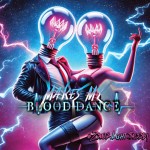
Artist: Makes My Blood Dance (@)
Title: #Z3R0 2 LGHT $P33D!
Format: CD & 12" + Download
Label: Metropolis (@)
Rated:
Title: #Z3R0 2 LGHT $P33D!
Format: CD & 12" + Download
Label: Metropolis (@)
Rated:
There are bands that blend genres because they cannot decide what they want to be, and then there are bands that do it because deciding would be terribly boring. New York's Makes My Blood Dance belong firmly to the second category. On their debut album "#Z3R0 2 LGHT $P33D!", electro, goth, metal, industrial funk and disco are thrown into the same room and somehow emerge looking like they had planned the meeting all along.
The band's formula is deceptively simple: serrated guitars, synthetic rhythms, heavy bass and vocals capable of moving from theatrical grandeur to intimate seduction. But the real trick is the rhythmic architecture. MMBD understand that darkness becomes considerably more effective when it can dance. “Time And A Place” establishes this immediately, balancing melancholic reflection with a beat that refuses to sit quietly in the corner. The song's sense of longing is wrapped in something almost club-oriented, creating a curious tension between vulnerability and propulsion.
“Black Summer” and “Impossible Odds” push further towards the industrial-metal side, where distorted guitars and electronic pulses collide without either element being reduced to decoration. The production by Bret “Epic” Mazur and Mikal Blue keeps the record polished and forceful, but there is enough contrast between the tracks to prevent the album becoming one extended wall of synthetic testosterone.
“Your Little Hand In Mine” introduces a more sensual dimension, while “Heavy Metal Armour” is considerably less interested in subtlety. The title alone apparently decided that subtlety had already been adequately represented elsewhere. Yet beneath the oversized gestures, MMBD have a good instinct for hooks, repetition and theatrical pacing. Their music is clearly designed with performance in mind, and the songs often feel as though they are already illuminated by strobes.
The most intriguing detour is “Lately”, a reworking of Macy Gray's song featuring Gray herself. Turning a soul-pop composition into industrial funk could easily have become an exercise in unnecessary violence, but MMBD preserve the emotional centre while surrounding it with harder electronic and rhythmic contours. Gray's unmistakable voice provides an important contrast to EV0's more dramatic delivery, making the track feel less like a novelty collaboration and more like an encounter between two different musical worlds.
Elsewhere, “Forget To Let It In” and “Invisible Friend” reveal a slightly more melodic side, suggesting that beneath the band's deliberately exaggerated visual and sonic identity there is a genuine interest in atmosphere. “Spin You Around” then brings the dance impulse back to the foreground, before the EDM remix of “Time And A Place” closes the album by making explicit what the rest of the record has been quietly insisting upon: these songs are built to move people physically as much as emotionally.
That is perhaps the key to understanding MMBD. Calling them “electro-goth” or “disco-metal” is useful only until the music starts playing. Their real territory lies somewhere between the nightclub, the metal venue and the theatrical stage, a place where a bass drum can be both a club pulse and a rock weapon. Their live aesthetic, with its carefully constructed visuals and ritualistic presentation, reinforces this sense that the songs are components of a larger spectacle rather than isolated recordings.
There is certainly an element of excess here. The band is not frightened of melodrama, grand gestures or titles written as though a keyboard had been left alone with a teenager's password generator. But excess is not necessarily a flaw when it is understood as part of the language. MMBD know that gothic culture has always contained a strange relationship between sincerity and spectacle, and they exploit that contradiction rather effectively.
What makes "#Z3R0 2 LGHT $P33D!" more than a collection of stylistic references is its consistency of purpose. The album wants darkness without austerity, heaviness without abandoning the dance floor, and theatricality without losing the songs underneath the costumes. It occasionally comes close to overplaying its hand, but that is preferable to sounding timid. A band calling itself Makes My Blood Dance has presumably accepted certain responsibilities.
The strongest moments arrive when the genres stop behaving like separate ingredients. Guitars become rhythmic machinery, synths become atmosphere, bass becomes physical pressure and the voice becomes both narrator and performer. The resulting sound is glossy, muscular and knowingly dramatic, but there is enough emotional uncertainty beneath the surface to keep it from becoming mere spectacle.
"#Z3R0 2 LGHT $P33D!" is therefore less a declaration that goth has discovered the dance floor than a reminder that the two were never really strangers. It is music for the moment when the apocalypse gets bored with being apocalyptic and decides to put on better clothes.
Human civilisation may be collapsing. At least someone remembered to bring the synthesizers.
The band's formula is deceptively simple: serrated guitars, synthetic rhythms, heavy bass and vocals capable of moving from theatrical grandeur to intimate seduction. But the real trick is the rhythmic architecture. MMBD understand that darkness becomes considerably more effective when it can dance. “Time And A Place” establishes this immediately, balancing melancholic reflection with a beat that refuses to sit quietly in the corner. The song's sense of longing is wrapped in something almost club-oriented, creating a curious tension between vulnerability and propulsion.
“Black Summer” and “Impossible Odds” push further towards the industrial-metal side, where distorted guitars and electronic pulses collide without either element being reduced to decoration. The production by Bret “Epic” Mazur and Mikal Blue keeps the record polished and forceful, but there is enough contrast between the tracks to prevent the album becoming one extended wall of synthetic testosterone.
“Your Little Hand In Mine” introduces a more sensual dimension, while “Heavy Metal Armour” is considerably less interested in subtlety. The title alone apparently decided that subtlety had already been adequately represented elsewhere. Yet beneath the oversized gestures, MMBD have a good instinct for hooks, repetition and theatrical pacing. Their music is clearly designed with performance in mind, and the songs often feel as though they are already illuminated by strobes.
The most intriguing detour is “Lately”, a reworking of Macy Gray's song featuring Gray herself. Turning a soul-pop composition into industrial funk could easily have become an exercise in unnecessary violence, but MMBD preserve the emotional centre while surrounding it with harder electronic and rhythmic contours. Gray's unmistakable voice provides an important contrast to EV0's more dramatic delivery, making the track feel less like a novelty collaboration and more like an encounter between two different musical worlds.
Elsewhere, “Forget To Let It In” and “Invisible Friend” reveal a slightly more melodic side, suggesting that beneath the band's deliberately exaggerated visual and sonic identity there is a genuine interest in atmosphere. “Spin You Around” then brings the dance impulse back to the foreground, before the EDM remix of “Time And A Place” closes the album by making explicit what the rest of the record has been quietly insisting upon: these songs are built to move people physically as much as emotionally.
That is perhaps the key to understanding MMBD. Calling them “electro-goth” or “disco-metal” is useful only until the music starts playing. Their real territory lies somewhere between the nightclub, the metal venue and the theatrical stage, a place where a bass drum can be both a club pulse and a rock weapon. Their live aesthetic, with its carefully constructed visuals and ritualistic presentation, reinforces this sense that the songs are components of a larger spectacle rather than isolated recordings.
There is certainly an element of excess here. The band is not frightened of melodrama, grand gestures or titles written as though a keyboard had been left alone with a teenager's password generator. But excess is not necessarily a flaw when it is understood as part of the language. MMBD know that gothic culture has always contained a strange relationship between sincerity and spectacle, and they exploit that contradiction rather effectively.
What makes "#Z3R0 2 LGHT $P33D!" more than a collection of stylistic references is its consistency of purpose. The album wants darkness without austerity, heaviness without abandoning the dance floor, and theatricality without losing the songs underneath the costumes. It occasionally comes close to overplaying its hand, but that is preferable to sounding timid. A band calling itself Makes My Blood Dance has presumably accepted certain responsibilities.
The strongest moments arrive when the genres stop behaving like separate ingredients. Guitars become rhythmic machinery, synths become atmosphere, bass becomes physical pressure and the voice becomes both narrator and performer. The resulting sound is glossy, muscular and knowingly dramatic, but there is enough emotional uncertainty beneath the surface to keep it from becoming mere spectacle.
"#Z3R0 2 LGHT $P33D!" is therefore less a declaration that goth has discovered the dance floor than a reminder that the two were never really strangers. It is music for the moment when the apocalypse gets bored with being apocalyptic and decides to put on better clothes.
Human civilisation may be collapsing. At least someone remembered to bring the synthesizers.
SINE: La Mordre
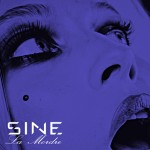
There is something deliciously suspicious about "La Mordre". SINE, the Austin-based project of multi-instrumentalist Rona Rougeheart, builds electronic music around sub-bass, heavy beats, industrial textures and a sharp sense of theatricality, but underneath the glamour there is always something with teeth. Her new album for Metropolis Records turns that tension into a narrative about ambition, seduction and the dangerous attraction of success. Rougeheart imagines a character chasing the big breakthrough, gradually discovering that the price of getting there may involve surrendering rather more than expected. The story is present, but never suffocatingly explained: it lives inside the music.
“Goddess” establishes the atmosphere with sleek menace, while “Perilized” introduces a more spectral dimension. From there, “Succumb To Me”, “2 Die 4” and “Trauma Bondage” sharpen the album's central contradiction: the music is designed to attract the body while the lyrics keep whispering that perhaps we should be suspicious. This is where SINE is particularly effective. Desire and danger are rarely presented as opposites. They are two sides of the same mechanism, and Rougeheart knows exactly how much temptation a good bassline can conceal.
Her concept of “Electronic Boom” is useful here, although "La Mordre" is considerably broader than a genre tag might suggest. Industrial electronics, dark pop, EBM-adjacent rhythms, cinematic atmospheres and more sensual passages constantly exchange places. Rougeheart's background as a drummer and multi-instrumentalist is important: the rhythms feel physical rather than merely programmed, while the voice behaves less like a conventional lead vocal than another component of the machinery. She can sound seductive, confrontational, detached or almost playful, sometimes within the same song.
That last quality saves the album from becoming overly solemn. Rougeheart has a well-developed taste for sarcasm and humour, and tracks such as “Immortal Disco” embrace the absurdity of the record's glamorous darkness. It is a useful counterweight to songs dealing with cruelty, trauma, obsession and control. Human beings have always enjoyed dancing while contemplating terrible decisions, so there is something reassuringly traditional about it.
The production, divided between Rougeheart and collaborators including Curse Mackey and AwareNess, gives the album enough variety without sacrificing cohesion. Mark Pistel's mastering provides additional definition to the heavy low end, but the record never becomes simply an exercise in sonic weight. The more effective moments are those in which attractive surfaces conceal uncomfortable ideas. “Blood + Wine” is seductive without becoming innocent; “Cruel” turns unpleasantness into something almost irresistibly danceable; “Bodies” brings the album's fascination with physicality closer to the foreground.
The title itself offers the appropriate metaphor. "La Mordre" evokes biting, and the entire album revolves around the transformation of desire into appetite. Stardom appears first as glitter, then as temptation, finally as something capable of changing the person who wants it. Rougeheart does not turn this into a conventional morality tale. There is no reassuring lesson waiting at the end, only the increasingly blurred boundary between wanting power and becoming consumed by it.
That ambiguity is one of the record's greatest strengths. SINE understands that darkness is more convincing when it does not constantly announce how dark it is. The music can be sensual, funny, aggressive and genuinely uneasy without having to choose one personality. It can invite you onto the dance floor while quietly questioning why you wanted to go there in the first place.
"La Mordre" therefore feels less like a collection of industrial-electronic tracks than a carefully staged descent into temptation. It is sleek without being sterile, theatrical without becoming camp, accessible without surrendering its sharper edges. Most importantly, it understands that seduction works better than intimidation. You do not have to be forced into the darkness. Sometimes the darkness simply offers you a drink. And if the drink happens to contain blood and wine, well, the warning was there. You just chose not to read it.
“Goddess” establishes the atmosphere with sleek menace, while “Perilized” introduces a more spectral dimension. From there, “Succumb To Me”, “2 Die 4” and “Trauma Bondage” sharpen the album's central contradiction: the music is designed to attract the body while the lyrics keep whispering that perhaps we should be suspicious. This is where SINE is particularly effective. Desire and danger are rarely presented as opposites. They are two sides of the same mechanism, and Rougeheart knows exactly how much temptation a good bassline can conceal.
Her concept of “Electronic Boom” is useful here, although "La Mordre" is considerably broader than a genre tag might suggest. Industrial electronics, dark pop, EBM-adjacent rhythms, cinematic atmospheres and more sensual passages constantly exchange places. Rougeheart's background as a drummer and multi-instrumentalist is important: the rhythms feel physical rather than merely programmed, while the voice behaves less like a conventional lead vocal than another component of the machinery. She can sound seductive, confrontational, detached or almost playful, sometimes within the same song.
That last quality saves the album from becoming overly solemn. Rougeheart has a well-developed taste for sarcasm and humour, and tracks such as “Immortal Disco” embrace the absurdity of the record's glamorous darkness. It is a useful counterweight to songs dealing with cruelty, trauma, obsession and control. Human beings have always enjoyed dancing while contemplating terrible decisions, so there is something reassuringly traditional about it.
The production, divided between Rougeheart and collaborators including Curse Mackey and AwareNess, gives the album enough variety without sacrificing cohesion. Mark Pistel's mastering provides additional definition to the heavy low end, but the record never becomes simply an exercise in sonic weight. The more effective moments are those in which attractive surfaces conceal uncomfortable ideas. “Blood + Wine” is seductive without becoming innocent; “Cruel” turns unpleasantness into something almost irresistibly danceable; “Bodies” brings the album's fascination with physicality closer to the foreground.
The title itself offers the appropriate metaphor. "La Mordre" evokes biting, and the entire album revolves around the transformation of desire into appetite. Stardom appears first as glitter, then as temptation, finally as something capable of changing the person who wants it. Rougeheart does not turn this into a conventional morality tale. There is no reassuring lesson waiting at the end, only the increasingly blurred boundary between wanting power and becoming consumed by it.
That ambiguity is one of the record's greatest strengths. SINE understands that darkness is more convincing when it does not constantly announce how dark it is. The music can be sensual, funny, aggressive and genuinely uneasy without having to choose one personality. It can invite you onto the dance floor while quietly questioning why you wanted to go there in the first place.
"La Mordre" therefore feels less like a collection of industrial-electronic tracks than a carefully staged descent into temptation. It is sleek without being sterile, theatrical without becoming camp, accessible without surrendering its sharper edges. Most importantly, it understands that seduction works better than intimidation. You do not have to be forced into the darkness. Sometimes the darkness simply offers you a drink. And if the drink happens to contain blood and wine, well, the warning was there. You just chose not to read it.
T.A.N.K.: Broken Mirror

Artist: T.A.N.K. (@)
Title: Broken Mirror
Format: CD + Download
Label: Electro Aggression Records (@)
Distributor: Poponaut
Rated:
Title: Broken Mirror
Format: CD + Download
Label: Electro Aggression Records (@)
Distributor: Poponaut
Rated:
Another new artist signed to the favorite Canadian institution when it comes to service the listener with "stellar old school EBM and authentic complex, multi-layered dark electro" music - EAR (Electro Aggression Records) - presents us this time a German tank. Well, they pretend that there's actually a more in-depth hidden agenda behind this pseudonym ("Taktischer Angriff (auf’s) Nervenkostüm") but actually I like the more simplistic, evident meaning of this T.A.N.K.. And why beating a dead horse on this? It fits perfectly with the music expression of this solo effort established by Reinhard Hüber back in 2001.
Although Reinhard has made some first steps into music in the 90s with a Punk-Rock-project called Faust, he found his musically idendity under his T.A.N.K.-pseudonym and the close appearance to the slowly upcoming so-called Neo-Old-School EBM wave around Dessau and the later established Electric Tremor label (the so-called Anhalt-EBM-style), which can be seen as a counter-wave against the leading, repetitive Terrorbanana / Hellectro-formula produced by the ridiculous snap-light Cyber-kids. Actually, if you look on the historical content, it can be said that Reinhard was one of the first activists of this special neo-old-school EBM style. Luckily this all hasn't too much impact on Reinhard's music.
Back in 2003 he could release his debut album "Musica Denaturale" on the small label Ars Electrique, while in 2017 Reinhard made a first comeback after a longer break with his album "Return" released on the Electric Tremor label from Dessau. Ever since that he has ongoing produced music, played several live gigs and could gain attention by the EAR label.
T.A.N.K. isn't at all just another NEP-clone sounding project, because Reinhard always digs deeper to sqeeze out a more layered sound expression out of his mostly hardware-synthesizer-based arsenal in his studio. Especially his synthesizer pad- and lead-sounds and the attempt to add a much more dense song progression well-placed into his still biting and pummeling bassline-sequencing work deserves respect and separates him successfully from repititive-sounding colleagues. So if it comes to find acts which can be in some way compared with Reinhard's work I would call rather lesser known names like Image Transmission or IC434 as references.
So T.A.N.K. can be seen as a tradionalist with a sound design obviously inspired by the so-called second wave of EBM in the mid-90s and for this, Reinhard has a lot of sharp-sounding weapons to offer. Reinhard's mostly adament and angry-sounding voice roars mighty over his mostly danceable-produced tracks and leads often the scenario. He also often integrates counter-snare drums between the linear kick drums which adds the impression that some of the songs are faster and more compact for the listener. Dancefloor-movement is strictly allowed and notable here on most of his tracks.
"Broken Mirror" offers 13 original tracks plus you'll get 4 quality remix contributions by Reinhard's EAR-label colleagues of Pyrroline, Sleepwalk, Serpents, and Synaptic Defect. The album starts with the opener "Freedom" and the epic-sounding string- and pad-sounds invite the curious listener until the beats and Reinhard's shouts kick in to lead this track. "At War" picks this style up, pushes even harder forward with some pounding synth-basslines, and celebrates the above mentioned counter-snare works into a moving pogo inferno. No one said that classic old-school EBM isn't the field Reinhard plays in.
To pick out the highlights out of the 13 original tracks seems to be a bit challenging because it has to be said that all of them are sounding relative cohesive and united. There isn't a track which falls under the radar regarding the level of quality. It's moreover a matter of personal preferences I guess. Everyone would maybe call the nailing "Reject" with its classic EBM-basslines and the well-accented timbre of Reinhard's vocals as being a trademark track on "Broken Mirror", but personally I am quite fine with the almost catchy starting "Bloodsucker" with its nice pad layers - they finally shimmering through the whole track. And if an artist pretty much fascinated to explore all depths of the classic old-school EBM-field likes to present the listener a pure instrumental tune with "Far Away", which sounds even layered and thrilling enough for this attempt, then I have to applaude.
"Broken Mirror" is undoubtly Reinhard's most matured album so far and backed up by the label EAR was surely the right decision to keep the ball rolling for T.A.N.K.. This is a quite nice produced EBM-album which unites traditional elements of the mid-90s with a surprisingly layered sound-design. Not completely unique for sure and no stuff, which hasn't been discovered or heard anywhere else before - but Reinhard has found his very own and authentic sounding niche which he services well.
Although Reinhard has made some first steps into music in the 90s with a Punk-Rock-project called Faust, he found his musically idendity under his T.A.N.K.-pseudonym and the close appearance to the slowly upcoming so-called Neo-Old-School EBM wave around Dessau and the later established Electric Tremor label (the so-called Anhalt-EBM-style), which can be seen as a counter-wave against the leading, repetitive Terrorbanana / Hellectro-formula produced by the ridiculous snap-light Cyber-kids. Actually, if you look on the historical content, it can be said that Reinhard was one of the first activists of this special neo-old-school EBM style. Luckily this all hasn't too much impact on Reinhard's music.
Back in 2003 he could release his debut album "Musica Denaturale" on the small label Ars Electrique, while in 2017 Reinhard made a first comeback after a longer break with his album "Return" released on the Electric Tremor label from Dessau. Ever since that he has ongoing produced music, played several live gigs and could gain attention by the EAR label.
T.A.N.K. isn't at all just another NEP-clone sounding project, because Reinhard always digs deeper to sqeeze out a more layered sound expression out of his mostly hardware-synthesizer-based arsenal in his studio. Especially his synthesizer pad- and lead-sounds and the attempt to add a much more dense song progression well-placed into his still biting and pummeling bassline-sequencing work deserves respect and separates him successfully from repititive-sounding colleagues. So if it comes to find acts which can be in some way compared with Reinhard's work I would call rather lesser known names like Image Transmission or IC434 as references.
So T.A.N.K. can be seen as a tradionalist with a sound design obviously inspired by the so-called second wave of EBM in the mid-90s and for this, Reinhard has a lot of sharp-sounding weapons to offer. Reinhard's mostly adament and angry-sounding voice roars mighty over his mostly danceable-produced tracks and leads often the scenario. He also often integrates counter-snare drums between the linear kick drums which adds the impression that some of the songs are faster and more compact for the listener. Dancefloor-movement is strictly allowed and notable here on most of his tracks.
"Broken Mirror" offers 13 original tracks plus you'll get 4 quality remix contributions by Reinhard's EAR-label colleagues of Pyrroline, Sleepwalk, Serpents, and Synaptic Defect. The album starts with the opener "Freedom" and the epic-sounding string- and pad-sounds invite the curious listener until the beats and Reinhard's shouts kick in to lead this track. "At War" picks this style up, pushes even harder forward with some pounding synth-basslines, and celebrates the above mentioned counter-snare works into a moving pogo inferno. No one said that classic old-school EBM isn't the field Reinhard plays in.
To pick out the highlights out of the 13 original tracks seems to be a bit challenging because it has to be said that all of them are sounding relative cohesive and united. There isn't a track which falls under the radar regarding the level of quality. It's moreover a matter of personal preferences I guess. Everyone would maybe call the nailing "Reject" with its classic EBM-basslines and the well-accented timbre of Reinhard's vocals as being a trademark track on "Broken Mirror", but personally I am quite fine with the almost catchy starting "Bloodsucker" with its nice pad layers - they finally shimmering through the whole track. And if an artist pretty much fascinated to explore all depths of the classic old-school EBM-field likes to present the listener a pure instrumental tune with "Far Away", which sounds even layered and thrilling enough for this attempt, then I have to applaude.
"Broken Mirror" is undoubtly Reinhard's most matured album so far and backed up by the label EAR was surely the right decision to keep the ball rolling for T.A.N.K.. This is a quite nice produced EBM-album which unites traditional elements of the mid-90s with a surprisingly layered sound-design. Not completely unique for sure and no stuff, which hasn't been discovered or heard anywhere else before - but Reinhard has found his very own and authentic sounding niche which he services well.