
Browse by Genre
Industrial Music / Industrial Metal / Aggro Industrial / Electro Metal
Industrial Noise / Power Noise / Harsh Noise
Synth Pop / Electro Pop / Synth-Electronica
Techno / Trance / Goa / Drum'n'Bass / Jungle / Tribal / Trip-Hop
Ambient / Electronica / Ethereal / Dub / Soundscapes / Abstract
Experimental / Avantgarde / Weird & Wired / Glitch / Noise / Field Recording
Dark / Gothic / Wave / New Wave / Dark Wave / Industrial Gothic
New Music / Downtown / Avantgarde Jazz / New Classical / World
Search Reviews
Music Reviews
David Shea: Meditations
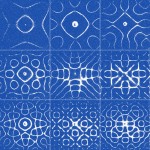


Meditation records often arrive wrapped in soft-focus promises: calm, balance, transcendence, preferably in pastel tones. "Meditations" by David Shea does not quite play that game. Released by Room40, this set of eight pieces feels less like a scented candle and more like an honest logbook of practice. Which is to say: attentive, restless, sometimes uncomfortable, and occasionally luminous.
Shea has never been a minimalist in the reductive sense. His trajectory from sample-based experimentation in the 1990s to cross-cultural composition has always involved friction, translation, and the bending of traditions rather than their preservation in glass cases. Here, the material orbits around fragments of the Buddhist Heart Sutra, that famously concise distillation of emptiness and form, itself a product of centuries of transmission along trade routes and linguistic shifts. Shea treats it accordingly, not as sacred museum artifact but as something historically porous, traded and re-voiced across cultures like a melody that refuses to settle.
The concept is deceptively simple: music made both for meditation and about meditation. Breath, stillness, distraction, physical discomfort, drifting thoughts, sudden clarity. Anyone who has actually tried to meditate knows that serenity is usually the last thing to show up. Shea understands this. These pieces do not float in uninterrupted bliss. They hover, tremble, sometimes thicken into dissonant clusters before dissolving back into open space.
The ensemble, recorded live in a shared setting, is central. Zheng-Ting Wang’s sheng introduces an ancient, reedy breath that feels almost architectural. Vibraphones and singing bowls shimmer without becoming decorative. Electric and MIDI guitars trace lines that blur the acoustic and the processed. Shea’s own “electromagnetic piano” and crystal bowls add an uncanny halo, as if the instruments themselves were quietly meditating on their own resonance.
“A Sutra” opens with a sense of gathering, tones assembling like thoughts before they are named. “Sitting in a Painted Cave” and its echoing counterpart, “Memories of Sitting in a Painted Cave”, operate like a mental replay: the same landscape, but filtered through recollection. Subtle variations in timbre and spatialisation make memory feel less reliable and more textured. “Stillness” is particularly revealing. It does not equate stillness with silence. Instead, it presents stillness as heightened listening, where even the smallest harmonic shift acquires weight.
The closing sequence, “The Heart Sutra” and “Svaha”, leans more explicitly into chant and recitation. Shea’s spoken voice, collaging translations shaped by multiple cultures, underscores how this text has always been hybrid. The final bonus “Metta Mix”, performed in the virtual environment of Second Life, folds the physical and digital into the practice. It sounds like a mind moving through layers of reality: imagined, embodied, streamed. If meditation once meant retreating from the world, here it includes avatars and bandwidth. The Silk Road becomes a server.
What makes "Meditations" compelling is its refusal to idealise the practice it documents. The music admits tension. It allows dissonance to sit beside consonance without resolving the argument too quickly. It recognises that emptiness is not a void but a dynamic field of relations. In that sense, the album feels less like an instruction manual and more like a companion. It does not promise enlightenment. It models attention.
For listeners expecting a purely ambient wash, this might feel too alert, too structured. For those willing to engage, it offers something rarer: a sonic environment that mirrors the real texture of contemplation. Breath in, breath out, distraction, return. Repeat. Not glamorous, not spectacular, but quietly transformative.
Shea has never been a minimalist in the reductive sense. His trajectory from sample-based experimentation in the 1990s to cross-cultural composition has always involved friction, translation, and the bending of traditions rather than their preservation in glass cases. Here, the material orbits around fragments of the Buddhist Heart Sutra, that famously concise distillation of emptiness and form, itself a product of centuries of transmission along trade routes and linguistic shifts. Shea treats it accordingly, not as sacred museum artifact but as something historically porous, traded and re-voiced across cultures like a melody that refuses to settle.
The concept is deceptively simple: music made both for meditation and about meditation. Breath, stillness, distraction, physical discomfort, drifting thoughts, sudden clarity. Anyone who has actually tried to meditate knows that serenity is usually the last thing to show up. Shea understands this. These pieces do not float in uninterrupted bliss. They hover, tremble, sometimes thicken into dissonant clusters before dissolving back into open space.
The ensemble, recorded live in a shared setting, is central. Zheng-Ting Wang’s sheng introduces an ancient, reedy breath that feels almost architectural. Vibraphones and singing bowls shimmer without becoming decorative. Electric and MIDI guitars trace lines that blur the acoustic and the processed. Shea’s own “electromagnetic piano” and crystal bowls add an uncanny halo, as if the instruments themselves were quietly meditating on their own resonance.
“A Sutra” opens with a sense of gathering, tones assembling like thoughts before they are named. “Sitting in a Painted Cave” and its echoing counterpart, “Memories of Sitting in a Painted Cave”, operate like a mental replay: the same landscape, but filtered through recollection. Subtle variations in timbre and spatialisation make memory feel less reliable and more textured. “Stillness” is particularly revealing. It does not equate stillness with silence. Instead, it presents stillness as heightened listening, where even the smallest harmonic shift acquires weight.
The closing sequence, “The Heart Sutra” and “Svaha”, leans more explicitly into chant and recitation. Shea’s spoken voice, collaging translations shaped by multiple cultures, underscores how this text has always been hybrid. The final bonus “Metta Mix”, performed in the virtual environment of Second Life, folds the physical and digital into the practice. It sounds like a mind moving through layers of reality: imagined, embodied, streamed. If meditation once meant retreating from the world, here it includes avatars and bandwidth. The Silk Road becomes a server.
What makes "Meditations" compelling is its refusal to idealise the practice it documents. The music admits tension. It allows dissonance to sit beside consonance without resolving the argument too quickly. It recognises that emptiness is not a void but a dynamic field of relations. In that sense, the album feels less like an instruction manual and more like a companion. It does not promise enlightenment. It models attention.
For listeners expecting a purely ambient wash, this might feel too alert, too structured. For those willing to engage, it offers something rarer: a sonic environment that mirrors the real texture of contemplation. Breath in, breath out, distraction, return. Repeat. Not glamorous, not spectacular, but quietly transformative.
Periode: Grapes of Nothingness


There is something beautifully perverse about titling your first properly titled album "Grapes Of Nothingness". It promises abundance and delivers… absence. Or rather, a very curated, hand-numbered, coloured-vinyl kind of absence, courtesy of Karlrecords.
Periode, the duo of Andreas Reihse and Thomas Winkler, have been quietly refining their dialogue since 2016. Reihse, known as a founding member of Kreidler and a composer for theatre and film, brings a structural instinct that never quite turns authoritarian. Winkler, who moves between music, painting, publishing and performance, supplies the grain, the friction, the slightly crooked line that keeps things human.
The setup is almost ascetic: a 70-plus Telecaster with eccentric pedals, a drum machine, an overworked laptop, and two minds that understand restraint. Winkler’s guitar patterns feel fragmented, as if they were discovered rather than written. They shimmer in reverb, hesitant and searching, until Reihse’s beats enter not to dominate but to frame. His programmed rhythms flirt with groove, then pull back at the last second, holding tension like someone who knows that gratification is overrated.
The backstory of Winkler learning his distinctive picking technique from a homeless man under the Brighton piers in 1986 sounds suspiciously cinematic. But the playing carries that ghostly residue. There is a sense of inherited gesture, now sharpened by decades of practice. The guitar lines are not flashy. They circle, they hover, they insist without raising their voice.
Across nine tracks, "Grapes Of Nothingness" unfolds less like a collection of songs and more like a series of mood studies. Melancholy is present, but it is not dramatic. It is the kind that watches the horizon rather than collapsing on the floor. The album often feels nocturnal, yet it can just as easily conjure brutal midday light, asphalt shimmering, a train platform somewhere in Berlin. Titles like “New Trains” and “Hohenschönhausen” hint at movement, but the motion is ambiguous. Are we travelling, or is the world sliding past while we remain still? The record never clarifies, and that is part of its quiet intelligence.
There are coordinates you might recognise: a trace of the atmosphere once cultivated by Les Disques du Crépuscule, a certain kraut-informed motorik discipline, a faint echo of Spaghetti Western spaciousness. But these are signposts, not destinations. Periode are not quoting; they are navigating. What emerges is something like a subdued Musique Noir, where the drama has already happened and we are left with its afterglow.
The production, tweaked and spatially polished, keeps the guitar’s contemplative drift in tension with the drum machine’s crisp, slightly scratchy surface. The beats never fully surrender to dancefloor logic, yet they are too physical to be dismissed as mere ambience. Is it trance or dance? The record shrugs and keeps moving.
What makes this album compelling is its refusal of spectacle. In a time when electronic music often competes for attention with brute force, Periode work with suggestion. They stretch a mood across a limited palette and prove that limitation can be fertile. Nothingness, here, is not emptiness. It is space. Space to drift, to project, to listen to the faint mechanics of repetition and variation.
Hand-numbered vinyl aside, this is not about collectability. It is about duration. About letting a guitar figure repeat just long enough to alter your perception of time. About discovering that a delayed groove can be more affecting than a drop. The grapes, it turns out, are not nothing at all. They are small, dark, and quietly intoxicating.
Periode, the duo of Andreas Reihse and Thomas Winkler, have been quietly refining their dialogue since 2016. Reihse, known as a founding member of Kreidler and a composer for theatre and film, brings a structural instinct that never quite turns authoritarian. Winkler, who moves between music, painting, publishing and performance, supplies the grain, the friction, the slightly crooked line that keeps things human.
The setup is almost ascetic: a 70-plus Telecaster with eccentric pedals, a drum machine, an overworked laptop, and two minds that understand restraint. Winkler’s guitar patterns feel fragmented, as if they were discovered rather than written. They shimmer in reverb, hesitant and searching, until Reihse’s beats enter not to dominate but to frame. His programmed rhythms flirt with groove, then pull back at the last second, holding tension like someone who knows that gratification is overrated.
The backstory of Winkler learning his distinctive picking technique from a homeless man under the Brighton piers in 1986 sounds suspiciously cinematic. But the playing carries that ghostly residue. There is a sense of inherited gesture, now sharpened by decades of practice. The guitar lines are not flashy. They circle, they hover, they insist without raising their voice.
Across nine tracks, "Grapes Of Nothingness" unfolds less like a collection of songs and more like a series of mood studies. Melancholy is present, but it is not dramatic. It is the kind that watches the horizon rather than collapsing on the floor. The album often feels nocturnal, yet it can just as easily conjure brutal midday light, asphalt shimmering, a train platform somewhere in Berlin. Titles like “New Trains” and “Hohenschönhausen” hint at movement, but the motion is ambiguous. Are we travelling, or is the world sliding past while we remain still? The record never clarifies, and that is part of its quiet intelligence.
There are coordinates you might recognise: a trace of the atmosphere once cultivated by Les Disques du Crépuscule, a certain kraut-informed motorik discipline, a faint echo of Spaghetti Western spaciousness. But these are signposts, not destinations. Periode are not quoting; they are navigating. What emerges is something like a subdued Musique Noir, where the drama has already happened and we are left with its afterglow.
The production, tweaked and spatially polished, keeps the guitar’s contemplative drift in tension with the drum machine’s crisp, slightly scratchy surface. The beats never fully surrender to dancefloor logic, yet they are too physical to be dismissed as mere ambience. Is it trance or dance? The record shrugs and keeps moving.
What makes this album compelling is its refusal of spectacle. In a time when electronic music often competes for attention with brute force, Periode work with suggestion. They stretch a mood across a limited palette and prove that limitation can be fertile. Nothingness, here, is not emptiness. It is space. Space to drift, to project, to listen to the faint mechanics of repetition and variation.
Hand-numbered vinyl aside, this is not about collectability. It is about duration. About letting a guitar figure repeat just long enough to alter your perception of time. About discovering that a delayed groove can be more affecting than a drop. The grapes, it turns out, are not nothing at all. They are small, dark, and quietly intoxicating.
Claudio F Baroni: Re-Genetic
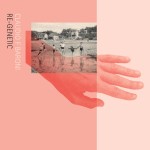
There is something almost suspiciously humble about "Re-Genetic". Two pieces, modest forces, a CD that does not scream for attention. And yet Claudio F. Baroni is doing something quietly radical here: he listens so intensely to speech that he turns listening itself into composition.
Baroni, an Argentine composer based in the Netherlands and a long-time collaborator of Unsounds, has made the spoken voice his laboratory. Trained in Rosario and later at the Royal Conservatory in The Hague with figures such as Louis Andriessen, he operates in a lineage where structure matters, but so does doubt. He is also deeply indebted to Robert Ashley, the patron saint of musical speech, and here that influence becomes both method and homage.
The premise sounds almost clinical: digitally analyse recorded speech, detect where Western scale pitches hide inside natural intonation, assign those pitches to instruments, align them precisely to syllables. Performers listen to the voice and “shadow” it in real time. It is as if language were placed under a microscope and the harmonic skeleton revealed. You could imagine this turning into a dry conceptual exercise. It does not.
In "J’ai connu", drawn from a pandemic-era text by Géraldine Schwarz, the whispered narration hovers between confession and analysis. The voice of Isabelle Vigier sits extremely close to the ear, almost ASMR in its intimacy. Around it, electric guitar, piano, bass and electronics do not decorate the words. They trace them. They lean into their pitch curves like careful archivists of breath. The effect is uncanny: meaning remains intact, but it is gently loosened from its throne. Words become events in time, small melodic arcs that bloom and vanish. When the instruments slip into brief interludes, replaying pitch constellations from the last phrase, the memory of speech lingers like a harmonic afterimage.
Then comes "Re-Genetic Mutation", built around the full original recording of Ashley’s 1991 solo voice piece. This is not a remix, not a reinterpretation in the fashionable sense. It is more like an act of devotion conducted with surgical tools. Ashley’s inner-monologue style, full of looping thoughts and refrains, already resists tidy comprehension. Baroni refuses to clarify it. He does not illustrate the text, does not underline it, does not tell us what it means. Instead, he extracts its tonal DNA and lets piano and electronics orbit it.
Reinier van Houdt’s piano playing is so precisely aligned with Ashley’s speech contours that, at times, the instrument seems to anticipate the voice. It creates a subtle perceptual glitch: who is leading whom? Is the voice casting the harmonic shadow, or is the piano quietly steering the narrative? That ambiguity becomes the real drama of the piece.
What makes "Re-Genetic" compelling is that it treats speech neither as message nor as raw sound, but as a fragile interface between the two. Baroni does not vandalise semantics. He simply shifts the spotlight. Meaning, sonority and music momentarily drift apart, then snap back into alignment. The listener is asked to give up the lazy habit of “understanding” and to enter a more exposed state of attention. Not mystical, not sentimental. Just alert.
There is a certain irony in using digital analysis to reveal something profoundly human: the micro-inflections that make a voice unique. In an era where voices are flattened into podcasts, voice notes and algorithmic clones, Baroni insists on the grain, the breath, the uneven curve of a syllable. He composes not from ideas about speech, but from speech itself.
This is not background music. It will not soundtrack your dinner. It asks for focus, and in return it offers a strange generosity: the chance to hear language as if it were happening for the first time. For a release that outwardly looks restrained, "Re-Genetic" carries a quietly subversive message. Listening, when taken seriously, is already a form of creation.
Baroni, an Argentine composer based in the Netherlands and a long-time collaborator of Unsounds, has made the spoken voice his laboratory. Trained in Rosario and later at the Royal Conservatory in The Hague with figures such as Louis Andriessen, he operates in a lineage where structure matters, but so does doubt. He is also deeply indebted to Robert Ashley, the patron saint of musical speech, and here that influence becomes both method and homage.
The premise sounds almost clinical: digitally analyse recorded speech, detect where Western scale pitches hide inside natural intonation, assign those pitches to instruments, align them precisely to syllables. Performers listen to the voice and “shadow” it in real time. It is as if language were placed under a microscope and the harmonic skeleton revealed. You could imagine this turning into a dry conceptual exercise. It does not.
In "J’ai connu", drawn from a pandemic-era text by Géraldine Schwarz, the whispered narration hovers between confession and analysis. The voice of Isabelle Vigier sits extremely close to the ear, almost ASMR in its intimacy. Around it, electric guitar, piano, bass and electronics do not decorate the words. They trace them. They lean into their pitch curves like careful archivists of breath. The effect is uncanny: meaning remains intact, but it is gently loosened from its throne. Words become events in time, small melodic arcs that bloom and vanish. When the instruments slip into brief interludes, replaying pitch constellations from the last phrase, the memory of speech lingers like a harmonic afterimage.
Then comes "Re-Genetic Mutation", built around the full original recording of Ashley’s 1991 solo voice piece. This is not a remix, not a reinterpretation in the fashionable sense. It is more like an act of devotion conducted with surgical tools. Ashley’s inner-monologue style, full of looping thoughts and refrains, already resists tidy comprehension. Baroni refuses to clarify it. He does not illustrate the text, does not underline it, does not tell us what it means. Instead, he extracts its tonal DNA and lets piano and electronics orbit it.
Reinier van Houdt’s piano playing is so precisely aligned with Ashley’s speech contours that, at times, the instrument seems to anticipate the voice. It creates a subtle perceptual glitch: who is leading whom? Is the voice casting the harmonic shadow, or is the piano quietly steering the narrative? That ambiguity becomes the real drama of the piece.
What makes "Re-Genetic" compelling is that it treats speech neither as message nor as raw sound, but as a fragile interface between the two. Baroni does not vandalise semantics. He simply shifts the spotlight. Meaning, sonority and music momentarily drift apart, then snap back into alignment. The listener is asked to give up the lazy habit of “understanding” and to enter a more exposed state of attention. Not mystical, not sentimental. Just alert.
There is a certain irony in using digital analysis to reveal something profoundly human: the micro-inflections that make a voice unique. In an era where voices are flattened into podcasts, voice notes and algorithmic clones, Baroni insists on the grain, the breath, the uneven curve of a syllable. He composes not from ideas about speech, but from speech itself.
This is not background music. It will not soundtrack your dinner. It asks for focus, and in return it offers a strange generosity: the chance to hear language as if it were happening for the first time. For a release that outwardly looks restrained, "Re-Genetic" carries a quietly subversive message. Listening, when taken seriously, is already a form of creation.
KMFDM: Enemy

Forty-two years in, most bands are content to sell anniversary box sets and pretend the revolution was a phase. KMFDM instead release their 24th studio album and declare war. Again.
"Enemy", out February 6th, 2026 via Metropolis Records, arrives with the subtlety of a steel-toed boot through a television screen. The Ultra Heavy Beat, that long-running slogan and rhythmic doctrine coined by Sascha Konietzko, remains intact: mechanical, militant, danceable in a way that makes you question your moral alignment while you move.
Konietzko, still steering the ship with Lucia Cifarelli at his side and Andy Selway hammering percussion like a factory foreman with no patience for excuses, now adds guitarist Tidor Nieddu to the frontline. The effect is not reinvention so much as reinforcement. KMFDM have never been shy about their aesthetic: distortion as architecture, slogans as hooks, politics as percussion.
The title track “ENEMY” opens the album in full manifesto mode. It does not ask for nuance. It demands allegiance. The production is crisp, heavy, unapologetically synthetic. You can trace a line back to the Wax Trax! era, when the band relocated from Hamburg to the United States and embedded themselves in the 90s industrial boom. That was the decade when “Juke Joint Jezebel” stormed charts and found its way into soundtracks for films like Mortal Kombat and Bad Boys. KMFDM learned early that confrontation sells, especially if you can dance to it.
“OUBLIETTE” leans into melody without surrendering weight. It has that polished, arena-ready sheen the band have honed over decades, with Cifarelli’s voice cutting through layers of programmed density. In contrast, “L’ETAT” is sharper, more metallic, a reminder that industrial metal is not meant to soothe. It grinds.
“VAMPYR” injects a funky pulse into the machinery. The groove is almost playful, though the lyrics never quite allow comfort. KMFDM’s long-standing strength lies in this balance: the ability to make satire sound like a rallying cry. “OUTERNATIONAL INTERVENTION” channels thrash energy into something deliberately hyperbolic, bordering on self-parody but never tipping into irrelevance. They know exactly how loud they are being.
The sequel “STRAY BULLET 2.0” is both self-reference and update. It nods to their own catalog without becoming trapped by it. After four decades, nostalgia would be easy. Instead, the band reframe their past through contemporary production, as if reminding listeners that history is not a museum piece but an active weapon.
“YOÜ”, featuring Annabella Konietzko, introduces a generational shift. Her songwriting debut with the group is explosive yet controlled, suggesting that the Ultra Heavy Beat might outlive even its founding captain. There is something almost pragmatic in that realization. Revolutions require succession planning.
KMFDM have always treated sociopolitical commentary not as garnish but as core material. From their early German recordings through their American ascendancy and eventual return to Hamburg in 2008, the band have maintained a consistent stance: confront hypocrisy, amplify dissent, reject complacency.
On "Enemy", that posture feels less rhetorical and more weary in its urgency. The world they critique is not abstract. The album’s tone oscillates between defiance and something closer to exasperation. “CATCH & KILL” and “GUN QUARTER SUE” carry a darkened groove that feels less like celebration and more like diagnosis.
“The Second Coming” closes the record with cinematic heft. Layers stack, rhythms tighten, and the band sound as though they are summarizing a thesis they have been refining since 1984. Industrial rock as continuity project. As warning system. As endurance test.
Technically, "Enemy" is immaculately produced. The guitars slash cleanly through programmed beats, synths occupy their own frequency territories, and the low end remains muscular without collapsing into mud. For a band this seasoned, discipline matters. The aggression is calibrated.
KMFDM’s longevity is not an accident. They have survived genre shifts, hiatuses, lineup changes, and the awkward aging of industrial aesthetics. Where peers softened or dissolved, they doubled down. There is something almost admirable in that stubbornness.
"Enemy" does not attempt subtlety. It does not apologize. It does not pretend the past forty years were rehearsal. Instead, it insists that the machinery still functions, the slogans still sting, and the dance floor can remain a site of resistance.
In an era that often confuses noise with impact, KMFDM remind us that impact requires structure. And possibly a very large amplifier.
"Enemy", out February 6th, 2026 via Metropolis Records, arrives with the subtlety of a steel-toed boot through a television screen. The Ultra Heavy Beat, that long-running slogan and rhythmic doctrine coined by Sascha Konietzko, remains intact: mechanical, militant, danceable in a way that makes you question your moral alignment while you move.
Konietzko, still steering the ship with Lucia Cifarelli at his side and Andy Selway hammering percussion like a factory foreman with no patience for excuses, now adds guitarist Tidor Nieddu to the frontline. The effect is not reinvention so much as reinforcement. KMFDM have never been shy about their aesthetic: distortion as architecture, slogans as hooks, politics as percussion.
The title track “ENEMY” opens the album in full manifesto mode. It does not ask for nuance. It demands allegiance. The production is crisp, heavy, unapologetically synthetic. You can trace a line back to the Wax Trax! era, when the band relocated from Hamburg to the United States and embedded themselves in the 90s industrial boom. That was the decade when “Juke Joint Jezebel” stormed charts and found its way into soundtracks for films like Mortal Kombat and Bad Boys. KMFDM learned early that confrontation sells, especially if you can dance to it.
“OUBLIETTE” leans into melody without surrendering weight. It has that polished, arena-ready sheen the band have honed over decades, with Cifarelli’s voice cutting through layers of programmed density. In contrast, “L’ETAT” is sharper, more metallic, a reminder that industrial metal is not meant to soothe. It grinds.
“VAMPYR” injects a funky pulse into the machinery. The groove is almost playful, though the lyrics never quite allow comfort. KMFDM’s long-standing strength lies in this balance: the ability to make satire sound like a rallying cry. “OUTERNATIONAL INTERVENTION” channels thrash energy into something deliberately hyperbolic, bordering on self-parody but never tipping into irrelevance. They know exactly how loud they are being.
The sequel “STRAY BULLET 2.0” is both self-reference and update. It nods to their own catalog without becoming trapped by it. After four decades, nostalgia would be easy. Instead, the band reframe their past through contemporary production, as if reminding listeners that history is not a museum piece but an active weapon.
“YOÜ”, featuring Annabella Konietzko, introduces a generational shift. Her songwriting debut with the group is explosive yet controlled, suggesting that the Ultra Heavy Beat might outlive even its founding captain. There is something almost pragmatic in that realization. Revolutions require succession planning.
KMFDM have always treated sociopolitical commentary not as garnish but as core material. From their early German recordings through their American ascendancy and eventual return to Hamburg in 2008, the band have maintained a consistent stance: confront hypocrisy, amplify dissent, reject complacency.
On "Enemy", that posture feels less rhetorical and more weary in its urgency. The world they critique is not abstract. The album’s tone oscillates between defiance and something closer to exasperation. “CATCH & KILL” and “GUN QUARTER SUE” carry a darkened groove that feels less like celebration and more like diagnosis.
“The Second Coming” closes the record with cinematic heft. Layers stack, rhythms tighten, and the band sound as though they are summarizing a thesis they have been refining since 1984. Industrial rock as continuity project. As warning system. As endurance test.
Technically, "Enemy" is immaculately produced. The guitars slash cleanly through programmed beats, synths occupy their own frequency territories, and the low end remains muscular without collapsing into mud. For a band this seasoned, discipline matters. The aggression is calibrated.
KMFDM’s longevity is not an accident. They have survived genre shifts, hiatuses, lineup changes, and the awkward aging of industrial aesthetics. Where peers softened or dissolved, they doubled down. There is something almost admirable in that stubbornness.
"Enemy" does not attempt subtlety. It does not apologize. It does not pretend the past forty years were rehearsal. Instead, it insists that the machinery still functions, the slogans still sting, and the dance floor can remain a site of resistance.
In an era that often confuses noise with impact, KMFDM remind us that impact requires structure. And possibly a very large amplifier.
Richard Francis: Combinations 4

There are musicians who play instruments. Then there are musicians who build a machine, wire it to misbehave, and call that the instrument. Richard Francis belongs firmly in the second category.
With "Combinations 4", Francis continues a practice he has refined since 2010: live, improvised takes recorded straight to stereo, barely edited, occasionally layered, and otherwise left to stand or fall on their own unstable circuitry.
He calls his setup the “fugue system”, which sounds faintly academic until you hear it operate. Built from digital and analogue components, the system merges found sound, feedback loops, generative channels, and hands-on control into a dense electronic ecology. The key detail is that he once intended it to replicate the complexity of studio composition in real time. Then he discovered he preferred the accidents. Sensible choice.
The pieces on "Combinations 4" do not unfold like linear compositions. They accumulate. Multiple signals drift toward each other, tangle, lock into patterns, then dissolve. The “combinations” of the title are not decorative overlays; they are interactions, small negotiations between forces that were never meant to coexist politely.
“Four A” opens with a cautious layering of textures, faint pulses nudging against grainy washes. It feels like stepping into a room where several machines are already humming and deciding not to turn any of them off. “Leave it all alone for months (edit)” suggests patience as a compositional method. Loops emerge as if they have been fermenting. The edit in the title hints at restraint, but the sound itself remains porous, raw at the edges.
“Parehuia” and “Phase effect on wet road” play with movement and reflection. Tones flicker and smear, as though light were refracting through damp asphalt at night. The music does not chase drama. It studies motion. Subtle shifts in phase create rhythmic illusions that appear and vanish before you can fully name them.
Then there are the titles that sound like marginal notes in a notebook: “The alphabet is a sampler”, “My instrument is a systems diagram”. Francis has a dry sense of humor about his own practice. He is not pretending this is mystical revelation. It is circuitry. It is process. It is an architecture of signal flow that occasionally stumbles into something unexpectedly lyrical.
“My fuel! Love it!” injects a jittery propulsion, feedback skittering like nervous energy trapped in a grid. “Like a forest” offers a brief, almost meditative clearing - thin strands of sound spaced with unusual generosity. Even here, however, nothing resolves into comfort. There is always a faint hiss of instability.
Francis’ biography reads like a map of serious experimental credentials: releases on labels such as Senufo Editions and Entr’acte, collaborations with figures including Ralf Wehowsky and Francisco Lopez, performances at institutions from ZKM Karlsruhe to Issue Project Room in New York. The pedigree is formidable. The music, however, resists prestige. It sounds provisional, alive, occasionally on the brink of short-circuit.
What distinguishes "Combinations 4" is its quiet confidence in process. The layering feels more deliberate than chaotic, suggesting that the system has matured. Patterns recur, semi-complex rhythms crystallize, and motifs reappear just long enough to imply structure without locking into it. You sense Francis guiding rather than commanding, adjusting parameters in real time while the network responds with its own stubborn logic.
There is something almost ecological about it. Feedback behaves like weather. Noise pools and evaporates. Signals migrate.
Despite its technological underpinnings, the album never feels sterile. The stereo field carries depth and air. Imperfections are not corrected; they are acknowledged. Trimmed beginnings and endings retain the sense that you are hearing a slice of an ongoing continuum, not a polished artifact.
Room40’s catalog has long embraced works that blur composition and improvisation, environment and abstraction. "Combinations 4" sits comfortably in that lineage while asserting its own temperament: less concerned with spectacle, more invested in the slow choreography of interaction.
In the end, this is not music that demands emotional confession. It invites attention. It rewards close listening with subtle shifts in pattern and density. It treats sound as a living diagram, lines crossing and recrossing until meaning emerges from friction.
Plenty of artists talk about systems. Richard Francis lets his system talk back.
With "Combinations 4", Francis continues a practice he has refined since 2010: live, improvised takes recorded straight to stereo, barely edited, occasionally layered, and otherwise left to stand or fall on their own unstable circuitry.
He calls his setup the “fugue system”, which sounds faintly academic until you hear it operate. Built from digital and analogue components, the system merges found sound, feedback loops, generative channels, and hands-on control into a dense electronic ecology. The key detail is that he once intended it to replicate the complexity of studio composition in real time. Then he discovered he preferred the accidents. Sensible choice.
The pieces on "Combinations 4" do not unfold like linear compositions. They accumulate. Multiple signals drift toward each other, tangle, lock into patterns, then dissolve. The “combinations” of the title are not decorative overlays; they are interactions, small negotiations between forces that were never meant to coexist politely.
“Four A” opens with a cautious layering of textures, faint pulses nudging against grainy washes. It feels like stepping into a room where several machines are already humming and deciding not to turn any of them off. “Leave it all alone for months (edit)” suggests patience as a compositional method. Loops emerge as if they have been fermenting. The edit in the title hints at restraint, but the sound itself remains porous, raw at the edges.
“Parehuia” and “Phase effect on wet road” play with movement and reflection. Tones flicker and smear, as though light were refracting through damp asphalt at night. The music does not chase drama. It studies motion. Subtle shifts in phase create rhythmic illusions that appear and vanish before you can fully name them.
Then there are the titles that sound like marginal notes in a notebook: “The alphabet is a sampler”, “My instrument is a systems diagram”. Francis has a dry sense of humor about his own practice. He is not pretending this is mystical revelation. It is circuitry. It is process. It is an architecture of signal flow that occasionally stumbles into something unexpectedly lyrical.
“My fuel! Love it!” injects a jittery propulsion, feedback skittering like nervous energy trapped in a grid. “Like a forest” offers a brief, almost meditative clearing - thin strands of sound spaced with unusual generosity. Even here, however, nothing resolves into comfort. There is always a faint hiss of instability.
Francis’ biography reads like a map of serious experimental credentials: releases on labels such as Senufo Editions and Entr’acte, collaborations with figures including Ralf Wehowsky and Francisco Lopez, performances at institutions from ZKM Karlsruhe to Issue Project Room in New York. The pedigree is formidable. The music, however, resists prestige. It sounds provisional, alive, occasionally on the brink of short-circuit.
What distinguishes "Combinations 4" is its quiet confidence in process. The layering feels more deliberate than chaotic, suggesting that the system has matured. Patterns recur, semi-complex rhythms crystallize, and motifs reappear just long enough to imply structure without locking into it. You sense Francis guiding rather than commanding, adjusting parameters in real time while the network responds with its own stubborn logic.
There is something almost ecological about it. Feedback behaves like weather. Noise pools and evaporates. Signals migrate.
Despite its technological underpinnings, the album never feels sterile. The stereo field carries depth and air. Imperfections are not corrected; they are acknowledged. Trimmed beginnings and endings retain the sense that you are hearing a slice of an ongoing continuum, not a polished artifact.
Room40’s catalog has long embraced works that blur composition and improvisation, environment and abstraction. "Combinations 4" sits comfortably in that lineage while asserting its own temperament: less concerned with spectacle, more invested in the slow choreography of interaction.
In the end, this is not music that demands emotional confession. It invites attention. It rewards close listening with subtle shifts in pattern and density. It treats sound as a living diagram, lines crossing and recrossing until meaning emerges from friction.
Plenty of artists talk about systems. Richard Francis lets his system talk back.