
Browse by Genre
Industrial Music / Industrial Metal / Aggro Industrial / Electro Metal
Industrial Noise / Power Noise / Harsh Noise
Synth Pop / Electro Pop / Synth-Electronica
Techno / Trance / Goa / Drum'n'Bass / Jungle / Tribal / Trip-Hop
Ambient / Electronica / Ethereal / Dub / Soundscapes / Abstract
Experimental / Avantgarde / Weird & Wired / Glitch / Noise / Field Recording
Dark / Gothic / Wave / New Wave / Dark Wave / Industrial Gothic
New Music / Downtown / Avantgarde Jazz / New Classical / World
Search Reviews
Music Reviews
GranLab: Movements
Seven years is long enough for scenes to mutate, trends to cannibalize themselves, and entire micro-genres to be born, hyped, and quietly buried. So when Heiko Schwanz resurfaces as Granlab with "Movements", the question isn’t nostalgia. It’s whether the body still remembers how to move, or just remembers remembering.
The answer is reassuringly physical.
Released on Broque, a label that has always treated minimal and tech-house like a kind of disciplined pleasure rather than a disposable commodity, "Movements" feels less like a comeback and more like a recalibration. Schwanz hasn’t chased the algorithmic ghosts of contemporary club culture. Instead, he tightens his language, strips away excess, and leans into something direct, almost stubbornly so.
“Sometimes I Wake Up” doesn’t waste time pretending to be subtle. It locks into a pulse and stays there, driven by an acid line that circles with the patience of something that knows exactly what it’s doing. There’s a faint whiff of late-90s euphoria, the kind that didn’t need irony to function, but it’s not revivalism. It’s more like muscle memory reactivated after a long dormancy. The addition of vocals, new territory for Granlab, is handled without overstatement. They don’t dominate; they hover, adding a human contour to an otherwise machine-driven insistence.
The title track “Movements” shifts the mood toward something darker, more pressurized. If “Sometimes I Wake Up” is about release, this is about tension. The groove feels enclosed, almost claustrophobic, with synth lines that flicker like strobe lights in a room where time has become unreliable. You can hear faint echoes of Green Velvet’s theatrical edge and Laurent Garnier’s expansive sense of narrative, but filtered through a more restrained, contemporary sensibility.
Then come the remixes, which do what remixes are supposed to do but rarely manage: they actually reinterpret rather than decorate. DML’s version loosens the spine of “Sometimes I Wake Up”, introducing a dub-techno sway that feels like the track has stepped outside for air, only to realize the night is still very much alive. Westend Ghetto, on the other hand, fractures it slightly, injecting glitchy textures and a subtle hip-house inflection that nudges the track into more playful, unstable territory without breaking it.
What makes "Movements" quietly compelling is its refusal to overstate its return. There’s no grand narrative of reinvention, no desperate attempt to sound “current”. Instead, it operates on a simpler, more difficult premise: that rhythm, when handled with care, is still enough. That a well-built track can carry memory, desire, and a hint of escape without announcing any of it too loudly.
It’s club music, yes, but not the kind that begs for attention. It assumes you’re already there, somewhere between repetition and release, letting the body negotiate what the mind tends to overcomplicate.
Let’s hope it doesn’t take another seven years for the next chapter. Even patience has its limits.
The answer is reassuringly physical.
Released on Broque, a label that has always treated minimal and tech-house like a kind of disciplined pleasure rather than a disposable commodity, "Movements" feels less like a comeback and more like a recalibration. Schwanz hasn’t chased the algorithmic ghosts of contemporary club culture. Instead, he tightens his language, strips away excess, and leans into something direct, almost stubbornly so.
“Sometimes I Wake Up” doesn’t waste time pretending to be subtle. It locks into a pulse and stays there, driven by an acid line that circles with the patience of something that knows exactly what it’s doing. There’s a faint whiff of late-90s euphoria, the kind that didn’t need irony to function, but it’s not revivalism. It’s more like muscle memory reactivated after a long dormancy. The addition of vocals, new territory for Granlab, is handled without overstatement. They don’t dominate; they hover, adding a human contour to an otherwise machine-driven insistence.
The title track “Movements” shifts the mood toward something darker, more pressurized. If “Sometimes I Wake Up” is about release, this is about tension. The groove feels enclosed, almost claustrophobic, with synth lines that flicker like strobe lights in a room where time has become unreliable. You can hear faint echoes of Green Velvet’s theatrical edge and Laurent Garnier’s expansive sense of narrative, but filtered through a more restrained, contemporary sensibility.
Then come the remixes, which do what remixes are supposed to do but rarely manage: they actually reinterpret rather than decorate. DML’s version loosens the spine of “Sometimes I Wake Up”, introducing a dub-techno sway that feels like the track has stepped outside for air, only to realize the night is still very much alive. Westend Ghetto, on the other hand, fractures it slightly, injecting glitchy textures and a subtle hip-house inflection that nudges the track into more playful, unstable territory without breaking it.
What makes "Movements" quietly compelling is its refusal to overstate its return. There’s no grand narrative of reinvention, no desperate attempt to sound “current”. Instead, it operates on a simpler, more difficult premise: that rhythm, when handled with care, is still enough. That a well-built track can carry memory, desire, and a hint of escape without announcing any of it too loudly.
It’s club music, yes, but not the kind that begs for attention. It assumes you’re already there, somewhere between repetition and release, letting the body negotiate what the mind tends to overcomplicate.
Let’s hope it doesn’t take another seven years for the next chapter. Even patience has its limits.
Leonie Strecker: Chroma
Artist: Leonie Strecker (@)
Title: Chroma
Format: Download Only (MP3 + Lossless)
Label: Line (@)
Rated:

Title: Chroma
Format: Download Only (MP3 + Lossless)
Label: Line (@)
Rated:
There’s a particular kind of album that doesn’t want to be “understood” so much as misperceived in interesting ways. "Chroma" by Leonie Strecker fits neatly into that category, quietly refusing to sit still long enough for your brain to label it and move on. It shimmers, withdraws, reappears somewhere slightly to the left of where you thought it was. If that sounds inconvenient, it is. Also the point.
Strecker, born in Düsseldorf and now based in Vienna, comes out of a trajectory that passes through electroacoustic composition studies in Rome, Düsseldorf, and Graz, with stops at institutions and festivals that tend to favor work you don’t casually hum in the shower. Her practice circles around presence, absence, and memory, which in less careful hands would result in something vaguely atmospheric and instantly forgettable. Instead, "Chroma" behaves like a controlled perceptual glitch, precise in construction but unstable in experience.
The opening “chroma accuracy” acts like a compressed thesis statement. Synthetic organ tones hover in a space that feels both architectural and imaginary, their harmonic clarity constantly threatened by saturation and interference. It’s structured, even disciplined, yet what you actually perceive keeps slipping. You’re never entirely sure whether you’re hearing a stable object or just the afterimage of one. A promising start, if you enjoy mild epistemological discomfort.
Then “a tear in my eye” interrupts the flow with something smaller and more volatile. Silence, high-frequency tones, and bursts of noise flicker in and out like a faulty circuit deciding whether to cooperate. It’s brief, almost rude in its brevity, but it introduces something crucial: the body. That fleeting vocal fragment toward the end doesn’t resolve into anything recognizable, which makes it more unsettling. It suggests presence without granting it, like someone almost speaking in the next room and then thinking better of it.
“peripher” is where things begin to stretch out and breathe, or at least simulate breathing. It starts from something recognizably physical, a recorded source that still carries the residue of space and touch, before gradually dissolving into the album’s synthetic core. The organ here becomes less an instrument and more a threshold, a halfway state between air, mechanism, and abstraction. Tones drift, detune, and recombine until the distinction between acoustic and electronic feels like a philosophical argument you’ve lost interest in winning.
At the center sits “MONO”, which might be the most quietly disorienting piece of the set. Noise initially behaves like background, the kind your brain politely ignores, until it doesn’t. It thickens into space, into rhythm, into something almost structural. Out of this, a voice begins to emerge, or rather fragments of one, consonants without commitment, speech reduced to its skeletal remains. Knowing that this piece originates from a performance where Strecker’s voice is gradually submerged only adds to the unease. What remains is not language but the memory of articulation, like finding footprints with no visible walker.
The title track “chroma” closes the album by intensifying everything without ever tipping into excess. Layers slide over one another, revealing and concealing in slow motion. Nothing dramatic happens, which is exactly why everything feels unstable. A tone shifts, a layer disappears, and suddenly what you thought was fixed reveals itself as provisional. The piece doesn’t resolve so much as thin out, like an image losing contrast until it becomes pure light.
The concept of “chroma” here isn’t decorative theory pasted onto sound to make it seem intelligent. It’s embedded in the listening experience. Just as color in philosophy hovers between object and perception, these sounds exist in a similar in-between. They’re not fully “in” the speakers, nor entirely in your head, but somewhere in the negotiation between the two. It’s a fragile, shifting zone, and Strecker navigates it with unnerving control.
There are distant affinities with the textural patience of Fennesz or the spatial sensitivity of Chihei Hatakeyama, but "Chroma" is less interested in atmosphere as environment and more in perception as process. It doesn’t give you a place to rest. It gives you a series of almost-places, each one dissolving as you arrive.
Not exactly background music, unless your background involves questioning whether sound itself has stable edges. In that case, this will feel uncomfortably at home.
Strecker, born in Düsseldorf and now based in Vienna, comes out of a trajectory that passes through electroacoustic composition studies in Rome, Düsseldorf, and Graz, with stops at institutions and festivals that tend to favor work you don’t casually hum in the shower. Her practice circles around presence, absence, and memory, which in less careful hands would result in something vaguely atmospheric and instantly forgettable. Instead, "Chroma" behaves like a controlled perceptual glitch, precise in construction but unstable in experience.
The opening “chroma accuracy” acts like a compressed thesis statement. Synthetic organ tones hover in a space that feels both architectural and imaginary, their harmonic clarity constantly threatened by saturation and interference. It’s structured, even disciplined, yet what you actually perceive keeps slipping. You’re never entirely sure whether you’re hearing a stable object or just the afterimage of one. A promising start, if you enjoy mild epistemological discomfort.
Then “a tear in my eye” interrupts the flow with something smaller and more volatile. Silence, high-frequency tones, and bursts of noise flicker in and out like a faulty circuit deciding whether to cooperate. It’s brief, almost rude in its brevity, but it introduces something crucial: the body. That fleeting vocal fragment toward the end doesn’t resolve into anything recognizable, which makes it more unsettling. It suggests presence without granting it, like someone almost speaking in the next room and then thinking better of it.
“peripher” is where things begin to stretch out and breathe, or at least simulate breathing. It starts from something recognizably physical, a recorded source that still carries the residue of space and touch, before gradually dissolving into the album’s synthetic core. The organ here becomes less an instrument and more a threshold, a halfway state between air, mechanism, and abstraction. Tones drift, detune, and recombine until the distinction between acoustic and electronic feels like a philosophical argument you’ve lost interest in winning.
At the center sits “MONO”, which might be the most quietly disorienting piece of the set. Noise initially behaves like background, the kind your brain politely ignores, until it doesn’t. It thickens into space, into rhythm, into something almost structural. Out of this, a voice begins to emerge, or rather fragments of one, consonants without commitment, speech reduced to its skeletal remains. Knowing that this piece originates from a performance where Strecker’s voice is gradually submerged only adds to the unease. What remains is not language but the memory of articulation, like finding footprints with no visible walker.
The title track “chroma” closes the album by intensifying everything without ever tipping into excess. Layers slide over one another, revealing and concealing in slow motion. Nothing dramatic happens, which is exactly why everything feels unstable. A tone shifts, a layer disappears, and suddenly what you thought was fixed reveals itself as provisional. The piece doesn’t resolve so much as thin out, like an image losing contrast until it becomes pure light.
The concept of “chroma” here isn’t decorative theory pasted onto sound to make it seem intelligent. It’s embedded in the listening experience. Just as color in philosophy hovers between object and perception, these sounds exist in a similar in-between. They’re not fully “in” the speakers, nor entirely in your head, but somewhere in the negotiation between the two. It’s a fragile, shifting zone, and Strecker navigates it with unnerving control.
There are distant affinities with the textural patience of Fennesz or the spatial sensitivity of Chihei Hatakeyama, but "Chroma" is less interested in atmosphere as environment and more in perception as process. It doesn’t give you a place to rest. It gives you a series of almost-places, each one dissolving as you arrive.
Not exactly background music, unless your background involves questioning whether sound itself has stable edges. In that case, this will feel uncomfortably at home.
Jake Soffer & Brent Carmer: Imaginary Rooms

Artist: Jake Soffer & Brent Carmer (@)
Title: Imaginary Rooms
Format: Download Only (MP3 + Lossless)
Label: Projekt (@)
Rated:

Title: Imaginary Rooms
Format: Download Only (MP3 + Lossless)
Label: Projekt (@)
Rated:
Some records you listen to. Others quietly usher you into a room and close the door behind you, leaving you alone with whatever version of yourself shows up. "Imaginary Rooms" belongs to the latter category, though it has the decency to leave a dim light on, just enough to keep the existential panic at a manageable level.
The Portland-based duo of Jake Soffer and Brent Carmer doesn’t rush to impress, which already puts them ahead of most debut records trying too hard to be “important”. Soffer’s baritone electric guitar dissolves into a low-frequency haze, stretched and processed until it behaves less like an instrument and more like weather. Carmer’s upright bass, bowed with grave patience, feels almost architectural, like load-bearing beams in a structure you can’t quite see but definitely inhabit.
Across its 57 minutes, the album avoids the usual ambient trap of becoming decorative wallpaper. These six pieces have weight. “Lost And Found” opens like a memory trying to assemble itself from fragments, hesitant and flickering. “Room With A View” suggests openness, but not comfort. It’s the kind of view you stare at while thinking about decisions you can’t undo. Then comes “The Room Where Everything Changed”, brief but dense, as if time itself briefly folds in on the sound.
“The Room With No Windows” is the centerpiece and, unsurprisingly, the most suffocating. Not in a cheap, cinematic way, but in that slow, creeping sense of enclosure where sound becomes both companion and boundary. Low-end drones swell and recede like something breathing just out of sight. By the time the title track arrives, there’s a subtle shift: textures begin to shimmer, as if the album is testing the possibility of light without fully committing to it.
Closing with “The Room Where We Met”, the duo leans into a fragile kind of warmth. Not resolution, exactly. More like the faint outline of connection, blurred by time and distance. It doesn’t comfort so much as acknowledge that something once mattered.
What makes "Imaginary Rooms" quietly compelling is its restraint. There’s no grand gesture, no obvious climax, no desperate need to be memorable. Instead, it trusts accumulation, the slow layering of tone and texture, the way memory itself works when you’re not trying to force it. You don’t “finish” this album so much as exit it, slightly disoriented, carrying traces of spaces that may or may not have existed.
It sits somewhere between the hushed erosion of Richard Skelton, the delicate atmospherics of Chihei Hatakeyama, and the textural patience of Fennesz, but it never feels derivative. If anything, it feels like two musicians carefully mapping an interior geography, one low frequency at a time.
Not a record for multitasking, unless your idea of multitasking involves staring at a wall and reconsidering your life choices. In that case, it’s perfect.
The Portland-based duo of Jake Soffer and Brent Carmer doesn’t rush to impress, which already puts them ahead of most debut records trying too hard to be “important”. Soffer’s baritone electric guitar dissolves into a low-frequency haze, stretched and processed until it behaves less like an instrument and more like weather. Carmer’s upright bass, bowed with grave patience, feels almost architectural, like load-bearing beams in a structure you can’t quite see but definitely inhabit.
Across its 57 minutes, the album avoids the usual ambient trap of becoming decorative wallpaper. These six pieces have weight. “Lost And Found” opens like a memory trying to assemble itself from fragments, hesitant and flickering. “Room With A View” suggests openness, but not comfort. It’s the kind of view you stare at while thinking about decisions you can’t undo. Then comes “The Room Where Everything Changed”, brief but dense, as if time itself briefly folds in on the sound.
“The Room With No Windows” is the centerpiece and, unsurprisingly, the most suffocating. Not in a cheap, cinematic way, but in that slow, creeping sense of enclosure where sound becomes both companion and boundary. Low-end drones swell and recede like something breathing just out of sight. By the time the title track arrives, there’s a subtle shift: textures begin to shimmer, as if the album is testing the possibility of light without fully committing to it.
Closing with “The Room Where We Met”, the duo leans into a fragile kind of warmth. Not resolution, exactly. More like the faint outline of connection, blurred by time and distance. It doesn’t comfort so much as acknowledge that something once mattered.
What makes "Imaginary Rooms" quietly compelling is its restraint. There’s no grand gesture, no obvious climax, no desperate need to be memorable. Instead, it trusts accumulation, the slow layering of tone and texture, the way memory itself works when you’re not trying to force it. You don’t “finish” this album so much as exit it, slightly disoriented, carrying traces of spaces that may or may not have existed.
It sits somewhere between the hushed erosion of Richard Skelton, the delicate atmospherics of Chihei Hatakeyama, and the textural patience of Fennesz, but it never feels derivative. If anything, it feels like two musicians carefully mapping an interior geography, one low frequency at a time.
Not a record for multitasking, unless your idea of multitasking involves staring at a wall and reconsidering your life choices. In that case, it’s perfect.
Mike Johnson: The Gardens Of Loss
Artist: Mike Johnson (@)
Title: The Gardens Of Loss
Format: CD + Download
Label: Cuneiform (http://www.cuneiformrecords.com/) (@)
Rated:
Title: The Gardens Of Loss
Format: CD + Download
Label: Cuneiform (http://www.cuneiformrecords.com/) (@)
Rated:
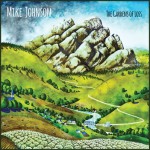
Some musicians spend decades refining a language. Others spend the same decades quietly dismantling it, piece by piece, just to see what survives the collapse. Mike Johnson has been doing both since the early 80s with Thinking Plague, a project that never really treated “rock” as a home so much as a temporary scaffolding. "The Gardens Of Loss" feels like the moment he steps outside that structure, looks back at it, and decides it was never the point anyway.
This is his first official solo album, though “solo” here is more of a conceptual loophole than a practical reality. Nineteen musicians, spread across continents, gather into something resembling an orchestra. Not the polished, obedient kind, but a restless assembly that seems to question its own existence while playing. The result isn’t rock with orchestral decoration, nor contemporary classical with a guitar awkwardly bolted on. It’s a dense electro-acoustic organism where roles blur, collide, and occasionally cancel each other out.
Johnson’s compositional DNA is unmistakable. The harmonic language leans toward that uneasy territory mapped out by 20th-century avant-garde composers, where tonality behaves like a suggestion rather than a rule. But what’s interesting here is not the complexity itself, it’s how it breathes. There are moments where the music loosens its grip, allowing something almost approachable to surface, only to fold back into intricate counterpoint or sudden structural detours. Accessibility, in this context, feels less like a concession and more like a trap door.
“Dies Irae” opens the album with a sense of compressed urgency. It doesn’t announce itself loudly, it tightens. You can feel the political anxiety embedded in its structure, not as a slogan but as pressure. “Boys With Toys” follows with a shorter, more sardonic gesture, like a brief, crooked smile in an otherwise severe conversation. Then pieces such as “The Lords Of Creation” and “Dumbstruck” stretch outward, revealing Johnson’s ability to sustain tension without relying on repetition or predictable escalation. These are not compositions that build toward a climax. They circle, accumulate, and then quietly destabilize.
At the center of all this sits the guitar, but not in the way rock tradition would demand. It doesn’t dominate. It insinuates. Its tone, sharp and slightly corrosive, cuts through the orchestral fabric when necessary, then recedes, becoming just another voice in a crowded, argumentative ensemble. It’s less a protagonist than a disruptive presence, reminding you that this music still carries a certain electric stubbornness.
The title track, “The Gardens Of Loss”, is where the album’s conceptual weight becomes almost tactile. There’s a fragile beauty in how it unfolds, constantly shadowed by a sense of erosion. It doesn’t romanticize decay, it observes it, with a kind of weary clarity. By the time you reach “Soulless In Gaza”, the emotional register has shifted into something heavier, more direct. Not didactic, but undeniably grounded in the present, where abstraction starts to feel like a luxury the music can’t quite afford.
Johnson has always been drawn to darker thematic terrain, but here the darkness feels less theatrical and more resigned. Environmental collapse, political instability, collective regret. None of this is framed as revelation. It’s treated as background noise that has become impossible to ignore. The album doesn’t protest loudly. It documents a state of mind where protest and mourning begin to overlap. What makes "The Gardens Of Loss" compelling is not just its ambition, which is considerable, but its refusal to resolve the contradictions it sets up. Rock and classical, structure and fragmentation, intellect and emotion. They don’t merge into a neat synthesis. They coexist, sometimes uneasily, sometimes beautifully, often both at once.
After more than four decades of bending genre definitions into increasingly abstract shapes, Johnson arrives at something that sounds less like a culmination and more like an exposed nerve. Not a grand statement, not a manifesto. Just a meticulously constructed environment where loss isn’t a theme, it’s the condition under which everything else happens.
Cheerful, in its own way. If your idea of cheer involves staring at the ruins and taking notes.
This is his first official solo album, though “solo” here is more of a conceptual loophole than a practical reality. Nineteen musicians, spread across continents, gather into something resembling an orchestra. Not the polished, obedient kind, but a restless assembly that seems to question its own existence while playing. The result isn’t rock with orchestral decoration, nor contemporary classical with a guitar awkwardly bolted on. It’s a dense electro-acoustic organism where roles blur, collide, and occasionally cancel each other out.
Johnson’s compositional DNA is unmistakable. The harmonic language leans toward that uneasy territory mapped out by 20th-century avant-garde composers, where tonality behaves like a suggestion rather than a rule. But what’s interesting here is not the complexity itself, it’s how it breathes. There are moments where the music loosens its grip, allowing something almost approachable to surface, only to fold back into intricate counterpoint or sudden structural detours. Accessibility, in this context, feels less like a concession and more like a trap door.
“Dies Irae” opens the album with a sense of compressed urgency. It doesn’t announce itself loudly, it tightens. You can feel the political anxiety embedded in its structure, not as a slogan but as pressure. “Boys With Toys” follows with a shorter, more sardonic gesture, like a brief, crooked smile in an otherwise severe conversation. Then pieces such as “The Lords Of Creation” and “Dumbstruck” stretch outward, revealing Johnson’s ability to sustain tension without relying on repetition or predictable escalation. These are not compositions that build toward a climax. They circle, accumulate, and then quietly destabilize.
At the center of all this sits the guitar, but not in the way rock tradition would demand. It doesn’t dominate. It insinuates. Its tone, sharp and slightly corrosive, cuts through the orchestral fabric when necessary, then recedes, becoming just another voice in a crowded, argumentative ensemble. It’s less a protagonist than a disruptive presence, reminding you that this music still carries a certain electric stubbornness.
The title track, “The Gardens Of Loss”, is where the album’s conceptual weight becomes almost tactile. There’s a fragile beauty in how it unfolds, constantly shadowed by a sense of erosion. It doesn’t romanticize decay, it observes it, with a kind of weary clarity. By the time you reach “Soulless In Gaza”, the emotional register has shifted into something heavier, more direct. Not didactic, but undeniably grounded in the present, where abstraction starts to feel like a luxury the music can’t quite afford.
Johnson has always been drawn to darker thematic terrain, but here the darkness feels less theatrical and more resigned. Environmental collapse, political instability, collective regret. None of this is framed as revelation. It’s treated as background noise that has become impossible to ignore. The album doesn’t protest loudly. It documents a state of mind where protest and mourning begin to overlap. What makes "The Gardens Of Loss" compelling is not just its ambition, which is considerable, but its refusal to resolve the contradictions it sets up. Rock and classical, structure and fragmentation, intellect and emotion. They don’t merge into a neat synthesis. They coexist, sometimes uneasily, sometimes beautifully, often both at once.
After more than four decades of bending genre definitions into increasingly abstract shapes, Johnson arrives at something that sounds less like a culmination and more like an exposed nerve. Not a grand statement, not a manifesto. Just a meticulously constructed environment where loss isn’t a theme, it’s the condition under which everything else happens.
Cheerful, in its own way. If your idea of cheer involves staring at the ruins and taking notes.
Sicker Man: Spökenkieker

Artist: Sicker Man (http://www.sicker-man.com/) (@)
Title: Spökenkieker
Format: LP
Label: Blank Records (@)
Rated:
Title: Spökenkieker
Format: LP
Label: Blank Records (@)
Rated:
Some artists make albums. Others build elaborate time machines and then pretend it’s just a record. Sicker Man has been quietly doing the latter for years, and "Spökenkieker" feels less like a new chapter than a return to the scene of the original disturbance.
The title alone already refuses to sit still. A soothsayer cursed with foresight, condemned to see forward only by staring backward. It’s a neat metaphor, but also an uncomfortably accurate description of how this album behaves. Vethake doesn’t chase the future. He excavates it, like something buried prematurely under layers of cultural fatigue.
There’s a specific geography haunting this record. Eastern Westphalia, the Teutoburg Forest, that damp mythological undergrowth where folklore doesn’t quite die, it just waits. You can hear it in the way the music breathes: not in clean lines, but in fog, in half-remembered gestures. The past here isn’t referenced, it leaks.
Musically, "Spökenkieker" is a careful mess. Not chaotic, that would be too easy. It’s more like several centuries arguing quietly in the same room. The electric cello, Vethake’s long-time accomplice, remains the gravitational center. It hums, scratches, dissolves, reassembles. Around it orbit fragments of spiritual jazz, orchestral swing, dub-inflected low-end pressure, and ambient architectures that seem to forget their own blueprints halfway through construction.
Tracks like “Johatsu” and its reprise function as thresholds rather than statements. They don’t begin or end so much as seep in and out, like memory failing to commit to a fixed version of itself. “Stop The Gravy Train” carries a title that suggests sabotage, and to its credit, it delivers something close: rhythms that feel slightly misaligned, as if refusing to fully cooperate with the idea of forward motion. It’s music that distrusts momentum.
The spoken word samples, scattered but never intrusive, act like archival ghosts. Not nostalgic, not explanatory. Just there, insisting that time is layered and inconvenient. Meanwhile, pieces like “Glass” and “Mean Drift” operate in a more fragile register, where texture becomes narrative and the smallest sonic shift feels like a plot twist no one bothered to explain.
There’s an underlying tension running through the album: the suspicion that the future has already happened, and we somehow missed it. This is where the hauntological angle stops being theory and starts becoming mood. Vethake doesn’t illustrate lost futures, he stages their afterlife. And it’s not grand or cinematic. It’s intimate, almost domestic. A flicker in the corner of perception.
For all its conceptual weight, "Spökenkieker" avoids collapsing under its own ambition. Mostly because it never tries to resolve anything. The two parts of “Ad Finem” suggest closure, but deliver something closer to suspension. Ending, in this context, is just another form of delay.
There’s also a dry sense of defiance embedded in the whole thing. The line about either mourning the dead or picking a fight isn’t just a slogan. The album does both, often in the same breath. It mourns through texture, and it fights through structure, or the refusal of it.
After more than two decades of moving through film scores, installations, and collaborations, Vethake still sounds mildly dissatisfied with the idea of settling into a recognizable form. Which is, frankly, the only reason this works. "Spökenkieker" doesn’t offer clarity, comfort, or even a stable identity. It offers a kind of persistent unease that feels strangely honest.
And in a landscape where the future is often marketed like a recycled product with better lighting, that unease might be the closest thing to foresight we get.
The title alone already refuses to sit still. A soothsayer cursed with foresight, condemned to see forward only by staring backward. It’s a neat metaphor, but also an uncomfortably accurate description of how this album behaves. Vethake doesn’t chase the future. He excavates it, like something buried prematurely under layers of cultural fatigue.
There’s a specific geography haunting this record. Eastern Westphalia, the Teutoburg Forest, that damp mythological undergrowth where folklore doesn’t quite die, it just waits. You can hear it in the way the music breathes: not in clean lines, but in fog, in half-remembered gestures. The past here isn’t referenced, it leaks.
Musically, "Spökenkieker" is a careful mess. Not chaotic, that would be too easy. It’s more like several centuries arguing quietly in the same room. The electric cello, Vethake’s long-time accomplice, remains the gravitational center. It hums, scratches, dissolves, reassembles. Around it orbit fragments of spiritual jazz, orchestral swing, dub-inflected low-end pressure, and ambient architectures that seem to forget their own blueprints halfway through construction.
Tracks like “Johatsu” and its reprise function as thresholds rather than statements. They don’t begin or end so much as seep in and out, like memory failing to commit to a fixed version of itself. “Stop The Gravy Train” carries a title that suggests sabotage, and to its credit, it delivers something close: rhythms that feel slightly misaligned, as if refusing to fully cooperate with the idea of forward motion. It’s music that distrusts momentum.
The spoken word samples, scattered but never intrusive, act like archival ghosts. Not nostalgic, not explanatory. Just there, insisting that time is layered and inconvenient. Meanwhile, pieces like “Glass” and “Mean Drift” operate in a more fragile register, where texture becomes narrative and the smallest sonic shift feels like a plot twist no one bothered to explain.
There’s an underlying tension running through the album: the suspicion that the future has already happened, and we somehow missed it. This is where the hauntological angle stops being theory and starts becoming mood. Vethake doesn’t illustrate lost futures, he stages their afterlife. And it’s not grand or cinematic. It’s intimate, almost domestic. A flicker in the corner of perception.
For all its conceptual weight, "Spökenkieker" avoids collapsing under its own ambition. Mostly because it never tries to resolve anything. The two parts of “Ad Finem” suggest closure, but deliver something closer to suspension. Ending, in this context, is just another form of delay.
There’s also a dry sense of defiance embedded in the whole thing. The line about either mourning the dead or picking a fight isn’t just a slogan. The album does both, often in the same breath. It mourns through texture, and it fights through structure, or the refusal of it.
After more than two decades of moving through film scores, installations, and collaborations, Vethake still sounds mildly dissatisfied with the idea of settling into a recognizable form. Which is, frankly, the only reason this works. "Spökenkieker" doesn’t offer clarity, comfort, or even a stable identity. It offers a kind of persistent unease that feels strangely honest.
And in a landscape where the future is often marketed like a recycled product with better lighting, that unease might be the closest thing to foresight we get.