
Wednesday, June 24, 2026
Browse by Genre
Industrial Music / Industrial Metal / Aggro Industrial / Electro Metal
Industrial Noise / Power Noise / Harsh Noise
Synth Pop / Electro Pop / Synth-Electronica
Techno / Trance / Goa / Drum'n'Bass / Jungle / Tribal / Trip-Hop
Ambient / Electronica / Ethereal / Dub / Soundscapes / Abstract
Experimental / Avantgarde / Weird & Wired / Glitch / Noise / Field Recording
Dark / Gothic / Wave / New Wave / Dark Wave / Industrial Gothic
New Music / Downtown / Avantgarde Jazz / New Classical / World
Search Reviews
Music Reviews
Illustrious: Mesmerine 111


There are albums you listen to, and then there are albums that seem to crawl up behind your consciousness, flip a few internal switches, and whisper, “Shh… let me drive for a while”. "Mesmerine" is very much the latter - a record that doesn’t so much play as "operate", as though composed by a pair of benevolent technomancers moonlighting as neuroscientists.
Illustrious - the long-running spatial-audio venture of Martyn Ware and Charles Stooke - here delivers its most unapologetically pharmacological experiment yet: two 50-minute doses of sound calibrated around the fabled 111 Hz frequency. Not the faux-mystic spa-pampering version you find on YouTube thumbnails with glowing chakras, but the unsettling, MRI-verified zone where the prefrontal cortex politely steps aside and the right hemisphere says, “Alright, I’ll take it from here.”
Ware’s involvement shapes the whole endeavour like an invisible architecture. This is one of the few figures in UK pop history who can move from "The Human League" to designing sonic cathedrals for the V&A without blinking, and here he leans fully into the “sound as engineered environment” ethos. Stooke’s presence adds something quieter but equally important - a sense of dramaturgy, of pacing, of human breath at the edges of the machine.
Together they build a space that feels halfway between a therapeutic ritual and a sci-fi diagnostic chamber. “Dose 1” is pure immersion: a hovering field of harmonics and low-frequency mass that expands like a fogbank illuminated from the inside. It doesn’t ask for attention; it simply replaces the air. After ten minutes you stop wondering what’s happening - the record has slipped its fingers into the neural wiring and begun humming to the parts of you that don’t speak in words.
“Dose 2”, with Stooke’s processed vocals, gently nudges the experience into a more ambiguous territory. The voice is soothing, yes, but also faintly uncanny - the kind of presence you might trust implicitly, only to wonder later if you were meant to. HAL 9000 has been mentioned elsewhere, but here the touch is less homicidal and more therapeutically omnipotent, like an AI that can’t harm you but absolutely can turn your introspection levels up to eleven.
The album’s pseudo-medical framing - dosage recommendations, possible side effects - would feel gimmicky if the music didn’t fully earn it. But it does. The trance isn’t theatrical; it’s physiological. Listen long enough, at the right volume, and you may find your sense of time dissolving into something embarrassingly primordial. It’s ritual music for a society that misplaced its rituals and hired an audio technician to invent new ones.
Is it music in the conventional sense? Barely. Does that matter? Not in the slightest. "Mesmerine" works more like a temporary reboot of the self - a recalibration, a quiet neurological coup. Ware and Stooke aren’t offering melodies so much as corridors; not emotions, but carefully tuned air.
Treat it like a drug, as suggested, but a noble one: the sort that doesn’t ask for devotion, only an hour of your life and a willingness to let go of the steering wheel. After all, surrender is sometimes the most lucid state of all.
Illustrious - the long-running spatial-audio venture of Martyn Ware and Charles Stooke - here delivers its most unapologetically pharmacological experiment yet: two 50-minute doses of sound calibrated around the fabled 111 Hz frequency. Not the faux-mystic spa-pampering version you find on YouTube thumbnails with glowing chakras, but the unsettling, MRI-verified zone where the prefrontal cortex politely steps aside and the right hemisphere says, “Alright, I’ll take it from here.”
Ware’s involvement shapes the whole endeavour like an invisible architecture. This is one of the few figures in UK pop history who can move from "The Human League" to designing sonic cathedrals for the V&A without blinking, and here he leans fully into the “sound as engineered environment” ethos. Stooke’s presence adds something quieter but equally important - a sense of dramaturgy, of pacing, of human breath at the edges of the machine.
Together they build a space that feels halfway between a therapeutic ritual and a sci-fi diagnostic chamber. “Dose 1” is pure immersion: a hovering field of harmonics and low-frequency mass that expands like a fogbank illuminated from the inside. It doesn’t ask for attention; it simply replaces the air. After ten minutes you stop wondering what’s happening - the record has slipped its fingers into the neural wiring and begun humming to the parts of you that don’t speak in words.
“Dose 2”, with Stooke’s processed vocals, gently nudges the experience into a more ambiguous territory. The voice is soothing, yes, but also faintly uncanny - the kind of presence you might trust implicitly, only to wonder later if you were meant to. HAL 9000 has been mentioned elsewhere, but here the touch is less homicidal and more therapeutically omnipotent, like an AI that can’t harm you but absolutely can turn your introspection levels up to eleven.
The album’s pseudo-medical framing - dosage recommendations, possible side effects - would feel gimmicky if the music didn’t fully earn it. But it does. The trance isn’t theatrical; it’s physiological. Listen long enough, at the right volume, and you may find your sense of time dissolving into something embarrassingly primordial. It’s ritual music for a society that misplaced its rituals and hired an audio technician to invent new ones.
Is it music in the conventional sense? Barely. Does that matter? Not in the slightest. "Mesmerine" works more like a temporary reboot of the self - a recalibration, a quiet neurological coup. Ware and Stooke aren’t offering melodies so much as corridors; not emotions, but carefully tuned air.
Treat it like a drug, as suggested, but a noble one: the sort that doesn’t ask for devotion, only an hour of your life and a willingness to let go of the steering wheel. After all, surrender is sometimes the most lucid state of all.
Robert Piotrowicz: Wrong Filament
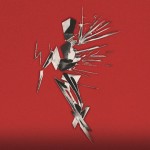
There’s something irresistibly subversive about "Wrong Filament". Robert Piotrowicz doesn’t try to reconstruct tradition - he invents it. He builds a “fictional folklore”, a world where Eastern European folk dances never fell silent, but instead mutated, electrified, passed underground - becoming something new, something both ancestral and post-industrial. And on this album, the synthetic becomes ritual. The imagined becomes physical. The “wrong” filament glows fiercely, weaving new textures where no living lineage remains.
Piotrowicz’s previous works have already toyed with deception and illusion: “Afterlife”, for example, turned synthesizers into organs and acoustic grandeur, all fake but eerily convincing. With "Wrong Filament", he sharpens that trickery. The six pieces on side A and side B are built with repetition, rhythm, minimal melodic motifs - but the way they evolve makes them feel like full ensembles of ghosts playing ancient dances long after the violins snapped. It’s not musique concrète, it’s not minimal techno, it’s more like "ritual-techno folklore".
From the opening track, “Turba”, you step into a world where drums are distant thunder, voices lost to memory, and yet the pattern persists - compelling, hypnotic, insistent. The sense of a crowded hall, of bodies moving, of breath and tension, lingers even though the instrumentation is purely electronic. It’s a ghost dance for a world that’s been flattened by history.
Then “Rewe” and “Przyszedlem Zabrac Ci Wszystko (I Have Come to Take It All from You)” show Piotrowicz’s willingness to confront darkness. There’s sorrow here; there’s fury. The melodies - when they appear - seem carved out of grief, shaped by displacement. But the rhythm keeps going. The pulse never sleeps. It’s ritual as survival.
On side B, pieces such as “Perlec” and “Wuokno” shift the album’s energy: there’s a sense of invocation, of collective memory being summoned and refracted through synthetic prisms. Despite being entirely electronic, the tracks have a strangely physical weight - the kind that makes you feel you should be dancing, or at least swaying, as if the floor beneath you remembers steps you never learned.
The final track, “Grupa Widm (Group of Spectres)”, feels like a benediction or an exorcism. Its drones stretch, its pulses throb, and you realize this music doesn’t end - it lingers, inscribes itself into the silence around you, and maybe carries forward the stories that were never meant to survive.
What’s fascinating about Piotrowicz’s approach is the paradox: "Wrong Filament" is entirely synthetic, yet it pulses with communal warmth, with the weight of ancestral grief, with the fury of histories unspoken. It isn’t nostalgia for a lost tradition - it’s forging a tradition with what remains: memory, loss, plastic circuits, and human will.
It’s playful in the sense that no folk purist could say “this is real traditional music”. But that’s the point. This isn’t tourism, nor revival. This is re-imagining. This is challenge. This is defiance. It says: “If world crushed old forms, I’ll invent new ones. If the violin died, let the synthesizer take its place”.
"Wrong Filament" asks tough questions: Can memory be synthetic? Can dance survive without flesh? Can folklore exist without homeland? And maybe - just maybe - the answer is yes - if you’re willing to listen to the hum beneath the silence.
Piotrowicz’s previous works have already toyed with deception and illusion: “Afterlife”, for example, turned synthesizers into organs and acoustic grandeur, all fake but eerily convincing. With "Wrong Filament", he sharpens that trickery. The six pieces on side A and side B are built with repetition, rhythm, minimal melodic motifs - but the way they evolve makes them feel like full ensembles of ghosts playing ancient dances long after the violins snapped. It’s not musique concrète, it’s not minimal techno, it’s more like "ritual-techno folklore".
From the opening track, “Turba”, you step into a world where drums are distant thunder, voices lost to memory, and yet the pattern persists - compelling, hypnotic, insistent. The sense of a crowded hall, of bodies moving, of breath and tension, lingers even though the instrumentation is purely electronic. It’s a ghost dance for a world that’s been flattened by history.
Then “Rewe” and “Przyszedlem Zabrac Ci Wszystko (I Have Come to Take It All from You)” show Piotrowicz’s willingness to confront darkness. There’s sorrow here; there’s fury. The melodies - when they appear - seem carved out of grief, shaped by displacement. But the rhythm keeps going. The pulse never sleeps. It’s ritual as survival.
On side B, pieces such as “Perlec” and “Wuokno” shift the album’s energy: there’s a sense of invocation, of collective memory being summoned and refracted through synthetic prisms. Despite being entirely electronic, the tracks have a strangely physical weight - the kind that makes you feel you should be dancing, or at least swaying, as if the floor beneath you remembers steps you never learned.
The final track, “Grupa Widm (Group of Spectres)”, feels like a benediction or an exorcism. Its drones stretch, its pulses throb, and you realize this music doesn’t end - it lingers, inscribes itself into the silence around you, and maybe carries forward the stories that were never meant to survive.
What’s fascinating about Piotrowicz’s approach is the paradox: "Wrong Filament" is entirely synthetic, yet it pulses with communal warmth, with the weight of ancestral grief, with the fury of histories unspoken. It isn’t nostalgia for a lost tradition - it’s forging a tradition with what remains: memory, loss, plastic circuits, and human will.
It’s playful in the sense that no folk purist could say “this is real traditional music”. But that’s the point. This isn’t tourism, nor revival. This is re-imagining. This is challenge. This is defiance. It says: “If world crushed old forms, I’ll invent new ones. If the violin died, let the synthesizer take its place”.
"Wrong Filament" asks tough questions: Can memory be synthetic? Can dance survive without flesh? Can folklore exist without homeland? And maybe - just maybe - the answer is yes - if you’re willing to listen to the hum beneath the silence.
Icon of Coil: Serenity is the Devil (25th Anniversary Remaster)

Artist: Icon of Coil
Title: Serenity is the Devil (25th Anniversary Remaster)
Format: 12" + Download
Label: Metropolis (@)
Rated:
Title: Serenity is the Devil (25th Anniversary Remaster)
Format: 12" + Download
Label: Metropolis (@)
Rated:
There are albums that age gracefully, like wine. Then there are albums that age like club walls: layered with memories, sweat-stained, and still vibrating faintly if you press your ear against them. Icon of Coil’s "Serenity Is the Devil" belongs proudly to the latter category - a futurepop cornerstone that never really left the dance floor, even when the bodies did.
Now, twenty-five years later, Metropolis Records resurrects it in a remastered double-LP edition, translucent orange like the warning light on a club exit you’re too euphoric to notice. And yes, the sound is slicker, louder, shinier - a bit like someone ran a microfiber cloth over a cyborg.
Icon of Coil’s origin story is almost mythological in the dark-electro world: Andy LaPlegua, who later unleashed Combichrist on the world, starts a project in ’97. Sebastian Komor joins in ’99, Christian Lund in 2000. The trio builds a sonic engine designed for sweaty basements and black-clad crowds who take their synths emotional and their beats punitive. The result: a debut that shot up the German alternative charts and helped cement futurepop as its own neon-lit kingdom.
Listening to this remaster in 2025 is a peculiar pleasure - like opening an old box of club flyers and realizing half of them still smell faintly of hairspray. Tracks such as “Regret” and “Shallow Nation” remain unreasonably catchy, balancing angst and uplift the way only Scandinavian EBM could back then: serious themes carried by melodies that border on pop, delivered with that signature LaPlegua baritone, half-brooding, half-inviting, always ready to lead you somewhere vaguely dangerous.
The production touch-ups don’t fundamentally change the album’s DNA. The kicks still hit with that early-2000s determination - before “compression wars” were a term and after everyone discovered sidechain. The synth leads have that chrome sheen, equal parts melancholy and propulsion, like a city skyline reflected in rain puddles. And “Floorkiller” still does what it says on the tin: ten minutes of unabashed club intent, big boots stomping in unison.
Perhaps the biggest surprise is the inclusion of “SEC FOUR”, previously unreleased - a small reward for longtime devotees, an archival whisper from a past that still thinks the future is blue, silver, and slightly menacing.
Is the album a masterpiece? Depends on whom you ask. Fans will still swear it changed their molecular structure. Skeptics will say it’s dated. They’re both right. That’s the charm: "Serenity Is the Devil" is a relic of a very specific era - a time when people earnestly believed in the emotional depth of vocoders, when synth pads felt like salvation, and when dancing felt like participating in the mythology of machines.
But give it time - preferably around 5 minutes and 26 seconds, i.e. the length of “Activate” - and the album’s magic returns. Not because it’s timeless, but because it’s proudly of its time, and somehow that honesty feels refreshing now.
This remaster doesn’t just polish an artifact. It reminds us of a world where the future sounded synthetic and strangely hopeful, and where a Norwegian trio could make entire rooms believe that melancholy and euphoria were simply two endpoints of the same flickering circuit.
The devil may be in the title, but the serenity comes from dancing.
Now, twenty-five years later, Metropolis Records resurrects it in a remastered double-LP edition, translucent orange like the warning light on a club exit you’re too euphoric to notice. And yes, the sound is slicker, louder, shinier - a bit like someone ran a microfiber cloth over a cyborg.
Icon of Coil’s origin story is almost mythological in the dark-electro world: Andy LaPlegua, who later unleashed Combichrist on the world, starts a project in ’97. Sebastian Komor joins in ’99, Christian Lund in 2000. The trio builds a sonic engine designed for sweaty basements and black-clad crowds who take their synths emotional and their beats punitive. The result: a debut that shot up the German alternative charts and helped cement futurepop as its own neon-lit kingdom.
Listening to this remaster in 2025 is a peculiar pleasure - like opening an old box of club flyers and realizing half of them still smell faintly of hairspray. Tracks such as “Regret” and “Shallow Nation” remain unreasonably catchy, balancing angst and uplift the way only Scandinavian EBM could back then: serious themes carried by melodies that border on pop, delivered with that signature LaPlegua baritone, half-brooding, half-inviting, always ready to lead you somewhere vaguely dangerous.
The production touch-ups don’t fundamentally change the album’s DNA. The kicks still hit with that early-2000s determination - before “compression wars” were a term and after everyone discovered sidechain. The synth leads have that chrome sheen, equal parts melancholy and propulsion, like a city skyline reflected in rain puddles. And “Floorkiller” still does what it says on the tin: ten minutes of unabashed club intent, big boots stomping in unison.
Perhaps the biggest surprise is the inclusion of “SEC FOUR”, previously unreleased - a small reward for longtime devotees, an archival whisper from a past that still thinks the future is blue, silver, and slightly menacing.
Is the album a masterpiece? Depends on whom you ask. Fans will still swear it changed their molecular structure. Skeptics will say it’s dated. They’re both right. That’s the charm: "Serenity Is the Devil" is a relic of a very specific era - a time when people earnestly believed in the emotional depth of vocoders, when synth pads felt like salvation, and when dancing felt like participating in the mythology of machines.
But give it time - preferably around 5 minutes and 26 seconds, i.e. the length of “Activate” - and the album’s magic returns. Not because it’s timeless, but because it’s proudly of its time, and somehow that honesty feels refreshing now.
This remaster doesn’t just polish an artifact. It reminds us of a world where the future sounded synthetic and strangely hopeful, and where a Norwegian trio could make entire rooms believe that melancholy and euphoria were simply two endpoints of the same flickering circuit.
The devil may be in the title, but the serenity comes from dancing.
Kev Hopper: XiX

Kev Hopper has spent four decades cultivating the sort of musical career that makes taxonomy sweat. Most listeners still remember him as the gravity-defying bassist of Stump: that glorious 1980s anomaly where dada humor, art-punk attitude and rhythmic mischief collided and left the scene slightly more unhinged than before. But after Stump dissolved, Hopper did what only the incurably curious do - he walked sideways into a long, winding solo path full of melodic puzzles, bent electronics, and a gentle refusal to behave.
"XiX" finds him in what reviewers often call “late style”, though Hopper’s version of maturity is more like a child genius who has discovered Euclidean geometry. It’s a record that deals in overlapping rhythmic grids, synthetic voices pitched into cartoon uncanny-valleys, and melodies that seem to arrive from some parallel pop universe where the rules are written in wobbly pencil. Critics tend to praise his eccentricity, his playfulness, his melodic stubbornness - and they’re right. Hopper doesn’t imitate anyone; he just keeps building new little worlds and inviting you in, provided you remove your sense of normality at the door.
The album is a tour across multiple states of mischief. “Hopper Arts Theme” opens like a miniature overture for a toy parade. It’s 44 seconds long and already feels like it contains a conceptual thesis - blinking, friendly, a faint smell of circuitry and fresh paint. From there, he dives into pieces like “Vector Prodder” and “Gruntian Forbes”, which sound as though Steve Reich had briefly taken a job composing jingles for malfunctioning alien appliances.
Then comes “Not What”, one of the few vocal tracks and the record’s clearest attempt at a single, if we can call this mutant dance-pop that. It’s catchy in a crooked way, a kind of identity crisis set to a groove with a vocoder grin. Hopper’s melodic instincts remain sharp, even when filtered through synthetic throats and wobbling rhythms. It’s playful, but the edges are crisp - the song snaps like a rubber band.
There’s an odd comfort in how "XiX" handles its weirdness. “Lance the Prawn” (a title only Hopper could get away with) drifts between absurd humor and what feels like the sonic equivalent of a short surrealist comic strip. Meanwhile “Brand Street Psychodrama” delivers what the title promises: a miniature meltdown laid out across two minutes of jittery electronics. “Stumblepluck” is a reminder that Hopper’s bass brain is still quietly running the show, even when he’s busy throwing glitter over Euclidean patterns.
And then there’s “The Cucurella Problem”, a closing piece that stretches out for nine sprawling minutes - not epic in the cinematic sense, but in the sense of watching an intricate, mechanical organism gently reconfigure itself. It feels like the album’s deepest breath, a calm but strange lagoon after so much neon eccentricity.
Across the record, Hopper continues the aesthetic he’s honed for years: melodic but off-center, pop-adjacent but never obedient, electronic but defiantly human. Reviews online often describe his music as whimsical, surreal, or oddly joyful - and "XiX" certainly fits that mold - but there’s also a subtle thoughtfulness beneath the surface. His play isn’t random; it’s meticulously crafted chaos, a little universe where skewed rhythms behave beautifully and every sound has been placed with purpose.
"XiX" isn’t trying to compete with contemporary electronic trends. It simply sidesteps them, humming to itself, drawing shapes in the air. It’s a delightfully crooked object - witty, bright, occasionally baffling, and strangely touching, like a mechanical bird learning to sing folk tunes.
A wonky wonder, really. The kind of record that reminds you that experimentation doesn’t need to be austere - it can also smile.
"XiX" finds him in what reviewers often call “late style”, though Hopper’s version of maturity is more like a child genius who has discovered Euclidean geometry. It’s a record that deals in overlapping rhythmic grids, synthetic voices pitched into cartoon uncanny-valleys, and melodies that seem to arrive from some parallel pop universe where the rules are written in wobbly pencil. Critics tend to praise his eccentricity, his playfulness, his melodic stubbornness - and they’re right. Hopper doesn’t imitate anyone; he just keeps building new little worlds and inviting you in, provided you remove your sense of normality at the door.
The album is a tour across multiple states of mischief. “Hopper Arts Theme” opens like a miniature overture for a toy parade. It’s 44 seconds long and already feels like it contains a conceptual thesis - blinking, friendly, a faint smell of circuitry and fresh paint. From there, he dives into pieces like “Vector Prodder” and “Gruntian Forbes”, which sound as though Steve Reich had briefly taken a job composing jingles for malfunctioning alien appliances.
Then comes “Not What”, one of the few vocal tracks and the record’s clearest attempt at a single, if we can call this mutant dance-pop that. It’s catchy in a crooked way, a kind of identity crisis set to a groove with a vocoder grin. Hopper’s melodic instincts remain sharp, even when filtered through synthetic throats and wobbling rhythms. It’s playful, but the edges are crisp - the song snaps like a rubber band.
There’s an odd comfort in how "XiX" handles its weirdness. “Lance the Prawn” (a title only Hopper could get away with) drifts between absurd humor and what feels like the sonic equivalent of a short surrealist comic strip. Meanwhile “Brand Street Psychodrama” delivers what the title promises: a miniature meltdown laid out across two minutes of jittery electronics. “Stumblepluck” is a reminder that Hopper’s bass brain is still quietly running the show, even when he’s busy throwing glitter over Euclidean patterns.
And then there’s “The Cucurella Problem”, a closing piece that stretches out for nine sprawling minutes - not epic in the cinematic sense, but in the sense of watching an intricate, mechanical organism gently reconfigure itself. It feels like the album’s deepest breath, a calm but strange lagoon after so much neon eccentricity.
Across the record, Hopper continues the aesthetic he’s honed for years: melodic but off-center, pop-adjacent but never obedient, electronic but defiantly human. Reviews online often describe his music as whimsical, surreal, or oddly joyful - and "XiX" certainly fits that mold - but there’s also a subtle thoughtfulness beneath the surface. His play isn’t random; it’s meticulously crafted chaos, a little universe where skewed rhythms behave beautifully and every sound has been placed with purpose.
"XiX" isn’t trying to compete with contemporary electronic trends. It simply sidesteps them, humming to itself, drawing shapes in the air. It’s a delightfully crooked object - witty, bright, occasionally baffling, and strangely touching, like a mechanical bird learning to sing folk tunes.
A wonky wonder, really. The kind of record that reminds you that experimentation doesn’t need to be austere - it can also smile.
Wayku: Selva Selva
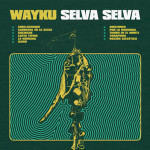

Wayku is the project of Percy A. Flores Navarro, a guitarist, researcher, and careful listener of the Peruvian Amazon. Before forming this project in 2022, Flores played with Motilones de Tarapoto and spent years traveling through Indigenous communities in San Martín and Loreto - not as a tourist but as someone willing to sit still long enough to hear how a culture breathes. That patient attention echoes across "Selva Selva", an album that reimagines the jungle’s musical traditions without trying to varnish them into some fashionable urban veneer.
Reviews online praise the record’s authenticity, its layered guitar work, its blend of the old with the slightly futuristic. Fair enough. But "Selva Selva" isn’t a museum piece brought into the studio for dusting. It’s more like a living creature that occasionally bares its teeth, or at least waves its tail with a mischievous twitch.
Flores anchors everything with his electric guitar - bright, sharp, sometimes surprisingly delicate, like sunlight glinting off machete steel. If the Amazon once adopted the electric guitar in the ’70s to electrify pandilla music, "Selva Selva" takes that historical spark and turns it into a controlled burn. The rhythms shuffle, slide, and whirl with a warmth that feels both festive and slightly hypnotic, the kind of ecstatic pulse you find in small-town squares during celebrations that go on longer than anyone intended.
Tracks like “Carnaval en la selva” and “Por la marginal” translate that communal exuberance into contemporary shapes. The flutes and percussion feel remembered rather than imitated - echoes of gatherings, not reenactments. Flores’s guitar dances over them like a bird that knows the path home without needing a map. It’s joyful music, yes, but the joy is never simple: there’s always a tiny ripple of tension somewhere underneath, a harmonic slip or rhythmic twitch that betrays Flores’s years spent studying how tradition and modernity don’t quite fit together but still insist on holding hands.
Elsewhere, the record leans into its more atmospheric instincts. “Icaro” moves like a dream left out to dry in the sun, a fragment of spiritual melody translated into electric shimmer. “Yanapuma” has a nocturnal quality - not dangerous, but alert, as though the track is listening to you as much as you are listening to it. And “Nación Selvática” closes the album with a broader horizon, the project’s cultural message surfacing without sloganeering: recognition, renewal, pride in a musical lineage too often overshadowed by coastal trends and cosmopolitan fashions.
If "Selva Selva" stumbles anywhere, it’s perhaps in its earnestness. Flores’s desire to honor, uplift, represent, reinterpret - that whole mission - sometimes presses more forcefully than the music itself. But honestly, that’s part of the album’s charm: its refusal to be ironic. In a world where everything is post-everything, there’s something refreshing about a record that wears its heart openly, like a woven cloth held up against the light.
Sonically, it’s a warm, slightly rough-edged listen - not polished to modern streaming-service gloss, and better for it. The production feels handcrafted, alive with room tone, humidity, and the occasional wild angle. Flores recorded nearly everything himself, and you can tell: the album sounds like a one-person expedition equipped with guitars, notebooks, memories, and a deep respect for the voices of the forest.
"Selva Selva" isn’t trying to be exotic or psychedelic or fashionable. It’s simply trying to be true - to place old rhythms into new shoes, to let tradition step forward without losing its accent.
And somehow, in that balance, the music blooms.
Reviews online praise the record’s authenticity, its layered guitar work, its blend of the old with the slightly futuristic. Fair enough. But "Selva Selva" isn’t a museum piece brought into the studio for dusting. It’s more like a living creature that occasionally bares its teeth, or at least waves its tail with a mischievous twitch.
Flores anchors everything with his electric guitar - bright, sharp, sometimes surprisingly delicate, like sunlight glinting off machete steel. If the Amazon once adopted the electric guitar in the ’70s to electrify pandilla music, "Selva Selva" takes that historical spark and turns it into a controlled burn. The rhythms shuffle, slide, and whirl with a warmth that feels both festive and slightly hypnotic, the kind of ecstatic pulse you find in small-town squares during celebrations that go on longer than anyone intended.
Tracks like “Carnaval en la selva” and “Por la marginal” translate that communal exuberance into contemporary shapes. The flutes and percussion feel remembered rather than imitated - echoes of gatherings, not reenactments. Flores’s guitar dances over them like a bird that knows the path home without needing a map. It’s joyful music, yes, but the joy is never simple: there’s always a tiny ripple of tension somewhere underneath, a harmonic slip or rhythmic twitch that betrays Flores’s years spent studying how tradition and modernity don’t quite fit together but still insist on holding hands.
Elsewhere, the record leans into its more atmospheric instincts. “Icaro” moves like a dream left out to dry in the sun, a fragment of spiritual melody translated into electric shimmer. “Yanapuma” has a nocturnal quality - not dangerous, but alert, as though the track is listening to you as much as you are listening to it. And “Nación Selvática” closes the album with a broader horizon, the project’s cultural message surfacing without sloganeering: recognition, renewal, pride in a musical lineage too often overshadowed by coastal trends and cosmopolitan fashions.
If "Selva Selva" stumbles anywhere, it’s perhaps in its earnestness. Flores’s desire to honor, uplift, represent, reinterpret - that whole mission - sometimes presses more forcefully than the music itself. But honestly, that’s part of the album’s charm: its refusal to be ironic. In a world where everything is post-everything, there’s something refreshing about a record that wears its heart openly, like a woven cloth held up against the light.
Sonically, it’s a warm, slightly rough-edged listen - not polished to modern streaming-service gloss, and better for it. The production feels handcrafted, alive with room tone, humidity, and the occasional wild angle. Flores recorded nearly everything himself, and you can tell: the album sounds like a one-person expedition equipped with guitars, notebooks, memories, and a deep respect for the voices of the forest.
"Selva Selva" isn’t trying to be exotic or psychedelic or fashionable. It’s simply trying to be true - to place old rhythms into new shoes, to let tradition step forward without losing its accent.
And somehow, in that balance, the music blooms.