
Browse by Genre
Industrial Music / Industrial Metal / Aggro Industrial / Electro Metal
Industrial Noise / Power Noise / Harsh Noise
Synth Pop / Electro Pop / Synth-Electronica
Techno / Trance / Goa / Drum'n'Bass / Jungle / Tribal / Trip-Hop
Ambient / Electronica / Ethereal / Dub / Soundscapes / Abstract
Experimental / Avantgarde / Weird & Wired / Glitch / Noise / Field Recording
Dark / Gothic / Wave / New Wave / Dark Wave / Industrial Gothic
New Music / Downtown / Avantgarde Jazz / New Classical / World
Search Reviews
Music Reviews
Akira Kosemura: Polaroid Piano


Some albums arrive exactly when they are supposed to. Others arrive twice. "Polaroid Piano" belongs to the latter category. First released fifteen years ago, Akira Kosemura's quiet masterpiece returns not as an exercise in nostalgia but as a reminder that genuine intimacy never really ages. Trends come and go with astonishing enthusiasm, often convinced they have invented silence from scratch. Meanwhile, this record simply continues breathing.
Japanese composer and pianist Akira Kosemura has built one of the most distinctive careers in contemporary modern classical music by consistently refusing unnecessary spectacle. Long before playlists began grouping together every softly recorded piano under the convenient label of "neo-classical", Kosemura was already cultivating a language where restraint carried emotional weight. Alongside his solo work, he has composed extensively for film, television and visual art, while his Schole Records label has become an important platform for similarly delicate and introspective voices. His music has always seemed less interested in telling stories than in preserving fleeting emotional climates before they disappear.
Originally released in 2011 through Someone Good, "Polaroid Piano" occupies a quietly significant place in the evolution of contemporary piano music. Lawrence English's observation that the album anticipated what would later become associated with the felt piano aesthetic is hardly exaggerated. Yet reducing the record to historical importance would miss the point entirely. What remains remarkable is not that it arrived early, but that it still sounds startlingly personal.
The title proves wonderfully apt. Like the instant photographs that inspired it, these twelve miniature pieces capture moments before they have time to pose. They preserve imperfections that another recording might have edited away. The subtle rustle of clothing, distant birds, the occasional intrusion of urban life, the lingering resonance of the room itself: none of these elements feel accidental. They become part of the composition, gentle reminders that music is never isolated from the world that produces it.
This porous relationship between performance and environment gives the album an unusual sense of presence. Rather than placing the listener in front of a perfectly polished instrument, Kosemura invites us to sit beside the piano, close enough to hear wood resonate, pedals move and air circulate through the room. The instrument becomes less of an object than a living body, responding to touch with extraordinary vulnerability.
The brevity of the individual compositions is another of the record's quiet strengths. Pieces such as "Hicari", "Faire" and "Look" rarely linger long enough to become declarative. Instead, they resemble fragments of memory that surface unexpectedly before dissolving again. Their emotional power comes precisely from this incompleteness. Kosemura understands that suggestion often travels further than explanation.
Elsewhere, tracks like "April", "Tyme" and the closing "Enough Grace" allow melodies a little more room to unfold, revealing his gift for harmonic clarity without ever slipping into sentimentality. His playing possesses remarkable discipline. Every note seems carefully weighed, yet nothing feels calculated. The music retains the freshness of improvisation even when its architecture is quietly meticulous.
The occasional appearance of Muneki Takasaka's guitar enriches the palette without disturbing its fragile equilibrium, while Lawrence English's field recordings drift through several pieces like distant recollections rather than explicit interventions. These sounds never function as decorative ambience. Instead, they subtly extend the acoustic space, suggesting landscapes that remain just beyond immediate perception.
Listening today, it becomes clear why "Polaroid Piano" continues to resonate while so many later imitators feel interchangeable. Countless recordings have borrowed its surface characteristics: close microphones, soft dynamics, intimate acoustics. Much fewer have understood its deeper lesson. Kosemura's minimalism is not an aesthetic filter but an ethical choice. He removes unnecessary gestures because the smallest ones already contain enough humanity.
There is also an understated optimism woven throughout the album. Even its more melancholic passages never surrender to despair. Instead, they acknowledge transience with remarkable grace. Like an old photograph discovered inside a forgotten book, these pieces carry both the tenderness of memory and the quiet acceptance that nothing remains untouched by time.
This anniversary edition therefore feels entirely justified, not because the album requires restoration, but because listeners occasionally require reminding. Some records become influential by inspiring imitation. Others become timeless because they remain impossible to replicate. "Polaroid Piano" belongs firmly to the second category. Fifteen years later, its snapshots have lost none of their colour. If anything, time has simply allowed us to notice details that were patiently waiting in the margins all along.
Japanese composer and pianist Akira Kosemura has built one of the most distinctive careers in contemporary modern classical music by consistently refusing unnecessary spectacle. Long before playlists began grouping together every softly recorded piano under the convenient label of "neo-classical", Kosemura was already cultivating a language where restraint carried emotional weight. Alongside his solo work, he has composed extensively for film, television and visual art, while his Schole Records label has become an important platform for similarly delicate and introspective voices. His music has always seemed less interested in telling stories than in preserving fleeting emotional climates before they disappear.
Originally released in 2011 through Someone Good, "Polaroid Piano" occupies a quietly significant place in the evolution of contemporary piano music. Lawrence English's observation that the album anticipated what would later become associated with the felt piano aesthetic is hardly exaggerated. Yet reducing the record to historical importance would miss the point entirely. What remains remarkable is not that it arrived early, but that it still sounds startlingly personal.
The title proves wonderfully apt. Like the instant photographs that inspired it, these twelve miniature pieces capture moments before they have time to pose. They preserve imperfections that another recording might have edited away. The subtle rustle of clothing, distant birds, the occasional intrusion of urban life, the lingering resonance of the room itself: none of these elements feel accidental. They become part of the composition, gentle reminders that music is never isolated from the world that produces it.
This porous relationship between performance and environment gives the album an unusual sense of presence. Rather than placing the listener in front of a perfectly polished instrument, Kosemura invites us to sit beside the piano, close enough to hear wood resonate, pedals move and air circulate through the room. The instrument becomes less of an object than a living body, responding to touch with extraordinary vulnerability.
The brevity of the individual compositions is another of the record's quiet strengths. Pieces such as "Hicari", "Faire" and "Look" rarely linger long enough to become declarative. Instead, they resemble fragments of memory that surface unexpectedly before dissolving again. Their emotional power comes precisely from this incompleteness. Kosemura understands that suggestion often travels further than explanation.
Elsewhere, tracks like "April", "Tyme" and the closing "Enough Grace" allow melodies a little more room to unfold, revealing his gift for harmonic clarity without ever slipping into sentimentality. His playing possesses remarkable discipline. Every note seems carefully weighed, yet nothing feels calculated. The music retains the freshness of improvisation even when its architecture is quietly meticulous.
The occasional appearance of Muneki Takasaka's guitar enriches the palette without disturbing its fragile equilibrium, while Lawrence English's field recordings drift through several pieces like distant recollections rather than explicit interventions. These sounds never function as decorative ambience. Instead, they subtly extend the acoustic space, suggesting landscapes that remain just beyond immediate perception.
Listening today, it becomes clear why "Polaroid Piano" continues to resonate while so many later imitators feel interchangeable. Countless recordings have borrowed its surface characteristics: close microphones, soft dynamics, intimate acoustics. Much fewer have understood its deeper lesson. Kosemura's minimalism is not an aesthetic filter but an ethical choice. He removes unnecessary gestures because the smallest ones already contain enough humanity.
There is also an understated optimism woven throughout the album. Even its more melancholic passages never surrender to despair. Instead, they acknowledge transience with remarkable grace. Like an old photograph discovered inside a forgotten book, these pieces carry both the tenderness of memory and the quiet acceptance that nothing remains untouched by time.
This anniversary edition therefore feels entirely justified, not because the album requires restoration, but because listeners occasionally require reminding. Some records become influential by inspiring imitation. Others become timeless because they remain impossible to replicate. "Polaroid Piano" belongs firmly to the second category. Fifteen years later, its snapshots have lost none of their colour. If anything, time has simply allowed us to notice details that were patiently waiting in the margins all along.
Federico Durand: La Manzana Mágica
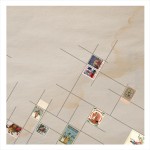
Some records ask to be understood. Others simply ask to be inhabited. Federico Durand's "La Manzana Mágica" belongs decisively to the latter category, unfolding less like a collection of compositions than like a carefully assembled cabinet of forgotten wonders. Inspired by Durand's collection of Cinderella stamps, those unofficial postage labels once dismissed as ephemera but now cherished by collectors, the Argentine composer constructs an album that shares their peculiar charm: modest in appearance, quietly enigmatic, and filled with stories that seem to exist somewhere between documented history and childhood imagination.
For anyone familiar with Durand's work on labels such as 12k, Spekk, Home Normal or Own Records, his aesthetic has always revolved around intimacy rather than spectacle. Over nearly two decades he has become one of the defining voices of lowercase ambient and electroacoustic minimalism, crafting music that often feels handmade in the most literal sense. Tape loops, fragile synthesizers, environmental recordings and tiny melodic gestures have long replaced grand orchestration in his vocabulary. While many artists working in this territory chase increasingly pristine production, Durand continues to embrace imperfections, allowing hiss, mechanical noise and accidental textures to become emotional protagonists rather than technical flaws. In an era obsessed with polishing every surface until it reflects nothing but itself, this remains a quietly radical gesture.
"La Manzana Mágica" may even be one of his most restrained works to date. The instrumentation is deliberately sparse, built from vintage synthesizers, cassette recorders, music boxes, tape echoes and an assortment of wonderfully eccentric devices that seem rescued from forgotten attics rather than music shops. Every sound appears carefully weighed before being allowed into the mix. Nothing shouts for attention. Even silence receives generous room to breathe, becoming an active participant instead of empty space.
The album's relationship with the Cinderella stamps is more than conceptual decoration. Like those tiny printed artifacts, these pieces carry the feeling of anonymous craftsmanship, objects made with care whose original contexts have partially dissolved with time. Tracks named after places, dates, children's tales or obscure references become little postcards arriving from uncertain destinations. One never quite knows whether they document memories, dreams or inventions, and that ambiguity becomes one of the record's greatest pleasures.
Throughout the twelve brief compositions, Durand resists conventional development. Melodies appear like birds briefly landing on a windowsill before disappearing again. Tape manipulation blurs temporal boundaries, making decades feel interchangeable. "God Helg 1920" and the title track seem suspended somewhere between nursery rhyme and distant transmission, while "Hansel y Gretel" transforms familiar folklore into something strangely weightless. "Jul 1948", featuring the voice of Durand's daughter María Luisa, lasts barely more than a minute, yet leaves an emotional residue disproportionate to its duration. It arrives without ceremony and departs before sentimentality has a chance to settle, like hearing children sing somewhere far beyond the garden wall.
One of the album's most touching moments comes with "Jólin 1960", itself a rediscovered recording found among old cassette boxes during a house move. Its inclusion perfectly mirrors the album's central philosophy: forgotten things are not necessarily lost. Sometimes they merely wait patiently until someone remembers where they belong.
There is something almost literary in Durand's approach. His compositions resemble the short stories of writers who trust implication over explanation, allowing tiny details to illuminate entire emotional landscapes. Listening becomes an act of gentle archaeology. Every tape flutter, every fading harmonic and every soft mechanical click feels like brushing dust away from some forgotten object whose value has little to do with rarity and everything to do with affection.
Despite its unmistakably nostalgic atmosphere, "La Manzana Mágica" never indulges in retro fetishism. Durand is not trying to recreate the past, nor to idealise it. Instead, he reminds us that memory itself is an active, imperfect instrument, continuously editing, erasing and inventing. The vintage equipment serves this idea naturally: old synthesizers do not merely imitate history, they carry it within their circuitry.
Humour also hides beneath the record's delicate exterior. There is something delightfully subversive about dedicating an entire album to unofficial stamps, elevating objects once considered second-rate into the source of profound artistic meditation. Humanity has always excelled at creating hierarchies, only to spend decades rediscovering the overlooked treasures sitting quietly beneath them. Cinderella herself would probably approve.
As with the finest releases in the 12k catalogue, "La Manzana Mágica" rewards patience without demanding solemnity. Its beauty emerges gradually, through accumulation rather than revelation. Like opening an old family album whose faces you do not recognise but somehow still feel connected to, the experience becomes strangely personal despite belonging entirely to someone else's memories.
Federico Durand has never been interested in making loud statements. Instead, he continues to prove that the smallest gestures often carry the greatest emotional weight. These miniature sonic stamps may never travel through any postal system, yet they somehow arrive exactly where they are meant to: that quiet place where memory, imagination and everyday wonder continue exchanging letters long after the world has stopped paying attention.
For anyone familiar with Durand's work on labels such as 12k, Spekk, Home Normal or Own Records, his aesthetic has always revolved around intimacy rather than spectacle. Over nearly two decades he has become one of the defining voices of lowercase ambient and electroacoustic minimalism, crafting music that often feels handmade in the most literal sense. Tape loops, fragile synthesizers, environmental recordings and tiny melodic gestures have long replaced grand orchestration in his vocabulary. While many artists working in this territory chase increasingly pristine production, Durand continues to embrace imperfections, allowing hiss, mechanical noise and accidental textures to become emotional protagonists rather than technical flaws. In an era obsessed with polishing every surface until it reflects nothing but itself, this remains a quietly radical gesture.
"La Manzana Mágica" may even be one of his most restrained works to date. The instrumentation is deliberately sparse, built from vintage synthesizers, cassette recorders, music boxes, tape echoes and an assortment of wonderfully eccentric devices that seem rescued from forgotten attics rather than music shops. Every sound appears carefully weighed before being allowed into the mix. Nothing shouts for attention. Even silence receives generous room to breathe, becoming an active participant instead of empty space.
The album's relationship with the Cinderella stamps is more than conceptual decoration. Like those tiny printed artifacts, these pieces carry the feeling of anonymous craftsmanship, objects made with care whose original contexts have partially dissolved with time. Tracks named after places, dates, children's tales or obscure references become little postcards arriving from uncertain destinations. One never quite knows whether they document memories, dreams or inventions, and that ambiguity becomes one of the record's greatest pleasures.
Throughout the twelve brief compositions, Durand resists conventional development. Melodies appear like birds briefly landing on a windowsill before disappearing again. Tape manipulation blurs temporal boundaries, making decades feel interchangeable. "God Helg 1920" and the title track seem suspended somewhere between nursery rhyme and distant transmission, while "Hansel y Gretel" transforms familiar folklore into something strangely weightless. "Jul 1948", featuring the voice of Durand's daughter María Luisa, lasts barely more than a minute, yet leaves an emotional residue disproportionate to its duration. It arrives without ceremony and departs before sentimentality has a chance to settle, like hearing children sing somewhere far beyond the garden wall.
One of the album's most touching moments comes with "Jólin 1960", itself a rediscovered recording found among old cassette boxes during a house move. Its inclusion perfectly mirrors the album's central philosophy: forgotten things are not necessarily lost. Sometimes they merely wait patiently until someone remembers where they belong.
There is something almost literary in Durand's approach. His compositions resemble the short stories of writers who trust implication over explanation, allowing tiny details to illuminate entire emotional landscapes. Listening becomes an act of gentle archaeology. Every tape flutter, every fading harmonic and every soft mechanical click feels like brushing dust away from some forgotten object whose value has little to do with rarity and everything to do with affection.
Despite its unmistakably nostalgic atmosphere, "La Manzana Mágica" never indulges in retro fetishism. Durand is not trying to recreate the past, nor to idealise it. Instead, he reminds us that memory itself is an active, imperfect instrument, continuously editing, erasing and inventing. The vintage equipment serves this idea naturally: old synthesizers do not merely imitate history, they carry it within their circuitry.
Humour also hides beneath the record's delicate exterior. There is something delightfully subversive about dedicating an entire album to unofficial stamps, elevating objects once considered second-rate into the source of profound artistic meditation. Humanity has always excelled at creating hierarchies, only to spend decades rediscovering the overlooked treasures sitting quietly beneath them. Cinderella herself would probably approve.
As with the finest releases in the 12k catalogue, "La Manzana Mágica" rewards patience without demanding solemnity. Its beauty emerges gradually, through accumulation rather than revelation. Like opening an old family album whose faces you do not recognise but somehow still feel connected to, the experience becomes strangely personal despite belonging entirely to someone else's memories.
Federico Durand has never been interested in making loud statements. Instead, he continues to prove that the smallest gestures often carry the greatest emotional weight. These miniature sonic stamps may never travel through any postal system, yet they somehow arrive exactly where they are meant to: that quiet place where memory, imagination and everyday wonder continue exchanging letters long after the world has stopped paying attention.
Accident Fantôme: Objets enchâssés dans des anneaux planétaires

Artist: Accident Fantôme (@)
Title: Objets enchâssés dans des anneaux planétaires
Format: LP
Label: moli del tro
Rated:
Title: Objets enchâssés dans des anneaux planétaires
Format: LP
Label: moli del tro
Rated:
There are collaborations that feel like simple encounters between musicians, and others that resemble some strange geological event: two different layers of matter collide, pressure accumulates, unexpected minerals appear. Objets ench'ssés dans des anneaux planétaires, the first release from Accident Fantôme, belongs to the second category. It does not sound like a project assembled by adding ingredients to a recipe. It feels more like something excavated.
The meeting between Accident du Travail and Fantôme Josepha brings together two already distinctive French experimental formations. On one side, Accident du Travail, the duo formed by Julie Normal and Olivier Demeaux, have spent years exploring fragile electronic territories through unusual instruments, especially the ondes Martenot, that wonderfully eccentric invention from 1928 which seems permanently suspended between science-fiction machinery and haunted cathedral furniture. On the other, Fantôme Josepha have developed a darker language where coldwave, spectral folk and analogue electronics coexist in a world that could easily provide the soundtrack for a medieval ghost discovering electricity.
The result of this encounter is an album born in a very specific place: a small village in the Meuse region, recorded inside a church containing a restored 18th-century pipe organ. The location is not merely a backdrop. Its resonance becomes one of the musicians. The architecture, the silence, the accumulated history of the surrounding landscape all enter the music. The phrase “Tarkovsky in the land of the trenches” may sound like an impossible cinematic cocktail prepared by someone who accidentally mixed a war documentary with a cosmic pilgrimage, yet it captures something essential: a meeting between memory, nature and metaphysical uncertainty.
Objets ench'ssés dans des anneaux planétaires is not an album interested in traditional progression. It moves according to a different logic, closer to geological time than human impatience. The opening piece “Cosmos” stretches across more than ten minutes, allowing the characteristic combination of ondes Martenot, harp, organ, guitar and electronics to slowly reveal its internal structure. The music does not announce itself with dramatic gestures; it appears gradually, like a landscape becoming visible as fog disappears.
The presence of the harp is particularly fascinating. In a less adventurous context, the instrument might suggest elegance or delicacy, perhaps even a certain decorative refinement. Here, Josepha Mougenot’s playing avoids any predictable angelic associations. The harp becomes an unstable, almost spectral element, intertwining with Julie Normal’s ondes Martenot and Olivier Demeaux’s keyboards to create textures that feel both ancient and futuristic.
Arnaud Marcaille’s 12-string electric guitar provides another crucial dimension. Rather than functioning as a conventional melodic instrument, it creates a ghostly pulse, a thread connecting the more abstract passages to something physical. Its presence prevents the album from floating away completely into pure abstraction. There is always a body beneath the apparition.
Tracks such as “Rhubarbe Bleue” and “Poe Toaster” reveal the project’s fascination with the strange and the uncanny. The latter title, referencing the mysterious figure associated with Edgar Allan Poe’s grave, perfectly fits the album’s atmosphere: somewhere between ritual, literary obsession and elegant absurdity. Humans have always had a curious relationship with ghosts. We claim not to believe in them, then spend centuries building monuments, writing books and recording albums about their possible existence. Very efficient denial, really.
The centrepiece of the record is “Euporie”, a fifteen-minute composition that fully embraces the collective language of Accident Fantôme. Here, drones, organ resonance, electronic textures and fragile melodic fragments coexist without competing for attention. The music creates tension through balance rather than confrontation. Silence is not an empty space but an active participant, shaping what appears and disappears.
Despite the album’s cosmic title and mystical atmosphere, there is nothing overly grandiose about it. This is not music trying to imitate the universe, a common temptation among experimental artists who occasionally seem convinced that adding a little reverb grants access to the secrets of galaxies. Accident Fantôme works differently. The cosmic dimension emerges from small details: a vibrating string, a breath of electronics, the natural decay of a room.
The mastering by James Plotkin contributes to preserving this delicate equilibrium, allowing the record’s darker and more abrasive edges to coexist with its moments of fragile beauty. The production never transforms the instruments into anonymous textures. Each sound retains its physical origin, its imperfections and its history.
Ultimately, Objets ench'ssés dans des anneaux planétaires is a record about coexistence: between old and new instruments, human gestures and electronic processes, forgotten histories and imagined futures. It carries traces of gothic atmosphere, drone, ambient experimentation and cinematic composition, but refuses to settle comfortably inside any of those categories.
Perhaps the most beautiful contradiction of the album is that it feels both ancient and unborn. It sounds like something discovered beneath layers of earth, yet also like a message sent from a future civilisation that has learned to communicate through resonance instead of language.
A planetary ring, after all, is made of fragments. Dust, ice, rock, remnants of collisions. Accident Fantôme understands that beauty often emerges precisely from these scattered pieces. Not from perfection, but from things that have survived impact.
The meeting between Accident du Travail and Fantôme Josepha brings together two already distinctive French experimental formations. On one side, Accident du Travail, the duo formed by Julie Normal and Olivier Demeaux, have spent years exploring fragile electronic territories through unusual instruments, especially the ondes Martenot, that wonderfully eccentric invention from 1928 which seems permanently suspended between science-fiction machinery and haunted cathedral furniture. On the other, Fantôme Josepha have developed a darker language where coldwave, spectral folk and analogue electronics coexist in a world that could easily provide the soundtrack for a medieval ghost discovering electricity.
The result of this encounter is an album born in a very specific place: a small village in the Meuse region, recorded inside a church containing a restored 18th-century pipe organ. The location is not merely a backdrop. Its resonance becomes one of the musicians. The architecture, the silence, the accumulated history of the surrounding landscape all enter the music. The phrase “Tarkovsky in the land of the trenches” may sound like an impossible cinematic cocktail prepared by someone who accidentally mixed a war documentary with a cosmic pilgrimage, yet it captures something essential: a meeting between memory, nature and metaphysical uncertainty.
Objets ench'ssés dans des anneaux planétaires is not an album interested in traditional progression. It moves according to a different logic, closer to geological time than human impatience. The opening piece “Cosmos” stretches across more than ten minutes, allowing the characteristic combination of ondes Martenot, harp, organ, guitar and electronics to slowly reveal its internal structure. The music does not announce itself with dramatic gestures; it appears gradually, like a landscape becoming visible as fog disappears.
The presence of the harp is particularly fascinating. In a less adventurous context, the instrument might suggest elegance or delicacy, perhaps even a certain decorative refinement. Here, Josepha Mougenot’s playing avoids any predictable angelic associations. The harp becomes an unstable, almost spectral element, intertwining with Julie Normal’s ondes Martenot and Olivier Demeaux’s keyboards to create textures that feel both ancient and futuristic.
Arnaud Marcaille’s 12-string electric guitar provides another crucial dimension. Rather than functioning as a conventional melodic instrument, it creates a ghostly pulse, a thread connecting the more abstract passages to something physical. Its presence prevents the album from floating away completely into pure abstraction. There is always a body beneath the apparition.
Tracks such as “Rhubarbe Bleue” and “Poe Toaster” reveal the project’s fascination with the strange and the uncanny. The latter title, referencing the mysterious figure associated with Edgar Allan Poe’s grave, perfectly fits the album’s atmosphere: somewhere between ritual, literary obsession and elegant absurdity. Humans have always had a curious relationship with ghosts. We claim not to believe in them, then spend centuries building monuments, writing books and recording albums about their possible existence. Very efficient denial, really.
The centrepiece of the record is “Euporie”, a fifteen-minute composition that fully embraces the collective language of Accident Fantôme. Here, drones, organ resonance, electronic textures and fragile melodic fragments coexist without competing for attention. The music creates tension through balance rather than confrontation. Silence is not an empty space but an active participant, shaping what appears and disappears.
Despite the album’s cosmic title and mystical atmosphere, there is nothing overly grandiose about it. This is not music trying to imitate the universe, a common temptation among experimental artists who occasionally seem convinced that adding a little reverb grants access to the secrets of galaxies. Accident Fantôme works differently. The cosmic dimension emerges from small details: a vibrating string, a breath of electronics, the natural decay of a room.
The mastering by James Plotkin contributes to preserving this delicate equilibrium, allowing the record’s darker and more abrasive edges to coexist with its moments of fragile beauty. The production never transforms the instruments into anonymous textures. Each sound retains its physical origin, its imperfections and its history.
Ultimately, Objets ench'ssés dans des anneaux planétaires is a record about coexistence: between old and new instruments, human gestures and electronic processes, forgotten histories and imagined futures. It carries traces of gothic atmosphere, drone, ambient experimentation and cinematic composition, but refuses to settle comfortably inside any of those categories.
Perhaps the most beautiful contradiction of the album is that it feels both ancient and unborn. It sounds like something discovered beneath layers of earth, yet also like a message sent from a future civilisation that has learned to communicate through resonance instead of language.
A planetary ring, after all, is made of fragments. Dust, ice, rock, remnants of collisions. Accident Fantôme understands that beauty often emerges precisely from these scattered pieces. Not from perfection, but from things that have survived impact.
Driftwood: Maps
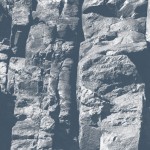
Maps are curious inventions. They promise orientation while quietly admitting that no drawing can ever replace the experience of walking. Driftwood's second album embraces that paradox with uncommon grace. "Maps" is less interested in telling listeners where they are than in revealing how landscapes emerge through attention itself. Every piece feels like a route sketched in real time, one that occasionally doubles back, disappears beneath mist, or discovers that the most meaningful destinations were never marked to begin with.
The Australian duo of Aviva Endean and Nick Ashwood have spent years cultivating practices that move comfortably between improvisation, contemporary composition, sound art and exploratory folk traditions. Their self-titled debut introduced a singular instrumental language centred on two microtonally retuned pump organs, clarinets and guitars. That combination alone was enough to distinguish them from the increasingly crowded field of drone and electroacoustic improvisation. "Maps" does not abandon that identity. Instead, it deepens it by allowing discreet electronics, modular synthesis, contact microphones and signal processing to seep into the acoustic fabric almost invisibly.
The result is remarkably organic. One never has the impression that electronics have been added to modernise the music or to create fashionable atmospheres. Rather, they behave like weather. They alter colour, pressure and perspective without announcing their presence, extending the acoustic instruments into spaces they could only imply on their own.
This sensitivity has long characterised Aviva Endean's work. Whether performing as an improviser, composer or clarinettist, she has consistently demonstrated an extraordinary ability to treat sound as physical material rather than symbolic language. Nick Ashwood brings an equally refined sensibility, his background spanning experimental guitar, installation and collaborative composition. Together they have discovered something increasingly rare: a duo whose individual personalities remain distinct while gradually dissolving into a genuinely shared voice.
The opening "The Sky Wide Open" immediately establishes this atmosphere of quiet curiosity. The pump organs breathe rather than simply sustain, their slightly unstable microtonal relationships producing harmonies that never quite settle into conventional expectations. Clarinet phrases appear almost tentatively, like birds testing unfamiliar air currents, while distant electronic shadows gently expand the music's horizon.
"Restless Earth" introduces a more pronounced rhythmic pulse, though rhythm here remains geological rather than mechanical. Repeated guitar figures create gentle momentum without imposing strict direction, allowing the surrounding drones to shift beneath them like slowly moving tectonic plates. There is movement everywhere, but never urgency.
Perhaps the album reaches its emotional centre with "From Star To Star". Here the duo's improvisational trust becomes particularly evident. Folk-like melodic fragments surface briefly before dissolving back into shimmering harmonic fields, suggesting memories that remain emotionally vivid even after their details have faded. It is music that understands nostalgia without becoming nostalgic, a distinction easier to appreciate than to achieve.
The middle section continues expanding this remarkable sense of place. "Dreaming North" carries a quiet luminosity, while "Where You Are The Wind Stirs" unfolds with almost narrative patience. The title proves surprisingly accurate. One has the sensation of invisible currents passing through the music, continuously reshaping its contours without ever disturbing its underlying calm.
"A Clearing", barely ninety seconds long, functions not as an interlude but as a change in perspective. After the denser textures surrounding it, this brief pause resembles emerging from forest into open light. It reminds us that silence, too, has topography.
The closing "You Are Here" provides the album's longest and perhaps most revealing journey. The title references the familiar marker found on maps, yet Driftwood gently subverts its certainty. By the end of the piece, "here" no longer refers to a geographical point but to a condition of listening. The improvisation unfolds with extraordinary patience, allowing tiny shifts in resonance, intonation and timbre to accumulate into something quietly transformative. There are no dramatic climaxes, no sudden revelations, only the gradual realisation that one's perception has been subtly recalibrated.
One of the greatest achievements of this release lies in its relationship with familiarity. Certain guitar ostinatos flirt with folk music, some harmonic progressions hint at hymn traditions, and the pump organs inevitably evoke domestic or ecclesiastical spaces. Yet none of these references become quotations. Instead, they function like half-remembered dreams whose origins remain tantalisingly out of reach. The album continually approaches recognisable musical terrain only to wander gently beyond it.
Joe Talia's mixing and mastering deserve particular praise. Every layer occupies space with remarkable clarity, preserving the physical intimacy of the performances while allowing the electronics to merge seamlessly with the acoustic instruments. Nothing feels artificially separated. Everything breathes within the same atmosphere.
Like much of Room40's catalogue, "Maps" rewards patience rather than demanding immediate admiration. It trusts that attentive listeners will discover its emotional richness through repeated encounters instead of spectacular first impressions. That confidence feels quietly refreshing. In an era where every algorithm insists we are perpetually lost unless someone is telling us exactly where to go, Driftwood offers another possibility. Perhaps the map is not there to eliminate uncertainty. Perhaps its true purpose is simply to remind us that wandering, when undertaken with curiosity, is already a form of arrival.
The Australian duo of Aviva Endean and Nick Ashwood have spent years cultivating practices that move comfortably between improvisation, contemporary composition, sound art and exploratory folk traditions. Their self-titled debut introduced a singular instrumental language centred on two microtonally retuned pump organs, clarinets and guitars. That combination alone was enough to distinguish them from the increasingly crowded field of drone and electroacoustic improvisation. "Maps" does not abandon that identity. Instead, it deepens it by allowing discreet electronics, modular synthesis, contact microphones and signal processing to seep into the acoustic fabric almost invisibly.
The result is remarkably organic. One never has the impression that electronics have been added to modernise the music or to create fashionable atmospheres. Rather, they behave like weather. They alter colour, pressure and perspective without announcing their presence, extending the acoustic instruments into spaces they could only imply on their own.
This sensitivity has long characterised Aviva Endean's work. Whether performing as an improviser, composer or clarinettist, she has consistently demonstrated an extraordinary ability to treat sound as physical material rather than symbolic language. Nick Ashwood brings an equally refined sensibility, his background spanning experimental guitar, installation and collaborative composition. Together they have discovered something increasingly rare: a duo whose individual personalities remain distinct while gradually dissolving into a genuinely shared voice.
The opening "The Sky Wide Open" immediately establishes this atmosphere of quiet curiosity. The pump organs breathe rather than simply sustain, their slightly unstable microtonal relationships producing harmonies that never quite settle into conventional expectations. Clarinet phrases appear almost tentatively, like birds testing unfamiliar air currents, while distant electronic shadows gently expand the music's horizon.
"Restless Earth" introduces a more pronounced rhythmic pulse, though rhythm here remains geological rather than mechanical. Repeated guitar figures create gentle momentum without imposing strict direction, allowing the surrounding drones to shift beneath them like slowly moving tectonic plates. There is movement everywhere, but never urgency.
Perhaps the album reaches its emotional centre with "From Star To Star". Here the duo's improvisational trust becomes particularly evident. Folk-like melodic fragments surface briefly before dissolving back into shimmering harmonic fields, suggesting memories that remain emotionally vivid even after their details have faded. It is music that understands nostalgia without becoming nostalgic, a distinction easier to appreciate than to achieve.
The middle section continues expanding this remarkable sense of place. "Dreaming North" carries a quiet luminosity, while "Where You Are The Wind Stirs" unfolds with almost narrative patience. The title proves surprisingly accurate. One has the sensation of invisible currents passing through the music, continuously reshaping its contours without ever disturbing its underlying calm.
"A Clearing", barely ninety seconds long, functions not as an interlude but as a change in perspective. After the denser textures surrounding it, this brief pause resembles emerging from forest into open light. It reminds us that silence, too, has topography.
The closing "You Are Here" provides the album's longest and perhaps most revealing journey. The title references the familiar marker found on maps, yet Driftwood gently subverts its certainty. By the end of the piece, "here" no longer refers to a geographical point but to a condition of listening. The improvisation unfolds with extraordinary patience, allowing tiny shifts in resonance, intonation and timbre to accumulate into something quietly transformative. There are no dramatic climaxes, no sudden revelations, only the gradual realisation that one's perception has been subtly recalibrated.
One of the greatest achievements of this release lies in its relationship with familiarity. Certain guitar ostinatos flirt with folk music, some harmonic progressions hint at hymn traditions, and the pump organs inevitably evoke domestic or ecclesiastical spaces. Yet none of these references become quotations. Instead, they function like half-remembered dreams whose origins remain tantalisingly out of reach. The album continually approaches recognisable musical terrain only to wander gently beyond it.
Joe Talia's mixing and mastering deserve particular praise. Every layer occupies space with remarkable clarity, preserving the physical intimacy of the performances while allowing the electronics to merge seamlessly with the acoustic instruments. Nothing feels artificially separated. Everything breathes within the same atmosphere.
Like much of Room40's catalogue, "Maps" rewards patience rather than demanding immediate admiration. It trusts that attentive listeners will discover its emotional richness through repeated encounters instead of spectacular first impressions. That confidence feels quietly refreshing. In an era where every algorithm insists we are perpetually lost unless someone is telling us exactly where to go, Driftwood offers another possibility. Perhaps the map is not there to eliminate uncertainty. Perhaps its true purpose is simply to remind us that wandering, when undertaken with curiosity, is already a form of arrival.
Tristan Allen: Osni the Flare
Artist: Tristan Allen (@)
Title: Osni the Flare
Format: CD & 12" + Download
Label: RVNG Intl. (@)
Rated:

Title: Osni the Flare
Format: CD & 12" + Download
Label: RVNG Intl. (@)
Rated:
Fantasy has always been a risky language for contemporary music. It is surprisingly easy to confuse myth with escapism, or symbolism with decorative eccentricity. Dragons, enchanted forests and invented worlds often collapse under the weight of their own ambition, leaving listeners admiring elaborate concepts while quietly wondering where the music wandered off to. Tristan Allen avoids that trap almost entirely. "Osni The Flare" never asks us to believe in its mythology as fiction. Instead, it reminds us that myths are simply emotional truths wearing improbable costumes.
The second chapter of Allen's projected trilogy, following the remarkable "Tin Iso and The Dawn", tells the story of Osni, the first mortal in Allen's carefully constructed universe, whose discovery of fire transforms them into a deity. On paper it reads like an ancient folktale rediscovered in an attic somewhere between Scandinavia, Japan and an overgrown corner of a child's imagination. In practice, it becomes something much stranger: a chamber opera without words, a puppet theatre performed through sound, and an exquisitely detailed meditation on transformation.
Allen's artistic path helps explain why "Osni The Flare" feels so singular without ever seeming deliberately eccentric. A classically trained pianist who studied at Berklee, they have wandered through experimental electronics, metal, contemporary composition and improvisation before finding an unexpected home in New York's puppetry community. That detour turns out not to be a detour at all. Puppetry and composition share the same essential challenge: convincing an audience that inanimate matter possesses an inner life. Allen approaches sound exactly as a master puppeteer approaches wood, string and cloth. Every tiny gesture matters because every tiny gesture contributes to the illusion that something impossible has quietly become alive.
This philosophy permeates every corner of the album. Recorded largely in Allen's Brooklyn apartment overlooking Cypress Hills Cemetery, "Osni The Flare" assembles an astonishing collection of sonic fragments into an organic whole. Toy pianos, bird-shaped ocarinas, Balinese flutes, harmonium, pump organ, battered Casio keyboards, bells, music boxes, upright bass, field recordings, homemade sound effects and wordless voices coexist without ever sounding like an inventory of curiosities. Lesser composers collect unusual instruments the way tourists collect refrigerator magnets, hoping novelty alone will generate meaning. Allen instead discovers a shared emotional grammar among these disparate objects.
The opening "Osni Opening" immediately establishes this intimate, handcrafted universe. Piano serves as both home and threshold, introducing a melodic language that feels strangely ancient despite being entirely original. The music never quotes folklore directly, yet it carries the quiet inevitability of stories passed orally across generations.
The first act, "Garden" and "Loon", unfolds with remarkable tenderness. Allen's decision to use wordless vocals proves inspired. Inspired in the genuine sense of the word, not the exhausted marketing version that now describes everything from symphonies to artisanal sandwiches. Freed from literal language, the voice becomes another landscape rather than a narrator, allowing listeners to inhabit Osni's journey without predetermined interpretation. The melodies drift somewhere between lullaby, ritual and distant memory.
As the narrative darkens through "Dragon" and "Pyre", Allen resists the temptation toward cinematic spectacle. Fire itself is never represented through bombastic crescendos. Instead, it emerges through microscopic details: fingernail clicks transformed into crackling embers, slowly decaying resonances, fragile harmonic shifts that seem to generate heat rather than simply describe it. The mythical dragon speaks in an invented language, yet the emotional weight remains entirely comprehensible. One need not understand every syllable to recognise hunger, danger or awe.
The album's central achievement may lie in how it treats scale. Although the story concerns gods, creation myths and elemental forces, the music remains profoundly domestic. Many sounds originate from objects found around Allen's apartment or patiently manipulated by hand. Music boxes are individually sampled and retuned. Cheap flutes become sacred instruments. Even a failing Casio keyboard contributes unexpected warmth. The extraordinary emerges from the ordinary through attention rather than expense. It is a comforting thought in an age where creativity is too often measured by software updates instead of imagination.
The third act, particularly "Umbra" and "Rite", enters increasingly ambiguous territory where mortality and divinity gradually exchange places. Here Allen's background in sound design becomes especially apparent. Rather than constructing traditional harmonic progressions, they sculpt spaces where melodies appear suspended inside evolving textures. The influence of gamelan music, hinted at in the bass-centred melodic writing, combines beautifully with contemporary electroacoustic techniques, producing something that feels simultaneously ceremonial and deeply personal.
The closing sequence, "Flood", "Everglow" and the brief "Osni Closing", offers resolution without finality. The transformation of Osni into the deity of fire is treated not as triumph but as acceptance. Every ending simultaneously opens another beginning. Even the album's final hidden detail, the involuntary whistle of puppet engineer Jim Freeman, quietly preserved in the closing moments, reinforces the record's humanity. After nearly an hour of meticulous world-building, Allen leaves us with the accidental sound of someone simply existing. It is a wonderfully humble gesture.
Paul Corley's mix deserves special mention for preserving the astonishing amount of detail without sacrificing coherence. Every miniature sound retains its tactile presence while contributing to an immersive whole. The production never overwhelms; it invites exploration. Each revisit reveals another carefully hidden thread connecting one act to the next.
"Osni The Flare" is ultimately less interested in fantasy than in belief itself. Fire here represents creation, love, mortality and memory all at once. Allen understands that myths endure not because they explain the world literally, but because they continue explaining us. Their album captures something many contemporary experimental works forget in the pursuit of conceptual sophistication: wonder is not childish. It is one of the most demanding artistic achievements imaginable.
Like the finest puppet performances, "Osni The Flare" succeeds through what puppeteers sometimes call "the true lie". We know perfectly well that strings are being pulled, tiny instruments are being wound, samples are being rearranged, and imaginary gods do not walk among us. Yet for forty-five luminous minutes, none of that seems remotely important. The fire burns anyway.
The second chapter of Allen's projected trilogy, following the remarkable "Tin Iso and The Dawn", tells the story of Osni, the first mortal in Allen's carefully constructed universe, whose discovery of fire transforms them into a deity. On paper it reads like an ancient folktale rediscovered in an attic somewhere between Scandinavia, Japan and an overgrown corner of a child's imagination. In practice, it becomes something much stranger: a chamber opera without words, a puppet theatre performed through sound, and an exquisitely detailed meditation on transformation.
Allen's artistic path helps explain why "Osni The Flare" feels so singular without ever seeming deliberately eccentric. A classically trained pianist who studied at Berklee, they have wandered through experimental electronics, metal, contemporary composition and improvisation before finding an unexpected home in New York's puppetry community. That detour turns out not to be a detour at all. Puppetry and composition share the same essential challenge: convincing an audience that inanimate matter possesses an inner life. Allen approaches sound exactly as a master puppeteer approaches wood, string and cloth. Every tiny gesture matters because every tiny gesture contributes to the illusion that something impossible has quietly become alive.
This philosophy permeates every corner of the album. Recorded largely in Allen's Brooklyn apartment overlooking Cypress Hills Cemetery, "Osni The Flare" assembles an astonishing collection of sonic fragments into an organic whole. Toy pianos, bird-shaped ocarinas, Balinese flutes, harmonium, pump organ, battered Casio keyboards, bells, music boxes, upright bass, field recordings, homemade sound effects and wordless voices coexist without ever sounding like an inventory of curiosities. Lesser composers collect unusual instruments the way tourists collect refrigerator magnets, hoping novelty alone will generate meaning. Allen instead discovers a shared emotional grammar among these disparate objects.
The opening "Osni Opening" immediately establishes this intimate, handcrafted universe. Piano serves as both home and threshold, introducing a melodic language that feels strangely ancient despite being entirely original. The music never quotes folklore directly, yet it carries the quiet inevitability of stories passed orally across generations.
The first act, "Garden" and "Loon", unfolds with remarkable tenderness. Allen's decision to use wordless vocals proves inspired. Inspired in the genuine sense of the word, not the exhausted marketing version that now describes everything from symphonies to artisanal sandwiches. Freed from literal language, the voice becomes another landscape rather than a narrator, allowing listeners to inhabit Osni's journey without predetermined interpretation. The melodies drift somewhere between lullaby, ritual and distant memory.
As the narrative darkens through "Dragon" and "Pyre", Allen resists the temptation toward cinematic spectacle. Fire itself is never represented through bombastic crescendos. Instead, it emerges through microscopic details: fingernail clicks transformed into crackling embers, slowly decaying resonances, fragile harmonic shifts that seem to generate heat rather than simply describe it. The mythical dragon speaks in an invented language, yet the emotional weight remains entirely comprehensible. One need not understand every syllable to recognise hunger, danger or awe.
The album's central achievement may lie in how it treats scale. Although the story concerns gods, creation myths and elemental forces, the music remains profoundly domestic. Many sounds originate from objects found around Allen's apartment or patiently manipulated by hand. Music boxes are individually sampled and retuned. Cheap flutes become sacred instruments. Even a failing Casio keyboard contributes unexpected warmth. The extraordinary emerges from the ordinary through attention rather than expense. It is a comforting thought in an age where creativity is too often measured by software updates instead of imagination.
The third act, particularly "Umbra" and "Rite", enters increasingly ambiguous territory where mortality and divinity gradually exchange places. Here Allen's background in sound design becomes especially apparent. Rather than constructing traditional harmonic progressions, they sculpt spaces where melodies appear suspended inside evolving textures. The influence of gamelan music, hinted at in the bass-centred melodic writing, combines beautifully with contemporary electroacoustic techniques, producing something that feels simultaneously ceremonial and deeply personal.
The closing sequence, "Flood", "Everglow" and the brief "Osni Closing", offers resolution without finality. The transformation of Osni into the deity of fire is treated not as triumph but as acceptance. Every ending simultaneously opens another beginning. Even the album's final hidden detail, the involuntary whistle of puppet engineer Jim Freeman, quietly preserved in the closing moments, reinforces the record's humanity. After nearly an hour of meticulous world-building, Allen leaves us with the accidental sound of someone simply existing. It is a wonderfully humble gesture.
Paul Corley's mix deserves special mention for preserving the astonishing amount of detail without sacrificing coherence. Every miniature sound retains its tactile presence while contributing to an immersive whole. The production never overwhelms; it invites exploration. Each revisit reveals another carefully hidden thread connecting one act to the next.
"Osni The Flare" is ultimately less interested in fantasy than in belief itself. Fire here represents creation, love, mortality and memory all at once. Allen understands that myths endure not because they explain the world literally, but because they continue explaining us. Their album captures something many contemporary experimental works forget in the pursuit of conceptual sophistication: wonder is not childish. It is one of the most demanding artistic achievements imaginable.
Like the finest puppet performances, "Osni The Flare" succeeds through what puppeteers sometimes call "the true lie". We know perfectly well that strings are being pulled, tiny instruments are being wound, samples are being rearranged, and imaginary gods do not walk among us. Yet for forty-five luminous minutes, none of that seems remotely important. The fire burns anyway.