
Browse by Genre
Industrial Music / Industrial Metal / Aggro Industrial / Electro Metal
Industrial Noise / Power Noise / Harsh Noise
Synth Pop / Electro Pop / Synth-Electronica
Techno / Trance / Goa / Drum'n'Bass / Jungle / Tribal / Trip-Hop
Ambient / Electronica / Ethereal / Dub / Soundscapes / Abstract
Experimental / Avantgarde / Weird & Wired / Glitch / Noise / Field Recording
Dark / Gothic / Wave / New Wave / Dark Wave / Industrial Gothic
New Music / Downtown / Avantgarde Jazz / New Classical / World
Search Reviews
Music Reviews
Cleared: Lustres
Patience is one of those virtues people admire from a safe distance, like glaciers or monks. Cleared have spent nearly fifteen years practicing it in public, which is either admirable discipline or a very slow refusal to hurry up. On "Lustres", that patience finally condenses into something that feels less like a method and more like a climate.
The duo - Steven Hess and Michael Vallera - have always worked through exchange: fragments passed back and forth, reshaped, recontextualized, sometimes stripped of their original identity entirely. This time, the process has been refined to a kind of asymmetrical collaboration. One generates the raw material, the other dismantles and reassembles it. It sounds almost clinical, but the results are anything but.
Released on Room40, "Lustres" leans more decisively into an electronic palette than their earlier work, though “electronic” here doesn’t mean clean or predictable. The sound is layered with different fidelities, where pristine textures coexist with degraded, almost corroded fragments. It’s less about contrast for its own sake and more about memory: how sound is never just itself, but also the device, the space, the context that carried it.
The title track, “Lustres”, opens like a slow rotation. Not quite a melody, not quite a drone. More like a surface being revealed under changing light. Elements drift into focus, then recede, leaving behind a faint afterimage. It’s music that doesn’t present itself all at once. You have to wait for it to admit what it’s doing.
“Shore” suggests something more grounded, though only just. There’s a subtle sense of boundary, of one texture pressing against another, but the edges remain porous. Nothing fully separates. Field recordings, processed tones, and distant harmonic traces blend into a continuum that feels both organic and slightly unreal, like a landscape remembered rather than observed.
“Aubade” introduces a faint sense of emergence, though not in any dramatic sense. If this is a dawn, it’s one that happens behind clouds. Gradual shifts in density and tone create the impression of light without ever fully illuminating the scene. It’s restrained to the point of near-denial, which is exactly why it works.
“Far”, the closing piece, feels appropriately named. It extends the album’s logic into a kind of distance, where sound becomes less about presence and more about implication. Things are suggested, hinted at, then withdrawn. You’re left with traces, not statements.
What "Lustres" does particularly well is resist the urge to resolve. Many records in this territory eventually reveal a hidden structure, a moment where everything clicks into place. Cleared avoid that satisfaction. Instead, they maintain a state of suspension, where meaning remains slightly out of reach. Not frustratingly so, just enough to keep you listening.
There are echoes of other artists operating in the long-form ambient and electroacoustic continuum, but Cleared’s approach feels less concerned with atmosphere as a fixed mood and more with atmosphere as a shifting condition. Subterranean and celestial, as they suggest, but also something in between: a space where orientation is never quite stable.
The mastering by Lawrence English gives the material a quiet precision, ensuring that even the most delicate elements retain their presence. Which matters, because this is music built on small differences, on the slow accumulation of detail.
Four tracks, each around ten minutes, none of them in a hurry to justify their existence. "Lustres" doesn’t demand attention so much as require a certain kind of listening: patient, slightly unfocused, willing to accept that not everything needs to declare itself immediately.
In other words, the exact opposite of how most people consume music now. Which probably explains why it feels necessary.
The duo - Steven Hess and Michael Vallera - have always worked through exchange: fragments passed back and forth, reshaped, recontextualized, sometimes stripped of their original identity entirely. This time, the process has been refined to a kind of asymmetrical collaboration. One generates the raw material, the other dismantles and reassembles it. It sounds almost clinical, but the results are anything but.
Released on Room40, "Lustres" leans more decisively into an electronic palette than their earlier work, though “electronic” here doesn’t mean clean or predictable. The sound is layered with different fidelities, where pristine textures coexist with degraded, almost corroded fragments. It’s less about contrast for its own sake and more about memory: how sound is never just itself, but also the device, the space, the context that carried it.
The title track, “Lustres”, opens like a slow rotation. Not quite a melody, not quite a drone. More like a surface being revealed under changing light. Elements drift into focus, then recede, leaving behind a faint afterimage. It’s music that doesn’t present itself all at once. You have to wait for it to admit what it’s doing.
“Shore” suggests something more grounded, though only just. There’s a subtle sense of boundary, of one texture pressing against another, but the edges remain porous. Nothing fully separates. Field recordings, processed tones, and distant harmonic traces blend into a continuum that feels both organic and slightly unreal, like a landscape remembered rather than observed.
“Aubade” introduces a faint sense of emergence, though not in any dramatic sense. If this is a dawn, it’s one that happens behind clouds. Gradual shifts in density and tone create the impression of light without ever fully illuminating the scene. It’s restrained to the point of near-denial, which is exactly why it works.
“Far”, the closing piece, feels appropriately named. It extends the album’s logic into a kind of distance, where sound becomes less about presence and more about implication. Things are suggested, hinted at, then withdrawn. You’re left with traces, not statements.
What "Lustres" does particularly well is resist the urge to resolve. Many records in this territory eventually reveal a hidden structure, a moment where everything clicks into place. Cleared avoid that satisfaction. Instead, they maintain a state of suspension, where meaning remains slightly out of reach. Not frustratingly so, just enough to keep you listening.
There are echoes of other artists operating in the long-form ambient and electroacoustic continuum, but Cleared’s approach feels less concerned with atmosphere as a fixed mood and more with atmosphere as a shifting condition. Subterranean and celestial, as they suggest, but also something in between: a space where orientation is never quite stable.
The mastering by Lawrence English gives the material a quiet precision, ensuring that even the most delicate elements retain their presence. Which matters, because this is music built on small differences, on the slow accumulation of detail.
Four tracks, each around ten minutes, none of them in a hurry to justify their existence. "Lustres" doesn’t demand attention so much as require a certain kind of listening: patient, slightly unfocused, willing to accept that not everything needs to declare itself immediately.
In other words, the exact opposite of how most people consume music now. Which probably explains why it feels necessary.
Dante: New Places

There’s always a moment, in every artist’s life, when “finding yourself” starts to sound suspiciously like “running away with better branding”. On "New Places", Dante does both, but with enough honesty to make it work.
This is his third album, apparently the one where things are supposed to click into place. Instead, it deliberately unsettles everything. Written and produced during a self-imposed exile in London, the record absorbs the city the way wet concrete absorbs footprints: not cleanly, not selectively, but completely. Field recordings, urban residue, late-night rhythms, fragments of voices and passing lives. It’s less a portrait of London than a nervous system reacting to it.
“Initiate” opens with a kind of defensive posture. The lyrics push back against external expectations, while the production hovers between restraint and release, like it’s not entirely sure whether it wants to confront or withdraw. That tension becomes a recurring motif. Dante isn’t presenting a polished identity here. He’s documenting the process of not having one.
“Choices” and the title track move deeper into that uncertainty. There’s a quiet obsession with decision-making, with the idea that every path taken implies a version of yourself you’ll never meet. Musically, the tracks drift between introspective electronica and something closer to understated club structures. Not quite dancefloor, not quite headphone confession. A liminal zone, which feels appropriate for someone sleeping in hostels and trying to rebuild a sense of direction.
The album’s strength lies in its refusal to overstate its own drama. “Feel Me” and “Sudden Silence” deal with emotional erosion in a surprisingly restrained way. No grand catharsis, no theatrical collapse. Just a gradual wearing down, mirrored by arrangements that favor space over density. You get the sense that if the tracks were any fuller, they would lose their point.
Midway through, pieces like “Steps” and “Come Ashore” function almost as transitions rather than statements. They don’t demand attention; they redirect it. It’s the sound of someone moving, physically and mentally, without quite knowing where they’re going. Which, inconveniently, is most of life.
“Flashbacks” is where things get messier, both lyrically and structurally. Memory intrudes, fragmented and slightly incoherent, as it tends to be. The production follows suit, introducing a more disjointed flow that resists easy interpretation. It’s one of the few moments where the album risks losing its balance, but that instability also gives it weight.
By the time “Overcome” and “Blue Skies” arrive, there’s a subtle shift. Not resolution, exactly, but a loosening. The music feels less burdened by the need to explain itself. “Primrose Hill,” closing the album, lands somewhere between reflection and suspension. Not quite closure, more like a pause where you acknowledge where you are before inevitably moving again.
What makes "New Places" compelling is its relationship with expectation. Dante explicitly rejects metrics, success formulas, the endless demand to outdo oneself. Naturally, he turns that rejection into an album, which is its own small contradiction. But instead of collapsing under that paradox, the record uses it as fuel.
Stylistically, it draws from a familiar palette - post-club electronica, ambient textures, introspective songwriting - but the execution feels personal rather than derivative. The London influence is less about specific scenes and more about density: cultural, emotional, sonic. Everything overlaps, nothing fully resolves.
The limited vinyl run, the crowdfunding angle, the carefully framed narrative of artistic renewal. It’s all very contemporary, almost predictably so. But beneath that packaging, there’s something less calculated: a document of someone stepping away from certainty and not rushing to replace it.
Not every track lands with equal force. Some feel like sketches, others like fully realized statements. But that unevenness is part of the architecture. "New Places" isn’t about perfection. It’s about movement, hesitation, and the strange clarity that comes from not knowing what you’re doing until after you’ve done it.
Which, unfortunately, is still the most reliable creative method available.
This is his third album, apparently the one where things are supposed to click into place. Instead, it deliberately unsettles everything. Written and produced during a self-imposed exile in London, the record absorbs the city the way wet concrete absorbs footprints: not cleanly, not selectively, but completely. Field recordings, urban residue, late-night rhythms, fragments of voices and passing lives. It’s less a portrait of London than a nervous system reacting to it.
“Initiate” opens with a kind of defensive posture. The lyrics push back against external expectations, while the production hovers between restraint and release, like it’s not entirely sure whether it wants to confront or withdraw. That tension becomes a recurring motif. Dante isn’t presenting a polished identity here. He’s documenting the process of not having one.
“Choices” and the title track move deeper into that uncertainty. There’s a quiet obsession with decision-making, with the idea that every path taken implies a version of yourself you’ll never meet. Musically, the tracks drift between introspective electronica and something closer to understated club structures. Not quite dancefloor, not quite headphone confession. A liminal zone, which feels appropriate for someone sleeping in hostels and trying to rebuild a sense of direction.
The album’s strength lies in its refusal to overstate its own drama. “Feel Me” and “Sudden Silence” deal with emotional erosion in a surprisingly restrained way. No grand catharsis, no theatrical collapse. Just a gradual wearing down, mirrored by arrangements that favor space over density. You get the sense that if the tracks were any fuller, they would lose their point.
Midway through, pieces like “Steps” and “Come Ashore” function almost as transitions rather than statements. They don’t demand attention; they redirect it. It’s the sound of someone moving, physically and mentally, without quite knowing where they’re going. Which, inconveniently, is most of life.
“Flashbacks” is where things get messier, both lyrically and structurally. Memory intrudes, fragmented and slightly incoherent, as it tends to be. The production follows suit, introducing a more disjointed flow that resists easy interpretation. It’s one of the few moments where the album risks losing its balance, but that instability also gives it weight.
By the time “Overcome” and “Blue Skies” arrive, there’s a subtle shift. Not resolution, exactly, but a loosening. The music feels less burdened by the need to explain itself. “Primrose Hill,” closing the album, lands somewhere between reflection and suspension. Not quite closure, more like a pause where you acknowledge where you are before inevitably moving again.
What makes "New Places" compelling is its relationship with expectation. Dante explicitly rejects metrics, success formulas, the endless demand to outdo oneself. Naturally, he turns that rejection into an album, which is its own small contradiction. But instead of collapsing under that paradox, the record uses it as fuel.
Stylistically, it draws from a familiar palette - post-club electronica, ambient textures, introspective songwriting - but the execution feels personal rather than derivative. The London influence is less about specific scenes and more about density: cultural, emotional, sonic. Everything overlaps, nothing fully resolves.
The limited vinyl run, the crowdfunding angle, the carefully framed narrative of artistic renewal. It’s all very contemporary, almost predictably so. But beneath that packaging, there’s something less calculated: a document of someone stepping away from certainty and not rushing to replace it.
Not every track lands with equal force. Some feel like sketches, others like fully realized statements. But that unevenness is part of the architecture. "New Places" isn’t about perfection. It’s about movement, hesitation, and the strange clarity that comes from not knowing what you’re doing until after you’ve done it.
Which, unfortunately, is still the most reliable creative method available.
John McGuire: Double String Trios

Artist: John McGuire (@)
Title: Double String Trios
Format: CD + Download
Label: Unseen Worlds (@)
Rated:

Title: Double String Trios
Format: CD + Download
Label: Unseen Worlds (@)
Rated:
Minimalism, when it ages well, doesn’t soften. It sharpens. It becomes less about repetition as a trick and more about repetition as a form of thinking. John McGuire has been thinking this way for decades, and "Double String Trios" feels like the result of a mind that never really stopped refining its own internal machinery.
Released by Unseen Worlds, the album gathers three substantial works written between 2012 and 2021, all based on a deceptively simple idea: two string trios facing each other, in dialogue, or perhaps in polite disagreement. It’s the kind of setup that sounds almost academic on paper, which usually means either something lifeless or something quietly astonishing. McGuire, inconveniently for cynics, lands closer to the latter.
His background matters here. Emerging from the postwar Cologne scene, shaped by figures like Karlheinz Stockhausen and Krzysztof Penderecki, McGuire developed a language rooted in serial processes but filtered through an almost obsessive sensitivity to sonic continuity. In his earlier electronic work, he dealt with pulses so fast they blurred into texture. Here, those same ideas are translated into strings, where nothing can hide. Every transition is exposed, every micro-shift carries the weight of human imperfection.
“Jump Cuts” opens the set with a title that promises fragmentation but delivers something more paradoxical: a continuity built out of constant recalibration. The two trios don’t so much interrupt each other as orbit, exchanging fragments, aligning briefly, then slipping out of phase. It’s intricate without being decorative, structured without feeling rigid. You can hear the system at work, but you also hear it breathe.
“Double Bars” expands this logic. The antiphonal setup becomes more pronounced, almost architectural. Lines cross, mirror, and diverge with a precision that feels less like composition and more like an ecosystem maintaining its balance. The use of proportional systems - Fibonacci relationships, rotating tempi - could easily turn into a compositional flex, but McGuire avoids that trap. The math is there, but it serves perception rather than dominating it.
By the time “Playground” arrives, the title feels like a quiet joke. There is play here, but it’s the kind that comes after decades of discipline. The music feels more fluid, less concerned with demonstrating its own logic, even as that logic remains intact. The two trios interact with a kind of understated elasticity, as if the rules have been internalized to the point of invisibility.
Under the direction of Axel Lindner, the ensemble navigates this terrain with impressive clarity. Nothing feels forced, nothing overstated. Which is crucial, because this music doesn’t reward dramatics. It rewards attention, patience, and a willingness to accept that meaning here is cumulative rather than immediate.
There’s a quiet irony in hearing work rooted in early electronic thinking translated so convincingly into acoustic form. It suggests that the real legacy of that era wasn’t the machines themselves, but a way of organizing sound that can survive without them.
At over an hour, the album doesn’t rush to prove anything. It unfolds, insists gently, and trusts you to keep up. Which, given the current attention economy, is either brave or slightly absurd. Possibly both.
But then again, so is writing music that treats time not as something to fill, but as something to shape.
Released by Unseen Worlds, the album gathers three substantial works written between 2012 and 2021, all based on a deceptively simple idea: two string trios facing each other, in dialogue, or perhaps in polite disagreement. It’s the kind of setup that sounds almost academic on paper, which usually means either something lifeless or something quietly astonishing. McGuire, inconveniently for cynics, lands closer to the latter.
His background matters here. Emerging from the postwar Cologne scene, shaped by figures like Karlheinz Stockhausen and Krzysztof Penderecki, McGuire developed a language rooted in serial processes but filtered through an almost obsessive sensitivity to sonic continuity. In his earlier electronic work, he dealt with pulses so fast they blurred into texture. Here, those same ideas are translated into strings, where nothing can hide. Every transition is exposed, every micro-shift carries the weight of human imperfection.
“Jump Cuts” opens the set with a title that promises fragmentation but delivers something more paradoxical: a continuity built out of constant recalibration. The two trios don’t so much interrupt each other as orbit, exchanging fragments, aligning briefly, then slipping out of phase. It’s intricate without being decorative, structured without feeling rigid. You can hear the system at work, but you also hear it breathe.
“Double Bars” expands this logic. The antiphonal setup becomes more pronounced, almost architectural. Lines cross, mirror, and diverge with a precision that feels less like composition and more like an ecosystem maintaining its balance. The use of proportional systems - Fibonacci relationships, rotating tempi - could easily turn into a compositional flex, but McGuire avoids that trap. The math is there, but it serves perception rather than dominating it.
By the time “Playground” arrives, the title feels like a quiet joke. There is play here, but it’s the kind that comes after decades of discipline. The music feels more fluid, less concerned with demonstrating its own logic, even as that logic remains intact. The two trios interact with a kind of understated elasticity, as if the rules have been internalized to the point of invisibility.
Under the direction of Axel Lindner, the ensemble navigates this terrain with impressive clarity. Nothing feels forced, nothing overstated. Which is crucial, because this music doesn’t reward dramatics. It rewards attention, patience, and a willingness to accept that meaning here is cumulative rather than immediate.
There’s a quiet irony in hearing work rooted in early electronic thinking translated so convincingly into acoustic form. It suggests that the real legacy of that era wasn’t the machines themselves, but a way of organizing sound that can survive without them.
At over an hour, the album doesn’t rush to prove anything. It unfolds, insists gently, and trusts you to keep up. Which, given the current attention economy, is either brave or slightly absurd. Possibly both.
But then again, so is writing music that treats time not as something to fill, but as something to shape.
Haptic: Ambivalence
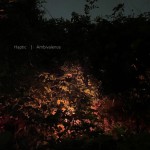
Artist: Haptic
Title: Ambivalence
Format: Download Only (MP3 + Lossless)
Label: Ash International
Rated:

Title: Ambivalence
Format: Download Only (MP3 + Lossless)
Label: Ash International
Rated:
Ambivalence is one of those words people like to use when they don’t want to admit they’re torn. In Haptic’s case, it’s less indecision and more a working method: holding opposing states in place long enough to see what kind of sound leaks out.
Across two extended pieces, "Ambivalence" finds Haptic - that is, Steven Hess, Joseph Clayton Mills, and Adam Sonderberg - operating in a space they’ve been refining for years: somewhere between composition and erosion. Their history, spanning installations, film work, and performances in institutions that tend to prefer silence dressed as art, shows up here not as prestige but as discipline. They know how to wait.
“Late Work I” unfolds like a system slowly revealing its own instability. Recorded in London with the addition of Mark Wastell, it begins in near-stasis, a low-density field where sound feels provisional, almost reluctant to commit. Small events appear, hover, and then either integrate or vanish. There’s a sense of microscopic negotiation, as if each element is testing whether it deserves to remain. Over time, the piece thickens, though never in a dramatic way. It accumulates rather than builds, which is a subtle but important distinction. You don’t notice the change until you realize you’ve been listening differently for the past ten minutes.
“Late Work II”, assembled across multiple locations and expanded with performers like Sarah Hughes and Seth Cooke, feels more dispersed, less centered. If the first piece suggests a room, this one suggests a network. Sounds emerge from different directions, loosely coordinated but not entirely aligned. There’s a quiet tension between cohesion and fragmentation, as if the piece is constantly deciding whether to cohere or fall apart. It does both, repeatedly.
What Haptic continue to do well, almost annoyingly well, is restraint. This kind of long-form electroacoustic work often collapses under the weight of its own seriousness, mistaking duration for depth. "Ambivalence" avoids that trap by maintaining a kind of internal skepticism. Nothing is allowed to dominate for too long. Textures are introduced, explored, and then quietly undermined. Stability is always temporary.
There are echoes of reductionist improvisation and post-lowercase aesthetics, but the trio doesn’t fully commit to austerity. There’s a subtle richness in the material, a willingness to let density creep in when necessary, only to strip it back again. It’s a constant recalibration of presence and absence, which fits the title a little too perfectly.
Mastering by Giuseppe Ielasi ensures that even the smallest gestures carry weight, which matters when your music depends on the listener noticing things they would normally ignore. And that’s really the unspoken demand here: attention. Not passive, not distracted. The kind that most people reserve for problems, not for sound.
Is it enjoyable? That depends on your definition. It’s not pleasant in any conventional sense, but it is absorbing, in the way watching something slowly take shape can be, even if you’re not entirely sure what it’s becoming.
Haptic’s seventeenth release doesn’t try to resolve its contradictions. It just sustains them, patiently, until they start to feel like the point rather than the problem. Which, inconveniently, is often how things actually work.
Across two extended pieces, "Ambivalence" finds Haptic - that is, Steven Hess, Joseph Clayton Mills, and Adam Sonderberg - operating in a space they’ve been refining for years: somewhere between composition and erosion. Their history, spanning installations, film work, and performances in institutions that tend to prefer silence dressed as art, shows up here not as prestige but as discipline. They know how to wait.
“Late Work I” unfolds like a system slowly revealing its own instability. Recorded in London with the addition of Mark Wastell, it begins in near-stasis, a low-density field where sound feels provisional, almost reluctant to commit. Small events appear, hover, and then either integrate or vanish. There’s a sense of microscopic negotiation, as if each element is testing whether it deserves to remain. Over time, the piece thickens, though never in a dramatic way. It accumulates rather than builds, which is a subtle but important distinction. You don’t notice the change until you realize you’ve been listening differently for the past ten minutes.
“Late Work II”, assembled across multiple locations and expanded with performers like Sarah Hughes and Seth Cooke, feels more dispersed, less centered. If the first piece suggests a room, this one suggests a network. Sounds emerge from different directions, loosely coordinated but not entirely aligned. There’s a quiet tension between cohesion and fragmentation, as if the piece is constantly deciding whether to cohere or fall apart. It does both, repeatedly.
What Haptic continue to do well, almost annoyingly well, is restraint. This kind of long-form electroacoustic work often collapses under the weight of its own seriousness, mistaking duration for depth. "Ambivalence" avoids that trap by maintaining a kind of internal skepticism. Nothing is allowed to dominate for too long. Textures are introduced, explored, and then quietly undermined. Stability is always temporary.
There are echoes of reductionist improvisation and post-lowercase aesthetics, but the trio doesn’t fully commit to austerity. There’s a subtle richness in the material, a willingness to let density creep in when necessary, only to strip it back again. It’s a constant recalibration of presence and absence, which fits the title a little too perfectly.
Mastering by Giuseppe Ielasi ensures that even the smallest gestures carry weight, which matters when your music depends on the listener noticing things they would normally ignore. And that’s really the unspoken demand here: attention. Not passive, not distracted. The kind that most people reserve for problems, not for sound.
Is it enjoyable? That depends on your definition. It’s not pleasant in any conventional sense, but it is absorbing, in the way watching something slowly take shape can be, even if you’re not entirely sure what it’s becoming.
Haptic’s seventeenth release doesn’t try to resolve its contradictions. It just sustains them, patiently, until they start to feel like the point rather than the problem. Which, inconveniently, is often how things actually work.
Strangebird~Sounds: Minerals From The Crust

Artist: Strangebird~Sounds
Title: Minerals From The Crust
Format: Download Only (MP3 + Lossless)
Label: Audiobulb (@)
Rated:
Title: Minerals From The Crust
Format: Download Only (MP3 + Lossless)
Label: Audiobulb (@)
Rated:
Geology is patient. Music, less so. "Minerals From The Crust" tries to reconcile the two, which is either ambitious or mildly delusional depending on your tolerance for concept-driven electronica. Against expectations, Gregory Geerts - working as Strangebird~Sounds - makes the idea hold together without turning it into a lecture disguised as a record.
Built around Eurorack modular synthesis (that beloved playground where cables breed like anxious thoughts), the album approaches sound as matter: shaped, fractured, compressed, occasionally allowed to shimmer. Geerts has been circling this territory for a while, but here the focus feels sharpened. Not more complex, just more intentional, which is rarer than most modular enthusiasts would like to admit.
“AMETRINE” opens like a brief calibration, a small flicker of tone and texture that sets the palette without overstaying its welcome. Then “AZURITE” settles into something more hypnotic, pulsing basslines underpinning crystalline sequences that feel structured but never rigid. There’s a tactile quality to the sound, as if you could run your fingers across it and come away with residue.
“BARYTE” and “CALCITE” deepen the terrain. Layers accumulate, but not in the usual maximalist sense. Instead, elements interlock, forming patterns that seem stable until they subtly shift, like mineral formations under pressure. It’s controlled unpredictability, the kind that comes from knowing your system well enough to let it misbehave productively.
“CELESTINE” and “FLUORITE” introduce a lighter, more suspended quality, where rhythm becomes less about propulsion and more about suggestion. The beats are there, technically, but they feel optional, like the music wouldn’t collapse without them. It’s ambient techno in the loosest sense, more concerned with texture than destination.
“MESOLITE” lives up to its fractured name, breaking rhythm into smaller, less obedient fragments. There’s a hint of microsound influence here, tiny events flickering in and out, refusing to coalesce into anything too comfortable. If you were hoping for a groove you could hold onto, this is where it slips away.
By the time “NEPTUNITE” and the longer “ZEOLITE” arrive, the album has settled into its own internal logic. Not narrative, exactly, but progression. You move through it the way you might move through layers of sediment, aware that each section contains traces of what came before, even if you can’t fully reconstruct it.
Comparisons to the broader ambient techno continuum are inevitable, but "Minerals From The Crust" feels less interested in the club-adjacent lineage and more in sound as material inquiry. There are faint echoes of artists who treat synthesis as a sculptural practice, but Geerts avoids the trap of turning process into spectacle. The machinery is present, but it doesn’t demand applause.
What makes the album work is its restraint. It could have easily become a showcase for modular excess, endless patching for the sake of complexity. Instead, it opts for brevity and focus. Most tracks hover around the three-minute mark, which in this context feels almost radical. Say what you need to say, then stop. Imagine that.
It’s not a record that overwhelms. It accumulates. Quietly, steadily, until you realize you’ve been listening more closely than you intended. Which, for a project about the slow formation of structure beneath the surface, feels appropriately on point.
Built around Eurorack modular synthesis (that beloved playground where cables breed like anxious thoughts), the album approaches sound as matter: shaped, fractured, compressed, occasionally allowed to shimmer. Geerts has been circling this territory for a while, but here the focus feels sharpened. Not more complex, just more intentional, which is rarer than most modular enthusiasts would like to admit.
“AMETRINE” opens like a brief calibration, a small flicker of tone and texture that sets the palette without overstaying its welcome. Then “AZURITE” settles into something more hypnotic, pulsing basslines underpinning crystalline sequences that feel structured but never rigid. There’s a tactile quality to the sound, as if you could run your fingers across it and come away with residue.
“BARYTE” and “CALCITE” deepen the terrain. Layers accumulate, but not in the usual maximalist sense. Instead, elements interlock, forming patterns that seem stable until they subtly shift, like mineral formations under pressure. It’s controlled unpredictability, the kind that comes from knowing your system well enough to let it misbehave productively.
“CELESTINE” and “FLUORITE” introduce a lighter, more suspended quality, where rhythm becomes less about propulsion and more about suggestion. The beats are there, technically, but they feel optional, like the music wouldn’t collapse without them. It’s ambient techno in the loosest sense, more concerned with texture than destination.
“MESOLITE” lives up to its fractured name, breaking rhythm into smaller, less obedient fragments. There’s a hint of microsound influence here, tiny events flickering in and out, refusing to coalesce into anything too comfortable. If you were hoping for a groove you could hold onto, this is where it slips away.
By the time “NEPTUNITE” and the longer “ZEOLITE” arrive, the album has settled into its own internal logic. Not narrative, exactly, but progression. You move through it the way you might move through layers of sediment, aware that each section contains traces of what came before, even if you can’t fully reconstruct it.
Comparisons to the broader ambient techno continuum are inevitable, but "Minerals From The Crust" feels less interested in the club-adjacent lineage and more in sound as material inquiry. There are faint echoes of artists who treat synthesis as a sculptural practice, but Geerts avoids the trap of turning process into spectacle. The machinery is present, but it doesn’t demand applause.
What makes the album work is its restraint. It could have easily become a showcase for modular excess, endless patching for the sake of complexity. Instead, it opts for brevity and focus. Most tracks hover around the three-minute mark, which in this context feels almost radical. Say what you need to say, then stop. Imagine that.
It’s not a record that overwhelms. It accumulates. Quietly, steadily, until you realize you’ve been listening more closely than you intended. Which, for a project about the slow formation of structure beneath the surface, feels appropriately on point.