
Browse by Genre
Industrial Music / Industrial Metal / Aggro Industrial / Electro Metal
Industrial Noise / Power Noise / Harsh Noise
Synth Pop / Electro Pop / Synth-Electronica
Techno / Trance / Goa / Drum'n'Bass / Jungle / Tribal / Trip-Hop
Ambient / Electronica / Ethereal / Dub / Soundscapes / Abstract
Experimental / Avantgarde / Weird & Wired / Glitch / Noise / Field Recording
Dark / Gothic / Wave / New Wave / Dark Wave / Industrial Gothic
New Music / Downtown / Avantgarde Jazz / New Classical / World
Search Reviews
Music Reviews
Paolo Tortora: Waves of Fading Memories

Artist: Paolo Tortora
Title: Waves of Fading Memories
Format: Tape + Download
Label: Torto Editions (@)
Rated:

Title: Waves of Fading Memories
Format: Tape + Download
Label: Torto Editions (@)
Rated:
Memory is unreliable. It edits without asking, loops details until they blur, replaces facts with atmospheres. Paolo Tortora seems perfectly comfortable with this problem. "Waves of Fading Memories" does not attempt to reconstruct the past. It lets it dissolve in real time, gently, stubbornly, one frequency at a time.
This cassette marks Tortora’s first solo outing after years spent inside the porous organism known as Japanese Gum, a project that treated krautrock, ambient, dub, and psychedelia less as genres than as climates. That sensibility hasn’t vanished. It has thinned out, slowed down, and turned inward. Where Japanese Gum often felt communal and expansive, this record feels solitary, coastal, and quietly obsessive.
The Ligurian Sea is not a postcard here. Its waves are broken down, stretched, filtered through guitar drones, analog pedals, and tape processes that refuse to behave like neutral tools. Natural sound and instrumental gesture blur until neither quite knows where it begins. The sea becomes texture. The guitar becomes weather. The synths hover like emotional residue rather than melody.
The album unfolds across four long chapters, all variations on the same fragile idea. "From a Memory" parts one through four don’t escalate or resolve. They circle. They return. They slightly misremember themselves. Listening feels less like following a path and more like wading into shallow water that keeps pulling you sideways. Progress happens, but quietly, almost shyly.
What Tortora does well is restraint. These pieces could easily collapse into formless drift, but they don’t. Subtle changes in density, slow shifts in harmonic pressure, and the grain of tape saturation keep the surface alive. There’s a physicality to the sound, an organic unevenness that resists the smoothness often associated with ambient music. This isn’t background. It’s an environment that notices you noticing it.
There’s also a soft melancholy at work, but not the dramatic kind. No grand statements, no cinematic sadness. More like the feeling of standing somewhere familiar and realizing you can’t quite place why it matters. The record’s title promises fading, and it delivers honestly. Nothing here is held too tightly. Everything is allowed to slip.
If there’s humor, it’s subtle and human. The idea that memories “have their own lives” sounds poetic until you realize it’s also inconvenient. They wander off. They refuse instructions. This album accepts that and builds around it, rather than trying to impose order. The waves keep coming, indifferent to narrative.
Mastered with care and presented on cassette, "Waves of Fading Memories" feels deliberately intimate. A format choice that matches the music’s scale and temperament. This is not a statement piece. It’s a patient one. A record that rewards deep listening, or half-listening, or drifting somewhere between the two.
Paolo Tortora doesn’t offer answers, and he doesn’t frame memory as something to recover. He treats it as a space you briefly inhabit before it reshapes itself. You leave changed, unsure how, carrying traces of sound that feel personal even if they aren’t yours. Which is probably the most honest way memory ever works.
This cassette marks Tortora’s first solo outing after years spent inside the porous organism known as Japanese Gum, a project that treated krautrock, ambient, dub, and psychedelia less as genres than as climates. That sensibility hasn’t vanished. It has thinned out, slowed down, and turned inward. Where Japanese Gum often felt communal and expansive, this record feels solitary, coastal, and quietly obsessive.
The Ligurian Sea is not a postcard here. Its waves are broken down, stretched, filtered through guitar drones, analog pedals, and tape processes that refuse to behave like neutral tools. Natural sound and instrumental gesture blur until neither quite knows where it begins. The sea becomes texture. The guitar becomes weather. The synths hover like emotional residue rather than melody.
The album unfolds across four long chapters, all variations on the same fragile idea. "From a Memory" parts one through four don’t escalate or resolve. They circle. They return. They slightly misremember themselves. Listening feels less like following a path and more like wading into shallow water that keeps pulling you sideways. Progress happens, but quietly, almost shyly.
What Tortora does well is restraint. These pieces could easily collapse into formless drift, but they don’t. Subtle changes in density, slow shifts in harmonic pressure, and the grain of tape saturation keep the surface alive. There’s a physicality to the sound, an organic unevenness that resists the smoothness often associated with ambient music. This isn’t background. It’s an environment that notices you noticing it.
There’s also a soft melancholy at work, but not the dramatic kind. No grand statements, no cinematic sadness. More like the feeling of standing somewhere familiar and realizing you can’t quite place why it matters. The record’s title promises fading, and it delivers honestly. Nothing here is held too tightly. Everything is allowed to slip.
If there’s humor, it’s subtle and human. The idea that memories “have their own lives” sounds poetic until you realize it’s also inconvenient. They wander off. They refuse instructions. This album accepts that and builds around it, rather than trying to impose order. The waves keep coming, indifferent to narrative.
Mastered with care and presented on cassette, "Waves of Fading Memories" feels deliberately intimate. A format choice that matches the music’s scale and temperament. This is not a statement piece. It’s a patient one. A record that rewards deep listening, or half-listening, or drifting somewhere between the two.
Paolo Tortora doesn’t offer answers, and he doesn’t frame memory as something to recover. He treats it as a space you briefly inhabit before it reshapes itself. You leave changed, unsure how, carrying traces of sound that feel personal even if they aren’t yours. Which is probably the most honest way memory ever works.
Armando Balice: Du noir tout autour
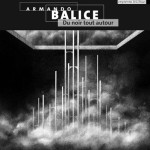
Artist: Armando Balice (@)
Title: Du noir tout autour
Format: CD
Label: empreintes DIGITALes (@)
Rated:
Title: Du noir tout autour
Format: CD
Label: empreintes DIGITALes (@)
Rated:
This is one of those records that doesn’t arrive so much as surround you. You don’t press play and wait for something to happen. You step inside, and the light politely excuses itself.
"Du noir tout autour" is Armando Balice doing what he does best, which is treating darkness not as mood, but as material. Not metaphorical gloom, not cinematic dread, but darkness as a working condition. As substance. As a space where sound has to earn its right to exist. This is acousmatic music that remembers where it came from: microphones out in the world, analogue oscillations with rough edges still showing, edited with care but never sanded down to politeness.
Balice has been circling this territory for years. A French-Italian composer shaped by Ina-GRM and the lineage of Denis Dufour and Jean-Marc Weber, he carries both the discipline of electroacoustic tradition and a taste for density that flirts openly with noise, metal, and orchestral mass. His music often sounds like it wants to be larger than the speakers that contain it. This album is no exception.
The record is built as a triptych, three long-form works that function like different angles on the same inner landscape. Black Garden, Empty Garden, Light Garden. The titles might suggest a neat progression, but the experience is less linear than that. Darkness doesn’t disappear. It reorganizes.
"Black Garden" opens the set with a sense of dramatic restraint. Field recordings, ravens, forest textures, and the cello of Lola Malique are not presented as scenery, but as unstable elements. Silence and noise keep interrupting each other, like tectonic plates that never quite lock into place. The short “noir” movements puncture the flow, brief moments where the ground seems to drop out entirely. It feels calm only if you mistake stillness for safety.
"Empty Garden" is the most unsettling of the three. Here, emptiness is not absence. It’s pressure. A void that hums quietly with potential. Sounds emerge cautiously, hover, then withdraw, leaving afterimages behind. There’s something almost physical about the way Balice lets space breathe, then compresses it again. This is not ambient comfort. It’s the kind of quiet that makes you aware of your own listening.
By the time "Light Garden" arrives, the title risks optimism, but Balice avoids that trap. Light here is not resolution. It’s exposure. Refractions, iridescent textures, and spectral reflections rise from the same dark matter as before. The cello reappears, birds return, synthetic tones stretch and fracture. Light and shadow coexist, inseparable, like two sides of the same sound.
What stands out across the album is Balice’s sense of form. These pieces collapse and rebuild themselves constantly. Elevations fall. Ruins reorganize. It feels architectural, but unstable, like a structure designed to test how much imbalance it can survive. Editing plays as big a role as sound generation, but the edits never feel surgical. They feel like collisions.
There’s a quiet humor buried in all this severity. Not jokes, but a kind of wry awareness. The idea that in the dark you can see more than you expect. That monochrome surfaces hide complex materials. That a flock of birds and a cello can share a space without explanation. Balice doesn’t underline these moments. He lets them happen and trusts the listener to notice.
"Du noir tout autour" is not an easy record, and it has no interest in being one. It demands attention, patience, and a willingness to let images form slowly, then dissolve. But it’s also deeply lyrical in its own abrasive way. A reminder that darkness is not the opposite of clarity. Sometimes it’s the only place where things come into focus at all.
"Du noir tout autour" is Armando Balice doing what he does best, which is treating darkness not as mood, but as material. Not metaphorical gloom, not cinematic dread, but darkness as a working condition. As substance. As a space where sound has to earn its right to exist. This is acousmatic music that remembers where it came from: microphones out in the world, analogue oscillations with rough edges still showing, edited with care but never sanded down to politeness.
Balice has been circling this territory for years. A French-Italian composer shaped by Ina-GRM and the lineage of Denis Dufour and Jean-Marc Weber, he carries both the discipline of electroacoustic tradition and a taste for density that flirts openly with noise, metal, and orchestral mass. His music often sounds like it wants to be larger than the speakers that contain it. This album is no exception.
The record is built as a triptych, three long-form works that function like different angles on the same inner landscape. Black Garden, Empty Garden, Light Garden. The titles might suggest a neat progression, but the experience is less linear than that. Darkness doesn’t disappear. It reorganizes.
"Black Garden" opens the set with a sense of dramatic restraint. Field recordings, ravens, forest textures, and the cello of Lola Malique are not presented as scenery, but as unstable elements. Silence and noise keep interrupting each other, like tectonic plates that never quite lock into place. The short “noir” movements puncture the flow, brief moments where the ground seems to drop out entirely. It feels calm only if you mistake stillness for safety.
"Empty Garden" is the most unsettling of the three. Here, emptiness is not absence. It’s pressure. A void that hums quietly with potential. Sounds emerge cautiously, hover, then withdraw, leaving afterimages behind. There’s something almost physical about the way Balice lets space breathe, then compresses it again. This is not ambient comfort. It’s the kind of quiet that makes you aware of your own listening.
By the time "Light Garden" arrives, the title risks optimism, but Balice avoids that trap. Light here is not resolution. It’s exposure. Refractions, iridescent textures, and spectral reflections rise from the same dark matter as before. The cello reappears, birds return, synthetic tones stretch and fracture. Light and shadow coexist, inseparable, like two sides of the same sound.
What stands out across the album is Balice’s sense of form. These pieces collapse and rebuild themselves constantly. Elevations fall. Ruins reorganize. It feels architectural, but unstable, like a structure designed to test how much imbalance it can survive. Editing plays as big a role as sound generation, but the edits never feel surgical. They feel like collisions.
There’s a quiet humor buried in all this severity. Not jokes, but a kind of wry awareness. The idea that in the dark you can see more than you expect. That monochrome surfaces hide complex materials. That a flock of birds and a cello can share a space without explanation. Balice doesn’t underline these moments. He lets them happen and trusts the listener to notice.
"Du noir tout autour" is not an easy record, and it has no interest in being one. It demands attention, patience, and a willingness to let images form slowly, then dissolve. But it’s also deeply lyrical in its own abrasive way. A reminder that darkness is not the opposite of clarity. Sometimes it’s the only place where things come into focus at all.
Dj Marcelle: Sorry, No Service


This record opens by refusing things. Service. Silence. Sequence. Surveillance. It keeps refusing until refusal itself becomes rhythm. Which is exactly the point. "Sorry, No Service" is not an album that wants to help you, guide you, or smooth anything out. It wants to keep moving while you’re still tying your shoes.
DJ Marcelle has built a career on saying no in productive ways. No genre loyalty. No fixed tempo. No polite separation between DJ culture, composition, performance, and mischief. Under the alias Another Nice Mess, she treats electronics and bass like elastic objects. They stretch, snap, wobble, then come back grinning. This LP feels like a continuation of that philosophy, but stripped of any remaining courtesy.
The Laurel & Hardy script woven into the concept is not a gimmick. It’s a structural device. Confusion, repetition, slapstick logic, timing that looks wrong until it suddenly lands perfectly. Stan and Ollie drift through the record like ghosts of vaudeville trapped inside a modular system. Their chatter mirrors the music’s method: repetition as insistence, humor as resistance, nonsense as a way of staying alert.
Musically, the A-side hits with a physical insistence that never quite settles into function. "Sorry, No Sorry" sets the tone: basslines that feel sturdy but slightly untrustworthy, rhythms that bounce like rubber balls in a concrete stairwell. "The 10.23 AM From Amsterdam Lelylaan" moves with commuter anxiety and accidental groove, a track that sounds like it might miss its stop but doesn’t care. The titles are long, dry, and pointed, like post-it notes left by someone who knows exactly what they’re doing and refuses to explain it.
Marcelle’s production has a particular clarity. Everything is audible, nothing is polite. Synths clank, oscillate, percolate, then repeat until repetition becomes content. "I Have Been Doing Some Accounting This Afternoon" is a perfect example: regimented but elastic, playful but slightly irritated. Numbers don’t add up, and neither does the track, which is why it works.
The short Latin detour, "Quidquid Latine Dictum Sit Altum Videtur", feels like a raised eyebrow aimed at institutional seriousness. It’s over quickly, says its piece, leaves no footnotes. That economy carries into the B-side, where "Sorry, No Silence" stretches out and breathes differently. Less chatter, more undertow. The groove is still there, but it’s wrapped in a kind of low-grade agitation, like a room full of people who all want to say something at once.
"Final Exam At The Music Academy" is as close as this album gets to a manifesto. It sounds like a test no one studied for and everyone passes anyway. "The High Synths Experiment" leans into texture and motion, while "Chairs" closes the record by refusing closure. Musical chairs, yes, but also power games, social choreography, who gets to sit and who keeps moving.
There is anger here, but it’s agile. There is humor, but it cuts. Marcelle doesn’t use repetition as comfort. She uses it as pressure. Repetition in protest, repetition in history, repetition everywhere. The album understands that nothing really changes unless it keeps happening, loudly, awkwardly, in public.
Recorded at home in Amsterdam, mastered with care, wrapped in Marcelle’s own visual language, "Sorry, No Service" sounds exactly like someone who doesn’t need permission. It’s dance music that doesn’t promise a dancefloor. It’s experimental music that doesn’t ask to be excused. It’s a record that keeps the bus moving even when no one knows the route, and somehow that feels like the most honest service available right now.
DJ Marcelle has built a career on saying no in productive ways. No genre loyalty. No fixed tempo. No polite separation between DJ culture, composition, performance, and mischief. Under the alias Another Nice Mess, she treats electronics and bass like elastic objects. They stretch, snap, wobble, then come back grinning. This LP feels like a continuation of that philosophy, but stripped of any remaining courtesy.
The Laurel & Hardy script woven into the concept is not a gimmick. It’s a structural device. Confusion, repetition, slapstick logic, timing that looks wrong until it suddenly lands perfectly. Stan and Ollie drift through the record like ghosts of vaudeville trapped inside a modular system. Their chatter mirrors the music’s method: repetition as insistence, humor as resistance, nonsense as a way of staying alert.
Musically, the A-side hits with a physical insistence that never quite settles into function. "Sorry, No Sorry" sets the tone: basslines that feel sturdy but slightly untrustworthy, rhythms that bounce like rubber balls in a concrete stairwell. "The 10.23 AM From Amsterdam Lelylaan" moves with commuter anxiety and accidental groove, a track that sounds like it might miss its stop but doesn’t care. The titles are long, dry, and pointed, like post-it notes left by someone who knows exactly what they’re doing and refuses to explain it.
Marcelle’s production has a particular clarity. Everything is audible, nothing is polite. Synths clank, oscillate, percolate, then repeat until repetition becomes content. "I Have Been Doing Some Accounting This Afternoon" is a perfect example: regimented but elastic, playful but slightly irritated. Numbers don’t add up, and neither does the track, which is why it works.
The short Latin detour, "Quidquid Latine Dictum Sit Altum Videtur", feels like a raised eyebrow aimed at institutional seriousness. It’s over quickly, says its piece, leaves no footnotes. That economy carries into the B-side, where "Sorry, No Silence" stretches out and breathes differently. Less chatter, more undertow. The groove is still there, but it’s wrapped in a kind of low-grade agitation, like a room full of people who all want to say something at once.
"Final Exam At The Music Academy" is as close as this album gets to a manifesto. It sounds like a test no one studied for and everyone passes anyway. "The High Synths Experiment" leans into texture and motion, while "Chairs" closes the record by refusing closure. Musical chairs, yes, but also power games, social choreography, who gets to sit and who keeps moving.
There is anger here, but it’s agile. There is humor, but it cuts. Marcelle doesn’t use repetition as comfort. She uses it as pressure. Repetition in protest, repetition in history, repetition everywhere. The album understands that nothing really changes unless it keeps happening, loudly, awkwardly, in public.
Recorded at home in Amsterdam, mastered with care, wrapped in Marcelle’s own visual language, "Sorry, No Service" sounds exactly like someone who doesn’t need permission. It’s dance music that doesn’t promise a dancefloor. It’s experimental music that doesn’t ask to be excused. It’s a record that keeps the bus moving even when no one knows the route, and somehow that feels like the most honest service available right now.
Gabi Delgado & Marc Hurtado: Neue Weltumfassende Resistance
Artist: Gabi Delgado & Marc Hurtado
Title: Neue Weltumfassende Resistance
Format: CD
Label: play loud! (@)
Rated:
Title: Neue Weltumfassende Resistance
Format: CD
Label: play loud! (@)
Rated:
Let’s clear the fog immediately. This long-delayed debut is not a polite archival release, not a museum piece gently dusted off for historical reasons. It is a living, breathing artifact of friction. Sound against word, body against machine, urgency against time. If you were hoping for a neat posthumous tribute wrapped in reverence and safety glass, you are in the wrong room.
"Neue Weltumfassende Resistance" is the audible trace of a dialogue that unfolded across borders, cables, and years. Germany, Spain, France. Emails, files, voices sent into the void and sent back altered. Gabi Delgado and Marc Hurtado were not collaborating in the friendly sense of the word. They were colliding. The project, founded in 2004 and refined through rare but intense physical encounters, works like a 360-degree cinematic drift. Fast, volatile, sometimes graceful, sometimes feral. No map. No master plan. Just motion.
Delgado, permanently etched into history through DAF, always treated minimalism as a weapon. Few words, heavy meaning, bodies forced into attention. Hurtado, with decades of work through Étant Donnés and his solo universe Sol Ixent, approaches sound as ritual, poetry as combustion, art as a total field. Put them together and you do not get compromise. You get exposure.
The album moves like a fractured dream. Short pieces bleed into longer ones. Languages slip past each other. French, German, Spanish coexist without translation, because translation would weaken the spell. Tracks like "Erotique Narcotique" pulse with a tense, narcotic sensuality, while "Embrasse-moi" and "Ouvre-moi" feel less like invitations and more like doors being forced open. Intimacy here is not comforting. It is invasive, necessary, slightly dangerous.
There are moments where Delgado’s ghost of EBM discipline surfaces. "Master" and "Business ist Business" echo the skeletal, confrontational economy he perfected decades ago. But this is not nostalgia, and certainly not revivalism. The rhythms feel less designed for movement and more for insistence. They repeat until meaning leaks out of them. They stare you down until you blink first.
Other tracks dissolve into something closer to sonic prose. "Ich trÄume nur" drifts with a fragile, dreamlike melancholy. "Traumfabrik" hums like a half-functioning factory of illusions. "Europa" sounds weary, ambiguous, unresolved, which feels appropriate. The final "Resistance (NWR)" stretches out into a slow-burning incantation. Not a climax, more a state of being. Resistance not as slogan, but as ongoing tension between spirit and structure.
Poetry here is not decorative. It does not sit politely on top of the music. It scratches, interrupts, destabilizes. Sometimes the voice leads, sometimes it dissolves into the electronics. Sometimes both happen at once. The result feels less like songs and more like transmissions intercepted mid-flight. Incomplete. Urgent. Necessary.
Knowing that Gabi Delgado passed away in 2020 adds weight, but the album does not trade on absence or sentimentality. It does not look backward. If anything, it feels impatient with the past. This is not a farewell. It is a statement that arrived late only because it refused to arrive prematurely.
"Neue Weltumfassende Resistance" is not comfortable listening. It resists easy categorization, easy pleasure, easy consumption. It demands attention and repays it unevenly. Some moments burn. Some hover. Some pass like brief hallucinations. Taken together, they form a work that refuses closure.
This is not a record that explains itself. It does not want your approval. It wants your presence. You do not listen to it so much as stand inside it, while two uncompromising artistic wills argue, embrace, and vanish into noise. And somehow, against all odds, it still feels alive.
"Neue Weltumfassende Resistance" is the audible trace of a dialogue that unfolded across borders, cables, and years. Germany, Spain, France. Emails, files, voices sent into the void and sent back altered. Gabi Delgado and Marc Hurtado were not collaborating in the friendly sense of the word. They were colliding. The project, founded in 2004 and refined through rare but intense physical encounters, works like a 360-degree cinematic drift. Fast, volatile, sometimes graceful, sometimes feral. No map. No master plan. Just motion.
Delgado, permanently etched into history through DAF, always treated minimalism as a weapon. Few words, heavy meaning, bodies forced into attention. Hurtado, with decades of work through Étant Donnés and his solo universe Sol Ixent, approaches sound as ritual, poetry as combustion, art as a total field. Put them together and you do not get compromise. You get exposure.
The album moves like a fractured dream. Short pieces bleed into longer ones. Languages slip past each other. French, German, Spanish coexist without translation, because translation would weaken the spell. Tracks like "Erotique Narcotique" pulse with a tense, narcotic sensuality, while "Embrasse-moi" and "Ouvre-moi" feel less like invitations and more like doors being forced open. Intimacy here is not comforting. It is invasive, necessary, slightly dangerous.
There are moments where Delgado’s ghost of EBM discipline surfaces. "Master" and "Business ist Business" echo the skeletal, confrontational economy he perfected decades ago. But this is not nostalgia, and certainly not revivalism. The rhythms feel less designed for movement and more for insistence. They repeat until meaning leaks out of them. They stare you down until you blink first.
Other tracks dissolve into something closer to sonic prose. "Ich trÄume nur" drifts with a fragile, dreamlike melancholy. "Traumfabrik" hums like a half-functioning factory of illusions. "Europa" sounds weary, ambiguous, unresolved, which feels appropriate. The final "Resistance (NWR)" stretches out into a slow-burning incantation. Not a climax, more a state of being. Resistance not as slogan, but as ongoing tension between spirit and structure.
Poetry here is not decorative. It does not sit politely on top of the music. It scratches, interrupts, destabilizes. Sometimes the voice leads, sometimes it dissolves into the electronics. Sometimes both happen at once. The result feels less like songs and more like transmissions intercepted mid-flight. Incomplete. Urgent. Necessary.
Knowing that Gabi Delgado passed away in 2020 adds weight, but the album does not trade on absence or sentimentality. It does not look backward. If anything, it feels impatient with the past. This is not a farewell. It is a statement that arrived late only because it refused to arrive prematurely.
"Neue Weltumfassende Resistance" is not comfortable listening. It resists easy categorization, easy pleasure, easy consumption. It demands attention and repays it unevenly. Some moments burn. Some hover. Some pass like brief hallucinations. Taken together, they form a work that refuses closure.
This is not a record that explains itself. It does not want your approval. It wants your presence. You do not listen to it so much as stand inside it, while two uncompromising artistic wills argue, embrace, and vanish into noise. And somehow, against all odds, it still feels alive.
Test Dept: Industrial Overture. Studio & Live Recordings 1982–1985

"Industrial Overture" arrives with the subtlety of a dropped anvil, which is exactly the point. This 4CD box set does not attempt to rehabilitate Test Dept into polite cultural history. It restores them as a problem. A loud, metallic, politically inconvenient problem that still rattles the furniture four decades on.
Formed in early-80s London, Test Dept were never just a band. They were a collision point between music, performance art, direct action, and an unshakable suspicion toward power structures. Scrap metal, found percussion, tape loops, shouted texts, and an almost architectural sense of rhythm became tools not for atmosphere but for confrontation. If industrial music often flirted with dystopia as aesthetic, Test Dept insisted on dystopia as lived condition.
This box set, "Industrial Overture. Studio & Live Recordings 1982–1985", functions less like a retrospective and more like an excavation. Across forty tracks, it captures the group at their most volatile, before genre boundaries hardened and before “industrial” became a marketing tag rather than a warning label. The inclusion of "Strength Of Metal In Motion", originally a cassette-only release from 1983, is particularly telling. It sounds raw, underfed, and absolutely convinced of its own necessity. No polish, no distance, just impact and intent.
The early albums "Ecstasy Under Duress" and "Atonal & Hamburg", unavailable for decades, confirm how quickly Test Dept refined their language without softening it. These recordings are obsessed with labor, discipline, control, and resistance. Rhythms grind rather than groove. Repetition feels coercive. Silence, when it appears, is tactical. Even now, the material refuses nostalgia. It doesn’t want to be remembered fondly. It wants to be taken seriously.
Live recordings dominate much of the set, and rightly so. Test Dept were always a physical entity. Performances documented here from venues like Acklam Hall, Heaven, Arch 69, and later Atonal festivals reveal music that behaves differently in rooms filled with bodies. Pieces stretch, mutate, collapse, then reassemble under pressure. Tracks like “Shockwork”, “Gdask”, and “Efficiency” appear in multiple versions, not as redundancy but as evidence of function. These works adapt to context, acoustics, and political temperature.
The John Peel sessions included here are a reminder of how strange it was that this music ever reached mainstream radio. Stripped of visuals and volume, the material still transmits urgency. It also shows how tightly constructed these pieces actually were beneath the noise. Test Dept were not anti-structure. They were anti-complacency.
The previously unreleased studio material and demo versions offer further insight into process rather than myth. You hear ideas being tested, stressed, sometimes abandoned. It reinforces the sense that this was not an aesthetic pose but an ongoing experiment in how sound could operate socially.
Since resurfacing in the mid-2010s under the guidance of founding members Paul Jamrozy and Gray Cunnington, Test Dept have resisted the temptation to rebrand themselves as legacy artists. Signing with Artoffact and launching this archival series feels less like a victory lap and more like unfinished business. The remastering by Paul Lavigne is respectful without sterilizing the edges. The packaging, designed by Jamrozy with Stefan Alt, keeps the visual language functional and unsentimental.
The accompanying booklet, featuring an essay by Alexei Monroe, adds historical framing without draining the material of its bite. This is useful context, but the music does not rely on explanation. It still communicates directly, and not gently.
"Industrial Overture" ultimately confirms that Test Dept were not documenting an era so much as anticipating a recurring condition. Surveillance, austerity, mechanized labor, ideological exhaustion. None of this feels resolved. If anything, the box set lands uncomfortably close to the present.
This is not a box for casual listening or background ambiance. It demands time, volume, and a certain tolerance for being unsettled. Test Dept never asked to be liked. They asked to be heard. Unfortunately, they still are.
Formed in early-80s London, Test Dept were never just a band. They were a collision point between music, performance art, direct action, and an unshakable suspicion toward power structures. Scrap metal, found percussion, tape loops, shouted texts, and an almost architectural sense of rhythm became tools not for atmosphere but for confrontation. If industrial music often flirted with dystopia as aesthetic, Test Dept insisted on dystopia as lived condition.
This box set, "Industrial Overture. Studio & Live Recordings 1982–1985", functions less like a retrospective and more like an excavation. Across forty tracks, it captures the group at their most volatile, before genre boundaries hardened and before “industrial” became a marketing tag rather than a warning label. The inclusion of "Strength Of Metal In Motion", originally a cassette-only release from 1983, is particularly telling. It sounds raw, underfed, and absolutely convinced of its own necessity. No polish, no distance, just impact and intent.
The early albums "Ecstasy Under Duress" and "Atonal & Hamburg", unavailable for decades, confirm how quickly Test Dept refined their language without softening it. These recordings are obsessed with labor, discipline, control, and resistance. Rhythms grind rather than groove. Repetition feels coercive. Silence, when it appears, is tactical. Even now, the material refuses nostalgia. It doesn’t want to be remembered fondly. It wants to be taken seriously.
Live recordings dominate much of the set, and rightly so. Test Dept were always a physical entity. Performances documented here from venues like Acklam Hall, Heaven, Arch 69, and later Atonal festivals reveal music that behaves differently in rooms filled with bodies. Pieces stretch, mutate, collapse, then reassemble under pressure. Tracks like “Shockwork”, “Gdask”, and “Efficiency” appear in multiple versions, not as redundancy but as evidence of function. These works adapt to context, acoustics, and political temperature.
The John Peel sessions included here are a reminder of how strange it was that this music ever reached mainstream radio. Stripped of visuals and volume, the material still transmits urgency. It also shows how tightly constructed these pieces actually were beneath the noise. Test Dept were not anti-structure. They were anti-complacency.
The previously unreleased studio material and demo versions offer further insight into process rather than myth. You hear ideas being tested, stressed, sometimes abandoned. It reinforces the sense that this was not an aesthetic pose but an ongoing experiment in how sound could operate socially.
Since resurfacing in the mid-2010s under the guidance of founding members Paul Jamrozy and Gray Cunnington, Test Dept have resisted the temptation to rebrand themselves as legacy artists. Signing with Artoffact and launching this archival series feels less like a victory lap and more like unfinished business. The remastering by Paul Lavigne is respectful without sterilizing the edges. The packaging, designed by Jamrozy with Stefan Alt, keeps the visual language functional and unsentimental.
The accompanying booklet, featuring an essay by Alexei Monroe, adds historical framing without draining the material of its bite. This is useful context, but the music does not rely on explanation. It still communicates directly, and not gently.
"Industrial Overture" ultimately confirms that Test Dept were not documenting an era so much as anticipating a recurring condition. Surveillance, austerity, mechanized labor, ideological exhaustion. None of this feels resolved. If anything, the box set lands uncomfortably close to the present.
This is not a box for casual listening or background ambiance. It demands time, volume, and a certain tolerance for being unsettled. Test Dept never asked to be liked. They asked to be heard. Unfortunately, they still are.