
Browse by Genre
Industrial Music / Industrial Metal / Aggro Industrial / Electro Metal
Industrial Noise / Power Noise / Harsh Noise
Synth Pop / Electro Pop / Synth-Electronica
Techno / Trance / Goa / Drum'n'Bass / Jungle / Tribal / Trip-Hop
Ambient / Electronica / Ethereal / Dub / Soundscapes / Abstract
Experimental / Avantgarde / Weird & Wired / Glitch / Noise / Field Recording
Dark / Gothic / Wave / New Wave / Dark Wave / Industrial Gothic
New Music / Downtown / Avantgarde Jazz / New Classical / World
Search Reviews
Music Reviews
R4: Blue / Green / Purple
Artist: R4 (@)
Title: Blue / Green / Purple
Format: 3" Mini CD
Label: Fusion Audio Recordings (@)
Rated:
Title: Blue / Green / Purple
Format: 3" Mini CD
Label: Fusion Audio Recordings (@)
Rated:
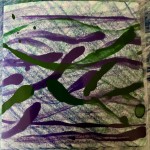
R4 has been around for a long time and I have really enjoyed his ability to merge ambience with noise. R4 is the work of one Barry Sheffel, who is also the man behind the Fusion Audio Recordings label. He had dropped off the face of the earth for a while, but he is back with a lot of new work, of which this is one. The label describes this simply as “Noise and quirky, leftfield electronics. Recorded in 2021. This is the second in series of mini CDRs.”
This disc consists of two tracks. We kick it off with “Traffik,” which is a short track of noise with a psychedelic feel. Lots of analogue noises and static, with a whimsical quality. It’s almost like he took honking cars and inserted them into road noise and theremin-like noises. “Two Point Seven Degrees Celcius” closes it out with a 17 minute track that really leans into the electronic noise with analog warbling, stuttering electronics, and shortwave radio transmission noises. There is a lot going on here that keeps it moving, and the music is layered in such a way as to continually build in both complexity and intensity. It ends quietly and deliberately, pulling you in, as it unravels in complexity to a static noise drone and then to quiet bass rumble. Nicely done.
This disc, along with his other recent output, such as “Rainmaker” on Inner Demons Records, show that R4 is in fine form and continues to produce noise music that is engaging and inventive. The 3 inch format really highlights R4’s work, with just enough length to construct a good track but not so long that it gets tiresome. Really solid noise. This album weighs in at just over 21 minutes and is limited to 15 copies, so get it while you can.
This disc consists of two tracks. We kick it off with “Traffik,” which is a short track of noise with a psychedelic feel. Lots of analogue noises and static, with a whimsical quality. It’s almost like he took honking cars and inserted them into road noise and theremin-like noises. “Two Point Seven Degrees Celcius” closes it out with a 17 minute track that really leans into the electronic noise with analog warbling, stuttering electronics, and shortwave radio transmission noises. There is a lot going on here that keeps it moving, and the music is layered in such a way as to continually build in both complexity and intensity. It ends quietly and deliberately, pulling you in, as it unravels in complexity to a static noise drone and then to quiet bass rumble. Nicely done.
This disc, along with his other recent output, such as “Rainmaker” on Inner Demons Records, show that R4 is in fine form and continues to produce noise music that is engaging and inventive. The 3 inch format really highlights R4’s work, with just enough length to construct a good track but not so long that it gets tiresome. Really solid noise. This album weighs in at just over 21 minutes and is limited to 15 copies, so get it while you can.
Barrena / See Through Buildings: Lament For Nuclear Winter / Windows Reflect Dust
Artist: Barrena / See Through Buildings (@)
Title: Lament For Nuclear Winter / Windows Reflect Dust
Format: Tape
Label: Fusion Audio Recordings (@)
Rated:

Title: Lament For Nuclear Winter / Windows Reflect Dust
Format: Tape
Label: Fusion Audio Recordings (@)
Rated:
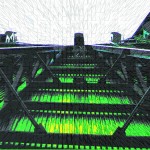
I really enjoy splits because the contrast can also be part of the experience. It is also a good way to find people you otherwise would not have known about, which is the case for me here. Barrena is the work of Puerto Rican artist Jorge Castro, and I have known his work for a long, long time. Castro has been in the experimental scene since the 1990s, most notably as part of Cornucopia, as well as other projects including Clon, Origami Subtropika and DEFORMA. The nice thing about Castro’s work is that he is difficult to nail down. Some of his stuff is harsh noise, some of it is mellow ambient, but all of it is interesting. The label describes the project thus: “As Barrena, Castro turns harsh noise wall formations into a meditative experience where feedback, distortion and digital artifacts become elements for immersive listening rather than disruption.” I was not familiar with See Through Buildings, but this is the harsh noise wall project of Ben Rehling, who hails from Garden Grove, CA. Rehling previously recorded under the name Jennifer Wolski in the 1990s and as part of A Moth In The Wine and The Climate Refugees. The label describes this track as “representative of the carefully crafted, droney HNW that has become See Through Buildings’ signature sound.” Sounds like a good time, so let’s dive in and see how this all plays out.
We kick it off with Barrena and “Lament For Nuclear Winter.” This is a low, rumbling piece with plenty of static thrown in for good measure. The overall feel is like watching television static while riding in a boxcar on a freight train. . . . that you aren’t supposed to be on because you jumped on in the middle of the night. And why is this train going so fast? This conductor seems like a man on a mission. What is the cargo in this train anyway? The track subtly shifts over time, sometimes highlighting the rumble, and sometimes the static, but it is a pleasant listen.
On the other side, we have See Through Buildings and “Windows Reflect Dust,” which is a pummeling wall of noise that buries everything under a mountain of crunchy static. However, this is not the kind of wall of noise where the artist simply records the space between radio stations. Rather, there is a lot of subtlety if you give it a listen with headphones. Or maybe there isn’t and your mind adds stuff that isn’t there to make sense of the chaos. Either way, it is a good piece for those who like their noise incredibly harsh, but with some underlying complexity.
I appreciate that although this is harsh noise wall, it is not as static as some practitioners make it. There is a lot happening under the layers, and you sometimes have to dig deep to find it, but like the princess and the pea, it’s there if you can feel it. This is a solid release of harsh noise wall and well worth checking out. This album weighs in at around 48 minutes and is limited to 100 copies.
We kick it off with Barrena and “Lament For Nuclear Winter.” This is a low, rumbling piece with plenty of static thrown in for good measure. The overall feel is like watching television static while riding in a boxcar on a freight train. . . . that you aren’t supposed to be on because you jumped on in the middle of the night. And why is this train going so fast? This conductor seems like a man on a mission. What is the cargo in this train anyway? The track subtly shifts over time, sometimes highlighting the rumble, and sometimes the static, but it is a pleasant listen.
On the other side, we have See Through Buildings and “Windows Reflect Dust,” which is a pummeling wall of noise that buries everything under a mountain of crunchy static. However, this is not the kind of wall of noise where the artist simply records the space between radio stations. Rather, there is a lot of subtlety if you give it a listen with headphones. Or maybe there isn’t and your mind adds stuff that isn’t there to make sense of the chaos. Either way, it is a good piece for those who like their noise incredibly harsh, but with some underlying complexity.
I appreciate that although this is harsh noise wall, it is not as static as some practitioners make it. There is a lot happening under the layers, and you sometimes have to dig deep to find it, but like the princess and the pea, it’s there if you can feel it. This is a solid release of harsh noise wall and well worth checking out. This album weighs in at around 48 minutes and is limited to 100 copies.
rsn: Deviation #1

I was not familiar with this artist, prior to getting this in my mailbox, but rsn is the work of ThomasRosen, who hails from Mülheim, Germany. Rosen is also a member of the black drone metal group [ B O L T ] and runs the cassette label momentarily records. The label describes his work thus: “Under the banner of rsn, Rosen produces richly textured drone and ambient compositions often intended for resonant spaces like galleries and sonic installations.” This sounds like a good time, so let’s see where this deviation takes us.
“deviation #1.1” kicks it off with lush, slowly evolving drone music that shifts continually, keeping it from staying too static. “deviation #1.2” likewise consists of slowly evolving drone, but where the first track was more soothing, this one is a bit more gritty, with some sawtooth waves thrown in to give it a bit of an edge. “deviation #1.3” is much smoother drone. Soft and peaceful, with just a hint of dissonance to keep it interesting. This one builds over time, becoming increasingly intense. “deviation #1.4” closes it all off by taking a different approach. Rather than the wall of drone, this one ebbs and flows as waves of drone encompass you and then fade away. The slow change of intensity makes for an interesting experience.
In short, if you like drone, this will definitely be up your alley. It takes a lot of work to create drone music that does not sound like someone put a brick on a synthesizer, and Rosen is clearly willing to put in the work. This is well constructed soundscape that one can simply dissolve into. Well done. This album weighs in at around 42 minutes and is limited to 100 copies.
“deviation #1.1” kicks it off with lush, slowly evolving drone music that shifts continually, keeping it from staying too static. “deviation #1.2” likewise consists of slowly evolving drone, but where the first track was more soothing, this one is a bit more gritty, with some sawtooth waves thrown in to give it a bit of an edge. “deviation #1.3” is much smoother drone. Soft and peaceful, with just a hint of dissonance to keep it interesting. This one builds over time, becoming increasingly intense. “deviation #1.4” closes it all off by taking a different approach. Rather than the wall of drone, this one ebbs and flows as waves of drone encompass you and then fade away. The slow change of intensity makes for an interesting experience.
In short, if you like drone, this will definitely be up your alley. It takes a lot of work to create drone music that does not sound like someone put a brick on a synthesizer, and Rosen is clearly willing to put in the work. This is well constructed soundscape that one can simply dissolve into. Well done. This album weighs in at around 42 minutes and is limited to 100 copies.
Gintas K: Atmosfera
Gintas K is the work of Lithuanian composer Gintas Kraptavicius. He has been kicking around the experimental scene for quite some time, so I was familiar with his work to some extent. His Bandcamp pages describes himself as "a sound artist, composer exploring digital, live, computer music, granular synthesis sound aesthetics." As for this release, the label describes this album thus: "ambience, electroacoustical micromelodies and noise played and record live without overdub." Sounds like a good time, so let's dive in and see what we have here.
We start off with “Atmosfera #1,” which is really peaceful; sparse piano with what sounds like rain and random electronic noises added in to break up the mellow vibe. This becomes increasingly noisy as the track progresses before slipping back into the calm piano melody. “Atmosfera #2” keeps this feeling going with piano and analog noises. In some ways, it can be considered a continuation of the previous track. As it progresses, it moves into a more insistent piano line that is heavily processed and more insistent. “Atmosfera #3” keeps the piano going, but with more analog squiggles and what sounds like a snare drum hitting sporadically. Gintas makes use of quiet spaces to draw you in before unleashing a torrent of analog noises toward the end. “Atmosfera #4” keeps this going in a similar trajectory. Suddenly, “Atmosfera #5” changes it up, with noises that sound like a cat fight in the alley under your bedroom window. I'm sure that no cats were actually harmed in the making of this track, but this one brings the noiseiness. There is a bit of piano thrown in, but it is completely overshadowed by the noises. And now the cats are being abducted by aliens? If you are one of the people that didn’t come here to get mellow, this is the track for you. “Atmosfera #6” is a bit more chaotic, with a pleasant melody that is all over the place mixed with the ever present analog noises. “Atmosfera #7” reprises the mellow piano melody with waves of staticy noises. This then becomes noisier before returning to the original peacefulness.
Overall, this is a nice composition, with each track serving as different variations on the same theme, almost as if this is an album of remixes of one track. Thankfully, the main theme is pleasant and engaging, and although the tracks mostly sound similar, they are not the same. Nicely done. This album weighs in at around 51 minutes and is limited to 25 copies on CDR and 100 cassettes, so pick it up while you can.
We start off with “Atmosfera #1,” which is really peaceful; sparse piano with what sounds like rain and random electronic noises added in to break up the mellow vibe. This becomes increasingly noisy as the track progresses before slipping back into the calm piano melody. “Atmosfera #2” keeps this feeling going with piano and analog noises. In some ways, it can be considered a continuation of the previous track. As it progresses, it moves into a more insistent piano line that is heavily processed and more insistent. “Atmosfera #3” keeps the piano going, but with more analog squiggles and what sounds like a snare drum hitting sporadically. Gintas makes use of quiet spaces to draw you in before unleashing a torrent of analog noises toward the end. “Atmosfera #4” keeps this going in a similar trajectory. Suddenly, “Atmosfera #5” changes it up, with noises that sound like a cat fight in the alley under your bedroom window. I'm sure that no cats were actually harmed in the making of this track, but this one brings the noiseiness. There is a bit of piano thrown in, but it is completely overshadowed by the noises. And now the cats are being abducted by aliens? If you are one of the people that didn’t come here to get mellow, this is the track for you. “Atmosfera #6” is a bit more chaotic, with a pleasant melody that is all over the place mixed with the ever present analog noises. “Atmosfera #7” reprises the mellow piano melody with waves of staticy noises. This then becomes noisier before returning to the original peacefulness.
Overall, this is a nice composition, with each track serving as different variations on the same theme, almost as if this is an album of remixes of one track. Thankfully, the main theme is pleasant and engaging, and although the tracks mostly sound similar, they are not the same. Nicely done. This album weighs in at around 51 minutes and is limited to 25 copies on CDR and 100 cassettes, so pick it up while you can.
Craven Faults: Sidings
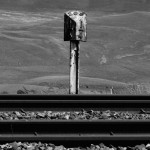
Some musicians write albums. Others map territories. Craven Faults has been doing the latter for years, patiently sketching a peculiar cartography where analogue synthesizers behave like geological tools and melodies emerge the way old rail lines surface from peat and fog.
With "Sidings", the project’s third full-length double LP following "Erratics & Unconformities" and "Standers", the anonymous architect behind the name returns to the same terrain: northern England seen not through postcards but through strata. Landscapes here are layered with industry, abandoned engineering projects, folklore, and a quietly obsessive relationship with sound technology. It’s pastoral music, if your idea of pasture includes rusted rail yards, forgotten viaducts, and the faint electrical hum of machines that refuse to die.
Craven Faults has always worked within a language of slowly evolving analogue sequences. Repetition is the skeleton, but patience is the real instrument. "Sidings" stretches this approach across eight pieces that unfold like journeys rather than compositions. The opener “A. Ganger” immediately sets the tone: arpeggios rotate with deliberate inevitability, like wheels finding their rhythm after a long push uphill. There’s propulsion, but it’s not the impatient kind. It feels engineered rather than performed.
The album’s conceptual framework wanders through railway construction, remote communities, and a labyrinth of historical references that jump between continents and decades. Recording studios appear in the liner notes like distant signal posts: Olympic, Gold Star, Black Ark, Wally Heider. The implication is quietly mischievous. The building of railroads, the building of studios, the building of electronic music cultures. All forms of infrastructure, all shaping how energy travels.
“Stoneyman” is perhaps the clearest demonstration of Craven Faults’ craft. The sequence is simple, almost stubborn, but the surrounding textures shift like weather over open moorland. Synth tones accumulate warmth until they glow rather than pulse. You start noticing microscopic variations, tiny rhythmic hesitations. It’s hypnotic in the literal sense, not the fashionable one.
Shorter tracks like “Yard Loup” and “Drover Hole Sike” function almost like signposts along the route. Brief, skeletal, they let the larger pieces breathe. “Three Loaning End” and “Incline Huttes” introduce subtle harmonic turns that feel like a road suddenly bending around a hill you didn’t see coming.
Then there’s “Far Closes”, the fifteen-minute closing track that quietly confirms the whole project’s logic. By this point the album has trained your ears to accept slow development as narrative. The piece unfolds with a kind of stoic beauty: two chords, a patient sequence, and a gradually thickening atmosphere that seems to condense out of cold air. Minimal ingredients, maximum horizon.
The persistent mystery around the project’s identity has always been part of the appeal. Rumours circulate, theories multiply, but none of it matters much. Craven Faults works precisely because the music feels detached from personality. It behaves more like landscape than confession.
What "Sidings" does particularly well is reinforce the idea that electronic music can carry a sense of place without relying on obvious sonic clichés. There are no field recordings of wind or sheep. Instead, the geography emerges through structure: repetition as terrain, modulation as weather, analogue warmth as soil.
It also quietly continues a tradition running from early minimalist electronics to kosmische music and the experimental underground that treats synthesizers less like futuristic gadgets and more like patient mechanical companions. The sound is neither nostalgic nor aggressively modern. It simply persists.
By the end of "Sidings", the metaphor of railways feels unavoidable. Tracks branching, converging, disappearing into tunnels. Some lines abandoned, others still carrying cargo through the night. Craven Faults doesn’t hurry the journey. It lets the listener walk beside the rails, counting sleepers, watching distant red kites circle overhead.
In an age addicted to immediacy, this sort of music feels almost subversive. Nothing explodes, nothing begs for attention. The album just continues forward, mile after mile, quietly proving that sometimes two chords really are enough. Three, as the album itself suggests, would probably be extravagant.
With "Sidings", the project’s third full-length double LP following "Erratics & Unconformities" and "Standers", the anonymous architect behind the name returns to the same terrain: northern England seen not through postcards but through strata. Landscapes here are layered with industry, abandoned engineering projects, folklore, and a quietly obsessive relationship with sound technology. It’s pastoral music, if your idea of pasture includes rusted rail yards, forgotten viaducts, and the faint electrical hum of machines that refuse to die.
Craven Faults has always worked within a language of slowly evolving analogue sequences. Repetition is the skeleton, but patience is the real instrument. "Sidings" stretches this approach across eight pieces that unfold like journeys rather than compositions. The opener “A. Ganger” immediately sets the tone: arpeggios rotate with deliberate inevitability, like wheels finding their rhythm after a long push uphill. There’s propulsion, but it’s not the impatient kind. It feels engineered rather than performed.
The album’s conceptual framework wanders through railway construction, remote communities, and a labyrinth of historical references that jump between continents and decades. Recording studios appear in the liner notes like distant signal posts: Olympic, Gold Star, Black Ark, Wally Heider. The implication is quietly mischievous. The building of railroads, the building of studios, the building of electronic music cultures. All forms of infrastructure, all shaping how energy travels.
“Stoneyman” is perhaps the clearest demonstration of Craven Faults’ craft. The sequence is simple, almost stubborn, but the surrounding textures shift like weather over open moorland. Synth tones accumulate warmth until they glow rather than pulse. You start noticing microscopic variations, tiny rhythmic hesitations. It’s hypnotic in the literal sense, not the fashionable one.
Shorter tracks like “Yard Loup” and “Drover Hole Sike” function almost like signposts along the route. Brief, skeletal, they let the larger pieces breathe. “Three Loaning End” and “Incline Huttes” introduce subtle harmonic turns that feel like a road suddenly bending around a hill you didn’t see coming.
Then there’s “Far Closes”, the fifteen-minute closing track that quietly confirms the whole project’s logic. By this point the album has trained your ears to accept slow development as narrative. The piece unfolds with a kind of stoic beauty: two chords, a patient sequence, and a gradually thickening atmosphere that seems to condense out of cold air. Minimal ingredients, maximum horizon.
The persistent mystery around the project’s identity has always been part of the appeal. Rumours circulate, theories multiply, but none of it matters much. Craven Faults works precisely because the music feels detached from personality. It behaves more like landscape than confession.
What "Sidings" does particularly well is reinforce the idea that electronic music can carry a sense of place without relying on obvious sonic clichés. There are no field recordings of wind or sheep. Instead, the geography emerges through structure: repetition as terrain, modulation as weather, analogue warmth as soil.
It also quietly continues a tradition running from early minimalist electronics to kosmische music and the experimental underground that treats synthesizers less like futuristic gadgets and more like patient mechanical companions. The sound is neither nostalgic nor aggressively modern. It simply persists.
By the end of "Sidings", the metaphor of railways feels unavoidable. Tracks branching, converging, disappearing into tunnels. Some lines abandoned, others still carrying cargo through the night. Craven Faults doesn’t hurry the journey. It lets the listener walk beside the rails, counting sleepers, watching distant red kites circle overhead.
In an age addicted to immediacy, this sort of music feels almost subversive. Nothing explodes, nothing begs for attention. The album just continues forward, mile after mile, quietly proving that sometimes two chords really are enough. Three, as the album itself suggests, would probably be extravagant.