
Browse by Genre
Industrial Music / Industrial Metal / Aggro Industrial / Electro Metal
Industrial Noise / Power Noise / Harsh Noise
Synth Pop / Electro Pop / Synth-Electronica
Techno / Trance / Goa / Drum'n'Bass / Jungle / Tribal / Trip-Hop
Ambient / Electronica / Ethereal / Dub / Soundscapes / Abstract
Experimental / Avantgarde / Weird & Wired / Glitch / Noise / Field Recording
Dark / Gothic / Wave / New Wave / Dark Wave / Industrial Gothic
New Music / Downtown / Avantgarde Jazz / New Classical / World
Search Reviews
Music Reviews
Åubin: Gaza


Listening to Lubin's Gaza is like standing in a war zone of sound - the distant tremor of explosions filtered through sine waves, voices bleeding into beat patterns, grief and anger given rhythmic form. It's not easy music, but it's urgent, uncompromising, and haunted by the weight of its own witness.
Lubin’s second album doesn’t just gesture toward protest - it drags the protest into the body. The template is raw industrial techno, with pulse and drive, but those beats never dominate: they are the skeleton beneath the flesh of field recordings, news fragments, voices from the ground. You feel the collision: the circuitry of machines and the flesh of speech, the abstraction of electronic design and the rawness of trauma.
From the opening “Raw Power” onward, the record feels like a struggle - not just against silence, but against forgetting. Al-Szifa moves slowly, gravely, as though walking through ruins; Gush Emunin turns tension into echo, letting resonance linger like smoke. Deptanie SzkLa (“treading glass”) is brittle sound made form, shards of rhythm under pressure. Jabalya and Sumud (a word meaning “steadfastness”) are dirges in motion. And in Gniew (“anger”), Lubin lets the full force loose: the longest track, the most exposed, where electronics, voice, modulations collide in catharsis.
What is striking is Lubin’s refusal to take a simple pole. The album does not pretend that its testimony is unambiguous; it explores how voices fracture under violence, how political catastrophe bleeds into personal pain. The result is not a manifesto but a lamentation that refuses to dull its edges.
One hears in Gaza echoes of industrial and darkambient traditions - but also something more alive, more precarious: music that feels like walking on cracked ground. You feel the instability in the mix, the shifting balance between noise and presence. The production is unflinching: no softening, no smoothing. The CD edition is limited (300 copies), folded in six-panel ekopack, reinforcing that this is precious and fragile.
A listener might stumble here - this is not comfortable music. But it is an album that demands to be heard. After the final echo fades, you realize it doesn’t leave you, because Gaza was never just sound. It was a call, a wound, a witness, and in that sense, it continues.
Lubin’s second album doesn’t just gesture toward protest - it drags the protest into the body. The template is raw industrial techno, with pulse and drive, but those beats never dominate: they are the skeleton beneath the flesh of field recordings, news fragments, voices from the ground. You feel the collision: the circuitry of machines and the flesh of speech, the abstraction of electronic design and the rawness of trauma.
From the opening “Raw Power” onward, the record feels like a struggle - not just against silence, but against forgetting. Al-Szifa moves slowly, gravely, as though walking through ruins; Gush Emunin turns tension into echo, letting resonance linger like smoke. Deptanie SzkLa (“treading glass”) is brittle sound made form, shards of rhythm under pressure. Jabalya and Sumud (a word meaning “steadfastness”) are dirges in motion. And in Gniew (“anger”), Lubin lets the full force loose: the longest track, the most exposed, where electronics, voice, modulations collide in catharsis.
What is striking is Lubin’s refusal to take a simple pole. The album does not pretend that its testimony is unambiguous; it explores how voices fracture under violence, how political catastrophe bleeds into personal pain. The result is not a manifesto but a lamentation that refuses to dull its edges.
One hears in Gaza echoes of industrial and darkambient traditions - but also something more alive, more precarious: music that feels like walking on cracked ground. You feel the instability in the mix, the shifting balance between noise and presence. The production is unflinching: no softening, no smoothing. The CD edition is limited (300 copies), folded in six-panel ekopack, reinforcing that this is precious and fragile.
A listener might stumble here - this is not comfortable music. But it is an album that demands to be heard. After the final echo fades, you realize it doesn’t leave you, because Gaza was never just sound. It was a call, a wound, a witness, and in that sense, it continues.
Ø (Mika Vainio): Sysivalo
There are albums that close a chapter, and there are albums that dim the light forever. "Sysivalo" - literally “darklight”, a word Mika Vainio invented by suturing "sysi" (darkness) and "valo" (light) - is both. Begun in 2014 and nearly finished before his passing in 2017, this ninth Ø record finally surfaces eight years later, not as an archive but as a last heartbeat that somehow keeps echoing.
The title tells the whole story: contradiction as oxygen. Vainio was always a master of paradox - the minimalist who made silence scream, the noise artist who knew when to whisper. "Sysivalo" is the distilled essence of that dialectic: 20 short etudes, each one like a small frost pattern on a windowpane, gone the moment you lean closer to inspect it.
The "Etudes" - seven of them scattered across the album - feel like diary fragments of a mind at work in isolation: tone experiments that hum, stutter, and stop mid-breath. There’s rhythm, but it’s rarely human; melody, but glimpsed through fog. Occasionally, something like warmth flickers ("Sylvannus", "Uusikuu"), but even that warmth feels borrowed from the friction of machines. The more melodic pieces, such as "Kangastus" (“mirage”) or "Ursa", recall the ghostly minimalism of early Ø, but they’ve aged - like field recordings from the underworld of electricity.
And then there’s "Loputon" - “Endless”. The last word, literally and metaphorically. It’s serene without being soft, like a pulse that’s decided to keep going even after the body has stopped. If death ever had an outro, this would be it: not grief, but quiet acceptance.
What’s extraordinary is how "Sysivalo" manages to be alive. Despite its posthumous nature, nothing here feels embalmed. It’s as if Vainio’s circuits are still running somewhere - eternally rebooting, perpetually crackling in the Finnish winter. The album sounds at once ancient and futuristic, like an abandoned radio tower still transmitting to no one in particular.
There’s also a sly sense of humor hiding in the austerity - that dry Vainio wit, the same that named a piece "T-Bahn" or could turn feedback into philosophy. Even in his most severe moments, he never lost touch with play - the childlike curiosity of what happens when you feed a spark into darkness.
Listening to "Sysivalo" feels like standing at the edge of a frozen lake at night: everything silent, but beneath the surface, the ice creaks, mutters, remembers. You realize that Vainio never really left. He just found a quieter frequency.
This isn’t a monument - it’s a transmission, faint but clear, from that strange border where light and darkness stop pretending they’re different things.
The title tells the whole story: contradiction as oxygen. Vainio was always a master of paradox - the minimalist who made silence scream, the noise artist who knew when to whisper. "Sysivalo" is the distilled essence of that dialectic: 20 short etudes, each one like a small frost pattern on a windowpane, gone the moment you lean closer to inspect it.
The "Etudes" - seven of them scattered across the album - feel like diary fragments of a mind at work in isolation: tone experiments that hum, stutter, and stop mid-breath. There’s rhythm, but it’s rarely human; melody, but glimpsed through fog. Occasionally, something like warmth flickers ("Sylvannus", "Uusikuu"), but even that warmth feels borrowed from the friction of machines. The more melodic pieces, such as "Kangastus" (“mirage”) or "Ursa", recall the ghostly minimalism of early Ø, but they’ve aged - like field recordings from the underworld of electricity.
And then there’s "Loputon" - “Endless”. The last word, literally and metaphorically. It’s serene without being soft, like a pulse that’s decided to keep going even after the body has stopped. If death ever had an outro, this would be it: not grief, but quiet acceptance.
What’s extraordinary is how "Sysivalo" manages to be alive. Despite its posthumous nature, nothing here feels embalmed. It’s as if Vainio’s circuits are still running somewhere - eternally rebooting, perpetually crackling in the Finnish winter. The album sounds at once ancient and futuristic, like an abandoned radio tower still transmitting to no one in particular.
There’s also a sly sense of humor hiding in the austerity - that dry Vainio wit, the same that named a piece "T-Bahn" or could turn feedback into philosophy. Even in his most severe moments, he never lost touch with play - the childlike curiosity of what happens when you feed a spark into darkness.
Listening to "Sysivalo" feels like standing at the edge of a frozen lake at night: everything silent, but beneath the surface, the ice creaks, mutters, remembers. You realize that Vainio never really left. He just found a quieter frequency.
This isn’t a monument - it’s a transmission, faint but clear, from that strange border where light and darkness stop pretending they’re different things.
Randi Pontoppidan & Christian Rønn: Shadow Moves
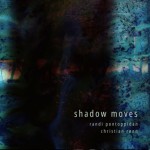
Stepping into Shadow Moves feels like entering the quiet corridor of a spaceship where each footstep echoes, and the walls hum with remembered vibrations. Danish improvisers Randi Pontoppidan and Christian Rønn have long been explorers of sonic terrain - she, the voice turning into instrument, electronics and all; he, the prepared grand piano, loops and live manipulation. Together, on this second collaborative album, they chart not a map of territory but a map of liminality: between sound and silence, between instrument and organism, between gesture and memory.
From the first track, “Shade”, the duo establish their dialect: Pontoppidan’s voice, at times a purr, at times a jagged edge, hovers over Rønn’s piano, each key resonance bent, stretched, treated like clay. It’s acoustic not in the sense of comfort but in the sense of matter: the strings vibrate, the electronics sigh, and the space around them becomes part of the instrumentation. The title suggests movement - but movement of shadows, subtle, unpredictable, under-light rather than spotlight.
In “Discussion”, the compositional interplay feels simultaneously conversational and conspiratorial. There are no solos in the jazz sense; instead one sound suggests, the other answers, then vanishes. It’s improv not as spectacle but as deep listening. Then “Fingers” and “Reason” transition us from the tactile into the abstract. In a mere minute, “Reason” poses a question so minimal it might be a breath or heartbeat rather than a piece of music.
Later, “Carousel” spins us outward: the prepared piano becomes metallic rings, Pontoppidan’s voice dives into reeds of air and modulation, and you wonder whether you’re still in the same cosmos. “Tremble” is like catching the vibration before the wave: brief, intense, brimming with kinetic under-current. “Phantom” - perhaps the album’s emotional heart - blends a piano motif that seems lost with a vocal register exploring its own ghost. The title track emerges not as a bold statement but as a revelation: wide skies, rare tranquility, the closing pieces feel less like ending than unfolding.
What’s compelling here is their refusal to rely on melody or groove as anchors. Instead the texture, the space between notes, the shift in tone become the terrain. Pontoppidan’s background in voice-improvisation and live electronics (she has worked with classical ensembles and experimental contexts) means her voice on this album doesn’t sit “on top” of the music - it is part of the architecture. Rønn’s piano work, shaped by his electroacoustic explorations and film score practice, provides both foundation and escape hatch. Together, they do not just perform; they inhabit sound.
And yes - there’s humor, if you let it in. When the prepared piano clangs like office-equipment gone rogue, or when the voice slides into an unexpected timbre, you realize that experimentation need not be grim. There’s delight in the mis-step, in the way a note refuses to settle. That playfulness reminds us that the “moves” here are shadows dancing at the edge of recognition, not polished routines.
For listeners willing to step out of habit, Shadow Moves offers more than ambient background or virtuosic display: it’s an invitation. To listen around the music, not just to it. To feel time stretch and contract. To greet the ghost in the piano string. To allow voice and key to blur into a new language.
From the first track, “Shade”, the duo establish their dialect: Pontoppidan’s voice, at times a purr, at times a jagged edge, hovers over Rønn’s piano, each key resonance bent, stretched, treated like clay. It’s acoustic not in the sense of comfort but in the sense of matter: the strings vibrate, the electronics sigh, and the space around them becomes part of the instrumentation. The title suggests movement - but movement of shadows, subtle, unpredictable, under-light rather than spotlight.
In “Discussion”, the compositional interplay feels simultaneously conversational and conspiratorial. There are no solos in the jazz sense; instead one sound suggests, the other answers, then vanishes. It’s improv not as spectacle but as deep listening. Then “Fingers” and “Reason” transition us from the tactile into the abstract. In a mere minute, “Reason” poses a question so minimal it might be a breath or heartbeat rather than a piece of music.
Later, “Carousel” spins us outward: the prepared piano becomes metallic rings, Pontoppidan’s voice dives into reeds of air and modulation, and you wonder whether you’re still in the same cosmos. “Tremble” is like catching the vibration before the wave: brief, intense, brimming with kinetic under-current. “Phantom” - perhaps the album’s emotional heart - blends a piano motif that seems lost with a vocal register exploring its own ghost. The title track emerges not as a bold statement but as a revelation: wide skies, rare tranquility, the closing pieces feel less like ending than unfolding.
What’s compelling here is their refusal to rely on melody or groove as anchors. Instead the texture, the space between notes, the shift in tone become the terrain. Pontoppidan’s background in voice-improvisation and live electronics (she has worked with classical ensembles and experimental contexts) means her voice on this album doesn’t sit “on top” of the music - it is part of the architecture. Rønn’s piano work, shaped by his electroacoustic explorations and film score practice, provides both foundation and escape hatch. Together, they do not just perform; they inhabit sound.
And yes - there’s humor, if you let it in. When the prepared piano clangs like office-equipment gone rogue, or when the voice slides into an unexpected timbre, you realize that experimentation need not be grim. There’s delight in the mis-step, in the way a note refuses to settle. That playfulness reminds us that the “moves” here are shadows dancing at the edge of recognition, not polished routines.
For listeners willing to step out of habit, Shadow Moves offers more than ambient background or virtuosic display: it’s an invitation. To listen around the music, not just to it. To feel time stretch and contract. To greet the ghost in the piano string. To allow voice and key to blur into a new language.
Dooom Orchestra: Our Sea Lies Within II

Our Sea Lies Within II feels less like a sequel and more like a deeper dive-into currents already stirring beneath the surface. This is Padua’s Dooom Orchestra returning to the same 2023 session that yielded the first chapter of Our Sea Lies Within, but crawling further into its folds: listening more closely, coaxing new voices to emerge, letting nuance carry weight.
Under the direction of Francesco Cigana (drums, percussion, and objects), the ensemble of young improvisers finds a language that is collective rather than soloistic. Saxophones, violins, vocals - all swirl and settle, sometimes in tension, sometimes in mutual suspension. The instrumentation is modest, but the interplay is ambitious: at times the group sounds like a chamber jazz ensemble, at times like a ritual invocation in slow motion. The acoustic realm is rarely still; even silence is textured, as though filled with echoes waiting to be named.
Early tracks like “Sicapoo” and “Vegvisir” spin threadlike motifs - something between wind through reeds and submerged memory. Sax lines flicker; strings tremble. “Hail Storm God Nara Swamp Blues” is a turning point: percussion becomes wind, violin becomes thunder, voices chant distant names. One hears the swamp hall in Tombolo, where the recording took place, its ambient resonance trapping breath and decay. “East River Prayer” and “For All Things to Come” feel like elegies raised in water, prayers cast into flow.
What’s striking is how II refuses to rely on flash or overt drama. The intensity comes from the glue - how one voice supports the next, how a note left hanging becomes gravity. The poetry by Cigana that accompanies the packaging points to that same intent: to metaphorize the inner sea we all carry. The ensemble doesn’t force declarations; it allows them to leak through the margins.
If you’re used to records as statements, this one asks to be lived. Sometimes too soft to command attention, often surprising in its restraint, Our Sea Lies Within II is a meditation on mutual trust. In a musical world that prizes flair and spectacle, Dooom Orchestra reminds us that deep listening can be its own kind of insistence.
Under the direction of Francesco Cigana (drums, percussion, and objects), the ensemble of young improvisers finds a language that is collective rather than soloistic. Saxophones, violins, vocals - all swirl and settle, sometimes in tension, sometimes in mutual suspension. The instrumentation is modest, but the interplay is ambitious: at times the group sounds like a chamber jazz ensemble, at times like a ritual invocation in slow motion. The acoustic realm is rarely still; even silence is textured, as though filled with echoes waiting to be named.
Early tracks like “Sicapoo” and “Vegvisir” spin threadlike motifs - something between wind through reeds and submerged memory. Sax lines flicker; strings tremble. “Hail Storm God Nara Swamp Blues” is a turning point: percussion becomes wind, violin becomes thunder, voices chant distant names. One hears the swamp hall in Tombolo, where the recording took place, its ambient resonance trapping breath and decay. “East River Prayer” and “For All Things to Come” feel like elegies raised in water, prayers cast into flow.
What’s striking is how II refuses to rely on flash or overt drama. The intensity comes from the glue - how one voice supports the next, how a note left hanging becomes gravity. The poetry by Cigana that accompanies the packaging points to that same intent: to metaphorize the inner sea we all carry. The ensemble doesn’t force declarations; it allows them to leak through the margins.
If you’re used to records as statements, this one asks to be lived. Sometimes too soft to command attention, often surprising in its restraint, Our Sea Lies Within II is a meditation on mutual trust. In a musical world that prizes flair and spectacle, Dooom Orchestra reminds us that deep listening can be its own kind of insistence.
IO: The Beauty of Simple Things

Artist: IO
Title: The Beauty of Simple Things
Format: Download Only (MP3 + Lossless)
Label: No Part Of It (@)
Rated:

Title: The Beauty of Simple Things
Format: Download Only (MP3 + Lossless)
Label: No Part Of It (@)
Rated:
There’s something disarmingly courageous in a musician choosing not grandeur, but tenderness - not the cathedral of sound, but the faint hum of its echo after everyone’s gone home. IO, the polymorphous artist from Porto Alegre, Brazil, has spent years scattering her identity across the digital wastelands of underground music - running netlabels like Shadow Tears and The Church of Noisy Goat, releasing everything from shoegaze lullabies to modular abrasion and harsh noise confessions. But "The Beauty of Simple Things" is her most naked offering yet: a lo-fi requiem for the ordinary.
Nineteen tracks. Each one short, melancholy, rustling with vinyl crackle - a patina of time, an audible ghost of fragility. It’s an album that sounds like it’s remembering itself as it plays. IO describes it as an autobiographical cycle - the slow healing after loss, isolation, grief, and rebirth - and you can hear that arc breathing through the sequence, like someone opening the shutters a little more with each song.
“The Pine Forest”, “The Tiny Flowers”, “The Grass Field” - even the titles feel like found fragments from a personal diary. The early pieces move in suspended sadness, halfway between ambient folk and dreamlike minimalism. Then the middle sequence - “Anguish”, “The Long Wait”, “The Death” - deepens the shadow, where silence becomes percussion and melody flickers like a match in damp air. By the time “Light Up” and “Reborn” arrive, IO isn’t triumphing so much as exhaling - not the fire of rebirth, but the quiet realization that being alive at all is miracle enough.
It’s easy to underestimate this album if you only skim it - the textures are simple, the production unassuming, the melodies almost hesitant. But that’s the trick: "The Beauty of Simple Things" is about the art of smallness, about noticing the world when you have nothing left but the will to notice. In a music culture addicted to escalation, IO’s restraint feels radical.
The record’s most poignant line isn’t even sung - it’s visual. The cover shows IO at sunset, photographed by her son - her first sunset seen after nearly a year of self-imposed exile. You can almost hear that image in the music: warmth and sorrow holding hands, the light bending over a healed scar.
If "The Beauty of Simple Things" were a scent, it would be the air after rain in an empty field. If it were a feeling, it would be the moment you realize grief hasn’t left you - it’s just learned to hum in tune.
Nineteen tracks. Each one short, melancholy, rustling with vinyl crackle - a patina of time, an audible ghost of fragility. It’s an album that sounds like it’s remembering itself as it plays. IO describes it as an autobiographical cycle - the slow healing after loss, isolation, grief, and rebirth - and you can hear that arc breathing through the sequence, like someone opening the shutters a little more with each song.
“The Pine Forest”, “The Tiny Flowers”, “The Grass Field” - even the titles feel like found fragments from a personal diary. The early pieces move in suspended sadness, halfway between ambient folk and dreamlike minimalism. Then the middle sequence - “Anguish”, “The Long Wait”, “The Death” - deepens the shadow, where silence becomes percussion and melody flickers like a match in damp air. By the time “Light Up” and “Reborn” arrive, IO isn’t triumphing so much as exhaling - not the fire of rebirth, but the quiet realization that being alive at all is miracle enough.
It’s easy to underestimate this album if you only skim it - the textures are simple, the production unassuming, the melodies almost hesitant. But that’s the trick: "The Beauty of Simple Things" is about the art of smallness, about noticing the world when you have nothing left but the will to notice. In a music culture addicted to escalation, IO’s restraint feels radical.
The record’s most poignant line isn’t even sung - it’s visual. The cover shows IO at sunset, photographed by her son - her first sunset seen after nearly a year of self-imposed exile. You can almost hear that image in the music: warmth and sorrow holding hands, the light bending over a healed scar.
If "The Beauty of Simple Things" were a scent, it would be the air after rain in an empty field. If it were a feeling, it would be the moment you realize grief hasn’t left you - it’s just learned to hum in tune.