
Browse by Genre
Industrial Music / Industrial Metal / Aggro Industrial / Electro Metal
Industrial Noise / Power Noise / Harsh Noise
Synth Pop / Electro Pop / Synth-Electronica
Techno / Trance / Goa / Drum'n'Bass / Jungle / Tribal / Trip-Hop
Ambient / Electronica / Ethereal / Dub / Soundscapes / Abstract
Experimental / Avantgarde / Weird & Wired / Glitch / Noise / Field Recording
Dark / Gothic / Wave / New Wave / Dark Wave / Industrial Gothic
New Music / Downtown / Avantgarde Jazz / New Classical / World
Search Reviews
Music Reviews
Tacet Tacet Tacet: Fickle

Artist: Tacet Tacet Tacet (@)
Title: Fickle
Format: Tape + Download
Label: Slowth Records (@)
Rated:

Title: Fickle
Format: Tape + Download
Label: Slowth Records (@)
Rated:
There’s a quiet daring in naming yourself after the Latin for “silence”, especially when your music seems so intent on abolishing it. Fickle, the third album by Francesco Zedde under the moniker Tacet Tacet Tacet, is a work of tension and transformation - a place where sound tries to push beyond its own edges, only to find new boundaries.
Zedde, now based in Utrecht but born in Italy, has long pursued a hybrid territory: ambient textures, glitch, concrete fragments, processed instruments, fields and samples. In Fickle, those methods are less ornament than foundation: rather than layering effects over sound, he seems to sculpt from sounds themselves, carving rhythms and melodies out of ambience. Indeed, the label describes the project as assembling ambient noises into structures, letting the listener drift from formlessness into pattern.
The album opens with “Gamble”, a solo drum motif gradually stretched, mirrored, and refracted until it is no longer “just drums” but a shifting terrain of pulses and echoes. It feels like watching a stone drop into a pond at midnight: the ripple becomes the pond. “Dissimulation” follows, unsettling with its lithe dissonances and abrupt silences. The horizon breaks here - what was sparse becomes uneasy, as though the air itself has pitched into fracture.
In “Pertinence”, glitchy rhythms, processed guitar, and irregular beats dance a jittery tango together. It’s one of the more structured moments - but structure here is elastic, always ready to warp. “Unfocus” pushes that warp further: pulses collapse, voices or fragments slide in and slip out, as though you’re half-listening to a hidden conversation in a storm. The field-recorded and elemental influences from Zedde’s trips (notably to Iceland) surface most vividly in “Welter”, which bathes insects, old organ, and bells in a slow, late-night glow.
The closing “Recurrence” is hypnotic minimalism. Two piano chords loop like heartbeats, their repetition both consoling and relentless. Processed breath, glitch and artifact swirl around them, as though the music is both resisting stasis and trapped in it. A voice - Rea Dubach, heavily transformed - drifts almost subliminally in the backdrop, as if memory trying to speak through interference.
For listeners familiar with his earlier work, Fickle might feel like a quieter, more introspective pivot. While the confrontations and noise gestures of past records remain in shadow, here they’re internalized. Rhythm is not a demand but a question. Texture doesn’t envelop - it suggests. Zedde’s collaborators, especially Jacopo Mittino (aka 52 Hearts Whale), help guide that balance; on tracks like “Gamble” and “Unfocus”, their co-composition tempers and redirects the tension.
If you’re a listener who falls in love with a note, Fickle asks you to wait; let it stretch, shift, and reappear. It’s not always comfortable. Some moments feel like your ears are catching shadows. But therein lies its beauty. This is music built from the space between sounds, and from the courage to let that space hold you.
Zedde, now based in Utrecht but born in Italy, has long pursued a hybrid territory: ambient textures, glitch, concrete fragments, processed instruments, fields and samples. In Fickle, those methods are less ornament than foundation: rather than layering effects over sound, he seems to sculpt from sounds themselves, carving rhythms and melodies out of ambience. Indeed, the label describes the project as assembling ambient noises into structures, letting the listener drift from formlessness into pattern.
The album opens with “Gamble”, a solo drum motif gradually stretched, mirrored, and refracted until it is no longer “just drums” but a shifting terrain of pulses and echoes. It feels like watching a stone drop into a pond at midnight: the ripple becomes the pond. “Dissimulation” follows, unsettling with its lithe dissonances and abrupt silences. The horizon breaks here - what was sparse becomes uneasy, as though the air itself has pitched into fracture.
In “Pertinence”, glitchy rhythms, processed guitar, and irregular beats dance a jittery tango together. It’s one of the more structured moments - but structure here is elastic, always ready to warp. “Unfocus” pushes that warp further: pulses collapse, voices or fragments slide in and slip out, as though you’re half-listening to a hidden conversation in a storm. The field-recorded and elemental influences from Zedde’s trips (notably to Iceland) surface most vividly in “Welter”, which bathes insects, old organ, and bells in a slow, late-night glow.
The closing “Recurrence” is hypnotic minimalism. Two piano chords loop like heartbeats, their repetition both consoling and relentless. Processed breath, glitch and artifact swirl around them, as though the music is both resisting stasis and trapped in it. A voice - Rea Dubach, heavily transformed - drifts almost subliminally in the backdrop, as if memory trying to speak through interference.
For listeners familiar with his earlier work, Fickle might feel like a quieter, more introspective pivot. While the confrontations and noise gestures of past records remain in shadow, here they’re internalized. Rhythm is not a demand but a question. Texture doesn’t envelop - it suggests. Zedde’s collaborators, especially Jacopo Mittino (aka 52 Hearts Whale), help guide that balance; on tracks like “Gamble” and “Unfocus”, their co-composition tempers and redirects the tension.
If you’re a listener who falls in love with a note, Fickle asks you to wait; let it stretch, shift, and reappear. It’s not always comfortable. Some moments feel like your ears are catching shadows. But therein lies its beauty. This is music built from the space between sounds, and from the courage to let that space hold you.
Pamplemousse: Porcelain


Let’s start with a paradox: "Porcelain" is anything but delicate. It cracks, chips, and clangs; it’s the sound of fragility weaponized - a teacup hurled through a Marshall stack. Sarah and Nico, the volcanic duo behind Pamplemousse, seem to have distilled the entire post-grunge hangover into nine compact detonations recorded once again with Peter Deimel at the Black Box - a place that’s become to noise what Abbey Road was to pop: sacred ground for distortion.
Pamplemousse’s story is already legend on their native Réunion Island - a place better known for its beaches than for feedback and fury. Born in 2016 as a trio, the band’s evolution into a duo has only made them sound more dangerous, more distilled. There’s a strange kind of intimacy in their violence now: the drum hits are like heartbeats in arrhythmia; the guitar riffs, crooked love letters written with a soldering iron.
"Porcelain" continues the band’s progression from "High Strung" and "Think of It" - but what once felt like raw, sweaty catharsis now carries a layer of uneasy clarity. “More Beautiful Than Madonna” opens the record like a slap of irony and joy - the sound of a band laughing at their own destruction. “Smile the Num” and “Miami Blue” stretch between menace and melancholy, where Nico’s vocals slide between a snarl and a confession. Then there’s “Bad Penny”, perhaps their most perfectly unhinged pop moment, a two-and-a-half-minute anthem for anyone who’s ever smiled while falling apart.
What’s striking about "Porcelain" is its sense of proportion. Everything teeters on the edge - the production is precise, the chaos rehearsed but never domesticated. Sarah’s drumming doesn’t so much keep time as threaten it, while Nico’s guitar playing sounds like it’s trying to chew its way out of its own amp. And yet, amid all the abrasion, there’s something beautiful: melody hiding inside the feedback, like a shard of porcelain glinting in rubble.
Thematically, "Porcelain" feels like a document of reinvention. After moving from the tropics of Réunion to the industrial greys of Lorraine, Pamplemousse seem to have found a new temperature - less humid, more electric. It’s as if the duo have traded volcanic heat for metallic tension, replacing sweat with static.
By the time the closer “Brick Head” stretches its seven minutes into a slow, hypnotic sprawl, the album feels less like a collection of songs and more like an exorcism recorded in real time. The chaos has structure, the noise has grace. You could call it grunge, noise rock, punk - but those words don’t quite hold. This is music that claws at its own labels, then dances on the scraps.
"Porcelain" is an album about endurance - not the kind that polishes and preserves, but the kind that chips and scars and still shines through. Fragility, as Pamplemousse remind us, is just another word for being alive loud enough to break.
Pamplemousse’s story is already legend on their native Réunion Island - a place better known for its beaches than for feedback and fury. Born in 2016 as a trio, the band’s evolution into a duo has only made them sound more dangerous, more distilled. There’s a strange kind of intimacy in their violence now: the drum hits are like heartbeats in arrhythmia; the guitar riffs, crooked love letters written with a soldering iron.
"Porcelain" continues the band’s progression from "High Strung" and "Think of It" - but what once felt like raw, sweaty catharsis now carries a layer of uneasy clarity. “More Beautiful Than Madonna” opens the record like a slap of irony and joy - the sound of a band laughing at their own destruction. “Smile the Num” and “Miami Blue” stretch between menace and melancholy, where Nico’s vocals slide between a snarl and a confession. Then there’s “Bad Penny”, perhaps their most perfectly unhinged pop moment, a two-and-a-half-minute anthem for anyone who’s ever smiled while falling apart.
What’s striking about "Porcelain" is its sense of proportion. Everything teeters on the edge - the production is precise, the chaos rehearsed but never domesticated. Sarah’s drumming doesn’t so much keep time as threaten it, while Nico’s guitar playing sounds like it’s trying to chew its way out of its own amp. And yet, amid all the abrasion, there’s something beautiful: melody hiding inside the feedback, like a shard of porcelain glinting in rubble.
Thematically, "Porcelain" feels like a document of reinvention. After moving from the tropics of Réunion to the industrial greys of Lorraine, Pamplemousse seem to have found a new temperature - less humid, more electric. It’s as if the duo have traded volcanic heat for metallic tension, replacing sweat with static.
By the time the closer “Brick Head” stretches its seven minutes into a slow, hypnotic sprawl, the album feels less like a collection of songs and more like an exorcism recorded in real time. The chaos has structure, the noise has grace. You could call it grunge, noise rock, punk - but those words don’t quite hold. This is music that claws at its own labels, then dances on the scraps.
"Porcelain" is an album about endurance - not the kind that polishes and preserves, but the kind that chips and scars and still shines through. Fragility, as Pamplemousse remind us, is just another word for being alive loud enough to break.
Lubin: Gaza

Listening to Lubin's Gaza is like standing in a war zone of sound - the distant tremor of explosions filtered through sine waves, voices bleeding into beat patterns, grief and anger given rhythmic form. It's not easy music, but it's urgent, uncompromising, and haunted by the weight of its own witness.
Lubin’s second album doesn’t just gesture toward protest - it drags the protest into the body. The template is raw industrial techno, with pulse and drive, but those beats never dominate: they are the skeleton beneath the flesh of field recordings, news fragments, voices from the ground. You feel the collision: the circuitry of machines and the flesh of speech, the abstraction of electronic design and the rawness of trauma.
From the opening “Raw Power” onward, the record feels like a struggle - not just against silence, but against forgetting. Al-Szifa moves slowly, gravely, as though walking through ruins; Gush Emunin turns tension into echo, letting resonance linger like smoke. Deptanie SzkLa (“treading glass”) is brittle sound made form, shards of rhythm under pressure. Jabalya and Sumud (a word meaning “steadfastness”) are dirges in motion. And in Gniew (“anger”), Lubin lets the full force loose: the longest track, the most exposed, where electronics, voice, modulations collide in catharsis.
What is striking is Lubin’s refusal to take a simple pole. The album does not pretend that its testimony is unambiguous; it explores how voices fracture under violence, how political catastrophe bleeds into personal pain. The result is not a manifesto but a lamentation that refuses to dull its edges.
One hears in Gaza echoes of industrial and darkambient traditions - but also something more alive, more precarious: music that feels like walking on cracked ground. You feel the instability in the mix, the shifting balance between noise and presence. The production is unflinching: no softening, no smoothing. The CD edition is limited (300 copies), folded in six-panel ekopack, reinforcing that this is precious and fragile.
A listener might stumble here - this is not comfortable music. But it is an album that demands to be heard. After the final echo fades, you realize it doesn’t leave you, because Gaza was never just sound. It was a call, a wound, a witness, and in that sense, it continues.
Lubin’s second album doesn’t just gesture toward protest - it drags the protest into the body. The template is raw industrial techno, with pulse and drive, but those beats never dominate: they are the skeleton beneath the flesh of field recordings, news fragments, voices from the ground. You feel the collision: the circuitry of machines and the flesh of speech, the abstraction of electronic design and the rawness of trauma.
From the opening “Raw Power” onward, the record feels like a struggle - not just against silence, but against forgetting. Al-Szifa moves slowly, gravely, as though walking through ruins; Gush Emunin turns tension into echo, letting resonance linger like smoke. Deptanie SzkLa (“treading glass”) is brittle sound made form, shards of rhythm under pressure. Jabalya and Sumud (a word meaning “steadfastness”) are dirges in motion. And in Gniew (“anger”), Lubin lets the full force loose: the longest track, the most exposed, where electronics, voice, modulations collide in catharsis.
What is striking is Lubin’s refusal to take a simple pole. The album does not pretend that its testimony is unambiguous; it explores how voices fracture under violence, how political catastrophe bleeds into personal pain. The result is not a manifesto but a lamentation that refuses to dull its edges.
One hears in Gaza echoes of industrial and darkambient traditions - but also something more alive, more precarious: music that feels like walking on cracked ground. You feel the instability in the mix, the shifting balance between noise and presence. The production is unflinching: no softening, no smoothing. The CD edition is limited (300 copies), folded in six-panel ekopack, reinforcing that this is precious and fragile.
A listener might stumble here - this is not comfortable music. But it is an album that demands to be heard. After the final echo fades, you realize it doesn’t leave you, because Gaza was never just sound. It was a call, a wound, a witness, and in that sense, it continues.
? (Mika Vainio): Sysivalo
There are albums that close a chapter, and there are albums that dim the light forever. "Sysivalo" - literally “darklight”, a word Mika Vainio invented by suturing "sysi" (darkness) and "valo" (light) - is both. Begun in 2014 and nearly finished before his passing in 2017, this ninth Ø record finally surfaces eight years later, not as an archive but as a last heartbeat that somehow keeps echoing.
The title tells the whole story: contradiction as oxygen. Vainio was always a master of paradox - the minimalist who made silence scream, the noise artist who knew when to whisper. "Sysivalo" is the distilled essence of that dialectic: 20 short etudes, each one like a small frost pattern on a windowpane, gone the moment you lean closer to inspect it.
The "Etudes" - seven of them scattered across the album - feel like diary fragments of a mind at work in isolation: tone experiments that hum, stutter, and stop mid-breath. There’s rhythm, but it’s rarely human; melody, but glimpsed through fog. Occasionally, something like warmth flickers ("Sylvannus", "Uusikuu"), but even that warmth feels borrowed from the friction of machines. The more melodic pieces, such as "Kangastus" (“mirage”) or "Ursa", recall the ghostly minimalism of early Ø, but they’ve aged - like field recordings from the underworld of electricity.
And then there’s "Loputon" - “Endless”. The last word, literally and metaphorically. It’s serene without being soft, like a pulse that’s decided to keep going even after the body has stopped. If death ever had an outro, this would be it: not grief, but quiet acceptance.
What’s extraordinary is how "Sysivalo" manages to be alive. Despite its posthumous nature, nothing here feels embalmed. It’s as if Vainio’s circuits are still running somewhere - eternally rebooting, perpetually crackling in the Finnish winter. The album sounds at once ancient and futuristic, like an abandoned radio tower still transmitting to no one in particular.
There’s also a sly sense of humor hiding in the austerity - that dry Vainio wit, the same that named a piece "T-Bahn" or could turn feedback into philosophy. Even in his most severe moments, he never lost touch with play - the childlike curiosity of what happens when you feed a spark into darkness.
Listening to "Sysivalo" feels like standing at the edge of a frozen lake at night: everything silent, but beneath the surface, the ice creaks, mutters, remembers. You realize that Vainio never really left. He just found a quieter frequency.
This isn’t a monument - it’s a transmission, faint but clear, from that strange border where light and darkness stop pretending they’re different things.
The title tells the whole story: contradiction as oxygen. Vainio was always a master of paradox - the minimalist who made silence scream, the noise artist who knew when to whisper. "Sysivalo" is the distilled essence of that dialectic: 20 short etudes, each one like a small frost pattern on a windowpane, gone the moment you lean closer to inspect it.
The "Etudes" - seven of them scattered across the album - feel like diary fragments of a mind at work in isolation: tone experiments that hum, stutter, and stop mid-breath. There’s rhythm, but it’s rarely human; melody, but glimpsed through fog. Occasionally, something like warmth flickers ("Sylvannus", "Uusikuu"), but even that warmth feels borrowed from the friction of machines. The more melodic pieces, such as "Kangastus" (“mirage”) or "Ursa", recall the ghostly minimalism of early Ø, but they’ve aged - like field recordings from the underworld of electricity.
And then there’s "Loputon" - “Endless”. The last word, literally and metaphorically. It’s serene without being soft, like a pulse that’s decided to keep going even after the body has stopped. If death ever had an outro, this would be it: not grief, but quiet acceptance.
What’s extraordinary is how "Sysivalo" manages to be alive. Despite its posthumous nature, nothing here feels embalmed. It’s as if Vainio’s circuits are still running somewhere - eternally rebooting, perpetually crackling in the Finnish winter. The album sounds at once ancient and futuristic, like an abandoned radio tower still transmitting to no one in particular.
There’s also a sly sense of humor hiding in the austerity - that dry Vainio wit, the same that named a piece "T-Bahn" or could turn feedback into philosophy. Even in his most severe moments, he never lost touch with play - the childlike curiosity of what happens when you feed a spark into darkness.
Listening to "Sysivalo" feels like standing at the edge of a frozen lake at night: everything silent, but beneath the surface, the ice creaks, mutters, remembers. You realize that Vainio never really left. He just found a quieter frequency.
This isn’t a monument - it’s a transmission, faint but clear, from that strange border where light and darkness stop pretending they’re different things.
Randi Pontoppidan & Christian R?nn: Shadow Moves
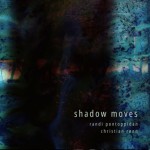
Stepping into Shadow Moves feels like entering the quiet corridor of a spaceship where each footstep echoes, and the walls hum with remembered vibrations. Danish improvisers Randi Pontoppidan and Christian Rønn have long been explorers of sonic terrain - she, the voice turning into instrument, electronics and all; he, the prepared grand piano, loops and live manipulation. Together, on this second collaborative album, they chart not a map of territory but a map of liminality: between sound and silence, between instrument and organism, between gesture and memory.
From the first track, “Shade”, the duo establish their dialect: Pontoppidan’s voice, at times a purr, at times a jagged edge, hovers over Rønn’s piano, each key resonance bent, stretched, treated like clay. It’s acoustic not in the sense of comfort but in the sense of matter: the strings vibrate, the electronics sigh, and the space around them becomes part of the instrumentation. The title suggests movement - but movement of shadows, subtle, unpredictable, under-light rather than spotlight.
In “Discussion”, the compositional interplay feels simultaneously conversational and conspiratorial. There are no solos in the jazz sense; instead one sound suggests, the other answers, then vanishes. It’s improv not as spectacle but as deep listening. Then “Fingers” and “Reason” transition us from the tactile into the abstract. In a mere minute, “Reason” poses a question so minimal it might be a breath or heartbeat rather than a piece of music.
Later, “Carousel” spins us outward: the prepared piano becomes metallic rings, Pontoppidan’s voice dives into reeds of air and modulation, and you wonder whether you’re still in the same cosmos. “Tremble” is like catching the vibration before the wave: brief, intense, brimming with kinetic under-current. “Phantom” - perhaps the album’s emotional heart - blends a piano motif that seems lost with a vocal register exploring its own ghost. The title track emerges not as a bold statement but as a revelation: wide skies, rare tranquility, the closing pieces feel less like ending than unfolding.
What’s compelling here is their refusal to rely on melody or groove as anchors. Instead the texture, the space between notes, the shift in tone become the terrain. Pontoppidan’s background in voice-improvisation and live electronics (she has worked with classical ensembles and experimental contexts) means her voice on this album doesn’t sit “on top” of the music - it is part of the architecture. Rønn’s piano work, shaped by his electroacoustic explorations and film score practice, provides both foundation and escape hatch. Together, they do not just perform; they inhabit sound.
And yes - there’s humor, if you let it in. When the prepared piano clangs like office-equipment gone rogue, or when the voice slides into an unexpected timbre, you realize that experimentation need not be grim. There’s delight in the mis-step, in the way a note refuses to settle. That playfulness reminds us that the “moves” here are shadows dancing at the edge of recognition, not polished routines.
For listeners willing to step out of habit, Shadow Moves offers more than ambient background or virtuosic display: it’s an invitation. To listen around the music, not just to it. To feel time stretch and contract. To greet the ghost in the piano string. To allow voice and key to blur into a new language.
From the first track, “Shade”, the duo establish their dialect: Pontoppidan’s voice, at times a purr, at times a jagged edge, hovers over Rønn’s piano, each key resonance bent, stretched, treated like clay. It’s acoustic not in the sense of comfort but in the sense of matter: the strings vibrate, the electronics sigh, and the space around them becomes part of the instrumentation. The title suggests movement - but movement of shadows, subtle, unpredictable, under-light rather than spotlight.
In “Discussion”, the compositional interplay feels simultaneously conversational and conspiratorial. There are no solos in the jazz sense; instead one sound suggests, the other answers, then vanishes. It’s improv not as spectacle but as deep listening. Then “Fingers” and “Reason” transition us from the tactile into the abstract. In a mere minute, “Reason” poses a question so minimal it might be a breath or heartbeat rather than a piece of music.
Later, “Carousel” spins us outward: the prepared piano becomes metallic rings, Pontoppidan’s voice dives into reeds of air and modulation, and you wonder whether you’re still in the same cosmos. “Tremble” is like catching the vibration before the wave: brief, intense, brimming with kinetic under-current. “Phantom” - perhaps the album’s emotional heart - blends a piano motif that seems lost with a vocal register exploring its own ghost. The title track emerges not as a bold statement but as a revelation: wide skies, rare tranquility, the closing pieces feel less like ending than unfolding.
What’s compelling here is their refusal to rely on melody or groove as anchors. Instead the texture, the space between notes, the shift in tone become the terrain. Pontoppidan’s background in voice-improvisation and live electronics (she has worked with classical ensembles and experimental contexts) means her voice on this album doesn’t sit “on top” of the music - it is part of the architecture. Rønn’s piano work, shaped by his electroacoustic explorations and film score practice, provides both foundation and escape hatch. Together, they do not just perform; they inhabit sound.
And yes - there’s humor, if you let it in. When the prepared piano clangs like office-equipment gone rogue, or when the voice slides into an unexpected timbre, you realize that experimentation need not be grim. There’s delight in the mis-step, in the way a note refuses to settle. That playfulness reminds us that the “moves” here are shadows dancing at the edge of recognition, not polished routines.
For listeners willing to step out of habit, Shadow Moves offers more than ambient background or virtuosic display: it’s an invitation. To listen around the music, not just to it. To feel time stretch and contract. To greet the ghost in the piano string. To allow voice and key to blur into a new language.