
Browse by Genre
Industrial Music / Industrial Metal / Aggro Industrial / Electro Metal
Industrial Noise / Power Noise / Harsh Noise
Synth Pop / Electro Pop / Synth-Electronica
Techno / Trance / Goa / Drum'n'Bass / Jungle / Tribal / Trip-Hop
Ambient / Electronica / Ethereal / Dub / Soundscapes / Abstract
Experimental / Avantgarde / Weird & Wired / Glitch / Noise / Field Recording
Dark / Gothic / Wave / New Wave / Dark Wave / Industrial Gothic
New Music / Downtown / Avantgarde Jazz / New Classical / World
Search Reviews
Music Reviews
Genetic Transmission: My Inspiration Is You
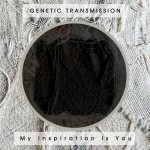
Artist: Genetic Transmission (@)
Title: My Inspiration Is You
Format: CD + Download
Label: Zoharum (http://zoharum.com/) (@)
Rated:

Title: My Inspiration Is You
Format: CD + Download
Label: Zoharum (http://zoharum.com/) (@)
Rated:
If hate had a reverb tail, Tomasz Twardawa would know its exact decay time. My Inspiration Is You - originally self-released in 2004 and now resurrected by Zoharum as part of the GT Archive series - feels like a time capsule of controlled destruction. It’s the twelfth entry in this ongoing exhumation of Twardawa’s uncompromising body of work, and probably one of the most visceral. The fact that the original edition came wrapped in a bandage was not a metaphor but a statement: this music bleeds.
Genetic Transmission has always stood apart in the Polish post-industrial scene - too raw for dark ambient, too abstract for noise, too human for power electronics. Here, Twardawa’s “sound sources: fury, pain and hate” are less emotional triggers than working materials. He sculpts them into dense, metallic structures, as if documenting the slow rusting of his own soul. The Eraserhead voice samples that surface in tracks 1 and 3 aren’t references so much as parasites - remnants of a shared dream of deformity.
The sound is massive yet claustrophobic, a thick fog of frequencies where every hiss feels like a wound and every silence like a withdrawal. And yet, amidst the wreckage, there’s an odd beauty - the kind of beauty you find in decay, in the geometry of corrosion. Twardawa’s compositions never flirt with catharsis; instead, they persist, stubbornly, like a machine refusing to die.
Listening to My Inspiration Is You in 2025 feels like eavesdropping on a past rage that still hasn’t cooled down. Its paradox lies in how personal it is: a document of hatred that somehow speaks of devotion, a mechanical prayer whispered through distortion. Perhaps the title is not ironic after all. Perhaps “you” - whoever that was - really were the fuel that made this machinery scream.
This is not an album that asks to be understood. It demands to be endured - and, if you’re lucky, survived.
Genetic Transmission has always stood apart in the Polish post-industrial scene - too raw for dark ambient, too abstract for noise, too human for power electronics. Here, Twardawa’s “sound sources: fury, pain and hate” are less emotional triggers than working materials. He sculpts them into dense, metallic structures, as if documenting the slow rusting of his own soul. The Eraserhead voice samples that surface in tracks 1 and 3 aren’t references so much as parasites - remnants of a shared dream of deformity.
The sound is massive yet claustrophobic, a thick fog of frequencies where every hiss feels like a wound and every silence like a withdrawal. And yet, amidst the wreckage, there’s an odd beauty - the kind of beauty you find in decay, in the geometry of corrosion. Twardawa’s compositions never flirt with catharsis; instead, they persist, stubbornly, like a machine refusing to die.
Listening to My Inspiration Is You in 2025 feels like eavesdropping on a past rage that still hasn’t cooled down. Its paradox lies in how personal it is: a document of hatred that somehow speaks of devotion, a mechanical prayer whispered through distortion. Perhaps the title is not ironic after all. Perhaps “you” - whoever that was - really were the fuel that made this machinery scream.
This is not an album that asks to be understood. It demands to be endured - and, if you’re lucky, survived.
Paradox Obscur: Ikona

There’s something deliciously contradictory about Ikona: it worships at the altar of the digital while sounding almost primitive in its physicality. Here, Greek duo Paradox Obscur - Kriistal Ann and Toxic Razor - trade much of their beloved analog circuitry for digital hardware, but without surrendering to the sterile perfection that usually comes with it. The result is a record that feels pixelated yet sweaty, neon-lit but still human - like a love story written in binary code and lipstick.
Kriistal Ann remains the album’s pulsing heart: her voice slips between command and confession, dominatrix and dreamer. In “Vulgar Sequence”, she turns the erotic into the algorithmic, spitting syllables like voltage spikes. “Like a Freak” goes full body mechanic - a tongue-in-cheek homage to acid basslines and dancefloor delirium. Elsewhere, “Impulse” and “Rodeo” play with synth-pop’s glitter while keeping one heel in the dungeon.
Despite the digital shift, Ikona keeps Paradox Obscur’s real-time ethos intact: no DAW, no safety net, no fake perfection. Every track sounds played, lived, exhaled. Even the rework of Armin Van Buuren’s “Lose This Feeling” feels like an act of reclamation - taking trance euphoria and translating it into noir futurism.
What makes Ikona stand out is not its adherence to genre, but its refusal of purity. It’s EBM for the emotionally literate, electro for the romantically unhinged. Paradox Obscur prove again that machines don’t kill passion - they can amplify it, distort it, turn it into something divine and indecent at once.
An album of flesh wearing a digital mask, smiling seductively through the glitch.
Kriistal Ann remains the album’s pulsing heart: her voice slips between command and confession, dominatrix and dreamer. In “Vulgar Sequence”, she turns the erotic into the algorithmic, spitting syllables like voltage spikes. “Like a Freak” goes full body mechanic - a tongue-in-cheek homage to acid basslines and dancefloor delirium. Elsewhere, “Impulse” and “Rodeo” play with synth-pop’s glitter while keeping one heel in the dungeon.
Despite the digital shift, Ikona keeps Paradox Obscur’s real-time ethos intact: no DAW, no safety net, no fake perfection. Every track sounds played, lived, exhaled. Even the rework of Armin Van Buuren’s “Lose This Feeling” feels like an act of reclamation - taking trance euphoria and translating it into noir futurism.
What makes Ikona stand out is not its adherence to genre, but its refusal of purity. It’s EBM for the emotionally literate, electro for the romantically unhinged. Paradox Obscur prove again that machines don’t kill passion - they can amplify it, distort it, turn it into something divine and indecent at once.
An album of flesh wearing a digital mask, smiling seductively through the glitch.
Annette Vande Gorne: Tutti Frutti

Artist: Annette Vande Gorne (@)
Title: Tutti Frutti
Format: CD + Download
Label: Persistence Of Sound (@)
Rated:
Title: Tutti Frutti
Format: CD + Download
Label: Persistence Of Sound (@)
Rated:
It takes a composer of rare confidence - or rare humour - to name a 40-year retrospective "Tutti Frutti". The title suggests a dessert explosion, a sonic sundae of strange textures and colors; but Annette Vande Gorne’s fruit salad is cut with razor blades of intellect and served in a vessel made of philosophy.
Across eight works spanning from 1983 to 2020, Vande Gorne - grande dame of Belgian acousmatics, founder of Musiques & Recherches and L’Espace du Son - gives us a panorama of her restless ear. These are not pieces so much as experiments in listening itself, each one testing how space, gesture, and illusion can rewire perception.
The opening "Cosmographie" imagines sound as a choreography of spheres: a galaxy made audible, where oscillation becomes syntax. "Paysage/Vitesse" compresses movement and perception until they blur - a trompe l’oreille for a choreography that never quite touches the ground. "Ce qu’a vu le vent d’Est" is a wind-borne requiem for Debussy and for war’s absurdities, a spectral homage that turns impressionism into compressionism.
Then comes "Remix Francistein", her Frankensteinian love letter to Francis Dhomont: an act of electroacoustic necromancy in which she stitches fragments of his work into something at once affectionate and hilariously uncanny. It’s self-aware, almost teasing - proof that high theory can still crack a smile.
Elsewhere, "Deux rêves fantastiques d’Aglavaine et Sélysette" and "Crise" show the composer at her most theatrical and instinctual - translating madness, myth, and emotion into voltage. And "Figures d’espace", the closer, feels like the philosophical keystone: a study in spatial virtuosity, where sound behaves like light, reflecting and refracting across invisible surfaces.
Throughout "Tutti Frutti", Vande Gorne reaffirms her lifelong gamble: that acousmatic music can be as expressive, sensual, and human as any symphony. What ties these wildly different works together is not a style but a stance - a belief that meaning, not mere sound, is the true material of composition.
Listening to this record is like wandering through a museum where the exhibits rearrange themselves around you - galaxies humming, ghosts of Debussy whispering, synths giggling in corners.
It’s called "Tutti Frutti", yes - but beneath its bright title lies a quiet manifesto: that sound, in all its absurd multiplicity, still speaks the language of the soul.
Across eight works spanning from 1983 to 2020, Vande Gorne - grande dame of Belgian acousmatics, founder of Musiques & Recherches and L’Espace du Son - gives us a panorama of her restless ear. These are not pieces so much as experiments in listening itself, each one testing how space, gesture, and illusion can rewire perception.
The opening "Cosmographie" imagines sound as a choreography of spheres: a galaxy made audible, where oscillation becomes syntax. "Paysage/Vitesse" compresses movement and perception until they blur - a trompe l’oreille for a choreography that never quite touches the ground. "Ce qu’a vu le vent d’Est" is a wind-borne requiem for Debussy and for war’s absurdities, a spectral homage that turns impressionism into compressionism.
Then comes "Remix Francistein", her Frankensteinian love letter to Francis Dhomont: an act of electroacoustic necromancy in which she stitches fragments of his work into something at once affectionate and hilariously uncanny. It’s self-aware, almost teasing - proof that high theory can still crack a smile.
Elsewhere, "Deux rêves fantastiques d’Aglavaine et Sélysette" and "Crise" show the composer at her most theatrical and instinctual - translating madness, myth, and emotion into voltage. And "Figures d’espace", the closer, feels like the philosophical keystone: a study in spatial virtuosity, where sound behaves like light, reflecting and refracting across invisible surfaces.
Throughout "Tutti Frutti", Vande Gorne reaffirms her lifelong gamble: that acousmatic music can be as expressive, sensual, and human as any symphony. What ties these wildly different works together is not a style but a stance - a belief that meaning, not mere sound, is the true material of composition.
Listening to this record is like wandering through a museum where the exhibits rearrange themselves around you - galaxies humming, ghosts of Debussy whispering, synths giggling in corners.
It’s called "Tutti Frutti", yes - but beneath its bright title lies a quiet manifesto: that sound, in all its absurd multiplicity, still speaks the language of the soul.
Brunhild Ferrari: Errant Ear
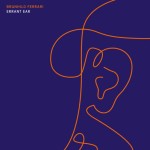
Artist: Brunhild Ferrari (@)
Title: Errant Ear
Format: CD + Download
Label: Persistence Of Sound (@)
Rated:
Title: Errant Ear
Format: CD + Download
Label: Persistence Of Sound (@)
Rated:
There’s something beautifully disobedient about Brunhild Ferrari’s listening. The title "Errant Ear" fits like a mischievous wink: this is not the tidy, obedient kind of hearing that classifies and files sounds away. No - this ear wanders, sniffs, remembers, doubts. It follows the scent of time like a distracted dog in a garden of ghosts.
Ferrari, of course, has spent a lifetime between worlds - German-born, French by sensibility, widow and collaborator of the late Luc Ferrari, guardian of his archives but never his shadow. Her "Errant Ear" feels like a continuation of Presque Rien’s philosophy, but spoken in a more intimate, feminine accent: less documentary, more diary; less the soundscape, more the trembling hand that records it.
The main piece, nearly half an hour long, unfolds like an auditory autobiography stitched from memories, borrowed moments (from Luke Fowler, Chris Watson, and Luc Ferrari himself), and her own tapes dating back to the 1970s. The result is neither collage nor narrative - more a drift through sensory strata. You can almost hear the rustle of forgotten rooms, the exhalation of film reels, the damp breath of a remembered forest. Her sound world is inhabited by memory, but not haunted by it: she handles nostalgia like a fragile instrument, playing it softly enough to remain alive.
Ferrari doesn’t merely curate her past - she remixes her own existence, with a humility that only someone who’s seen entire aesthetic movements come and go could possess. There’s humor in that too: her “Capriccio for Velasca”, inspired by a football team and composed by someone who’s never actually watched a match, is a brief, charming absurdity - a sonic joke disguised as a miniature opera of whistles, crowds, and invention.
At its core, "Errant Ear" is an act of gentle resistance against both silence and noise - against the tyranny of narrative coherence. It’s an invitation to get lost, to mishear, to err beautifully. Ferrari’s art doesn’t shout its wisdom; it hums it, between the raindrops of memory.
Listening to this record feels like opening an old drawer and finding a seashell that still smells faintly of the sea - not the sea itself, but its persistence in you.
Ferrari, of course, has spent a lifetime between worlds - German-born, French by sensibility, widow and collaborator of the late Luc Ferrari, guardian of his archives but never his shadow. Her "Errant Ear" feels like a continuation of Presque Rien’s philosophy, but spoken in a more intimate, feminine accent: less documentary, more diary; less the soundscape, more the trembling hand that records it.
The main piece, nearly half an hour long, unfolds like an auditory autobiography stitched from memories, borrowed moments (from Luke Fowler, Chris Watson, and Luc Ferrari himself), and her own tapes dating back to the 1970s. The result is neither collage nor narrative - more a drift through sensory strata. You can almost hear the rustle of forgotten rooms, the exhalation of film reels, the damp breath of a remembered forest. Her sound world is inhabited by memory, but not haunted by it: she handles nostalgia like a fragile instrument, playing it softly enough to remain alive.
Ferrari doesn’t merely curate her past - she remixes her own existence, with a humility that only someone who’s seen entire aesthetic movements come and go could possess. There’s humor in that too: her “Capriccio for Velasca”, inspired by a football team and composed by someone who’s never actually watched a match, is a brief, charming absurdity - a sonic joke disguised as a miniature opera of whistles, crowds, and invention.
At its core, "Errant Ear" is an act of gentle resistance against both silence and noise - against the tyranny of narrative coherence. It’s an invitation to get lost, to mishear, to err beautifully. Ferrari’s art doesn’t shout its wisdom; it hums it, between the raindrops of memory.
Listening to this record feels like opening an old drawer and finding a seashell that still smells faintly of the sea - not the sea itself, but its persistence in you.
Pleasure Voyage: Postcards from Eden

Artist: Pleasure Voyage (@)
Title: Postcards from Eden
Format: Tape + Download
Label: Constellation Tatsu (@)
Rated:

Title: Postcards from Eden
Format: Tape + Download
Label: Constellation Tatsu (@)
Rated:
Pleasure Voyage’s "Postcards from Eden" feels like a quietly confident statement from two artists who know exactly how far softness can go. The Hungarian duo - Attila and Szilárd - explore a contemporary form of Balearic downtempo where clarity and restraint replace excess. Their approach to arrangement and sound design reveals an ear trained not only in electronic rhythm but in the emotional geometry of jazz, where space and phrasing carry as much weight as melody.
Across its six tracks, "Postcards from Eden" moves through distinct moods that are never hurried yet never static. The opener, “Postcards from Eden (Intro)”, sets the album’s tone with harmonic transparency: pads bloom in slow motion, grounded by minimal percussion that functions less as propulsion and more as a frame. The rhythmic logic of the record develops subtly, from the syncopated shimmer of “Natural Unity (Afro Jazz Version)” to the gentle swing of “Human Spirits”, where electronic timbres blend with acoustic textures in a dialogue rather than a collision.
The duo’s production is notable for its balance between analog tactility and digital cleanliness. Bass lines are warm and compressed, often moving in short circular motifs that suggest deep house lineage without surrendering to formula. The use of reverb and delay is deliberate, evoking distance rather than haze - a kind of lucid dream where every element remains distinct.
If earlier works in this Balearic revival often indulge in nostalgia, "Postcards from Eden" seems less about imitation and more about reconstruction. It reframes the genre’s utopian impulse as a study in emotional precision: pleasure not as hedonism, but as equilibrium. “Reunion” and “Soul Journey”, for example, both play with tonal ambiguity - minor chords that refuse melancholy, major resolutions that feel suspended - creating a narrative arc closer to reflection than escapism.
Even the album’s sequencing mirrors a natural rhythm: expansion and release. The closing “Natural Unity (Oceanic Version)” doesn’t seek closure but continuity, suggesting that Eden is not a place but a condition of listening.
Ultimately, "Postcards from Eden" succeeds not because it reinvents the Balearic canon, but because it understands that paradise - musical or otherwise - is sustained by attention to detail. Pleasure Voyage’s Eden is meticulously arranged, delicately rhythmic, and quietly alive.
Across its six tracks, "Postcards from Eden" moves through distinct moods that are never hurried yet never static. The opener, “Postcards from Eden (Intro)”, sets the album’s tone with harmonic transparency: pads bloom in slow motion, grounded by minimal percussion that functions less as propulsion and more as a frame. The rhythmic logic of the record develops subtly, from the syncopated shimmer of “Natural Unity (Afro Jazz Version)” to the gentle swing of “Human Spirits”, where electronic timbres blend with acoustic textures in a dialogue rather than a collision.
The duo’s production is notable for its balance between analog tactility and digital cleanliness. Bass lines are warm and compressed, often moving in short circular motifs that suggest deep house lineage without surrendering to formula. The use of reverb and delay is deliberate, evoking distance rather than haze - a kind of lucid dream where every element remains distinct.
If earlier works in this Balearic revival often indulge in nostalgia, "Postcards from Eden" seems less about imitation and more about reconstruction. It reframes the genre’s utopian impulse as a study in emotional precision: pleasure not as hedonism, but as equilibrium. “Reunion” and “Soul Journey”, for example, both play with tonal ambiguity - minor chords that refuse melancholy, major resolutions that feel suspended - creating a narrative arc closer to reflection than escapism.
Even the album’s sequencing mirrors a natural rhythm: expansion and release. The closing “Natural Unity (Oceanic Version)” doesn’t seek closure but continuity, suggesting that Eden is not a place but a condition of listening.
Ultimately, "Postcards from Eden" succeeds not because it reinvents the Balearic canon, but because it understands that paradise - musical or otherwise - is sustained by attention to detail. Pleasure Voyage’s Eden is meticulously arranged, delicately rhythmic, and quietly alive.