
Browse by Genre
Industrial Music / Industrial Metal / Aggro Industrial / Electro Metal
Industrial Noise / Power Noise / Harsh Noise
Synth Pop / Electro Pop / Synth-Electronica
Techno / Trance / Goa / Drum'n'Bass / Jungle / Tribal / Trip-Hop
Ambient / Electronica / Ethereal / Dub / Soundscapes / Abstract
Experimental / Avantgarde / Weird & Wired / Glitch / Noise / Field Recording
Dark / Gothic / Wave / New Wave / Dark Wave / Industrial Gothic
New Music / Downtown / Avantgarde Jazz / New Classical / World
Search Reviews
Music Reviews
Drexciya: Fusion Flats
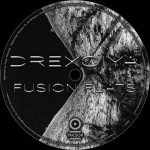
With "Fusion Flats", Drexciya resurface not as a nostalgia act embalmed in wax, but as a living pressure system - still leaking electricity, still bending timelines. This reissue feels less like an archival gesture and more like reopening a submerged hatch: the water rushes in, the lights flicker, and suddenly Detroit techno is once again an alien ecology rather than a genre tag.
Originally orbiting the gravitational pull of "Neptune’s Lair", "Fusion Flats" has always been a curious object in the Drexciyan universe. Not a manifesto, not a deep mythological chapter, but a working engine: stripped, propulsive, functional in the best sense. It moves forward with that unmistakable Drexciya gait - elastic, slightly hostile, deeply physical - where electro rhythms snap like tendons and synth lines feel engineered rather than composed. This is music that doesn’t express emotion so much as generate conditions: pressure, velocity, submersion.
Hearing it now, remastered and newly contextualized, the track’s economy is striking. No excess mythology, no ornamental sci-fi gloss - just a lean, hydrodynamic groove that seems designed to test how much motion can be extracted from minimal information. Drexciya were always masters of this paradox: sounding futuristic by being brutally efficient. The future, here, is not shiny - it’s optimized.
The remixes expand the perimeter without breaking the seal. Octave One’s version treats "Fusion Flats" like a living organism, stretching it into something more muscular and panoramic, without sanding down its edges. Kaotic Spatial Rhythms lean into abstraction, letting the track fray and destabilize, while 043 Chaos push it closer to electro’s nervous system - jagged, uncompromising, slightly unwell (in a good way). None of them attempt to “improve” the original; they orbit it, respectfully aware that Drexciya is not material to be fixed, only refracted.
The new artwork by Matthew Angelo Harrison fits perfectly into this logic: not illustration, not homage, but a contemporary echo - suggesting that Drexciya’s ideas are still metabolizing inside current artistic practice. Which is perhaps the quiet revelation of this reissue. Twenty-five years on, "Fusion Flats" doesn’t sound prophetic or dated; it sounds operational. Like a tool that was built correctly the first time.
There’s a temptation, with Drexciya, to drown everything in lore. But "Fusion Flats" reminds us that beneath the myth was always a ruthless clarity of design. This is techno that doesn’t ask you to believe in Atlantis - it simply drops you underwater and checks whether you can still move. Spoiler: you can. And it still feels incredible.
Originally orbiting the gravitational pull of "Neptune’s Lair", "Fusion Flats" has always been a curious object in the Drexciyan universe. Not a manifesto, not a deep mythological chapter, but a working engine: stripped, propulsive, functional in the best sense. It moves forward with that unmistakable Drexciya gait - elastic, slightly hostile, deeply physical - where electro rhythms snap like tendons and synth lines feel engineered rather than composed. This is music that doesn’t express emotion so much as generate conditions: pressure, velocity, submersion.
Hearing it now, remastered and newly contextualized, the track’s economy is striking. No excess mythology, no ornamental sci-fi gloss - just a lean, hydrodynamic groove that seems designed to test how much motion can be extracted from minimal information. Drexciya were always masters of this paradox: sounding futuristic by being brutally efficient. The future, here, is not shiny - it’s optimized.
The remixes expand the perimeter without breaking the seal. Octave One’s version treats "Fusion Flats" like a living organism, stretching it into something more muscular and panoramic, without sanding down its edges. Kaotic Spatial Rhythms lean into abstraction, letting the track fray and destabilize, while 043 Chaos push it closer to electro’s nervous system - jagged, uncompromising, slightly unwell (in a good way). None of them attempt to “improve” the original; they orbit it, respectfully aware that Drexciya is not material to be fixed, only refracted.
The new artwork by Matthew Angelo Harrison fits perfectly into this logic: not illustration, not homage, but a contemporary echo - suggesting that Drexciya’s ideas are still metabolizing inside current artistic practice. Which is perhaps the quiet revelation of this reissue. Twenty-five years on, "Fusion Flats" doesn’t sound prophetic or dated; it sounds operational. Like a tool that was built correctly the first time.
There’s a temptation, with Drexciya, to drown everything in lore. But "Fusion Flats" reminds us that beneath the myth was always a ruthless clarity of design. This is techno that doesn’t ask you to believe in Atlantis - it simply drops you underwater and checks whether you can still move. Spoiler: you can. And it still feels incredible.
Cie: Adventures II Remixes

Artist: Cie
Title: Adventures II Remixes
Format: Download Only (MP3 + Lossless)
Label: Form & Terra Records (http://www.formnterra.com/) (@)
Rated:

Title: Adventures II Remixes
Format: Download Only (MP3 + Lossless)
Label: Form & Terra Records (http://www.formnterra.com/) (@)
Rated:
If "Adventures" was Cie’s map, "Adventures II Remixes" is what happens when you hand that map to four travelers who refuse to follow the dotted line. They keep the names of the mountains and valleys, sure, but the paths shift, the weather changes, and suddenly you’re somewhere both recognizable and oddly dislocated - which is exactly how a good remix record should behave.
Cie has always worked in that fertile zone where techno isn’t just functional architecture but a narrative space: clean structures, yes, but with an ear for atmosphere, memory, and slow transformation. The original "Adventures" hinted at landscapes rather than declaring them outright. This second chapter asks what happens when others start digging under those surfaces, tapping different fault lines.
Andrey Sirotkin opens with “Reichenstein” and immediately leans into propulsion. His version feels like the moment when a hike turns into a run: acid lines coil and uncoil with a grin that’s half-discipline, half-mischief. It’s grounded, muscular, and knows exactly when to push - not flashy, just confidently kinetic, like a machine that’s learned how to smile.
Georg Neufeld’s take on “Der Turm” is pure dub techno hypnosis, but without the sleepwalking cliché. The pulse is steady, almost stubborn, as if refusing to resolve. Sounds drift in and out like fog wrapping itself around concrete. It’s immersive in the literal sense: you don’t listen to it so much as find yourself inside it, checking your watch only to realize time has quietly slipped away.
Granlab’s “Stenzelberg” remix is where things start to sparkle and crack. Percussion ricochets, stabs glow briefly and vanish, strings hover like mist over a ravine. There’s a sense of playful danger here - not chaos, but the thrill of not quite knowing what’s around the next bend. It’s the most scenic stop on the journey, and the one that rewards repeated listens.
Chris Baumann closes the loop by returning to “Reichenstein”, but this is no nostalgic glance backward. His version is leaner, faster, more insistent - a night-drive remix that strips things down to nerve and momentum. It doesn’t ask permission, it just keeps going, eyes fixed on the vanishing point, daring you to keep up until morning arrives.
What makes "Adventures II Remixes" work is its restraint. No one tries to “improve” Cie’s material by overdecorating it. Instead, each remix acts like a different light source, revealing textures that were already there but easy to miss. It’s techno as conversation rather than competition - four voices speaking clearly, never shouting.
In the end, this isn’t a victory lap or an add-on for completists. It’s a reminder that electronic music, at its best, is a living terrain: shared, reinterpreted, and constantly in motion. Put this on, start walking, and don’t worry too much about where you’ll end up. The detours are the point.
Cie has always worked in that fertile zone where techno isn’t just functional architecture but a narrative space: clean structures, yes, but with an ear for atmosphere, memory, and slow transformation. The original "Adventures" hinted at landscapes rather than declaring them outright. This second chapter asks what happens when others start digging under those surfaces, tapping different fault lines.
Andrey Sirotkin opens with “Reichenstein” and immediately leans into propulsion. His version feels like the moment when a hike turns into a run: acid lines coil and uncoil with a grin that’s half-discipline, half-mischief. It’s grounded, muscular, and knows exactly when to push - not flashy, just confidently kinetic, like a machine that’s learned how to smile.
Georg Neufeld’s take on “Der Turm” is pure dub techno hypnosis, but without the sleepwalking cliché. The pulse is steady, almost stubborn, as if refusing to resolve. Sounds drift in and out like fog wrapping itself around concrete. It’s immersive in the literal sense: you don’t listen to it so much as find yourself inside it, checking your watch only to realize time has quietly slipped away.
Granlab’s “Stenzelberg” remix is where things start to sparkle and crack. Percussion ricochets, stabs glow briefly and vanish, strings hover like mist over a ravine. There’s a sense of playful danger here - not chaos, but the thrill of not quite knowing what’s around the next bend. It’s the most scenic stop on the journey, and the one that rewards repeated listens.
Chris Baumann closes the loop by returning to “Reichenstein”, but this is no nostalgic glance backward. His version is leaner, faster, more insistent - a night-drive remix that strips things down to nerve and momentum. It doesn’t ask permission, it just keeps going, eyes fixed on the vanishing point, daring you to keep up until morning arrives.
What makes "Adventures II Remixes" work is its restraint. No one tries to “improve” Cie’s material by overdecorating it. Instead, each remix acts like a different light source, revealing textures that were already there but easy to miss. It’s techno as conversation rather than competition - four voices speaking clearly, never shouting.
In the end, this isn’t a victory lap or an add-on for completists. It’s a reminder that electronic music, at its best, is a living terrain: shared, reinterpreted, and constantly in motion. Put this on, start walking, and don’t worry too much about where you’ll end up. The detours are the point.
Nadja: cut
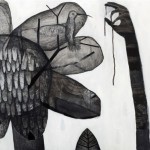

With "cut", Nadja return not so much with an album as with a pressure chamber. After the monolithic, instrumental sprawl of "Nalepa", Aidan Baker and Leah Buckareff reopen the mouth of the band and allow voices back in - but not in any conventional, song-oriented sense. These are not vocals that explain. They hover, fracture, bleed into the grain of the sound. Words are present, but meaning arrives mostly through weight, duration, and abrasion.
Released as a four-track double LP - each piece occupying an entire vinyl side - "cut" unfolds at Nadja’s preferred geological pace. Time stretches, nerves adjust, expectations erode. The band’s signature doomgaze mass is intact: guitars and bass form vast, fog-thick planes, drones grind slowly against themselves, distortion becomes a climate rather than an effect. Yet something is different here. The walls are still immense, but they breathe. Sometimes they even step back, revealing quieter, unsettling clearings.
Vocals, both from Baker and Buckareff and from an extended cast of guests, function less as narrative agents and more as structural material. They are layered, submerged, blurred into the soundwalls like half-remembered thoughts or intrusive memories that refuse to stay buried. This approach aligns closely with the album’s thematic core: trauma, psychological stress, and the fragile mechanisms we build to survive them. The voices don’t comfort. They testify - often indistinctly, sometimes painfully.
One of "cut"’s most striking developments is its expanded instrumentation. Harp, French horn, and saxophone drift in and out of the mix, not as decorative gestures but as destabilizing forces. The harp glints like a nervous system exposed to cold air; the horn adds a funereal gravity; the saxophone - played by Baker himself - emerges as a wounded, human breath amid the machinery. These elements don’t soften Nadja’s sound. They complicate it, adding emotional grain to an already abrasive surface.
The album’s structure rewards physical listening. The vinyl-only extended versions allow the pieces to fully exhaust themselves, to linger past comfort and into revelation. Digital editions, trimmed for practicality, feel almost polite by comparison. On vinyl, "cut" insists on presence: you sit with it, or it sits on you.
Despite its bleak emotional terrain, "cut" never indulges in melodrama. Nadja’s restraint remains crucial. The band understands that real heaviness isn’t about volume alone - it’s about accumulation, about the slow realization that something has been pressing on you for a long time. There is even, in a grim way, a hint of dark humor in the album’s excesses: titles that read like emotional autopsies, stretches of sound so prolonged they dare you to blink first.
Ultimately, "cut" feels like an album about endurance rather than resolution. It doesn’t offer healing so much as acknowledgement. The music doesn’t close wounds; it traces their edges, again and again, until the act of listening itself becomes a form of sonic sublimation - an imperfect tool, but sometimes the only one available.
Nadja have never been a band for quick relief. With "cut", they remind us that some experiences cannot be shortened, summarized, or safely processed. They must be entered slowly, lived through, and carried - like a scar you don’t hide, because hiding would take more energy than you have left.
Released as a four-track double LP - each piece occupying an entire vinyl side - "cut" unfolds at Nadja’s preferred geological pace. Time stretches, nerves adjust, expectations erode. The band’s signature doomgaze mass is intact: guitars and bass form vast, fog-thick planes, drones grind slowly against themselves, distortion becomes a climate rather than an effect. Yet something is different here. The walls are still immense, but they breathe. Sometimes they even step back, revealing quieter, unsettling clearings.
Vocals, both from Baker and Buckareff and from an extended cast of guests, function less as narrative agents and more as structural material. They are layered, submerged, blurred into the soundwalls like half-remembered thoughts or intrusive memories that refuse to stay buried. This approach aligns closely with the album’s thematic core: trauma, psychological stress, and the fragile mechanisms we build to survive them. The voices don’t comfort. They testify - often indistinctly, sometimes painfully.
One of "cut"’s most striking developments is its expanded instrumentation. Harp, French horn, and saxophone drift in and out of the mix, not as decorative gestures but as destabilizing forces. The harp glints like a nervous system exposed to cold air; the horn adds a funereal gravity; the saxophone - played by Baker himself - emerges as a wounded, human breath amid the machinery. These elements don’t soften Nadja’s sound. They complicate it, adding emotional grain to an already abrasive surface.
The album’s structure rewards physical listening. The vinyl-only extended versions allow the pieces to fully exhaust themselves, to linger past comfort and into revelation. Digital editions, trimmed for practicality, feel almost polite by comparison. On vinyl, "cut" insists on presence: you sit with it, or it sits on you.
Despite its bleak emotional terrain, "cut" never indulges in melodrama. Nadja’s restraint remains crucial. The band understands that real heaviness isn’t about volume alone - it’s about accumulation, about the slow realization that something has been pressing on you for a long time. There is even, in a grim way, a hint of dark humor in the album’s excesses: titles that read like emotional autopsies, stretches of sound so prolonged they dare you to blink first.
Ultimately, "cut" feels like an album about endurance rather than resolution. It doesn’t offer healing so much as acknowledgement. The music doesn’t close wounds; it traces their edges, again and again, until the act of listening itself becomes a form of sonic sublimation - an imperfect tool, but sometimes the only one available.
Nadja have never been a band for quick relief. With "cut", they remind us that some experiences cannot be shortened, summarized, or safely processed. They must be entered slowly, lived through, and carried - like a scar you don’t hide, because hiding would take more energy than you have left.
F A I D R O S: s/t
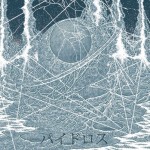
With "F A I D R O S", Jonas Rosén doesn’t so much release an album as he opens a pressure hatch and lets vacuum rush in. Two long-form pieces, minimal information, maximum gravity. No choruses, no handrails. Just sound drifting, orbiting, occasionally threatening to implode.
If you come here expecting the scorched abrasion of Senza Testa, you might initially think Rosén has gone soft. He hasn’t. He’s gone cold. This is not the noise of impact, but of distance: throbbing arpeggios that pulse like malfunctioning satellites, bass frequencies so low they feel less heard than "suspected", and chords that hover with the calm menace of something ancient and indifferent. Think early kosmische lineage - yes, Tangerine Dream, yes, Schulze - but stripped of romantic stargazing. This is space without astronauts. No heroic narratives, just systems humming because they must.
What makes "F A I D R O S" compelling is its restraint. Rosén understands that in this terrain, excess is the enemy. The analog synths are allowed to breathe, to misbehave slightly, to reveal their circuitry like exposed nerves. The music unfolds slowly, with the patience of deep time. Motifs emerge, threaten to coalesce into something recognizable, then dissolve again, as if embarrassed by the idea of form. It’s less about progression than persistence: sound as a condition rather than a story.
There’s also something quietly radical in how this album exists. Limited vinyl, multiple cassette versions, even a Eurorack module that lets you physically touch the DNA of the record. This isn’t merch; it’s an extension of the work. Rosén’s long-standing DIY ethos isn’t a slogan here, but a methodology. He doesn’t just compose music - he builds the ecosystem it lives in. The fact that mastering is handled by Stefan Betke (Pole) feels less like a prestige move and more like a nod between craftsmen who understand the beauty of controlled instability.
Despite its cosmic framing, "F A I D R O S" is oddly intimate. Dedicated to Rosén’s father, it carries a subdued emotional charge, never stated, never dramatized. Mourning here is not loud; it’s gravitational. You feel it in the way sounds linger, in how silence is treated not as absence but as a loaded space between events. This is music that doesn’t ask for your attention - it waits for it. And if you’re distracted, it will simply continue without you.
Is it funny? Only in the driest possible sense: the joke is that something this minimal, this stubbornly unyielding, can still feel alive. That two tracks, each longer than some people’s attention spans, can say more by refusing to explain themselves. "F A I D R O S" doesn’t promise transcendence. It offers duration, density, and the quiet thrill of being very small in a very large sonic void.
End transmission, indeed.
If you come here expecting the scorched abrasion of Senza Testa, you might initially think Rosén has gone soft. He hasn’t. He’s gone cold. This is not the noise of impact, but of distance: throbbing arpeggios that pulse like malfunctioning satellites, bass frequencies so low they feel less heard than "suspected", and chords that hover with the calm menace of something ancient and indifferent. Think early kosmische lineage - yes, Tangerine Dream, yes, Schulze - but stripped of romantic stargazing. This is space without astronauts. No heroic narratives, just systems humming because they must.
What makes "F A I D R O S" compelling is its restraint. Rosén understands that in this terrain, excess is the enemy. The analog synths are allowed to breathe, to misbehave slightly, to reveal their circuitry like exposed nerves. The music unfolds slowly, with the patience of deep time. Motifs emerge, threaten to coalesce into something recognizable, then dissolve again, as if embarrassed by the idea of form. It’s less about progression than persistence: sound as a condition rather than a story.
There’s also something quietly radical in how this album exists. Limited vinyl, multiple cassette versions, even a Eurorack module that lets you physically touch the DNA of the record. This isn’t merch; it’s an extension of the work. Rosén’s long-standing DIY ethos isn’t a slogan here, but a methodology. He doesn’t just compose music - he builds the ecosystem it lives in. The fact that mastering is handled by Stefan Betke (Pole) feels less like a prestige move and more like a nod between craftsmen who understand the beauty of controlled instability.
Despite its cosmic framing, "F A I D R O S" is oddly intimate. Dedicated to Rosén’s father, it carries a subdued emotional charge, never stated, never dramatized. Mourning here is not loud; it’s gravitational. You feel it in the way sounds linger, in how silence is treated not as absence but as a loaded space between events. This is music that doesn’t ask for your attention - it waits for it. And if you’re distracted, it will simply continue without you.
Is it funny? Only in the driest possible sense: the joke is that something this minimal, this stubbornly unyielding, can still feel alive. That two tracks, each longer than some people’s attention spans, can say more by refusing to explain themselves. "F A I D R O S" doesn’t promise transcendence. It offers duration, density, and the quiet thrill of being very small in a very large sonic void.
End transmission, indeed.
IKI: Body

IKI’s "Body" does not ask to be listened to so much as inhabited. It is an album that breathes, sweats, twitches, occasionally forgets what it was doing, then remembers - like a living organism caught mid-thought. Built entirely from voices, and proudly so, "Body" refuses the cosmetic surgery of heavy processing in favor of exposed skin: cracks, saliva, friction, pulse. If most contemporary vocal music tries to sound superhuman, IKI insist on sounding unmistakably human, and sometimes inconveniently so.
For more than a decade, this Nordic vocal collective has treated the voice less as a vehicle for melody and more as a full-body instrument, a nervous system with lungs attached. Here, that philosophy tightens into something almost anatomical. Tracks like “Run”, “Walk”, “Dance”, and “Float” aren’t metaphors; they’re instructions, tempos mapped directly onto muscle memory. You don’t so much hear them as feel your own body quietly syncing up, like an internal metronome realizing it’s been off all day. The recurring “Circuit” motifs act as pressure points - short, ritualistic pauses that reset the flow - circling an unsettling question that lingers longer than the notes themselves: what remains when the body stops performing its most basic task?
There’s something faintly humorous, too, in the album’s seriousness. Five highly trained vocalists working tirelessly to become “one body” is a beautiful idea, but also an absurd one, like a very disciplined choir trying to cosplay as a single mammal. And yet, it works. The friction between individual voices never fully disappears; instead, it generates energy. The group oscillates between trance-like cohesion and moments where the seams show, reminding us that unity is always negotiated, never given.
Musically, "Body" sits at an uneasy crossroads between ritual and club culture, between ancient vocal practices and the ghost of electronic music that isn’t actually there. Beats emerge without drums, drones without synths, drops without bass. It’s minimal, but not ascetic; physical, but not athletic. The album unfolds in cycles, encouraging repeat listening, as if the end were merely a suggestion. This circularity mirrors IKI’s long-standing interest in improvisation and deep listening, but here it feels more existential than exploratory - as if repetition itself were a survival mechanism.
Context matters. Coming from a group deeply embedded in experimental performance, interdisciplinary collaboration, and live ritual, "Body" feels less like a standalone record and more like a distilled essence of years spent testing what voices can endure. Their history - working with artists from Blixa Bargeld to Laurie Anderson - hovers in the background, but never overshadows the intimacy of this release. If anything, "Body" feels like a deliberate stripping away of spectacle, a move toward something quieter, riskier, and harder to market.
In the end, "Body" is not comforting music, but it is caring music. It doesn’t promise transcendence; it offers presence. It asks you to listen with your ribs, your breath, your balance. And maybe that’s the joke, gently delivered: after all the machines, concepts, and abstractions, we’re still stuck in these strange, noisy bodies - breathing, vibrating, making sounds - and IKI have decided to take that fact very seriously, without ever pretending it isn’t a little bit weird.
For more than a decade, this Nordic vocal collective has treated the voice less as a vehicle for melody and more as a full-body instrument, a nervous system with lungs attached. Here, that philosophy tightens into something almost anatomical. Tracks like “Run”, “Walk”, “Dance”, and “Float” aren’t metaphors; they’re instructions, tempos mapped directly onto muscle memory. You don’t so much hear them as feel your own body quietly syncing up, like an internal metronome realizing it’s been off all day. The recurring “Circuit” motifs act as pressure points - short, ritualistic pauses that reset the flow - circling an unsettling question that lingers longer than the notes themselves: what remains when the body stops performing its most basic task?
There’s something faintly humorous, too, in the album’s seriousness. Five highly trained vocalists working tirelessly to become “one body” is a beautiful idea, but also an absurd one, like a very disciplined choir trying to cosplay as a single mammal. And yet, it works. The friction between individual voices never fully disappears; instead, it generates energy. The group oscillates between trance-like cohesion and moments where the seams show, reminding us that unity is always negotiated, never given.
Musically, "Body" sits at an uneasy crossroads between ritual and club culture, between ancient vocal practices and the ghost of electronic music that isn’t actually there. Beats emerge without drums, drones without synths, drops without bass. It’s minimal, but not ascetic; physical, but not athletic. The album unfolds in cycles, encouraging repeat listening, as if the end were merely a suggestion. This circularity mirrors IKI’s long-standing interest in improvisation and deep listening, but here it feels more existential than exploratory - as if repetition itself were a survival mechanism.
Context matters. Coming from a group deeply embedded in experimental performance, interdisciplinary collaboration, and live ritual, "Body" feels less like a standalone record and more like a distilled essence of years spent testing what voices can endure. Their history - working with artists from Blixa Bargeld to Laurie Anderson - hovers in the background, but never overshadows the intimacy of this release. If anything, "Body" feels like a deliberate stripping away of spectacle, a move toward something quieter, riskier, and harder to market.
In the end, "Body" is not comforting music, but it is caring music. It doesn’t promise transcendence; it offers presence. It asks you to listen with your ribs, your breath, your balance. And maybe that’s the joke, gently delivered: after all the machines, concepts, and abstractions, we’re still stuck in these strange, noisy bodies - breathing, vibrating, making sounds - and IKI have decided to take that fact very seriously, without ever pretending it isn’t a little bit weird.