
Browse by Genre
Industrial Music / Industrial Metal / Aggro Industrial / Electro Metal
Industrial Noise / Power Noise / Harsh Noise
Synth Pop / Electro Pop / Synth-Electronica
Techno / Trance / Goa / Drum'n'Bass / Jungle / Tribal / Trip-Hop
Ambient / Electronica / Ethereal / Dub / Soundscapes / Abstract
Experimental / Avantgarde / Weird & Wired / Glitch / Noise / Field Recording
Dark / Gothic / Wave / New Wave / Dark Wave / Industrial Gothic
New Music / Downtown / Avantgarde Jazz / New Classical / World
Search Reviews
Music Reviews
Horse Lords & Arnold Dreyblatt: FRKWYS Vol. 18: Extended Field

There’s a special kind of madness required to look at music and think: "numbers will save us". "FRKWYS Vol. 18: Extended Field" does exactly that - and somehow comes out sounding more alive, more bodily, more sweaty than half the records built on expression. This is not the cold triumph of theory. It’s theory dragged into the street, forced to dance, and politely thanked afterward.
The meeting between Horse Lords and Arnold Dreyblatt feels less like a collaboration and more like a geological event. Two tectonic plates of just intonation slide against each other, slowly at first, then with audible friction. Dreyblatt, a key figure in American experimental music since the late 1970s, has spent decades excavating psychoacoustic phenomena: excited strings, metallic overtones, sound as physical mass. His work - rooted in experiences with La Monte Young and Alvin Lucier - has always treated tuning not as flavor but as architecture. Horse Lords, meanwhile, approach similar materials from the opposite direction: rhythm-first, ecstatic, motoric, suspicious of stasis, and deeply invested in what happens when systems are pushed until they start hallucinating.
What makes "Extended Field" compelling is not that these worlds merge seamlessly - they don’t - but that they agree to coexist under a shared constraint. The numerical matrix at the core of the record acts like a social contract: no one gets to dominate, no one gets to default to habit. And you can hear that discipline everywhere. The galloping, polyrhythmic momentum that defines Horse Lords never disappears, but it’s subtly bent, reweighted, forced to articulate itself inside Dreyblatt’s harmonic scaffolding. Conversely, Dreyblatt’s drones and overtone clouds are no longer static monuments; they’re nudged, stroked, and occasionally provoked into motion.
“Advance” sets the tone: forward motion without triumph, propulsion without release. “Extended Field” feels like a living diagram - numbers turning into grooves, ratios sweating under the pressure of repetition. On “Suspension”, time stretches and thins out; tones hover, bowing textures ripple, and the band seems to breathe inside the sound rather than play on top of it. It’s meditative, but not peaceful - more like watching a bridge vibrate under steady traffic. The closing “Impulse Array” is where the record quietly shows its hand: harmonic progressions emerge that feel uncannily inevitable, strangely reminiscent of sacred music, yet stripped of destination. Direction without arrival. Faith without doctrine.
There’s something gently funny about all this seriousness. Not in a jokey way, but in the cosmic irony of it: a group of fiercely intelligent musicians constructing elaborate limits in order to feel free. Algorithmic discipline as a path to surprise. Mathematics as a sensual experience. If Bach were alive and had access to SuperCollider, he might nod approvingly - then ask why the drummer sounds like he’s trying to outrun time itself.
"FRKWYS Vol. 18: Extended Field" doesn’t ask to be understood so much as inhabited. It’s music that trusts the listener to feel ratios in their bones, to accept that harmony can be both rigorously designed and strangely emotional. No grand gestures, no false transcendence - just a sustained, radiant field where structure hums, pulses, and refuses to sit still.
The meeting between Horse Lords and Arnold Dreyblatt feels less like a collaboration and more like a geological event. Two tectonic plates of just intonation slide against each other, slowly at first, then with audible friction. Dreyblatt, a key figure in American experimental music since the late 1970s, has spent decades excavating psychoacoustic phenomena: excited strings, metallic overtones, sound as physical mass. His work - rooted in experiences with La Monte Young and Alvin Lucier - has always treated tuning not as flavor but as architecture. Horse Lords, meanwhile, approach similar materials from the opposite direction: rhythm-first, ecstatic, motoric, suspicious of stasis, and deeply invested in what happens when systems are pushed until they start hallucinating.
What makes "Extended Field" compelling is not that these worlds merge seamlessly - they don’t - but that they agree to coexist under a shared constraint. The numerical matrix at the core of the record acts like a social contract: no one gets to dominate, no one gets to default to habit. And you can hear that discipline everywhere. The galloping, polyrhythmic momentum that defines Horse Lords never disappears, but it’s subtly bent, reweighted, forced to articulate itself inside Dreyblatt’s harmonic scaffolding. Conversely, Dreyblatt’s drones and overtone clouds are no longer static monuments; they’re nudged, stroked, and occasionally provoked into motion.
“Advance” sets the tone: forward motion without triumph, propulsion without release. “Extended Field” feels like a living diagram - numbers turning into grooves, ratios sweating under the pressure of repetition. On “Suspension”, time stretches and thins out; tones hover, bowing textures ripple, and the band seems to breathe inside the sound rather than play on top of it. It’s meditative, but not peaceful - more like watching a bridge vibrate under steady traffic. The closing “Impulse Array” is where the record quietly shows its hand: harmonic progressions emerge that feel uncannily inevitable, strangely reminiscent of sacred music, yet stripped of destination. Direction without arrival. Faith without doctrine.
There’s something gently funny about all this seriousness. Not in a jokey way, but in the cosmic irony of it: a group of fiercely intelligent musicians constructing elaborate limits in order to feel free. Algorithmic discipline as a path to surprise. Mathematics as a sensual experience. If Bach were alive and had access to SuperCollider, he might nod approvingly - then ask why the drummer sounds like he’s trying to outrun time itself.
"FRKWYS Vol. 18: Extended Field" doesn’t ask to be understood so much as inhabited. It’s music that trusts the listener to feel ratios in their bones, to accept that harmony can be both rigorously designed and strangely emotional. No grand gestures, no false transcendence - just a sustained, radiant field where structure hums, pulses, and refuses to sit still.
VV.AA.: Światłowód
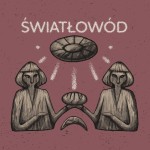
Artist: VV.AA.
Title: Światłowód
Format: CD + Download
Label: Zoharum (http://zoharum.com/) (@)
Rated:

Title: Światłowód
Format: CD + Download
Label: Zoharum (http://zoharum.com/) (@)
Rated:
"Swiatlowod" arrives like a bonfire at dawn: still warm, already turning to smoke, stubbornly luminous against the cold. Marketed plainly as a farewell album, it behaves less like a goodbye note and more like a carefully braided nerve - signals still firing even as the body prepares to change shape. Fitting, given the title: a fiber optic line, a conduit of light, information, memory. ROD unplug the cable, but the glow lingers in your retinas.
ROD, the electro-folk trio from Wejherowo, have always worked in that fertile tension between archaic ritual and contemporary circuitry. Pagan echoes, folk bones, northern chill: these aren’t costumes here, but weather conditions. On "Swiatlowod", that climate fractures into individual trajectories. Alongside four final ROD tracks, we hear solo statements from Hansollo, DN (Loki), and RIP (Cichy), each carving their own runic notch into the same piece of wood. Different hands, same tree.
What’s striking - and slightly suspicious, like a coincidence that’s too neat - is how cohesive the record feels despite its patchwork origin. Different sessions, methods, and temporal coordinates, yet the album flows like a single nocturnal walk from forest edge to city street. That coherence doesn’t come from production gloss or genre loyalty, but from a shared gravity: a pull toward folklore not as nostalgia, but as a way of thinking about sound, land, and time. This is music that believes the past is not behind us, but under our feet.
The ROD tracks proper feel like condensed rituals: short, sharp, purposeful. There’s no indulgence, no ambient sprawl pretending to be depth. "Swiatlowod" and "Portelabend" crackle with restrained urgency, while "Wole Las" and "Gwozdz" lean into blunt repetition, as if insisting that simplicity can still bruise. These pieces feel communal - songs meant to be carried by breath, stomped into dirt, or shouted into fog.
When the album fractures into solo paths, the light refracts. DN’s pieces are austere and inward-looking, almost diaristic, like dates etched into ice. Hansollo’s tracks foreground his background in electronics: colder, cleaner, but still haunted, as if analog ghosts are rattling inside digital cages. RIP’s contributions - co-shaped by Cichy - pull the album toward song form again, pivoting between forest and city, human voice and environment, intimacy and distance. "Leny" and "Miejski" aren’t opposites so much as mirror states: the same unease wearing different coats.
There’s a quiet humor in how "Swiatlowod" refuses grand finales. No epic closer, no sentimental swell. Instead, it disperses. The band says this is the end, but the record behaves like a threshold - less obituary, more trailhead. It gently suggests that dissolution can be productive, that breaking apart doesn’t mean vanishing, just changing bandwidth.
In the end, "Swiatlowod" feels like a document of transmission rather than closure. Signals sent forward, backward, sideways. A reminder that traditions don’t survive by being preserved in amber, but by being re-routed, re-wired, and occasionally cut loose altogether. ROD step away, but the line stays hot.
ROD, the electro-folk trio from Wejherowo, have always worked in that fertile tension between archaic ritual and contemporary circuitry. Pagan echoes, folk bones, northern chill: these aren’t costumes here, but weather conditions. On "Swiatlowod", that climate fractures into individual trajectories. Alongside four final ROD tracks, we hear solo statements from Hansollo, DN (Loki), and RIP (Cichy), each carving their own runic notch into the same piece of wood. Different hands, same tree.
What’s striking - and slightly suspicious, like a coincidence that’s too neat - is how cohesive the record feels despite its patchwork origin. Different sessions, methods, and temporal coordinates, yet the album flows like a single nocturnal walk from forest edge to city street. That coherence doesn’t come from production gloss or genre loyalty, but from a shared gravity: a pull toward folklore not as nostalgia, but as a way of thinking about sound, land, and time. This is music that believes the past is not behind us, but under our feet.
The ROD tracks proper feel like condensed rituals: short, sharp, purposeful. There’s no indulgence, no ambient sprawl pretending to be depth. "Swiatlowod" and "Portelabend" crackle with restrained urgency, while "Wole Las" and "Gwozdz" lean into blunt repetition, as if insisting that simplicity can still bruise. These pieces feel communal - songs meant to be carried by breath, stomped into dirt, or shouted into fog.
When the album fractures into solo paths, the light refracts. DN’s pieces are austere and inward-looking, almost diaristic, like dates etched into ice. Hansollo’s tracks foreground his background in electronics: colder, cleaner, but still haunted, as if analog ghosts are rattling inside digital cages. RIP’s contributions - co-shaped by Cichy - pull the album toward song form again, pivoting between forest and city, human voice and environment, intimacy and distance. "Leny" and "Miejski" aren’t opposites so much as mirror states: the same unease wearing different coats.
There’s a quiet humor in how "Swiatlowod" refuses grand finales. No epic closer, no sentimental swell. Instead, it disperses. The band says this is the end, but the record behaves like a threshold - less obituary, more trailhead. It gently suggests that dissolution can be productive, that breaking apart doesn’t mean vanishing, just changing bandwidth.
In the end, "Swiatlowod" feels like a document of transmission rather than closure. Signals sent forward, backward, sideways. A reminder that traditions don’t survive by being preserved in amber, but by being re-routed, re-wired, and occasionally cut loose altogether. ROD step away, but the line stays hot.
Manja Ristić: Into Your Eyes
Artist: Manja Ristić (@)
Title: Into Your Eyes
Format: Download Only (MP3 + Lossless)
Label: Line (@)
Rated:
Title: Into Your Eyes
Format: Download Only (MP3 + Lossless)
Label: Line (@)
Rated:
Listening to "Into Your Eyes" feels less like pressing play and more like consenting to slow down - an agreement signed in breath rather than ink. Manja Ristic doesn’t offer tracks so much as thresholds. You don’t cross them quickly; you hover, uncertain at first, then quietly altered.
Ristic has long operated in that rare zone where sound art, ecology, and poetry aren’t separate disciplines but different dialects of the same sentence. A classically trained violinist who gradually abandoned the safety net of notation, she now works as a careful listener to systems most of us ignore until they fail: water pressure, microcurrents, weather moods, the private lives of materials. Her third release for LINE refines this practice into a triptych that feels simultaneously microscopic and planetary - three long-form pieces that ask not “what am I hearing?” but “who is speaking, and why did I stop listening?”.
What’s striking about "Into Your Eyes" is its refusal of drama. There are no climaxes, no obvious narrative arcs, no gestures begging for interpretation. Instead, Ristic builds density through attention. Sounds accumulate like sediment: hydrophone murmurs, fragile resonances, barely-there vibrations that feel closer to tactile sensation than to music in the traditional sense. If you’re waiting for a melody, it won’t arrive. If you’re willing to accept presence instead, you’ll be rewarded.
"Innocence Overturned" opens the album in a state of suspended becoming. It feels like a work about restraint - about stopping before the gesture hardens into statement. There’s a quiet tension here, a sense of ideas deliberately left unfinished, as if completion itself might be a kind of betrayal. It’s contemplative without being precious, and austere without slipping into coldness. Think of it as a room with the lights off, where you gradually realize the darkness is doing something important.
The wonderfully titled "A Seagull Speaks into the Chimney on the Shore of Lake Geneva" introduces a more explicitly narrative layer, though story might be too linear a word. The piece moves like an act of witness: environmental, political, and faintly tragic without ever raising its voice. Field recordings breathe alongside processed textures, and the listening position feels deliberately fragile - as if the work could collapse if approached too aggressively. There’s a quiet, almost dry irony here too: the idea of calling out into a structure built to channel smoke, hoping someone might still hear.
The closing "Prophecy of the World Without Anguish" is the longest and most immersive of the three, and perhaps the most radical in its gentleness. Rather than forecasting catastrophe, it imagines continuity - an uninterrupted mesh of sound-events where nothing is hierarchically louder, more important, or more musical than anything else. Lightning, water, air, resonance: everything coexists without competing for the foreground. It’s not utopian in a naïve sense, but it does suggest that anguish might be a byproduct of how we listen, not of the world itself.
Technically, the album is immaculate without advertising its craft. The use of hydrophones, the careful mastering, the integration of externally recorded material - all of it serves the central idea rather than the other way around. This is sound art that doesn’t fetishize process, even though the process is clearly rigorous. Ristic’s strength lies in knowing when to intervene and when to step aside, allowing the environment to co-author the work.
If there’s humor here, it’s subtle and human: the quiet absurdity of realizing that every surface, every pressure change, every supposedly inert object has been speaking all along - patiently, indifferently - while we were busy being expressive. "Into Your Eyes" doesn’t demand your attention; it patiently waits for it. And once you give it, you may find that the world sounds slightly louder, stranger, and more alive than before.
Ristic has long operated in that rare zone where sound art, ecology, and poetry aren’t separate disciplines but different dialects of the same sentence. A classically trained violinist who gradually abandoned the safety net of notation, she now works as a careful listener to systems most of us ignore until they fail: water pressure, microcurrents, weather moods, the private lives of materials. Her third release for LINE refines this practice into a triptych that feels simultaneously microscopic and planetary - three long-form pieces that ask not “what am I hearing?” but “who is speaking, and why did I stop listening?”.
What’s striking about "Into Your Eyes" is its refusal of drama. There are no climaxes, no obvious narrative arcs, no gestures begging for interpretation. Instead, Ristic builds density through attention. Sounds accumulate like sediment: hydrophone murmurs, fragile resonances, barely-there vibrations that feel closer to tactile sensation than to music in the traditional sense. If you’re waiting for a melody, it won’t arrive. If you’re willing to accept presence instead, you’ll be rewarded.
"Innocence Overturned" opens the album in a state of suspended becoming. It feels like a work about restraint - about stopping before the gesture hardens into statement. There’s a quiet tension here, a sense of ideas deliberately left unfinished, as if completion itself might be a kind of betrayal. It’s contemplative without being precious, and austere without slipping into coldness. Think of it as a room with the lights off, where you gradually realize the darkness is doing something important.
The wonderfully titled "A Seagull Speaks into the Chimney on the Shore of Lake Geneva" introduces a more explicitly narrative layer, though story might be too linear a word. The piece moves like an act of witness: environmental, political, and faintly tragic without ever raising its voice. Field recordings breathe alongside processed textures, and the listening position feels deliberately fragile - as if the work could collapse if approached too aggressively. There’s a quiet, almost dry irony here too: the idea of calling out into a structure built to channel smoke, hoping someone might still hear.
The closing "Prophecy of the World Without Anguish" is the longest and most immersive of the three, and perhaps the most radical in its gentleness. Rather than forecasting catastrophe, it imagines continuity - an uninterrupted mesh of sound-events where nothing is hierarchically louder, more important, or more musical than anything else. Lightning, water, air, resonance: everything coexists without competing for the foreground. It’s not utopian in a naïve sense, but it does suggest that anguish might be a byproduct of how we listen, not of the world itself.
Technically, the album is immaculate without advertising its craft. The use of hydrophones, the careful mastering, the integration of externally recorded material - all of it serves the central idea rather than the other way around. This is sound art that doesn’t fetishize process, even though the process is clearly rigorous. Ristic’s strength lies in knowing when to intervene and when to step aside, allowing the environment to co-author the work.
If there’s humor here, it’s subtle and human: the quiet absurdity of realizing that every surface, every pressure change, every supposedly inert object has been speaking all along - patiently, indifferently - while we were busy being expressive. "Into Your Eyes" doesn’t demand your attention; it patiently waits for it. And once you give it, you may find that the world sounds slightly louder, stranger, and more alive than before.
Zea & Drumband Hallelujah Makkum: In lichem fol beloften
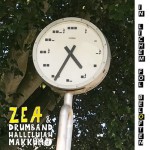
Artist: Zea & Drumband Hallelujah Makkum
Title: In lichem fol beloften
Format: Book + Vinyl
Label: Makkum Records/Subroutine (@)
Rated:

Title: In lichem fol beloften
Format: Book + Vinyl
Label: Makkum Records/Subroutine (@)
Rated:
There’s something quietly radical about "In lichem fol beloften" (Frisian for "A Body Full of Promises"). It doesn’t shout, doesn’t posture, doesn’t try to convince you of its importance. It simply stands there - barefoot, stubborn, speaking Frisian as if it were the most natural and necessary thing in the world - and lets time bend around it.
Arnold de Boer has always treated language like a physical object: something you can rub, bruise, repeat until it changes temperature. Known to many as the restless engine inside The Ex, under the name Zea he has long pursued a parallel path - more ascetic, more inward, but no less political in its refusal to smooth out rough edges. This album feels like a further stripping down, paradoxically achieved by adding people. Lots of them.
Enter Drumband Hallelujah Makkum: sixteen players (including Arnold's father, 81 years aged Feddie de Boer), 125 years of local history, and a pulse that doesn’t decorate the songs but anchors them to the ground. These are not “beats” in any fashionable sense. They are ceremonial, communal, almost agricultural. Drums as weather. Drums as memory. Drums as something you don’t argue with.
The choice of Frisian is not a folkloristic gesture, nor a niche affectation. It’s a statement made without a megaphone. Frisian here functions as a body - imperfect, resistant to easy translation, carrying meanings that don’t want to travel lightly. Even when De Boer translates poets like M. Vasalis or Nelly Sachs, the result isn’t literary reverence but friction. Words rub against rhythm, poetry bumps into breath. "De Dea", for instance, doesn’t dramatize death; it negotiates with it, like two old chess players who know the endgame but keep playing out of habit.
Musically, the album thrives on restraint. Guitar figures circle patiently, clarinet and cello slip in like half-remembered thoughts, and the drums - whether the core band or the full drumband - create a sense of forward motion that never quite becomes progress. This is music that walks, not runs. Music that counts steps. Music that knows where it comes from and doesn’t feel obliged to explain itself.
The recording spaces matter. Churches, with their patient acoustics and refusal to rush decay, turn these songs into something spatial rather than linear. You don’t just listen; you inhabit. Time stretches. Repetition becomes hypnotic rather than insistent. Even the shorter tracks feel complete, like small, sealed rooms.
There’s also an emotional clarity here that avoids sentimentality. "Pine en tiid" ("Pain and time") - splitted in two parts - treats pain not as drama but as duration. "Wer in dei tenein" ("Another Day Gone") doesn’t lament the passing of time; it acknowledges it, calmly, like closing a door without slamming it. And when voices join - whether Dina Popma’s or Tsead Bruinja’s spoken presence - it feels less like collaboration and more like shared breathing.
The accompanying book isn’t an accessory; it’s part of the organism. Lyrics, images, translations, marginal stories: all reinforcing the idea that meaning doesn’t live in one place. It migrates. It hesitates. It resists being pinned down.
If there’s humor here, it’s dry and human - the kind that comes from knowing that promises are fragile things, especially when carried in a body. "In lichem fol beloften" doesn’t offer solutions, anthems, or easy entry points. It offers attention. And in a musical landscape addicted to speed, clarity, and exportability, that might be its most subversive gesture.
A quiet album, then - but quiet like a village that remembers everything.
Arnold de Boer has always treated language like a physical object: something you can rub, bruise, repeat until it changes temperature. Known to many as the restless engine inside The Ex, under the name Zea he has long pursued a parallel path - more ascetic, more inward, but no less political in its refusal to smooth out rough edges. This album feels like a further stripping down, paradoxically achieved by adding people. Lots of them.
Enter Drumband Hallelujah Makkum: sixteen players (including Arnold's father, 81 years aged Feddie de Boer), 125 years of local history, and a pulse that doesn’t decorate the songs but anchors them to the ground. These are not “beats” in any fashionable sense. They are ceremonial, communal, almost agricultural. Drums as weather. Drums as memory. Drums as something you don’t argue with.
The choice of Frisian is not a folkloristic gesture, nor a niche affectation. It’s a statement made without a megaphone. Frisian here functions as a body - imperfect, resistant to easy translation, carrying meanings that don’t want to travel lightly. Even when De Boer translates poets like M. Vasalis or Nelly Sachs, the result isn’t literary reverence but friction. Words rub against rhythm, poetry bumps into breath. "De Dea", for instance, doesn’t dramatize death; it negotiates with it, like two old chess players who know the endgame but keep playing out of habit.
Musically, the album thrives on restraint. Guitar figures circle patiently, clarinet and cello slip in like half-remembered thoughts, and the drums - whether the core band or the full drumband - create a sense of forward motion that never quite becomes progress. This is music that walks, not runs. Music that counts steps. Music that knows where it comes from and doesn’t feel obliged to explain itself.
The recording spaces matter. Churches, with their patient acoustics and refusal to rush decay, turn these songs into something spatial rather than linear. You don’t just listen; you inhabit. Time stretches. Repetition becomes hypnotic rather than insistent. Even the shorter tracks feel complete, like small, sealed rooms.
There’s also an emotional clarity here that avoids sentimentality. "Pine en tiid" ("Pain and time") - splitted in two parts - treats pain not as drama but as duration. "Wer in dei tenein" ("Another Day Gone") doesn’t lament the passing of time; it acknowledges it, calmly, like closing a door without slamming it. And when voices join - whether Dina Popma’s or Tsead Bruinja’s spoken presence - it feels less like collaboration and more like shared breathing.
The accompanying book isn’t an accessory; it’s part of the organism. Lyrics, images, translations, marginal stories: all reinforcing the idea that meaning doesn’t live in one place. It migrates. It hesitates. It resists being pinned down.
If there’s humor here, it’s dry and human - the kind that comes from knowing that promises are fragile things, especially when carried in a body. "In lichem fol beloften" doesn’t offer solutions, anthems, or easy entry points. It offers attention. And in a musical landscape addicted to speed, clarity, and exportability, that might be its most subversive gesture.
A quiet album, then - but quiet like a village that remembers everything.
Durán Vázquez + Kloob: Vinum Sabbati, In the Dawn of Science Fiction
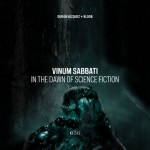
Artist: Durán Vázquez + Kloob (@)
Title: Vinum Sabbati, In the Dawn of Science Fiction
Format: CD + Download
Label: Crónica (@)
Rated:
Title: Vinum Sabbati, In the Dawn of Science Fiction
Format: CD + Download
Label: Crónica (@)
Rated:
There are albums that flirt with darkness, and then there are albums that brew it slowly, like a dubious tincture simmering in a back room where the light never quite arrives. "Vinum Sabbati, In the Dawn of Science Fiction" belongs to the latter. Durán Vázquez and Kloob don’t just reference Arthur Machen’s unsettling "Novel of the White Powder" - they distill it, inhale the fumes, and then calmly invite the listener to do the same, warning label already peeled off.
Both artists come with long electronic pedigrees, but this is not a nostalgic handshake between veterans. Vázquez, long associated with Crónica’s austere and conceptually sharp catalog, brings a rigorously hands-on approach to sound: no generative tricks, no algorithmic safety nets, just legacy software pushed until it starts behaving like a nervous system. Kloob, whose path runs from subterranean dance music to a more rarefied ambient practice, supplies an instinct for atmosphere that knows when to envelop and when to withdraw. Together, they operate less like collaborators and more like accomplices.
The Machen reference is crucial, not as literary garnish but as structural DNA. In the original text, "Vinum Sabbati" is a substance that alters its subjects from the inside out, turning latent corruption into something grotesquely visible. The music mirrors this process with unnerving patience. Sounds rarely arrive fully formed; they seep in, coagulate, and mutate. Drones curdle. Textures itch. Rhythms appear briefly, only to be swallowed by something thicker and less cooperative.
The opening “Prelude to Dreadful Confessions by a Doctor” establishes the album’s clinical tone: a cold, observational distance that paradoxically heightens the horror. By the time tracks like “Devil’s Pharmacy” and “The Rotten Limb” unfold, the sound design has become almost corporeal - less electronic music than a study in sonic pathology. There’s a dry humor lurking here too, in the refusal to dramatize. The titles scream Grand Guignol; the music responds with a raised eyebrow and a scalpel.
What makes the record particularly effective is its sense of restraint. Even at its most oppressive, it avoids the temptation to overwhelm. Dynamic range is treated as a moral issue: silences feel complicit, low frequencies feel invasive, and sudden shifts in density land like unwanted diagnoses. “Ominous Remedy - Transcending Human Condition” stretches this tension beautifully, balancing slow-burning dread with a strange, almost ritualistic calm, as if transcendence were just another side effect listed in small print.
By the closing “Scientific Horror”, the album has completed its transformation. Fear here is not theatrical but procedural - administered carefully, observed closely, and left unresolved. The dedication, “In memory of those who did not survive the medicine”, stops being metaphorical and starts feeling uncomfortably precise.
"Vinum Sabbati, In the Dawn of Science Fiction" is not an easy listen, nor does it pretend to be. It’s an album that understands horror as a process rather than an event, and science fiction as an emotional condition before it ever became a genre. Durán Vázquez and Kloob don’t offer catharsis; they offer exposure. Drink at your own risk.
Both artists come with long electronic pedigrees, but this is not a nostalgic handshake between veterans. Vázquez, long associated with Crónica’s austere and conceptually sharp catalog, brings a rigorously hands-on approach to sound: no generative tricks, no algorithmic safety nets, just legacy software pushed until it starts behaving like a nervous system. Kloob, whose path runs from subterranean dance music to a more rarefied ambient practice, supplies an instinct for atmosphere that knows when to envelop and when to withdraw. Together, they operate less like collaborators and more like accomplices.
The Machen reference is crucial, not as literary garnish but as structural DNA. In the original text, "Vinum Sabbati" is a substance that alters its subjects from the inside out, turning latent corruption into something grotesquely visible. The music mirrors this process with unnerving patience. Sounds rarely arrive fully formed; they seep in, coagulate, and mutate. Drones curdle. Textures itch. Rhythms appear briefly, only to be swallowed by something thicker and less cooperative.
The opening “Prelude to Dreadful Confessions by a Doctor” establishes the album’s clinical tone: a cold, observational distance that paradoxically heightens the horror. By the time tracks like “Devil’s Pharmacy” and “The Rotten Limb” unfold, the sound design has become almost corporeal - less electronic music than a study in sonic pathology. There’s a dry humor lurking here too, in the refusal to dramatize. The titles scream Grand Guignol; the music responds with a raised eyebrow and a scalpel.
What makes the record particularly effective is its sense of restraint. Even at its most oppressive, it avoids the temptation to overwhelm. Dynamic range is treated as a moral issue: silences feel complicit, low frequencies feel invasive, and sudden shifts in density land like unwanted diagnoses. “Ominous Remedy - Transcending Human Condition” stretches this tension beautifully, balancing slow-burning dread with a strange, almost ritualistic calm, as if transcendence were just another side effect listed in small print.
By the closing “Scientific Horror”, the album has completed its transformation. Fear here is not theatrical but procedural - administered carefully, observed closely, and left unresolved. The dedication, “In memory of those who did not survive the medicine”, stops being metaphorical and starts feeling uncomfortably precise.
"Vinum Sabbati, In the Dawn of Science Fiction" is not an easy listen, nor does it pretend to be. It’s an album that understands horror as a process rather than an event, and science fiction as an emotional condition before it ever became a genre. Durán Vázquez and Kloob don’t offer catharsis; they offer exposure. Drink at your own risk.