
Browse by Genre
Industrial Music / Industrial Metal / Aggro Industrial / Electro Metal
Industrial Noise / Power Noise / Harsh Noise
Synth Pop / Electro Pop / Synth-Electronica
Techno / Trance / Goa / Drum'n'Bass / Jungle / Tribal / Trip-Hop
Ambient / Electronica / Ethereal / Dub / Soundscapes / Abstract
Experimental / Avantgarde / Weird & Wired / Glitch / Noise / Field Recording
Dark / Gothic / Wave / New Wave / Dark Wave / Industrial Gothic
New Music / Downtown / Avantgarde Jazz / New Classical / World
Search Reviews
Music Reviews
Andrea Costanza: Celestial Dreams
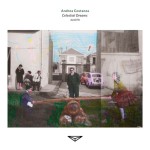
Artist: Andrea Costanza
Title: Celestial Dreams
Format: Download Only (MP3 + Lossless)
Label: Dragon's Eye Recordings (@)
Rated:

Title: Celestial Dreams
Format: Download Only (MP3 + Lossless)
Label: Dragon's Eye Recordings (@)
Rated:
Andrea Costanza’s "Celestial Dreams" feels like stepping into a memory you are not entirely sure belongs to you. The air is full of soft colors, the kind that leak from childhood photographs left too long in the sun. Costanza pulls these shades into sound with a delicacy that suggests he is handling something breakable. And he is. The album is built around early wounds that came too soon, the kind that rearrange the heart before it even knows its shape. Yet nothing here sounds heavy. The weight has been metabolized into light.
Costanza is the kind of artist who seems to live in slow motion while the rest of us unzip our days in a blur. His background zigzags through punk, opera houses, techno basements, and Italian cinema scores, giving his music a gently scrambled lineage. You can hear that restless path in these tracks. They are ambient, yes, but they carry a pulse that feels borrowed from the nights he spent inhaling dub-techno fog in the Netherlands. They shimmer with the romantic curves of Italian compositions he grew up on. They occasionally blush with a folk melody he probably didn’t intend to write but slipped through anyway, like a childhood habit returning at the wrong time.
"If only you.." opens the album with a sense of longing that avoids melodrama by staying small and sincere. The piece seems to walk toward you, quietly offering its hand. "Youth" follows with a kind of soft sunrise energy. Not the triumphant sort. More the moment when you wake up too early and the world is still unmade. Costanza excels at this atmosphere: the half-hour before responsibility clocks in.
"Can you Imagine?" brings in Emil F and feels like two friends comparing dreams without worrying if the stories make sense. Then "Life is Beautiful" arrives, and yes, it is dangerously close to the territory of sentimentality, yet Costanza dodges the trap by grounding it in a melody that feels as fragile as thin glass. If it had been any grander, it would have collapsed under its own optimism.
In "Two celestial souls", there is a glimmer that recalls Italian film scores from the seventies. Slightly nostalgic, slightly mysterious, slightly too beautiful to be trusted. "I’ll always think about you" is gentler, almost whispered. The title might suggest drama, but the track behaves more like a folded note passed across a school desk. It holds a secret but offers it without pressure.
By the time we reach "Us forever, together", Costanza’s romantic streak is fully awake. Yet he refuses to saturate the emotion, instead choosing repetition as a kind of heartbeat. "Without fears" is the closest the album gets to steady rhythm, and there is a bittersweet courage to it, as though the title were not a declaration but a wish. Finally, "Dreaming Love" closes the collection with Emil F again, the two weaving a lullaby for an adulthood that still remembers how to giggle.
What makes "Celestial Dreams" compelling is not its theme of childhood, which is easy enough to invoke. It is the way Costanza resists nostalgia’s usual traps. There is no sugary glow here, no attempt to varnish the past into something sacred. Instead, he constructs a listening space where wonder can reappear without theatrics. The music is gentle but not timid, hopeful but not naive, emotional but never swollen. And it does something quietly radical. It suggests that the innocence we mourn is not gone, merely folded into the corners of our lives, waiting for a bit of attention.
Costanza is not preaching. He is offering. He has carved out a little clearing in the noise of contemporary life and placed nine pieces inside it, each one an invitation to breathe differently for a few minutes. If the album has a message, it is whispered rather than spoken. Something like: “You were once lighter. It is not too late to remember”.
And that, frankly, is a gift.
Costanza is the kind of artist who seems to live in slow motion while the rest of us unzip our days in a blur. His background zigzags through punk, opera houses, techno basements, and Italian cinema scores, giving his music a gently scrambled lineage. You can hear that restless path in these tracks. They are ambient, yes, but they carry a pulse that feels borrowed from the nights he spent inhaling dub-techno fog in the Netherlands. They shimmer with the romantic curves of Italian compositions he grew up on. They occasionally blush with a folk melody he probably didn’t intend to write but slipped through anyway, like a childhood habit returning at the wrong time.
"If only you.." opens the album with a sense of longing that avoids melodrama by staying small and sincere. The piece seems to walk toward you, quietly offering its hand. "Youth" follows with a kind of soft sunrise energy. Not the triumphant sort. More the moment when you wake up too early and the world is still unmade. Costanza excels at this atmosphere: the half-hour before responsibility clocks in.
"Can you Imagine?" brings in Emil F and feels like two friends comparing dreams without worrying if the stories make sense. Then "Life is Beautiful" arrives, and yes, it is dangerously close to the territory of sentimentality, yet Costanza dodges the trap by grounding it in a melody that feels as fragile as thin glass. If it had been any grander, it would have collapsed under its own optimism.
In "Two celestial souls", there is a glimmer that recalls Italian film scores from the seventies. Slightly nostalgic, slightly mysterious, slightly too beautiful to be trusted. "I’ll always think about you" is gentler, almost whispered. The title might suggest drama, but the track behaves more like a folded note passed across a school desk. It holds a secret but offers it without pressure.
By the time we reach "Us forever, together", Costanza’s romantic streak is fully awake. Yet he refuses to saturate the emotion, instead choosing repetition as a kind of heartbeat. "Without fears" is the closest the album gets to steady rhythm, and there is a bittersweet courage to it, as though the title were not a declaration but a wish. Finally, "Dreaming Love" closes the collection with Emil F again, the two weaving a lullaby for an adulthood that still remembers how to giggle.
What makes "Celestial Dreams" compelling is not its theme of childhood, which is easy enough to invoke. It is the way Costanza resists nostalgia’s usual traps. There is no sugary glow here, no attempt to varnish the past into something sacred. Instead, he constructs a listening space where wonder can reappear without theatrics. The music is gentle but not timid, hopeful but not naive, emotional but never swollen. And it does something quietly radical. It suggests that the innocence we mourn is not gone, merely folded into the corners of our lives, waiting for a bit of attention.
Costanza is not preaching. He is offering. He has carved out a little clearing in the noise of contemporary life and placed nine pieces inside it, each one an invitation to breathe differently for a few minutes. If the album has a message, it is whispered rather than spoken. Something like: “You were once lighter. It is not too late to remember”.
And that, frankly, is a gift.
Ioa Beduneau: Mélodies pour Clairons
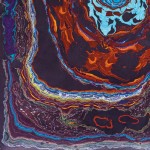
Ioa Beduneau’s debut, "Mélodies pour Clairons", feels like opening a terrarium someone has been quietly tending for years. You lift the lid and the air trembles a little, alive with tiny movements you can’t immediately catalogue. Beduneau, working from the sun-bleached south of France, has long built contraptions that play themselves, a kind of intimate robotics shaped by disabled embodiment and DIY stubbornness. He understands machines not as servants but as companions. Here he turns that same sensibility toward modular synthesis, treating voltages like breath and circuits like cartilage, until the whole album moves with an oddly biological grace.
Despite the title, don’t expect a parade of medieval trumpets. The clairon becomes more of a memory than an instrument, a point of emotional gravity around which these pieces drift. During the lockdown hush, Beduneau used it as a confidant of sorts, and you can hear that tenderness in the way he reimagines its physics. Air pressure becomes voltage pressure. Metal tubing becomes spectral resonance. It is less reenactment than reincarnation.
The opening track, "Bête ivre", wobbles into view like an animal learning to stand. Notes sway, almost tipsy, while little synthetic creatures chatter around the edges. Beduneau isn’t building melodies so much as coaxing them into existence, like a naturalist humming at a hesitant bird. "Bêtes heureuses" stretches further, warm and slightly unhinged, a meadow where every blade of grass seems to have its oscillator. He lets chaos have a seat at the table, but never the head of it.
"Volante" feels like a glimmering insect flicking between sunbeams. Its rhythm is almost accidental, born from overlapping gestures rather than strict sequencing. Then "Cloches & Trompes" lowers us into a world of confused bells and half-remembered brass timbres. It is charmingly odd; you get the sense Beduneau is deliberately misinterpreting tradition to find out what else might fall out of its pockets.
The two parts of "Une Flaque sous les Bois" close the album with something resembling narrative clarity. The short first section is a shy ripple, barely a footprint in wet soil. The second deepens into a contemplative pool, full of layered echoes that feel like thoughts you had during childhood and forgot to finish.
Across the record, Beduneau shows a knack for sculpting sound that is playful but not frivolous, tender but never saccharine. There is humor in the way these synthetic lifeforms behave, but also a quiet seriousness in how they are cared for. His approach to disability as a form of perceptual tuning rather than limitation gives the music a rare specificity. Nothing here feels generic; every gesture seems to come from a body listening to itself as much as the world.
Marionette has built its reputation on releasing music that doesn’t fear its strangeness, and Beduneau fits right into that lineage. "Mélodies pour Clairons" is a small biosphere of wonders, an album that invites you to lean in closer until you start hearing your breath tangled in its circuits. It is impressionistic, sincere, slightly eccentric, and quietly luminous. In other words, alive.
Despite the title, don’t expect a parade of medieval trumpets. The clairon becomes more of a memory than an instrument, a point of emotional gravity around which these pieces drift. During the lockdown hush, Beduneau used it as a confidant of sorts, and you can hear that tenderness in the way he reimagines its physics. Air pressure becomes voltage pressure. Metal tubing becomes spectral resonance. It is less reenactment than reincarnation.
The opening track, "Bête ivre", wobbles into view like an animal learning to stand. Notes sway, almost tipsy, while little synthetic creatures chatter around the edges. Beduneau isn’t building melodies so much as coaxing them into existence, like a naturalist humming at a hesitant bird. "Bêtes heureuses" stretches further, warm and slightly unhinged, a meadow where every blade of grass seems to have its oscillator. He lets chaos have a seat at the table, but never the head of it.
"Volante" feels like a glimmering insect flicking between sunbeams. Its rhythm is almost accidental, born from overlapping gestures rather than strict sequencing. Then "Cloches & Trompes" lowers us into a world of confused bells and half-remembered brass timbres. It is charmingly odd; you get the sense Beduneau is deliberately misinterpreting tradition to find out what else might fall out of its pockets.
The two parts of "Une Flaque sous les Bois" close the album with something resembling narrative clarity. The short first section is a shy ripple, barely a footprint in wet soil. The second deepens into a contemplative pool, full of layered echoes that feel like thoughts you had during childhood and forgot to finish.
Across the record, Beduneau shows a knack for sculpting sound that is playful but not frivolous, tender but never saccharine. There is humor in the way these synthetic lifeforms behave, but also a quiet seriousness in how they are cared for. His approach to disability as a form of perceptual tuning rather than limitation gives the music a rare specificity. Nothing here feels generic; every gesture seems to come from a body listening to itself as much as the world.
Marionette has built its reputation on releasing music that doesn’t fear its strangeness, and Beduneau fits right into that lineage. "Mélodies pour Clairons" is a small biosphere of wonders, an album that invites you to lean in closer until you start hearing your breath tangled in its circuits. It is impressionistic, sincere, slightly eccentric, and quietly luminous. In other words, alive.
Jon Porras: Achlys
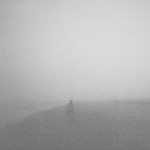
"Achlys" feels like the moment a landscape exhales. Jon Porras, best known for shaping windswept drone worlds with Barn Owl, steps here into a darker, more granular climate, one where sound behaves less like composition and more like geology. The album moves slowly but with intent, as if each track were a drifting fragment of cliffside breaking loose and sliding into a fog-filled ravine. It doesn’t bloom; it accumulates. And accumulation, in Porras’ hands, becomes a kind of narrative without words, a ritual of sediment rather than melody.
The record’s backbone is a tug-of-war between what’s played and what’s eroded. Porras writes fingerpicked guitar phrases, then subjects them to a patient series of distortions and modular alchemies until the original shape becomes unsteady. You sense the ghost of the guitar more often than the instrument itself, like finding a fossil whose outline refuses to stay still. This approach makes the music feel haunted by its own earlier versions, always drifting between what it once was and what it is becoming.
Porras has always had an eye for the cinematographic, but "Achlys" feels like his most film-minded work yet. Not in the sense of scoring images, but in evoking cuts, dissolves, and misaligned frames. The influence of "El Mar La Mar" is easily felt in the way he layers textures until emotional meaning forms through density rather than theme. Each piece feels like a short shot of landscape etched onto decaying celluloid. The pacing is disjunctive, swollen with pauses, shot through with heat shimmer.
The opener, “Fields”, sets the tone immediately: faint guitar trails buried under a loose architecture of hollow resonance. The track feels like watching smoke coil upward from smoldering ground. “Before the Rite” deepens the tension, swelling until it nearly breaks apart, but Porras reins it back with a strange tenderness, as if refusing to let the storm have the final word. “Castilleja” follows with a brittle, wind-bent beauty, while “Sea Storm” disorients the ear with low-end churns that suggest the ocean heaving in its sleep.
The title track is one of the most striking moments: harmonic shards suspended in a web of distortion, flickering like insects caught in a beam of dying daylight. “Ceremony Stone” circles ideas without ever landing, a ritual that refuses resolution, while “Holodiscus” drifts with a kind of mournful defiance. The closer, “Walking Void”, is as much an echo as a track, the album’s final gesture of dissolution.
Part of the album’s charge comes from the environment that shaped it. Porras composed much of it during mountain storms, listening to trees groan under pressure, hearing the low-end rumble of weather against high elevation terrain. You can feel that physicality throughout "Achlys". The music is both immense and delicate, heavy as old wood and fragile as a dried leaf. The emotional world here is not dramatic but elemental, drawn from the tension of standing between sky and ground, watching everything around you shift by degrees.
What makes the album compelling is its refusal to resolve into a single identity. It exists in thresholds: between form and drift, between presence and dissolution, between memory and distortion. Even at its densest, it remains spacious, like fog lit by distant moonlight. Porras offers no answers, no catharsis, only the sensation of moving through a place where everything is fading into something else.
"Achlys" is patient, shadowed, strangely luminous. It’s an album that feels like walking along the edge of a landscape that is still deciding whether to remain or disappear. And in that quiet uncertainty, it finds something rare: the beauty of erosion as a living process.
The record’s backbone is a tug-of-war between what’s played and what’s eroded. Porras writes fingerpicked guitar phrases, then subjects them to a patient series of distortions and modular alchemies until the original shape becomes unsteady. You sense the ghost of the guitar more often than the instrument itself, like finding a fossil whose outline refuses to stay still. This approach makes the music feel haunted by its own earlier versions, always drifting between what it once was and what it is becoming.
Porras has always had an eye for the cinematographic, but "Achlys" feels like his most film-minded work yet. Not in the sense of scoring images, but in evoking cuts, dissolves, and misaligned frames. The influence of "El Mar La Mar" is easily felt in the way he layers textures until emotional meaning forms through density rather than theme. Each piece feels like a short shot of landscape etched onto decaying celluloid. The pacing is disjunctive, swollen with pauses, shot through with heat shimmer.
The opener, “Fields”, sets the tone immediately: faint guitar trails buried under a loose architecture of hollow resonance. The track feels like watching smoke coil upward from smoldering ground. “Before the Rite” deepens the tension, swelling until it nearly breaks apart, but Porras reins it back with a strange tenderness, as if refusing to let the storm have the final word. “Castilleja” follows with a brittle, wind-bent beauty, while “Sea Storm” disorients the ear with low-end churns that suggest the ocean heaving in its sleep.
The title track is one of the most striking moments: harmonic shards suspended in a web of distortion, flickering like insects caught in a beam of dying daylight. “Ceremony Stone” circles ideas without ever landing, a ritual that refuses resolution, while “Holodiscus” drifts with a kind of mournful defiance. The closer, “Walking Void”, is as much an echo as a track, the album’s final gesture of dissolution.
Part of the album’s charge comes from the environment that shaped it. Porras composed much of it during mountain storms, listening to trees groan under pressure, hearing the low-end rumble of weather against high elevation terrain. You can feel that physicality throughout "Achlys". The music is both immense and delicate, heavy as old wood and fragile as a dried leaf. The emotional world here is not dramatic but elemental, drawn from the tension of standing between sky and ground, watching everything around you shift by degrees.
What makes the album compelling is its refusal to resolve into a single identity. It exists in thresholds: between form and drift, between presence and dissolution, between memory and distortion. Even at its densest, it remains spacious, like fog lit by distant moonlight. Porras offers no answers, no catharsis, only the sensation of moving through a place where everything is fading into something else.
"Achlys" is patient, shadowed, strangely luminous. It’s an album that feels like walking along the edge of a landscape that is still deciding whether to remain or disappear. And in that quiet uncertainty, it finds something rare: the beauty of erosion as a living process.
Mikoo: It Floats
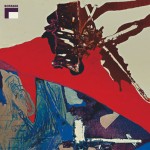
"It Floats" feels like a glass sphere drifting on dark water: luminous, fragile, deceptively simple, and hiding a whole meteorology inside. Mikoo, the Oslo-rooted ensemble orbiting drummer and composer Michaela Antalová, has always given the impression of a band thinking in multiple languages at once - rhythm, breath, texture, memory - but here they sound like they’ve agreed to speak in one shared dream. It’s their second album, built slowly over four years and across several cities, as if the music needed to accrue its own sediment before revealing its shape.
Antalová is at the center, not as a dictator of pulse but as a quiet engineer of gravity. Her drumming gives the music a sense of drifting momentum, like a tide deciding where it wants to break. Around her, the group folds itself with remarkable delicacy. Fredrik Rasten’s guitars shimmer like half-remembered folk songs turning toward abstraction. Vojtch Procházka’s organs and synths hum with a devotional patience, the kind that doesn’t require a church. Magnus Nergaard’s bass leans in and out of frame, more mood than anchor. And then there is Ina Sagstuen, whose voice carries the kind of emotional bandwidth that can make a line feel like an inheritance and a confession at the same time.
And inheritance is the album’s secret spine. Sagstuen’s lyrics rummage through everything passed down between generations: habits, myths, wounds that refuse to heal because no one dares to name them. There’s a feminist undercurrent that never shouts but slices cleanly, recalling how women have been written off as unstable, arcane, or dangerous - and how those old ghosts still pace the hallways of the present. The songs hover between vulnerability and resolve, like someone speaking quietly so you have to lean in.
The music mirrors this psychological archaeology. Some tracks clearly began as composed structures, while others feel like the moment a collective improvisation turns eerie and intentional, as if the band suddenly glimpsed the same image and followed it. This coexistence of meticulous craft and instinct gives the record its strange buoyancy. It really does float - not because it’s lightweight, but because it refuses to sink into a single genre. Indie pop dissolves into chamber minimalism, which mutates into something like folk stretched until it becomes vapor. Noise and rock haunt the edges, softening into colors rather than forms.
“Chased” unspools like a chase scene unfolding underwater, slow but relentless. “Three Scars” feels carved out of silence, each gesture carrying the weight of what is not said. “Everything Is Yelling Louder Than Me” is the closest the album comes to catharsis, though even here the eruption is subtle, like a whispered scream inside a cathedral. And “Bells”, barely two minutes long, closes the record with a small ritual, a soft ringing-out that feels like someone opening a window rather than shutting a door.
It helps that the album is wrapped in Dorothy Hood’s luminous artwork and shaped under the production guidance of Antalová and Kim Myhr, whose fingerprints you can sense in the balance between clarity and haze. The whole thing feels crafted with a patience almost unfashionable today: a willingness to wait for the music to reveal what it wants to become.
"It Floats" is an album about weight that refuses to be heavy, about history that still breathes down your neck, about emotional turbulence rendered with the precision of someone stitching a wound rather than pointing at it. It’s thoughtful, drifting, quietly radical. And somewhere in its currents, Mikoo seem to ask a question that lingers after the final notes fade: what parts of ourselves do we carry because they’re ours, and what parts because no one ever told us we could set them down?
Antalová is at the center, not as a dictator of pulse but as a quiet engineer of gravity. Her drumming gives the music a sense of drifting momentum, like a tide deciding where it wants to break. Around her, the group folds itself with remarkable delicacy. Fredrik Rasten’s guitars shimmer like half-remembered folk songs turning toward abstraction. Vojtch Procházka’s organs and synths hum with a devotional patience, the kind that doesn’t require a church. Magnus Nergaard’s bass leans in and out of frame, more mood than anchor. And then there is Ina Sagstuen, whose voice carries the kind of emotional bandwidth that can make a line feel like an inheritance and a confession at the same time.
And inheritance is the album’s secret spine. Sagstuen’s lyrics rummage through everything passed down between generations: habits, myths, wounds that refuse to heal because no one dares to name them. There’s a feminist undercurrent that never shouts but slices cleanly, recalling how women have been written off as unstable, arcane, or dangerous - and how those old ghosts still pace the hallways of the present. The songs hover between vulnerability and resolve, like someone speaking quietly so you have to lean in.
The music mirrors this psychological archaeology. Some tracks clearly began as composed structures, while others feel like the moment a collective improvisation turns eerie and intentional, as if the band suddenly glimpsed the same image and followed it. This coexistence of meticulous craft and instinct gives the record its strange buoyancy. It really does float - not because it’s lightweight, but because it refuses to sink into a single genre. Indie pop dissolves into chamber minimalism, which mutates into something like folk stretched until it becomes vapor. Noise and rock haunt the edges, softening into colors rather than forms.
“Chased” unspools like a chase scene unfolding underwater, slow but relentless. “Three Scars” feels carved out of silence, each gesture carrying the weight of what is not said. “Everything Is Yelling Louder Than Me” is the closest the album comes to catharsis, though even here the eruption is subtle, like a whispered scream inside a cathedral. And “Bells”, barely two minutes long, closes the record with a small ritual, a soft ringing-out that feels like someone opening a window rather than shutting a door.
It helps that the album is wrapped in Dorothy Hood’s luminous artwork and shaped under the production guidance of Antalová and Kim Myhr, whose fingerprints you can sense in the balance between clarity and haze. The whole thing feels crafted with a patience almost unfashionable today: a willingness to wait for the music to reveal what it wants to become.
"It Floats" is an album about weight that refuses to be heavy, about history that still breathes down your neck, about emotional turbulence rendered with the precision of someone stitching a wound rather than pointing at it. It’s thoughtful, drifting, quietly radical. And somewhere in its currents, Mikoo seem to ask a question that lingers after the final notes fade: what parts of ourselves do we carry because they’re ours, and what parts because no one ever told us we could set them down?
Snuffo: Embrace The Arts
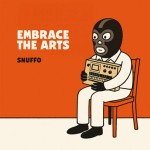
Artist: Snuffo
Title: Embrace The Arts
Format: Download Only (MP3 + Lossless)
Label: self-released
Rated:

Title: Embrace The Arts
Format: Download Only (MP3 + Lossless)
Label: self-released
Rated:
Snuffo’s Embrace The Arts arrives like a manifesto disguised as an LP, the kind of record that knows exactly what it wants yet behaves as if it stumbled into the room by coincidence. Benedikt Schmidt has been orbiting the fringes of club culture and experimental performance for years, sometimes as Snuffo, sometimes as half of Snuff Crew, sometimes as a novelist, sometimes as Cellarkalt’s wandering phantom. He seems constitutionally incapable of doing just one thing at a time, so it is almost touching that this album insists on a single radiant instruction: take art seriously because it is one of the few things that still takes you seriously in return.
The music itself feels like a diary kept during a heatwave, a stretch of Mallorca summer where machines sweat as much as people do. Schmidt recorded live in the studio, which here translates into a sense of breath and twitch and occasional lovely clumsiness. The ten tracks have that “I trusted my instincts before my brain even woke up” energy that often marks his best work. Pursuit of Happiness opens the circle with a playful tightness, the kind of track that smiles crookedly while pacing around the room. Escapist stretches out like a shadow at sunset, holding both melancholy and mischief in the same beat. Cosmic Intervention is more ascensional, a little cosmic disco, a little bunker techno, the sort of thing that could soundtrack a midnight revelation or a 4 a.m. mistake.
Even the shorter pieces feel like miniature sculptures. Dry Spell (Hang In There) sounds like someone knocking politely on the door of their own subconscious. Every Now and Then is all vapor trail and hesitation, a slow-motion pulse that refuses to resolve. And Rituals brings a low-burning momentum, as if the machines are performing their own rite and Schmidt is just there to keep the candles from tipping.
What sets the album apart is the way it wears its artistic convictions without becoming preachy. The tracks are playful, occasionally rough at the edges, unashamedly direct. They speak of doubt, stubbornness, imagination, and the impossible hope that art might still nudge the world sideways when nothing else seems to. Dissent in particular carries this spirit like a torch, a fizzing pulse wrapped in grit and gentle threat. Whims and Balm close the record with a sense of earned tenderness, small gestures offered after the storm.
Embrace The Arts is ultimately a snapshot of an artist who has spent decades learning that invention cannot be forced but it can be cultivated, like a stubborn plant that grows out of concrete simply because it damn well feels like it. Schmidt listens to his machines until they speak back, and what they tell him here is that joy and doubt and resistance can coexist inside a kick drum.
The music itself feels like a diary kept during a heatwave, a stretch of Mallorca summer where machines sweat as much as people do. Schmidt recorded live in the studio, which here translates into a sense of breath and twitch and occasional lovely clumsiness. The ten tracks have that “I trusted my instincts before my brain even woke up” energy that often marks his best work. Pursuit of Happiness opens the circle with a playful tightness, the kind of track that smiles crookedly while pacing around the room. Escapist stretches out like a shadow at sunset, holding both melancholy and mischief in the same beat. Cosmic Intervention is more ascensional, a little cosmic disco, a little bunker techno, the sort of thing that could soundtrack a midnight revelation or a 4 a.m. mistake.
Even the shorter pieces feel like miniature sculptures. Dry Spell (Hang In There) sounds like someone knocking politely on the door of their own subconscious. Every Now and Then is all vapor trail and hesitation, a slow-motion pulse that refuses to resolve. And Rituals brings a low-burning momentum, as if the machines are performing their own rite and Schmidt is just there to keep the candles from tipping.
What sets the album apart is the way it wears its artistic convictions without becoming preachy. The tracks are playful, occasionally rough at the edges, unashamedly direct. They speak of doubt, stubbornness, imagination, and the impossible hope that art might still nudge the world sideways when nothing else seems to. Dissent in particular carries this spirit like a torch, a fizzing pulse wrapped in grit and gentle threat. Whims and Balm close the record with a sense of earned tenderness, small gestures offered after the storm.
Embrace The Arts is ultimately a snapshot of an artist who has spent decades learning that invention cannot be forced but it can be cultivated, like a stubborn plant that grows out of concrete simply because it damn well feels like it. Schmidt listens to his machines until they speak back, and what they tell him here is that joy and doubt and resistance can coexist inside a kick drum.