
Sunday, September 6, 2026
Browse by Genre
Industrial Music / Industrial Metal / Aggro Industrial / Electro Metal
Industrial Noise / Power Noise / Harsh Noise
Synth Pop / Electro Pop / Synth-Electronica
Techno / Trance / Goa / Drum'n'Bass / Jungle / Tribal / Trip-Hop
Ambient / Electronica / Ethereal / Dub / Soundscapes / Abstract
Experimental / Avantgarde / Weird & Wired / Glitch / Noise / Field Recording
Dark / Gothic / Wave / New Wave / Dark Wave / Industrial Gothic
New Music / Downtown / Avantgarde Jazz / New Classical / World
Search Reviews
Music Reviews
Susanna Santos Silva & Vasco Trilla: Mushin

Artist: Susanna Santos Silva & Vasco Trilla (@)
Title: Mushin
Format: 12" + Download
Label: Defkaz (@)
Rated:

Title: Mushin
Format: 12" + Download
Label: Defkaz (@)
Rated:
Free improvisation and Zen philosophy make potentially dangerous neighbours. Put “no-mind”, “presence” and “dissolution of ego” together and, before long, somebody is probably selling incense. "Mushin" fortunately has more grit than that. Susana Santos Silva and Vasco Trilla approach the idea through sound rather than spiritual decoration, producing two extended improvisations that depend on alertness, instinct and an almost stubborn refusal to force the music into shape.
The title is important. "Mushin" is the Japanese term for “no-mind”, formed from "mu", meaning nothingness or absence, and "shin", referring to mind, heart or spirit. In Zen and martial arts, it describes a state of “no-mind”: not the absence of thought, but freedom from the fear, anger and ego that can interfere with spontaneous action. The album splits that word into its two components, "Mu" and "Shin", turning the title itself into a loose framework for the music. The idea is less about achieving emptiness than about removing the need to decide in advance what should happen next.
The cover provides an unexpectedly perfect visual joke about all this. A solitary figure sits on a toilet in the middle of an otherwise magnificent mountainous panorama, apparently contemplating nature while attending to one of humanity's least elevated activities. It is difficult to imagine a more efficient image of “no-mind”: forget ego, transcend attachment, and perhaps deal with the plumbing first. The deliberately awkward collage, with its tilted geometric frame and elongated lettering, makes the whole scene look simultaneously contemplative, ridiculous and strangely dignified. Zen masters have traditionally had rather more elegant surroundings, but there is something wonderfully democratic about reducing enlightenment to a toilet with a view.
That distinction is audible from the beginning. Santos Silva's trumpet can be piercing, breathy, brittle or unexpectedly lyrical, while Trilla draws an astonishing range of sounds from percussion without allowing it to settle into conventional rhythmic duties. A metallic strike may provoke a trumpet fragment; a burst of noise may be followed by an almost absurdly delicate response. The musicians seem to be listening for possibilities rather than waiting for their turn.
Santos Silva has become one of the most distinctive figures in European improvised music, working across free jazz, contemporary composition and experimental performance. Trilla, meanwhile, has developed an equally broad percussion vocabulary, using drums and objects as sources of colour, friction and resonance as much as rhythm. Their meeting works because neither needs to demonstrate the full contents of the toolbox. The interesting sounds are often the ones that happen when both players leave something unfinished.
"Mu", at eighteen minutes, is the more exploratory half of the proposition. Small gestures acquire disproportionate importance, with Santos Silva repeatedly testing how far a note can be pushed before it ceases to behave like a conventional trumpet sound. Trilla responds with clicks, scrapes, vibrations and sudden impacts. The tension comes less from volume than from uncertainty: you never quite know whether the next sound will extend what has just happened or overturn it.
"Shin", slightly longer, becomes more volatile. Its exchanges can accumulate into dense bursts before suddenly thinning out again, giving the piece a sense of movement without conventional development. There are confrontational passages, but no sense of competition. Neither musician is trying to “win” the improvisation, which is fortunate because music, unlike competitive swimming, does not improve merely because someone arrives first.
The Zen concept becomes convincing precisely because the performance does not sound serenely detached. "Mushin" is alert, sometimes abrasive and occasionally restless. “No-mind” here means acting without becoming trapped by expectation. Santos Silva and Trilla continually respond to what is happening in the immediate moment, including the silences and gaps left by the previous gesture. The absence of predetermined structure becomes a source of discipline rather than an excuse for chaos.
The cover's absurdity turns out to be another useful clue. Its picturesque mountains suggest transcendence; its protagonist, sitting on the toilet, stubbornly returns transcendence to earth. The album does something comparable with its philosophical premise. Rather than presenting “no-mind” as some elevated state beyond ordinary experience, the music keeps it grounded in breath, impact, hesitation, reaction and the physical behaviour of two instruments. Enlightenment, if it exists here, apparently has plumbing.
Recorded in Barcelona in September 2024, the album captures that physical exchange with considerable clarity. You hear the grain and instability of the trumpet, the mechanics of percussion, the tiny noises that conventionally polished recordings might politely sweep under the carpet. Those details matter because "Mushin" is ultimately about responsiveness: sound is constantly being produced, reconsidered and replaced.
At nearly forty minutes, the album never pretends to offer a conventional beginning-middle-end narrative. Instead, its form emerges through the accumulation and withdrawal of attention. "Mu" and "Shin" are not two songs illustrating a philosophical concept; they are two sides of an experiment in which the musicians try to let the music happen before either of them has time to tell it what it ought to be.
And perhaps that is the most interesting thing about "Mushin": it takes an idea that could easily become pompous and makes it audible through very practical means. Listen closely. React quickly. Do not cling to what has already happened. Then do it again.
The cover may therefore be more than an eccentric visual gag. A human being, a toilet, a mountain, an empty horizon: everything grand and everything ridiculous occupying the same frame. Which is probably a fairly accurate summary of being alive, and perhaps the most convincing definition of “no-mind” this record could have asked for.
The title is important. "Mushin" is the Japanese term for “no-mind”, formed from "mu", meaning nothingness or absence, and "shin", referring to mind, heart or spirit. In Zen and martial arts, it describes a state of “no-mind”: not the absence of thought, but freedom from the fear, anger and ego that can interfere with spontaneous action. The album splits that word into its two components, "Mu" and "Shin", turning the title itself into a loose framework for the music. The idea is less about achieving emptiness than about removing the need to decide in advance what should happen next.
The cover provides an unexpectedly perfect visual joke about all this. A solitary figure sits on a toilet in the middle of an otherwise magnificent mountainous panorama, apparently contemplating nature while attending to one of humanity's least elevated activities. It is difficult to imagine a more efficient image of “no-mind”: forget ego, transcend attachment, and perhaps deal with the plumbing first. The deliberately awkward collage, with its tilted geometric frame and elongated lettering, makes the whole scene look simultaneously contemplative, ridiculous and strangely dignified. Zen masters have traditionally had rather more elegant surroundings, but there is something wonderfully democratic about reducing enlightenment to a toilet with a view.
That distinction is audible from the beginning. Santos Silva's trumpet can be piercing, breathy, brittle or unexpectedly lyrical, while Trilla draws an astonishing range of sounds from percussion without allowing it to settle into conventional rhythmic duties. A metallic strike may provoke a trumpet fragment; a burst of noise may be followed by an almost absurdly delicate response. The musicians seem to be listening for possibilities rather than waiting for their turn.
Santos Silva has become one of the most distinctive figures in European improvised music, working across free jazz, contemporary composition and experimental performance. Trilla, meanwhile, has developed an equally broad percussion vocabulary, using drums and objects as sources of colour, friction and resonance as much as rhythm. Their meeting works because neither needs to demonstrate the full contents of the toolbox. The interesting sounds are often the ones that happen when both players leave something unfinished.
"Mu", at eighteen minutes, is the more exploratory half of the proposition. Small gestures acquire disproportionate importance, with Santos Silva repeatedly testing how far a note can be pushed before it ceases to behave like a conventional trumpet sound. Trilla responds with clicks, scrapes, vibrations and sudden impacts. The tension comes less from volume than from uncertainty: you never quite know whether the next sound will extend what has just happened or overturn it.
"Shin", slightly longer, becomes more volatile. Its exchanges can accumulate into dense bursts before suddenly thinning out again, giving the piece a sense of movement without conventional development. There are confrontational passages, but no sense of competition. Neither musician is trying to “win” the improvisation, which is fortunate because music, unlike competitive swimming, does not improve merely because someone arrives first.
The Zen concept becomes convincing precisely because the performance does not sound serenely detached. "Mushin" is alert, sometimes abrasive and occasionally restless. “No-mind” here means acting without becoming trapped by expectation. Santos Silva and Trilla continually respond to what is happening in the immediate moment, including the silences and gaps left by the previous gesture. The absence of predetermined structure becomes a source of discipline rather than an excuse for chaos.
The cover's absurdity turns out to be another useful clue. Its picturesque mountains suggest transcendence; its protagonist, sitting on the toilet, stubbornly returns transcendence to earth. The album does something comparable with its philosophical premise. Rather than presenting “no-mind” as some elevated state beyond ordinary experience, the music keeps it grounded in breath, impact, hesitation, reaction and the physical behaviour of two instruments. Enlightenment, if it exists here, apparently has plumbing.
Recorded in Barcelona in September 2024, the album captures that physical exchange with considerable clarity. You hear the grain and instability of the trumpet, the mechanics of percussion, the tiny noises that conventionally polished recordings might politely sweep under the carpet. Those details matter because "Mushin" is ultimately about responsiveness: sound is constantly being produced, reconsidered and replaced.
At nearly forty minutes, the album never pretends to offer a conventional beginning-middle-end narrative. Instead, its form emerges through the accumulation and withdrawal of attention. "Mu" and "Shin" are not two songs illustrating a philosophical concept; they are two sides of an experiment in which the musicians try to let the music happen before either of them has time to tell it what it ought to be.
And perhaps that is the most interesting thing about "Mushin": it takes an idea that could easily become pompous and makes it audible through very practical means. Listen closely. React quickly. Do not cling to what has already happened. Then do it again.
The cover may therefore be more than an eccentric visual gag. A human being, a toilet, a mountain, an empty horizon: everything grand and everything ridiculous occupying the same frame. Which is probably a fairly accurate summary of being alive, and perhaps the most convincing definition of “no-mind” this record could have asked for.
Sam Rosenthal: The Width of Shadows
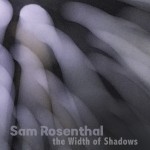
There is a peculiar elegance in making something new from material you had already given up on. "The Width of Shadows", Sam Rosenthal's first solo electronic-ambient-drone album in more than a decade, is essentially an exercise in musical salvage: unfinished pieces gathered from the last five years, dismantled, rearranged, processed and allowed to become something other than what they originally intended to be.
Rosenthal is, of course, a central figure in American darkwave and ambient music, founder of Projekt Records and Black Tape For A Blue Girl. Yet this record feels deliberately removed from the narrative density of his vocal work. There are no songs demanding attention, no obvious destination, barely even a conventional sense of progression. Instead, "The Width of Shadows" operates through layers, resonance and gradual changes in emotional temperature.
The short "Sunflow" establishes the atmosphere almost immediately, a fragile electronic shimmer that feels less like an opening statement than the first patch of light entering an otherwise unlit room. "Flare Equilibrium" and "The Visitor" expand that space, introducing slowly shifting tones and submerged harmonic activity. The music is spacious without being empty: there is always something moving somewhere inside it, although it often seems to be moving at the geological speed favoured by ambient musicians and continental drift.
What makes the album particularly interesting is Rosenthal's decision to abandon his former perfectionism. Rather than reconstructing each piece according to its original blueprint, he treats the old recordings as raw material. Sounds are removed, blurred, reprocessed and displaced until the tracks acquire their own internal atmosphere. This gives the music a slightly unstable quality, as though the compositions are remembering what they once were but have decided not to tell us.
"Solar Silent Sound" and "Filament" are especially effective in this respect. Their textures seem to hover between electronic warmth and something colder, almost astronomical, while "Angular Momentum, Vaulted Sky" introduces a stronger sense of gravitational movement. The title itself is revealing: Rosenthal's music rarely depicts darkness as absence. Darkness has weight here. It bends the surrounding space.
The older "The Width of Shadows", originally dating from 2002, becomes the album's emotional hinge. Heard in this context, it no longer feels like an archival inclusion but part of a larger conversation between different moments in Rosenthal's musical life. The past is not being restored so much as made to coexist with the present.
And then comes "Orbital Equilibrium", seventeen minutes that provide the album's real test of patience. It is also its reward. Rather than relying on dramatic development, the piece gradually alters the listener's perception of scale. Sounds become less like individual events and more like a surrounding environment. The distinction between foreground and background begins to collapse.
There is an appealing contradiction at the centre of "The Width of Shadows". Rosenthal approached these abandoned tracks with greater spontaneity, yet the resulting album feels unusually controlled. Its freedom comes not from chaos but from relinquishing the obligation to preserve an original idea. Once the music is treated as material rather than property, it becomes possible to reshape it without nostalgia.
The result is ambient music with a surprisingly human imperfection. It does not attempt to manufacture transcendence through endless clouds of synthetic sweetness. Its beauty is darker, more provisional, occasionally even slightly bruised. These are sounds that seem to have survived something.
Perhaps that is why "The Width of Shadows" feels less like a collection of finished compositions than a landscape assembled from traces: fragments of abandoned ideas, old recordings, new processing and memories that have lost their timestamps.
The shadows are wide because the past keeps taking up space. Rosenthal simply learned how to illuminate them without making them disappear.
Rosenthal is, of course, a central figure in American darkwave and ambient music, founder of Projekt Records and Black Tape For A Blue Girl. Yet this record feels deliberately removed from the narrative density of his vocal work. There are no songs demanding attention, no obvious destination, barely even a conventional sense of progression. Instead, "The Width of Shadows" operates through layers, resonance and gradual changes in emotional temperature.
The short "Sunflow" establishes the atmosphere almost immediately, a fragile electronic shimmer that feels less like an opening statement than the first patch of light entering an otherwise unlit room. "Flare Equilibrium" and "The Visitor" expand that space, introducing slowly shifting tones and submerged harmonic activity. The music is spacious without being empty: there is always something moving somewhere inside it, although it often seems to be moving at the geological speed favoured by ambient musicians and continental drift.
What makes the album particularly interesting is Rosenthal's decision to abandon his former perfectionism. Rather than reconstructing each piece according to its original blueprint, he treats the old recordings as raw material. Sounds are removed, blurred, reprocessed and displaced until the tracks acquire their own internal atmosphere. This gives the music a slightly unstable quality, as though the compositions are remembering what they once were but have decided not to tell us.
"Solar Silent Sound" and "Filament" are especially effective in this respect. Their textures seem to hover between electronic warmth and something colder, almost astronomical, while "Angular Momentum, Vaulted Sky" introduces a stronger sense of gravitational movement. The title itself is revealing: Rosenthal's music rarely depicts darkness as absence. Darkness has weight here. It bends the surrounding space.
The older "The Width of Shadows", originally dating from 2002, becomes the album's emotional hinge. Heard in this context, it no longer feels like an archival inclusion but part of a larger conversation between different moments in Rosenthal's musical life. The past is not being restored so much as made to coexist with the present.
And then comes "Orbital Equilibrium", seventeen minutes that provide the album's real test of patience. It is also its reward. Rather than relying on dramatic development, the piece gradually alters the listener's perception of scale. Sounds become less like individual events and more like a surrounding environment. The distinction between foreground and background begins to collapse.
There is an appealing contradiction at the centre of "The Width of Shadows". Rosenthal approached these abandoned tracks with greater spontaneity, yet the resulting album feels unusually controlled. Its freedom comes not from chaos but from relinquishing the obligation to preserve an original idea. Once the music is treated as material rather than property, it becomes possible to reshape it without nostalgia.
The result is ambient music with a surprisingly human imperfection. It does not attempt to manufacture transcendence through endless clouds of synthetic sweetness. Its beauty is darker, more provisional, occasionally even slightly bruised. These are sounds that seem to have survived something.
Perhaps that is why "The Width of Shadows" feels less like a collection of finished compositions than a landscape assembled from traces: fragments of abandoned ideas, old recordings, new processing and memories that have lost their timestamps.
The shadows are wide because the past keeps taking up space. Rosenthal simply learned how to illuminate them without making them disappear.
Olivier Alary: Vestiges
Artist: Olivier Alary (@)
Title: Vestiges
Format: Download Only (MP3 + Lossless)
Label: Line (@)
Rated:
Title: Vestiges
Format: Download Only (MP3 + Lossless)
Label: Line (@)
Rated:
Memory is rarely as polite as we would like it to be. It does not preserve things intact; it scratches them, distorts them, misplaces them and occasionally returns them years later in a form we barely recognise. "Vestiges", the new album by French composer Olivier Alary for LINE, is built around precisely this unruly quality of remembrance. A continuous 43-minute composition divided into five movements, it brings together twelve amplified lap steel guitars and electronics, treating the ensemble almost as a single instrumental organism rather than twelve separate voices.
The concept may sound cerebral, but the music itself is remarkably physical. Alary's starting point is almost disarmingly simple: sustained slide movements across the strings generate resonance, interference and tiny fluctuations in pitch. From this limited vocabulary emerges an extraordinarily unstable sonic field. The guitars begin to lose their conventional identity, producing tones that hover somewhere between strings, voices, electrical hum and distant environmental noise. It is less a choir of guitars than a choir remembering that it was once something else.
Alary has been exploring the borderlands between composition, electronic music and sound art for decades, with previous work appearing on LINE including "Pieces for Sine Wave Oscillators" and "Apparitions (Vol. 1)". His approach has consistently favoured acoustic phenomena that seem to occupy the threshold between recognisable sound and abstraction. With "Vestiges", that threshold becomes the entire subject.
The opening movement establishes the principle without rushing to explain it. Sustained tones gradually interfere with one another, creating beating frequencies and harmonic shadows that seem to appear independently of the performers. Nothing dramatic happens, yet the ear becomes increasingly occupied. What initially resembles a static drone reveals itself as a landscape in constant microscopic motion.
The second and third movements deepen the illusion. Noise, saturation, friction and unstable intonation become structural components rather than imperfections to be corrected. The effect recalls the physical deterioration of analogue recordings: hiss, distortion, wear and the vague sensation that something has been copied too many times. Yet there is no nostalgia for obsolete technology here. These qualities have become part of the composition itself.
This is particularly effective because "Vestiges" never tries to imitate an old recording. Instead, it behaves like one.
Alary's fascination with Robert Smithson's "Partially Buried Woodshed" and Daniel Spoerri's "Le Déjeuner sous l'herbe" provides an illuminating parallel. Both works involve objects or events being buried, concealed and subsequently encountered through excavation. "Vestiges" applies a similar logic to sound. These tones feel less composed than unearthed, as if they had spent years underground accumulating pressure and geological dirt before somebody finally decided to listen to them.
That metaphor also explains why the album can feel strangely intimate despite its scale. Twelve lap steels should, theoretically, announce themselves as an ensemble. Here they dissolve into a collective body. Their proximity produces psychoacoustic effects that are almost vocal: pitches seem to breathe, tones swell and recede, and harmonic combinations appear where no individual instrument appears responsible for them.
The fourth movement is particularly striking in this respect. The music seems to hover between emergence and disappearance, with fragments of apparent melody forming briefly before being absorbed back into the surrounding mass. It creates the peculiar impression of hearing something through a wall, or perhaps remembering a sound rather than actually hearing it. The distinction becomes increasingly difficult to maintain.
By the fifth movement, the music has acquired a remarkable emotional weight without ever resorting to conventional expression. There are no melodies to hum afterwards, no dramatic climax waiting patiently for its cue, no obvious narrative resolution. Instead, Alary makes tiny alterations feel consequential. A change in density, a slight shift in pitch or a new layer of distortion can suddenly alter the entire perceived architecture.
That patience is the album's greatest virtue.
"Vestiges" demands attention, but it does not reward impatience. Its drama exists at the scale of minute changes, where listening becomes less about following events and more about noticing that the supposedly static object has been moving all along. Human beings usually require explosions, choruses or at least someone falling down the stairs before they agree that something has happened. Alary gets away with a tremor in the harmonic field.
The result is haunting without relying on the usual vocabulary of haunted music. There are no ghosts being theatrically summoned. Instead, the instruments become conduits for absence. The “voices” we seem to hear are produced by resonance and interference, but our perception insists on giving them a human quality. The séance is therefore partly performed by the musicians and partly by our own brains, which remain stubbornly committed to finding faces in clouds and voices in static.
"Vestiges" ultimately suggests that deterioration can be a form of creation. Its sounds become beautiful not despite their noise, instability and opacity, but because of them. Every imperfection seems to carry evidence of something having happened before.
And that may be the album's quietest achievement: it makes time audible without trying to illustrate it.
The music does not reconstruct the past.
It lets the past leave a stain.
The concept may sound cerebral, but the music itself is remarkably physical. Alary's starting point is almost disarmingly simple: sustained slide movements across the strings generate resonance, interference and tiny fluctuations in pitch. From this limited vocabulary emerges an extraordinarily unstable sonic field. The guitars begin to lose their conventional identity, producing tones that hover somewhere between strings, voices, electrical hum and distant environmental noise. It is less a choir of guitars than a choir remembering that it was once something else.
Alary has been exploring the borderlands between composition, electronic music and sound art for decades, with previous work appearing on LINE including "Pieces for Sine Wave Oscillators" and "Apparitions (Vol. 1)". His approach has consistently favoured acoustic phenomena that seem to occupy the threshold between recognisable sound and abstraction. With "Vestiges", that threshold becomes the entire subject.
The opening movement establishes the principle without rushing to explain it. Sustained tones gradually interfere with one another, creating beating frequencies and harmonic shadows that seem to appear independently of the performers. Nothing dramatic happens, yet the ear becomes increasingly occupied. What initially resembles a static drone reveals itself as a landscape in constant microscopic motion.
The second and third movements deepen the illusion. Noise, saturation, friction and unstable intonation become structural components rather than imperfections to be corrected. The effect recalls the physical deterioration of analogue recordings: hiss, distortion, wear and the vague sensation that something has been copied too many times. Yet there is no nostalgia for obsolete technology here. These qualities have become part of the composition itself.
This is particularly effective because "Vestiges" never tries to imitate an old recording. Instead, it behaves like one.
Alary's fascination with Robert Smithson's "Partially Buried Woodshed" and Daniel Spoerri's "Le Déjeuner sous l'herbe" provides an illuminating parallel. Both works involve objects or events being buried, concealed and subsequently encountered through excavation. "Vestiges" applies a similar logic to sound. These tones feel less composed than unearthed, as if they had spent years underground accumulating pressure and geological dirt before somebody finally decided to listen to them.
That metaphor also explains why the album can feel strangely intimate despite its scale. Twelve lap steels should, theoretically, announce themselves as an ensemble. Here they dissolve into a collective body. Their proximity produces psychoacoustic effects that are almost vocal: pitches seem to breathe, tones swell and recede, and harmonic combinations appear where no individual instrument appears responsible for them.
The fourth movement is particularly striking in this respect. The music seems to hover between emergence and disappearance, with fragments of apparent melody forming briefly before being absorbed back into the surrounding mass. It creates the peculiar impression of hearing something through a wall, or perhaps remembering a sound rather than actually hearing it. The distinction becomes increasingly difficult to maintain.
By the fifth movement, the music has acquired a remarkable emotional weight without ever resorting to conventional expression. There are no melodies to hum afterwards, no dramatic climax waiting patiently for its cue, no obvious narrative resolution. Instead, Alary makes tiny alterations feel consequential. A change in density, a slight shift in pitch or a new layer of distortion can suddenly alter the entire perceived architecture.
That patience is the album's greatest virtue.
"Vestiges" demands attention, but it does not reward impatience. Its drama exists at the scale of minute changes, where listening becomes less about following events and more about noticing that the supposedly static object has been moving all along. Human beings usually require explosions, choruses or at least someone falling down the stairs before they agree that something has happened. Alary gets away with a tremor in the harmonic field.
The result is haunting without relying on the usual vocabulary of haunted music. There are no ghosts being theatrically summoned. Instead, the instruments become conduits for absence. The “voices” we seem to hear are produced by resonance and interference, but our perception insists on giving them a human quality. The séance is therefore partly performed by the musicians and partly by our own brains, which remain stubbornly committed to finding faces in clouds and voices in static.
"Vestiges" ultimately suggests that deterioration can be a form of creation. Its sounds become beautiful not despite their noise, instability and opacity, but because of them. Every imperfection seems to carry evidence of something having happened before.
And that may be the album's quietest achievement: it makes time audible without trying to illustrate it.
The music does not reconstruct the past.
It lets the past leave a stain.
Makes My Blood Dance: #Z3R0 2 LGHT $P33D!

Artist: Makes My Blood Dance (@)
Title: #Z3R0 2 LGHT $P33D!
Format: CD & 12" + Download
Label: Metropolis (@)
Rated:

Title: #Z3R0 2 LGHT $P33D!
Format: CD & 12" + Download
Label: Metropolis (@)
Rated:
There are bands that blend genres because they cannot decide what they want to be, and then there are bands that do it because deciding would be terribly boring. New York's Makes My Blood Dance belong firmly to the second category. On their debut album "#Z3R0 2 LGHT $P33D!", electro, goth, metal, industrial funk and disco are thrown into the same room and somehow emerge looking like they had planned the meeting all along.
The band's formula is deceptively simple: serrated guitars, synthetic rhythms, heavy bass and vocals capable of moving from theatrical grandeur to intimate seduction. But the real trick is the rhythmic architecture. MMBD understand that darkness becomes considerably more effective when it can dance. “Time And A Place” establishes this immediately, balancing melancholic reflection with a beat that refuses to sit quietly in the corner. The song's sense of longing is wrapped in something almost club-oriented, creating a curious tension between vulnerability and propulsion.
“Black Summer” and “Impossible Odds” push further towards the industrial-metal side, where distorted guitars and electronic pulses collide without either element being reduced to decoration. The production by Bret “Epic” Mazur and Mikal Blue keeps the record polished and forceful, but there is enough contrast between the tracks to prevent the album becoming one extended wall of synthetic testosterone.
“Your Little Hand In Mine” introduces a more sensual dimension, while “Heavy Metal Armour” is considerably less interested in subtlety. The title alone apparently decided that subtlety had already been adequately represented elsewhere. Yet beneath the oversized gestures, MMBD have a good instinct for hooks, repetition and theatrical pacing. Their music is clearly designed with performance in mind, and the songs often feel as though they are already illuminated by strobes.
The most intriguing detour is “Lately”, a reworking of Macy Gray's song featuring Gray herself. Turning a soul-pop composition into industrial funk could easily have become an exercise in unnecessary violence, but MMBD preserve the emotional centre while surrounding it with harder electronic and rhythmic contours. Gray's unmistakable voice provides an important contrast to EV0's more dramatic delivery, making the track feel less like a novelty collaboration and more like an encounter between two different musical worlds.
Elsewhere, “Forget To Let It In” and “Invisible Friend” reveal a slightly more melodic side, suggesting that beneath the band's deliberately exaggerated visual and sonic identity there is a genuine interest in atmosphere. “Spin You Around” then brings the dance impulse back to the foreground, before the EDM remix of “Time And A Place” closes the album by making explicit what the rest of the record has been quietly insisting upon: these songs are built to move people physically as much as emotionally.
That is perhaps the key to understanding MMBD. Calling them “electro-goth” or “disco-metal” is useful only until the music starts playing. Their real territory lies somewhere between the nightclub, the metal venue and the theatrical stage, a place where a bass drum can be both a club pulse and a rock weapon. Their live aesthetic, with its carefully constructed visuals and ritualistic presentation, reinforces this sense that the songs are components of a larger spectacle rather than isolated recordings.
There is certainly an element of excess here. The band is not frightened of melodrama, grand gestures or titles written as though a keyboard had been left alone with a teenager's password generator. But excess is not necessarily a flaw when it is understood as part of the language. MMBD know that gothic culture has always contained a strange relationship between sincerity and spectacle, and they exploit that contradiction rather effectively.
What makes "#Z3R0 2 LGHT $P33D!" more than a collection of stylistic references is its consistency of purpose. The album wants darkness without austerity, heaviness without abandoning the dance floor, and theatricality without losing the songs underneath the costumes. It occasionally comes close to overplaying its hand, but that is preferable to sounding timid. A band calling itself Makes My Blood Dance has presumably accepted certain responsibilities.
The strongest moments arrive when the genres stop behaving like separate ingredients. Guitars become rhythmic machinery, synths become atmosphere, bass becomes physical pressure and the voice becomes both narrator and performer. The resulting sound is glossy, muscular and knowingly dramatic, but there is enough emotional uncertainty beneath the surface to keep it from becoming mere spectacle.
"#Z3R0 2 LGHT $P33D!" is therefore less a declaration that goth has discovered the dance floor than a reminder that the two were never really strangers. It is music for the moment when the apocalypse gets bored with being apocalyptic and decides to put on better clothes.
Human civilisation may be collapsing. At least someone remembered to bring the synthesizers.
The band's formula is deceptively simple: serrated guitars, synthetic rhythms, heavy bass and vocals capable of moving from theatrical grandeur to intimate seduction. But the real trick is the rhythmic architecture. MMBD understand that darkness becomes considerably more effective when it can dance. “Time And A Place” establishes this immediately, balancing melancholic reflection with a beat that refuses to sit quietly in the corner. The song's sense of longing is wrapped in something almost club-oriented, creating a curious tension between vulnerability and propulsion.
“Black Summer” and “Impossible Odds” push further towards the industrial-metal side, where distorted guitars and electronic pulses collide without either element being reduced to decoration. The production by Bret “Epic” Mazur and Mikal Blue keeps the record polished and forceful, but there is enough contrast between the tracks to prevent the album becoming one extended wall of synthetic testosterone.
“Your Little Hand In Mine” introduces a more sensual dimension, while “Heavy Metal Armour” is considerably less interested in subtlety. The title alone apparently decided that subtlety had already been adequately represented elsewhere. Yet beneath the oversized gestures, MMBD have a good instinct for hooks, repetition and theatrical pacing. Their music is clearly designed with performance in mind, and the songs often feel as though they are already illuminated by strobes.
The most intriguing detour is “Lately”, a reworking of Macy Gray's song featuring Gray herself. Turning a soul-pop composition into industrial funk could easily have become an exercise in unnecessary violence, but MMBD preserve the emotional centre while surrounding it with harder electronic and rhythmic contours. Gray's unmistakable voice provides an important contrast to EV0's more dramatic delivery, making the track feel less like a novelty collaboration and more like an encounter between two different musical worlds.
Elsewhere, “Forget To Let It In” and “Invisible Friend” reveal a slightly more melodic side, suggesting that beneath the band's deliberately exaggerated visual and sonic identity there is a genuine interest in atmosphere. “Spin You Around” then brings the dance impulse back to the foreground, before the EDM remix of “Time And A Place” closes the album by making explicit what the rest of the record has been quietly insisting upon: these songs are built to move people physically as much as emotionally.
That is perhaps the key to understanding MMBD. Calling them “electro-goth” or “disco-metal” is useful only until the music starts playing. Their real territory lies somewhere between the nightclub, the metal venue and the theatrical stage, a place where a bass drum can be both a club pulse and a rock weapon. Their live aesthetic, with its carefully constructed visuals and ritualistic presentation, reinforces this sense that the songs are components of a larger spectacle rather than isolated recordings.
There is certainly an element of excess here. The band is not frightened of melodrama, grand gestures or titles written as though a keyboard had been left alone with a teenager's password generator. But excess is not necessarily a flaw when it is understood as part of the language. MMBD know that gothic culture has always contained a strange relationship between sincerity and spectacle, and they exploit that contradiction rather effectively.
What makes "#Z3R0 2 LGHT $P33D!" more than a collection of stylistic references is its consistency of purpose. The album wants darkness without austerity, heaviness without abandoning the dance floor, and theatricality without losing the songs underneath the costumes. It occasionally comes close to overplaying its hand, but that is preferable to sounding timid. A band calling itself Makes My Blood Dance has presumably accepted certain responsibilities.
The strongest moments arrive when the genres stop behaving like separate ingredients. Guitars become rhythmic machinery, synths become atmosphere, bass becomes physical pressure and the voice becomes both narrator and performer. The resulting sound is glossy, muscular and knowingly dramatic, but there is enough emotional uncertainty beneath the surface to keep it from becoming mere spectacle.
"#Z3R0 2 LGHT $P33D!" is therefore less a declaration that goth has discovered the dance floor than a reminder that the two were never really strangers. It is music for the moment when the apocalypse gets bored with being apocalyptic and decides to put on better clothes.
Human civilisation may be collapsing. At least someone remembered to bring the synthesizers.
Jungstötter: Sustained
Artist: Jungstötter (@)
Title: Sustained
Format: Download Only (MP3 + Lossless)
Label: Unguarded (@)
Rated:
Title: Sustained
Format: Download Only (MP3 + Lossless)
Label: Unguarded (@)
Rated:
There is something almost perversely physical about "Sustained". Fabian Altstötter, the Berlin-based musician behind Jungstötter, builds his third album around the human breath, but refuses to turn that idea into some tasteful wellness metaphor. Breathing here is effort, interruption, desire, exhaustion: the sound of a body trying to remain present while everything around it seems determined to become noise.
Compared with the denser architecture of "Love Is" and "One Star", "Sustained" is remarkably reduced. Piano, strings, harmonica, electronics and abrasive fragments occupy a narrow but intensely expressive space, while Altstötter's voice moves through it with an unusual mixture of distance and immediacy. Sometimes it sounds barely attached to the body producing it; elsewhere it suddenly becomes almost startlingly melodic. The contrast gives the songs their peculiar tension. Nothing is quite comfortable, including the beautiful parts.
The opening "Overturn" establishes the album's language through repetition and disruption, its rhythmic pattern constantly threatening to lose its balance. "Sunk" then sinks into something more intimate, where piano and harmonica seem to rub against one another like two memories that cannot quite agree. On "That Noise", disturbance becomes almost a character in itself, while "Tell This Lover" and "Loud Fingers" reveal how effectively Altstötter can let conventional songcraft emerge from the wreckage.
The remarkable thing is that "Sustained" never mistakes fragility for gentleness. Its quiet moments can be more unsettling than its eruptions. Noise scratches at melodies; melodies retreat rather than resolve; instruments seem to breathe, hesitate and occasionally lose patience. Even "Again", featuring Ronja's spectral vocals, feels less like a duet than two separate bodies briefly discovering that they occupy the same atmosphere.
Altstötter's lyrics are similarly resistant to tidy interpretation. They move through love, exhaustion, desire, alienation and bodily sensation using images that feel half-remembered rather than explained. "Seaweed", "Consume Me" and "Elastic (Avenue)" are particularly good examples of this strange poetic elasticity: concrete images become psychological states without ever settling into symbolism with an instruction manual attached.
There is also something quietly political beneath the romanticism. Altstötter describes the album through the idea of a communal body, sustained by many people breathing alongside one another. That notion gives the record an emotional dimension beyond private melancholy. The “I” is repeatedly invaded by other voices, other hands, other breaths. Even solitude becomes relational.
This may explain why the album feels intimate without becoming confessional. "Sustained" is not interested in handing the listener a diary and asking for sympathy. It creates a fragile acoustic organism and lets us hear it struggling to remain alive. The music contracts, expands, scratches, pauses and starts again.
Human beings have spent centuries trying to make suffering sound profound. Altstötter takes the more difficult route: he makes it sound ordinary, physical and occasionally beautiful.
Then he lets it breathe.
Compared with the denser architecture of "Love Is" and "One Star", "Sustained" is remarkably reduced. Piano, strings, harmonica, electronics and abrasive fragments occupy a narrow but intensely expressive space, while Altstötter's voice moves through it with an unusual mixture of distance and immediacy. Sometimes it sounds barely attached to the body producing it; elsewhere it suddenly becomes almost startlingly melodic. The contrast gives the songs their peculiar tension. Nothing is quite comfortable, including the beautiful parts.
The opening "Overturn" establishes the album's language through repetition and disruption, its rhythmic pattern constantly threatening to lose its balance. "Sunk" then sinks into something more intimate, where piano and harmonica seem to rub against one another like two memories that cannot quite agree. On "That Noise", disturbance becomes almost a character in itself, while "Tell This Lover" and "Loud Fingers" reveal how effectively Altstötter can let conventional songcraft emerge from the wreckage.
The remarkable thing is that "Sustained" never mistakes fragility for gentleness. Its quiet moments can be more unsettling than its eruptions. Noise scratches at melodies; melodies retreat rather than resolve; instruments seem to breathe, hesitate and occasionally lose patience. Even "Again", featuring Ronja's spectral vocals, feels less like a duet than two separate bodies briefly discovering that they occupy the same atmosphere.
Altstötter's lyrics are similarly resistant to tidy interpretation. They move through love, exhaustion, desire, alienation and bodily sensation using images that feel half-remembered rather than explained. "Seaweed", "Consume Me" and "Elastic (Avenue)" are particularly good examples of this strange poetic elasticity: concrete images become psychological states without ever settling into symbolism with an instruction manual attached.
There is also something quietly political beneath the romanticism. Altstötter describes the album through the idea of a communal body, sustained by many people breathing alongside one another. That notion gives the record an emotional dimension beyond private melancholy. The “I” is repeatedly invaded by other voices, other hands, other breaths. Even solitude becomes relational.
This may explain why the album feels intimate without becoming confessional. "Sustained" is not interested in handing the listener a diary and asking for sympathy. It creates a fragile acoustic organism and lets us hear it struggling to remain alive. The music contracts, expands, scratches, pauses and starts again.
Human beings have spent centuries trying to make suffering sound profound. Altstötter takes the more difficult route: he makes it sound ordinary, physical and occasionally beautiful.
Then he lets it breathe.