
Browse by Genre
Industrial Music / Industrial Metal / Aggro Industrial / Electro Metal
Industrial Noise / Power Noise / Harsh Noise
Synth Pop / Electro Pop / Synth-Electronica
Techno / Trance / Goa / Drum'n'Bass / Jungle / Tribal / Trip-Hop
Ambient / Electronica / Ethereal / Dub / Soundscapes / Abstract
Experimental / Avantgarde / Weird & Wired / Glitch / Noise / Field Recording
Dark / Gothic / Wave / New Wave / Dark Wave / Industrial Gothic
New Music / Downtown / Avantgarde Jazz / New Classical / World
Search Reviews
Music Reviews
Greg Stasiw: Guesswork
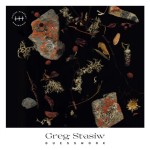
Artist: Greg Stasiw (@)
Title: Guesswork
Format: 12" + Download
Label: Hidden Harmony Recordings (@)
Rated:

Title: Guesswork
Format: 12" + Download
Label: Hidden Harmony Recordings (@)
Rated:
Some artists spend years refining a signature style. Others wander, collect fragments, hesitate, double back, and eventually assemble something that feels less like a statement and more like a map of indecision. Predictably, that second approach tends to be far more interesting.
With "Guesswork", Greg Stasiw turns uncertainty into method. The title is not ironic, nor self-deprecating in the usual performative way. It’s a working principle. The album, released on Hidden Harmony Recordings, gathers around four years of sonic experiments into a sequence that feels at once carefully arranged and quietly provisional, as if each track were still considering whether it wants to exist.
Stasiw’s background reads like a polite refusal to specialize: anthropology, animation, illustration, a life spent moving between cities from New York to Tokyo to Bratislava. His musical formation is equally scattered, beginning with ambient tapes and Windows 98 experiments before drifting through piano lessons, choirs, taiko, metal, and eventually software-based composition. The result is not eclecticism for its own sake, but a kind of porous sensibility. Sounds are not fixed objects here; they are events, spatial suggestions, small provocations.
"Guesswork" originated from an unrealized collaboration with visual artist Philippe Shewchenko, whose imagery nonetheless left a residue strong enough to shape the album’s direction. You can hear that visual impulse throughout: these tracks behave less like songs and more like environments waiting to be entered.
The opening piece, “Signature”, sets the tone with low, patient drones that feel like coordinates rather than declarations. From there, the album drifts into “Field”, where light, buoyant textures suggest a kind of pastoral scene relocated to an unfamiliar planet. It’s calm, but not entirely safe. Something in the timbre keeps the listener slightly off-balance, as if the air itself had been subtly altered.
Throughout the record, Stasiw demonstrates a precise control over sonic space. Notes are placed with restraint, often suspended in near-silence, allowing the listener’s perception to do part of the compositional work. This is not minimalism in the austere, doctrinal sense, but a more intuitive form of reduction. The music removes what it doesn’t urgently need, then waits to see what remains.
“Plant” introduces a fragile piano figure that feels almost too delicate to touch, while “Humidity” expands into a denser ecosystem of percussive echoes and field-like recordings, hinting at unseen lifeforms. There is a recurring sense that each track is a microclimate, governed by its own internal logic.
The shorter interludes - “Distance”, “Arizona”, “Audience” - function like transitional corridors between these environments. Brief, slightly enigmatic, they prevent the album from settling into predictability. Just when you think you’ve understood the terrain, the ground shifts again.
What’s striking is the album’s balance between clarity and ambiguity. The sound design is immaculate: tones are clean, textures finely etched, spatial depth carefully calibrated. And yet the emotional content remains elusive. There is calm here, certainly, but also a faint melancholy, a sense of searching without the promise of resolution.
Stasiw cites influences that might raise an eyebrow if handled less carefully: the environmental serenity of Hiroshi Yoshimura, the weightless lyricism of Harold Budd, the experimental visual sensibility of Norman McLaren, the cosmic drift of Pauline Anna Strom. Fortunately, "Guesswork" avoids the trap of imitation. These references are absorbed rather than displayed, contributing to a soundworld that feels coherent without being easily classifiable.
The longer pieces, such as “Prow” and “Adobe”, allow this approach to fully unfold. Layers accumulate slowly, not in dramatic crescendos but in subtle shifts of density and color. Time stretches. Attention narrows. You begin to notice small details you would normally ignore, which is probably the point.
If there is a quiet irony at the heart of "Guesswork", it lies in how deliberate it all sounds. This is not the work of someone stumbling blindly through possibilities. It is the work of someone who understands that uncertainty, when handled with care, can become a compositional tool. Trial and error, yes. But curated, shaped, and ultimately trusted.
In a musical landscape that often demands clear identities and immediate impact, Stasiw offers something less definitive and more patient: a series of sonic spaces where confusion and clarity coexist without needing to resolve their differences.
Not a bad outcome for guesswork.
With "Guesswork", Greg Stasiw turns uncertainty into method. The title is not ironic, nor self-deprecating in the usual performative way. It’s a working principle. The album, released on Hidden Harmony Recordings, gathers around four years of sonic experiments into a sequence that feels at once carefully arranged and quietly provisional, as if each track were still considering whether it wants to exist.
Stasiw’s background reads like a polite refusal to specialize: anthropology, animation, illustration, a life spent moving between cities from New York to Tokyo to Bratislava. His musical formation is equally scattered, beginning with ambient tapes and Windows 98 experiments before drifting through piano lessons, choirs, taiko, metal, and eventually software-based composition. The result is not eclecticism for its own sake, but a kind of porous sensibility. Sounds are not fixed objects here; they are events, spatial suggestions, small provocations.
"Guesswork" originated from an unrealized collaboration with visual artist Philippe Shewchenko, whose imagery nonetheless left a residue strong enough to shape the album’s direction. You can hear that visual impulse throughout: these tracks behave less like songs and more like environments waiting to be entered.
The opening piece, “Signature”, sets the tone with low, patient drones that feel like coordinates rather than declarations. From there, the album drifts into “Field”, where light, buoyant textures suggest a kind of pastoral scene relocated to an unfamiliar planet. It’s calm, but not entirely safe. Something in the timbre keeps the listener slightly off-balance, as if the air itself had been subtly altered.
Throughout the record, Stasiw demonstrates a precise control over sonic space. Notes are placed with restraint, often suspended in near-silence, allowing the listener’s perception to do part of the compositional work. This is not minimalism in the austere, doctrinal sense, but a more intuitive form of reduction. The music removes what it doesn’t urgently need, then waits to see what remains.
“Plant” introduces a fragile piano figure that feels almost too delicate to touch, while “Humidity” expands into a denser ecosystem of percussive echoes and field-like recordings, hinting at unseen lifeforms. There is a recurring sense that each track is a microclimate, governed by its own internal logic.
The shorter interludes - “Distance”, “Arizona”, “Audience” - function like transitional corridors between these environments. Brief, slightly enigmatic, they prevent the album from settling into predictability. Just when you think you’ve understood the terrain, the ground shifts again.
What’s striking is the album’s balance between clarity and ambiguity. The sound design is immaculate: tones are clean, textures finely etched, spatial depth carefully calibrated. And yet the emotional content remains elusive. There is calm here, certainly, but also a faint melancholy, a sense of searching without the promise of resolution.
Stasiw cites influences that might raise an eyebrow if handled less carefully: the environmental serenity of Hiroshi Yoshimura, the weightless lyricism of Harold Budd, the experimental visual sensibility of Norman McLaren, the cosmic drift of Pauline Anna Strom. Fortunately, "Guesswork" avoids the trap of imitation. These references are absorbed rather than displayed, contributing to a soundworld that feels coherent without being easily classifiable.
The longer pieces, such as “Prow” and “Adobe”, allow this approach to fully unfold. Layers accumulate slowly, not in dramatic crescendos but in subtle shifts of density and color. Time stretches. Attention narrows. You begin to notice small details you would normally ignore, which is probably the point.
If there is a quiet irony at the heart of "Guesswork", it lies in how deliberate it all sounds. This is not the work of someone stumbling blindly through possibilities. It is the work of someone who understands that uncertainty, when handled with care, can become a compositional tool. Trial and error, yes. But curated, shaped, and ultimately trusted.
In a musical landscape that often demands clear identities and immediate impact, Stasiw offers something less definitive and more patient: a series of sonic spaces where confusion and clarity coexist without needing to resolve their differences.
Not a bad outcome for guesswork.
Stepmother: Bring Me Flowers and Tell Me You Love Me

Artist: Stepmother (@)
Title: Bring Me Flowers and Tell Me You Love Me
Format: CD & 12" + Download
Label: Megaphone/Knock'em Dead Records (@)
Rated:
Title: Bring Me Flowers and Tell Me You Love Me
Format: CD & 12" + Download
Label: Megaphone/Knock'em Dead Records (@)
Rated:
Some bands reunite because nostalgia pays the bills. Others reappear because an unfinished conversation refuses to stay quiet. Stepmother clearly belongs to the second category, which is both admirable and slightly dangerous. Conversations left open for ten years tend to accumulate strange ideas in the meantime.
"Bring Me Flowers and Tell Me You Love Me", released via Megaphone Records and Knock’em Dead Records, feels exactly like that: a backlog of half-formed thoughts, theatrical impulses, and stylistic detours finally allowed to collide in one place. The original trio - Lukas Simonis, Jeroen Visser, and Bill Gilonis - already carried decades of post-punk and experimental baggage from projects orbiting bands like The Work and the broader European underground. But the real catalyst here is the arrival of Tisa World, whose voice doesn’t simply complete the picture. It redraws it entirely.
Stepmother has always operated in that slightly suspicious zone where genres are treated as optional accessories. On their debut, the band flirted with post-punk, prog, and absurdist pop. This time, the palette expands further: jagged guitars, off-kilter electronics, ghostly horns, and rhythms that seem to change direction out of mild impatience. Somewhere in the background, the mischievous spirit of Bonzo Dog Doo-Dah Band still lingers, reminding everyone not to take coherence too seriously.
The album opens with “Drunk”, which wastes no time establishing a tone of controlled instability. The structure feels intentionally precarious, as if it might collapse but never quite does. “Great Trading Days II” follows with a sharper edge, its rhythmic backbone pushing forward while the arrangement keeps slipping sideways.
Then comes “Goblin Market”, a brief, almost theatrical vignette that hints at the band’s fondness for surreal storytelling. It’s one of several moments where the record behaves less like an album and more like a sequence of small stage scenes. Characters appear, gestures are made, and before you can fully understand them, the curtain moves again.
At the center of all this, Tisa World’s voice acts as both guide and disruptor. She doesn’t simply sing over the music; she inhabits it, bending phrasing and tone in ways that feel simultaneously precise and unpredictable. On “Insomnia”, her delivery stretches the track into a tense, nocturnal space, while “Well to Die In” - featuring cello by Nina Hitz - introduces a darker, almost fragile atmosphere.
The band’s collective nature remains intact. This is not a singer-fronted project in the traditional sense. Instead, voices, instruments, and textures circulate roles freely. “I Am a Gambler” exemplifies this dynamic: a restless piece where narrative fragments, rhythmic shifts, and instrumental interplay refuse to settle into a single hierarchy.
Shorter tracks like “Bevredig Mij”, “Shadow”, and “Gaslighting” function as strange interjections, almost like marginal notes scribbled in the album’s margins. They interrupt the flow just enough to prevent any sense of linear progression. If you were hoping for a tidy arc, this record politely declines.
There is, however, a coherence beneath the apparent chaos. It lies in the band’s shared sensibility: a taste for the slightly absurd, the theatrically skewed, the emotionally ambiguous. Even when the music veers into playful territory, there’s an undercurrent of tension, a sense that something slightly off is being revealed.
The production reinforces this. Nothing feels overly polished. Edges remain rough, textures collide rather than blend seamlessly, and the overall sound retains a kind of live-wire immediacy. It’s less about perfection and more about presence.
What makes "Bring Me Flowers and Tell Me You Love Me" work is precisely its refusal to behave like a conventional “comeback” album. It doesn’t summarize the band’s past, nor does it attempt to modernize it for contemporary expectations. Instead, it continues the conversation as if no time had passed, while quietly acknowledging that everything has changed.
Which is, admittedly, a complicated way of making music.
But Stepmother seems comfortable with complications. And in a landscape increasingly optimized for clarity and efficiency, their tangled, theatrical, slightly unhinged approach feels oddly refreshing.
"Bring Me Flowers and Tell Me You Love Me", released via Megaphone Records and Knock’em Dead Records, feels exactly like that: a backlog of half-formed thoughts, theatrical impulses, and stylistic detours finally allowed to collide in one place. The original trio - Lukas Simonis, Jeroen Visser, and Bill Gilonis - already carried decades of post-punk and experimental baggage from projects orbiting bands like The Work and the broader European underground. But the real catalyst here is the arrival of Tisa World, whose voice doesn’t simply complete the picture. It redraws it entirely.
Stepmother has always operated in that slightly suspicious zone where genres are treated as optional accessories. On their debut, the band flirted with post-punk, prog, and absurdist pop. This time, the palette expands further: jagged guitars, off-kilter electronics, ghostly horns, and rhythms that seem to change direction out of mild impatience. Somewhere in the background, the mischievous spirit of Bonzo Dog Doo-Dah Band still lingers, reminding everyone not to take coherence too seriously.
The album opens with “Drunk”, which wastes no time establishing a tone of controlled instability. The structure feels intentionally precarious, as if it might collapse but never quite does. “Great Trading Days II” follows with a sharper edge, its rhythmic backbone pushing forward while the arrangement keeps slipping sideways.
Then comes “Goblin Market”, a brief, almost theatrical vignette that hints at the band’s fondness for surreal storytelling. It’s one of several moments where the record behaves less like an album and more like a sequence of small stage scenes. Characters appear, gestures are made, and before you can fully understand them, the curtain moves again.
At the center of all this, Tisa World’s voice acts as both guide and disruptor. She doesn’t simply sing over the music; she inhabits it, bending phrasing and tone in ways that feel simultaneously precise and unpredictable. On “Insomnia”, her delivery stretches the track into a tense, nocturnal space, while “Well to Die In” - featuring cello by Nina Hitz - introduces a darker, almost fragile atmosphere.
The band’s collective nature remains intact. This is not a singer-fronted project in the traditional sense. Instead, voices, instruments, and textures circulate roles freely. “I Am a Gambler” exemplifies this dynamic: a restless piece where narrative fragments, rhythmic shifts, and instrumental interplay refuse to settle into a single hierarchy.
Shorter tracks like “Bevredig Mij”, “Shadow”, and “Gaslighting” function as strange interjections, almost like marginal notes scribbled in the album’s margins. They interrupt the flow just enough to prevent any sense of linear progression. If you were hoping for a tidy arc, this record politely declines.
There is, however, a coherence beneath the apparent chaos. It lies in the band’s shared sensibility: a taste for the slightly absurd, the theatrically skewed, the emotionally ambiguous. Even when the music veers into playful territory, there’s an undercurrent of tension, a sense that something slightly off is being revealed.
The production reinforces this. Nothing feels overly polished. Edges remain rough, textures collide rather than blend seamlessly, and the overall sound retains a kind of live-wire immediacy. It’s less about perfection and more about presence.
What makes "Bring Me Flowers and Tell Me You Love Me" work is precisely its refusal to behave like a conventional “comeback” album. It doesn’t summarize the band’s past, nor does it attempt to modernize it for contemporary expectations. Instead, it continues the conversation as if no time had passed, while quietly acknowledging that everything has changed.
Which is, admittedly, a complicated way of making music.
But Stepmother seems comfortable with complications. And in a landscape increasingly optimized for clarity and efficiency, their tangled, theatrical, slightly unhinged approach feels oddly refreshing.
XII Sound: Tube V

Artist: XII Sound
Title: Tube V
Format: Download Only (MP3 + Lossless)
Label: Driftworks/Audiobulb (@)
Rated:

Title: Tube V
Format: Download Only (MP3 + Lossless)
Label: Driftworks/Audiobulb (@)
Rated:
Public transport is rarely described as a site of intimacy. More often it’s a shared inconvenience, a moving container of mild irritation and suppressed eye contact. Yet for Alice DeVille, working under the name XII Sound, the London Underground becomes something stranger: a nervous system, a memory archive, and, inconveniently, a source of anxiety.
"Tube V", released as part of the SITE series by Driftworks and Audiobulb, is built from that contradiction. Fear and familiarity occupy the same acoustic space, and instead of resolving the tension, DeVille leans into it. The result is not quite a document, not quite a composition. More like a set of controlled exposures, where the artist repeatedly enters the environment that unsettles her and listens until it begins to change shape.
DeVille’s background as an opera singer and flautist is not incidental here. You can hear it in the way she treats sound as something physical, embodied, almost architectural. But instead of projecting into grand halls, her voice folds itself into tunnels, compressing, echoing, blending with mechanical noise. At times, she quite literally duets with the infrastructure. Which sounds poetic until you realize the infrastructure is a train braking at high frequency.
The opening sequence - “Tube I” through “Tube IV” - functions like a gradual descent. Snippets of announcements, metallic rhythms, fragments of conversation, and processed environmental sounds begin to overlap. DeVille introduces natural elements—birdsong, water, subtle field textures—not as contrast but as camouflage. The boundaries blur. Is that a train or a breath? A rail screech or a manipulated voice? The uncertainty is deliberate, and slightly disorienting.
By the time we reach “Tube V”, the album’s conceptual core becomes clearer. The space is no longer purely external. The tube has been internalized, transformed into a kind of resonant chamber where memory, panic, and nostalgia circulate. The childhood recollection of falling asleep to train sounds coexists with the adult experience of claustrophobia. Comfort and dread share the same frequency band.
The closing piece, “Tube I–V”, gathers these fragments into a longer form, less a summary than a reconfiguration. Motifs reappear, textures overlap more densely, and the listening experience becomes almost spatial. You don’t just hear the work; you seem to move through it, as if the tunnels had been reassembled inside your head.
Technically, the album sits somewhere between microsound, ambient composition, and electroacoustic collage. But labels feel slightly inadequate here. What matters more is the method: recording, sampling, reshaping, and recontextualizing everyday sounds until they reveal hidden emotional contours. DeVille’s use of tools like Ableton’s Simpler is not about virtuosity but about transformation. The mundane becomes unstable, then strangely expressive.
There’s also an undercurrent of ecological thinking running through the work. By blending natural and industrial sounds so thoroughly, DeVille resists the easy binary between “organic” and “artificial”. The city is not separate from nature; it is another ecosystem, just louder and less forgiving. "Tube V" suggests that reconnection might not come from escaping these environments, but from listening to them more carefully. Which is a slightly uncomfortable proposition, given how most people experience rush hour.
What prevents the album from becoming a purely conceptual exercise is its emotional honesty. The fear is not aestheticized into something neat. It lingers, unresolved. But alongside it, there is curiosity, even tenderness. The tube is not only a site of panic; it is also a place of memory, of rhythm, of accidental music.
In the end, "Tube V" feels like a negotiation. Between body and architecture, between control and overwhelm, between the human voice and the mechanical systems that surround it.
Not the most relaxing commute you’ll ever take. But certainly one of the more revealing.
"Tube V", released as part of the SITE series by Driftworks and Audiobulb, is built from that contradiction. Fear and familiarity occupy the same acoustic space, and instead of resolving the tension, DeVille leans into it. The result is not quite a document, not quite a composition. More like a set of controlled exposures, where the artist repeatedly enters the environment that unsettles her and listens until it begins to change shape.
DeVille’s background as an opera singer and flautist is not incidental here. You can hear it in the way she treats sound as something physical, embodied, almost architectural. But instead of projecting into grand halls, her voice folds itself into tunnels, compressing, echoing, blending with mechanical noise. At times, she quite literally duets with the infrastructure. Which sounds poetic until you realize the infrastructure is a train braking at high frequency.
The opening sequence - “Tube I” through “Tube IV” - functions like a gradual descent. Snippets of announcements, metallic rhythms, fragments of conversation, and processed environmental sounds begin to overlap. DeVille introduces natural elements—birdsong, water, subtle field textures—not as contrast but as camouflage. The boundaries blur. Is that a train or a breath? A rail screech or a manipulated voice? The uncertainty is deliberate, and slightly disorienting.
By the time we reach “Tube V”, the album’s conceptual core becomes clearer. The space is no longer purely external. The tube has been internalized, transformed into a kind of resonant chamber where memory, panic, and nostalgia circulate. The childhood recollection of falling asleep to train sounds coexists with the adult experience of claustrophobia. Comfort and dread share the same frequency band.
The closing piece, “Tube I–V”, gathers these fragments into a longer form, less a summary than a reconfiguration. Motifs reappear, textures overlap more densely, and the listening experience becomes almost spatial. You don’t just hear the work; you seem to move through it, as if the tunnels had been reassembled inside your head.
Technically, the album sits somewhere between microsound, ambient composition, and electroacoustic collage. But labels feel slightly inadequate here. What matters more is the method: recording, sampling, reshaping, and recontextualizing everyday sounds until they reveal hidden emotional contours. DeVille’s use of tools like Ableton’s Simpler is not about virtuosity but about transformation. The mundane becomes unstable, then strangely expressive.
There’s also an undercurrent of ecological thinking running through the work. By blending natural and industrial sounds so thoroughly, DeVille resists the easy binary between “organic” and “artificial”. The city is not separate from nature; it is another ecosystem, just louder and less forgiving. "Tube V" suggests that reconnection might not come from escaping these environments, but from listening to them more carefully. Which is a slightly uncomfortable proposition, given how most people experience rush hour.
What prevents the album from becoming a purely conceptual exercise is its emotional honesty. The fear is not aestheticized into something neat. It lingers, unresolved. But alongside it, there is curiosity, even tenderness. The tube is not only a site of panic; it is also a place of memory, of rhythm, of accidental music.
In the end, "Tube V" feels like a negotiation. Between body and architecture, between control and overwhelm, between the human voice and the mechanical systems that surround it.
Not the most relaxing commute you’ll ever take. But certainly one of the more revealing.
Elizabeth Davis: Flowers
There are songs that refuse to die. They get covered, translated, simplified, turned into background nostalgia for documentaries about a past everyone claims to understand. And then someone comes along, takes the original apart like a broken watch, and suddenly the mechanism starts ticking again, louder and slightly unsettling.
With "Flowers", Elizabeth Davis does exactly that to Pete Seeger’s “Where Have All the Flowers Gone”. Not a cover, not a tribute. More like a forensic investigation conducted with scissors, tape loops, and a mild distrust of linear history.
Released by South of North, the EP emerges from a residency at Sternhagen Gut, a rural retreat run by Gudrun Gut and Thomas Fehlmann. You might imagine quiet fields, long walks, maybe some polite reflection. Instead, Davis uses that isolation to dismantle a protest song loaded with decades of political and emotional residue. Apparently, the countryside is excellent for controlled sonic disassembly.
Davis’ background helps explain the method. Before operating under her own name and the alias Wilted Woman, she moved through free jazz, punk, and experimental electronics, developing a practice that balances algorithmic processes with tactile, almost fragile sound design. Her now-concluded radio show "Deep Puddle" already hinted at this tendency: narration, collage, fragmentation. "Flowers" feels like a natural extension, only more focused, more precise in its quiet disruptions.
Each of the six tracks starts from Seeger’s melody and lyrical structure, then proceeds to gently sabotage it.
“All in Uniform” opens with a sense of recognition that quickly dissolves. Familiar melodic contours flicker beneath layers of vocal loops and digital residue, like a memory trying to stabilize but failing. The original song’s anti-war sentiment is still there, but it no longer speaks in clear slogans. Instead, it murmurs, hesitates, fragments.
“Wo sind sie geblieben” shifts into a linguistic and cultural echo chamber. German phrases intersect with processed vocal textures, reminding you that translation is never neutral. Meaning slips. Words migrate. History refuses to sit still.
Across the EP, Davis employs cut-up techniques reminiscent of William S. Burroughs and Brion Gysin, slicing and reassembling lyrics into new constellations. But where those methods often lean toward chaos, Davis maintains a curious balance. There is structure here, even melody. Just enough to lure you in before the ground shifts slightly under your feet.
“Ever Learn” and “Young Ones” flirt with something almost like songcraft. Hooks appear, rhythms stabilize, and for a moment you think you’ve found a center. Then the textures begin to glitch, voices multiply, and the composition gently reminds you that repetition is not the same as understanding. History repeats, yes. But it also mutates.
On “Long Time Passes”, time itself becomes elastic. The pacing stretches, the sonic elements drift apart, and the familiar refrain dissolves into a kind of temporal fog. It’s less a reinterpretation than a meditation on duration: how long does it take for meaning to erode? Apparently not that long.
By the closing track, “Gone”, the source material feels both distant and eerily present. The melody has been thinned out, almost ghost-like, while the surrounding textures hum with quiet tension. It’s as if the song has been reduced to its emotional residue, stripped of narrative clarity but not of impact.
What makes "Flowers" compelling is not just its conceptual premise but its restraint. Davis resists the temptation to overwhelm. The sound design is detailed yet spacious, the compositions carefully paced. Even in its more abstract moments, the EP retains a sense of intimacy, as if these transformations were happening in a small room rather than an academic laboratory.
The influence of her conversations with Gudrun Gut is subtly audible here: a dialogue between experimentation and accessibility, between avant-garde instincts and the gravitational pull of melody. The result is a work that never fully settles into either territory, which is precisely why it remains engaging.
At its core, "Flowers" asks an uncomfortable question: what happens when a protest song becomes historical artifact? Do we preserve it, repeat it, or dismantle it to see if it still breathes?
Davis chooses dismantling. Carefully, almost tenderly.
And in the process, she reveals that beneath the familiar refrain lies something less stable, more fragile, and perhaps more honest than we remembered.
With "Flowers", Elizabeth Davis does exactly that to Pete Seeger’s “Where Have All the Flowers Gone”. Not a cover, not a tribute. More like a forensic investigation conducted with scissors, tape loops, and a mild distrust of linear history.
Released by South of North, the EP emerges from a residency at Sternhagen Gut, a rural retreat run by Gudrun Gut and Thomas Fehlmann. You might imagine quiet fields, long walks, maybe some polite reflection. Instead, Davis uses that isolation to dismantle a protest song loaded with decades of political and emotional residue. Apparently, the countryside is excellent for controlled sonic disassembly.
Davis’ background helps explain the method. Before operating under her own name and the alias Wilted Woman, she moved through free jazz, punk, and experimental electronics, developing a practice that balances algorithmic processes with tactile, almost fragile sound design. Her now-concluded radio show "Deep Puddle" already hinted at this tendency: narration, collage, fragmentation. "Flowers" feels like a natural extension, only more focused, more precise in its quiet disruptions.
Each of the six tracks starts from Seeger’s melody and lyrical structure, then proceeds to gently sabotage it.
“All in Uniform” opens with a sense of recognition that quickly dissolves. Familiar melodic contours flicker beneath layers of vocal loops and digital residue, like a memory trying to stabilize but failing. The original song’s anti-war sentiment is still there, but it no longer speaks in clear slogans. Instead, it murmurs, hesitates, fragments.
“Wo sind sie geblieben” shifts into a linguistic and cultural echo chamber. German phrases intersect with processed vocal textures, reminding you that translation is never neutral. Meaning slips. Words migrate. History refuses to sit still.
Across the EP, Davis employs cut-up techniques reminiscent of William S. Burroughs and Brion Gysin, slicing and reassembling lyrics into new constellations. But where those methods often lean toward chaos, Davis maintains a curious balance. There is structure here, even melody. Just enough to lure you in before the ground shifts slightly under your feet.
“Ever Learn” and “Young Ones” flirt with something almost like songcraft. Hooks appear, rhythms stabilize, and for a moment you think you’ve found a center. Then the textures begin to glitch, voices multiply, and the composition gently reminds you that repetition is not the same as understanding. History repeats, yes. But it also mutates.
On “Long Time Passes”, time itself becomes elastic. The pacing stretches, the sonic elements drift apart, and the familiar refrain dissolves into a kind of temporal fog. It’s less a reinterpretation than a meditation on duration: how long does it take for meaning to erode? Apparently not that long.
By the closing track, “Gone”, the source material feels both distant and eerily present. The melody has been thinned out, almost ghost-like, while the surrounding textures hum with quiet tension. It’s as if the song has been reduced to its emotional residue, stripped of narrative clarity but not of impact.
What makes "Flowers" compelling is not just its conceptual premise but its restraint. Davis resists the temptation to overwhelm. The sound design is detailed yet spacious, the compositions carefully paced. Even in its more abstract moments, the EP retains a sense of intimacy, as if these transformations were happening in a small room rather than an academic laboratory.
The influence of her conversations with Gudrun Gut is subtly audible here: a dialogue between experimentation and accessibility, between avant-garde instincts and the gravitational pull of melody. The result is a work that never fully settles into either territory, which is precisely why it remains engaging.
At its core, "Flowers" asks an uncomfortable question: what happens when a protest song becomes historical artifact? Do we preserve it, repeat it, or dismantle it to see if it still breathes?
Davis chooses dismantling. Carefully, almost tenderly.
And in the process, she reveals that beneath the familiar refrain lies something less stable, more fragile, and perhaps more honest than we remembered.
Bellbird: The Call
Birds have always been generous with their music. Humans, meanwhile, keep trying to translate it into saxophones, drums, and theoretical frameworks. Sometimes the results are embarrassing. Occasionally they’re glorious. "The Call", the second album by Montréal’s Bellbird, leans confidently toward the latter.
Released by the famously adventurous Constellation Records, the record arrives with the sort of pedigree that might make lesser bands nervous. The label’s catalogue has long housed artists who treat genre boundaries as polite suggestions rather than rules. Bellbird fits comfortably in that ecosystem, joining a lineage that includes figures like Matana Roberts and the sprawling ensembles orbiting the Montréal experimental scene.
The quartet itself emerged from a slightly romantic origin story: pandemic-era park jams around the city’s vibrant improvisational circles, particularly those connected to the community hub Café Résonance. From those outdoor beginnings, the group gradually solidified into a formidable collective voice. The lineup is deceptively simple: Allison Burik on alto saxophone and bass clarinet, Claire Devlin on tenor sax, Eli Davidovici on bass, and Mili Hong on drums. No piano, no guitar. No comfortable harmonic cushion. Just four musicians negotiating space in real time, like birds sharing the same thermal current.
That absence of a chordal instrument becomes the group’s secret weapon. Harmony in Bellbird doesn’t arrive pre-packaged; it emerges through friction. Two saxophones spiral around each other, the bass bends and bows its way into unexpected colors, and the drums behave less like timekeepers than cartographers mapping sudden rhythmic terrain.
The album’s title draws from the white bellbird, a South American species famous for producing one of the loudest calls in the animal kingdom. Bellbird the band takes that natural signal not as a gimmick but as a conceptual starting point. Throughout the record, animal communication becomes a metaphor for collective expression: sound as announcement, warning, invitation.
The opener, “Firefly Pharology”, wastes little time establishing the quartet’s method. Short melodic fragments ricochet between horns while Hong’s drums crack and tumble with punkish impatience. The music carries traces of jazz history, sure, but it refuses to sit politely beside it. You can hear distant echoes of Charles Mingus in the muscular ensemble writing, flashes of Eric Dolphy in the woodwinds’ acrobatic dialogue, and perhaps the structural looseness of Ornette Coleman’s harmolodic experiments. Yet Bellbird doesn’t sound like revivalists. The band treats those influences the way a river treats stones: shaping them through movement rather than preserving them in glass.
Tracks such as “Murmuration” and “Phthalo Green” reveal a different side of the ensemble. Here the quartet leans into subtle melodic figures and patient development, allowing small motifs to drift and regroup like flocks of birds changing direction mid-air. The music breathes. It pauses. Occasionally it explodes again, because restraint only works if someone eventually breaks it.
The most explicitly lyrical moment arrives with “Soft Animal”, inspired by a poem by Mary Oliver. The piece unfolds with disarming simplicity, reminding listeners that experimental jazz doesn’t always need to prove its intellectual credentials. Sometimes a melody can simply exist, fragile and unguarded, like an animal stepping cautiously into a clearing.
Elsewhere, the album’s political consciousness surfaces without grandstanding. “Blowing on Embers” carries a dedication to Palestinian solidarity, its slow-burning tension building through layered improvisation rather than slogans. The band’s broader ecological concerns also run quietly through the music: recordings and transcriptions of natural sounds influenced the compositional process, suggesting a worldview where human music sits inside a wider sonic ecosystem.
The title track, “The Call”, acts as the album’s gravitational centre. Built partly from the analyzed cry of the white bellbird itself, the piece transforms that natural signal into a jagged yet strangely jubilant ensemble statement. It feels like a collective shout across a valley. Not angry, exactly. More like a declaration that the band has arrived at its own language.
Production-wise, the recording at Montréal’s Hotel2Tango Studio preserves the rawness of Bellbird’s live energy. Engineer Sylvaine Arnaud resists the temptation to polish the music into sterile perfection. Drums hit hard, reeds squeal when they need to, and the room itself occasionally seems to lean into the performance.
What ultimately distinguishes "The Call" is the group’s insistence on collective identity. Jazz history often revolves around charismatic bandleaders and virtuosic soloists. Bellbird chooses a different model: four musicians listening fiercely to one another, shaping form together, allowing the music to move like a living organism rather than a hierarchy.
In a cultural moment saturated with individual branding and algorithmic playlists, that kind of musical democracy feels almost radical.
And somewhere, perhaps in a rainforest far away, an actual bellbird is screaming into the canopy with absolute conviction. Bellbird the band appears to have heard it.
Released by the famously adventurous Constellation Records, the record arrives with the sort of pedigree that might make lesser bands nervous. The label’s catalogue has long housed artists who treat genre boundaries as polite suggestions rather than rules. Bellbird fits comfortably in that ecosystem, joining a lineage that includes figures like Matana Roberts and the sprawling ensembles orbiting the Montréal experimental scene.
The quartet itself emerged from a slightly romantic origin story: pandemic-era park jams around the city’s vibrant improvisational circles, particularly those connected to the community hub Café Résonance. From those outdoor beginnings, the group gradually solidified into a formidable collective voice. The lineup is deceptively simple: Allison Burik on alto saxophone and bass clarinet, Claire Devlin on tenor sax, Eli Davidovici on bass, and Mili Hong on drums. No piano, no guitar. No comfortable harmonic cushion. Just four musicians negotiating space in real time, like birds sharing the same thermal current.
That absence of a chordal instrument becomes the group’s secret weapon. Harmony in Bellbird doesn’t arrive pre-packaged; it emerges through friction. Two saxophones spiral around each other, the bass bends and bows its way into unexpected colors, and the drums behave less like timekeepers than cartographers mapping sudden rhythmic terrain.
The album’s title draws from the white bellbird, a South American species famous for producing one of the loudest calls in the animal kingdom. Bellbird the band takes that natural signal not as a gimmick but as a conceptual starting point. Throughout the record, animal communication becomes a metaphor for collective expression: sound as announcement, warning, invitation.
The opener, “Firefly Pharology”, wastes little time establishing the quartet’s method. Short melodic fragments ricochet between horns while Hong’s drums crack and tumble with punkish impatience. The music carries traces of jazz history, sure, but it refuses to sit politely beside it. You can hear distant echoes of Charles Mingus in the muscular ensemble writing, flashes of Eric Dolphy in the woodwinds’ acrobatic dialogue, and perhaps the structural looseness of Ornette Coleman’s harmolodic experiments. Yet Bellbird doesn’t sound like revivalists. The band treats those influences the way a river treats stones: shaping them through movement rather than preserving them in glass.
Tracks such as “Murmuration” and “Phthalo Green” reveal a different side of the ensemble. Here the quartet leans into subtle melodic figures and patient development, allowing small motifs to drift and regroup like flocks of birds changing direction mid-air. The music breathes. It pauses. Occasionally it explodes again, because restraint only works if someone eventually breaks it.
The most explicitly lyrical moment arrives with “Soft Animal”, inspired by a poem by Mary Oliver. The piece unfolds with disarming simplicity, reminding listeners that experimental jazz doesn’t always need to prove its intellectual credentials. Sometimes a melody can simply exist, fragile and unguarded, like an animal stepping cautiously into a clearing.
Elsewhere, the album’s political consciousness surfaces without grandstanding. “Blowing on Embers” carries a dedication to Palestinian solidarity, its slow-burning tension building through layered improvisation rather than slogans. The band’s broader ecological concerns also run quietly through the music: recordings and transcriptions of natural sounds influenced the compositional process, suggesting a worldview where human music sits inside a wider sonic ecosystem.
The title track, “The Call”, acts as the album’s gravitational centre. Built partly from the analyzed cry of the white bellbird itself, the piece transforms that natural signal into a jagged yet strangely jubilant ensemble statement. It feels like a collective shout across a valley. Not angry, exactly. More like a declaration that the band has arrived at its own language.
Production-wise, the recording at Montréal’s Hotel2Tango Studio preserves the rawness of Bellbird’s live energy. Engineer Sylvaine Arnaud resists the temptation to polish the music into sterile perfection. Drums hit hard, reeds squeal when they need to, and the room itself occasionally seems to lean into the performance.
What ultimately distinguishes "The Call" is the group’s insistence on collective identity. Jazz history often revolves around charismatic bandleaders and virtuosic soloists. Bellbird chooses a different model: four musicians listening fiercely to one another, shaping form together, allowing the music to move like a living organism rather than a hierarchy.
In a cultural moment saturated with individual branding and algorithmic playlists, that kind of musical democracy feels almost radical.
And somewhere, perhaps in a rainforest far away, an actual bellbird is screaming into the canopy with absolute conviction. Bellbird the band appears to have heard it.