
Tuesday, October 27, 2026
Browse by Genre
Industrial Music / Industrial Metal / Aggro Industrial / Electro Metal
Industrial Noise / Power Noise / Harsh Noise
Synth Pop / Electro Pop / Synth-Electronica
Techno / Trance / Goa / Drum'n'Bass / Jungle / Tribal / Trip-Hop
Ambient / Electronica / Ethereal / Dub / Soundscapes / Abstract
Experimental / Avantgarde / Weird & Wired / Glitch / Noise / Field Recording
Dark / Gothic / Wave / New Wave / Dark Wave / Industrial Gothic
New Music / Downtown / Avantgarde Jazz / New Classical / World
Search Reviews
Music Reviews
Jeff Mills: The Trip To Vega
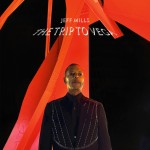
Humanity has survived volcanic eruptions, pandemics, wars, shortages, electrical collapse and the usual assortment of disasters that make civilisation look like a badly managed group project. In Jeff Mills’s "The Trip To Vega", however, the final straw is sound itself. Set on September 23, 2097, the album imagines a planet whose shifting tectonic plates generate a destructive harmonic frequency, gradually robbing living beings of their senses and cognitive abilities. Earth has become uninhabitable, and the only remaining option is to pack a few million people into enormous spacecraft and head for Vega, a star system 25.3 light-years away. There is no last-minute scientific breakthrough, no heroic attempt to save the old home, no inspirational speech about humanity pulling together. The decision has been made. All that remains is the journey.
It is a premise that suits Mills remarkably well. Since emerging from Detroit’s techno scene in the late 1980s, first as the formidable DJ known as The Wizard and then as a founding member of Underground Resistance, he has treated electronic music as more than a mechanism for moving bodies around a room. His work has repeatedly ventured into science fiction, cinema, astronomy and speculative futures, with projects inspired by Fritz Lang’s "Metropolis" and the continuing exploration of outer space in releases such as "The Trip: Enter The Black Hole". Through Axis Records, the label he founded in 1992, Mills has cultivated a musical universe in which techno can function as a narrative instrument, a form of abstract storytelling that does not require actors to explain what the audience should feel. "The Trip To Vega" continues this trajectory, but its imagined catastrophe gives the cosmic fascination a distinctly terrestrial sting. Space is no longer simply somewhere to explore. It is the emergency exit.
The album’s most intriguing conceptual decision is that the catastrophe arrives through a physical phenomenon that music itself might seem uniquely equipped to represent. A harmful frequency is eroding the senses, yet Mills responds not with an obvious wall of punishing noise, but with a carefully shaped electronic environment. The production reportedly avoids drum machines altogether, arranging individual percussion sounds to suggest the presence of a rhythmic instrument without relying on one. It also places much of its emphasis on mid, low and subsonic frequencies, deliberately reducing the prominence of the high end in keeping with the fictional damage inflicted on human hearing. This is not merely an album with a science-fiction story attached to it; the story informs the way the music has been constructed. The distinction matters. Plenty of electronic records borrow the vocabulary of space, adding a few synthesiser bleeps and an evocative title before returning to familiar business. Mills makes the premise part of the sound’s internal logic.
“Destination Bright Star” establishes the departure with a sense of measured purpose. There is no need for a frantic launch sequence or the cinematic equivalent of a countdown shouted by someone wearing a headset. The music advances with a restrained, deliberate quality, suggesting a voyage whose necessity has already settled every argument. “Ten Cycles” develops the sense of movement through repetition and subtle shifts in the electronic texture. Here, cycles need not mean a dance floor’s reassuring return to the downbeat; they can suggest the mechanics of a vast machine carrying an entire species away from its place of origin. The pulse is present, but its function is less celebratory than navigational.
“Omega Dust Rings” and “Lyra” extend the journey into more elusive territory. Rather than painting a postcard of the cosmos, Mills evokes distance through spacious arrangements, suspended tones and small changes in sonic density. The music often feels as though it is withholding information, leaving the listener to imagine the enormous, indifferent geography beyond the spacecraft’s windows. “Lyra”, approaching ten minutes, has room to unfold without being obliged to produce a dramatic event every thirty seconds. That patience is essential to the album’s atmosphere: the universe is not a theme park designed to keep passengers entertained, and even an interstellar migration will contain stretches when nothing happens except the passage of time and the faint suspicion that the destination may be no more hospitable than the place left behind.
“Equinox” and “Twenty-Five Light Years Away” bring the concept’s human scale into focus. The latter title makes the distance brutally tangible. Twenty-five light-years is not a scenic detour, and a population fleeing ecological collapse cannot exactly pull over at a service station if the trip becomes uncomfortable. Mills’s music treats this expanse less as an opportunity for heroic spectacle than as an exercise in suspension and endurance. There is a curious emotional restraint here. The departure of millions of people from Earth could inspire a grandiose orchestral lament, complete with strings straining under the weight of human destiny. Instead, Mills leaves much of the drama implicit, allowing the spaces between sounds to carry some of the emotional burden. The absence of overt sentiment does not make the scenario less bleak; it makes it harder to escape.
The album’s most imposing statement arrives with “March Of The Purple Orbs”, which stretches across more than fourteen minutes. Its title sounds like an expedition designed by an especially eccentric planetary cartographer, but the extended duration gives Mills the opportunity to work on a broader scale. Repetition becomes a means of establishing mass and momentum, while the track’s gradual development suggests movement through an environment that cannot be comprehended in a single glance. The march is less a military parade than a procession of objects whose purpose and destination remain obscure. It also provides a useful counterweight to the more delicate passages: the voyage is not exclusively contemplative, and the machinery of survival has a weight of its own.
“Terraform” introduces the possibility of making a new home, though the word carries its own uncomfortable implication. Humanity has already transformed Earth into a place where life can no longer comfortably exist; now it must attempt to alter another world, presumably with the conviction that this time things will turn out differently. The optimism is understandable, but not entirely reassuring. “Alpha Quadrant” returns to the navigational language of science fiction, its electronic structures suggesting systems and coordinates rather than a conventional destination song. By “Orbiting The Star”, the expedition appears to have reached the threshold of its objective, yet arrival does not necessarily equal resolution. “Circumstellar Debris”, the brief final track, leaves the album with the residue of movement: fragments, remnants and the material left over after a long passage through space. It is a fittingly ambiguous ending for a story that offers no guarantee that escape will lead to salvation.
Across its eleven tracks and three vinyl discs, "The Trip To Vega" occupies the territory between ambient electronics, experimental techno and cinematic composition. Those approaching Mills primarily for the relentless physicality of his classic club work may find little here that resembles a conventional floor-filler. That is not a failure to deliver the expected goods so much as a reminder that Mills has never been content to remain within one definition of techno. His more abstract projects have consistently explored how electronic sound can carry ideas beyond the club, and this album belongs to that longer inquiry.
The approach does have its limitations. The album’s restrained pacing and carefully maintained atmosphere can occasionally make individual pieces feel like sections of one long composition rather than sharply differentiated songs. The concept supplies a strong framework, but it can also encourage the music to remain at a similar emotional altitude for extended stretches. Listeners who require frequent rhythmic payoffs or unmistakable melodic landmarks may find the journey somewhat uneventful. Yet this relative lack of incident also reflects the album’s central idea: a voyage lasting decades cannot be reduced to a succession of spectacular discoveries, and the psychological reality of leaving an entire planet behind is unlikely to resolve itself through a satisfying drop.
There is a final irony in Mills’s scenario. Humanity escapes a world rendered hostile by an uncontrollable natural process, but the album never promises that the new home will provide a clean beginning. Vega is a destination, not a moral lesson, and the story is explicitly framed as a consequence rather than a cautionary tale. That refusal to deliver a reassuring message gives the music an unusual seriousness. The future is not presented as a puzzle that technological ingenuity will inevitably solve; it is a condition people must endure, with whatever remains of their senses, memories and capacity for hope.
"The Trip To Vega" is therefore less a soundtrack to triumphant space exploration than a meditation on displacement, adaptation and the uneasy difference between survival and rescue. Mills builds a world in which rhythm can suggest propulsion, silence can imply distance, and low frequencies become the acoustic footprint of a civilisation losing its grip on the familiar. The stars may be beautiful, but beauty has never guaranteed hospitality. After all, even the most advanced spacecraft cannot promise that its passengers have learned anything from the planet they abandoned. It can only carry them onward, through the dark, toward whatever happens next.
It is a premise that suits Mills remarkably well. Since emerging from Detroit’s techno scene in the late 1980s, first as the formidable DJ known as The Wizard and then as a founding member of Underground Resistance, he has treated electronic music as more than a mechanism for moving bodies around a room. His work has repeatedly ventured into science fiction, cinema, astronomy and speculative futures, with projects inspired by Fritz Lang’s "Metropolis" and the continuing exploration of outer space in releases such as "The Trip: Enter The Black Hole". Through Axis Records, the label he founded in 1992, Mills has cultivated a musical universe in which techno can function as a narrative instrument, a form of abstract storytelling that does not require actors to explain what the audience should feel. "The Trip To Vega" continues this trajectory, but its imagined catastrophe gives the cosmic fascination a distinctly terrestrial sting. Space is no longer simply somewhere to explore. It is the emergency exit.
The album’s most intriguing conceptual decision is that the catastrophe arrives through a physical phenomenon that music itself might seem uniquely equipped to represent. A harmful frequency is eroding the senses, yet Mills responds not with an obvious wall of punishing noise, but with a carefully shaped electronic environment. The production reportedly avoids drum machines altogether, arranging individual percussion sounds to suggest the presence of a rhythmic instrument without relying on one. It also places much of its emphasis on mid, low and subsonic frequencies, deliberately reducing the prominence of the high end in keeping with the fictional damage inflicted on human hearing. This is not merely an album with a science-fiction story attached to it; the story informs the way the music has been constructed. The distinction matters. Plenty of electronic records borrow the vocabulary of space, adding a few synthesiser bleeps and an evocative title before returning to familiar business. Mills makes the premise part of the sound’s internal logic.
“Destination Bright Star” establishes the departure with a sense of measured purpose. There is no need for a frantic launch sequence or the cinematic equivalent of a countdown shouted by someone wearing a headset. The music advances with a restrained, deliberate quality, suggesting a voyage whose necessity has already settled every argument. “Ten Cycles” develops the sense of movement through repetition and subtle shifts in the electronic texture. Here, cycles need not mean a dance floor’s reassuring return to the downbeat; they can suggest the mechanics of a vast machine carrying an entire species away from its place of origin. The pulse is present, but its function is less celebratory than navigational.
“Omega Dust Rings” and “Lyra” extend the journey into more elusive territory. Rather than painting a postcard of the cosmos, Mills evokes distance through spacious arrangements, suspended tones and small changes in sonic density. The music often feels as though it is withholding information, leaving the listener to imagine the enormous, indifferent geography beyond the spacecraft’s windows. “Lyra”, approaching ten minutes, has room to unfold without being obliged to produce a dramatic event every thirty seconds. That patience is essential to the album’s atmosphere: the universe is not a theme park designed to keep passengers entertained, and even an interstellar migration will contain stretches when nothing happens except the passage of time and the faint suspicion that the destination may be no more hospitable than the place left behind.
“Equinox” and “Twenty-Five Light Years Away” bring the concept’s human scale into focus. The latter title makes the distance brutally tangible. Twenty-five light-years is not a scenic detour, and a population fleeing ecological collapse cannot exactly pull over at a service station if the trip becomes uncomfortable. Mills’s music treats this expanse less as an opportunity for heroic spectacle than as an exercise in suspension and endurance. There is a curious emotional restraint here. The departure of millions of people from Earth could inspire a grandiose orchestral lament, complete with strings straining under the weight of human destiny. Instead, Mills leaves much of the drama implicit, allowing the spaces between sounds to carry some of the emotional burden. The absence of overt sentiment does not make the scenario less bleak; it makes it harder to escape.
The album’s most imposing statement arrives with “March Of The Purple Orbs”, which stretches across more than fourteen minutes. Its title sounds like an expedition designed by an especially eccentric planetary cartographer, but the extended duration gives Mills the opportunity to work on a broader scale. Repetition becomes a means of establishing mass and momentum, while the track’s gradual development suggests movement through an environment that cannot be comprehended in a single glance. The march is less a military parade than a procession of objects whose purpose and destination remain obscure. It also provides a useful counterweight to the more delicate passages: the voyage is not exclusively contemplative, and the machinery of survival has a weight of its own.
“Terraform” introduces the possibility of making a new home, though the word carries its own uncomfortable implication. Humanity has already transformed Earth into a place where life can no longer comfortably exist; now it must attempt to alter another world, presumably with the conviction that this time things will turn out differently. The optimism is understandable, but not entirely reassuring. “Alpha Quadrant” returns to the navigational language of science fiction, its electronic structures suggesting systems and coordinates rather than a conventional destination song. By “Orbiting The Star”, the expedition appears to have reached the threshold of its objective, yet arrival does not necessarily equal resolution. “Circumstellar Debris”, the brief final track, leaves the album with the residue of movement: fragments, remnants and the material left over after a long passage through space. It is a fittingly ambiguous ending for a story that offers no guarantee that escape will lead to salvation.
Across its eleven tracks and three vinyl discs, "The Trip To Vega" occupies the territory between ambient electronics, experimental techno and cinematic composition. Those approaching Mills primarily for the relentless physicality of his classic club work may find little here that resembles a conventional floor-filler. That is not a failure to deliver the expected goods so much as a reminder that Mills has never been content to remain within one definition of techno. His more abstract projects have consistently explored how electronic sound can carry ideas beyond the club, and this album belongs to that longer inquiry.
The approach does have its limitations. The album’s restrained pacing and carefully maintained atmosphere can occasionally make individual pieces feel like sections of one long composition rather than sharply differentiated songs. The concept supplies a strong framework, but it can also encourage the music to remain at a similar emotional altitude for extended stretches. Listeners who require frequent rhythmic payoffs or unmistakable melodic landmarks may find the journey somewhat uneventful. Yet this relative lack of incident also reflects the album’s central idea: a voyage lasting decades cannot be reduced to a succession of spectacular discoveries, and the psychological reality of leaving an entire planet behind is unlikely to resolve itself through a satisfying drop.
There is a final irony in Mills’s scenario. Humanity escapes a world rendered hostile by an uncontrollable natural process, but the album never promises that the new home will provide a clean beginning. Vega is a destination, not a moral lesson, and the story is explicitly framed as a consequence rather than a cautionary tale. That refusal to deliver a reassuring message gives the music an unusual seriousness. The future is not presented as a puzzle that technological ingenuity will inevitably solve; it is a condition people must endure, with whatever remains of their senses, memories and capacity for hope.
"The Trip To Vega" is therefore less a soundtrack to triumphant space exploration than a meditation on displacement, adaptation and the uneasy difference between survival and rescue. Mills builds a world in which rhythm can suggest propulsion, silence can imply distance, and low frequencies become the acoustic footprint of a civilisation losing its grip on the familiar. The stars may be beautiful, but beauty has never guaranteed hospitality. After all, even the most advanced spacecraft cannot promise that its passengers have learned anything from the planet they abandoned. It can only carry them onward, through the dark, toward whatever happens next.
Matias Aguayo: Anenoa


Matias Aguayo has never seemed particularly interested in the idea that electronic music should behave itself. On "Anenoa", his first full-length album in seven years, the Chilean-German producer treats the dance floor less as a destination than as a place where music can acquire new identities, accents and occasionally questionable manners. Cumbia rubs shoulders with house, synth-funk gets tangled in pop, and voices slip between singing, speaking, murmuring and something resembling a private joke overheard by several hundred people. The result is warm, mischievous and deliberately difficult to file under a single genre, which will doubtless inconvenience anyone whose record collection depends on strict alphabetical and stylistic discipline.
Aguayo has spent more than two decades making a virtue of such evasions. He first attracted wider attention through Closer Musik, the project he formed with Dirk Leyers, before establishing himself as a solo artist associated with Kompakt and its distinctive strain of Cologne minimalism. His subsequent work gradually loosened the boundaries between club music, performance, pop and experimental practice, while Cómeme, the label he co-founded, became a platform for sounds that rarely asked permission from established electronic-music conventions. Now based in Mexico, Aguayo continues to approach dance music as a social activity rather than a technical demonstration of how efficiently a kick drum can organise human beings. "Anenoa" extends that outlook through a substantial cast of collaborators and a stronger emphasis on voice, with much of the album sung in Spanish. Its apparent looseness is not a lack of direction; it is a refusal to confuse direction with obedience.
“Sentimientos Encontraos” sets the tone with a springy, cumbia-inflected rhythm and Aguayo’s elastic delivery, which treats language as both a vehicle for meaning and a percussive resource. His voice rarely behaves like the polished lead instrument expected from conventional pop. It can sound conversational, slyly exaggerated or almost childlike, moving around the beat rather than settling obediently into its designated place. This is one of his most distinctive qualities: he understands that a voice can communicate personality before the listener has deciphered every word. The track feels celebratory without becoming anonymous party music, as though the dance floor had temporarily become a neighbourhood gathering where everyone has a different idea of what the song is about.
“Asuca, Rock, Roll” takes a more angular route, combining twitchy electronic funk with a more expansive, almost dreamlike passage in which Angel Deradoorian’s flute and Etienne Jaumet’s synthesiser work change the atmosphere. The transition is characteristic of the album’s refusal to stay in one emotional register for too long. Aguayo can establish a groove, then introduce an element that seems to question what the groove was doing there in the first place. “Nuevo Desfile” continues the parade with a sense of playful forward motion, while the title itself suggests spectacle without specifying who, exactly, is being celebrated. That ambiguity suits the music. Aguayo is interested in collective energy, but not in the tidy choreography of a crowd all performing the same approved reaction.
The collaborations deepen this sense of movement between personalities. On “¿No Ves?”, Chilean electropop artist Javiera Mena brings a more recognisably melodic presence to a track whose repetitive framework has an understated, slightly unsettled quality. The song is accessible without being entirely reassuring; its repetition feels less like a commercial hook being hammered into place than a thought returning because it has not yet been resolved. “La Heredera”, featuring IARAHEI and Camille Mandoki, is tougher and more shadowed, its electronic framework accommodating sharply contrasting vocal approaches. The voices do not simply decorate Aguayo’s production. They alter its character, creating a conversation whose participants seem to occupy different emotional spaces. “Agua Que Corre”, with Mexican singer Girl Ultra, moves into a supple, sensual form of electronic R&B, where the beat and vocal phrasing seem to negotiate their own private agreement. Each collaboration expands the album’s palette without making it sound like a compilation assembled to impress a particularly well-connected festival booker.
“Avestruz En Veracruz” is among the album’s more immediately kinetic moments, driven by a motoric insistence that brushes against electroclash while retaining Aguayo’s fondness for odd angles and unexpected vocal gestures. “The Beat”, meanwhile, makes its subject explicit without reducing the music to an instruction manual. The rhythm is direct, but the track’s character comes from the way Aguayo plays with it, using the voice almost as another piece of equipment. He is not trying to prove that electronic music can accommodate singing. That argument was settled some decades ago, despite the occasional producer who still seems startled to discover a human throat. He is exploring how singing can make dance music less predictable, more intimate and faintly absurd.
The two-part title suite gives the album a different kind of focus. “Anenoa Pt. 1” briefly steps away from the more extroverted tracks, while “Anenoa Pt. 2”, featuring Daudi Matsiko and Barbie Williams, brings the record toward a more reflective conclusion. Matsiko’s alternative-folk background introduces a different emotional grain, and Williams’ presence helps connect the closing piece to the album’s broader vocal world. The contrast is revealing: after so much rhythmic playfulness, the record can afford a softer landing without pretending that every loose end has been tied. “Cuando Ya No Esté De Moda” adds another layer of self-aware humour through its title, contemplating the moment when whatever currently feels vital becomes yesterday’s taste. In dance music, where novelty is often marketed as a moral obligation, that possibility deserves more than a passing joke. Trends are temporary; the body’s need to move is rather less dependent on the latest press release.
Aguayo’s musical language is built from contrasts: synthetic textures alongside live instrumentation, repetition alongside improvisatory vocal phrasing, club functionality alongside moments that seem to wander off in search of something less easily named. The personnel help make this mixture tangible. Rafael Cohen of !!! contributes guitar, bass, keyboards and arrangements; Jaumet adds synths and saxophone; Deradoorian plays flute; and musicians including Juanita Carvajal, Kalabrese and Gibrana Cervantes contribute further instrumental colour. Matt Karmil handles production and mixdown. The record’s social character therefore exists in its actual construction, not merely in the promotional vocabulary of collaboration and cultural exchange. Its different voices and instrumental approaches are allowed to remain recognisable rather than being ironed into a single anonymous finish.
There are moments when this abundance of ideas risks becoming diffuse. The stylistic changes are part of the album’s appeal, but they can also interrupt its momentum, and not every track leaves an equally strong impression once the immediate pleasure of its texture has passed. Listeners hoping for a sustained return to Aguayo’s earlier minimal-house sound may also find that "Anenoa" is more interested in dismantling expectations than satisfying nostalgia. Yet the album’s diversity rarely feels like genre tourism. The styles are not arranged as souvenirs from different musical traditions; they are materials Aguayo and his collaborators use to create a common language, however provisional and eccentric that language may be.
Ultimately, "Anenoa" argues for dance music as a form of social imagination. Its pleasure comes not only from rhythm but from the friction between individual voices, from the sense that a song can change shape when another person enters the room. Aguayo does not offer a grand theory of community, nor does he need to. He gives us grooves that leave space for disagreement, melodies that do not demand uniformity, and performances that allow awkwardness to remain part of the fun. In a culture increasingly devoted to optimising every experience, there is something quietly radical about music that does not want everyone to move in exactly the same way. "Anenoa" prefers a less orderly proposition: a party can be coherent without being uniform, and a dance floor can bring people together without requiring them to become interchangeable. Even the beat, it seems, can learn to share.
Aguayo has spent more than two decades making a virtue of such evasions. He first attracted wider attention through Closer Musik, the project he formed with Dirk Leyers, before establishing himself as a solo artist associated with Kompakt and its distinctive strain of Cologne minimalism. His subsequent work gradually loosened the boundaries between club music, performance, pop and experimental practice, while Cómeme, the label he co-founded, became a platform for sounds that rarely asked permission from established electronic-music conventions. Now based in Mexico, Aguayo continues to approach dance music as a social activity rather than a technical demonstration of how efficiently a kick drum can organise human beings. "Anenoa" extends that outlook through a substantial cast of collaborators and a stronger emphasis on voice, with much of the album sung in Spanish. Its apparent looseness is not a lack of direction; it is a refusal to confuse direction with obedience.
“Sentimientos Encontraos” sets the tone with a springy, cumbia-inflected rhythm and Aguayo’s elastic delivery, which treats language as both a vehicle for meaning and a percussive resource. His voice rarely behaves like the polished lead instrument expected from conventional pop. It can sound conversational, slyly exaggerated or almost childlike, moving around the beat rather than settling obediently into its designated place. This is one of his most distinctive qualities: he understands that a voice can communicate personality before the listener has deciphered every word. The track feels celebratory without becoming anonymous party music, as though the dance floor had temporarily become a neighbourhood gathering where everyone has a different idea of what the song is about.
“Asuca, Rock, Roll” takes a more angular route, combining twitchy electronic funk with a more expansive, almost dreamlike passage in which Angel Deradoorian’s flute and Etienne Jaumet’s synthesiser work change the atmosphere. The transition is characteristic of the album’s refusal to stay in one emotional register for too long. Aguayo can establish a groove, then introduce an element that seems to question what the groove was doing there in the first place. “Nuevo Desfile” continues the parade with a sense of playful forward motion, while the title itself suggests spectacle without specifying who, exactly, is being celebrated. That ambiguity suits the music. Aguayo is interested in collective energy, but not in the tidy choreography of a crowd all performing the same approved reaction.
The collaborations deepen this sense of movement between personalities. On “¿No Ves?”, Chilean electropop artist Javiera Mena brings a more recognisably melodic presence to a track whose repetitive framework has an understated, slightly unsettled quality. The song is accessible without being entirely reassuring; its repetition feels less like a commercial hook being hammered into place than a thought returning because it has not yet been resolved. “La Heredera”, featuring IARAHEI and Camille Mandoki, is tougher and more shadowed, its electronic framework accommodating sharply contrasting vocal approaches. The voices do not simply decorate Aguayo’s production. They alter its character, creating a conversation whose participants seem to occupy different emotional spaces. “Agua Que Corre”, with Mexican singer Girl Ultra, moves into a supple, sensual form of electronic R&B, where the beat and vocal phrasing seem to negotiate their own private agreement. Each collaboration expands the album’s palette without making it sound like a compilation assembled to impress a particularly well-connected festival booker.
“Avestruz En Veracruz” is among the album’s more immediately kinetic moments, driven by a motoric insistence that brushes against electroclash while retaining Aguayo’s fondness for odd angles and unexpected vocal gestures. “The Beat”, meanwhile, makes its subject explicit without reducing the music to an instruction manual. The rhythm is direct, but the track’s character comes from the way Aguayo plays with it, using the voice almost as another piece of equipment. He is not trying to prove that electronic music can accommodate singing. That argument was settled some decades ago, despite the occasional producer who still seems startled to discover a human throat. He is exploring how singing can make dance music less predictable, more intimate and faintly absurd.
The two-part title suite gives the album a different kind of focus. “Anenoa Pt. 1” briefly steps away from the more extroverted tracks, while “Anenoa Pt. 2”, featuring Daudi Matsiko and Barbie Williams, brings the record toward a more reflective conclusion. Matsiko’s alternative-folk background introduces a different emotional grain, and Williams’ presence helps connect the closing piece to the album’s broader vocal world. The contrast is revealing: after so much rhythmic playfulness, the record can afford a softer landing without pretending that every loose end has been tied. “Cuando Ya No Esté De Moda” adds another layer of self-aware humour through its title, contemplating the moment when whatever currently feels vital becomes yesterday’s taste. In dance music, where novelty is often marketed as a moral obligation, that possibility deserves more than a passing joke. Trends are temporary; the body’s need to move is rather less dependent on the latest press release.
Aguayo’s musical language is built from contrasts: synthetic textures alongside live instrumentation, repetition alongside improvisatory vocal phrasing, club functionality alongside moments that seem to wander off in search of something less easily named. The personnel help make this mixture tangible. Rafael Cohen of !!! contributes guitar, bass, keyboards and arrangements; Jaumet adds synths and saxophone; Deradoorian plays flute; and musicians including Juanita Carvajal, Kalabrese and Gibrana Cervantes contribute further instrumental colour. Matt Karmil handles production and mixdown. The record’s social character therefore exists in its actual construction, not merely in the promotional vocabulary of collaboration and cultural exchange. Its different voices and instrumental approaches are allowed to remain recognisable rather than being ironed into a single anonymous finish.
There are moments when this abundance of ideas risks becoming diffuse. The stylistic changes are part of the album’s appeal, but they can also interrupt its momentum, and not every track leaves an equally strong impression once the immediate pleasure of its texture has passed. Listeners hoping for a sustained return to Aguayo’s earlier minimal-house sound may also find that "Anenoa" is more interested in dismantling expectations than satisfying nostalgia. Yet the album’s diversity rarely feels like genre tourism. The styles are not arranged as souvenirs from different musical traditions; they are materials Aguayo and his collaborators use to create a common language, however provisional and eccentric that language may be.
Ultimately, "Anenoa" argues for dance music as a form of social imagination. Its pleasure comes not only from rhythm but from the friction between individual voices, from the sense that a song can change shape when another person enters the room. Aguayo does not offer a grand theory of community, nor does he need to. He gives us grooves that leave space for disagreement, melodies that do not demand uniformity, and performances that allow awkwardness to remain part of the fun. In a culture increasingly devoted to optimising every experience, there is something quietly radical about music that does not want everyone to move in exactly the same way. "Anenoa" prefers a less orderly proposition: a party can be coherent without being uniform, and a dance floor can bring people together without requiring them to become interchangeable. Even the beat, it seems, can learn to share.
Hunter As a Horse: Paradise Lost

There is a peculiar freedom in becoming the monster someone else was afraid you might be. Not necessarily the sort with claws and an inconvenient appetite for villagers, but the person who finally stops apologizing for the parts of themselves that refuse to behave. On "Paradise Lost", South African musician Mia van Wyk, recording as Hunter As A Horse (HAAH), explores this territory through twelve songs of dark electronic pop, where bruised intimacy meets cinematic grandeur and the dance floor occasionally resembles a place where psychological demons go to settle their accounts. This is not a record about emerging from darkness with everything neatly resolved. It is about discovering that some of the things we have been taught to suppress might be the very things that allow us to survive.
Based in the Western Cape, van Wyk has spent roughly a decade developing Hunter As A Horse through independently released singles and EPs, building a sound that moves between alternative electronics, dream-pop, alternative dance and gothic atmospheres. Her songs have also found their way into television productions including "American Horror Story", "Riverdale" and "Elite", as well as film and advertising placements. That cinematic reach makes sense: her music often seems designed for emotional situations that ordinary lighting cannot adequately accommodate. A troubled memory deserves a suitably ominous synth; an existential crisis is rarely improved by a cheerful ukulele.
Yet "Paradise Lost", her debut full-length for Metropolis Records, is more than a collection of moody songs waiting to be licensed for the next attractive catastrophe on television. Van Wyk has described the album as a connected body of work, an extension of the approach she began developing on the 2025 EP "Anathema". Where her earlier releases tended to treat each song as an independent statement, this record emerges from a more sustained period of personal confrontation and reflection. Its twelve tracks explore desire, obsession, surrender, revenge, love and the integration of those less socially acceptable aspects of the self that are usually hidden behind a respectable expression and a functioning calendar.
The title inevitably invokes John Milton's epic poem, but van Wyk's paradise is less a lost theological ideal than a psychological construction whose foundations may never have been particularly sound. The album's central tension lies in the relationship between destruction and transformation: what happens when the identities imposed upon us become unbearable, and the qualities we once considered shameful begin to offer a route towards autonomy? Rather than presenting darkness as a disease to be cured, van Wyk treats it as a complicated inheritance, one that can contain both destructive impulses and unexpected reserves of strength. It is an appealingly uncomfortable proposition, especially in an era when personal growth is frequently packaged as a cheerful sequence of inspirational slogans. Sometimes becoming a better version of yourself involves discovering that the old version had some legitimate grievances.
The opening "Here's To All The Ones" establishes an atmosphere of retrospective reckoning, balancing emotional weight with the propulsion of electronic pop. There is a toast-like quality to its title, but the gesture need not imply forgiveness or sentimental reconciliation. Sometimes raising a glass to the people who shaped us is simply a way of acknowledging that they existed, that the damage happened, and that we are no longer obliged to organize our lives around their expectations. The track's accessible melodic framework provides an inviting entrance into the album's darker concerns, allowing vulnerability and rhythmic confidence to coexist without either being reduced to decoration.
"Kiss of Death" sharpens the atmosphere, introducing the dangerous attraction that recurs throughout the record. Van Wyk's fascination with misunderstood villains and unsettling characters informs a broader interest in the seductive side of destructive relationships. The gothic imagination has always understood that danger rarely arrives wearing a sign that says DANGER. More often, it appears as fascination, intimacy or the promise of becoming someone extraordinary. The song's dark-pop framework is well suited to this ambiguity, where beauty and menace can occupy the same space without one necessarily cancelling out the other.
With "Object", the album turns towards the question of agency. The title suggests the experience of being reduced to something defined by another person's desires, expectations or projections. It is a particularly relevant subject within a record concerned with reclaiming one's identity from external narratives. The electronic arrangement provides a framework for that struggle, while the song's placement within the larger sequence allows it to contribute to the album's evolving psychological portrait rather than function as an isolated statement. Van Wyk is interested not merely in what happens to a person, but in the internal architecture that develops around those experiences: the defences, contradictions and habits that can become so familiar that we mistake them for our actual selves.
With Obey, van Wyk moves into more industrial territory, using a firmer electronic pulse to complicate the relationship between submission and autonomy. Masochist explores the attraction of destructive patterns, while The Fortress expands into a more imposing, cinematic arrangement. These tracks share an interest in psychological defences, but they approach the subject from different angles: the urge to surrender, the repetition of familiar pain, the construction of barriers against further injury. Van Wyk's strength lies in allowing these themes to remain contradictory. Vulnerability does not automatically imply helplessness, just as self-protection can become another form of confinement. The mind, apparently, has a talent for turning its emergency exits into permanent residences.
The title track, Paradise Lost, occupies a central position in this emotional landscape. Its electronic drive gives the song a sense of forward motion, but the underlying mood is less one of escape than of reckoning with what cannot be recovered. The lost paradise might be innocence, an idealized relationship or an earlier conception of the self that no longer survives contact with experience. Van Wyk seems less interested in restoring that imaginary Eden than in examining what its disappearance makes possible. There is no obligation to rebuild a place that was never as safe as it appeared.
Go To Bed Now introduces another shade of unease, its deceptively familiar title suggesting a command that could be affectionate, controlling or faintly sinister depending on the circumstances. The album's ability to find ambiguity in everyday expressions is one of its more appealing qualities. Even a bedtime instruction can acquire a disturbing undertone when heard in the context of a record concerned with power, desire and surrender. Sleep offers temporary refuge, but it can also represent avoidance, the suspension of resistance or the wish to escape one's own thoughts. The song's electronic accessibility keeps these darker possibilities from becoming ponderous.
Leviathan, one of the singles that preceded the album, makes the transformation at its heart particularly explicit. Van Wyk frames the mythical sea monster as a figure for reclaiming power after being controlled or diminished by another person. Rather than seeking revenge, the song imagines a transformation so complete that the former oppressor loses the ability to dictate the terms of the protagonist's existence. Its compact, synth-driven arrangement gives the idea a sense of decisive momentum. The monster, traditionally a symbol of something to be feared or defeated, becomes an alternative to the demand that everyone remain harmless, agreeable and easily understood. It is a rather useful career change for a monster.
Lighthouse offers a contrasting image, built around the possibility of orientation amid uncertainty. Its melodic character is more reflective, allowing the album's emotional intensity to acquire a different dimension. A lighthouse does not eliminate the sea's dangers; it makes navigation possible. The distinction fits van Wyk's broader outlook, in which confronting difficult aspects of oneself does not guarantee a painless resolution. It may, however, provide a clearer sense of direction.
The brief Dark Sky restores a more forceful rhythmic emphasis, while Dead Things closes the album on a more contemplative note. The final track suggests that discarded identities, painful memories and exhausted relationships can continue to occupy the imagination long after their apparent endings. Van Wyk does not need to turn this into a grand finale of redemption. The more interesting possibility is that transformation means learning to live with what remains, rather than pretending that the past can be erased through sheer determination.
Musically, Paradise Lost benefits from van Wyk's ability to move between pulsating electronic pop and slower, atmospheric passages without abandoning the album's underlying identity. Her vocals provide continuity across these changes, carrying the songs with a mixture of restraint and emotional intensity. The production favours carefully constructed synth textures, dark melodic contours and rhythms that can be as suitable for a dance floor as for solitary listening at an hour when sensible people are asleep. The result sits comfortably between darkwave, synth-pop, dream-pop and alternative electronic music, with occasional industrial edges.
There is, however, a limitation worth acknowledging. The album's consistency can occasionally work against its ambition. Several tracks share similar atmospheric textures and vocal restraint, and the sustained dark mood sometimes makes their individual identities less distinct than their titles and concepts suggest. One contemporary review also identifies this relative uniformity as a weakness, despite finding the record an effective example of electronic dark pop.
The more enthusiastic responses emphasize the contrast between the album's melodic accessibility and its psychologically demanding subject matter. Both perspectives have merit: coherence helps the record function as a connected work, but a little more contrast in pacing and sonic colour might have made its twelve chapters feel even more sharply defined.
Still, the album's central achievement lies in the relationship between its music and its ideas. Van Wyk has spent years developing Hunter As A Horse through independent singles and EPs, and Paradise Lost represents a deliberate move towards a more unified statement. The earlier Anathema EP helped establish that approach, while the debut's release through Metropolis Records places her work within a label tradition encompassing electronic, industrial and gothic music. The transition from a collection of independent songs to a connected album gives her recurring concerns with trauma, identity and transformation a more sustained context.
Ultimately, Paradise Lost is most compelling when it refuses to equate darkness with defeat. Its protagonist does not emerge purified, innocent or miraculously free of contradiction. Instead, she discovers that the parts of herself she once tried to bury can become sources of agency, provided she is willing to confront them honestly. That is a more complicated proposition than the usual inspirational narrative, in which adversity conveniently produces wisdom before the end credits.
The album's paradise has been lost, but the loss is not the whole story. What remains is a collection of darkly melodic songs about reclaiming the right to define oneself, even when the result is unsettling, difficult or impossible to fit into somebody else's preferred version of events. Hunter As A Horse makes that process danceable without pretending it is easy.
Sometimes the monster is simply the person who has stopped asking permission to exist. And sometimes, as van Wyk suggests, the crown looks better when it has survived a little fire.
Based in the Western Cape, van Wyk has spent roughly a decade developing Hunter As A Horse through independently released singles and EPs, building a sound that moves between alternative electronics, dream-pop, alternative dance and gothic atmospheres. Her songs have also found their way into television productions including "American Horror Story", "Riverdale" and "Elite", as well as film and advertising placements. That cinematic reach makes sense: her music often seems designed for emotional situations that ordinary lighting cannot adequately accommodate. A troubled memory deserves a suitably ominous synth; an existential crisis is rarely improved by a cheerful ukulele.
Yet "Paradise Lost", her debut full-length for Metropolis Records, is more than a collection of moody songs waiting to be licensed for the next attractive catastrophe on television. Van Wyk has described the album as a connected body of work, an extension of the approach she began developing on the 2025 EP "Anathema". Where her earlier releases tended to treat each song as an independent statement, this record emerges from a more sustained period of personal confrontation and reflection. Its twelve tracks explore desire, obsession, surrender, revenge, love and the integration of those less socially acceptable aspects of the self that are usually hidden behind a respectable expression and a functioning calendar.
The title inevitably invokes John Milton's epic poem, but van Wyk's paradise is less a lost theological ideal than a psychological construction whose foundations may never have been particularly sound. The album's central tension lies in the relationship between destruction and transformation: what happens when the identities imposed upon us become unbearable, and the qualities we once considered shameful begin to offer a route towards autonomy? Rather than presenting darkness as a disease to be cured, van Wyk treats it as a complicated inheritance, one that can contain both destructive impulses and unexpected reserves of strength. It is an appealingly uncomfortable proposition, especially in an era when personal growth is frequently packaged as a cheerful sequence of inspirational slogans. Sometimes becoming a better version of yourself involves discovering that the old version had some legitimate grievances.
The opening "Here's To All The Ones" establishes an atmosphere of retrospective reckoning, balancing emotional weight with the propulsion of electronic pop. There is a toast-like quality to its title, but the gesture need not imply forgiveness or sentimental reconciliation. Sometimes raising a glass to the people who shaped us is simply a way of acknowledging that they existed, that the damage happened, and that we are no longer obliged to organize our lives around their expectations. The track's accessible melodic framework provides an inviting entrance into the album's darker concerns, allowing vulnerability and rhythmic confidence to coexist without either being reduced to decoration.
"Kiss of Death" sharpens the atmosphere, introducing the dangerous attraction that recurs throughout the record. Van Wyk's fascination with misunderstood villains and unsettling characters informs a broader interest in the seductive side of destructive relationships. The gothic imagination has always understood that danger rarely arrives wearing a sign that says DANGER. More often, it appears as fascination, intimacy or the promise of becoming someone extraordinary. The song's dark-pop framework is well suited to this ambiguity, where beauty and menace can occupy the same space without one necessarily cancelling out the other.
With "Object", the album turns towards the question of agency. The title suggests the experience of being reduced to something defined by another person's desires, expectations or projections. It is a particularly relevant subject within a record concerned with reclaiming one's identity from external narratives. The electronic arrangement provides a framework for that struggle, while the song's placement within the larger sequence allows it to contribute to the album's evolving psychological portrait rather than function as an isolated statement. Van Wyk is interested not merely in what happens to a person, but in the internal architecture that develops around those experiences: the defences, contradictions and habits that can become so familiar that we mistake them for our actual selves.
With Obey, van Wyk moves into more industrial territory, using a firmer electronic pulse to complicate the relationship between submission and autonomy. Masochist explores the attraction of destructive patterns, while The Fortress expands into a more imposing, cinematic arrangement. These tracks share an interest in psychological defences, but they approach the subject from different angles: the urge to surrender, the repetition of familiar pain, the construction of barriers against further injury. Van Wyk's strength lies in allowing these themes to remain contradictory. Vulnerability does not automatically imply helplessness, just as self-protection can become another form of confinement. The mind, apparently, has a talent for turning its emergency exits into permanent residences.
The title track, Paradise Lost, occupies a central position in this emotional landscape. Its electronic drive gives the song a sense of forward motion, but the underlying mood is less one of escape than of reckoning with what cannot be recovered. The lost paradise might be innocence, an idealized relationship or an earlier conception of the self that no longer survives contact with experience. Van Wyk seems less interested in restoring that imaginary Eden than in examining what its disappearance makes possible. There is no obligation to rebuild a place that was never as safe as it appeared.
Go To Bed Now introduces another shade of unease, its deceptively familiar title suggesting a command that could be affectionate, controlling or faintly sinister depending on the circumstances. The album's ability to find ambiguity in everyday expressions is one of its more appealing qualities. Even a bedtime instruction can acquire a disturbing undertone when heard in the context of a record concerned with power, desire and surrender. Sleep offers temporary refuge, but it can also represent avoidance, the suspension of resistance or the wish to escape one's own thoughts. The song's electronic accessibility keeps these darker possibilities from becoming ponderous.
Leviathan, one of the singles that preceded the album, makes the transformation at its heart particularly explicit. Van Wyk frames the mythical sea monster as a figure for reclaiming power after being controlled or diminished by another person. Rather than seeking revenge, the song imagines a transformation so complete that the former oppressor loses the ability to dictate the terms of the protagonist's existence. Its compact, synth-driven arrangement gives the idea a sense of decisive momentum. The monster, traditionally a symbol of something to be feared or defeated, becomes an alternative to the demand that everyone remain harmless, agreeable and easily understood. It is a rather useful career change for a monster.
Lighthouse offers a contrasting image, built around the possibility of orientation amid uncertainty. Its melodic character is more reflective, allowing the album's emotional intensity to acquire a different dimension. A lighthouse does not eliminate the sea's dangers; it makes navigation possible. The distinction fits van Wyk's broader outlook, in which confronting difficult aspects of oneself does not guarantee a painless resolution. It may, however, provide a clearer sense of direction.
The brief Dark Sky restores a more forceful rhythmic emphasis, while Dead Things closes the album on a more contemplative note. The final track suggests that discarded identities, painful memories and exhausted relationships can continue to occupy the imagination long after their apparent endings. Van Wyk does not need to turn this into a grand finale of redemption. The more interesting possibility is that transformation means learning to live with what remains, rather than pretending that the past can be erased through sheer determination.
Musically, Paradise Lost benefits from van Wyk's ability to move between pulsating electronic pop and slower, atmospheric passages without abandoning the album's underlying identity. Her vocals provide continuity across these changes, carrying the songs with a mixture of restraint and emotional intensity. The production favours carefully constructed synth textures, dark melodic contours and rhythms that can be as suitable for a dance floor as for solitary listening at an hour when sensible people are asleep. The result sits comfortably between darkwave, synth-pop, dream-pop and alternative electronic music, with occasional industrial edges.
There is, however, a limitation worth acknowledging. The album's consistency can occasionally work against its ambition. Several tracks share similar atmospheric textures and vocal restraint, and the sustained dark mood sometimes makes their individual identities less distinct than their titles and concepts suggest. One contemporary review also identifies this relative uniformity as a weakness, despite finding the record an effective example of electronic dark pop.
The more enthusiastic responses emphasize the contrast between the album's melodic accessibility and its psychologically demanding subject matter. Both perspectives have merit: coherence helps the record function as a connected work, but a little more contrast in pacing and sonic colour might have made its twelve chapters feel even more sharply defined.
Still, the album's central achievement lies in the relationship between its music and its ideas. Van Wyk has spent years developing Hunter As A Horse through independent singles and EPs, and Paradise Lost represents a deliberate move towards a more unified statement. The earlier Anathema EP helped establish that approach, while the debut's release through Metropolis Records places her work within a label tradition encompassing electronic, industrial and gothic music. The transition from a collection of independent songs to a connected album gives her recurring concerns with trauma, identity and transformation a more sustained context.
Ultimately, Paradise Lost is most compelling when it refuses to equate darkness with defeat. Its protagonist does not emerge purified, innocent or miraculously free of contradiction. Instead, she discovers that the parts of herself she once tried to bury can become sources of agency, provided she is willing to confront them honestly. That is a more complicated proposition than the usual inspirational narrative, in which adversity conveniently produces wisdom before the end credits.
The album's paradise has been lost, but the loss is not the whole story. What remains is a collection of darkly melodic songs about reclaiming the right to define oneself, even when the result is unsettling, difficult or impossible to fit into somebody else's preferred version of events. Hunter As A Horse makes that process danceable without pretending it is easy.
Sometimes the monster is simply the person who has stopped asking permission to exist. And sometimes, as van Wyk suggests, the crown looks better when it has survived a little fire.
Vincent Grimaldi: Amorce De Champ

Artist: Vincent Grimaldi (@)
Title: Amorce De Champ
Format: CD + Download
Label: Misanthropic Agenda (@)
Rated:

Title: Amorce De Champ
Format: CD + Download
Label: Misanthropic Agenda (@)
Rated:
Every recording is a small act of deception. A microphone selects, a tape machine alters, a loudspeaker translates, and somewhere along the chain the original event acquires a second life that may have very little interest in remaining faithful to its source. Vincent Grimaldi's "Amorce De Champ" takes this deceptively simple observation as the starting point for a study of sound in its various material disguises. Across five pieces assembled from field recordings, reel-to-reel manipulations, radio signals, turntable experiments and analog modular synthesis, the Lausanne-based sound artist examines the unstable boundary between an acoustic event and its technological afterlife. The result is an electroacoustic work less concerned with reproducing the world than with exposing the strange things that happen when we attempt to capture it.
Grimaldi's practice belongs to the empirical, hands-on tradition of musique concrète, in which recorded sounds become compositional material rather than mere illustrations of recognizable objects or places. His approach places particular emphasis on the physical conditions of recording and reproduction: the character of magnetic tape, the distortions introduced by playback equipment, the resonance of a room, the interference of a radio signal and the unpredictable behaviour of feedback. These are not simply imperfections to be corrected during the final mix. They are active participants in the music, each with its own acoustic personality and capacity to disrupt expectations. In an era when software promises to remove every click, hiss and blemish at the touch of a button, Grimaldi has the good sense to ask what might be lost when everything works exactly as intended.
The album's title suggests a threshold between the recording apparatus and the surrounding world, a point at which sound begins to acquire a different identity. That idea extends to the French expression "hors-champ", referring to what remains outside the visible or audible frame. In cinema, an unseen presence can be more suggestive than anything placed directly before the camera; in electroacoustic composition, a sound's uncertain origin can become part of its expressive force. Grimaldi works in this territory of partial revelation, where the listener encounters fragments without necessarily being granted the satisfaction of identifying their source. It is an approach that rewards curiosity rather than recognition, which is just as well: the world contains more interesting noises than most of us have names for.
The opening "Amorce De Champ 1" establishes this exploratory attitude through a vocabulary of altered textures, resonant spaces and unstable sonic detail. Rather than organizing the material around conventional musical development, Grimaldi draws attention to the behaviour of individual sounds: how they emerge, decay, distort or acquire unexpected weight through repetition and manipulation. The listener is invited to consider the grain of a recording as closely as its apparent content. A hiss can become a landscape; a mechanical scrape can suggest movement; an indistinct resonance can imply a room whose dimensions remain stubbornly unavailable. The imagination does much of the work, but the sounds themselves refuse to become passive props in an internal film.
The second piece, Amorce De Champ 2, stretches across ten minutes, giving the album its longest uninterrupted space for investigation. Grimaldi's use of reel-to-reel equipment is especially pertinent here: magnetic tape is not a transparent container but a physical medium, subject to friction, saturation, degradation and the peculiar temporal distortions produced by recording and playback. Its imperfections can be exaggerated, repeated or recontextualized until the recording begins to comment on its own construction. There is something quietly mischievous about this approach. The technology designed to preserve a sound becomes a source of transformation, and the attempt to document reality ends up manufacturing another reality altogether. Even the most expensive studio equipment, it seems, cannot be trusted to leave well enough alone.
Amorce De Champ 3 continues the investigation through the contrasts between different sonic materials, while the fourth installment explores the possibilities inherent in reverberation, feedback and the unstable relationship between foreground and background. Grimaldi's use of a Serge modular synthesizer adds another dimension to this process, introducing electronic sounds that can interact with recorded material without necessarily revealing where one category ends and the other begins. The distinction between an environmental recording and an electronically generated texture becomes less important than their respective behaviour: their density, resonance, duration and capacity to occupy acoustic space. The synthesizer is not there to provide a conventional melodic counterweight. It is another instrument for testing how sound behaves when removed from its familiar context.
The album's final section, Amorce De Champ 5, completes the sequence without imposing an overly explicit conclusion on what is essentially an open-ended experiment. The five similarly titled pieces function less like separate songs than successive examinations of a common problem, each approaching the material from a slightly different angle. This unity is one of the work's strengths, although it also establishes its principal demand on the listener. Those expecting clearly differentiated movements, memorable themes or an obvious narrative arc may find the proceedings too elusive. The emphasis falls on microscopic changes in timbre and texture, and the distinctions between individual passages can sometimes be subtler than their duration might suggest. Attentive listening is rewarded, but attention cannot be summoned indefinitely by decree, even by the most determined experimental musician.
What prevents Amorce De Champ from becoming a purely technical demonstration is Grimaldi's interest in the perceptual consequences of his methods. Tape manipulation and feedback are not interesting merely because they can produce unusual sounds; they matter because they alter our understanding of what we hear. A familiar noise stripped of its context becomes ambiguous, while an unfamiliar one can suddenly seem strangely recognizable. The mind attempts to reconstruct a source, assigning identities to fragments and filling gaps in the acoustic picture. Grimaldi exploits this instinct without necessarily satisfying it, leaving the listener suspended between recognition and speculation. The result is a form of listening in which uncertainty becomes productive rather than frustrating, provided one is willing to abandon the expectation that every sound must eventually identify itself.
The recommendation to play the album through loudspeakers is also significant. This is music concerned with the physical behaviour of sound, and its spatial qualities deserve more than a cursory encounter through whatever tiny transducers happen to be lying around. Speaker placement, room acoustics and listening distance can all influence the perception of reverberation, resonance and low-level detail. The environment in which the album is heard consequently becomes part of the experience, extending Grimaldi's inquiry beyond the studio and into the listener's own surroundings. Your living room may not have been designed as an electroacoustic research facility, but for once its shortcomings might actually contribute to the project.
Released by Misanthropic Agenda, Amorce De Champ also arrives within a context particularly sympathetic to experimental sound art. Founded in 1998, the label has developed an extensive catalogue encompassing electronic music, noise and unconventional approaches to recorded sound. The involvement of Francisco Meirino in the release's layout further connects the album to Lausanne's experimental scene, where technical investigation and material experimentation have long occupied an important place. Grimaldi's recording, editing, mixing and mastering process took place in Lausanne during 2024 and 2025, using an arsenal of equipment that includes reel-to-reel tape recorders, field-recording devices, a turntable, radios and analog synthesis. These tools are not simply listed as studio trivia: they describe the physical means through which the album's ideas take shape.
Ultimately, Amorce De Champ is a work about the distance between hearing something and knowing what it is. Its five compositions encourage us to consider recording not as a neutral act of preservation but as a process that inevitably changes its subject. The hiss, crackle, distortion and interference that conventional production seeks to eliminate become evidence of that transformation, traces of the machinery through which sound acquires a new existence. Grimaldi finds a certain beauty in these compromised transmissions, not because technological failure is inherently poetic, but because the resulting imperfections expose possibilities that a perfectly clean signal might conceal.
There is no need to romanticize the obsolete or pretend that magnetic tape possesses mystical wisdom unavailable to digital technology. The point is more interesting than that: every medium shapes what passes through it, and every act of listening involves a negotiation between physical reality and perception. Amorce De Champ makes that negotiation audible, one unstable fragment at a time. The recording may never tell us exactly what we are hearing, but it offers something more valuable than a tidy answer: a reason to listen again.
Grimaldi's practice belongs to the empirical, hands-on tradition of musique concrète, in which recorded sounds become compositional material rather than mere illustrations of recognizable objects or places. His approach places particular emphasis on the physical conditions of recording and reproduction: the character of magnetic tape, the distortions introduced by playback equipment, the resonance of a room, the interference of a radio signal and the unpredictable behaviour of feedback. These are not simply imperfections to be corrected during the final mix. They are active participants in the music, each with its own acoustic personality and capacity to disrupt expectations. In an era when software promises to remove every click, hiss and blemish at the touch of a button, Grimaldi has the good sense to ask what might be lost when everything works exactly as intended.
The album's title suggests a threshold between the recording apparatus and the surrounding world, a point at which sound begins to acquire a different identity. That idea extends to the French expression "hors-champ", referring to what remains outside the visible or audible frame. In cinema, an unseen presence can be more suggestive than anything placed directly before the camera; in electroacoustic composition, a sound's uncertain origin can become part of its expressive force. Grimaldi works in this territory of partial revelation, where the listener encounters fragments without necessarily being granted the satisfaction of identifying their source. It is an approach that rewards curiosity rather than recognition, which is just as well: the world contains more interesting noises than most of us have names for.
The opening "Amorce De Champ 1" establishes this exploratory attitude through a vocabulary of altered textures, resonant spaces and unstable sonic detail. Rather than organizing the material around conventional musical development, Grimaldi draws attention to the behaviour of individual sounds: how they emerge, decay, distort or acquire unexpected weight through repetition and manipulation. The listener is invited to consider the grain of a recording as closely as its apparent content. A hiss can become a landscape; a mechanical scrape can suggest movement; an indistinct resonance can imply a room whose dimensions remain stubbornly unavailable. The imagination does much of the work, but the sounds themselves refuse to become passive props in an internal film.
The second piece, Amorce De Champ 2, stretches across ten minutes, giving the album its longest uninterrupted space for investigation. Grimaldi's use of reel-to-reel equipment is especially pertinent here: magnetic tape is not a transparent container but a physical medium, subject to friction, saturation, degradation and the peculiar temporal distortions produced by recording and playback. Its imperfections can be exaggerated, repeated or recontextualized until the recording begins to comment on its own construction. There is something quietly mischievous about this approach. The technology designed to preserve a sound becomes a source of transformation, and the attempt to document reality ends up manufacturing another reality altogether. Even the most expensive studio equipment, it seems, cannot be trusted to leave well enough alone.
Amorce De Champ 3 continues the investigation through the contrasts between different sonic materials, while the fourth installment explores the possibilities inherent in reverberation, feedback and the unstable relationship between foreground and background. Grimaldi's use of a Serge modular synthesizer adds another dimension to this process, introducing electronic sounds that can interact with recorded material without necessarily revealing where one category ends and the other begins. The distinction between an environmental recording and an electronically generated texture becomes less important than their respective behaviour: their density, resonance, duration and capacity to occupy acoustic space. The synthesizer is not there to provide a conventional melodic counterweight. It is another instrument for testing how sound behaves when removed from its familiar context.
The album's final section, Amorce De Champ 5, completes the sequence without imposing an overly explicit conclusion on what is essentially an open-ended experiment. The five similarly titled pieces function less like separate songs than successive examinations of a common problem, each approaching the material from a slightly different angle. This unity is one of the work's strengths, although it also establishes its principal demand on the listener. Those expecting clearly differentiated movements, memorable themes or an obvious narrative arc may find the proceedings too elusive. The emphasis falls on microscopic changes in timbre and texture, and the distinctions between individual passages can sometimes be subtler than their duration might suggest. Attentive listening is rewarded, but attention cannot be summoned indefinitely by decree, even by the most determined experimental musician.
What prevents Amorce De Champ from becoming a purely technical demonstration is Grimaldi's interest in the perceptual consequences of his methods. Tape manipulation and feedback are not interesting merely because they can produce unusual sounds; they matter because they alter our understanding of what we hear. A familiar noise stripped of its context becomes ambiguous, while an unfamiliar one can suddenly seem strangely recognizable. The mind attempts to reconstruct a source, assigning identities to fragments and filling gaps in the acoustic picture. Grimaldi exploits this instinct without necessarily satisfying it, leaving the listener suspended between recognition and speculation. The result is a form of listening in which uncertainty becomes productive rather than frustrating, provided one is willing to abandon the expectation that every sound must eventually identify itself.
The recommendation to play the album through loudspeakers is also significant. This is music concerned with the physical behaviour of sound, and its spatial qualities deserve more than a cursory encounter through whatever tiny transducers happen to be lying around. Speaker placement, room acoustics and listening distance can all influence the perception of reverberation, resonance and low-level detail. The environment in which the album is heard consequently becomes part of the experience, extending Grimaldi's inquiry beyond the studio and into the listener's own surroundings. Your living room may not have been designed as an electroacoustic research facility, but for once its shortcomings might actually contribute to the project.
Released by Misanthropic Agenda, Amorce De Champ also arrives within a context particularly sympathetic to experimental sound art. Founded in 1998, the label has developed an extensive catalogue encompassing electronic music, noise and unconventional approaches to recorded sound. The involvement of Francisco Meirino in the release's layout further connects the album to Lausanne's experimental scene, where technical investigation and material experimentation have long occupied an important place. Grimaldi's recording, editing, mixing and mastering process took place in Lausanne during 2024 and 2025, using an arsenal of equipment that includes reel-to-reel tape recorders, field-recording devices, a turntable, radios and analog synthesis. These tools are not simply listed as studio trivia: they describe the physical means through which the album's ideas take shape.
Ultimately, Amorce De Champ is a work about the distance between hearing something and knowing what it is. Its five compositions encourage us to consider recording not as a neutral act of preservation but as a process that inevitably changes its subject. The hiss, crackle, distortion and interference that conventional production seeks to eliminate become evidence of that transformation, traces of the machinery through which sound acquires a new existence. Grimaldi finds a certain beauty in these compromised transmissions, not because technological failure is inherently poetic, but because the resulting imperfections expose possibilities that a perfectly clean signal might conceal.
There is no need to romanticize the obsolete or pretend that magnetic tape possesses mystical wisdom unavailable to digital technology. The point is more interesting than that: every medium shapes what passes through it, and every act of listening involves a negotiation between physical reality and perception. Amorce De Champ makes that negotiation audible, one unstable fragment at a time. The recording may never tell us exactly what we are hearing, but it offers something more valuable than a tidy answer: a reason to listen again.
Naga Kirana: Lumba2

Artist: Naga Kirana (@)
Title: Lumba2
Format: Download Only (MP3 + Lossless)
Label: Glitterbeat (@)
Rated:
Title: Lumba2
Format: Download Only (MP3 + Lossless)
Label: Glitterbeat (@)
Rated:
There are worse ways to negotiate the relationship between past and present than putting a synthesizer on the table and inviting everyone to play. Amsterdam's Naga Kirana approaches this proposition with an infectious sense of curiosity, bringing Indonesian musical traditions into contact with electronic pop, looping grooves and the kind of rhythmic persistence that makes sitting still feel like an administrative decision. "Lumba2 / Ngajuh Hudjan", the collective's double-sided digital single, offers an eight-minute glimpse of an upcoming full-length album, establishing a sound that is playful without being frivolous and culturally rooted without treating heritage as something that must remain behind glass.
Naga Kirana emerged from conversations between musicians of Indonesian and Dutch backgrounds, with personal histories, archival discoveries and contemporary musical exchanges all feeding into the project. The lineup draws on Amsterdam's fertile alternative scene: vocalist Inda Duran, bassist Rouzy Portier of Nusantara Beat, synthesizer player Marnix Wilmink of Mauskovic Dance Band, Jasper Verhulst of Altn Gün and drummer Kees Schaper. These are musicians accustomed to working across stylistic boundaries, and their collective experience gives the project a natural rhythmic confidence. The result is not an attempt to recreate some imaginary, culturally immaculate past, but a living conversation in which traditional melodic ideas can coexist with analogue synths, electronic percussion and dance-floor instincts.
Duran is central to the group's identity, particularly through her engagement with Indonesian-language songwriting. Working with Indonesian writers, including Adinda Adwimasari and Petani Hati, she develops lyrics that connect the music to a linguistic and cultural inheritance while leaving room for everyday absurdities and emotional ambiguity. This is an important distinction: cultural identity need not be expressed exclusively through solemn declarations, ceremonial gestures or the musical equivalent of a museum audio guide. Sometimes it can be carried by a catchy refrain, an unusual melodic turn or a song about dolphins. The world has enough solemnity already; what it could use is a little more imagination.
The title track, Lumba2, takes its name from the Indonesian word for dolphin, lumba-lumba, and swims along on repeating gamelan-inspired melodic figures and hypnotic rhythms. There is something delightfully disarming about the way the track combines an almost aquatic lightness with the steady propulsion of electronic dance music. Its looping motifs seem to circle rather than march, creating a sensation of movement without urgency, as if the music had discovered that getting somewhere is overrated when the journey itself has such a good groove. Yet the cheerful surface conceals a more complicated emotional dimension, with Duran's lyrics addressing the distance between appearances and what lies beneath them. Dolphins may have a reputation for perpetual playfulness, but even the most photogenic creatures presumably have their difficult afternoons.
The arrangement succeeds by allowing its constituent elements to retain their identities without competing for attention. The bass provides a grounded, bodily pulse, while the synthesizers introduce a distinctly contemporary sheen around the repetitive melodic material. Electronic percussion supplies momentum without burdening the track with unnecessary muscle. Rather than treating Indonesian musical references as exotic ornaments pasted onto a generic synth-pop framework, Naga Kirana allows them to influence the music's actual movement and phrasing. The result has an appealingly circular quality, balancing repetition and variation in a way that invites both concentrated listening and considerably less concentrated dancing. Anyone who insists that intellectual engagement and moving one's hips are mutually exclusive might need to have their entertainment licence reviewed.
Ngajuh Hudjan, by contrast, approaches tradition through reinterpretation. Based on a Sundanese folk song by Zaenal Arifin, the piece retains its association with gratitude for rainfall while translating its musical language into a gentle electronic setting. Rain is an unusually generous subject for a song: it cools the earth, sustains vegetation and occasionally gives the sky an excuse to produce a rainbow. It also has the advantage of being more useful than most things discussed in political speeches. Naga Kirana's treatment gives the material a softly hypnotic character, with electronic textures lending the song a sense of ritual without overwhelming its underlying warmth. Where Lumba2 suggests playful ambiguity, Ngajuh Hudjan finds its strength in contemplation and quiet renewal.
The contrast between the two tracks makes the single more substantial than a simple showcase for a promising new sound. One moves through repetition towards dance-floor pleasure; the other uses electronic repetition to create a more reflective atmosphere. Both demonstrate how inherited musical material can remain active rather than becoming a fixed symbol of cultural identity. Tradition is often presented as something that must be preserved from change, but music has always travelled, absorbed influences and adapted to the instruments available. A synthesizer is not inherently less authentic than a traditional instrument, just as an acoustic performance is not automatically more truthful. The interesting question is whether the transformation produces something meaningful. Here, the answer is largely affirmative.
There is also something particularly fitting about the project's Amsterdam origins. The city's musical underground has long provided fertile ground for encounters between styles and cultural backgrounds, and Naga Kirana's members bring experience from groups such as Nusantara Beat and Altn Gün, whose work likewise engages with musical histories through contemporary arrangements. That shared sensibility helps explain why the single feels less like a genre experiment conducted under laboratory conditions and more like the natural outcome of musicians discovering common ground. The electronics are not there to make tradition sound modern, as if it needed a software update. They offer another means of expressing what the music can do.
At just over eight minutes, Lumba2 / Ngajuh Hudjan leaves little room for indulgence, and that economy works in its favour. Neither track overstays its welcome, while their differing moods provide a clear sense of the collective's potential. The single is, by definition, a preview rather than a complete artistic statement, so the forthcoming album will have to demonstrate whether this balance of melodic immediacy, rhythmic sophistication and cultural dialogue can sustain a longer journey. For now, the signs are encouraging.
Released digitally by Glitterbeat, Lumba2 introduces a project that understands musical exchange as a process of listening rather than appropriation by checklist. Naga Kirana makes room for ancestry and experimentation, for the hypnotic repetition of electronic grooves and the organic sensibility of Indonesian melodic traditions. It is music that can make you dance before you have worked out why, then reward you for staying long enough to listen more carefully.
The rain falls, the dolphins swim, the synthesizers glow. Somewhere between memory and the dance floor, Naga Kirana finds a language of its own.
Naga Kirana emerged from conversations between musicians of Indonesian and Dutch backgrounds, with personal histories, archival discoveries and contemporary musical exchanges all feeding into the project. The lineup draws on Amsterdam's fertile alternative scene: vocalist Inda Duran, bassist Rouzy Portier of Nusantara Beat, synthesizer player Marnix Wilmink of Mauskovic Dance Band, Jasper Verhulst of Altn Gün and drummer Kees Schaper. These are musicians accustomed to working across stylistic boundaries, and their collective experience gives the project a natural rhythmic confidence. The result is not an attempt to recreate some imaginary, culturally immaculate past, but a living conversation in which traditional melodic ideas can coexist with analogue synths, electronic percussion and dance-floor instincts.
Duran is central to the group's identity, particularly through her engagement with Indonesian-language songwriting. Working with Indonesian writers, including Adinda Adwimasari and Petani Hati, she develops lyrics that connect the music to a linguistic and cultural inheritance while leaving room for everyday absurdities and emotional ambiguity. This is an important distinction: cultural identity need not be expressed exclusively through solemn declarations, ceremonial gestures or the musical equivalent of a museum audio guide. Sometimes it can be carried by a catchy refrain, an unusual melodic turn or a song about dolphins. The world has enough solemnity already; what it could use is a little more imagination.
The title track, Lumba2, takes its name from the Indonesian word for dolphin, lumba-lumba, and swims along on repeating gamelan-inspired melodic figures and hypnotic rhythms. There is something delightfully disarming about the way the track combines an almost aquatic lightness with the steady propulsion of electronic dance music. Its looping motifs seem to circle rather than march, creating a sensation of movement without urgency, as if the music had discovered that getting somewhere is overrated when the journey itself has such a good groove. Yet the cheerful surface conceals a more complicated emotional dimension, with Duran's lyrics addressing the distance between appearances and what lies beneath them. Dolphins may have a reputation for perpetual playfulness, but even the most photogenic creatures presumably have their difficult afternoons.
The arrangement succeeds by allowing its constituent elements to retain their identities without competing for attention. The bass provides a grounded, bodily pulse, while the synthesizers introduce a distinctly contemporary sheen around the repetitive melodic material. Electronic percussion supplies momentum without burdening the track with unnecessary muscle. Rather than treating Indonesian musical references as exotic ornaments pasted onto a generic synth-pop framework, Naga Kirana allows them to influence the music's actual movement and phrasing. The result has an appealingly circular quality, balancing repetition and variation in a way that invites both concentrated listening and considerably less concentrated dancing. Anyone who insists that intellectual engagement and moving one's hips are mutually exclusive might need to have their entertainment licence reviewed.
Ngajuh Hudjan, by contrast, approaches tradition through reinterpretation. Based on a Sundanese folk song by Zaenal Arifin, the piece retains its association with gratitude for rainfall while translating its musical language into a gentle electronic setting. Rain is an unusually generous subject for a song: it cools the earth, sustains vegetation and occasionally gives the sky an excuse to produce a rainbow. It also has the advantage of being more useful than most things discussed in political speeches. Naga Kirana's treatment gives the material a softly hypnotic character, with electronic textures lending the song a sense of ritual without overwhelming its underlying warmth. Where Lumba2 suggests playful ambiguity, Ngajuh Hudjan finds its strength in contemplation and quiet renewal.
The contrast between the two tracks makes the single more substantial than a simple showcase for a promising new sound. One moves through repetition towards dance-floor pleasure; the other uses electronic repetition to create a more reflective atmosphere. Both demonstrate how inherited musical material can remain active rather than becoming a fixed symbol of cultural identity. Tradition is often presented as something that must be preserved from change, but music has always travelled, absorbed influences and adapted to the instruments available. A synthesizer is not inherently less authentic than a traditional instrument, just as an acoustic performance is not automatically more truthful. The interesting question is whether the transformation produces something meaningful. Here, the answer is largely affirmative.
There is also something particularly fitting about the project's Amsterdam origins. The city's musical underground has long provided fertile ground for encounters between styles and cultural backgrounds, and Naga Kirana's members bring experience from groups such as Nusantara Beat and Altn Gün, whose work likewise engages with musical histories through contemporary arrangements. That shared sensibility helps explain why the single feels less like a genre experiment conducted under laboratory conditions and more like the natural outcome of musicians discovering common ground. The electronics are not there to make tradition sound modern, as if it needed a software update. They offer another means of expressing what the music can do.
At just over eight minutes, Lumba2 / Ngajuh Hudjan leaves little room for indulgence, and that economy works in its favour. Neither track overstays its welcome, while their differing moods provide a clear sense of the collective's potential. The single is, by definition, a preview rather than a complete artistic statement, so the forthcoming album will have to demonstrate whether this balance of melodic immediacy, rhythmic sophistication and cultural dialogue can sustain a longer journey. For now, the signs are encouraging.
Released digitally by Glitterbeat, Lumba2 introduces a project that understands musical exchange as a process of listening rather than appropriation by checklist. Naga Kirana makes room for ancestry and experimentation, for the hypnotic repetition of electronic grooves and the organic sensibility of Indonesian melodic traditions. It is music that can make you dance before you have worked out why, then reward you for staying long enough to listen more carefully.
The rain falls, the dolphins swim, the synthesizers glow. Somewhere between memory and the dance floor, Naga Kirana finds a language of its own.