
Friday, October 16, 2026
Browse by Genre
Industrial Music / Industrial Metal / Aggro Industrial / Electro Metal
Industrial Noise / Power Noise / Harsh Noise
Synth Pop / Electro Pop / Synth-Electronica
Techno / Trance / Goa / Drum'n'Bass / Jungle / Tribal / Trip-Hop
Ambient / Electronica / Ethereal / Dub / Soundscapes / Abstract
Experimental / Avantgarde / Weird & Wired / Glitch / Noise / Field Recording
Dark / Gothic / Wave / New Wave / Dark Wave / Industrial Gothic
New Music / Downtown / Avantgarde Jazz / New Classical / World
Search Reviews
Music Reviews
Italo Brutalo: Knight Fever

Although it’s not the overt tribute to the Pontiac Trans Am or the Stuart Phillips theme of “Knight Rider”, the “Knight Fever” EP is a more open-ended slice of retro. It’s instrumental italo-electro-disco style material with a thoroughly 80’s make-up, but with modern production values and a genre-open approach that allows the inclusion of acid squelches and other elements of varying levels of anachronism. And yes, it’s kind of synthwave, sort of.
The bright infectious riff of “Taniacid” is unashamedly feel-good and is a highlight. When “Trust Doesn’t Rust” takes a similar attitude but over a lazier groove, it doesn’t quite shine as brightly. “Knightmares” is also at more of a walking pace, but its more aggressive throbbing light-industrial bassline and nicely quirky melody carries it through- but when “Not A Drop To Drink” sets off at the same tempo, with another old school simple Italian-ish bassline, in a few ways it does start to feel like it is a single musical idea that has been stretched and filled out somewhat even just to fill a 4-track EP.
It’s strong synthwavey production with some really strong melodic elements, but it doesn’t constantly sparkle.
The bright infectious riff of “Taniacid” is unashamedly feel-good and is a highlight. When “Trust Doesn’t Rust” takes a similar attitude but over a lazier groove, it doesn’t quite shine as brightly. “Knightmares” is also at more of a walking pace, but its more aggressive throbbing light-industrial bassline and nicely quirky melody carries it through- but when “Not A Drop To Drink” sets off at the same tempo, with another old school simple Italian-ish bassline, in a few ways it does start to feel like it is a single musical idea that has been stretched and filled out somewhat even just to fill a 4-track EP.
It’s strong synthwavey production with some really strong melodic elements, but it doesn’t constantly sparkle.
Etrusca 3D (Spencer Clark & Francesco Cavaliere): Etrusca 3D
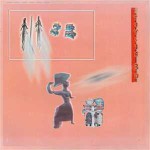
Artist: Etrusca 3D (Spencer Clark & Francesco Cavaliere)
Title: Etrusca 3D
Format: 12" + Download
Label: Pacific City Discs / Discrepant
Title: Etrusca 3D
Format: 12" + Download
Label: Pacific City Discs / Discrepant
There’s a curious concept behind “Etrusca 3D”, where Cavaliere recites the names of various deities from the ancient Italian civilisation, at various intensities, and then the two loop them and use them as the core of electronica compositions that attempt to add further instrumental narrative to the chanting.
The result, however, isn’t nearly as reverential or ethereal as it is pitched as. Instead, it has to be described as playful. Pitching the voices up and down in a sampler has an old-school, 1980’s, ‘joy of sampling’ feel to it and in pieces like “Il Demone Blu” it feels like it’s channelling the early work of JJ Jeczalik more than it’s channelling any ancient Gods. This is reinforced by the analogue synths used for some of the melody lines in tracks like “Tuchulcha”, and the somewhat lo-fi treatment of the vocal sounds at times.
When it’s at its weirdest, such as in the lengthy textured dialogue of “Velathri”, is actually when it’s at its least successful, but when it gets a bit of a groove on, such as in “Vanth”, or lets the instrumental music meander in the foreground a little more such as in “Fulmini”, it’s a very enjoyable, almost foot-tapping listen.
So in terms of its conceptual target, it does seem like something of a mis-fire, but as a short (37-minute) playful album of light electronica, it still has a lot of merit.
The result, however, isn’t nearly as reverential or ethereal as it is pitched as. Instead, it has to be described as playful. Pitching the voices up and down in a sampler has an old-school, 1980’s, ‘joy of sampling’ feel to it and in pieces like “Il Demone Blu” it feels like it’s channelling the early work of JJ Jeczalik more than it’s channelling any ancient Gods. This is reinforced by the analogue synths used for some of the melody lines in tracks like “Tuchulcha”, and the somewhat lo-fi treatment of the vocal sounds at times.
When it’s at its weirdest, such as in the lengthy textured dialogue of “Velathri”, is actually when it’s at its least successful, but when it gets a bit of a groove on, such as in “Vanth”, or lets the instrumental music meander in the foreground a little more such as in “Fulmini”, it’s a very enjoyable, almost foot-tapping listen.
So in terms of its conceptual target, it does seem like something of a mis-fire, but as a short (37-minute) playful album of light electronica, it still has a lot of merit.
Hologram Teen: Pizza Conspiracy

Artist: Hologram Teen
Title: Pizza Conspiracy
Format: CD & 12"
Label: Ransom Note
Title: Pizza Conspiracy
Format: CD & 12"
Label: Ransom Note
The second album from Hologram Teen, aka Morgan Lhote, is genuinely eclectic. Eclectic is an overused term nowadays, and here it doesn’t just mean a few esoteric samples, it means a collection of hip-hop and disco-funk tracks with a truly international and expansive range of international sources. It’s jazzy, quirky, multi-lingual and it has a bit of a sense of humour too. The closest comparison I can think of is the Avalanches’ earlier stuff, but “Pizza Conspiracy”, despite the paranoid title, has a unique character of its own that’s more laidback and it treads with a light step. As well as plenty of African- and South American-sounding patterns, it also brings in other influences less frequently heard in this context- including an interesting bent towards prog rock and wig-out electronica.
Very few of these tracks top the three minute mark, and as a result some leave you wanting plenty more, or Googling for the extended remix. Highlights include the punchy opener “Élixir Trémolo” the dubby samplitude of “Cosmogatto”, and the wilfully genre-antagonising African-loungecore-meets-70’s-cop-show-love-theme of “Bongos Over Dyke Slope”.
At times this feels like an instrumental version of an unreleased early De La Soul album, with steady concise positivity-infused grooves like “Rock Eagle Rock” feeling like they’re tailor-made for Plug One and Plug Two to roll their lyrics over. Backing this up is the sense of skit tracks, several sub-two-minute pieces that feel like shorter-baked half-ideas, adding to the general sense of montage.
A 39-minute ‘beat tape’ mixes together all the tracks into a continuous flow, and it’s in this mix that the tracks feel more at home, strangely, a bit more homogenised but an easier background listen.
There’s no crossover hit here that will garner massive attention as a single- first single “Dalston Wizardzz” is sweet but a little forgettable and sync-music-ish, though the perkiness of the bonus Al Kent remix gives it a nice lift. But as a true exercise in jazzy eclecticism and successful crate-digging with a properly feel-good attitude, it’s impossible not to like.
Very few of these tracks top the three minute mark, and as a result some leave you wanting plenty more, or Googling for the extended remix. Highlights include the punchy opener “Élixir Trémolo” the dubby samplitude of “Cosmogatto”, and the wilfully genre-antagonising African-loungecore-meets-70’s-cop-show-love-theme of “Bongos Over Dyke Slope”.
At times this feels like an instrumental version of an unreleased early De La Soul album, with steady concise positivity-infused grooves like “Rock Eagle Rock” feeling like they’re tailor-made for Plug One and Plug Two to roll their lyrics over. Backing this up is the sense of skit tracks, several sub-two-minute pieces that feel like shorter-baked half-ideas, adding to the general sense of montage.
A 39-minute ‘beat tape’ mixes together all the tracks into a continuous flow, and it’s in this mix that the tracks feel more at home, strangely, a bit more homogenised but an easier background listen.
There’s no crossover hit here that will garner massive attention as a single- first single “Dalston Wizardzz” is sweet but a little forgettable and sync-music-ish, though the perkiness of the bonus Al Kent remix gives it a nice lift. But as a true exercise in jazzy eclecticism and successful crate-digging with a properly feel-good attitude, it’s impossible not to like.
KMRU: Peel
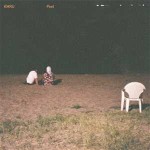
Artist: KMRU
Title: Peel
Format: 12" x 2
Label: Editions Mego
Title: Peel
Format: 12" x 2
Label: Editions Mego
Nairobi-based KMRU (aka Joseph Kamaru) has joined up with Editions Mego to offer up a blend of electronics and Kenyan field recordings that is predominantly ambient. Contrasts run deep, as the colder-sounding electronic pads and drones blend with warmer, thicker textures, but the overall tone is stretched and slowed and minimised (with exceptions) into something both abstract and mesmeric.
Across six long pieces, totalling 76 minutes, a trusted format is followed. Different tones and notes are used, but each one is essentially a variant on the same velvety bed of fixed melody, with more organic elements sounding like they’re happening outside. “Well” is somewhat closer and tighter-sounding, while “Solace”, unsurprisingly from the title, feels more barren and melancholic, with a faintly breathing pulse under.
An exception to the generally minimalist tone is “Klang”, a much more room-filling arrangement with an endless feeling of building and waking that never seems to climax. It’s like an orchestra warming up, but an orchestra made of synths and city life, and it feels quite overwhelming after being lulled into the calm that preceded it. “Insubstantial” restores the calm after and offers the album’s most melodic loop pattern, albeit a faint one.
The title track is the last and longest piece, a slightly cleaner-sounding 23-minute slow progression around a two-chord pattern that pretty much sums up the whole release.
It’s not as adventurous or diverse as some might hope, nor does it have the ‘ethnic identity’ that Europeans or Americans might stereotypically expect from African music, but as a richly textured calm piece of ambient, it’s like a high quality quilt.
Across six long pieces, totalling 76 minutes, a trusted format is followed. Different tones and notes are used, but each one is essentially a variant on the same velvety bed of fixed melody, with more organic elements sounding like they’re happening outside. “Well” is somewhat closer and tighter-sounding, while “Solace”, unsurprisingly from the title, feels more barren and melancholic, with a faintly breathing pulse under.
An exception to the generally minimalist tone is “Klang”, a much more room-filling arrangement with an endless feeling of building and waking that never seems to climax. It’s like an orchestra warming up, but an orchestra made of synths and city life, and it feels quite overwhelming after being lulled into the calm that preceded it. “Insubstantial” restores the calm after and offers the album’s most melodic loop pattern, albeit a faint one.
The title track is the last and longest piece, a slightly cleaner-sounding 23-minute slow progression around a two-chord pattern that pretty much sums up the whole release.
It’s not as adventurous or diverse as some might hope, nor does it have the ‘ethnic identity’ that Europeans or Americans might stereotypically expect from African music, but as a richly textured calm piece of ambient, it’s like a high quality quilt.
Siavash Amini: A Mimesis of Nothingness
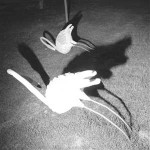
Artist: Siavash Amini
Title: A Mimesis of Nothingness
Format: 12" + Download
Label: Hallow Ground
Title: A Mimesis of Nothingness
Format: 12" + Download
Label: Hallow Ground
“A Mimesis Of Nothingness” is a series of six dark abstract soundscapes where Siavash Amini derived inspiration from the photography work of fellow Tehranian Nooshin Shafiee, whose photographs were sadly not included in the promo package so I can’t comment, but as described in the accompanying sheet, showed not “the Tehran that everyone projected into their work” but instead “Tehran showing itself through tiny and giant overlooked places and objects”.
And there is certainly plenty of sinister undercurrent here. “Perpetually Inwards” is scarcely more than just a brooding rumble. “Lustrous Residue” feels somehow alien and dangerous, short stabbing percussive sounds and scratches carrying a sense of latent threat.
But there is also a sombre beauty too, as exhibited in pieces like the very melancholic “Moonless Garden”, which introduces hollow and more melody-driven string-like sounds and birdsong noise that somehow manages to avoid feeling cliché, perhaps because it feels chaotic and zoo-like rather than like a genuine landscape.
This conflict of moods is clashed together most dramatically in “Observance (Shadow)” where the soft choral-like pads seem to be quietly resisting the sharp-edged, impulsive, metallic and unpredictable screeching noises that come along to try and break them.
It’s 36 minutes of very dark portraiture, a kind of brooding semi-ambient yet one you can’t ignore thanks to the various unsettling tones and unexpected bumps. It’s far removed from the traditional images of Tehran and tells you something you didn’t already know, which is often the sign of a good portrait.
And there is certainly plenty of sinister undercurrent here. “Perpetually Inwards” is scarcely more than just a brooding rumble. “Lustrous Residue” feels somehow alien and dangerous, short stabbing percussive sounds and scratches carrying a sense of latent threat.
But there is also a sombre beauty too, as exhibited in pieces like the very melancholic “Moonless Garden”, which introduces hollow and more melody-driven string-like sounds and birdsong noise that somehow manages to avoid feeling cliché, perhaps because it feels chaotic and zoo-like rather than like a genuine landscape.
This conflict of moods is clashed together most dramatically in “Observance (Shadow)” where the soft choral-like pads seem to be quietly resisting the sharp-edged, impulsive, metallic and unpredictable screeching noises that come along to try and break them.
It’s 36 minutes of very dark portraiture, a kind of brooding semi-ambient yet one you can’t ignore thanks to the various unsettling tones and unexpected bumps. It’s far removed from the traditional images of Tehran and tells you something you didn’t already know, which is often the sign of a good portrait.