
Browse by Genre
Industrial Music / Industrial Metal / Aggro Industrial / Electro Metal
Industrial Noise / Power Noise / Harsh Noise
Synth Pop / Electro Pop / Synth-Electronica
Techno / Trance / Goa / Drum'n'Bass / Jungle / Tribal / Trip-Hop
Ambient / Electronica / Ethereal / Dub / Soundscapes / Abstract
Experimental / Avantgarde / Weird & Wired / Glitch / Noise / Field Recording
Dark / Gothic / Wave / New Wave / Dark Wave / Industrial Gothic
New Music / Downtown / Avantgarde Jazz / New Classical / World
Search Reviews
Music Reviews
Pauline Oliveros + Musiques Nouvelles: Four Meditations / Sound Geometries

Artist: Pauline Oliveros + Musiques Nouvelles (@)
Title: Four Meditations / Sound Geometries
Format: CD
Label: Sub Rosa (@)
Rated:

Title: Four Meditations / Sound Geometries
Format: CD
Label: Sub Rosa (@)
Rated:
2016 was not only the year that is going to be filed as the one when a series of pop rock iconic characters passed away, but this perpetual funeral oration was devoted to many legends of the avant-garde and erudite contemporary music scene (I could mention Jean-Claude Risset - one of the pioneers of computer music - or Tony Conrad), equally (and sometimes much more) important than particular mass phenomenon. One of the greatest and less famous (for the less erudite listeners, I mean) character of the contemporary music scene that recently died was Pauline Oliveros. She passed away on 25th November, but she kept on doing experiments till her last days, in particular on her favorite instrument, the accordion. Besides some interesting compositions, her most significant contribution to listeners are a couple of theories, which are also lessons on how to listen to music and sound: according to some reviewers, both the theory of "deep listening" - an expression that she used to name her project and her "band", by which she focused on the research of really bizarre performative spaces, such as cathedrals, caves, and underground cisterns - and the one on "sonic awareness" got partially influenced by the meeting with theoretical physicist and karate master Lester Ingber. The latter was soon turned into a sort of new system of music notation: according to Heidi Von Gunden, a musicologist who wrote an essay on Pauline Oliveros' sonic and musical research, sonic awareness was "a synthesis of the psychology of consciousness, the physiology of the martial arts, and the sociology of the feminist movement", whose way of processing aural information was based on attention and awareness, that got respectively represented by a dot and a circle by Oliveros in some compositions. Some of the above-sketched theories could help you better understanding this important release on Sub Rosa, including two long-lasting pieces. The first one, "Four Meditations for Orchestra", was composed between 1991 and 1997 and features vocalist Ione, who wonderfully interprets those reflections by using different languages and a dramatic vocal transpositions ranging between mournful moments, litany, raving ecstasy and onomatopoeia, while Belgian orchestra Musiques Nouvelles sets the sound by a seemingly disassembled technique, where the cohesion between elements got reached after each instrument seems to say something while the other ones prepares the ground, before amalgamating with Ione's voice. The second piece, "Sound Geometries (for Chamber Orchestra)", got recorded by means of Expanded Instrument System, a sort of platform to process sounds grabbed by microphones and channelling them into ten geometrical patterns, which were a kind of guided paths to move player's sounds in the sonic space through a 5.1 surround sound system. It's ideally divided into three movements: the first ones get somehow matched as you can listen how the patterns seem to lead the instrument from a vaguely organized layout to something similar to chaotic improvisation, both of them preceding the ascending choral effect reaching its acme and its higher voltage in the very last five minutes.
Great Waitress: Hue
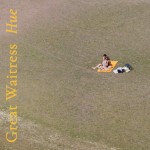

Isolated squeals, hanging screeching, single tones, mild pinches on strings - it sometimes remind the noise of a messy mountain of metallic junk slightly moved by breezes, differently elongated accordion whispers, creaking object or ligneous cracks that could let you think of an ongoing but almost gentle flaying of a wooden object, subtle alternation of shy stroking of higher keys of a piano or heavyweight lingering on lower ones, sinister swooping drones on grazed strings. All the enlisted elements would mean nothing by themselves, so that the primary activity of the Great Waitress, the project by Australian accordion player Monika Brookes and her fellow-countrywoman Laura Altman on clarinet together with German pianist Magda Mayas (names that some of our readers following electroacoustic improvisation on our zine could have met on some outputs by the appreciated Portuguese label Creative Sources, but theses girls individually made a plenty of important collaborations - including Joe Talia for Oren Ambarchi and The Necks'members Chris Abrahams and Tony Beck -), is setting the table by improvising some possible arrangements by means of different and mostly improvised criteria in order to inspire a narrative plot and feed listener's imagination. For instance, the first part of "Ribboning", one of the two long-lasting halves of 'Hue' made me imagine the cinematic representation of the phase of studying preceding a duel between Shaolin monks in the middle of a Japanese garden, which will never start. The general mood of the session turns into something else around the seventh minute: the first near-touch of the elements meet a rising pressure, which turns again into a sort of wanted stasis after three minutes. Likewise brain-stimulative, the way this trio performed in the second half, they wisely named "Pleats", whose slightly upsetting progression reaches the highest intensity when the rubbing on piano strings (I guess they made it so) generates a sound which evokes the one of an impending storm.
Erik Friedlander - Black Phoebe: Rings

I already quoted this amazing project by New York-based accomplished and talented cellist Erik Friedlander, while introducing "Nothing On Earth," Erik's soundtrack for the expedition in Greenland by Mick Abrams and Murray Fredericks. A particular cinematic nuance is listenable in the sound he developed together with Japenese talented musicians Satoshi Takeishi (percussion) and Shoko Nagai (piano, accordion, and electronics) as listeners can readily perceive in some tracks of this newly assembled album, which look like portraits such as the cheeky tango they crafted on the opener "The Seducer", the gentle gipsy riding on "The Risky Business" and the exciting "Flycatcher" or the almost grotesque chamber music scherzo of "A Single Eye", but it's not the main feature. The stylistic adhesive cementing the twelve lovely tracks they recorded in "Rings" is the way the trio build the loop-based composition approach by Erik in each single song, who doesn't sound repetitive at all, due to the varieties of music styles by which Satoshi and Shoko implant during their sonic landscaping. Don't expect anything really super revolutionary, but just some well crafted good music by three brilliantly peppy musicians (not a small thing nowadays). In my opinion, the better way to appreciate this feature is focusing on the repetition on strings by Erik and almost unselfconsciously sink the delicate piano-driven melodies and the likewise sensitive or pleasantly faster tapping on percussions in between vibrant or lazier moments, that could let you imagine Black Phebe were aimed to give a sound to an interstate between fiction and reality for secret admirers of daydreaming, who keep having a head on its shoulders.
Collateral Nature: Smoky Backbone

Artist: Collateral Nature (@)
Title: Smoky Backbone
Format: 12" x 2
Label: Beat Machine Records (@)
Rated:
Title: Smoky Backbone
Format: 12" x 2
Label: Beat Machine Records (@)
Rated:
I had not heard of this act before, but it is an Italian duo consisting of Claudio Vittori and Paolo Gozzetti, with some others thrown in for good measure. As the press sheet describes it, this album moves “through smooth jazzy vibes and gently electronic scenarios” and “ranges from trip hop remembrances to dance floor vibes passing through nu jazz perceptions and UK sound memories.” Fair enough. Let’s put it on the turntable. This is pretty straightforward jazzy lounge music with sultry female vocals. You can almost smell the cigarette smoke and cheap whisky as you picture the dive bar in which they are playing. Synth organ, drums, and vocals make for a pretty solid combination. Still, I found it to be well constructed but nothing that really blew me away. There didn’t feel like there was much experimentation, leaving the end result feeling a bit sterile. The high point on the album was the powerful vocals by Jaia Sowden on “Tribal Tattoo,” which closes the album on a high point. Next up, we have the remixes by Wandl, Werkha, H-SIK, and Yellowtail. Generally, remixes are too conservative for my taste and tend to stick too close to the original. Thankfully, this is not the case here. Each of these remixes are much more complex and interesting than the original. For example, H-SIK brings some glitch to the table and Yellowtail trades in the organ for guitar with the drums and vocals for a more frantic feel. Given the choice between the two, I would dump the originals and go with the remixes.
Antoine Chessex, Apartment House & Jérôme Noetinger: Plastic Concrete / Accumulation
Artist: Antoine Chessex, Apartment House & Jérôme Noetinger
Title: Plastic Concrete / Accumulation
Format: CD
Label: Bocian Records
Title: Plastic Concrete / Accumulation
Format: CD
Label: Bocian Records
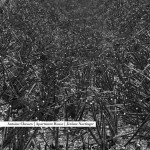
This pan-European collaboration, recorded live, has an almost traditional avantgarde feel to it, if that’s not a contradiction in terms. It follows a mould of loose, improvised and wilfully unpredictable experimental jazz and classical music that has existed for decades, and manages to be both classical and jazz in parts. Noetinger’s electronics bring additional modern digital surprises, but these are twists of lemon in an otherwise fairly familiar cup of tea.
After a spiky first five minutes, “Plastic Concrete” settles into suspended drones reminiscent of György Ligeti, with the cello and brass performances being pushed to their natural limits. The electronics return to the fore towards the end, with more use of what sounds like radio signals and everyday foley blended into something unrecognisable.
Recorded over a year apart, the Apartment House ensemble is a different line-up between the two pieces, with only the cellist in common. On the second and longer piece “Accumulation”, the brass and bass have gone, and the extra violins and a viola added give things a more familiar avantgarde-string-quartet-like sound. The super-slow glissandos and fluctuations and the wavering between chord and discord are hypnotic, treading a fine line between mesmeric and uncomfortable. The abrupt stabby staccatos make a brief return halfway through, before a staggered extended outro of arpeggios gradually descending in energy to an unexpectedly soporific close.
This is an unusual and enjoyable collection of two very cultured, semi-improvised pieces of music that’s “avant-garde” and “post-modern”, but in ways that resurface the old naive question, is it truly avant-garde if people have been doing this for decades?
After a spiky first five minutes, “Plastic Concrete” settles into suspended drones reminiscent of György Ligeti, with the cello and brass performances being pushed to their natural limits. The electronics return to the fore towards the end, with more use of what sounds like radio signals and everyday foley blended into something unrecognisable.
Recorded over a year apart, the Apartment House ensemble is a different line-up between the two pieces, with only the cellist in common. On the second and longer piece “Accumulation”, the brass and bass have gone, and the extra violins and a viola added give things a more familiar avantgarde-string-quartet-like sound. The super-slow glissandos and fluctuations and the wavering between chord and discord are hypnotic, treading a fine line between mesmeric and uncomfortable. The abrupt stabby staccatos make a brief return halfway through, before a staggered extended outro of arpeggios gradually descending in energy to an unexpectedly soporific close.
This is an unusual and enjoyable collection of two very cultured, semi-improvised pieces of music that’s “avant-garde” and “post-modern”, but in ways that resurface the old naive question, is it truly avant-garde if people have been doing this for decades?