
Browse by Genre
Industrial Music / Industrial Metal / Aggro Industrial / Electro Metal
Industrial Noise / Power Noise / Harsh Noise
Synth Pop / Electro Pop / Synth-Electronica
Techno / Trance / Goa / Drum'n'Bass / Jungle / Tribal / Trip-Hop
Ambient / Electronica / Ethereal / Dub / Soundscapes / Abstract
Experimental / Avantgarde / Weird & Wired / Glitch / Noise / Field Recording
Dark / Gothic / Wave / New Wave / Dark Wave / Industrial Gothic
New Music / Downtown / Avantgarde Jazz / New Classical / World
Search Reviews
Music Reviews
Night Nail: Fates Remade

Artist: Night Nail (@)
Title: Fates Remade
Format: Download Only (MP3 + Lossless)
Label: Metropolis (@)
Rated:

Title: Fates Remade
Format: Download Only (MP3 + Lossless)
Label: Metropolis (@)
Rated:
"Fates Remade" by Night Nail reimagines the original tracks from "Fates Explained" through a dark prism, with a remix lineup that includes a true all-star roster of post-punk and darkwave artisans. From Bestial Mouths to Kill Shelter, each artist injects their unique touch into Night Nail’s moody soundscapes, resulting in an album that feels both familiar and hauntingly otherworldly. If "Fates Explained" drew us into a labyrinth of somber melodies and introspective darkness, "Fates Remade" holds a distorted mirror up to that world, bending its edges into even darker dimensions.
As Berlin-based Night Nail, originally from Los Angeles, pushes into new sonic territory, each remix pulses with fresh energy while remaining loyal to the band’s ethos. "Fates Remade" plays with the listener's sense of continuity: familiar melodies are twisted and fractured into alternate realities by these remix artists, creating a record that is both a tribute and a transformation. Notably, the Kill Shelter remix of "Fates Explained" brings a clean, hauntingly cold production style that accentuates the band’s emotive vocals, while Bedless Bones’ interpretation of "Antipathy" invokes a slow, spectral build that feels like traversing shadowy Berlin alleyways.
Ironically, in an album that seeks to "remake" and reconstruct the past, Night Nail has never sounded more forward-looking. The track "I'm Not Her God", remixed by A State Of Flux, represents an especially compelling collaboration, merging powerful vocals with dark synth atmospheres that are chillingly poignant, while "Sounds & Shadows" aptly notes that Night Nail’s layered, "abstract" sound remains criminally underrated within the dark music community. As "Fates Remade" unfolds, it becomes clear that the true magic of this remix album lies in its ability to transform each song into a ghostly version of itself - an echo both near and far, as though Night Nail’s universe is collapsing and rebuilding, all at once.
In "Fates Remade", Night Nail offers us both a reckoning and a reawakening, proving that even in darkness, there’s a beauty to be found in repetition, reconstruction, and endless reinterpretation. You can check out the remix album on the band's Bandcamp and experience the enchantment firsthand.
As Berlin-based Night Nail, originally from Los Angeles, pushes into new sonic territory, each remix pulses with fresh energy while remaining loyal to the band’s ethos. "Fates Remade" plays with the listener's sense of continuity: familiar melodies are twisted and fractured into alternate realities by these remix artists, creating a record that is both a tribute and a transformation. Notably, the Kill Shelter remix of "Fates Explained" brings a clean, hauntingly cold production style that accentuates the band’s emotive vocals, while Bedless Bones’ interpretation of "Antipathy" invokes a slow, spectral build that feels like traversing shadowy Berlin alleyways.
Ironically, in an album that seeks to "remake" and reconstruct the past, Night Nail has never sounded more forward-looking. The track "I'm Not Her God", remixed by A State Of Flux, represents an especially compelling collaboration, merging powerful vocals with dark synth atmospheres that are chillingly poignant, while "Sounds & Shadows" aptly notes that Night Nail’s layered, "abstract" sound remains criminally underrated within the dark music community. As "Fates Remade" unfolds, it becomes clear that the true magic of this remix album lies in its ability to transform each song into a ghostly version of itself - an echo both near and far, as though Night Nail’s universe is collapsing and rebuilding, all at once.
In "Fates Remade", Night Nail offers us both a reckoning and a reawakening, proving that even in darkness, there’s a beauty to be found in repetition, reconstruction, and endless reinterpretation. You can check out the remix album on the band's Bandcamp and experience the enchantment firsthand.
Bill Leeb: Model Kollapse
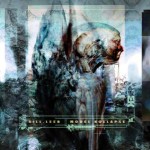
This new album by the evergreen Vancouver-based EBM knight Bill Leeb might surprise you. Not because it deviates wildly from Leeb’s industrial pedigree, but because it revels in the contradictions: icy electronics melded with warmth, danceability laced with tension. With nods to electro-industrial pioneers like Front 242 and Skinny Puppy, Leeb’s DNA is unmistakable, yet "Model Kollapse" also bears modern darkwave sensibilities, teasing echoes of Gesaffelstein’s sleek menace or ADULT.'s synth dystopias.
Tracks like "Demons" and "Pinned Down" throb with raw energy, yet the album showcases unexpected vulnerability, particularly in collaborations like "Terror Forms" (feat. Shannon Hemmet). This tension between aggression and introspection anchors the record, creating an emotional spectrum that stretches from mechanical precision to human fragility.
Musically, it’s punchy and accessible - less dense than some of Leeb’s previous work with Front Line Assembly. While some purists may long for the more abrasive side of his earlier projects, "Model Kollapse" feels like a deliberate evolution. It leans more toward structure and songcraft without sacrificing the undercurrent of chaos. Tracks like "Muted Obsession" (feat. ACTORS) and "Simulation" feel familiar in their post-punk beats, but there’s a clarity and melodic sheen that invites repeat listens, with just enough unease lingering to remind you where Leeb’s roots are.
In the grander scheme, Leeb’s first solo venture in decades doesn’t reinvent the wheel but refines and recalibrates his longstanding approach. It’s less about collapsing models and more about bending them just enough to see what bleeds through. In tracks like "Neuromotive" and "Simulation", there’s an aesthetic tension - machines pulse with human anxiety, underscoring our collective reliance on technology for identity and control. The sleek production conceals a darker narrative: that our techno-utopia has become a dystopian trap, an endless feedback loop of consumption and surveillance. Leeb’s soundscapes here reflect not just sonic evolution but a commentary on the fragile state of reality itself.
The album’s embrace of darkwave and industrial genres feels like a critique of capitalist modernity, where human emotions are modulated by algorithms and systems. As digital experiences dominate, "Model Kollapse" muses on how we engage with - and are shaped by - the synthetic environments we’ve built. Politically, it’s subtle but poignant, its mechanized beats and shifting atmospheres a reflection of societal disintegration. Leeb’s work has always walked the line between aggression and introspection, and here it’s no different: "Model Kollapse" asks us whether we’re ready to acknowledge the systems that increasingly define us, or whether we’ll keep dancing to their beat.
Ultimately, "Model Kollapse" could embody the tension between progress and collapse, forcing us to consider how we remain human in a world increasingly mediated by technology. It’s both an ode to and a warning about the worlds we are creating through this collapse of the old paradigms - both industrial and political.
Tracks like "Demons" and "Pinned Down" throb with raw energy, yet the album showcases unexpected vulnerability, particularly in collaborations like "Terror Forms" (feat. Shannon Hemmet). This tension between aggression and introspection anchors the record, creating an emotional spectrum that stretches from mechanical precision to human fragility.
Musically, it’s punchy and accessible - less dense than some of Leeb’s previous work with Front Line Assembly. While some purists may long for the more abrasive side of his earlier projects, "Model Kollapse" feels like a deliberate evolution. It leans more toward structure and songcraft without sacrificing the undercurrent of chaos. Tracks like "Muted Obsession" (feat. ACTORS) and "Simulation" feel familiar in their post-punk beats, but there’s a clarity and melodic sheen that invites repeat listens, with just enough unease lingering to remind you where Leeb’s roots are.
In the grander scheme, Leeb’s first solo venture in decades doesn’t reinvent the wheel but refines and recalibrates his longstanding approach. It’s less about collapsing models and more about bending them just enough to see what bleeds through. In tracks like "Neuromotive" and "Simulation", there’s an aesthetic tension - machines pulse with human anxiety, underscoring our collective reliance on technology for identity and control. The sleek production conceals a darker narrative: that our techno-utopia has become a dystopian trap, an endless feedback loop of consumption and surveillance. Leeb’s soundscapes here reflect not just sonic evolution but a commentary on the fragile state of reality itself.
The album’s embrace of darkwave and industrial genres feels like a critique of capitalist modernity, where human emotions are modulated by algorithms and systems. As digital experiences dominate, "Model Kollapse" muses on how we engage with - and are shaped by - the synthetic environments we’ve built. Politically, it’s subtle but poignant, its mechanized beats and shifting atmospheres a reflection of societal disintegration. Leeb’s work has always walked the line between aggression and introspection, and here it’s no different: "Model Kollapse" asks us whether we’re ready to acknowledge the systems that increasingly define us, or whether we’ll keep dancing to their beat.
Ultimately, "Model Kollapse" could embody the tension between progress and collapse, forcing us to consider how we remain human in a world increasingly mediated by technology. It’s both an ode to and a warning about the worlds we are creating through this collapse of the old paradigms - both industrial and political.
Krolowczana Smuga: Konwulsanki
Artist: Krolowczana Smuga (@)
Title: Konwulsanki
Format: CD
Label: Zoharum (http://zoharum.com/) (@)
Rated:

Title: Konwulsanki
Format: CD
Label: Zoharum (http://zoharum.com/) (@)
Rated:
If you’ve been on the hunt for an album that’s as perplexing as it is bold, as irritating as it is inventive, "Konwulsanki" by KROLOWCZANA SMUGA might just be your fever dream (or nightmare) come true. This sixth release by Adam Pitak’s one-man band is nothing short of a chaotic, genre-defying experiment that dares you to make sense of it—if you can.
To label "Konwulsanki" as "weird" might be the understatement of the year. The album is a labyrinth of sound that draws from an eclectic mix of industrial, metal, Eastern European folk, and whatever else Pitak decided to throw into the pot. The label’s promo sheet bills this as “freak horror folk”, a term that feels both fitting and woefully inadequate. At its core, "Konwulsanki" is an album that thrives on its own unpredictability, constantly shifting gears and keeping the listener perpetually off-balance.
The opening track, "Oj Ladna To Je Lada" ["Oh, Pretty Is the Goddess Lada"], starts off deceptively tame with its atmospheric acoustic guitar, only to dive headfirst into a whirlwind of industrialized drums, jagged guitars, and ferocious vocals. It’s a jarring, almost violent introduction to the album that might lead you to believe you’ve got "Konwulsanki" figured out. But don’t get too comfortable — things are about to get a lot weirder.
Tracks like "Zurawinowy Jam" ["Cranberry Jam"] introduce folk elements that, on their own, might seem straightforward. But in the context of the album, these moments of relative calm feel unsettling, as if they’re luring you into a false sense of security before the next sonic curveball hits. The industrial and electronic touches that sneak into the background only add to the disorientation, creating an atmosphere that’s both playful and menacing.
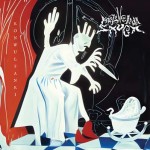
Speaking of playful, there’s an undeniable jester-like quality to Pitak’s work. The album’s aesthetic — both sonically and visually — hints at a mischievousness that borders on the mocking. It’s as if Pitak is daring you to take him seriously, all the while knowing that the joke might very well be on you. This aspect of "Konwulsanki" draws an unexpected parallel to Tormentor’s "Recipe Ferrum! 777", another album that revels in its own eccentricity. While the two records differ musically, they share a spirit of chaotic, almost gleeful, experimentation that’s hard to ignore.
But here’s where things get tricky: "Konwulsanki" is not an easy album to love. It’s the musical equivalent of a stubborn puzzle that refuses to be solved, and the constant shifting from one genre to another can quickly become exhausting. There’s a sense that the album’s eccentricity is sometimes self-serving, as if the point is to be weird for weirdness’ sake rather than to serve any greater artistic purpose. For some listeners, this will be part of the album’s charm—a testament to its unique, boundary-pushing nature. For others, it will be an exercise in frustration, a dizzying ride that leaves them more annoyed than anything else.
Tracks like "Alkochochlik" ["Alcoholic Imp"] and "Konwulsaniec" ["Convulsion"] epitomize this dichotomy. On one hand, they’re masterfully crafted, showcasing Pitak’s skill in blending disparate elements into a cohesive whole. On the other, they’re relentless in their refusal to settle into any one style, constantly pulling the rug out from under the listener just when they think they’ve found their footing.
Ultimately, "Konwulsanki" is an album that’s as likely to alienate as it is to fascinate. It’s a well-made record, brimming with creativity and vision, but it’s also one that doesn’t give a damn whether you like it or not. For those who enjoy music that challenges them, that pushes boundaries and refuses to conform, "Konwulsanki" might be a revelation. For those who prefer their music a bit more straightforward, it’s likely to be an exercise in irritation.
In the end, KRÓLÓWCZANA SMUGA’s latest offering is a polarizing piece of work, and maybe that’s exactly the point. Whether you find it brilliant or baffling, one thing is for sure: "Konwulsanki" is an album that refuses to be ignored. And in a world where so much music blends into the background, that’s something worth paying attention to — even if it drives you a little mad in the process (particularly to understand Polish lyrics or Polish folklore and legends, quoted in them, if you're interested in this level of comprehension, as well!).
To label "Konwulsanki" as "weird" might be the understatement of the year. The album is a labyrinth of sound that draws from an eclectic mix of industrial, metal, Eastern European folk, and whatever else Pitak decided to throw into the pot. The label’s promo sheet bills this as “freak horror folk”, a term that feels both fitting and woefully inadequate. At its core, "Konwulsanki" is an album that thrives on its own unpredictability, constantly shifting gears and keeping the listener perpetually off-balance.
The opening track, "Oj Ladna To Je Lada" ["Oh, Pretty Is the Goddess Lada"], starts off deceptively tame with its atmospheric acoustic guitar, only to dive headfirst into a whirlwind of industrialized drums, jagged guitars, and ferocious vocals. It’s a jarring, almost violent introduction to the album that might lead you to believe you’ve got "Konwulsanki" figured out. But don’t get too comfortable — things are about to get a lot weirder.
Tracks like "Zurawinowy Jam" ["Cranberry Jam"] introduce folk elements that, on their own, might seem straightforward. But in the context of the album, these moments of relative calm feel unsettling, as if they’re luring you into a false sense of security before the next sonic curveball hits. The industrial and electronic touches that sneak into the background only add to the disorientation, creating an atmosphere that’s both playful and menacing.
Speaking of playful, there’s an undeniable jester-like quality to Pitak’s work. The album’s aesthetic — both sonically and visually — hints at a mischievousness that borders on the mocking. It’s as if Pitak is daring you to take him seriously, all the while knowing that the joke might very well be on you. This aspect of "Konwulsanki" draws an unexpected parallel to Tormentor’s "Recipe Ferrum! 777", another album that revels in its own eccentricity. While the two records differ musically, they share a spirit of chaotic, almost gleeful, experimentation that’s hard to ignore.
But here’s where things get tricky: "Konwulsanki" is not an easy album to love. It’s the musical equivalent of a stubborn puzzle that refuses to be solved, and the constant shifting from one genre to another can quickly become exhausting. There’s a sense that the album’s eccentricity is sometimes self-serving, as if the point is to be weird for weirdness’ sake rather than to serve any greater artistic purpose. For some listeners, this will be part of the album’s charm—a testament to its unique, boundary-pushing nature. For others, it will be an exercise in frustration, a dizzying ride that leaves them more annoyed than anything else.
Tracks like "Alkochochlik" ["Alcoholic Imp"] and "Konwulsaniec" ["Convulsion"] epitomize this dichotomy. On one hand, they’re masterfully crafted, showcasing Pitak’s skill in blending disparate elements into a cohesive whole. On the other, they’re relentless in their refusal to settle into any one style, constantly pulling the rug out from under the listener just when they think they’ve found their footing.
Ultimately, "Konwulsanki" is an album that’s as likely to alienate as it is to fascinate. It’s a well-made record, brimming with creativity and vision, but it’s also one that doesn’t give a damn whether you like it or not. For those who enjoy music that challenges them, that pushes boundaries and refuses to conform, "Konwulsanki" might be a revelation. For those who prefer their music a bit more straightforward, it’s likely to be an exercise in irritation.
In the end, KRÓLÓWCZANA SMUGA’s latest offering is a polarizing piece of work, and maybe that’s exactly the point. Whether you find it brilliant or baffling, one thing is for sure: "Konwulsanki" is an album that refuses to be ignored. And in a world where so much music blends into the background, that’s something worth paying attention to — even if it drives you a little mad in the process (particularly to understand Polish lyrics or Polish folklore and legends, quoted in them, if you're interested in this level of comprehension, as well!).
Larmo: Alarm

Larmo's "Alarm" arrives like a drill to the temple... it's an industrial behemoth that stomps across the soundscape with the subtlety of a bulldozer, all jagged edges and pounding intensity. If you were expecting a soothing auditory experience, you’ve wandered into the wrong bunker.
The album’s title track, “Alarm”, wastes no time getting down to business. The opening seconds are like a klaxon blaring in a dystopian factory, setting the tone for the mechanical hellscape that follows. Larmo (real name: Miroslaw Matyasik) doesn’t just dabble in industrial noise; he thrives in it, bending harsh electronic textures to his will with a precision that’s both brutal and hypnotic. The beats here aren’t just heavy — they’re seismic, shaking the very ground on which your sanity stands.
There’s an undeniable beauty in the chaos, though. "Alarm" isn’t just about bombarding you with noise; it’s about constructing a world out of that noise — a world where every rusted gear and screeching piston has its place. Tracks like “Grit” and “TECH (NIC)” are masterclasses in controlled demolition, each one an intricate lattice of abrasive sounds that somehow coalesce into a coherent, if punishing, whole.
But just when you think you’ve got Larmo figured out, he pulls a fast one. “N.B x N.N.”, featuring Gosia, injects a haunting human element into the mix, with her vocals cutting through the mechanized backdrop like a ghost in the machine. It’s a moment of unexpected vulnerability, a fleeting glimpse of humanity before the noise swallows you whole again. And then there’s “Gnat”, where Paula’s contributions lend the track a frenetic energy, as if the machinery is starting to malfunction, spiraling out of control.
Larmo isn’t shy about his influences, drawing freely from the worlds of illbient, techno, and even bass music to forge his own brand of industrial warfare. But unlike many of his contemporaries, who often get lost in their own self-indulgence, Larmo’s compositions are tight, purposeful, and — dare I say — catchy in their own twisted way. The rhythm in “Komunikat” is almost danceable, if you’re the kind of person who likes to dance on the ruins of civilization.
Then there’s the Monya remix of “Flat Breath”, which closes the album with a sense of finality. It sounds like a reinvention of the original track, stripping the track down to its raw essence and building it back up with layers of pulsating bass and reverberating echoes. The remix manages to be both more expansive and more claustrophobic than its predecessor, a fitting end to an album that never stops pushing boundaries.
Comparisons to industrial heavyweights like Skinny Puppy or Nine Inch Nails are inevitable, but Larmo carves out his own niche within the genre. Where those bands often explore the dark corners of the human psyche, Larmo seems more interested in the intersection of man and machine—what happens when the lines blur, when the human element is subsumed by the relentless march of technology.
And yet, for all its aggression, "Alarm" is surprisingly accessible. There’s a clarity to the production, a sharpness that cuts through the noise and makes each track stand out in stark relief. It’s as if Larmo is inviting you to peer into the machinery, to marvel at its complexity even as it grinds you down.
The album’s title track, “Alarm”, wastes no time getting down to business. The opening seconds are like a klaxon blaring in a dystopian factory, setting the tone for the mechanical hellscape that follows. Larmo (real name: Miroslaw Matyasik) doesn’t just dabble in industrial noise; he thrives in it, bending harsh electronic textures to his will with a precision that’s both brutal and hypnotic. The beats here aren’t just heavy — they’re seismic, shaking the very ground on which your sanity stands.
There’s an undeniable beauty in the chaos, though. "Alarm" isn’t just about bombarding you with noise; it’s about constructing a world out of that noise — a world where every rusted gear and screeching piston has its place. Tracks like “Grit” and “TECH (NIC)” are masterclasses in controlled demolition, each one an intricate lattice of abrasive sounds that somehow coalesce into a coherent, if punishing, whole.
But just when you think you’ve got Larmo figured out, he pulls a fast one. “N.B x N.N.”, featuring Gosia, injects a haunting human element into the mix, with her vocals cutting through the mechanized backdrop like a ghost in the machine. It’s a moment of unexpected vulnerability, a fleeting glimpse of humanity before the noise swallows you whole again. And then there’s “Gnat”, where Paula’s contributions lend the track a frenetic energy, as if the machinery is starting to malfunction, spiraling out of control.
Larmo isn’t shy about his influences, drawing freely from the worlds of illbient, techno, and even bass music to forge his own brand of industrial warfare. But unlike many of his contemporaries, who often get lost in their own self-indulgence, Larmo’s compositions are tight, purposeful, and — dare I say — catchy in their own twisted way. The rhythm in “Komunikat” is almost danceable, if you’re the kind of person who likes to dance on the ruins of civilization.
Then there’s the Monya remix of “Flat Breath”, which closes the album with a sense of finality. It sounds like a reinvention of the original track, stripping the track down to its raw essence and building it back up with layers of pulsating bass and reverberating echoes. The remix manages to be both more expansive and more claustrophobic than its predecessor, a fitting end to an album that never stops pushing boundaries.
Comparisons to industrial heavyweights like Skinny Puppy or Nine Inch Nails are inevitable, but Larmo carves out his own niche within the genre. Where those bands often explore the dark corners of the human psyche, Larmo seems more interested in the intersection of man and machine—what happens when the lines blur, when the human element is subsumed by the relentless march of technology.
And yet, for all its aggression, "Alarm" is surprisingly accessible. There’s a clarity to the production, a sharpness that cuts through the noise and makes each track stand out in stark relief. It’s as if Larmo is inviting you to peer into the machinery, to marvel at its complexity even as it grinds you down.
Lugola: The Truth Penetrates Your Mouth

Lugola’s "The Truth Penetrates Your Mouth" is an album designed to purge the faint-hearted from the listener pool altogether. This is power electronics at its most visceral, a sonic assault that demands not just your attention, but your full emotional surrender. If its previous release "You Are Not A Special" was a warning shot across the bow, then "The Truth Penetrates Your Mouth" is the full-frontal attack, an auditory blitzkrieg that leaves no safe space to hide.
Let’s start with the title. If you’re not already recoiling in discomfort, you might not fully grasp what you’re in for. Lugola’s work doesn’t merely want to enter your ears — it wants to invade your psyche, to pierce through your mental defenses, leaving you exposed to the raw, unfiltered truth of its message. This is Radical Musical Terrorism, a term that might sound hyperbolic until you experience the album for yourself.
Opening with "Confront", the album immediately grabs you by the throat, dragging you into a world of relentless noise and confrontational lyricism. There’s no warm-up, no easing into the chaos. Instead, you’re plunged headfirst into a barrage of industrial soundscapes that seem almost sentient in their aggression. It’s as though the machines have risen up not just to challenge humanity, but to obliterate it, one decibel at a time.
The title track, "The Truth Penetrates Your Mouth", serves as the album’s manifesto, a six-minute-plus onslaught of pulsating rhythms and shouted declarations that leave no room for ambiguity. The truth, as Lugola sees it, isn’t something gentle or comforting. It’s a brutal force, one that smashes through the barriers we erect to protect ourselves from reality’s harsher aspects. The track’s sonic architecture is monumental, a wall of sound that looms over you, daring you to look away — though you won’t be able to, because once you’re locked into this experience, escape is not an option.
Then there’s "Hate Me Like I Hate Myself", a track that encapsulates the album’s emotional core — or perhaps more accurately, its emotional void. This isn’t a cry for help; it’s a statement of fact, delivered with a kind of nihilistic resignation that’s as chilling as it is compelling. The track’s relentless drive mirrors the self-destructive urges it describes, creating a feedback loop of sound and sentiment that’s almost unbearable in its intensity.
And let’s not forget "How Much Are You Willing To Sacrifice To Remain Fucking Nobody", a track that might as well be the album’s thesis statement. It’s a bitter indictment of the futility of existence, set against a backdrop of grinding industrial noise that feels like the sonic equivalent of sandpaper on flesh. Here, Lugola isn’t just questioning the listener’s choices — he’s questioning the very nature of those choices, peeling back the layers of societal conditioning to reveal the void underneath.
But perhaps the album’s most unsettling moment comes with "Decompose". Clocking in at over seven minutes, this track feels less like a piece of music and more like a ritualistic descent into madness. The soundscapes here are less structured, more chaotic, as though the very fabric of reality is unraveling in real-time. By the time the track ends, you’re left in a state of disorientation, unsure of what’s real and what’s merely a product of Lugola’s sonic alchemy.
By the time you reach “You Will Never Be In Control” and “A Fucking Failure”, any semblance of hope has been well and truly extinguished. These tracks are a descent into chaos, where control is a distant memory and all that remains is the cold, hard reality of failure. And yet, there’s something strangely cathartic about it. Lugola doesn’t just wallow in despair; it confronts it head-on, dragging you down with it and forcing you to face the truth, however ugly it may be. The album closes with “Bitter Reality”, a final, punishing blow that leaves you reeling. It’s a fitting end to a record that never once lets up, never once gives you the chance to come up for air.
"The Truth Penetrates Your Mouth" is a harrowing, unflinching journey through the darkest recesses of human emotion and industrial sound. It’s not for everyone, and it’s not trying to be. But for those who are willing to brave its unrelenting assault, it offers a kind of catharsis that’s as rare as it is intense. There’s a sense of purposeful direction here, a clear intent behind the chaos that sets "The Truth Penetrates Your Mouth" apart from mere sonic aggression for its own sake. This is music as weaponry, sound as a tool for psychic demolition, and Lugola wields it with an expert hand.
In the end, whether you find "The Truth Penetrates Your Mouth" to be a transformative experience or a torturous one might depend on your tolerance for sonic extremity and emotional intensity. But one thing is certain: Lugola has created a work that will leave an indelible mark on anyone who dares to let it in.
Let’s start with the title. If you’re not already recoiling in discomfort, you might not fully grasp what you’re in for. Lugola’s work doesn’t merely want to enter your ears — it wants to invade your psyche, to pierce through your mental defenses, leaving you exposed to the raw, unfiltered truth of its message. This is Radical Musical Terrorism, a term that might sound hyperbolic until you experience the album for yourself.
Opening with "Confront", the album immediately grabs you by the throat, dragging you into a world of relentless noise and confrontational lyricism. There’s no warm-up, no easing into the chaos. Instead, you’re plunged headfirst into a barrage of industrial soundscapes that seem almost sentient in their aggression. It’s as though the machines have risen up not just to challenge humanity, but to obliterate it, one decibel at a time.
The title track, "The Truth Penetrates Your Mouth", serves as the album’s manifesto, a six-minute-plus onslaught of pulsating rhythms and shouted declarations that leave no room for ambiguity. The truth, as Lugola sees it, isn’t something gentle or comforting. It’s a brutal force, one that smashes through the barriers we erect to protect ourselves from reality’s harsher aspects. The track’s sonic architecture is monumental, a wall of sound that looms over you, daring you to look away — though you won’t be able to, because once you’re locked into this experience, escape is not an option.
Then there’s "Hate Me Like I Hate Myself", a track that encapsulates the album’s emotional core — or perhaps more accurately, its emotional void. This isn’t a cry for help; it’s a statement of fact, delivered with a kind of nihilistic resignation that’s as chilling as it is compelling. The track’s relentless drive mirrors the self-destructive urges it describes, creating a feedback loop of sound and sentiment that’s almost unbearable in its intensity.
And let’s not forget "How Much Are You Willing To Sacrifice To Remain Fucking Nobody", a track that might as well be the album’s thesis statement. It’s a bitter indictment of the futility of existence, set against a backdrop of grinding industrial noise that feels like the sonic equivalent of sandpaper on flesh. Here, Lugola isn’t just questioning the listener’s choices — he’s questioning the very nature of those choices, peeling back the layers of societal conditioning to reveal the void underneath.
But perhaps the album’s most unsettling moment comes with "Decompose". Clocking in at over seven minutes, this track feels less like a piece of music and more like a ritualistic descent into madness. The soundscapes here are less structured, more chaotic, as though the very fabric of reality is unraveling in real-time. By the time the track ends, you’re left in a state of disorientation, unsure of what’s real and what’s merely a product of Lugola’s sonic alchemy.
By the time you reach “You Will Never Be In Control” and “A Fucking Failure”, any semblance of hope has been well and truly extinguished. These tracks are a descent into chaos, where control is a distant memory and all that remains is the cold, hard reality of failure. And yet, there’s something strangely cathartic about it. Lugola doesn’t just wallow in despair; it confronts it head-on, dragging you down with it and forcing you to face the truth, however ugly it may be. The album closes with “Bitter Reality”, a final, punishing blow that leaves you reeling. It’s a fitting end to a record that never once lets up, never once gives you the chance to come up for air.
"The Truth Penetrates Your Mouth" is a harrowing, unflinching journey through the darkest recesses of human emotion and industrial sound. It’s not for everyone, and it’s not trying to be. But for those who are willing to brave its unrelenting assault, it offers a kind of catharsis that’s as rare as it is intense. There’s a sense of purposeful direction here, a clear intent behind the chaos that sets "The Truth Penetrates Your Mouth" apart from mere sonic aggression for its own sake. This is music as weaponry, sound as a tool for psychic demolition, and Lugola wields it with an expert hand.
In the end, whether you find "The Truth Penetrates Your Mouth" to be a transformative experience or a torturous one might depend on your tolerance for sonic extremity and emotional intensity. But one thing is certain: Lugola has created a work that will leave an indelible mark on anyone who dares to let it in.