
Browse by Genre
Industrial Music / Industrial Metal / Aggro Industrial / Electro Metal
Industrial Noise / Power Noise / Harsh Noise
Synth Pop / Electro Pop / Synth-Electronica
Techno / Trance / Goa / Drum'n'Bass / Jungle / Tribal / Trip-Hop
Ambient / Electronica / Ethereal / Dub / Soundscapes / Abstract
Experimental / Avantgarde / Weird & Wired / Glitch / Noise / Field Recording
Dark / Gothic / Wave / New Wave / Dark Wave / Industrial Gothic
New Music / Downtown / Avantgarde Jazz / New Classical / World
Search Reviews
Music Reviews
Love Ghost x Skold: s/t
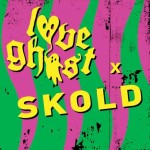
What do you get when you cross the brooding theatrics of Swedish industrial veteran Tim Sköld with the Gen Z angst and emo-rap energy of Love Ghost? The answer lies in "Love Ghost X SKOLD", an album that sounds like it was forged in a shadowy, neon-lit underworld where goth, industrial, and post-emo meet for a late-night drink. It’s a thrilling ride - dark, self-aware, and melodramatic in all the right ways.
For those unfamiliar, Love Ghost is a Los Angeles-based band known for their blend of emo, alt-rock, and trap elements, and their openness to experimental collaborations. Partnering with SKOLD - known for his work with KMFDM, Marilyn Manson, and his own solo projects - brings a fresh layer of industrial grime and nihilistic swagger to their sound. This album is less about compromise and more about fusion: a younger band embracing an older aesthetic without losing their identity.
The album opens with "Intro", a minute-long prelude of eerie, cinematic tension that sets the tone. From there, "Nightshade and Cocaine" kicks things into gear - a sleazy, pulsating track dripping with danger and desperation. It’s hard not to imagine it as the soundtrack to a late-night heist gone wrong, complete with eyeliner smudges and a trail of glittering wreckage.
Tracks like "Great White Buffalo" and "You Are The Gun (Valhalla)" carry an epic quality, pairing soaring melodies with grinding industrial undertones. There’s an undeniable theatricality here, somewhere between the raw vulnerability of Nine Inch Nails’ "The Fragile" and the dystopian swagger of Marilyn Manson’s "Mechanical Animals".
A track like "Cemetery" could be a highlight - a gothic ballad that feels both earnest and deliciously over-the-top. Its macabre lyrics and anthemic chorus strike a balance between emo sincerity and industrial detachment. "Ski Mask" offers a grittier, more menacing vibe, reminiscent of SKOLD’s work with KMFDM, while "The Star of the Show" takes a playful jab at fame and self-destruction, with Love Ghost’s signature wry lyricism at the forefront. "Spacedust" and "Hold On" introduce a more introspective tone, weaving in the melancholic melodies that Love Ghost fans will recognize as their emotional core.
The album closes with "Level Up" and "Less Than Zero", two tracks that feel like they’re winking at the listener. The former is a gritty anthem about survival and reinvention, while the latter is a nihilistic kiss-off - a fitting conclusion to an album steeped in self-aware darkness.
The beauty of "Love Ghost X SKOLD" lies in its refusal to take itself too seriously, even as it dives headfirst into themes of addiction, existential despair, and toxic love. There’s an inherent campiness to the project, but it’s delivered with enough sincerity to make it compelling.
If Love Ghost is the wide-eyed newcomer, SKOLD is the weary mentor, and their collaboration feels like a passing of the torch - from the industrial trenches of the ’90s to the chaotic, genre-blurring landscape of today.
So, pour yourself a drink (something black and bitter, preferably), and turn up "Love Ghost X SKOLD". It’s the perfect soundtrack for late-night musings, reckless adventures, and the occasional existential crisis.
For those unfamiliar, Love Ghost is a Los Angeles-based band known for their blend of emo, alt-rock, and trap elements, and their openness to experimental collaborations. Partnering with SKOLD - known for his work with KMFDM, Marilyn Manson, and his own solo projects - brings a fresh layer of industrial grime and nihilistic swagger to their sound. This album is less about compromise and more about fusion: a younger band embracing an older aesthetic without losing their identity.
The album opens with "Intro", a minute-long prelude of eerie, cinematic tension that sets the tone. From there, "Nightshade and Cocaine" kicks things into gear - a sleazy, pulsating track dripping with danger and desperation. It’s hard not to imagine it as the soundtrack to a late-night heist gone wrong, complete with eyeliner smudges and a trail of glittering wreckage.
Tracks like "Great White Buffalo" and "You Are The Gun (Valhalla)" carry an epic quality, pairing soaring melodies with grinding industrial undertones. There’s an undeniable theatricality here, somewhere between the raw vulnerability of Nine Inch Nails’ "The Fragile" and the dystopian swagger of Marilyn Manson’s "Mechanical Animals".
A track like "Cemetery" could be a highlight - a gothic ballad that feels both earnest and deliciously over-the-top. Its macabre lyrics and anthemic chorus strike a balance between emo sincerity and industrial detachment. "Ski Mask" offers a grittier, more menacing vibe, reminiscent of SKOLD’s work with KMFDM, while "The Star of the Show" takes a playful jab at fame and self-destruction, with Love Ghost’s signature wry lyricism at the forefront. "Spacedust" and "Hold On" introduce a more introspective tone, weaving in the melancholic melodies that Love Ghost fans will recognize as their emotional core.
The album closes with "Level Up" and "Less Than Zero", two tracks that feel like they’re winking at the listener. The former is a gritty anthem about survival and reinvention, while the latter is a nihilistic kiss-off - a fitting conclusion to an album steeped in self-aware darkness.
The beauty of "Love Ghost X SKOLD" lies in its refusal to take itself too seriously, even as it dives headfirst into themes of addiction, existential despair, and toxic love. There’s an inherent campiness to the project, but it’s delivered with enough sincerity to make it compelling.
If Love Ghost is the wide-eyed newcomer, SKOLD is the weary mentor, and their collaboration feels like a passing of the torch - from the industrial trenches of the ’90s to the chaotic, genre-blurring landscape of today.
So, pour yourself a drink (something black and bitter, preferably), and turn up "Love Ghost X SKOLD". It’s the perfect soundtrack for late-night musings, reckless adventures, and the occasional existential crisis.
Unit:187: KillCure
Artist: Unit:187 (http://www.unit187.com/) (@)
Title: KillCure
Format: CD + Download
Label: Metropolis (@)
Rated:

Title: KillCure
Format: CD + Download
Label: Metropolis (@)
Rated:
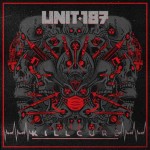
Industrial legends Unit:187 return with "KillCure", an album steeped in legacy, grit, and raw emotional power. This release is not just a record but a thunderous act of remembrance - a sonic monument built to honor founding member Tod Law, who passed away in 2015. In "KillCure", Unit:187 merges the ferocity of their past with a sharpened edge, showcasing their resilience and ability to evolve in the face of loss.
The title itself, "KillCure", feels like a cipher for the album’s ethos. It’s the kind of wordplay that could double as graffiti scrawled across a crumbling dystopian wall: defiant, cryptic, and darkly poetic. This duality courses through every track, as Unit:187 explores themes of destruction and regeneration, rage and catharsis, past and future.
Opening with the aptly titled “Glamhammer”, the album kicks off like a steel-toed boot smashing through a neon sign. This track is a grinding anthem of industrial bravado, a perfect storm of metallic riffs and cybernetic beats that hit harder than a warehouse rave at the end of the world.
“Eyes Open” brings a haunting vulnerability, blending relentless percussion with moments of melodic reprieve. It’s the sound of waking up to chaos and deciding to dance with it anyway. By contrast, “Dick” (yes, that’s really the title) throws subtlety out the window, delivering a snarling, tongue-in-cheek takedown wrapped in distorted guitars and venomous vocals.
Amidst the ferocity, “New Beginning” feels like the beating heart of the album. Written in part with Tod Law, it’s a poignant anthem of renewal, its driving rhythm a pulse that refuses to falter. The collaborative spirit of the record shines here, with contributions from the likes of Chris Peterson, Ross Redhead, and others weaving a rich tapestry of sound that honors Tod’s legacy while blazing forward.
“Swallow” and “Famous Face” bring sharp social critique into the mix, their lyrics biting as the music pummels. These tracks remind us that Unit:187’s anger isn’t directionless - it’s aimed squarely at the hollow promises of fame and the compromises demanded by modernity.
The title track, “KillCure”, closes the album with an apocalyptic flourish, melding grinding industrial grooves with a darkly cinematic atmosphere. It’s a fitting finale, encapsulating the album’s exploration of grief, survival, and defiance.
"KillCure" is a declaration of survival, a howl into the void, and a celebration of the connections that transcend loss. With its searing soundscapes and unrelenting energy, Unit:187 has created a work that’s both a tribute to Tod Law and a testament to the enduring power of industrial music. This is not just a return - it’s a resurrection.
The title itself, "KillCure", feels like a cipher for the album’s ethos. It’s the kind of wordplay that could double as graffiti scrawled across a crumbling dystopian wall: defiant, cryptic, and darkly poetic. This duality courses through every track, as Unit:187 explores themes of destruction and regeneration, rage and catharsis, past and future.
Opening with the aptly titled “Glamhammer”, the album kicks off like a steel-toed boot smashing through a neon sign. This track is a grinding anthem of industrial bravado, a perfect storm of metallic riffs and cybernetic beats that hit harder than a warehouse rave at the end of the world.
“Eyes Open” brings a haunting vulnerability, blending relentless percussion with moments of melodic reprieve. It’s the sound of waking up to chaos and deciding to dance with it anyway. By contrast, “Dick” (yes, that’s really the title) throws subtlety out the window, delivering a snarling, tongue-in-cheek takedown wrapped in distorted guitars and venomous vocals.
Amidst the ferocity, “New Beginning” feels like the beating heart of the album. Written in part with Tod Law, it’s a poignant anthem of renewal, its driving rhythm a pulse that refuses to falter. The collaborative spirit of the record shines here, with contributions from the likes of Chris Peterson, Ross Redhead, and others weaving a rich tapestry of sound that honors Tod’s legacy while blazing forward.
“Swallow” and “Famous Face” bring sharp social critique into the mix, their lyrics biting as the music pummels. These tracks remind us that Unit:187’s anger isn’t directionless - it’s aimed squarely at the hollow promises of fame and the compromises demanded by modernity.
The title track, “KillCure”, closes the album with an apocalyptic flourish, melding grinding industrial grooves with a darkly cinematic atmosphere. It’s a fitting finale, encapsulating the album’s exploration of grief, survival, and defiance.
"KillCure" is a declaration of survival, a howl into the void, and a celebration of the connections that transcend loss. With its searing soundscapes and unrelenting energy, Unit:187 has created a work that’s both a tribute to Tod Law and a testament to the enduring power of industrial music. This is not just a return - it’s a resurrection.
genCAB: III I II (THIRD EYE GEMINI)

Artist: genCAB (@)
Title: III I II (THIRD EYE GEMINI)
Format: CD + Download
Label: Metropolis (@)
Rated:

Title: III I II (THIRD EYE GEMINI)
Format: CD + Download
Label: Metropolis (@)
Rated:
There’s a certain magic in revisiting the past - dusting off old chapters, rewriting them with a sharper pen, and layering them with the wisdom and chaos time so graciously provides. David Dutton, the sonic mastermind behind genCAB, wields that magic with aplomb in "III I II (Third Eye Gemini)". Equal parts resurrection and reinvention, this album blends the raw energy of the project's early days with the seasoned artistry Dutton has honed over years of experimentation.
Born out of the ashes of their earlier work, "III I II" carries an alchemical quality: nostalgia spun into gold. Dutton’s production wizardry turns every track into a labyrinth of EBM beats, synthpop melodies, and industrial grit. Tracks from the past are not merely revisited - they’re stripped down to their core, reimagined, and electrified with the confidence of an artist unafraid to tear apart their own history.
The album kicks off with "Spite Is Might", a visceral manifesto drenched in lyrical nihilism and jagged rhythms. It feels like being handed a grenade - with the pin already pulled. From there, the album delves into the depths of human frailty, with tracks like "Appentence" and "Self Image(s)" exploring themes of identity and despair through shimmering synth lines and brooding vocals.
"Seasons in Hell" is a standout - a fever dream that waltzes between cinematic dread and a kind of euphoric, industrial catharsis. "Gemini Transmuter", the album’s titular nod, is both a revelation and an implosion, where Dutton’s introspection reaches its peak. The oscillating tempo mirrors the inner struggle of transformation, making it one of the most poignant moments on the record.
Lyrically, Dutton doesn’t shy away from the heavy stuff. There’s a biting self-awareness that courses through the veins of "III I II", making it as much a confession as it is a performance. His words oscillate between poetic and blunt, with lines like “I blame myself ‘cause this must be a curse” ("Gemini Transmuter") landing like punches to the gut.
For long-time genCAB fans, this album is a treasure trove - a love letter to their patience and devotion. For newcomers, it’s a powerful introduction to a band that refuses to sit still, musically or thematically. "III I II" is both a reflection and a forward leap, proof that nostalgia and innovation can coexist in the same chaotic, beautiful breath.
In the realm of industrial and EBM, where some acts rest on their laurels, genCAB blazes a trail - albeit a jagged one - straight into the heart of their own evolution. The third eye is wide open, and the view is breathtakingly raw.
An exhilarating rollercoaster of introspection, rebellion, and reinvention. genCAB doesn’t just revisit their past; they conquer it. "III I II" is a must-listen for anyone craving depth, grit, and a dash of beautiful chaos.
Born out of the ashes of their earlier work, "III I II" carries an alchemical quality: nostalgia spun into gold. Dutton’s production wizardry turns every track into a labyrinth of EBM beats, synthpop melodies, and industrial grit. Tracks from the past are not merely revisited - they’re stripped down to their core, reimagined, and electrified with the confidence of an artist unafraid to tear apart their own history.
The album kicks off with "Spite Is Might", a visceral manifesto drenched in lyrical nihilism and jagged rhythms. It feels like being handed a grenade - with the pin already pulled. From there, the album delves into the depths of human frailty, with tracks like "Appentence" and "Self Image(s)" exploring themes of identity and despair through shimmering synth lines and brooding vocals.
"Seasons in Hell" is a standout - a fever dream that waltzes between cinematic dread and a kind of euphoric, industrial catharsis. "Gemini Transmuter", the album’s titular nod, is both a revelation and an implosion, where Dutton’s introspection reaches its peak. The oscillating tempo mirrors the inner struggle of transformation, making it one of the most poignant moments on the record.
Lyrically, Dutton doesn’t shy away from the heavy stuff. There’s a biting self-awareness that courses through the veins of "III I II", making it as much a confession as it is a performance. His words oscillate between poetic and blunt, with lines like “I blame myself ‘cause this must be a curse” ("Gemini Transmuter") landing like punches to the gut.
For long-time genCAB fans, this album is a treasure trove - a love letter to their patience and devotion. For newcomers, it’s a powerful introduction to a band that refuses to sit still, musically or thematically. "III I II" is both a reflection and a forward leap, proof that nostalgia and innovation can coexist in the same chaotic, beautiful breath.
In the realm of industrial and EBM, where some acts rest on their laurels, genCAB blazes a trail - albeit a jagged one - straight into the heart of their own evolution. The third eye is wide open, and the view is breathtakingly raw.
An exhilarating rollercoaster of introspection, rebellion, and reinvention. genCAB doesn’t just revisit their past; they conquer it. "III I II" is a must-listen for anyone craving depth, grit, and a dash of beautiful chaos.
Diaries of Destruction: DoD II
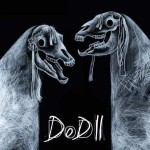
Diaries of Destruction’s "DoD II" is an alchemical experiment in sound - metallic, molten, and meditative. This avant-garde drone metal opus, released fittingly on Halloween, feels like a séance between shadow and light, its spectral guitars and abyssal bass weaving an incantation of raw catharsis and glimmers of mischievous wit.
Elif Yalvaç, a Turkish composer and sonic shapeshifter, leads this project alongside bassist Jordan Muscatello, a stalwart of the London experimental scene. Together, they summon a soundscape where field recordings murmur like ghostly whispers, microtonal riffs burn like slow embers, and metal’s crushing weight is counterbalanced by ambient introspection.
The album begins with "Mari Lwyd", a spectral invocation nodding to Welsh wassailing traditions with its ghostly textures and unsettling calm - a piece that feels as if it might be performed by the spirits of the Mari Lwyd itself, draped in skulls and folklore. Immediately, Yalvaç and Muscatello establish their modus operandi: a playful yet reverent embrace of destruction as a form of creation.
"JC VD", a chaotic ode to the unlikely patron saint of their Netherlands tour, Jean-Claude Van Damme, blends guttural bass lines with gleeful noise, punctuated by an eerie snippet of laughter - a rare, human moment in an otherwise otherworldly experience. It’s both irreverent and oddly poignant, a reminder that even amidst existential droning, humor has its place.
Tracks like "sli sli" ("Smoky Smoky") pair Turkey’s rich linguistic heritage with Scotland’s smoky, peaty whisky traditions, a fusion of geographic and personal nostalgia. This track’s slowly unfurling distortion mirrors the foggy haze of memory, creating a sensory experience as tactile as it is sonic.
Then there’s "Þetta Reddast", a closing track whose Icelandic title promises, "It’s all going to work out in the end." It’s an ironic gesture, given the album’s apocalyptic sound, but also a surprisingly comforting one - a balm to its darker undercurrents. Yalvaç’s guitar sings with a measured restraint, underscored by Muscatello’s pulsing bass, as if the two are stitching together the remnants of the sonic chaos they’ve unleashed.
But "DoD II" isn’t just about weight and darkness; it finds moments of fragile beauty and introspection, particularly in tracks like "Ilvaite" and "Of Butterflies". Here, the duo proves that drone metal isn’t just an auditory battering ram but a canvas for emotional nuance and delicate textural interplay.
Yalvaç’s mastery of electronics and audio programming adds an ethereal sheen to the album, while Muscatello’s improvisational sensibilities anchor it firmly in the corporeal. Their chemistry is palpable, a meeting of minds where opposites - metal and ambient, humor and gravitas, chaos and structure - dance in uneasy harmony.
Ultimately, "DoD II" is a testimony to creative destruction and destructive creativity, a balancing act of sarcasm and sincerity. It’s a journey into the void that, paradoxically, leaves the listener feeling more alive. For fans of Sunn O))), Boris, or anyone willing to walk the line between heaviness and transcendence, "DoD II" is a soundtrack for staring into the abyss - and laughing with it.
Elif Yalvaç, a Turkish composer and sonic shapeshifter, leads this project alongside bassist Jordan Muscatello, a stalwart of the London experimental scene. Together, they summon a soundscape where field recordings murmur like ghostly whispers, microtonal riffs burn like slow embers, and metal’s crushing weight is counterbalanced by ambient introspection.
The album begins with "Mari Lwyd", a spectral invocation nodding to Welsh wassailing traditions with its ghostly textures and unsettling calm - a piece that feels as if it might be performed by the spirits of the Mari Lwyd itself, draped in skulls and folklore. Immediately, Yalvaç and Muscatello establish their modus operandi: a playful yet reverent embrace of destruction as a form of creation.
"JC VD", a chaotic ode to the unlikely patron saint of their Netherlands tour, Jean-Claude Van Damme, blends guttural bass lines with gleeful noise, punctuated by an eerie snippet of laughter - a rare, human moment in an otherwise otherworldly experience. It’s both irreverent and oddly poignant, a reminder that even amidst existential droning, humor has its place.
Tracks like "sli sli" ("Smoky Smoky") pair Turkey’s rich linguistic heritage with Scotland’s smoky, peaty whisky traditions, a fusion of geographic and personal nostalgia. This track’s slowly unfurling distortion mirrors the foggy haze of memory, creating a sensory experience as tactile as it is sonic.
Then there’s "Þetta Reddast", a closing track whose Icelandic title promises, "It’s all going to work out in the end." It’s an ironic gesture, given the album’s apocalyptic sound, but also a surprisingly comforting one - a balm to its darker undercurrents. Yalvaç’s guitar sings with a measured restraint, underscored by Muscatello’s pulsing bass, as if the two are stitching together the remnants of the sonic chaos they’ve unleashed.
But "DoD II" isn’t just about weight and darkness; it finds moments of fragile beauty and introspection, particularly in tracks like "Ilvaite" and "Of Butterflies". Here, the duo proves that drone metal isn’t just an auditory battering ram but a canvas for emotional nuance and delicate textural interplay.
Yalvaç’s mastery of electronics and audio programming adds an ethereal sheen to the album, while Muscatello’s improvisational sensibilities anchor it firmly in the corporeal. Their chemistry is palpable, a meeting of minds where opposites - metal and ambient, humor and gravitas, chaos and structure - dance in uneasy harmony.
Ultimately, "DoD II" is a testimony to creative destruction and destructive creativity, a balancing act of sarcasm and sincerity. It’s a journey into the void that, paradoxically, leaves the listener feeling more alive. For fans of Sunn O))), Boris, or anyone willing to walk the line between heaviness and transcendence, "DoD II" is a soundtrack for staring into the abyss - and laughing with it.
PIG: Feast of Agony EP

There’s a strange delight in the macabre feast Raymond Watts - our indefatigable Lord of Lard - has laid out in "Feast of Agony". This EP isn’t just music; it’s a sermon for the damned, a blood-soaked hymn for those trapped in the echo chamber of modern despair. And oh, how gloriously PIG relishes in its depravity.
Opening with "Heroin for the Damned", a sonic gut-punch co-written with longtime collaborator Jim Davies, Watts channels the primal roar of a funeral procession gone rogue. It’s a track that seduces with industrial hooks before hurling you into a maelstrom of chaos, its lyrics laced with nihilistic poetry and sardonic wit. Watts doesn’t sing so much as declare war on complacency, a general rallying the disenfranchised masses to his side.
The EP’s remaining tracks are no less blistering. "Fallout" swaggers with the menace of a ticking time bomb, while "Comedown" drags you through the sticky afterbirth of ecstasy and regret. "Hand of Mercy (Make the Cut)" is a barbed-wire ballad, its jagged edges softened only by Watts’ grim determination to find redemption amidst ruin. And then there’s "The Ratchet Effect", a snarling beast of a song that captures the tension of a world perpetually on the brink.
Closing the set is "Baptise Bless & Bleed (Red Line Remix)", a ritualistic offering reimagined by Jim Davies. It’s a hymn for the broken, soaked in gasoline and set alight - a fitting end to an EP that revels in the catharsis of destruction.
Watts is no stranger to weaving brutal satire with visceral soundscapes, but "Feast of Agony" finds him sharpening his claws on the grindstone of modern disillusionment. The EP rages against hopelessness and hypocrisy, but beneath the grit lies a flicker of humanity - a sly nod to the fact that even in agony, there’s something worth fighting for.
PIG’s music has always been a paradox: grotesque yet seductive, punishing yet strangely liberating. "Feast of Agony" is no exception, a banquet of despair served with a knowing smirk. It’s as if Watts is reminding us that while the world may be falling apart, at least we can dance - or march - to the chaos.
As the "Heroin for the Damned" tour kicks off, it’s clear that PIG isn’t content to fade quietly into the void. Instead, Watts continues to reign as the master of industrial debauchery, proving once again that even the most twisted feast can offer a morsel of salvation.
Opening with "Heroin for the Damned", a sonic gut-punch co-written with longtime collaborator Jim Davies, Watts channels the primal roar of a funeral procession gone rogue. It’s a track that seduces with industrial hooks before hurling you into a maelstrom of chaos, its lyrics laced with nihilistic poetry and sardonic wit. Watts doesn’t sing so much as declare war on complacency, a general rallying the disenfranchised masses to his side.
The EP’s remaining tracks are no less blistering. "Fallout" swaggers with the menace of a ticking time bomb, while "Comedown" drags you through the sticky afterbirth of ecstasy and regret. "Hand of Mercy (Make the Cut)" is a barbed-wire ballad, its jagged edges softened only by Watts’ grim determination to find redemption amidst ruin. And then there’s "The Ratchet Effect", a snarling beast of a song that captures the tension of a world perpetually on the brink.
Closing the set is "Baptise Bless & Bleed (Red Line Remix)", a ritualistic offering reimagined by Jim Davies. It’s a hymn for the broken, soaked in gasoline and set alight - a fitting end to an EP that revels in the catharsis of destruction.
Watts is no stranger to weaving brutal satire with visceral soundscapes, but "Feast of Agony" finds him sharpening his claws on the grindstone of modern disillusionment. The EP rages against hopelessness and hypocrisy, but beneath the grit lies a flicker of humanity - a sly nod to the fact that even in agony, there’s something worth fighting for.
PIG’s music has always been a paradox: grotesque yet seductive, punishing yet strangely liberating. "Feast of Agony" is no exception, a banquet of despair served with a knowing smirk. It’s as if Watts is reminding us that while the world may be falling apart, at least we can dance - or march - to the chaos.
As the "Heroin for the Damned" tour kicks off, it’s clear that PIG isn’t content to fade quietly into the void. Instead, Watts continues to reign as the master of industrial debauchery, proving once again that even the most twisted feast can offer a morsel of salvation.