
Browse by Genre
Industrial Music / Industrial Metal / Aggro Industrial / Electro Metal
Industrial Noise / Power Noise / Harsh Noise
Synth Pop / Electro Pop / Synth-Electronica
Techno / Trance / Goa / Drum'n'Bass / Jungle / Tribal / Trip-Hop
Ambient / Electronica / Ethereal / Dub / Soundscapes / Abstract
Experimental / Avantgarde / Weird & Wired / Glitch / Noise / Field Recording
Dark / Gothic / Wave / New Wave / Dark Wave / Industrial Gothic
New Music / Downtown / Avantgarde Jazz / New Classical / World
Search Reviews
Music Reviews
Black Plumes: s/t

Artist: Black Plumes
Title: s/t
Format: Download Only (MP3 + Lossless)
Label: Inner Demons Records
Rated:
Title: s/t
Format: Download Only (MP3 + Lossless)
Label: Inner Demons Records
Rated:
I knew nothing about this project before getting this release, but Black Plumes is the work of one Alexia Grind. The label describes the project thus: “Black Plumes is the worker breaking her chains, filtered through amplified rage. Black Plumes is burning gunpowder in guerilla full metal jacket. Black Plumes is a strained voice that screams out, ‘No.’” Sounds like a timely album, so let’s see what we have here.
This album consists of one 16 minute track titled "Black Plumes," which kicks off with a sample of Cyrus' monologue from "The Warriors," stating "I say the future is ours if you can count" and ending with "can you dig it," which I always associate with Pop Will Eat Itself. This then kicks into blistering crunchy bass noise wall with high pitched feedback squalls throughout. And feedback. So much so that I was listening to this at work with headphones and my colleague came over to see what the heck I was listening to because he could hear the feedback from across the room. But there is a lot going on here, both with frequency and quiet passages that keep the listener engaged. Really well done.
I’m generally not a fan of high pitched noise, but this release manages to pull it off. If you like it harsh with a lot of variety, this is well worth checking out. This album weighs in at around 16 minutes.
This album consists of one 16 minute track titled "Black Plumes," which kicks off with a sample of Cyrus' monologue from "The Warriors," stating "I say the future is ours if you can count" and ending with "can you dig it," which I always associate with Pop Will Eat Itself. This then kicks into blistering crunchy bass noise wall with high pitched feedback squalls throughout. And feedback. So much so that I was listening to this at work with headphones and my colleague came over to see what the heck I was listening to because he could hear the feedback from across the room. But there is a lot going on here, both with frequency and quiet passages that keep the listener engaged. Really well done.
I’m generally not a fan of high pitched noise, but this release manages to pull it off. If you like it harsh with a lot of variety, this is well worth checking out. This album weighs in at around 16 minutes.
Chaos V.G.: Leven Zonder Grenzen

Artist: Chaos V.G.
Title: Leven Zonder Grenzen
Format: Download Only (MP3 + Lossless)
Label: Inner Demons Records
Rated:
Title: Leven Zonder Grenzen
Format: Download Only (MP3 + Lossless)
Label: Inner Demons Records
Rated:
Chaos V.G. is the work of one Dennis van Geldrop, who also performs as Kuttekop, Nee!, and Deathtomusic. Most of his output as Chaos V.G. has taken place in the last few years with splits by people like Odal and RDKPL. The notes state “i get happy making noise, i love chaos in music, and every now and then i tear my whole house down for a few weeks. and try to make something of music from it. noise makes me happy, and that's how I discharge myself and stay on the right frequency.” So say we all, Dennis. Sounds like a good time, so let’s get into it.
We kick it off with (a04), which is squiggly analog noise with a lot of frequency changes. It’s a lot of fun. (a09) is more of the same with a lot of bass drone, like line noise gone bad, and more analog squiggles. (a10) changes it up a bit with machine gun bass and what sounds like heavily processed screaming added to the analog noises. (b04) is a bit more crunchy, with machine noise and feedback loops. Nice use of dynamics to draw the listener in. (b06) closes it out with sweeping noise blasts and high-pitched noise that seems to get harsher as it goes on until it cuts out with a bit of line noise.
Google Translate tells me that Leven Zonder Grenzen is Dutch for "Life Without Borders," and this one fits the bill. This is pure chaos, as the name implies, and everything is grist for the noise mill. The noise seems almost joyful, which I appreciate. If you like your noise all over the map, this is well worth checking out. This album weighs in at around 20 minutes.
We kick it off with (a04), which is squiggly analog noise with a lot of frequency changes. It’s a lot of fun. (a09) is more of the same with a lot of bass drone, like line noise gone bad, and more analog squiggles. (a10) changes it up a bit with machine gun bass and what sounds like heavily processed screaming added to the analog noises. (b04) is a bit more crunchy, with machine noise and feedback loops. Nice use of dynamics to draw the listener in. (b06) closes it out with sweeping noise blasts and high-pitched noise that seems to get harsher as it goes on until it cuts out with a bit of line noise.
Google Translate tells me that Leven Zonder Grenzen is Dutch for "Life Without Borders," and this one fits the bill. This is pure chaos, as the name implies, and everything is grist for the noise mill. The noise seems almost joyful, which I appreciate. If you like your noise all over the map, this is well worth checking out. This album weighs in at around 20 minutes.
Genetic Transmission: My Inspiration Is You
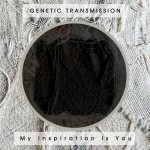
Artist: Genetic Transmission (@)
Title: My Inspiration Is You
Format: CD + Download
Label: Zoharum (http://zoharum.com/) (@)
Rated:

Title: My Inspiration Is You
Format: CD + Download
Label: Zoharum (http://zoharum.com/) (@)
Rated:
If hate had a reverb tail, Tomasz Twardawa would know its exact decay time. My Inspiration Is You - originally self-released in 2004 and now resurrected by Zoharum as part of the GT Archive series - feels like a time capsule of controlled destruction. It’s the twelfth entry in this ongoing exhumation of Twardawa’s uncompromising body of work, and probably one of the most visceral. The fact that the original edition came wrapped in a bandage was not a metaphor but a statement: this music bleeds.
Genetic Transmission has always stood apart in the Polish post-industrial scene - too raw for dark ambient, too abstract for noise, too human for power electronics. Here, Twardawa’s “sound sources: fury, pain and hate” are less emotional triggers than working materials. He sculpts them into dense, metallic structures, as if documenting the slow rusting of his own soul. The Eraserhead voice samples that surface in tracks 1 and 3 aren’t references so much as parasites - remnants of a shared dream of deformity.
The sound is massive yet claustrophobic, a thick fog of frequencies where every hiss feels like a wound and every silence like a withdrawal. And yet, amidst the wreckage, there’s an odd beauty - the kind of beauty you find in decay, in the geometry of corrosion. Twardawa’s compositions never flirt with catharsis; instead, they persist, stubbornly, like a machine refusing to die.
Listening to My Inspiration Is You in 2025 feels like eavesdropping on a past rage that still hasn’t cooled down. Its paradox lies in how personal it is: a document of hatred that somehow speaks of devotion, a mechanical prayer whispered through distortion. Perhaps the title is not ironic after all. Perhaps “you” - whoever that was - really were the fuel that made this machinery scream.
This is not an album that asks to be understood. It demands to be endured - and, if you’re lucky, survived.
Genetic Transmission has always stood apart in the Polish post-industrial scene - too raw for dark ambient, too abstract for noise, too human for power electronics. Here, Twardawa’s “sound sources: fury, pain and hate” are less emotional triggers than working materials. He sculpts them into dense, metallic structures, as if documenting the slow rusting of his own soul. The Eraserhead voice samples that surface in tracks 1 and 3 aren’t references so much as parasites - remnants of a shared dream of deformity.
The sound is massive yet claustrophobic, a thick fog of frequencies where every hiss feels like a wound and every silence like a withdrawal. And yet, amidst the wreckage, there’s an odd beauty - the kind of beauty you find in decay, in the geometry of corrosion. Twardawa’s compositions never flirt with catharsis; instead, they persist, stubbornly, like a machine refusing to die.
Listening to My Inspiration Is You in 2025 feels like eavesdropping on a past rage that still hasn’t cooled down. Its paradox lies in how personal it is: a document of hatred that somehow speaks of devotion, a mechanical prayer whispered through distortion. Perhaps the title is not ironic after all. Perhaps “you” - whoever that was - really were the fuel that made this machinery scream.
This is not an album that asks to be understood. It demands to be endured - and, if you’re lucky, survived.
FRAG: FRAG Deconstructed Genetic Transmission
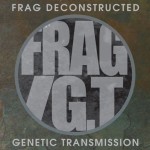
Somewhere between reverence and desecration, Stephen h Burroughs lights a ritual fire over the ashes of Genetic Transmission. Under his alias FRAG, he doesn’t remix or reinterpret the Polish project’s noise - he vivisects it. With surgical perversity and monastic focus, he turns Tomasz Twardawa’s dense sonic matter into a kind of industrial archaeology, scraping corrosion off frequencies until only the ghosts of circuits remain.
Burroughs, known from the iron age of Head of David and the fevered exorcisms of Tunnels of h, has long been obsessed with noise as a vessel of faith - or at least obsession disguised as faith. In FRAG Deconstructed Genetic Transmission, he behaves less like a producer and more like an anatomist of entropy. Each piece (five long, disquieting slabs of sound) moves like a body being remembered - stretched, cracked, reduced to pure vibration. What was once noise becomes language again, though one written in the syntax of decay.
The deconstruction is total. You can almost hear Burroughs in dialogue with Twardawa’s ghost, trading static for silence, tension for surrender. Track “03”, at nearly 23 minutes, feels like standing in a cathedral built of detuned machinery - a mechanical requiem, humming its own demise. Yet even in this ruin, there’s beauty: not the beauty of symmetry, but of persistence, of something still trying to breathe through its wires.
If early industrial was the sound of cities eroding, this is the echo of the ruins dreaming of electricity. FRAG doesn’t modernize Genetic Transmission - he translates it into a new language of corrosion. It’s as if the tape hiss of the past were dissolving into dust and light, whispering: "this is not resurrection - it’s decomposition made sacred".
A demanding, fascinating, and perversely meditative record. Noise as memento mori. Silence as confession.
Burroughs, known from the iron age of Head of David and the fevered exorcisms of Tunnels of h, has long been obsessed with noise as a vessel of faith - or at least obsession disguised as faith. In FRAG Deconstructed Genetic Transmission, he behaves less like a producer and more like an anatomist of entropy. Each piece (five long, disquieting slabs of sound) moves like a body being remembered - stretched, cracked, reduced to pure vibration. What was once noise becomes language again, though one written in the syntax of decay.
The deconstruction is total. You can almost hear Burroughs in dialogue with Twardawa’s ghost, trading static for silence, tension for surrender. Track “03”, at nearly 23 minutes, feels like standing in a cathedral built of detuned machinery - a mechanical requiem, humming its own demise. Yet even in this ruin, there’s beauty: not the beauty of symmetry, but of persistence, of something still trying to breathe through its wires.
If early industrial was the sound of cities eroding, this is the echo of the ruins dreaming of electricity. FRAG doesn’t modernize Genetic Transmission - he translates it into a new language of corrosion. It’s as if the tape hiss of the past were dissolving into dust and light, whispering: "this is not resurrection - it’s decomposition made sacred".
A demanding, fascinating, and perversely meditative record. Noise as memento mori. Silence as confession.
Cadlag: Tensor
Cadlag’s new album "Tensor" (Pharmafabrik, 2025) arrives like an earthquake that has learned the art of patience. This Slovenian collective has always resisted easy classification, living at the crossroads where drone and noise collide with the rigor of hardcore and the abyss of experimental electronics. Their very name, borrowed from mathematical functions that leap discontinuously, feels like a key: the music is about thresholds, about edges where stability crumbles and something unexpected bursts through.
What makes "Tensor" remarkable is the way it transforms space itself into an instrument. These nine tracks were recorded in resonant environments - a cathedral, a World War I cavern, mining shafts, disused industrial sites. The walls, floors, and ceilings do not merely reflect sound; they conspire with it, amplifying menace, deepening silence, smearing distortion until it becomes physical. A bowed note on the electric upright bass lingers not because of delay pedals but because stone and air decide to hold onto it. The environment is not background but co-author.
The opening track, “Tensor”, sets the mood like an invocation: solemn, cavernous, dread-laden, a kind of slow procession through invisible architecture. “Matrix” compresses that intensity into just over three minutes, clinical yet suffocating, while “Legionela” swells like an infection spreading through tissue, layers multiplying until you feel overwhelmed. Shorter fragments like “Kompakte” act like violent breaths - quick stabs of noise between long drones - while the eleven-minute “Ampula” is the gravitational heart of the record, drawing the listener into a slow, corrosive spiral that seems endless. The closing “Cavern” dissolves into reverberations, a final descent into echo where sound collapses into itself.
This music is not friendly, not melodic, and certainly not casual. There are no lyrics to decode, no hooks to whistle afterward, only textures, densities, and silences that demand attention. Yet within its extremity lies a strange clarity. Cadlag do not throw noise at the listener indiscriminately; they sculpt it, balancing chaos with restraint, aggression with emptiness. The dynamics are key: moments of near-stasis make the violent eruptions even more crushing. Listening is exhausting, but not in vain - it feels like wandering through tunnels where every echo carries a warning, and every vibration tells you the structure might give way.
Of course, "Tensor" will not appeal to everyone. Play it in the wrong context - say, at brunch - and you’ll probably lose all your guests. Its emotional palette is narrow, focused almost exclusively on tension, dread, and oppressive weight. But for those who are willing to immerse themselves, the record becomes more than music; it is an acoustic ritual, a confrontation with space, decay, and resonance.
In the end, "Tensor" is a dark monument built from sound and reverberation. It is not a wall of noise but a cathedral of discontinuities, a meditation carved into the frequencies of stone and steel. To hear it properly is to feel your bones vibrate, to recognize that silence is as violent as distortion, and to accept that beauty sometimes comes dressed as collapse.
What makes "Tensor" remarkable is the way it transforms space itself into an instrument. These nine tracks were recorded in resonant environments - a cathedral, a World War I cavern, mining shafts, disused industrial sites. The walls, floors, and ceilings do not merely reflect sound; they conspire with it, amplifying menace, deepening silence, smearing distortion until it becomes physical. A bowed note on the electric upright bass lingers not because of delay pedals but because stone and air decide to hold onto it. The environment is not background but co-author.
The opening track, “Tensor”, sets the mood like an invocation: solemn, cavernous, dread-laden, a kind of slow procession through invisible architecture. “Matrix” compresses that intensity into just over three minutes, clinical yet suffocating, while “Legionela” swells like an infection spreading through tissue, layers multiplying until you feel overwhelmed. Shorter fragments like “Kompakte” act like violent breaths - quick stabs of noise between long drones - while the eleven-minute “Ampula” is the gravitational heart of the record, drawing the listener into a slow, corrosive spiral that seems endless. The closing “Cavern” dissolves into reverberations, a final descent into echo where sound collapses into itself.
This music is not friendly, not melodic, and certainly not casual. There are no lyrics to decode, no hooks to whistle afterward, only textures, densities, and silences that demand attention. Yet within its extremity lies a strange clarity. Cadlag do not throw noise at the listener indiscriminately; they sculpt it, balancing chaos with restraint, aggression with emptiness. The dynamics are key: moments of near-stasis make the violent eruptions even more crushing. Listening is exhausting, but not in vain - it feels like wandering through tunnels where every echo carries a warning, and every vibration tells you the structure might give way.
Of course, "Tensor" will not appeal to everyone. Play it in the wrong context - say, at brunch - and you’ll probably lose all your guests. Its emotional palette is narrow, focused almost exclusively on tension, dread, and oppressive weight. But for those who are willing to immerse themselves, the record becomes more than music; it is an acoustic ritual, a confrontation with space, decay, and resonance.
In the end, "Tensor" is a dark monument built from sound and reverberation. It is not a wall of noise but a cathedral of discontinuities, a meditation carved into the frequencies of stone and steel. To hear it properly is to feel your bones vibrate, to recognize that silence is as violent as distortion, and to accept that beauty sometimes comes dressed as collapse.