
Browse by Genre
Industrial Music / Industrial Metal / Aggro Industrial / Electro Metal
Industrial Noise / Power Noise / Harsh Noise
Synth Pop / Electro Pop / Synth-Electronica
Techno / Trance / Goa / Drum'n'Bass / Jungle / Tribal / Trip-Hop
Ambient / Electronica / Ethereal / Dub / Soundscapes / Abstract
Experimental / Avantgarde / Weird & Wired / Glitch / Noise / Field Recording
Dark / Gothic / Wave / New Wave / Dark Wave / Industrial Gothic
New Music / Downtown / Avantgarde Jazz / New Classical / World
Search Reviews
Music Reviews
Daniel Szwed: Splinter

Daniel Szwed doesn’t play drums - he summons them. He drags the instrument down into the furnace of his own invention, hammers it with noise, scorches it with electricity, and lets it whisper, when needed, through the smoke. "Splinter", his new album on Rope Worm, feels less like a collection of tracks and more like the aftermath of an eruption: shards, pulses, fragments of ritual that still glow with heat.
The Polish percussionist - known from BNNT, Dynasonic, and collaborations that stretch across the borders of noise, art, and techno - has always sought sound not as texture but as resistance. Here, under the guidance of producer Mateusz Rosiski, he continues that trajectory but narrows the focus: "Splinter" is both heavier and more skeletal than its predecessor "Sun’s Mother", stripping away any hint of grandeur to reveal what’s underneath - nerve, tension, and the slow violence of rhythm itself.
The guests, scattered like echoes across the album, are not collaborators so much as apparitions. Jessica opens the record with "S1", a vocal incantation half-drowned in distortion - a voice caught between invocation and malfunction. Natalia Górecka’s piano on "S2" introduces a strange calm, as if a room momentarily cleared of smoke, before the machinery starts again. Mala Herba, who appears twice, adds her signature haunted presence: not singing over Szwed’s sound but inside it, like someone trapped in its circuitry. And Liam Andrews - of My Disco and Big Brave lineage - lends weight and gravity to "S4", where bass, flutes, and percussion merge into something that resembles a collapsing building played in reverse.
What makes "Splinter" compelling is its sense of moral urgency beneath the noise. There’s the explicit shout - “Free Palestine!” stamped on the credits - but also a deeper resonance: an artist refusing to make neutral sound. Even the structure of the album feels political - fractured, unresolved, unpolished in the most deliberate sense. It’s a work of defiance, of brokenness embraced as the truest possible form.
If "Sun’s Mother" was the ritual at sunset, "Splinter" is the one performed under emergency lighting, when power’s been cut but something still needs to be said - loudly, through the cracks.
Szwed’s music has always balanced between endurance and transcendence, but here it feels as if he’s stopped seeking either. What’s left is something more vital: pulse as protest, distortion as confession, feedback as a form of prayer.
And when the final track fades, it doesn’t feel like an ending. It feels like standing in the silence after an explosion - counting, not casualties, but survivors.
The Polish percussionist - known from BNNT, Dynasonic, and collaborations that stretch across the borders of noise, art, and techno - has always sought sound not as texture but as resistance. Here, under the guidance of producer Mateusz Rosiski, he continues that trajectory but narrows the focus: "Splinter" is both heavier and more skeletal than its predecessor "Sun’s Mother", stripping away any hint of grandeur to reveal what’s underneath - nerve, tension, and the slow violence of rhythm itself.
The guests, scattered like echoes across the album, are not collaborators so much as apparitions. Jessica opens the record with "S1", a vocal incantation half-drowned in distortion - a voice caught between invocation and malfunction. Natalia Górecka’s piano on "S2" introduces a strange calm, as if a room momentarily cleared of smoke, before the machinery starts again. Mala Herba, who appears twice, adds her signature haunted presence: not singing over Szwed’s sound but inside it, like someone trapped in its circuitry. And Liam Andrews - of My Disco and Big Brave lineage - lends weight and gravity to "S4", where bass, flutes, and percussion merge into something that resembles a collapsing building played in reverse.
What makes "Splinter" compelling is its sense of moral urgency beneath the noise. There’s the explicit shout - “Free Palestine!” stamped on the credits - but also a deeper resonance: an artist refusing to make neutral sound. Even the structure of the album feels political - fractured, unresolved, unpolished in the most deliberate sense. It’s a work of defiance, of brokenness embraced as the truest possible form.
If "Sun’s Mother" was the ritual at sunset, "Splinter" is the one performed under emergency lighting, when power’s been cut but something still needs to be said - loudly, through the cracks.
Szwed’s music has always balanced between endurance and transcendence, but here it feels as if he’s stopped seeking either. What’s left is something more vital: pulse as protest, distortion as confession, feedback as a form of prayer.
And when the final track fades, it doesn’t feel like an ending. It feels like standing in the silence after an explosion - counting, not casualties, but survivors.
Marmur: Elektroniczne Systemy
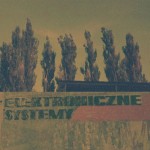
There’s a certain grim laughter humming inside Elektroniczne Systemy. It’s the kind that sneaks out from between dusty oscillators and corroded guitar cables, that peculiar Polish humour which sounds like despair trying to dance, failing gracefully, and deciding that failure is, in fact, the point.
Marmur - that’s Artur Rumiski and Macio Moretti - are two shapeshifters from different ends of the country’s experimental underground: Rumiski, the architect of texture and tension in outfits like Furia, Thaw, and Arrm, and Moretti, the cosmic jester behind LXMP and countless side aliases, who treats irony like a musical instrument. Together, they form a duo that sounds less like a band and more like a "malfunctioning ecosystem", where guitars melt into static, machines breathe, and feedback turns into a form of prayer.
The album’s title, Elektroniczne Systemy (“Electronic Systems”), is wonderfully misleading. There’s nothing systematic here. Everything bleeds. Circuits collapse into drones, drones crack into glitches, and every sound feels like it’s trying to reform itself after a slow disaster. It’s ambient music if you redefined “ambient” as “the inside of a broken fax machine dreaming of the sea”.
Opener “Ludzko” (Humanity) begins like an autopsy of civilization recorded through a wet contact mic - metallic hums, ghostly overtones, a texture that hovers between sacred and decomposing. “Drena” stretches out into twelve minutes of magnetic fatigue, like a field recording of entropy itself. And “Objazd” (Detour) closes the album with an oddly optimistic sputter - the sound of a detour that never quite finds its way back, yet enjoys the confusion.
What’s striking is how Elektroniczne Systemy feels neither nostalgic nor futuristic. It exists in a present tense of corrosion - a moment where analog and digital, human and mechanical, serious and absurd, all short-circuit into one another. The production, courtesy of Bartek Kapsa, preserves that instability with surgical precision: everything sounds deliberate, but nothing feels safe.
It’s music for the non-functioning device that is you: funny, unsettling, tender in its mechanical coldness. Rumiski and Moretti manage to build an emotional architecture out of glitches, feedback, and small domestic ghosts.
In the end, Elektroniczne Systemy doesn’t really play - it persists, like a faint electric hum in a dark room after you’ve turned everything off. A reminder that the machines are listening too.
Marmur - that’s Artur Rumiski and Macio Moretti - are two shapeshifters from different ends of the country’s experimental underground: Rumiski, the architect of texture and tension in outfits like Furia, Thaw, and Arrm, and Moretti, the cosmic jester behind LXMP and countless side aliases, who treats irony like a musical instrument. Together, they form a duo that sounds less like a band and more like a "malfunctioning ecosystem", where guitars melt into static, machines breathe, and feedback turns into a form of prayer.
The album’s title, Elektroniczne Systemy (“Electronic Systems”), is wonderfully misleading. There’s nothing systematic here. Everything bleeds. Circuits collapse into drones, drones crack into glitches, and every sound feels like it’s trying to reform itself after a slow disaster. It’s ambient music if you redefined “ambient” as “the inside of a broken fax machine dreaming of the sea”.
Opener “Ludzko” (Humanity) begins like an autopsy of civilization recorded through a wet contact mic - metallic hums, ghostly overtones, a texture that hovers between sacred and decomposing. “Drena” stretches out into twelve minutes of magnetic fatigue, like a field recording of entropy itself. And “Objazd” (Detour) closes the album with an oddly optimistic sputter - the sound of a detour that never quite finds its way back, yet enjoys the confusion.
What’s striking is how Elektroniczne Systemy feels neither nostalgic nor futuristic. It exists in a present tense of corrosion - a moment where analog and digital, human and mechanical, serious and absurd, all short-circuit into one another. The production, courtesy of Bartek Kapsa, preserves that instability with surgical precision: everything sounds deliberate, but nothing feels safe.
It’s music for the non-functioning device that is you: funny, unsettling, tender in its mechanical coldness. Rumiski and Moretti manage to build an emotional architecture out of glitches, feedback, and small domestic ghosts.
In the end, Elektroniczne Systemy doesn’t really play - it persists, like a faint electric hum in a dark room after you’ve turned everything off. A reminder that the machines are listening too.
The Mad Laboratory of Anti-Matter: Study Of A Dead End

Artist: The Mad Laboratory of Anti-Matter (http://www.paed.ch/tmloam.html)
Title: Study Of A Dead End
Format: LP
Label: moli del tro
Rated:

Title: Study Of A Dead End
Format: LP
Label: moli del tro
Rated:
The Mad Laboratory of Anti-Matter sound like they’ve just detonated a club inside a philosophy department - and filmed the aftermath with a contact mic. *Study of a Dead End*, their debut for moli del tro, is a volatile collision of industrial fury, Lebanese pulse, and Swiss precision, crafted by the duo of Nadia Daou and Paed Conca - two restless multi-instrumentalists who turn discontent into audible chaos.
The record opens like a manifesto scribbled on the back of a circuit board. “Annihilation of Denial” is not a song but a declaration - a mechanical stomp drenched in distortion, clarinet howls, and Daou’s hypnotic vocal fragments, which sound like coded messages from a future uprising. By the time “Punching at Power (Tribute to Allen Ginsberg)” arrives, you start to suspect the duo might be channeling the Beat poet’s ghost through a malfunctioning drum machine. Their rebellion is not nostalgic but visceral - you can almost hear the sweat of resistance under the synthetic glare.
Conca, a veteran of Europe’s experimental scene (BNNT, Port Said, Praed), and Daou, known for her raw fusion of Middle Eastern and electronic ritualism, forge an unlikely hybrid: part techno séance, part anti-fascist cabaret. Every beat seems to question authority; every processed reed line feels like a call to arms disguised as a groove. It’s music that scratches, bites, and sometimes even smiles - but never politely.
The title, Study of a Dead End, could be ironic. Nothing here feels like a dead end. If anything, this album studies collapse the way arsonists study fire - intimately, with curiosity, and a touch of perverse affection. “Society of the Spectacle”, the brief, twitching centerpiece, plays like a Situationist prank - a noisy wink at Debord’s ghost before Roman Hiele’s remix turns it into a neon labyrinth of loops and disintegration.
What makes the record fascinating is its duality: it’s both methodical and manic. The drums march like an algorithm; the clarinet melts like mercury. Nadia’s electronics hum like overheated machinery. And underneath it all, a pulse - not quite human, not quite robotic - keeps beating, stubbornly, like a protester’s heart under a riot helmet.
In the end, Study of a Dead End feels like a question thrown at the listener: what happens when you dance at the edge of collapse? Daou and Conca don’t give an answer - they just turn up the volume, open the lab door, and let the feedback do the talking.
The record opens like a manifesto scribbled on the back of a circuit board. “Annihilation of Denial” is not a song but a declaration - a mechanical stomp drenched in distortion, clarinet howls, and Daou’s hypnotic vocal fragments, which sound like coded messages from a future uprising. By the time “Punching at Power (Tribute to Allen Ginsberg)” arrives, you start to suspect the duo might be channeling the Beat poet’s ghost through a malfunctioning drum machine. Their rebellion is not nostalgic but visceral - you can almost hear the sweat of resistance under the synthetic glare.
Conca, a veteran of Europe’s experimental scene (BNNT, Port Said, Praed), and Daou, known for her raw fusion of Middle Eastern and electronic ritualism, forge an unlikely hybrid: part techno séance, part anti-fascist cabaret. Every beat seems to question authority; every processed reed line feels like a call to arms disguised as a groove. It’s music that scratches, bites, and sometimes even smiles - but never politely.
The title, Study of a Dead End, could be ironic. Nothing here feels like a dead end. If anything, this album studies collapse the way arsonists study fire - intimately, with curiosity, and a touch of perverse affection. “Society of the Spectacle”, the brief, twitching centerpiece, plays like a Situationist prank - a noisy wink at Debord’s ghost before Roman Hiele’s remix turns it into a neon labyrinth of loops and disintegration.
What makes the record fascinating is its duality: it’s both methodical and manic. The drums march like an algorithm; the clarinet melts like mercury. Nadia’s electronics hum like overheated machinery. And underneath it all, a pulse - not quite human, not quite robotic - keeps beating, stubbornly, like a protester’s heart under a riot helmet.
In the end, Study of a Dead End feels like a question thrown at the listener: what happens when you dance at the edge of collapse? Daou and Conca don’t give an answer - they just turn up the volume, open the lab door, and let the feedback do the talking.
Lubin: Gaza


Listening to Lubin's Gaza is like standing in a war zone of sound - the distant tremor of explosions filtered through sine waves, voices bleeding into beat patterns, grief and anger given rhythmic form. It's not easy music, but it's urgent, uncompromising, and haunted by the weight of its own witness.
Lubin’s second album doesn’t just gesture toward protest - it drags the protest into the body. The template is raw industrial techno, with pulse and drive, but those beats never dominate: they are the skeleton beneath the flesh of field recordings, news fragments, voices from the ground. You feel the collision: the circuitry of machines and the flesh of speech, the abstraction of electronic design and the rawness of trauma.
From the opening “Raw Power” onward, the record feels like a struggle - not just against silence, but against forgetting. Al-Szifa moves slowly, gravely, as though walking through ruins; Gush Emunin turns tension into echo, letting resonance linger like smoke. Deptanie SzkLa (“treading glass”) is brittle sound made form, shards of rhythm under pressure. Jabalya and Sumud (a word meaning “steadfastness”) are dirges in motion. And in Gniew (“anger”), Lubin lets the full force loose: the longest track, the most exposed, where electronics, voice, modulations collide in catharsis.
What is striking is Lubin’s refusal to take a simple pole. The album does not pretend that its testimony is unambiguous; it explores how voices fracture under violence, how political catastrophe bleeds into personal pain. The result is not a manifesto but a lamentation that refuses to dull its edges.
One hears in Gaza echoes of industrial and darkambient traditions - but also something more alive, more precarious: music that feels like walking on cracked ground. You feel the instability in the mix, the shifting balance between noise and presence. The production is unflinching: no softening, no smoothing. The CD edition is limited (300 copies), folded in six-panel ekopack, reinforcing that this is precious and fragile.
A listener might stumble here - this is not comfortable music. But it is an album that demands to be heard. After the final echo fades, you realize it doesn’t leave you, because Gaza was never just sound. It was a call, a wound, a witness, and in that sense, it continues.
Lubin’s second album doesn’t just gesture toward protest - it drags the protest into the body. The template is raw industrial techno, with pulse and drive, but those beats never dominate: they are the skeleton beneath the flesh of field recordings, news fragments, voices from the ground. You feel the collision: the circuitry of machines and the flesh of speech, the abstraction of electronic design and the rawness of trauma.
From the opening “Raw Power” onward, the record feels like a struggle - not just against silence, but against forgetting. Al-Szifa moves slowly, gravely, as though walking through ruins; Gush Emunin turns tension into echo, letting resonance linger like smoke. Deptanie SzkLa (“treading glass”) is brittle sound made form, shards of rhythm under pressure. Jabalya and Sumud (a word meaning “steadfastness”) are dirges in motion. And in Gniew (“anger”), Lubin lets the full force loose: the longest track, the most exposed, where electronics, voice, modulations collide in catharsis.
What is striking is Lubin’s refusal to take a simple pole. The album does not pretend that its testimony is unambiguous; it explores how voices fracture under violence, how political catastrophe bleeds into personal pain. The result is not a manifesto but a lamentation that refuses to dull its edges.
One hears in Gaza echoes of industrial and darkambient traditions - but also something more alive, more precarious: music that feels like walking on cracked ground. You feel the instability in the mix, the shifting balance between noise and presence. The production is unflinching: no softening, no smoothing. The CD edition is limited (300 copies), folded in six-panel ekopack, reinforcing that this is precious and fragile.
A listener might stumble here - this is not comfortable music. But it is an album that demands to be heard. After the final echo fades, you realize it doesn’t leave you, because Gaza was never just sound. It was a call, a wound, a witness, and in that sense, it continues.
? (Mika Vainio): Sysivalo
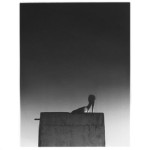
There are albums that close a chapter, and there are albums that dim the light forever. "Sysivalo" - literally “darklight”, a word Mika Vainio invented by suturing "sysi" (darkness) and "valo" (light) - is both. Begun in 2014 and nearly finished before his passing in 2017, this ninth Ø record finally surfaces eight years later, not as an archive but as a last heartbeat that somehow keeps echoing.
The title tells the whole story: contradiction as oxygen. Vainio was always a master of paradox - the minimalist who made silence scream, the noise artist who knew when to whisper. "Sysivalo" is the distilled essence of that dialectic: 20 short etudes, each one like a small frost pattern on a windowpane, gone the moment you lean closer to inspect it.
The "Etudes" - seven of them scattered across the album - feel like diary fragments of a mind at work in isolation: tone experiments that hum, stutter, and stop mid-breath. There’s rhythm, but it’s rarely human; melody, but glimpsed through fog. Occasionally, something like warmth flickers ("Sylvannus", "Uusikuu"), but even that warmth feels borrowed from the friction of machines. The more melodic pieces, such as "Kangastus" (“mirage”) or "Ursa", recall the ghostly minimalism of early Ø, but they’ve aged - like field recordings from the underworld of electricity.
And then there’s "Loputon" - “Endless”. The last word, literally and metaphorically. It’s serene without being soft, like a pulse that’s decided to keep going even after the body has stopped. If death ever had an outro, this would be it: not grief, but quiet acceptance.
What’s extraordinary is how "Sysivalo" manages to be alive. Despite its posthumous nature, nothing here feels embalmed. It’s as if Vainio’s circuits are still running somewhere - eternally rebooting, perpetually crackling in the Finnish winter. The album sounds at once ancient and futuristic, like an abandoned radio tower still transmitting to no one in particular.
There’s also a sly sense of humor hiding in the austerity - that dry Vainio wit, the same that named a piece "T-Bahn" or could turn feedback into philosophy. Even in his most severe moments, he never lost touch with play - the childlike curiosity of what happens when you feed a spark into darkness.
Listening to "Sysivalo" feels like standing at the edge of a frozen lake at night: everything silent, but beneath the surface, the ice creaks, mutters, remembers. You realize that Vainio never really left. He just found a quieter frequency.
This isn’t a monument - it’s a transmission, faint but clear, from that strange border where light and darkness stop pretending they’re different things.
The title tells the whole story: contradiction as oxygen. Vainio was always a master of paradox - the minimalist who made silence scream, the noise artist who knew when to whisper. "Sysivalo" is the distilled essence of that dialectic: 20 short etudes, each one like a small frost pattern on a windowpane, gone the moment you lean closer to inspect it.
The "Etudes" - seven of them scattered across the album - feel like diary fragments of a mind at work in isolation: tone experiments that hum, stutter, and stop mid-breath. There’s rhythm, but it’s rarely human; melody, but glimpsed through fog. Occasionally, something like warmth flickers ("Sylvannus", "Uusikuu"), but even that warmth feels borrowed from the friction of machines. The more melodic pieces, such as "Kangastus" (“mirage”) or "Ursa", recall the ghostly minimalism of early Ø, but they’ve aged - like field recordings from the underworld of electricity.
And then there’s "Loputon" - “Endless”. The last word, literally and metaphorically. It’s serene without being soft, like a pulse that’s decided to keep going even after the body has stopped. If death ever had an outro, this would be it: not grief, but quiet acceptance.
What’s extraordinary is how "Sysivalo" manages to be alive. Despite its posthumous nature, nothing here feels embalmed. It’s as if Vainio’s circuits are still running somewhere - eternally rebooting, perpetually crackling in the Finnish winter. The album sounds at once ancient and futuristic, like an abandoned radio tower still transmitting to no one in particular.
There’s also a sly sense of humor hiding in the austerity - that dry Vainio wit, the same that named a piece "T-Bahn" or could turn feedback into philosophy. Even in his most severe moments, he never lost touch with play - the childlike curiosity of what happens when you feed a spark into darkness.
Listening to "Sysivalo" feels like standing at the edge of a frozen lake at night: everything silent, but beneath the surface, the ice creaks, mutters, remembers. You realize that Vainio never really left. He just found a quieter frequency.
This isn’t a monument - it’s a transmission, faint but clear, from that strange border where light and darkness stop pretending they’re different things.