
Browse by Genre
Industrial Music / Industrial Metal / Aggro Industrial / Electro Metal
Industrial Noise / Power Noise / Harsh Noise
Synth Pop / Electro Pop / Synth-Electronica
Techno / Trance / Goa / Drum'n'Bass / Jungle / Tribal / Trip-Hop
Ambient / Electronica / Ethereal / Dub / Soundscapes / Abstract
Experimental / Avantgarde / Weird & Wired / Glitch / Noise / Field Recording
Dark / Gothic / Wave / New Wave / Dark Wave / Industrial Gothic
New Music / Downtown / Avantgarde Jazz / New Classical / World
Search Reviews
Music Reviews
Hiroshi Ebina: On Solitude

There was probably a time when solitude meant forests, mountains, monks, maybe a lighthouse keeper staring heroically into Atlantic storms. In 2026 solitude mostly means turning your phone face down for eleven minutes and pretending not to hear civilization vibrating inside your pocket. Into this exhausted condition arrives "On Solitude" by Hiroshi Ebina, a record that does not romanticize isolation so much as rehabilitate it. Not loneliness as punishment, but solitude as recovery protocol for nervous systems damaged by permanent connectivity.
Released by KITCHEN. LABEL, Ebina’s third album for the imprint continues his gradual movement toward what might loosely be called post-digital ambient music. Yet that term barely captures the emotional delicacy of the work. Across thirteen tracks, Ebina builds a sound world suspended somewhere between dream techno, environmental composition, ambient minimalism, and faded memory architecture. The album feels less like a sequence of songs than a carefully lit interior space designed for listening to one’s own thoughts without immediately panicking about them.
The influence of Perfect Days hangs gently over the album, not through imitation but through temperament. Like Wenders’ film, "On Solitude" finds quiet dignity in repetition, routine, and attentive observation. Ebina seems fascinated by small internal shifts rather than dramatic gestures. A synth pattern subtly mutates. A field recording drifts through the edge of perception. A piano chord lingers slightly longer than expected. Tiny movements become emotionally seismic because the music leaves enough space for the listener to notice them.
“The Village in the Sky”, featuring Hinako Omori, opens the album with a kind of restrained radiance. Omori’s presence feels almost evaporative, her voice less a lead performance than a soft atmospheric current threading through the arrangement. The track establishes the album’s central emotional paradox immediately: the music feels deeply melancholic without becoming despairing. Ebina understands that sadness and calm are not opposites. Sometimes they share the same room quietly for years.
Elsewhere, “Your Mind Is Like the Ocean” and its mirrored counterpart “My Mind Is Like the Ocean” function almost like emotional weather systems. Low-end pulses drift beneath shimmering synth textures that never fully settle into rhythmic certainty. The tracks evoke internal turbulence rendered at a distance, as though observing one’s own anxiety from the shoreline rather than drowning inside it. Dream techno is an accurate descriptor here, but only partially. These rhythms do not propel bodies toward ecstasy so much as guide consciousness toward stillness.
Ebina’s compositional restraint is crucial to the album’s success. Lesser artists working within ambient-adjacent territories often confuse softness with emotional depth, producing endless washes of decorative melancholy fit mainly for expensive cafés where everyone is typing emails about “creative alignment”. "On Solitude" avoids this fate because it remains attentive to detail. “Saudade da Memória Perdida,” with its delicate music-box motifs, could easily have collapsed into sentimentality. Instead, it feels strangely unresolved, like remembering a childhood place incorrectly yet emotionally accurately.
The shorter interludes, particularly “For Brief Moment” and “Hush”, function almost as breathing spaces between emotional states. Ebina appears less interested in traditional narrative progression than in creating fluctuating conditions of attention. Listening becomes less about anticipation and more about inhabitation. Which sounds suspiciously close to mindfulness culture, admittedly, but the album thankfully avoids the smug therapeutic optimism that often infects music marketed as healing. Ebina does not promise enlightenment. He merely offers a temporary refuge from overstimulation.
Side B drifts even further inward. “Transience/Permanence” and “Quiescence” dissolve rhythmic structure almost entirely, allowing spectral piano tones and suspended harmonics to hover in ambiguous emotional territory. The influence of post-classical minimalism emerges here, though Ebina filters it through electronic atmospheres warm enough to avoid academic coldness. “Hokokuji Bamboo Forest” subtly integrates environmental recordings into the music, transforming natural ambience into part of the harmonic ecology rather than exotic decoration. The piece breathes rather than performs nature.
The closing “A Silent Room”, featuring marucoporoporo, is among the album’s quietest and most affecting moments. The vocals barely insist upon themselves, arriving like traces of human presence inside a room already filled with memory. By this point, the album has abandoned any distinction between external landscape and internal consciousness. Solitude becomes not absence but permeability, a state in which thoughts, sounds, memories, and environments intermingle without hierarchy.
What makes "On Solitude" particularly compelling is its resistance to spectacle. Contemporary electronic music often feels trapped between maximalist stimulation and carefully branded introspection. Ebina chooses neither route. His music unfolds patiently, trusting listeners enough not to constantly demand attention. In a culture optimized for interruption, this patience feels quietly radical.
Mastering engineer Joseph Branciforte preserves the album’s fragile spatial qualities beautifully, while the artwork by Chizuru Masumura complements the music’s understated emotional architecture without overstating its themes. Everything about the release suggests careful attention without preciousness.
By the end, "On Solitude" does not necessarily make the listener feel better. It does something more interesting. It restores sensitivity to small emotional textures modern life continuously erodes. The faint ache beneath routine. The warmth hidden inside repetition. The strange relief of becoming temporarily unreachable.
Humanity spent decades inventing technologies meant to eliminate distance, silence, and waiting. Now entire generations are desperately buying ambient records to simulate the psychological conditions those technologies destroyed. Ebina, at least, understands the irony well enough to turn it into something genuinely beautiful.
Released by KITCHEN. LABEL, Ebina’s third album for the imprint continues his gradual movement toward what might loosely be called post-digital ambient music. Yet that term barely captures the emotional delicacy of the work. Across thirteen tracks, Ebina builds a sound world suspended somewhere between dream techno, environmental composition, ambient minimalism, and faded memory architecture. The album feels less like a sequence of songs than a carefully lit interior space designed for listening to one’s own thoughts without immediately panicking about them.
The influence of Perfect Days hangs gently over the album, not through imitation but through temperament. Like Wenders’ film, "On Solitude" finds quiet dignity in repetition, routine, and attentive observation. Ebina seems fascinated by small internal shifts rather than dramatic gestures. A synth pattern subtly mutates. A field recording drifts through the edge of perception. A piano chord lingers slightly longer than expected. Tiny movements become emotionally seismic because the music leaves enough space for the listener to notice them.
“The Village in the Sky”, featuring Hinako Omori, opens the album with a kind of restrained radiance. Omori’s presence feels almost evaporative, her voice less a lead performance than a soft atmospheric current threading through the arrangement. The track establishes the album’s central emotional paradox immediately: the music feels deeply melancholic without becoming despairing. Ebina understands that sadness and calm are not opposites. Sometimes they share the same room quietly for years.
Elsewhere, “Your Mind Is Like the Ocean” and its mirrored counterpart “My Mind Is Like the Ocean” function almost like emotional weather systems. Low-end pulses drift beneath shimmering synth textures that never fully settle into rhythmic certainty. The tracks evoke internal turbulence rendered at a distance, as though observing one’s own anxiety from the shoreline rather than drowning inside it. Dream techno is an accurate descriptor here, but only partially. These rhythms do not propel bodies toward ecstasy so much as guide consciousness toward stillness.
Ebina’s compositional restraint is crucial to the album’s success. Lesser artists working within ambient-adjacent territories often confuse softness with emotional depth, producing endless washes of decorative melancholy fit mainly for expensive cafés where everyone is typing emails about “creative alignment”. "On Solitude" avoids this fate because it remains attentive to detail. “Saudade da Memória Perdida,” with its delicate music-box motifs, could easily have collapsed into sentimentality. Instead, it feels strangely unresolved, like remembering a childhood place incorrectly yet emotionally accurately.
The shorter interludes, particularly “For Brief Moment” and “Hush”, function almost as breathing spaces between emotional states. Ebina appears less interested in traditional narrative progression than in creating fluctuating conditions of attention. Listening becomes less about anticipation and more about inhabitation. Which sounds suspiciously close to mindfulness culture, admittedly, but the album thankfully avoids the smug therapeutic optimism that often infects music marketed as healing. Ebina does not promise enlightenment. He merely offers a temporary refuge from overstimulation.
Side B drifts even further inward. “Transience/Permanence” and “Quiescence” dissolve rhythmic structure almost entirely, allowing spectral piano tones and suspended harmonics to hover in ambiguous emotional territory. The influence of post-classical minimalism emerges here, though Ebina filters it through electronic atmospheres warm enough to avoid academic coldness. “Hokokuji Bamboo Forest” subtly integrates environmental recordings into the music, transforming natural ambience into part of the harmonic ecology rather than exotic decoration. The piece breathes rather than performs nature.
The closing “A Silent Room”, featuring marucoporoporo, is among the album’s quietest and most affecting moments. The vocals barely insist upon themselves, arriving like traces of human presence inside a room already filled with memory. By this point, the album has abandoned any distinction between external landscape and internal consciousness. Solitude becomes not absence but permeability, a state in which thoughts, sounds, memories, and environments intermingle without hierarchy.
What makes "On Solitude" particularly compelling is its resistance to spectacle. Contemporary electronic music often feels trapped between maximalist stimulation and carefully branded introspection. Ebina chooses neither route. His music unfolds patiently, trusting listeners enough not to constantly demand attention. In a culture optimized for interruption, this patience feels quietly radical.
Mastering engineer Joseph Branciforte preserves the album’s fragile spatial qualities beautifully, while the artwork by Chizuru Masumura complements the music’s understated emotional architecture without overstating its themes. Everything about the release suggests careful attention without preciousness.
By the end, "On Solitude" does not necessarily make the listener feel better. It does something more interesting. It restores sensitivity to small emotional textures modern life continuously erodes. The faint ache beneath routine. The warmth hidden inside repetition. The strange relief of becoming temporarily unreachable.
Humanity spent decades inventing technologies meant to eliminate distance, silence, and waiting. Now entire generations are desperately buying ambient records to simulate the psychological conditions those technologies destroyed. Ebina, at least, understands the irony well enough to turn it into something genuinely beautiful.
Dekad: A Distorted View

Before writing anything about Dekad’s new album, I would like to express my solidarity with BOREDOMproduct, which had to suspend its label activities for a year after being affected by the wildfire that struck a vast area of Marseille in the summer of 2025. That said, let’s turn to J.B. Lacassagne’s project, here assisted by Member U-0176 on production. The new album A Distorted View arrives four years after Nowhere Lines and three years after Videodrama, the album by The Overlookers, a project formed by J.B. together with Creature XY of Foretaste. A Distorted View finds its strength in the instrumental department, where E.B.M. and synth-pop blend as if it were a collaboration between Depeche Mode’s Black Celebration era and early And One (I’m not sure why, but the track “I Should Have” particularly brought this comparison to mind). The sounds are never banal, and the rhythmic sections are meticulously crafted: instead of standard kick and snare patterns, you’ll often hear processed and modified percussive elements. This richness intertwines beautifully with the synth textures, creating a never-dull sonic tapestry that shifts with each track. In my opinion, this is the album’s greatest asset, along with its consistently catchy and inventive melodies. Lyrically, rather than depicting specific situations, the songs explore emotional states that highlight the fragility and uncertainty of the human psyche during personal crises triggered by relationships or social circumstances. To give you an idea, here’s an excerpt from “Crystal”: “Reality’s collapsing / My mind slowly fracturing / Shadows in the corner of my eyes / Whispers linger in my ears / Fading illusion / Broken confusion / In a distorted state / Nothing is ever straight". The only "weak" point lies in the vocal delivery, which remains within a fairly narrow harmonic range throughout the album. This makes the voice sound somewhat uniform from track to track. This is the reason why I’m deducting half a point from my overall score. Nevertheless, A Distorted View is undoubtedly an album that deserves your attention.
Lauer: K1m Fantasy EP
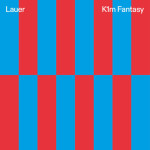
Somewhere, in a parallel universe where dance floors behave like philosophical devices instead of sticky social experiments, "K1m Fantasy" makes perfect sense. In this one, it still does, but you have to meet it halfway. Philipp Lauer, operating as Lauer, has been around long enough to know that confidence in electronic music isn’t about volume or speed. It’s about restraint, timing, and the quiet arrogance of someone who’s seen trends come and go like seasonal allergies.
Released via Melodize, the imprint helmed by Beartrax, this EP doesn’t try to reinvent the dance floor. It treats it more like a lucid dream, a place where familiar forms behave slightly differently, as if they’ve been given just enough freedom to misbehave without collapsing entirely.
“Boss Electro” opens with the kind of self-assurance that would be unbearable if it weren’t so precisely calibrated. The groove is crisp, almost architectural, but there’s a looseness in the synth work that keeps it from feeling like a museum piece. Lauer isn’t showing off. He’s demonstrating control, which is more unsettling. You get the sense he could push it further, harder, faster, but chooses not to. Discipline as a flex. Irritating, but effective.
“Rabbits” shifts tone without abandoning structure. The title suggests whimsy, and yes, there’s something playful in the bouncing synth lines, but it’s not naïve. It feels more like watching something small and alert navigating a space that might not be entirely safe. The track hops, but it also listens. There’s tension under the surface, which saves it from becoming decorative.
The title track, “K1m Fantasy”, is where things stretch out and breathe. The tempo relaxes, the textures widen, and suddenly the dance floor becomes less about movement and more about suspension. It’s introspective without collapsing into self-importance, a delicate balance that many producers attempt and few manage. Lauer lets the elements unfold at their own pace, trusting the listener to stay with him. Which is generous, or risky, depending on your attention span.
“Choirs” closes the EP with a curious blend of the ceremonial and the synthetic. Brassy stabs cut through layers of vocal-like textures that feel communal but slightly uncanny, like a congregation made of circuits. There’s an undercurrent of collectivity here, a reminder that even the most individualistic dance floor experiences are, at their core, shared illusions. Not exactly comforting, but at least honest.
Lauer’s two-decade trajectory through electronic music is audible in the details. You can trace faint echoes of electro, techno, even Italo-adjacent warmth, but nothing feels nostalgic. If anything, "K1m Fantasy" is suspicious of nostalgia. It prefers to hover in a kind of perpetual present, where past influences are acknowledged but not worshipped.
It’s also worth noting what the EP doesn’t do. It doesn’t chase immediacy, doesn’t rely on obvious peaks, doesn’t beg for attention. In a landscape where many tracks behave like over-caffeinated sales pitches, this one feels almost aloof. It assumes you’ll come to it. If you don’t, it will continue existing just fine without you.
Which, annoyingly, makes it more compelling.
Released via Melodize, the imprint helmed by Beartrax, this EP doesn’t try to reinvent the dance floor. It treats it more like a lucid dream, a place where familiar forms behave slightly differently, as if they’ve been given just enough freedom to misbehave without collapsing entirely.
“Boss Electro” opens with the kind of self-assurance that would be unbearable if it weren’t so precisely calibrated. The groove is crisp, almost architectural, but there’s a looseness in the synth work that keeps it from feeling like a museum piece. Lauer isn’t showing off. He’s demonstrating control, which is more unsettling. You get the sense he could push it further, harder, faster, but chooses not to. Discipline as a flex. Irritating, but effective.
“Rabbits” shifts tone without abandoning structure. The title suggests whimsy, and yes, there’s something playful in the bouncing synth lines, but it’s not naïve. It feels more like watching something small and alert navigating a space that might not be entirely safe. The track hops, but it also listens. There’s tension under the surface, which saves it from becoming decorative.
The title track, “K1m Fantasy”, is where things stretch out and breathe. The tempo relaxes, the textures widen, and suddenly the dance floor becomes less about movement and more about suspension. It’s introspective without collapsing into self-importance, a delicate balance that many producers attempt and few manage. Lauer lets the elements unfold at their own pace, trusting the listener to stay with him. Which is generous, or risky, depending on your attention span.
“Choirs” closes the EP with a curious blend of the ceremonial and the synthetic. Brassy stabs cut through layers of vocal-like textures that feel communal but slightly uncanny, like a congregation made of circuits. There’s an undercurrent of collectivity here, a reminder that even the most individualistic dance floor experiences are, at their core, shared illusions. Not exactly comforting, but at least honest.
Lauer’s two-decade trajectory through electronic music is audible in the details. You can trace faint echoes of electro, techno, even Italo-adjacent warmth, but nothing feels nostalgic. If anything, "K1m Fantasy" is suspicious of nostalgia. It prefers to hover in a kind of perpetual present, where past influences are acknowledged but not worshipped.
It’s also worth noting what the EP doesn’t do. It doesn’t chase immediacy, doesn’t rely on obvious peaks, doesn’t beg for attention. In a landscape where many tracks behave like over-caffeinated sales pitches, this one feels almost aloof. It assumes you’ll come to it. If you don’t, it will continue existing just fine without you.
Which, annoyingly, makes it more compelling.
Timo Kaukolampi: Strive – Original Music & Outtakes

Artist: Timo Kaukolampi (@)
Title: Strive – Original Music & Outtakes
Format: CD + Download
Label: Öm Sound
Rated:

Title: Strive – Original Music & Outtakes
Format: CD + Download
Label: Öm Sound
Rated:
Soundtracks often pretend to guide you through a story. "Strive – Original Music & Outtakes" does something less polite: it drops you into a malfunctioning system and lets you figure out where the exits used to be.
Timo Kaukolampi has spent years navigating the intersection between kosmische drift, industrial pulse and something colder, more clinical. With K-X-P and Op:l Bastards, he built a reputation for music that feels engineered rather than composed, as if circuitry had developed a taste for rhythm. This first solo soundtrack doesn’t mark a departure. It sharpens the edges.
The premise behind "Strive" - a near-future world where technological obsession has quietly replaced human connection - could easily collapse into familiar dystopian aesthetics. Kaukolampi avoids that trap by refusing to aestheticize the future. Instead, he degrades it. The sound palette is fractured, corroded, intentionally incomplete. Minimalism here isn’t elegant reduction; it’s damage control.
Tracks like “Beginning” and “Max Speaks” sketch out a sonic architecture built from pulses that feel slightly misaligned, like a machine running just off calibration. There’s tension, but not the cinematic kind that resolves into release. It accumulates, compresses, lingers. Even the shortest pieces - “Corpse”, “Overpass” - function less as transitions and more as interruptions, abrupt reminders that continuity is optional.
What makes this release particularly revealing is the inclusion of outtakes and discarded sketches. Normally, these function as archival curiosities, polite extras for completists. Here, they feel essential. The discarded versions - “First Drive”, “End Titles”, “Drive Movement” - don’t just show alternative ideas; they expose the process of erosion, the gradual stripping away of anything too stable, too resolved. You hear decisions being made, or more accurately, unmade.
There’s a lineage here that stretches from the Berlin school’s expansive electronics to the austere patience of Éliane Radigue, but Kaukolampi compresses those influences into something more volatile. His sound doesn’t expand outward. It folds in on itself, creating dense, pressurized environments rather than open sonic landscapes.
Released by Öm Sound, "Strive - Original Music & Outtakes" feels less like a finished statement and more like a controlled exposure of a working mind. Not everything here is complete, and that’s precisely the point. Completion would imply stability, and this music has no interest in reassuring you that things hold together.
Listening to it without the film is a slightly disorienting experience, like reading fragments of a technical manual for a machine you’ve never seen. But the emotional logic still leaks through: obsession, distance, the faint, stubborn trace of connection trying to survive in hostile circuitry.
It’s not immersive in the usual sense. It doesn’t surround you. It encloses you. And once you’re inside, it becomes clear that the system isn’t broken. It’s functioning exactly as designed. Which is, admittedly, worse.
Timo Kaukolampi has spent years navigating the intersection between kosmische drift, industrial pulse and something colder, more clinical. With K-X-P and Op:l Bastards, he built a reputation for music that feels engineered rather than composed, as if circuitry had developed a taste for rhythm. This first solo soundtrack doesn’t mark a departure. It sharpens the edges.
The premise behind "Strive" - a near-future world where technological obsession has quietly replaced human connection - could easily collapse into familiar dystopian aesthetics. Kaukolampi avoids that trap by refusing to aestheticize the future. Instead, he degrades it. The sound palette is fractured, corroded, intentionally incomplete. Minimalism here isn’t elegant reduction; it’s damage control.
Tracks like “Beginning” and “Max Speaks” sketch out a sonic architecture built from pulses that feel slightly misaligned, like a machine running just off calibration. There’s tension, but not the cinematic kind that resolves into release. It accumulates, compresses, lingers. Even the shortest pieces - “Corpse”, “Overpass” - function less as transitions and more as interruptions, abrupt reminders that continuity is optional.
What makes this release particularly revealing is the inclusion of outtakes and discarded sketches. Normally, these function as archival curiosities, polite extras for completists. Here, they feel essential. The discarded versions - “First Drive”, “End Titles”, “Drive Movement” - don’t just show alternative ideas; they expose the process of erosion, the gradual stripping away of anything too stable, too resolved. You hear decisions being made, or more accurately, unmade.
There’s a lineage here that stretches from the Berlin school’s expansive electronics to the austere patience of Éliane Radigue, but Kaukolampi compresses those influences into something more volatile. His sound doesn’t expand outward. It folds in on itself, creating dense, pressurized environments rather than open sonic landscapes.
Released by Öm Sound, "Strive - Original Music & Outtakes" feels less like a finished statement and more like a controlled exposure of a working mind. Not everything here is complete, and that’s precisely the point. Completion would imply stability, and this music has no interest in reassuring you that things hold together.
Listening to it without the film is a slightly disorienting experience, like reading fragments of a technical manual for a machine you’ve never seen. But the emotional logic still leaks through: obsession, distance, the faint, stubborn trace of connection trying to survive in hostile circuitry.
It’s not immersive in the usual sense. It doesn’t surround you. It encloses you. And once you’re inside, it becomes clear that the system isn’t broken. It’s functioning exactly as designed. Which is, admittedly, worse.
Siren Section: Separation Team

Artist: Siren Section (@)
Title: Separation Team
Format: Download Only (MP3 + Lossless)
Label: self-released
Rated:

Title: Separation Team
Format: Download Only (MP3 + Lossless)
Label: self-released
Rated:
There’s something faintly suspicious about albums that arrive after a long silence claiming urgency. Most of the time, it’s just backlog dressed up as revelation. "Separation Team" by Siren Section almost falls into that trap - until it doesn’t, and instead pulls you into something far less tidy: a record that sounds like it had no choice but to exist.
The backstory matters, unfortunately. A decade of unfinished material, a band on pause, and then a near-death experience forcing things into alignment. You’d expect catharsis. What you get instead is something colder, more ambiguous. Recovery here is not redemption; it’s just continuation, slightly warped.
Musically, Siren Section operate in that crowded intersection where post-punk gloom meets industrial abrasion and shoegaze residue. The difference is that they don’t seem particularly interested in curating their influences into something fashionable. The album feels stitched together from impulses rather than references, which gives it a strange internal logic. Tracks like “Bullet Train” and “Medicine” move with mechanical insistence, while others fracture into quieter, almost dissociative passages that feel less like transitions and more like gaps in memory.
There’s a recurring sense that the songs are circling something they can’t quite articulate without collapsing it. The titular “Separation Team” is a perfect example: it suggests unity, but only through erosion. A partnership that stabilizes by dissolving its own boundaries. Romantic, if your idea of romance includes mutual disappearance.
Lyrically, the album leans into mythic imagery - phoenixes, labyrinths, cycles devouring themselves - but it never fully commits to symbolism as explanation. These are not metaphors to decode; they’re recurring symptoms. The ouroboros isn’t there to be clever, it’s there because the record genuinely doesn’t know how to stop eating its own tail.
At times, the theatricality threatens to tip into excess. You can almost hear the band daring themselves to go further into the abyss. But just as things risk becoming overwrought, a track will pull back, reduce itself to a skeletal rhythm or a half-erased vocal line, and remind you that restraint is still part of the vocabulary. Not a common trait in records this emotionally invested in their own collapse.
The length - eighty minutes, because subtlety is apparently illegal - is both a strength and a test of patience. There are moments where the album could have benefited from less devotion to its own internal mythology. Then again, trimming it might have broken the spell. This is not a collection of songs; it’s a closed system. You either enter it or you don’t.
What lingers is not any single track, but a kind of emotional afterimage: the sense of having witnessed a process rather than a statement. "Separation Team" doesn’t resolve its tensions, it sustains them. Survival is framed not as triumph, but as an ongoing negotiation with whatever nearly erased you in the first place.
In a landscape full of carefully engineered vulnerability, Siren Section offer something less flattering: vulnerability that doesn’t clean up after itself. It sprawls, contradicts, repeats, insists. Like someone trying to explain what happened and realizing, halfway through, that the explanation is just another version of the problem.
The backstory matters, unfortunately. A decade of unfinished material, a band on pause, and then a near-death experience forcing things into alignment. You’d expect catharsis. What you get instead is something colder, more ambiguous. Recovery here is not redemption; it’s just continuation, slightly warped.
Musically, Siren Section operate in that crowded intersection where post-punk gloom meets industrial abrasion and shoegaze residue. The difference is that they don’t seem particularly interested in curating their influences into something fashionable. The album feels stitched together from impulses rather than references, which gives it a strange internal logic. Tracks like “Bullet Train” and “Medicine” move with mechanical insistence, while others fracture into quieter, almost dissociative passages that feel less like transitions and more like gaps in memory.
There’s a recurring sense that the songs are circling something they can’t quite articulate without collapsing it. The titular “Separation Team” is a perfect example: it suggests unity, but only through erosion. A partnership that stabilizes by dissolving its own boundaries. Romantic, if your idea of romance includes mutual disappearance.
Lyrically, the album leans into mythic imagery - phoenixes, labyrinths, cycles devouring themselves - but it never fully commits to symbolism as explanation. These are not metaphors to decode; they’re recurring symptoms. The ouroboros isn’t there to be clever, it’s there because the record genuinely doesn’t know how to stop eating its own tail.
At times, the theatricality threatens to tip into excess. You can almost hear the band daring themselves to go further into the abyss. But just as things risk becoming overwrought, a track will pull back, reduce itself to a skeletal rhythm or a half-erased vocal line, and remind you that restraint is still part of the vocabulary. Not a common trait in records this emotionally invested in their own collapse.
The length - eighty minutes, because subtlety is apparently illegal - is both a strength and a test of patience. There are moments where the album could have benefited from less devotion to its own internal mythology. Then again, trimming it might have broken the spell. This is not a collection of songs; it’s a closed system. You either enter it or you don’t.
What lingers is not any single track, but a kind of emotional afterimage: the sense of having witnessed a process rather than a statement. "Separation Team" doesn’t resolve its tensions, it sustains them. Survival is framed not as triumph, but as an ongoing negotiation with whatever nearly erased you in the first place.
In a landscape full of carefully engineered vulnerability, Siren Section offer something less flattering: vulnerability that doesn’t clean up after itself. It sprawls, contradicts, repeats, insists. Like someone trying to explain what happened and realizing, halfway through, that the explanation is just another version of the problem.