
Browse by Genre
Industrial Music / Industrial Metal / Aggro Industrial / Electro Metal
Industrial Noise / Power Noise / Harsh Noise
Synth Pop / Electro Pop / Synth-Electronica
Techno / Trance / Goa / Drum'n'Bass / Jungle / Tribal / Trip-Hop
Ambient / Electronica / Ethereal / Dub / Soundscapes / Abstract
Experimental / Avantgarde / Weird & Wired / Glitch / Noise / Field Recording
Dark / Gothic / Wave / New Wave / Dark Wave / Industrial Gothic
New Music / Downtown / Avantgarde Jazz / New Classical / World
Search Reviews
Music Reviews
XII Sound: Tube V
Artist: XII Sound
Title: Tube V
Format: Download Only (MP3 + Lossless)
Label: Driftworks/Audiobulb (@)
Rated:

Title: Tube V
Format: Download Only (MP3 + Lossless)
Label: Driftworks/Audiobulb (@)
Rated:
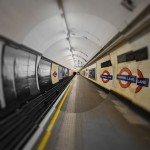
Public transport is rarely described as a site of intimacy. More often it’s a shared inconvenience, a moving container of mild irritation and suppressed eye contact. Yet for Alice DeVille, working under the name XII Sound, the London Underground becomes something stranger: a nervous system, a memory archive, and, inconveniently, a source of anxiety.
"Tube V", released as part of the SITE series by Driftworks and Audiobulb, is built from that contradiction. Fear and familiarity occupy the same acoustic space, and instead of resolving the tension, DeVille leans into it. The result is not quite a document, not quite a composition. More like a set of controlled exposures, where the artist repeatedly enters the environment that unsettles her and listens until it begins to change shape.
DeVille’s background as an opera singer and flautist is not incidental here. You can hear it in the way she treats sound as something physical, embodied, almost architectural. But instead of projecting into grand halls, her voice folds itself into tunnels, compressing, echoing, blending with mechanical noise. At times, she quite literally duets with the infrastructure. Which sounds poetic until you realize the infrastructure is a train braking at high frequency.
The opening sequence - “Tube I” through “Tube IV” - functions like a gradual descent. Snippets of announcements, metallic rhythms, fragments of conversation, and processed environmental sounds begin to overlap. DeVille introduces natural elements—birdsong, water, subtle field textures—not as contrast but as camouflage. The boundaries blur. Is that a train or a breath? A rail screech or a manipulated voice? The uncertainty is deliberate, and slightly disorienting.
By the time we reach “Tube V”, the album’s conceptual core becomes clearer. The space is no longer purely external. The tube has been internalized, transformed into a kind of resonant chamber where memory, panic, and nostalgia circulate. The childhood recollection of falling asleep to train sounds coexists with the adult experience of claustrophobia. Comfort and dread share the same frequency band.
The closing piece, “Tube I–V”, gathers these fragments into a longer form, less a summary than a reconfiguration. Motifs reappear, textures overlap more densely, and the listening experience becomes almost spatial. You don’t just hear the work; you seem to move through it, as if the tunnels had been reassembled inside your head.
Technically, the album sits somewhere between microsound, ambient composition, and electroacoustic collage. But labels feel slightly inadequate here. What matters more is the method: recording, sampling, reshaping, and recontextualizing everyday sounds until they reveal hidden emotional contours. DeVille’s use of tools like Ableton’s Simpler is not about virtuosity but about transformation. The mundane becomes unstable, then strangely expressive.
There’s also an undercurrent of ecological thinking running through the work. By blending natural and industrial sounds so thoroughly, DeVille resists the easy binary between “organic” and “artificial”. The city is not separate from nature; it is another ecosystem, just louder and less forgiving. "Tube V" suggests that reconnection might not come from escaping these environments, but from listening to them more carefully. Which is a slightly uncomfortable proposition, given how most people experience rush hour.
What prevents the album from becoming a purely conceptual exercise is its emotional honesty. The fear is not aestheticized into something neat. It lingers, unresolved. But alongside it, there is curiosity, even tenderness. The tube is not only a site of panic; it is also a place of memory, of rhythm, of accidental music.
In the end, "Tube V" feels like a negotiation. Between body and architecture, between control and overwhelm, between the human voice and the mechanical systems that surround it.
Not the most relaxing commute you’ll ever take. But certainly one of the more revealing.
"Tube V", released as part of the SITE series by Driftworks and Audiobulb, is built from that contradiction. Fear and familiarity occupy the same acoustic space, and instead of resolving the tension, DeVille leans into it. The result is not quite a document, not quite a composition. More like a set of controlled exposures, where the artist repeatedly enters the environment that unsettles her and listens until it begins to change shape.
DeVille’s background as an opera singer and flautist is not incidental here. You can hear it in the way she treats sound as something physical, embodied, almost architectural. But instead of projecting into grand halls, her voice folds itself into tunnels, compressing, echoing, blending with mechanical noise. At times, she quite literally duets with the infrastructure. Which sounds poetic until you realize the infrastructure is a train braking at high frequency.
The opening sequence - “Tube I” through “Tube IV” - functions like a gradual descent. Snippets of announcements, metallic rhythms, fragments of conversation, and processed environmental sounds begin to overlap. DeVille introduces natural elements—birdsong, water, subtle field textures—not as contrast but as camouflage. The boundaries blur. Is that a train or a breath? A rail screech or a manipulated voice? The uncertainty is deliberate, and slightly disorienting.
By the time we reach “Tube V”, the album’s conceptual core becomes clearer. The space is no longer purely external. The tube has been internalized, transformed into a kind of resonant chamber where memory, panic, and nostalgia circulate. The childhood recollection of falling asleep to train sounds coexists with the adult experience of claustrophobia. Comfort and dread share the same frequency band.
The closing piece, “Tube I–V”, gathers these fragments into a longer form, less a summary than a reconfiguration. Motifs reappear, textures overlap more densely, and the listening experience becomes almost spatial. You don’t just hear the work; you seem to move through it, as if the tunnels had been reassembled inside your head.
Technically, the album sits somewhere between microsound, ambient composition, and electroacoustic collage. But labels feel slightly inadequate here. What matters more is the method: recording, sampling, reshaping, and recontextualizing everyday sounds until they reveal hidden emotional contours. DeVille’s use of tools like Ableton’s Simpler is not about virtuosity but about transformation. The mundane becomes unstable, then strangely expressive.
There’s also an undercurrent of ecological thinking running through the work. By blending natural and industrial sounds so thoroughly, DeVille resists the easy binary between “organic” and “artificial”. The city is not separate from nature; it is another ecosystem, just louder and less forgiving. "Tube V" suggests that reconnection might not come from escaping these environments, but from listening to them more carefully. Which is a slightly uncomfortable proposition, given how most people experience rush hour.
What prevents the album from becoming a purely conceptual exercise is its emotional honesty. The fear is not aestheticized into something neat. It lingers, unresolved. But alongside it, there is curiosity, even tenderness. The tube is not only a site of panic; it is also a place of memory, of rhythm, of accidental music.
In the end, "Tube V" feels like a negotiation. Between body and architecture, between control and overwhelm, between the human voice and the mechanical systems that surround it.
Not the most relaxing commute you’ll ever take. But certainly one of the more revealing.
Elizabeth Davis: Flowers
There are songs that refuse to die. They get covered, translated, simplified, turned into background nostalgia for documentaries about a past everyone claims to understand. And then someone comes along, takes the original apart like a broken watch, and suddenly the mechanism starts ticking again, louder and slightly unsettling.
With "Flowers", Elizabeth Davis does exactly that to Pete Seeger’s “Where Have All the Flowers Gone”. Not a cover, not a tribute. More like a forensic investigation conducted with scissors, tape loops, and a mild distrust of linear history.
Released by South of North, the EP emerges from a residency at Sternhagen Gut, a rural retreat run by Gudrun Gut and Thomas Fehlmann. You might imagine quiet fields, long walks, maybe some polite reflection. Instead, Davis uses that isolation to dismantle a protest song loaded with decades of political and emotional residue. Apparently, the countryside is excellent for controlled sonic disassembly.
Davis’ background helps explain the method. Before operating under her own name and the alias Wilted Woman, she moved through free jazz, punk, and experimental electronics, developing a practice that balances algorithmic processes with tactile, almost fragile sound design. Her now-concluded radio show "Deep Puddle" already hinted at this tendency: narration, collage, fragmentation. "Flowers" feels like a natural extension, only more focused, more precise in its quiet disruptions.
Each of the six tracks starts from Seeger’s melody and lyrical structure, then proceeds to gently sabotage it.
“All in Uniform” opens with a sense of recognition that quickly dissolves. Familiar melodic contours flicker beneath layers of vocal loops and digital residue, like a memory trying to stabilize but failing. The original song’s anti-war sentiment is still there, but it no longer speaks in clear slogans. Instead, it murmurs, hesitates, fragments.
“Wo sind sie geblieben” shifts into a linguistic and cultural echo chamber. German phrases intersect with processed vocal textures, reminding you that translation is never neutral. Meaning slips. Words migrate. History refuses to sit still.
Across the EP, Davis employs cut-up techniques reminiscent of William S. Burroughs and Brion Gysin, slicing and reassembling lyrics into new constellations. But where those methods often lean toward chaos, Davis maintains a curious balance. There is structure here, even melody. Just enough to lure you in before the ground shifts slightly under your feet.
“Ever Learn” and “Young Ones” flirt with something almost like songcraft. Hooks appear, rhythms stabilize, and for a moment you think you’ve found a center. Then the textures begin to glitch, voices multiply, and the composition gently reminds you that repetition is not the same as understanding. History repeats, yes. But it also mutates.
On “Long Time Passes”, time itself becomes elastic. The pacing stretches, the sonic elements drift apart, and the familiar refrain dissolves into a kind of temporal fog. It’s less a reinterpretation than a meditation on duration: how long does it take for meaning to erode? Apparently not that long.
By the closing track, “Gone”, the source material feels both distant and eerily present. The melody has been thinned out, almost ghost-like, while the surrounding textures hum with quiet tension. It’s as if the song has been reduced to its emotional residue, stripped of narrative clarity but not of impact.
What makes "Flowers" compelling is not just its conceptual premise but its restraint. Davis resists the temptation to overwhelm. The sound design is detailed yet spacious, the compositions carefully paced. Even in its more abstract moments, the EP retains a sense of intimacy, as if these transformations were happening in a small room rather than an academic laboratory.
The influence of her conversations with Gudrun Gut is subtly audible here: a dialogue between experimentation and accessibility, between avant-garde instincts and the gravitational pull of melody. The result is a work that never fully settles into either territory, which is precisely why it remains engaging.
At its core, "Flowers" asks an uncomfortable question: what happens when a protest song becomes historical artifact? Do we preserve it, repeat it, or dismantle it to see if it still breathes?
Davis chooses dismantling. Carefully, almost tenderly.
And in the process, she reveals that beneath the familiar refrain lies something less stable, more fragile, and perhaps more honest than we remembered.
With "Flowers", Elizabeth Davis does exactly that to Pete Seeger’s “Where Have All the Flowers Gone”. Not a cover, not a tribute. More like a forensic investigation conducted with scissors, tape loops, and a mild distrust of linear history.
Released by South of North, the EP emerges from a residency at Sternhagen Gut, a rural retreat run by Gudrun Gut and Thomas Fehlmann. You might imagine quiet fields, long walks, maybe some polite reflection. Instead, Davis uses that isolation to dismantle a protest song loaded with decades of political and emotional residue. Apparently, the countryside is excellent for controlled sonic disassembly.
Davis’ background helps explain the method. Before operating under her own name and the alias Wilted Woman, she moved through free jazz, punk, and experimental electronics, developing a practice that balances algorithmic processes with tactile, almost fragile sound design. Her now-concluded radio show "Deep Puddle" already hinted at this tendency: narration, collage, fragmentation. "Flowers" feels like a natural extension, only more focused, more precise in its quiet disruptions.
Each of the six tracks starts from Seeger’s melody and lyrical structure, then proceeds to gently sabotage it.
“All in Uniform” opens with a sense of recognition that quickly dissolves. Familiar melodic contours flicker beneath layers of vocal loops and digital residue, like a memory trying to stabilize but failing. The original song’s anti-war sentiment is still there, but it no longer speaks in clear slogans. Instead, it murmurs, hesitates, fragments.
“Wo sind sie geblieben” shifts into a linguistic and cultural echo chamber. German phrases intersect with processed vocal textures, reminding you that translation is never neutral. Meaning slips. Words migrate. History refuses to sit still.
Across the EP, Davis employs cut-up techniques reminiscent of William S. Burroughs and Brion Gysin, slicing and reassembling lyrics into new constellations. But where those methods often lean toward chaos, Davis maintains a curious balance. There is structure here, even melody. Just enough to lure you in before the ground shifts slightly under your feet.
“Ever Learn” and “Young Ones” flirt with something almost like songcraft. Hooks appear, rhythms stabilize, and for a moment you think you’ve found a center. Then the textures begin to glitch, voices multiply, and the composition gently reminds you that repetition is not the same as understanding. History repeats, yes. But it also mutates.
On “Long Time Passes”, time itself becomes elastic. The pacing stretches, the sonic elements drift apart, and the familiar refrain dissolves into a kind of temporal fog. It’s less a reinterpretation than a meditation on duration: how long does it take for meaning to erode? Apparently not that long.
By the closing track, “Gone”, the source material feels both distant and eerily present. The melody has been thinned out, almost ghost-like, while the surrounding textures hum with quiet tension. It’s as if the song has been reduced to its emotional residue, stripped of narrative clarity but not of impact.
What makes "Flowers" compelling is not just its conceptual premise but its restraint. Davis resists the temptation to overwhelm. The sound design is detailed yet spacious, the compositions carefully paced. Even in its more abstract moments, the EP retains a sense of intimacy, as if these transformations were happening in a small room rather than an academic laboratory.
The influence of her conversations with Gudrun Gut is subtly audible here: a dialogue between experimentation and accessibility, between avant-garde instincts and the gravitational pull of melody. The result is a work that never fully settles into either territory, which is precisely why it remains engaging.
At its core, "Flowers" asks an uncomfortable question: what happens when a protest song becomes historical artifact? Do we preserve it, repeat it, or dismantle it to see if it still breathes?
Davis chooses dismantling. Carefully, almost tenderly.
And in the process, she reveals that beneath the familiar refrain lies something less stable, more fragile, and perhaps more honest than we remembered.
Matilde Meireles: Four Tales

Cities are usually described through their skylines, traffic, or architectural bravado. Rarely through their rivers actually speaking. Which is unfortunate, because water has been patiently composing the soundtrack of urban life long before humans decided to build bridges over it.
With "Four Tales", Matilde Meireles approaches the city from precisely that overlooked perspective: listening downward, toward the currents, the metal infrastructures touching them, and the fragile ecosystems vibrating along their edges. The album, released by Crónica, grows out of DRIFT Belfast floating pavilion project, a collaborative architectural and sonic experiment that temporarily anchored itself along the River Lagan during the Belfast 2024 cultural programme. The pavilion itself functioned as a kind of “floating instrument”, inviting visitors to pause, listen, and reconsider the relationship between city and river.
Translating such a spatial and communal experience into a record is not exactly a trivial exercise. Sound installations often resist documentation the way clouds resist photography. Yet "Four Tales" manages to retain something essential from the original project: the sense that listening is not just a sensory act but a form of attention, perhaps even care.
The album unfolds in four long pieces, each acting less like a track and more like a chapter in a slowly drifting narrative.
“One” begins with water itself. Field recordings collected across multiple geographies ripple through the piece: the gentle currents of the Lagan, distant rivers in Portugal, Spain and England, the calm sea in Greece, even a storm in Mozambique. The composition behaves like a hydrological map drawn with sound rather than ink. Metallic resonances from the pavilion’s scaffolding and the tactile friction of cotton ropes enter the texture, creating a dialogue between natural movement and human-built structures. The result is quietly immersive, like standing beside a river long enough that the landscape begins to reveal its smaller rhythms.
“Two” shifts the perspective slightly, tracing an imagined sonic journey between two points along the Lagan. Micro and macro events coexist: underwater murmurs, atmospheric disturbances, electromagnetic interference humming through urban infrastructure. Meireles arranges these layers with a patient sense of pacing, allowing them to breathe rather than forcing them into tidy narrative arcs. The piece feels less composed than cultivated, as if the composer were tending a garden of vibrations rather than arranging a score.
With “Three”, the album takes an unexpectedly reflective turn. Raw biodiversity recordings made around Stranmillis Weir are assembled alongside a spoken narration cataloguing species both present and absent. The device is deceptively simple yet conceptually sharp: a reminder that field recording is always partial, always incomplete. Technology captures fragments, but the ecosystem remains larger than the microphone’s reach. It is a subtle meditation on presence and absence, observation and imagination.
Finally “Four” offers an excerpt from a live performance that took place on the pavilion itself, where improvisers interacted with the surrounding environment. Percussion, amplified objects, field recordings and the unusual resonance of the tromba marina intertwine with the acoustic properties of the floating structure. The piece carries a gentle unpredictability, the feeling that the river and the performers are negotiating the music together in real time.
Meireles has long worked at the intersection of sound art, environmental awareness and social engagement, and "Four Tales" neatly condenses these concerns into a single project. Her background in interdisciplinary sonic research, including years spent working in SARC: Centre for Interdisciplinary Research in Sound and Music at Queen’s University Belfast, clearly informs the methodical yet poetic way she approaches listening.
What keeps the album from drifting into academic dryness is its quiet sense of wonder. The compositions never lecture the listener about ecology or urban infrastructure. Instead, they invite a slower pace of perception. Spend enough time with these sounds and the city begins to feel less like a static grid of buildings and more like a living mesh of currents, animals, machines and human footsteps.
In a world obsessed with louder signals and faster rhythms, "Four Tales" proposes something mildly radical: stop, lean closer, and listen to the river.
It has been telling stories the whole time.
With "Four Tales", Matilde Meireles approaches the city from precisely that overlooked perspective: listening downward, toward the currents, the metal infrastructures touching them, and the fragile ecosystems vibrating along their edges. The album, released by Crónica, grows out of DRIFT Belfast floating pavilion project, a collaborative architectural and sonic experiment that temporarily anchored itself along the River Lagan during the Belfast 2024 cultural programme. The pavilion itself functioned as a kind of “floating instrument”, inviting visitors to pause, listen, and reconsider the relationship between city and river.
Translating such a spatial and communal experience into a record is not exactly a trivial exercise. Sound installations often resist documentation the way clouds resist photography. Yet "Four Tales" manages to retain something essential from the original project: the sense that listening is not just a sensory act but a form of attention, perhaps even care.
The album unfolds in four long pieces, each acting less like a track and more like a chapter in a slowly drifting narrative.
“One” begins with water itself. Field recordings collected across multiple geographies ripple through the piece: the gentle currents of the Lagan, distant rivers in Portugal, Spain and England, the calm sea in Greece, even a storm in Mozambique. The composition behaves like a hydrological map drawn with sound rather than ink. Metallic resonances from the pavilion’s scaffolding and the tactile friction of cotton ropes enter the texture, creating a dialogue between natural movement and human-built structures. The result is quietly immersive, like standing beside a river long enough that the landscape begins to reveal its smaller rhythms.
“Two” shifts the perspective slightly, tracing an imagined sonic journey between two points along the Lagan. Micro and macro events coexist: underwater murmurs, atmospheric disturbances, electromagnetic interference humming through urban infrastructure. Meireles arranges these layers with a patient sense of pacing, allowing them to breathe rather than forcing them into tidy narrative arcs. The piece feels less composed than cultivated, as if the composer were tending a garden of vibrations rather than arranging a score.
With “Three”, the album takes an unexpectedly reflective turn. Raw biodiversity recordings made around Stranmillis Weir are assembled alongside a spoken narration cataloguing species both present and absent. The device is deceptively simple yet conceptually sharp: a reminder that field recording is always partial, always incomplete. Technology captures fragments, but the ecosystem remains larger than the microphone’s reach. It is a subtle meditation on presence and absence, observation and imagination.
Finally “Four” offers an excerpt from a live performance that took place on the pavilion itself, where improvisers interacted with the surrounding environment. Percussion, amplified objects, field recordings and the unusual resonance of the tromba marina intertwine with the acoustic properties of the floating structure. The piece carries a gentle unpredictability, the feeling that the river and the performers are negotiating the music together in real time.
Meireles has long worked at the intersection of sound art, environmental awareness and social engagement, and "Four Tales" neatly condenses these concerns into a single project. Her background in interdisciplinary sonic research, including years spent working in SARC: Centre for Interdisciplinary Research in Sound and Music at Queen’s University Belfast, clearly informs the methodical yet poetic way she approaches listening.
What keeps the album from drifting into academic dryness is its quiet sense of wonder. The compositions never lecture the listener about ecology or urban infrastructure. Instead, they invite a slower pace of perception. Spend enough time with these sounds and the city begins to feel less like a static grid of buildings and more like a living mesh of currents, animals, machines and human footsteps.
In a world obsessed with louder signals and faster rhythms, "Four Tales" proposes something mildly radical: stop, lean closer, and listen to the river.
It has been telling stories the whole time.
VV.AA.: eavesdrop festival 2024

Artist: VV.AA.
Title: eavesdrop festival 2024
Format: Tape + Download
Label: Karlrecords (http://www.karlrecords.net/) (@)
Rated:
Title: eavesdrop festival 2024
Format: Tape + Download
Label: Karlrecords (http://www.karlrecords.net/) (@)
Rated:
Festivals like to describe themselves as “platforms”. Which is a polite way of saying: a temporary ecosystem where musicians, machines, cables and philosophical anxieties gather in one architectural container and see what noises emerge. The Eavesdrop Festival, held inside the cavernous concrete geometry of Silent Green Kulturquartier in Berlin, takes that idea unusually seriously. Even its name suggests a listening posture that is slightly sideways. Not passive, not passive-aggressive either. Just attentive. Curious. Nose pressed against the sonic keyhole.
The compilation "eavesdrop festival 2024", released by Karlrecords as a hand-numbered cassette in the modest quantity of one hundred copies, functions less like a souvenir and more like an archaeological sample. Two nights of performances are distilled into nine tracks, most of them raw excerpts from live sets, plus a couple of stereo reductions of installations that originally occupied physical space in multichannel form. In other words, what you hear is already a translation. A shadow of a spatial event flattened into tape hiss and magnetic particles.
That might sound like a loss. It is not. If anything, the reduction intensifies the listening.
The opening fragment by Rashad Becker behaves like a laboratory demonstration of synthesis gone slightly feral. Becker, a composer whose biography reads like a list of philosophical resignations, sculpts tones that feel both clinical and oddly humorous, as if oscillators had developed personalities and were arguing quietly in the corner.
Then Mariam Rezaei enters with a turntable performance that dismantles the polite expectations of DJ culture. Her approach to vinyl is closer to sculptural violence than nostalgic reverence. Scratches explode, rhythms disintegrate, fragments collide at absurd velocities. Somewhere between free improvisation and sonic surrealism, the record player stops pretending it was ever meant merely to reproduce sound.
The collaboration between Audrey Chen and Hugo Esquinca pushes things further into bodily territory. Chen’s voice stretches into impossible shapes while Esquinca floods the acoustic space with extreme amplification. The result is less a duet than a temporary organism: lungs, circuits and architecture vibrating together in uneasy sympathy.
A moment of structural contrast arrives with Nima Aghiani, whose work balances synthesis, field recordings and instrumental gestures with the compositional patience of someone who enjoys juxtaposing incompatible sonic colors. His excerpt behaves like a collage assembled with microscopic care.
On the more conceptual end of the spectrum sits Lottie Sebes’ "Mouthpiece", a stereo version of a multichannel installation involving AI-mediated voice synthesis. The piece hovers somewhere between machine confession and algorithmic séance, quietly probing the power dynamics embedded in technologies that speak with borrowed human timbres.
Side B brings an entirely different set of physical energies. Nina Garcia treats the electric guitar as an object to interrogate rather than a tool to perform with. Scrapes, resonances and unstable feedback loops accumulate until the instrument resembles a metal animal discovering its own nervous system.
Festival curator Jasmine Guffond contributes "Approaching Chaos", another installation-derived piece where generative structures blur the boundary between system and improvisation. It sounds like infrastructure thinking aloud.
The longest track belongs to Ilpo Vaisanen, formerly of Pan Sonic, whose legacy in minimalist electronic brutality remains intimidating. His live excerpt is a slow tectonic drift of analogue tones, dub-inflected pressure and industrial residue. Few artists can produce such density with such stubbornly simple tools.
Finally Mat Pogo closes the tape with "Special Occasion", which sounds exactly like what might happen if a noise performance, a punk monologue and a surrealist radio play collided after midnight. Screams, narrative fragments and absurd vocal gestures swirl together with a theatrical sense of chaos. You could call it nonsense. You could also call it a reminder that experimental music occasionally benefits from a sense of humor.
Beyond the music itself, the release carries a weight that refuses to remain abstract. All revenues from the compilation go to Medical Aid for Palestinians and Thamra, supporting medical assistance and food sovereignty initiatives in Gaza. It is a quiet but deliberate gesture: listening as a political act, not merely an aesthetic pastime.
So the tape ends up performing two functions at once. On one level, it documents a particular moment in Berlin’s ever-shifting ecosystem of experimental sound practices. On another, it reminds listeners that curiosity and attention are not neutral habits. They can also be forms of solidarity.
Strange little object, this cassette. Limited, fragile, probably destined to live on a shelf next to other obscure artefacts of contemporary sonic culture. Yet inside those seventy-eight minutes you hear something stubbornly alive: artists testing the limits of machines, bodies and rooms, while the audience leans in and listens a bit closer than usual.
Which, come to think of it, is exactly what eavesdropping was supposed to be about.
The compilation "eavesdrop festival 2024", released by Karlrecords as a hand-numbered cassette in the modest quantity of one hundred copies, functions less like a souvenir and more like an archaeological sample. Two nights of performances are distilled into nine tracks, most of them raw excerpts from live sets, plus a couple of stereo reductions of installations that originally occupied physical space in multichannel form. In other words, what you hear is already a translation. A shadow of a spatial event flattened into tape hiss and magnetic particles.
That might sound like a loss. It is not. If anything, the reduction intensifies the listening.
The opening fragment by Rashad Becker behaves like a laboratory demonstration of synthesis gone slightly feral. Becker, a composer whose biography reads like a list of philosophical resignations, sculpts tones that feel both clinical and oddly humorous, as if oscillators had developed personalities and were arguing quietly in the corner.
Then Mariam Rezaei enters with a turntable performance that dismantles the polite expectations of DJ culture. Her approach to vinyl is closer to sculptural violence than nostalgic reverence. Scratches explode, rhythms disintegrate, fragments collide at absurd velocities. Somewhere between free improvisation and sonic surrealism, the record player stops pretending it was ever meant merely to reproduce sound.
The collaboration between Audrey Chen and Hugo Esquinca pushes things further into bodily territory. Chen’s voice stretches into impossible shapes while Esquinca floods the acoustic space with extreme amplification. The result is less a duet than a temporary organism: lungs, circuits and architecture vibrating together in uneasy sympathy.
A moment of structural contrast arrives with Nima Aghiani, whose work balances synthesis, field recordings and instrumental gestures with the compositional patience of someone who enjoys juxtaposing incompatible sonic colors. His excerpt behaves like a collage assembled with microscopic care.
On the more conceptual end of the spectrum sits Lottie Sebes’ "Mouthpiece", a stereo version of a multichannel installation involving AI-mediated voice synthesis. The piece hovers somewhere between machine confession and algorithmic séance, quietly probing the power dynamics embedded in technologies that speak with borrowed human timbres.
Side B brings an entirely different set of physical energies. Nina Garcia treats the electric guitar as an object to interrogate rather than a tool to perform with. Scrapes, resonances and unstable feedback loops accumulate until the instrument resembles a metal animal discovering its own nervous system.
Festival curator Jasmine Guffond contributes "Approaching Chaos", another installation-derived piece where generative structures blur the boundary between system and improvisation. It sounds like infrastructure thinking aloud.
The longest track belongs to Ilpo Vaisanen, formerly of Pan Sonic, whose legacy in minimalist electronic brutality remains intimidating. His live excerpt is a slow tectonic drift of analogue tones, dub-inflected pressure and industrial residue. Few artists can produce such density with such stubbornly simple tools.
Finally Mat Pogo closes the tape with "Special Occasion", which sounds exactly like what might happen if a noise performance, a punk monologue and a surrealist radio play collided after midnight. Screams, narrative fragments and absurd vocal gestures swirl together with a theatrical sense of chaos. You could call it nonsense. You could also call it a reminder that experimental music occasionally benefits from a sense of humor.
Beyond the music itself, the release carries a weight that refuses to remain abstract. All revenues from the compilation go to Medical Aid for Palestinians and Thamra, supporting medical assistance and food sovereignty initiatives in Gaza. It is a quiet but deliberate gesture: listening as a political act, not merely an aesthetic pastime.
So the tape ends up performing two functions at once. On one level, it documents a particular moment in Berlin’s ever-shifting ecosystem of experimental sound practices. On another, it reminds listeners that curiosity and attention are not neutral habits. They can also be forms of solidarity.
Strange little object, this cassette. Limited, fragile, probably destined to live on a shelf next to other obscure artefacts of contemporary sonic culture. Yet inside those seventy-eight minutes you hear something stubbornly alive: artists testing the limits of machines, bodies and rooms, while the audience leans in and listens a bit closer than usual.
Which, come to think of it, is exactly what eavesdropping was supposed to be about.
Eternal Cynic: Eat, Drink And Be Merry For Tomorrow We Snuff It
Artist: Eternal Cynic
Title: Eat, Drink And Be Merry For Tomorrow We Snuff It
Format: 3" Mini CD
Label: Inner Demons Records
Rated:

Title: Eat, Drink And Be Merry For Tomorrow We Snuff It
Format: 3" Mini CD
Label: Inner Demons Records
Rated:
I had previously reviewed an album from this artist, so I was interested to see where the cynic takes us this time. The answer, of course, is the grave. It is rare that an artist shows their work, but The Eternal Cynic has, in this case, provided commentary on all of the tracks and describes the album as "an avant-garde auditory journey through the ephemeral whispers of existence, captured and distorted in the raw, unfiltered essence of harsh noise wall. This album serves as a profound, albeit jarringly cacophonous, meditation on the fleeting nature of human life. The titles of our compositions—Ephemeral, Memento Mori, Perchance To Dream, and Totentanz—each evoke a different aspect of our inevitable march towards oblivion." And on that note, let's dive right into the void.
"Ephemeral" kicks everything off with static that ebbs and flows throughout the track over slow droning tones. The artist explains that "the static symbolises the relentless passage of time, while the underlying drone serves as a reminder of our inevitable demise." "Perchance to Dream" is where we get the heavy harsh noise wall that Inner Demons is known for. This is constantly shifting rumbling noise. Around 9 minutes in, it shifts to drone in the foreground, overpowering the noise that remains in the background. The artist explains that "This track explores the fragile boundary between our waking nightmares and our sleeping reveries. The interwoven layers of sound mimic the erratic and unpredictable nature of dreams, providing a stark contrast to the harsh reality we escape from nightly." The noise and the drone make for an interesting juxtaposition, but if I were to play this for my wife, I suspect that she would not get it. Still, I appreciate the sentiment.
On to the second disc as we dance with death. The notes for "Memento Mori" read: "Remember, dear listener, that you must die. . . . The relentless wall of noise here represents the ever-present shadow of death that lurks behind our every action, a humbling reminder that we are but temporary residents on this spinning rock." There is sparse, crackling static and voice that I can't really make out (although it sounds like an old phonograph recording). I expected a full blast of noise, but it was just the static and the voices. But that was enough. It worked, and the voices being just outside of comprehension only enhanced the track. Finally, we close it off with "Totentanz," which opens with heavily distorted voices that quickly give way to rumbling noise wall overlaying the sounds of howling winds. This continues, constantly shifting, until it sputters to a conclusion. There is enough movement to keep it interesting, and the ending reinforces the idea that it will all come crashing down in the end because all of us will eventually have our own dance with death. As the artist explains, "It’s a celebration, a lament, and a conclusion all in one."
Noise is a difficult medium to use for a philosophical argument, but musically it works well, so all is good. If you like your noise with a bit of melancholy and existential dread, this is well worth checking out. This album weighs in at around 42 minutes and is limited to 42 copies, which is the meaning of life, the universe, and everything. I will leave the last word to the Eternal Cynic: “So, dear connoisseurs of the avant-garde, grab your finest beverage, indulge in your most decadent pleasures, and let the walls of noise remind you: eat, drink, and be merry, for tomorrow we snuff it.”
"Ephemeral" kicks everything off with static that ebbs and flows throughout the track over slow droning tones. The artist explains that "the static symbolises the relentless passage of time, while the underlying drone serves as a reminder of our inevitable demise." "Perchance to Dream" is where we get the heavy harsh noise wall that Inner Demons is known for. This is constantly shifting rumbling noise. Around 9 minutes in, it shifts to drone in the foreground, overpowering the noise that remains in the background. The artist explains that "This track explores the fragile boundary between our waking nightmares and our sleeping reveries. The interwoven layers of sound mimic the erratic and unpredictable nature of dreams, providing a stark contrast to the harsh reality we escape from nightly." The noise and the drone make for an interesting juxtaposition, but if I were to play this for my wife, I suspect that she would not get it. Still, I appreciate the sentiment.
On to the second disc as we dance with death. The notes for "Memento Mori" read: "Remember, dear listener, that you must die. . . . The relentless wall of noise here represents the ever-present shadow of death that lurks behind our every action, a humbling reminder that we are but temporary residents on this spinning rock." There is sparse, crackling static and voice that I can't really make out (although it sounds like an old phonograph recording). I expected a full blast of noise, but it was just the static and the voices. But that was enough. It worked, and the voices being just outside of comprehension only enhanced the track. Finally, we close it off with "Totentanz," which opens with heavily distorted voices that quickly give way to rumbling noise wall overlaying the sounds of howling winds. This continues, constantly shifting, until it sputters to a conclusion. There is enough movement to keep it interesting, and the ending reinforces the idea that it will all come crashing down in the end because all of us will eventually have our own dance with death. As the artist explains, "It’s a celebration, a lament, and a conclusion all in one."
Noise is a difficult medium to use for a philosophical argument, but musically it works well, so all is good. If you like your noise with a bit of melancholy and existential dread, this is well worth checking out. This album weighs in at around 42 minutes and is limited to 42 copies, which is the meaning of life, the universe, and everything. I will leave the last word to the Eternal Cynic: “So, dear connoisseurs of the avant-garde, grab your finest beverage, indulge in your most decadent pleasures, and let the walls of noise remind you: eat, drink, and be merry, for tomorrow we snuff it.”