
Browse by Genre
Industrial Music / Industrial Metal / Aggro Industrial / Electro Metal
Industrial Noise / Power Noise / Harsh Noise
Synth Pop / Electro Pop / Synth-Electronica
Techno / Trance / Goa / Drum'n'Bass / Jungle / Tribal / Trip-Hop
Ambient / Electronica / Ethereal / Dub / Soundscapes / Abstract
Experimental / Avantgarde / Weird & Wired / Glitch / Noise / Field Recording
Dark / Gothic / Wave / New Wave / Dark Wave / Industrial Gothic
New Music / Downtown / Avantgarde Jazz / New Classical / World
Search Reviews
Music Reviews
Silvia Tarozzi: Lucciole

Artist: Silvia Tarozzi (@)
Title: Lucciole
Format: CD & 12" + Download
Label: Unseen Worlds (@)
Rated:

Title: Lucciole
Format: CD & 12" + Download
Label: Unseen Worlds (@)
Rated:
There are records that try to illuminate something, and then there are records that flicker - uncertain, fragile, stubbornly alive. "Lucciole" by Silvia Tarozzi belongs to the second category: a constellation of small lights that never quite settle into a single, reassuring glow.
Tarozzi has always worked in that delicate zone where composition meets memory, where the violin is less an instrument than a thread stitching together time, place, and people. After the introspective "Mi specchio e rifletto" and the rooted, almost archival dialogue of "Canti di guerra, di lavoro e d’amore", "Lucciole" feels like a widening of the circle. Not an expansion in volume or ambition, but in permeability. Everything seeps into everything else: voices into instruments, dreams into documentation, the living into the remembered.
The opening brass ensemble sets a tone that is almost suspiciously radiant, like a village procession that knows something you don’t. That brightness, though, is never stable. It dissolves quickly into more intimate terrains, where Tarozzi’s voice hovers between singing and recalling, as if each phrase had to check with the past before fully existing in the present.
There’s a quiet audacity in how "Lucciole" handles its themes. Loss, transformation, continuity. The usual heavy words. Yet nothing here feels heavy. Even in pieces like “Corallo e perle”, born from a dream after death, the music refuses to monumentalize grief. It keeps it porous, breathable. Almost domestic. As if mourning were something you could place gently on a table next to a cup of coffee and just… sit with.
The collaborative dimension is everywhere, but never crowded. This is not one of those collective records where everyone politely waits for their turn to be noticed. Instead, the ensemble behaves like a shifting organism. The theremin sighs, the saxophone murmurs, the electronics blur the edges, and Tarozzi moves through it all with a kind of attentive restraint. No grand gestures, no ego trying to claim center stage. Which, in 2026, counts as a minor miracle.
Even the cover of Milton Nascimento’s “River Phoenix” avoids the usual trap of reverence. It doesn’t try to improve, modernize, or reinterpret in some dramatic way. It simply listens differently. And that difference is enough to make it feel newly inhabited, like a familiar room rearranged overnight.
What’s quietly striking is how "Lucciole" treats sound as a social space. Not metaphorically, but structurally. The presence of the children’s choir at the end is not just a poetic closure, it’s a statement. Composition here is not an isolated act of authorship; it’s something learned, shared, passed along, slightly altered each time. Tarozzi herself has described that choir as a “gym of hope”, which sounds almost naïve until you realize the album has been quietly training you to believe it.
If there’s something almost funny about "Lucciole", it’s how little it tries to impress you. No conceptual overkill, no need to announce its importance. It just unfolds, patiently, like those small lights it’s named after. You either notice them, or you don’t. And if you do, you’re left with the uncomfortable suspicion that this kind of listening, attentive and unhurried, might actually require more effort than all the noise we usually mistake for meaning.
Tarozzi has always worked in that delicate zone where composition meets memory, where the violin is less an instrument than a thread stitching together time, place, and people. After the introspective "Mi specchio e rifletto" and the rooted, almost archival dialogue of "Canti di guerra, di lavoro e d’amore", "Lucciole" feels like a widening of the circle. Not an expansion in volume or ambition, but in permeability. Everything seeps into everything else: voices into instruments, dreams into documentation, the living into the remembered.
The opening brass ensemble sets a tone that is almost suspiciously radiant, like a village procession that knows something you don’t. That brightness, though, is never stable. It dissolves quickly into more intimate terrains, where Tarozzi’s voice hovers between singing and recalling, as if each phrase had to check with the past before fully existing in the present.
There’s a quiet audacity in how "Lucciole" handles its themes. Loss, transformation, continuity. The usual heavy words. Yet nothing here feels heavy. Even in pieces like “Corallo e perle”, born from a dream after death, the music refuses to monumentalize grief. It keeps it porous, breathable. Almost domestic. As if mourning were something you could place gently on a table next to a cup of coffee and just… sit with.
The collaborative dimension is everywhere, but never crowded. This is not one of those collective records where everyone politely waits for their turn to be noticed. Instead, the ensemble behaves like a shifting organism. The theremin sighs, the saxophone murmurs, the electronics blur the edges, and Tarozzi moves through it all with a kind of attentive restraint. No grand gestures, no ego trying to claim center stage. Which, in 2026, counts as a minor miracle.
Even the cover of Milton Nascimento’s “River Phoenix” avoids the usual trap of reverence. It doesn’t try to improve, modernize, or reinterpret in some dramatic way. It simply listens differently. And that difference is enough to make it feel newly inhabited, like a familiar room rearranged overnight.
What’s quietly striking is how "Lucciole" treats sound as a social space. Not metaphorically, but structurally. The presence of the children’s choir at the end is not just a poetic closure, it’s a statement. Composition here is not an isolated act of authorship; it’s something learned, shared, passed along, slightly altered each time. Tarozzi herself has described that choir as a “gym of hope”, which sounds almost naïve until you realize the album has been quietly training you to believe it.
If there’s something almost funny about "Lucciole", it’s how little it tries to impress you. No conceptual overkill, no need to announce its importance. It just unfolds, patiently, like those small lights it’s named after. You either notice them, or you don’t. And if you do, you’re left with the uncomfortable suspicion that this kind of listening, attentive and unhurried, might actually require more effort than all the noise we usually mistake for meaning.
bohbi: Factory Dimensia
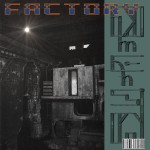
Artist: bohbi (http://antonzim.com/) (@)
Title: Factory Dimensia
Format: CD + Download
Label: Umland Records (@)
Rated:
Title: Factory Dimensia
Format: CD + Download
Label: Umland Records (@)
Rated:
Some records try to be coherent. Others prefer to be honest about the fact that coherence is mostly a social construct we cling to so we don’t spiral mid-commute. "Factory Dimensia", by Anton Zimmermann under his alias bohbi, belongs firmly to the second category.
Zimmermann - drummer, producer, and apparently someone with a high tolerance for internal noise - builds this album like a system under stress. Industrial grit, punk abrasion, and jazz elasticity are thrown together not to fuse cleanly, but to rub against each other until something sparks. The result is a sound that feels less composed than provoked.
From the opening "What Am I Doing This For?" (a title that doubles as a reasonable question for both artist and listener), the album establishes its central tension: propulsion versus collapse. Drums don’t just keep time, they interrogate it. Rhythms lurch, accelerate, fragment. You get the sense that structure is being tested rather than trusted.
What keeps "Factory Dimensia" from dissolving into pure chaos is its strange relationship with melody. Even at its most abrasive, there are fragments of something almost tender hiding underneath. A piano line here, a Rhodes shimmer there, a sax phrase that briefly suggests order before being swallowed again. It’s as if the album can’t decide whether it wants to confront you or confess something.
The ensemble plays a crucial role in maintaining this instability. The presence of players like Jan Klare - switching between sax, clarinet, flute, and EWI - adds a kind of shape-shifting quality, where timbre itself becomes unreliable. One moment you’re in something resembling a free jazz environment, the next you’re knee-deep in a distorted, almost industrial groove that feels like it escaped from a malfunctioning factory floor.
Tracks like "Confusion Or Illusion? (In A Memory)" flirt with introspection, though never long enough to become comfortable. Meanwhile, "24/7 Grind" does exactly what the title promises: it hammers away with a persistence that feels both energizing and faintly exhausting, like productivity culture turned into sound.
There’s also a willingness to embrace cliché - intentionally, almost defiantly. Romantic gestures appear, then get undercut. Kitsch surfaces, then mutates. Instead of avoiding these elements, Zimmermann uses them as raw material, bending them until they lose their original function. It’s a risky move, but here it mostly works, precisely because nothing is allowed to settle.
The dystopian undertone is hard to miss. Not the cinematic, apocalyptic kind, but something more banal and therefore more unsettling: the sense of being trapped in repetitive systems, of noise becoming background until it suddenly isn’t. "Factory Dimensia" mirrors that condition, shifting between immersion and overload, clarity and distortion.
And yet, for all its rough edges, there’s a peculiar warmth running through the album. Not comfort, exactly, but a kind of stubborn humanity. The mess feels lived-in. The contradictions feel intentional, or at least accepted.
In the end, "Factory Dimensia" doesn’t resolve its tensions. It amplifies them, loops them, occasionally dances on them. It’s less a finished object than a process caught in motion, still negotiating with itself.
Not the easiest listen. But then again, neither is thinking too much about why you’re doing any of this in the first place.
Zimmermann - drummer, producer, and apparently someone with a high tolerance for internal noise - builds this album like a system under stress. Industrial grit, punk abrasion, and jazz elasticity are thrown together not to fuse cleanly, but to rub against each other until something sparks. The result is a sound that feels less composed than provoked.
From the opening "What Am I Doing This For?" (a title that doubles as a reasonable question for both artist and listener), the album establishes its central tension: propulsion versus collapse. Drums don’t just keep time, they interrogate it. Rhythms lurch, accelerate, fragment. You get the sense that structure is being tested rather than trusted.
What keeps "Factory Dimensia" from dissolving into pure chaos is its strange relationship with melody. Even at its most abrasive, there are fragments of something almost tender hiding underneath. A piano line here, a Rhodes shimmer there, a sax phrase that briefly suggests order before being swallowed again. It’s as if the album can’t decide whether it wants to confront you or confess something.
The ensemble plays a crucial role in maintaining this instability. The presence of players like Jan Klare - switching between sax, clarinet, flute, and EWI - adds a kind of shape-shifting quality, where timbre itself becomes unreliable. One moment you’re in something resembling a free jazz environment, the next you’re knee-deep in a distorted, almost industrial groove that feels like it escaped from a malfunctioning factory floor.
Tracks like "Confusion Or Illusion? (In A Memory)" flirt with introspection, though never long enough to become comfortable. Meanwhile, "24/7 Grind" does exactly what the title promises: it hammers away with a persistence that feels both energizing and faintly exhausting, like productivity culture turned into sound.
There’s also a willingness to embrace cliché - intentionally, almost defiantly. Romantic gestures appear, then get undercut. Kitsch surfaces, then mutates. Instead of avoiding these elements, Zimmermann uses them as raw material, bending them until they lose their original function. It’s a risky move, but here it mostly works, precisely because nothing is allowed to settle.
The dystopian undertone is hard to miss. Not the cinematic, apocalyptic kind, but something more banal and therefore more unsettling: the sense of being trapped in repetitive systems, of noise becoming background until it suddenly isn’t. "Factory Dimensia" mirrors that condition, shifting between immersion and overload, clarity and distortion.
And yet, for all its rough edges, there’s a peculiar warmth running through the album. Not comfort, exactly, but a kind of stubborn humanity. The mess feels lived-in. The contradictions feel intentional, or at least accepted.
In the end, "Factory Dimensia" doesn’t resolve its tensions. It amplifies them, loops them, occasionally dances on them. It’s less a finished object than a process caught in motion, still negotiating with itself.
Not the easiest listen. But then again, neither is thinking too much about why you’re doing any of this in the first place.
Łubin: Cargo

There’s something oddly reassuring about trains. Not the delays, obviously, or the existential dread of platform announcements, but the rhythm: that stubborn, repetitive insistence that something is moving forward, whether you understand the destination or not. Lubin builds "Cargo" entirely inside that logic, and then quietly dismantles it.
This third album is less about trains as objects and more about trains as systems of thought. Over nearly a year of field recordings and compositional work, Lubin reduces railway sound to its skeletal essence: pulses, friction, metallic breath. What remains is not documentary in the traditional sense, but something closer to an internalized infrastructure. The railway stops being a place and becomes a condition.
The track titles - "201 E", "ST 44", "TEM 2" - read like technical labels, almost bureaucratic in their precision. And yet the music they contain is anything but rigid. Beneath the mechanical naming lies a fluid, unstable sound world where glitchy electronics dissolve into field recordings and back again. It’s as if the machines themselves were trying to remember how they sound.
Opening pieces establish the central grammar: repetition as propulsion, texture as narrative. The rhythmic patterns mimic the cadence of wheels on tracks, but never settle into something comfortably loopable. There’s always a slight misalignment, a micro-hesitation that keeps the listener alert. You’re not riding the train. You’re listening from inside its nervous system.
What’s interesting is how "Cargo" avoids the obvious romanticism of travel. No sweeping vistas, no sentimental departures. Movement here is stripped of spectacle. It becomes cyclical, almost claustrophobic. The sense of journey is present, but without arrival. A loop rather than a line.
At times, the album drifts into something resembling a dream of industry: blurred edges, softened impacts, a kind of low-resolution memory of machinery. The glitch elements don’t disrupt so much as corrode, gently destabilizing the rhythmic grid. It’s minimalism, but with a faint anxiety running underneath, like a system that knows it might fail but keeps running anyway.
There’s a quiet intelligence in how Lubin handles time. Tracks stretch without feeling long, compress without feeling abrupt. The longest piece, "Newag 15D", unfolds like a slow recalibration of perception. By the end, rhythm no longer feels like something external. It has migrated inward, syncing with the body in a way that is slightly unsettling if you think about it too much.
If there’s humor here, it’s buried deep. The idea of turning freight trains into introspective, almost meditative compositions carries a certain dry absurdity. Industrial logistics reimagined as emotional cartography. Somewhere, a cargo manifest is being read as poetry.
What "Cargo" ultimately suggests is that infrastructure is never just functional. It accumulates memory, symbolism, even a kind of unconscious meaning. By focusing so closely on the sonic residue of railways, Lubin exposes the thin line between movement and stasis, between system and experience.
It’s not a journey in the traditional sense. More like being gently locked inside a moving mechanism and realizing, after a while, that you’ve started to breathe with it.
This third album is less about trains as objects and more about trains as systems of thought. Over nearly a year of field recordings and compositional work, Lubin reduces railway sound to its skeletal essence: pulses, friction, metallic breath. What remains is not documentary in the traditional sense, but something closer to an internalized infrastructure. The railway stops being a place and becomes a condition.
The track titles - "201 E", "ST 44", "TEM 2" - read like technical labels, almost bureaucratic in their precision. And yet the music they contain is anything but rigid. Beneath the mechanical naming lies a fluid, unstable sound world where glitchy electronics dissolve into field recordings and back again. It’s as if the machines themselves were trying to remember how they sound.
Opening pieces establish the central grammar: repetition as propulsion, texture as narrative. The rhythmic patterns mimic the cadence of wheels on tracks, but never settle into something comfortably loopable. There’s always a slight misalignment, a micro-hesitation that keeps the listener alert. You’re not riding the train. You’re listening from inside its nervous system.
What’s interesting is how "Cargo" avoids the obvious romanticism of travel. No sweeping vistas, no sentimental departures. Movement here is stripped of spectacle. It becomes cyclical, almost claustrophobic. The sense of journey is present, but without arrival. A loop rather than a line.
At times, the album drifts into something resembling a dream of industry: blurred edges, softened impacts, a kind of low-resolution memory of machinery. The glitch elements don’t disrupt so much as corrode, gently destabilizing the rhythmic grid. It’s minimalism, but with a faint anxiety running underneath, like a system that knows it might fail but keeps running anyway.
There’s a quiet intelligence in how Lubin handles time. Tracks stretch without feeling long, compress without feeling abrupt. The longest piece, "Newag 15D", unfolds like a slow recalibration of perception. By the end, rhythm no longer feels like something external. It has migrated inward, syncing with the body in a way that is slightly unsettling if you think about it too much.
If there’s humor here, it’s buried deep. The idea of turning freight trains into introspective, almost meditative compositions carries a certain dry absurdity. Industrial logistics reimagined as emotional cartography. Somewhere, a cargo manifest is being read as poetry.
What "Cargo" ultimately suggests is that infrastructure is never just functional. It accumulates memory, symbolism, even a kind of unconscious meaning. By focusing so closely on the sonic residue of railways, Lubin exposes the thin line between movement and stasis, between system and experience.
It’s not a journey in the traditional sense. More like being gently locked inside a moving mechanism and realizing, after a while, that you’ve started to breathe with it.
Greg Stasiw: Guesswork
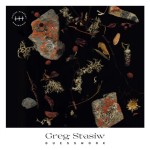
Artist: Greg Stasiw (@)
Title: Guesswork
Format: 12" + Download
Label: Hidden Harmony Recordings (@)
Rated:

Title: Guesswork
Format: 12" + Download
Label: Hidden Harmony Recordings (@)
Rated:
Some artists spend years refining a signature style. Others wander, collect fragments, hesitate, double back, and eventually assemble something that feels less like a statement and more like a map of indecision. Predictably, that second approach tends to be far more interesting.
With "Guesswork", Greg Stasiw turns uncertainty into method. The title is not ironic, nor self-deprecating in the usual performative way. It’s a working principle. The album, released on Hidden Harmony Recordings, gathers around four years of sonic experiments into a sequence that feels at once carefully arranged and quietly provisional, as if each track were still considering whether it wants to exist.
Stasiw’s background reads like a polite refusal to specialize: anthropology, animation, illustration, a life spent moving between cities from New York to Tokyo to Bratislava. His musical formation is equally scattered, beginning with ambient tapes and Windows 98 experiments before drifting through piano lessons, choirs, taiko, metal, and eventually software-based composition. The result is not eclecticism for its own sake, but a kind of porous sensibility. Sounds are not fixed objects here; they are events, spatial suggestions, small provocations.
"Guesswork" originated from an unrealized collaboration with visual artist Philippe Shewchenko, whose imagery nonetheless left a residue strong enough to shape the album’s direction. You can hear that visual impulse throughout: these tracks behave less like songs and more like environments waiting to be entered.
The opening piece, “Signature”, sets the tone with low, patient drones that feel like coordinates rather than declarations. From there, the album drifts into “Field”, where light, buoyant textures suggest a kind of pastoral scene relocated to an unfamiliar planet. It’s calm, but not entirely safe. Something in the timbre keeps the listener slightly off-balance, as if the air itself had been subtly altered.
Throughout the record, Stasiw demonstrates a precise control over sonic space. Notes are placed with restraint, often suspended in near-silence, allowing the listener’s perception to do part of the compositional work. This is not minimalism in the austere, doctrinal sense, but a more intuitive form of reduction. The music removes what it doesn’t urgently need, then waits to see what remains.
“Plant” introduces a fragile piano figure that feels almost too delicate to touch, while “Humidity” expands into a denser ecosystem of percussive echoes and field-like recordings, hinting at unseen lifeforms. There is a recurring sense that each track is a microclimate, governed by its own internal logic.
The shorter interludes - “Distance”, “Arizona”, “Audience” - function like transitional corridors between these environments. Brief, slightly enigmatic, they prevent the album from settling into predictability. Just when you think you’ve understood the terrain, the ground shifts again.
What’s striking is the album’s balance between clarity and ambiguity. The sound design is immaculate: tones are clean, textures finely etched, spatial depth carefully calibrated. And yet the emotional content remains elusive. There is calm here, certainly, but also a faint melancholy, a sense of searching without the promise of resolution.
Stasiw cites influences that might raise an eyebrow if handled less carefully: the environmental serenity of Hiroshi Yoshimura, the weightless lyricism of Harold Budd, the experimental visual sensibility of Norman McLaren, the cosmic drift of Pauline Anna Strom. Fortunately, "Guesswork" avoids the trap of imitation. These references are absorbed rather than displayed, contributing to a soundworld that feels coherent without being easily classifiable.
The longer pieces, such as “Prow” and “Adobe”, allow this approach to fully unfold. Layers accumulate slowly, not in dramatic crescendos but in subtle shifts of density and color. Time stretches. Attention narrows. You begin to notice small details you would normally ignore, which is probably the point.
If there is a quiet irony at the heart of "Guesswork", it lies in how deliberate it all sounds. This is not the work of someone stumbling blindly through possibilities. It is the work of someone who understands that uncertainty, when handled with care, can become a compositional tool. Trial and error, yes. But curated, shaped, and ultimately trusted.
In a musical landscape that often demands clear identities and immediate impact, Stasiw offers something less definitive and more patient: a series of sonic spaces where confusion and clarity coexist without needing to resolve their differences.
Not a bad outcome for guesswork.
With "Guesswork", Greg Stasiw turns uncertainty into method. The title is not ironic, nor self-deprecating in the usual performative way. It’s a working principle. The album, released on Hidden Harmony Recordings, gathers around four years of sonic experiments into a sequence that feels at once carefully arranged and quietly provisional, as if each track were still considering whether it wants to exist.
Stasiw’s background reads like a polite refusal to specialize: anthropology, animation, illustration, a life spent moving between cities from New York to Tokyo to Bratislava. His musical formation is equally scattered, beginning with ambient tapes and Windows 98 experiments before drifting through piano lessons, choirs, taiko, metal, and eventually software-based composition. The result is not eclecticism for its own sake, but a kind of porous sensibility. Sounds are not fixed objects here; they are events, spatial suggestions, small provocations.
"Guesswork" originated from an unrealized collaboration with visual artist Philippe Shewchenko, whose imagery nonetheless left a residue strong enough to shape the album’s direction. You can hear that visual impulse throughout: these tracks behave less like songs and more like environments waiting to be entered.
The opening piece, “Signature”, sets the tone with low, patient drones that feel like coordinates rather than declarations. From there, the album drifts into “Field”, where light, buoyant textures suggest a kind of pastoral scene relocated to an unfamiliar planet. It’s calm, but not entirely safe. Something in the timbre keeps the listener slightly off-balance, as if the air itself had been subtly altered.
Throughout the record, Stasiw demonstrates a precise control over sonic space. Notes are placed with restraint, often suspended in near-silence, allowing the listener’s perception to do part of the compositional work. This is not minimalism in the austere, doctrinal sense, but a more intuitive form of reduction. The music removes what it doesn’t urgently need, then waits to see what remains.
“Plant” introduces a fragile piano figure that feels almost too delicate to touch, while “Humidity” expands into a denser ecosystem of percussive echoes and field-like recordings, hinting at unseen lifeforms. There is a recurring sense that each track is a microclimate, governed by its own internal logic.
The shorter interludes - “Distance”, “Arizona”, “Audience” - function like transitional corridors between these environments. Brief, slightly enigmatic, they prevent the album from settling into predictability. Just when you think you’ve understood the terrain, the ground shifts again.
What’s striking is the album’s balance between clarity and ambiguity. The sound design is immaculate: tones are clean, textures finely etched, spatial depth carefully calibrated. And yet the emotional content remains elusive. There is calm here, certainly, but also a faint melancholy, a sense of searching without the promise of resolution.
Stasiw cites influences that might raise an eyebrow if handled less carefully: the environmental serenity of Hiroshi Yoshimura, the weightless lyricism of Harold Budd, the experimental visual sensibility of Norman McLaren, the cosmic drift of Pauline Anna Strom. Fortunately, "Guesswork" avoids the trap of imitation. These references are absorbed rather than displayed, contributing to a soundworld that feels coherent without being easily classifiable.
The longer pieces, such as “Prow” and “Adobe”, allow this approach to fully unfold. Layers accumulate slowly, not in dramatic crescendos but in subtle shifts of density and color. Time stretches. Attention narrows. You begin to notice small details you would normally ignore, which is probably the point.
If there is a quiet irony at the heart of "Guesswork", it lies in how deliberate it all sounds. This is not the work of someone stumbling blindly through possibilities. It is the work of someone who understands that uncertainty, when handled with care, can become a compositional tool. Trial and error, yes. But curated, shaped, and ultimately trusted.
In a musical landscape that often demands clear identities and immediate impact, Stasiw offers something less definitive and more patient: a series of sonic spaces where confusion and clarity coexist without needing to resolve their differences.
Not a bad outcome for guesswork.
Stepmother: Bring Me Flowers and Tell Me You Love Me

Artist: Stepmother (@)
Title: Bring Me Flowers and Tell Me You Love Me
Format: CD & 12" + Download
Label: Megaphone/Knock'em Dead Records (@)
Rated:
Title: Bring Me Flowers and Tell Me You Love Me
Format: CD & 12" + Download
Label: Megaphone/Knock'em Dead Records (@)
Rated:
Some bands reunite because nostalgia pays the bills. Others reappear because an unfinished conversation refuses to stay quiet. Stepmother clearly belongs to the second category, which is both admirable and slightly dangerous. Conversations left open for ten years tend to accumulate strange ideas in the meantime.
"Bring Me Flowers and Tell Me You Love Me", released via Megaphone Records and Knock’em Dead Records, feels exactly like that: a backlog of half-formed thoughts, theatrical impulses, and stylistic detours finally allowed to collide in one place. The original trio - Lukas Simonis, Jeroen Visser, and Bill Gilonis - already carried decades of post-punk and experimental baggage from projects orbiting bands like The Work and the broader European underground. But the real catalyst here is the arrival of Tisa World, whose voice doesn’t simply complete the picture. It redraws it entirely.
Stepmother has always operated in that slightly suspicious zone where genres are treated as optional accessories. On their debut, the band flirted with post-punk, prog, and absurdist pop. This time, the palette expands further: jagged guitars, off-kilter electronics, ghostly horns, and rhythms that seem to change direction out of mild impatience. Somewhere in the background, the mischievous spirit of Bonzo Dog Doo-Dah Band still lingers, reminding everyone not to take coherence too seriously.
The album opens with “Drunk”, which wastes no time establishing a tone of controlled instability. The structure feels intentionally precarious, as if it might collapse but never quite does. “Great Trading Days II” follows with a sharper edge, its rhythmic backbone pushing forward while the arrangement keeps slipping sideways.
Then comes “Goblin Market”, a brief, almost theatrical vignette that hints at the band’s fondness for surreal storytelling. It’s one of several moments where the record behaves less like an album and more like a sequence of small stage scenes. Characters appear, gestures are made, and before you can fully understand them, the curtain moves again.
At the center of all this, Tisa World’s voice acts as both guide and disruptor. She doesn’t simply sing over the music; she inhabits it, bending phrasing and tone in ways that feel simultaneously precise and unpredictable. On “Insomnia”, her delivery stretches the track into a tense, nocturnal space, while “Well to Die In” - featuring cello by Nina Hitz - introduces a darker, almost fragile atmosphere.
The band’s collective nature remains intact. This is not a singer-fronted project in the traditional sense. Instead, voices, instruments, and textures circulate roles freely. “I Am a Gambler” exemplifies this dynamic: a restless piece where narrative fragments, rhythmic shifts, and instrumental interplay refuse to settle into a single hierarchy.
Shorter tracks like “Bevredig Mij”, “Shadow”, and “Gaslighting” function as strange interjections, almost like marginal notes scribbled in the album’s margins. They interrupt the flow just enough to prevent any sense of linear progression. If you were hoping for a tidy arc, this record politely declines.
There is, however, a coherence beneath the apparent chaos. It lies in the band’s shared sensibility: a taste for the slightly absurd, the theatrically skewed, the emotionally ambiguous. Even when the music veers into playful territory, there’s an undercurrent of tension, a sense that something slightly off is being revealed.
The production reinforces this. Nothing feels overly polished. Edges remain rough, textures collide rather than blend seamlessly, and the overall sound retains a kind of live-wire immediacy. It’s less about perfection and more about presence.
What makes "Bring Me Flowers and Tell Me You Love Me" work is precisely its refusal to behave like a conventional “comeback” album. It doesn’t summarize the band’s past, nor does it attempt to modernize it for contemporary expectations. Instead, it continues the conversation as if no time had passed, while quietly acknowledging that everything has changed.
Which is, admittedly, a complicated way of making music.
But Stepmother seems comfortable with complications. And in a landscape increasingly optimized for clarity and efficiency, their tangled, theatrical, slightly unhinged approach feels oddly refreshing.
"Bring Me Flowers and Tell Me You Love Me", released via Megaphone Records and Knock’em Dead Records, feels exactly like that: a backlog of half-formed thoughts, theatrical impulses, and stylistic detours finally allowed to collide in one place. The original trio - Lukas Simonis, Jeroen Visser, and Bill Gilonis - already carried decades of post-punk and experimental baggage from projects orbiting bands like The Work and the broader European underground. But the real catalyst here is the arrival of Tisa World, whose voice doesn’t simply complete the picture. It redraws it entirely.
Stepmother has always operated in that slightly suspicious zone where genres are treated as optional accessories. On their debut, the band flirted with post-punk, prog, and absurdist pop. This time, the palette expands further: jagged guitars, off-kilter electronics, ghostly horns, and rhythms that seem to change direction out of mild impatience. Somewhere in the background, the mischievous spirit of Bonzo Dog Doo-Dah Band still lingers, reminding everyone not to take coherence too seriously.
The album opens with “Drunk”, which wastes no time establishing a tone of controlled instability. The structure feels intentionally precarious, as if it might collapse but never quite does. “Great Trading Days II” follows with a sharper edge, its rhythmic backbone pushing forward while the arrangement keeps slipping sideways.
Then comes “Goblin Market”, a brief, almost theatrical vignette that hints at the band’s fondness for surreal storytelling. It’s one of several moments where the record behaves less like an album and more like a sequence of small stage scenes. Characters appear, gestures are made, and before you can fully understand them, the curtain moves again.
At the center of all this, Tisa World’s voice acts as both guide and disruptor. She doesn’t simply sing over the music; she inhabits it, bending phrasing and tone in ways that feel simultaneously precise and unpredictable. On “Insomnia”, her delivery stretches the track into a tense, nocturnal space, while “Well to Die In” - featuring cello by Nina Hitz - introduces a darker, almost fragile atmosphere.
The band’s collective nature remains intact. This is not a singer-fronted project in the traditional sense. Instead, voices, instruments, and textures circulate roles freely. “I Am a Gambler” exemplifies this dynamic: a restless piece where narrative fragments, rhythmic shifts, and instrumental interplay refuse to settle into a single hierarchy.
Shorter tracks like “Bevredig Mij”, “Shadow”, and “Gaslighting” function as strange interjections, almost like marginal notes scribbled in the album’s margins. They interrupt the flow just enough to prevent any sense of linear progression. If you were hoping for a tidy arc, this record politely declines.
There is, however, a coherence beneath the apparent chaos. It lies in the band’s shared sensibility: a taste for the slightly absurd, the theatrically skewed, the emotionally ambiguous. Even when the music veers into playful territory, there’s an undercurrent of tension, a sense that something slightly off is being revealed.
The production reinforces this. Nothing feels overly polished. Edges remain rough, textures collide rather than blend seamlessly, and the overall sound retains a kind of live-wire immediacy. It’s less about perfection and more about presence.
What makes "Bring Me Flowers and Tell Me You Love Me" work is precisely its refusal to behave like a conventional “comeback” album. It doesn’t summarize the band’s past, nor does it attempt to modernize it for contemporary expectations. Instead, it continues the conversation as if no time had passed, while quietly acknowledging that everything has changed.
Which is, admittedly, a complicated way of making music.
But Stepmother seems comfortable with complications. And in a landscape increasingly optimized for clarity and efficiency, their tangled, theatrical, slightly unhinged approach feels oddly refreshing.