
Browse by Genre
Industrial Music / Industrial Metal / Aggro Industrial / Electro Metal
Industrial Noise / Power Noise / Harsh Noise
Synth Pop / Electro Pop / Synth-Electronica
Techno / Trance / Goa / Drum'n'Bass / Jungle / Tribal / Trip-Hop
Ambient / Electronica / Ethereal / Dub / Soundscapes / Abstract
Experimental / Avantgarde / Weird & Wired / Glitch / Noise / Field Recording
Dark / Gothic / Wave / New Wave / Dark Wave / Industrial Gothic
New Music / Downtown / Avantgarde Jazz / New Classical / World
Search Reviews
Music Reviews
7XINS: One Knob Per Function
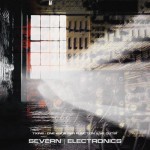
Artist: 7XINS (@)
Title: One Knob Per Function
Format: Tape + Download
Label: Severn Electronics
Rated:

Title: One Knob Per Function
Format: Tape + Download
Label: Severn Electronics
Rated:
There’s something wonderfully perverse about a record called "One Knob Per Function". It reads like a technical manual, yet what you get is anything but clinical. 7XINS, with six years of sweat-drenched nights and cables spilling across club floors, has carved a document of techno not as a slick studio exercise but as a living, breathing, misbehaving beast. These are not tracks polished in a DAW until they resemble chrome sculptures. They are timestamps: 3 a.m. in Warsaw, 5 a.m. in Berlin, midnight in Glasgow - moments when machines and bodies synced up for just long enough to generate pressure, heat, release.
The philosophy here is tactile: knobs, wires, oscillators, all pushed until they scream. The result is techno that feels both raw and sculptural. Distorted kicks hammer like industrial machinery, while modular lines coil like snakes in fluorescent cages. Nothing is fixed; everything is volatile. A recording from Tresor buzzes with the claustrophobic electricity of a concrete bunker, while the FOLD sessions capture that peculiar London mix of precision and chaos, the bass lines like scaffolding collapsing in slow motion.
And yet, despite the grit, there’s poetry in the process. The cassette format is the perfect carrier - fragile magnetic tape straining to contain this much voltage. You can almost smell the dust of old tape machines, the sweat of the dance floor, the singed circuits. It’s as if the music itself were resisting the idea of permanence, insisting on being ephemeral, lived, momentary.
What’s funny - if we can use that word in a context where kick drums sound like jackhammers - is that "One Knob Per Function" is also a farewell. A wave to a period of live performance where everything was built on immediacy and risk. You don’t just hear beats, you hear the decisions behind them: the hesitation before a filter sweep, the recklessness of pushing distortion too far, the relief when the room erupts in approval.
In the end, this isn’t a record you "listen" to as much as one you "inhabit". It doesn’t try to transport you to the club; it drags the club into your headphones, with all its imperfections intact. For those who demand their techno spotless, this will feel like a nightmare. For those who crave the dirt, the danger, the glorious unpredictability of machines that might collapse at any moment - this is a love letter.
The philosophy here is tactile: knobs, wires, oscillators, all pushed until they scream. The result is techno that feels both raw and sculptural. Distorted kicks hammer like industrial machinery, while modular lines coil like snakes in fluorescent cages. Nothing is fixed; everything is volatile. A recording from Tresor buzzes with the claustrophobic electricity of a concrete bunker, while the FOLD sessions capture that peculiar London mix of precision and chaos, the bass lines like scaffolding collapsing in slow motion.
And yet, despite the grit, there’s poetry in the process. The cassette format is the perfect carrier - fragile magnetic tape straining to contain this much voltage. You can almost smell the dust of old tape machines, the sweat of the dance floor, the singed circuits. It’s as if the music itself were resisting the idea of permanence, insisting on being ephemeral, lived, momentary.
What’s funny - if we can use that word in a context where kick drums sound like jackhammers - is that "One Knob Per Function" is also a farewell. A wave to a period of live performance where everything was built on immediacy and risk. You don’t just hear beats, you hear the decisions behind them: the hesitation before a filter sweep, the recklessness of pushing distortion too far, the relief when the room erupts in approval.
In the end, this isn’t a record you "listen" to as much as one you "inhabit". It doesn’t try to transport you to the club; it drags the club into your headphones, with all its imperfections intact. For those who demand their techno spotless, this will feel like a nightmare. For those who crave the dirt, the danger, the glorious unpredictability of machines that might collapse at any moment - this is a love letter.
Val Xalino: Dançá Dançá T\'Manchê (Acid Pauli Mixes)
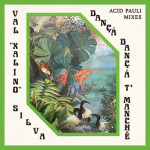
Artist: Val Xalino (@)
Title: Dançá Dançá T\'Manchê (Acid Pauli Mixes)
Format: 12" + Download
Label: Compost Records (@)
Rated:

Title: Dançá Dançá T\'Manchê (Acid Pauli Mixes)
Format: 12" + Download
Label: Compost Records (@)
Rated:
When a Cape Verdean legend meets a Bavarian trickster alchemist, the result is less a remix than a portal. "Dançá Dançá T'Manchê" already carries within it the salt and sunlight of the islands, the swaying hips of an entire archipelago compressed into melody and rhythm. Val Xalino, who has been singing this music since the 1980s - his records now collector’s treasures - knows how to make a guitar feel like a shoreline. Into this long-lived tradition wanders Acid Pauli, ever the surrealist of the dance floor, who treats Xalino’s song not as material to be reworked but as a constellation to be bent, refracted, and multiplied.
The "Fullmix" is a summer mirage: you step into it with sand between your toes and come out barefoot on an interstellar dune. Acid Pauli’s hand is gentle but sly; the pulse doesn’t overwhelm, it insinuates, reshaping Xalino’s voice until it feels like it’s both coming from a Cape Verdean plaza and echoing through Berlin warehouses at 4 a.m.
The "Autowah Dub" is where the mischief blooms. Guitars and percussion are pulled through elastic filters, as if the track itself were grinning, chewing its own rhythm like tropical gum. It’s dub, yes, but also hall-of-mirrors dub, playful and distorted, like dancing with your reflection in a funhouse on a hot day.
And then the "Sublib Dub", the most dreamlike of the three, "slows" everything into a humid, drifting electro-house sway. It’s the sound of nightfall after a festival, when the last dancers glow faintly in the dark, unsure whether the music has ended or just dissolved into the air.
There’s something funny, almost ironic, about calling this a “summer hit”. Acid Pauli doesn’t do hits in the traditional sense - he does detours, side paths, rabbit holes. But here, by accident or design, he’s made something irresistibly radiant: a record that could just as easily soundtrack a wedding in Mindelo as a sunrise set at Garbicz.
This release isn’t just a remix. It’s a handshake across oceans and decades: from Val Xalino’s rarefied Cape Verdean archives to Acid Pauli’s modern kaleidoscope of beats. The result is music that doesn’t simply ask you to dance - it makes you dance in two worlds at once.
The "Fullmix" is a summer mirage: you step into it with sand between your toes and come out barefoot on an interstellar dune. Acid Pauli’s hand is gentle but sly; the pulse doesn’t overwhelm, it insinuates, reshaping Xalino’s voice until it feels like it’s both coming from a Cape Verdean plaza and echoing through Berlin warehouses at 4 a.m.
The "Autowah Dub" is where the mischief blooms. Guitars and percussion are pulled through elastic filters, as if the track itself were grinning, chewing its own rhythm like tropical gum. It’s dub, yes, but also hall-of-mirrors dub, playful and distorted, like dancing with your reflection in a funhouse on a hot day.
And then the "Sublib Dub", the most dreamlike of the three, "slows" everything into a humid, drifting electro-house sway. It’s the sound of nightfall after a festival, when the last dancers glow faintly in the dark, unsure whether the music has ended or just dissolved into the air.
There’s something funny, almost ironic, about calling this a “summer hit”. Acid Pauli doesn’t do hits in the traditional sense - he does detours, side paths, rabbit holes. But here, by accident or design, he’s made something irresistibly radiant: a record that could just as easily soundtrack a wedding in Mindelo as a sunrise set at Garbicz.
This release isn’t just a remix. It’s a handshake across oceans and decades: from Val Xalino’s rarefied Cape Verdean archives to Acid Pauli’s modern kaleidoscope of beats. The result is music that doesn’t simply ask you to dance - it makes you dance in two worlds at once.
Sicker Man: Stop The Gravy Train / Hollowed

Artist: Sicker Man (http://www.sicker-man.com/) (@)
Title: Stop The Gravy Train / Hollowed
Format: 7"
Label: Blank Records (@)
Rated:
Title: Stop The Gravy Train / Hollowed
Format: 7"
Label: Blank Records (@)
Rated:
Tobias Vethake, alias Sicker Man, has always been less interested in riding the gravy train than in derailing it, bending the tracks into strange loops, and planting wildflowers in the wreckage. Over the last quarter-century, he’s moved restlessly through film scores, collaborations, and solo works - always circling back to his electric cello, the instrument he treats not as a chamber relic but as a living organism that hums, snarls, and folds itself into electronic architectures. His latest 7-inch, "Stop the Gravy Train / Hollowed", feels like a miniature universe compressed into two sides of vinyl - short in duration, long in resonance.
“Stop the Gravy Train” has the swagger of dub, the angularity of noise, and the pulse of experimental pop, yet it’s pierced by a saxophone line that sounds like it wandered out of a smoky late-night jazz session and accidentally fell into a whirlpool of delay units. Vethake’s cello becomes a subterranean engine here, less melodic than seismic, pushing the track forward with a kind of nervous propulsion. It’s as if Moondog had been handed a drum machine and told to rewrite the script for a protest march.
“Hollowed”, by contrast, drifts into more spacious territory. The saxophone stretches itself like a beam of light across broken beats and electronic debris, while Sicker Man sculpts the surrounding space with sculptural precision - like a sound architect carving rooms for ghosts to inhabit. There’s something haunted about it, though not in the gothic sense; more like wandering an abandoned modernist building where every echo carries traces of conversations that once mattered.
Across both tracks, what impresses is Vethake’s refusal to settle: his music is never content to stay in one genre lane but instead plays traffic cop to dub, noise, spiritual jazz, and electronics, orchestrating near-collisions that somehow resolve into clarity. His longtime fascination with performance spaces - whether in theatres, galleries, or tunnels - shows up here too: these tracks feel like they’ve been built to breathe in real air, not just to live as digital files.
The irony of the title is hard to miss: after 15 releases and countless collaborations, this is about as far as you can get from gravy. No excess, no comfort food. Just two meticulously boiled-down reductions, sharp, and bitter on the tongue, but with a strange aftertaste that makes you want to put the needle back and start again.
“Stop the Gravy Train” has the swagger of dub, the angularity of noise, and the pulse of experimental pop, yet it’s pierced by a saxophone line that sounds like it wandered out of a smoky late-night jazz session and accidentally fell into a whirlpool of delay units. Vethake’s cello becomes a subterranean engine here, less melodic than seismic, pushing the track forward with a kind of nervous propulsion. It’s as if Moondog had been handed a drum machine and told to rewrite the script for a protest march.
“Hollowed”, by contrast, drifts into more spacious territory. The saxophone stretches itself like a beam of light across broken beats and electronic debris, while Sicker Man sculpts the surrounding space with sculptural precision - like a sound architect carving rooms for ghosts to inhabit. There’s something haunted about it, though not in the gothic sense; more like wandering an abandoned modernist building where every echo carries traces of conversations that once mattered.
Across both tracks, what impresses is Vethake’s refusal to settle: his music is never content to stay in one genre lane but instead plays traffic cop to dub, noise, spiritual jazz, and electronics, orchestrating near-collisions that somehow resolve into clarity. His longtime fascination with performance spaces - whether in theatres, galleries, or tunnels - shows up here too: these tracks feel like they’ve been built to breathe in real air, not just to live as digital files.
The irony of the title is hard to miss: after 15 releases and countless collaborations, this is about as far as you can get from gravy. No excess, no comfort food. Just two meticulously boiled-down reductions, sharp, and bitter on the tongue, but with a strange aftertaste that makes you want to put the needle back and start again.
Yearns: Fata Morgana

Artist: Yearns
Title: Fata Morgana
Format: Download Only (MP3 + Lossless)
Label: A Guide To Saints (@)
Rated:
Title: Fata Morgana
Format: Download Only (MP3 + Lossless)
Label: A Guide To Saints (@)
Rated:
Yearns’ "Fata Morgana" drifts into the ear like a trick of light on a hot horizon - half real, half hallucinated, but fully absorbing. The duo of Andrew Foley and Joel Saunders built it not side by side but across suburban fences, tossing sound files back and forth like paper planes in the dark. What begins as a humble Casio keyboard phrase or a murky tape loop gets refracted into a drone, reshaped into a ghost of itself, then layered with hiss, degradation, and sleepy-eyed transformations. The result is music that often feels like it was discovered in tide pools at dawn, fragile and unrepeatable, carrying sand in its circuits.
The title is no accident. Like its namesake optical illusion, these pieces hover above perception, constantly blurring what you think you hear. A seagull hymn melts into soft electronic vapors, while basslines lurk like sea creatures below the surface. “Depth Sounder” feels like sonar pinging the subconscious; “Mariana Radar” scans a trench where melody and murmur swap disguises. By the time “Siphonophore” and “Kaupichthys Eels” arrive, the album has fully surrendered to a pelagic dream, equal parts field recording, ambient sculpture, and aquatic myth-making.
There’s something slyly funny in how domestic the process was. Joel mentions emailing Andrew tracks after putting his child to bed, only to wake and find them transfigured overnight into otherworldly textures he could hardly recognize. The suburban dad routine colliding with underwater science-fiction soundscapes is the kind of paradox that ambient music thrives on: transcendence squeezed between bedtime stories and inbox notifications.
Mastered by Lawrence English (who knows a thing or two about turning subtle frequencies into tectonic events), "Fata Morgana" is as much about perception as it is about sound. It resists the tidy category of “ambient”, because its textures are too tactile, too salty, too flickering with life. This is not background music - it’s foreground mirage, a reminder that illusions can be more nourishing than the supposed real.
The title is no accident. Like its namesake optical illusion, these pieces hover above perception, constantly blurring what you think you hear. A seagull hymn melts into soft electronic vapors, while basslines lurk like sea creatures below the surface. “Depth Sounder” feels like sonar pinging the subconscious; “Mariana Radar” scans a trench where melody and murmur swap disguises. By the time “Siphonophore” and “Kaupichthys Eels” arrive, the album has fully surrendered to a pelagic dream, equal parts field recording, ambient sculpture, and aquatic myth-making.
There’s something slyly funny in how domestic the process was. Joel mentions emailing Andrew tracks after putting his child to bed, only to wake and find them transfigured overnight into otherworldly textures he could hardly recognize. The suburban dad routine colliding with underwater science-fiction soundscapes is the kind of paradox that ambient music thrives on: transcendence squeezed between bedtime stories and inbox notifications.
Mastered by Lawrence English (who knows a thing or two about turning subtle frequencies into tectonic events), "Fata Morgana" is as much about perception as it is about sound. It resists the tidy category of “ambient”, because its textures are too tactile, too salty, too flickering with life. This is not background music - it’s foreground mirage, a reminder that illusions can be more nourishing than the supposed real.
Norman Westberg: Milan
Norman Westberg has always been the quiet storm inside the hurricane. For decades, his guitar work in Swans has been synonymous with tectonic slabs of sound - massive, relentless, overwhelming. Yet when Westberg steps out alone, the roar softens, and what’s left is something oceanic: vast, patient, shimmering with shifting light rather than brute force. "Milan", his latest release on Room40, is another reminder that the guitar can be less a weapon and more a lens - something that refracts, bends, and blurs perception.
Recorded during a tour that had him supporting Swans, these pieces retain the scale of his band work but not its brutality. Instead, they flow like liquid architecture, structures of delay and resonance that slowly tilt, as if the floor beneath the listener were gently revolving. Titles like "A Particular Tuesday" or "The Early Middle" suggest not epics but diary entries, the sort of half-notes one scribbles down to anchor time. Yet the music itself feels anything but casual - it is dense in texture, unfolding in waves of tone that surge, ebb, and fold back upon themselves.
Westberg’s guitar becomes a membrane rather than a stringed instrument. You don’t hear him so much as inhabit him: the circuits and pedals breathing like lungs, feedback rising not as aggression but as atmosphere. At moments you could swear the record was recorded underwater; at others, it feels like the sky itself has been coaxed into oscillation.
There’s also a sense of continuity here, as "Milan" revisits motifs from earlier records like "After Vacation", reframing them in a new light. It’s not nostalgia - it’s more like looking at the same coastline from another vantage point, noticing details you missed the first time.
If Swans are the cathedral, Westberg solo is the stained glass window: intricate, fragile, and quietly luminous. "Milan" doesn’t shout; it doesn’t need to. It invites you into its porous edges, where repetition turns into trance and time dissolves into resonance.
Listening feels like drifting through a city at night - unhurried, alert, open to the glimmer of unexpected reflections in darkened windows. It’s music that insists the smallest vibration, stretched and sustained, can hold as much power as the loudest crash.
Recorded during a tour that had him supporting Swans, these pieces retain the scale of his band work but not its brutality. Instead, they flow like liquid architecture, structures of delay and resonance that slowly tilt, as if the floor beneath the listener were gently revolving. Titles like "A Particular Tuesday" or "The Early Middle" suggest not epics but diary entries, the sort of half-notes one scribbles down to anchor time. Yet the music itself feels anything but casual - it is dense in texture, unfolding in waves of tone that surge, ebb, and fold back upon themselves.
Westberg’s guitar becomes a membrane rather than a stringed instrument. You don’t hear him so much as inhabit him: the circuits and pedals breathing like lungs, feedback rising not as aggression but as atmosphere. At moments you could swear the record was recorded underwater; at others, it feels like the sky itself has been coaxed into oscillation.
There’s also a sense of continuity here, as "Milan" revisits motifs from earlier records like "After Vacation", reframing them in a new light. It’s not nostalgia - it’s more like looking at the same coastline from another vantage point, noticing details you missed the first time.
If Swans are the cathedral, Westberg solo is the stained glass window: intricate, fragile, and quietly luminous. "Milan" doesn’t shout; it doesn’t need to. It invites you into its porous edges, where repetition turns into trance and time dissolves into resonance.
Listening feels like drifting through a city at night - unhurried, alert, open to the glimmer of unexpected reflections in darkened windows. It’s music that insists the smallest vibration, stretched and sustained, can hold as much power as the loudest crash.