
Browse by Genre
Industrial Music / Industrial Metal / Aggro Industrial / Electro Metal
Industrial Noise / Power Noise / Harsh Noise
Synth Pop / Electro Pop / Synth-Electronica
Techno / Trance / Goa / Drum'n'Bass / Jungle / Tribal / Trip-Hop
Ambient / Electronica / Ethereal / Dub / Soundscapes / Abstract
Experimental / Avantgarde / Weird & Wired / Glitch / Noise / Field Recording
Dark / Gothic / Wave / New Wave / Dark Wave / Industrial Gothic
New Music / Downtown / Avantgarde Jazz / New Classical / World
Search Reviews
Music Reviews
The DirtBirdz: Jawbreakerz

Artist: The DirtBirdz (@)
Title: Jawbreakerz
Format: Download Only (MP3 + Lossless)
Label: Distrackt Records (@)
Rated:

Title: Jawbreakerz
Format: Download Only (MP3 + Lossless)
Label: Distrackt Records (@)
Rated:
If techno were a candy, "Jawbreakerz" would be the one that cracks your teeth before it melts in your mouth. Dublin duo The DirtBirdz return with an eight-track EP on Sonic Distrackt that is equal parts sugar rush and concrete slab, serving five pummeling originals and three remixes that trace the fault lines of underground techno with the precision of a wrecking ball.
From the opening blast of “909 Jawbreaker”, it’s clear the duo aren’t interested in subtle introductions. Percussion ricochets like loose bolts in a factory, while stabbing synths spar with the kick in a way that makes you wonder if your speakers have started plotting mutiny. “FR8 Train” continues the industrial metaphors literally, a mechanized groove that feels like being tied to the tracks while the locomotive barrels through. Then comes “Bass BangEr”, a cheeky nod to jacking house tropes but driven through the DirtBirdz’ grinder until it emerges distorted, swaggering, and oddly funky - like a bouncer who also moonlights as a breakdancer.
“Uncle Charly” is where the duo get nostalgic, dialing up the haze of early rave culture with distorted kicks and stabs that sound like they’ve been smuggled straight from a forgotten 1992 warehouse. But the EP’s real pivot is “XTC”, the deepest and most hypnotic of the originals, with acid lines wriggling like neon worms in a storm drain, offering a kind of subterranean euphoria rather than the high-gloss peak-time smash.
The remixes extend this palette rather than dilute it. Label bosses Brotherhood of the Wolf take “Bass BangEr” in two directions: first, an industrial behemoth bristling with drones and oppressive low-end; then, a dub version that strips it back to hypnotic stabs and rolling percussion, proving minimalism can be just as crushing as maximalism. Finally, JCIE’s remix of “XTC” slows things down, pulling the track apart until it feels like a dream of a rave rather than the thing itself - like hearing it seep through the walls of the club from the outside.
What makes "Jawbreakerz" compelling isn’t just its technical heft (though there’s plenty of that) but the way it manages to wear its influences openly without feeling derivative. Early ’90s rave culture, hard-edged industrial techno, acid squiggles, warehouse hypnosis - they’re all in the cauldron, but The DirtBirdz stir with a grin, letting humor and playfulness peek through the concrete. Even the titles - “FR8 Train”, “Uncle Charly” - suggest they know this music is as much about cheek as it is about pounding the floor.
In the end, "Jawbreakerz" is a record built for clubs that still reek of smoke machines, sticky floors, and 5 a.m. delirium, but it’s also smart enough to toy with those tropes rather than just replicate them. It’s techno with both fists up and tongue firmly in cheek - unrelenting, but with a wink.
From the opening blast of “909 Jawbreaker”, it’s clear the duo aren’t interested in subtle introductions. Percussion ricochets like loose bolts in a factory, while stabbing synths spar with the kick in a way that makes you wonder if your speakers have started plotting mutiny. “FR8 Train” continues the industrial metaphors literally, a mechanized groove that feels like being tied to the tracks while the locomotive barrels through. Then comes “Bass BangEr”, a cheeky nod to jacking house tropes but driven through the DirtBirdz’ grinder until it emerges distorted, swaggering, and oddly funky - like a bouncer who also moonlights as a breakdancer.
“Uncle Charly” is where the duo get nostalgic, dialing up the haze of early rave culture with distorted kicks and stabs that sound like they’ve been smuggled straight from a forgotten 1992 warehouse. But the EP’s real pivot is “XTC”, the deepest and most hypnotic of the originals, with acid lines wriggling like neon worms in a storm drain, offering a kind of subterranean euphoria rather than the high-gloss peak-time smash.
The remixes extend this palette rather than dilute it. Label bosses Brotherhood of the Wolf take “Bass BangEr” in two directions: first, an industrial behemoth bristling with drones and oppressive low-end; then, a dub version that strips it back to hypnotic stabs and rolling percussion, proving minimalism can be just as crushing as maximalism. Finally, JCIE’s remix of “XTC” slows things down, pulling the track apart until it feels like a dream of a rave rather than the thing itself - like hearing it seep through the walls of the club from the outside.
What makes "Jawbreakerz" compelling isn’t just its technical heft (though there’s plenty of that) but the way it manages to wear its influences openly without feeling derivative. Early ’90s rave culture, hard-edged industrial techno, acid squiggles, warehouse hypnosis - they’re all in the cauldron, but The DirtBirdz stir with a grin, letting humor and playfulness peek through the concrete. Even the titles - “FR8 Train”, “Uncle Charly” - suggest they know this music is as much about cheek as it is about pounding the floor.
In the end, "Jawbreakerz" is a record built for clubs that still reek of smoke machines, sticky floors, and 5 a.m. delirium, but it’s also smart enough to toy with those tropes rather than just replicate them. It’s techno with both fists up and tongue firmly in cheek - unrelenting, but with a wink.
(Exit) Knarr: Drops
Artist: (Exit) Knarr (@)
Title: Drops
Format: 12" + Download
Label: Sonic Transmissions Records
Rated:
Title: Drops
Format: 12" + Download
Label: Sonic Transmissions Records
Rated:
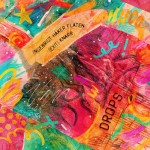
If there’s one thing Ingebrigt Håker Flaten has mastered over the decades, it’s the art of turning experiments that shouldn’t work into music that absolutely does. What began as a one-off commission for Vossajazz has now grown into his most vital project, (Exit) Knarr, a vessel big enough to hold free-jazz fury, painterly abstraction, and electronics without ever capsizing. On "Drops" (Sonic Transmissions Records), the third studio album by this steady sextet, Håker Flaten doesn’t just steer the ship - he redraws the nautical charts altogether.
The big idea this time: graphic scores. Skeptics might groan - ah, another exercise in shapes and squiggles masquerading as music - but "Drops" proves why (Exit) Knarr is a different beast. Håker Flaten treats visual art like a Rosetta Stone for sound, citing influences as wide-ranging as Kandinsky, Hilma af Klint, Braxton, Cage, and Xenakis. The results are not esoteric puzzles but vivid sonic canvases: bursts of saxophone like brushstrokes, piano lines flickering like rays through stained glass, bass and drums sculpting a rhythmic architecture that feels both ancient and futuristic. Electronics buzz in and out, not as gimmick but as atmosphere, expanding the palette like a painter suddenly discovering neon.
The opener, "Deluge", is a Wayne Shorter deconstruction, a sprawling homage that feels less like a cover than a séance - summoning Shorter’s spirit while bending it through Knarr’s idiosyncratic prism. With Mette Rasmussen and Veslemøy Narvesen joining for this extended lineup, the piece floods the room with both reverence and unruly joy. The title track, "Drops", condenses that energy into glittering shards - sharp, bright, and quick to vanish. "Kanón (for Paal Nilssen-Love)", at nearly seventeen minutes, is the record’s backbone, a monumental free-jazz sprawl that pays tribute while also flexing the band’s stamina and wit. Finally, "Austin Vibes", tweaked by Karl Hjalmar Nyberg, is a sly nod to Håker Flaten’s Texas chapter, folding geography into sonics as easily as flipping a record side.
There’s an almost mischievous clarity to "Drops". For all its conceptual depth, the music never drowns in theory. Instead, it radiates a restless joy - an insistence that even the most abstract experiments should swing, should sing, should breathe. After all, this is a band that thrives on collision: jazz against electronics, structure against improvisation, rigor against play. What might look on paper like chaos becomes, in their hands, inevitability.
At its heart, "Drops" is about transformation. Childhood sketches reappear as graphic scores; personal mythologies turn into band dialogues; one festival commission becomes a flagship ensemble. You can hear Håker Flaten the painter, the scientist, the jazz radical, the cosmic traveler - all converging in a single fluid gesture.
The album closes with the sense that (Exit) Knarr isn’t just a band but a long voyage - each release another stop in an unfolding odyssey. "Drops" may be a new destination, but it already points to other horizons. It rewards repetition, not because it hides secrets, but because its surface is alive, always refracting light differently, depending on how you listen.
It’s a record that reminds you: sometimes the best way to explain music is to draw it first - and then play until the paper catches fire.
The big idea this time: graphic scores. Skeptics might groan - ah, another exercise in shapes and squiggles masquerading as music - but "Drops" proves why (Exit) Knarr is a different beast. Håker Flaten treats visual art like a Rosetta Stone for sound, citing influences as wide-ranging as Kandinsky, Hilma af Klint, Braxton, Cage, and Xenakis. The results are not esoteric puzzles but vivid sonic canvases: bursts of saxophone like brushstrokes, piano lines flickering like rays through stained glass, bass and drums sculpting a rhythmic architecture that feels both ancient and futuristic. Electronics buzz in and out, not as gimmick but as atmosphere, expanding the palette like a painter suddenly discovering neon.
The opener, "Deluge", is a Wayne Shorter deconstruction, a sprawling homage that feels less like a cover than a séance - summoning Shorter’s spirit while bending it through Knarr’s idiosyncratic prism. With Mette Rasmussen and Veslemøy Narvesen joining for this extended lineup, the piece floods the room with both reverence and unruly joy. The title track, "Drops", condenses that energy into glittering shards - sharp, bright, and quick to vanish. "Kanón (for Paal Nilssen-Love)", at nearly seventeen minutes, is the record’s backbone, a monumental free-jazz sprawl that pays tribute while also flexing the band’s stamina and wit. Finally, "Austin Vibes", tweaked by Karl Hjalmar Nyberg, is a sly nod to Håker Flaten’s Texas chapter, folding geography into sonics as easily as flipping a record side.
There’s an almost mischievous clarity to "Drops". For all its conceptual depth, the music never drowns in theory. Instead, it radiates a restless joy - an insistence that even the most abstract experiments should swing, should sing, should breathe. After all, this is a band that thrives on collision: jazz against electronics, structure against improvisation, rigor against play. What might look on paper like chaos becomes, in their hands, inevitability.
At its heart, "Drops" is about transformation. Childhood sketches reappear as graphic scores; personal mythologies turn into band dialogues; one festival commission becomes a flagship ensemble. You can hear Håker Flaten the painter, the scientist, the jazz radical, the cosmic traveler - all converging in a single fluid gesture.
The album closes with the sense that (Exit) Knarr isn’t just a band but a long voyage - each release another stop in an unfolding odyssey. "Drops" may be a new destination, but it already points to other horizons. It rewards repetition, not because it hides secrets, but because its surface is alive, always refracting light differently, depending on how you listen.
It’s a record that reminds you: sometimes the best way to explain music is to draw it first - and then play until the paper catches fire.
Relay For Death: Mutual Consuming

Artist: Relay For Death
Title: Mutual Consuming
Format: 12" + Download
Label: The Helen Scarsdale Agency (@)
Rated:
Title: Mutual Consuming
Format: 12" + Download
Label: The Helen Scarsdale Agency (@)
Rated:
Relay For Death have always sounded like they’re making music at the very end of the world - or perhaps just past it, when the ruins have cooled, and only the faint hum of electricity survives. With "Mutual Consuming", the Spikula twins refine that post-apocalyptic grammar into something both implacable and strangely serene: two side-long slabs of smoldering ambience, at once minimal and oppressive, delicate and devastating.
The title comes from traditional Chinese medicine, where yin and yang don’t fight so much as they devour one another, endlessly. Relay For Death take that idea and render it in sound: frequencies that seem to eat themselves, loops collapsing into static, drones feeding on their own reverberations. It’s not Ouroboros, exactly, but something more dyspeptic - an eternal feedback cycle where digestion never ends, only mutates.
Side A, "intone the morph orb", is a slow sink into an abyssal throb, like Thomas Köner’s polar drones except more toxic, thickened with radiation and decay. It feels like the inside of a glacier listening to itself dissolve. Side B, "terminal ice wind", blows colder: all brittle metallic resonance and cavernous breaths, an industrial cousin of MB’s desolate meditations. The piece unfurls like weather, impersonal yet all-consuming, leaving you with the unsettling impression that the storm doesn’t notice you, and never will.
Relay For Death have long worked in this hermetic register - grim, uncompromising, allergic to narrative - but here the sense of collapse feels almost sculptural. Noise, usually about eruption, here becomes about erosion: a slow wearing down of sound into absence. What’s remarkable is how immersive that void is. If destruction has a texture, the twins have managed to record it.
Originally part of the now-mythical "On Corrosion" boxset (the ten-cassette wooden reliquary that instantly vanished into collector lore), "Mutual Consuming" finally crawls back into circulation on its own. It still feels less like an album and more like an environment: a frozen, poisoned atmosphere in which the listener is allowed to drift, stripped of warmth but overwhelmed by detail.
Listening is like staring too long into black water: first frightening, then mesmerizing, then almost comforting. Relay For Death may claim there’s no through-line with their past work, but the bleak humor of that denial is telling. In the gorge fest of existence, the twins don’t offer catharsis or clarity. What they offer is endurance. A space where destruction, rather than resisted, is simply inhabited.
It’s nihilism with staying power. A music for when there’s nothing left to do but sit with the storm, and let it consume.
The title comes from traditional Chinese medicine, where yin and yang don’t fight so much as they devour one another, endlessly. Relay For Death take that idea and render it in sound: frequencies that seem to eat themselves, loops collapsing into static, drones feeding on their own reverberations. It’s not Ouroboros, exactly, but something more dyspeptic - an eternal feedback cycle where digestion never ends, only mutates.
Side A, "intone the morph orb", is a slow sink into an abyssal throb, like Thomas Köner’s polar drones except more toxic, thickened with radiation and decay. It feels like the inside of a glacier listening to itself dissolve. Side B, "terminal ice wind", blows colder: all brittle metallic resonance and cavernous breaths, an industrial cousin of MB’s desolate meditations. The piece unfurls like weather, impersonal yet all-consuming, leaving you with the unsettling impression that the storm doesn’t notice you, and never will.
Relay For Death have long worked in this hermetic register - grim, uncompromising, allergic to narrative - but here the sense of collapse feels almost sculptural. Noise, usually about eruption, here becomes about erosion: a slow wearing down of sound into absence. What’s remarkable is how immersive that void is. If destruction has a texture, the twins have managed to record it.
Originally part of the now-mythical "On Corrosion" boxset (the ten-cassette wooden reliquary that instantly vanished into collector lore), "Mutual Consuming" finally crawls back into circulation on its own. It still feels less like an album and more like an environment: a frozen, poisoned atmosphere in which the listener is allowed to drift, stripped of warmth but overwhelmed by detail.
Listening is like staring too long into black water: first frightening, then mesmerizing, then almost comforting. Relay For Death may claim there’s no through-line with their past work, but the bleak humor of that denial is telling. In the gorge fest of existence, the twins don’t offer catharsis or clarity. What they offer is endurance. A space where destruction, rather than resisted, is simply inhabited.
It’s nihilism with staying power. A music for when there’s nothing left to do but sit with the storm, and let it consume.
Dj Haram: Beside Myself

DJ Haram’s Beside Myself is the kind of record that could only have been made in a world teetering on the brink - half diary of grief, half declaration of resistance, half inside joke told through clenched teeth. Yes, that’s three halves, but the math fits the spirit: this is music that exists in overflow, in contradiction, in the anxious doubling of being “beside oneself”.
Across its 14 tracks, Haram builds a jagged cathedral of bass, noise, and borrowed traditions. Jersey Club patterns snap against darbuka drums, punk energy snarls beside electroacoustic drones, and her own voice - poetic, bitter, tender, sardonic - threads through the chaos. This isn’t the kind of “world music” where cultures melt politely into a tasteful soup. It’s a sonic clash kitchen where saz-like tones and rattling percussion get tossed in with grime-stained synths, tape hiss, and militant beats. You can almost hear the sparks flying off the gear.
Her collaborators make the road less lonely: Moor Mother and the 700 Bliss kin bring barbed-wire lyricism; Bbymutha slides in with defiant bite; Armand Hammer pull no punches; trumpeter Aquiles Navarro blows fire through the smoke. Even when the grooves threaten to collapse under their own distortion, there’s a collective force holding the pieces together - a small, volatile community in sound.
The political undertow is everywhere, but never in the neat, hashtag-friendly way. Haram herself mocks the commodification of dissent, sneering at the way radical slogans get “yaasified” into brand aesthetics. Instead, she builds what she calls a “vulnerable shelter amidst a worsening storm”, music that refuses easy catharsis. No “joy is resistance” platitudes here - just raw, unresolved survival, jagged as an unhealed scar.
What makes Beside Myself so compelling is that it is, paradoxically, both a mirror of despair and a generator of new energy. Its pessimism is almost hopeful in its refusal to compromise. Each track is a little act of friction: bass that grumbles like collapsing concrete, verses that cut like graffiti on glass, beats that stutter and rage but never surrender to silence.
It’s unclassifiable, yet unmistakably hers. A record that won’t heal the world, as Haram admits, but will at least soundtrack the feeling of being alive inside its fractures. Think of it less as an album and more as a dispatch from the trenches: a reminder that even when the system is devouring itself, there are still frequencies left to hijack, still noises left to make.
Listening to Beside Myself feels like holding onto a burning wire. It hurts, but it’s alive. And in times like these, maybe that’s the most radical kind of music we can ask for.
Across its 14 tracks, Haram builds a jagged cathedral of bass, noise, and borrowed traditions. Jersey Club patterns snap against darbuka drums, punk energy snarls beside electroacoustic drones, and her own voice - poetic, bitter, tender, sardonic - threads through the chaos. This isn’t the kind of “world music” where cultures melt politely into a tasteful soup. It’s a sonic clash kitchen where saz-like tones and rattling percussion get tossed in with grime-stained synths, tape hiss, and militant beats. You can almost hear the sparks flying off the gear.
Her collaborators make the road less lonely: Moor Mother and the 700 Bliss kin bring barbed-wire lyricism; Bbymutha slides in with defiant bite; Armand Hammer pull no punches; trumpeter Aquiles Navarro blows fire through the smoke. Even when the grooves threaten to collapse under their own distortion, there’s a collective force holding the pieces together - a small, volatile community in sound.
The political undertow is everywhere, but never in the neat, hashtag-friendly way. Haram herself mocks the commodification of dissent, sneering at the way radical slogans get “yaasified” into brand aesthetics. Instead, she builds what she calls a “vulnerable shelter amidst a worsening storm”, music that refuses easy catharsis. No “joy is resistance” platitudes here - just raw, unresolved survival, jagged as an unhealed scar.
What makes Beside Myself so compelling is that it is, paradoxically, both a mirror of despair and a generator of new energy. Its pessimism is almost hopeful in its refusal to compromise. Each track is a little act of friction: bass that grumbles like collapsing concrete, verses that cut like graffiti on glass, beats that stutter and rage but never surrender to silence.
It’s unclassifiable, yet unmistakably hers. A record that won’t heal the world, as Haram admits, but will at least soundtrack the feeling of being alive inside its fractures. Think of it less as an album and more as a dispatch from the trenches: a reminder that even when the system is devouring itself, there are still frequencies left to hijack, still noises left to make.
Listening to Beside Myself feels like holding onto a burning wire. It hurts, but it’s alive. And in times like these, maybe that’s the most radical kind of music we can ask for.
Andy Graydon & Klaus Janek: A Book Of Waves
Artist: Andy Graydon & Klaus Janek (@)
Title: A Book Of Waves
Format: CD + Download
Label: Room40 (@)
Rated:

Title: A Book Of Waves
Format: CD + Download
Label: Room40 (@)
Rated:
Some records are less albums than they are tidal charts: sound as a record of pressure, pull, undertow. A Book of Waves, the long-gestating collaboration between sound artist Andy Graydon and contrabassist Klaus Janek, belongs squarely to that category. It feels less like two musicians conversing than like two bodies of water colliding - surface glints against abyssal depth, sudden turbulence against long, rolling swells. Released on Room40, it’s the sort of project that refuses to be rushed, shaped over two years of back-and-forth exchanges across oceans and continents. The distance didn’t dilute the duo’s synergy; it gave it gravity.
Graydon, known for weaving installations and sonic environments that meditate on ecology and perception, brings textures that hiss, shimmer, and scatter like foam across the crest of a wave. Janek, whose double bass has long been a tectonic presence in improvised and electroacoustic circles, anchors the drift with sonorous lows and grainy, resonant arco passages that feel closer to geological rumble than “melody”. Together, their process was one of asynchronous layering: not the give-and-take of live improvisation but something slower, more sculptural, like carving tidal pools into stone and waiting for them to fill.
The title nods to Stefan Helmreich’s book on the science and culture of waves, and it’s apt - because what Graydon and Janek create isn’t merely music about water but music that moves as water does. Opener “Premeridian” unfurls in glacial arcs, a dawn tide of bass drone and airy crackle. “Uta” lingers in delicate suspension, like the moment just before a wave breaks, each sound an eddy threatening to spiral away. By the time we reach “Silcrow”, the album’s center of gravity, we’re submerged in a deep-sea zone of creaks and shifting masses, a place where pressure itself seems to have become audible. The closing “Postmedian” is less resolution than ebb - the sea pulling back, leaving rivulets behind, fragile but persistent.
What makes A Book of Waves compelling is its refusal to settle. It drifts between the live impulse and the fixed studio artifact, between improvisation and composition, between erosion and accumulation. The listener becomes less a spectator and more a shoreline: shaped, battered, and soothed by whatever comes ashore.
It is, in the best sense, an album that seems to resist ownership. The sounds belong to no one, not even the duo - they belong to the physics of resonance, the shared languages of pulse and decay, the way all waves eventually leave their trace. To play it is to sit with slowness, with movement that measures itself not in minutes but in tides.
And perhaps that is the secret joy here: Graydon and Janek remind us that music, like water, has no need to hurry. It will find us, carve us, drown us, or cradle us, whether or not we’re ready.
Graydon, known for weaving installations and sonic environments that meditate on ecology and perception, brings textures that hiss, shimmer, and scatter like foam across the crest of a wave. Janek, whose double bass has long been a tectonic presence in improvised and electroacoustic circles, anchors the drift with sonorous lows and grainy, resonant arco passages that feel closer to geological rumble than “melody”. Together, their process was one of asynchronous layering: not the give-and-take of live improvisation but something slower, more sculptural, like carving tidal pools into stone and waiting for them to fill.
The title nods to Stefan Helmreich’s book on the science and culture of waves, and it’s apt - because what Graydon and Janek create isn’t merely music about water but music that moves as water does. Opener “Premeridian” unfurls in glacial arcs, a dawn tide of bass drone and airy crackle. “Uta” lingers in delicate suspension, like the moment just before a wave breaks, each sound an eddy threatening to spiral away. By the time we reach “Silcrow”, the album’s center of gravity, we’re submerged in a deep-sea zone of creaks and shifting masses, a place where pressure itself seems to have become audible. The closing “Postmedian” is less resolution than ebb - the sea pulling back, leaving rivulets behind, fragile but persistent.
What makes A Book of Waves compelling is its refusal to settle. It drifts between the live impulse and the fixed studio artifact, between improvisation and composition, between erosion and accumulation. The listener becomes less a spectator and more a shoreline: shaped, battered, and soothed by whatever comes ashore.
It is, in the best sense, an album that seems to resist ownership. The sounds belong to no one, not even the duo - they belong to the physics of resonance, the shared languages of pulse and decay, the way all waves eventually leave their trace. To play it is to sit with slowness, with movement that measures itself not in minutes but in tides.
And perhaps that is the secret joy here: Graydon and Janek remind us that music, like water, has no need to hurry. It will find us, carve us, drown us, or cradle us, whether or not we’re ready.