
Browse by Genre
Industrial Music / Industrial Metal / Aggro Industrial / Electro Metal
Industrial Noise / Power Noise / Harsh Noise
Synth Pop / Electro Pop / Synth-Electronica
Techno / Trance / Goa / Drum'n'Bass / Jungle / Tribal / Trip-Hop
Ambient / Electronica / Ethereal / Dub / Soundscapes / Abstract
Experimental / Avantgarde / Weird & Wired / Glitch / Noise / Field Recording
Dark / Gothic / Wave / New Wave / Dark Wave / Industrial Gothic
New Music / Downtown / Avantgarde Jazz / New Classical / World
Search Reviews
Music Reviews
Noiseshaper: Welcome The Unknown
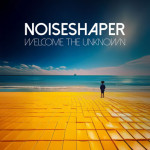
If dub reggae is a river flowing through time, Noiseshaper is its tireless current - always recognizable, always evolving. Their latest album, "Welcome The Unknown", is equal parts high tide and calm resurgence: familiar enough to feel like home, and fresh enough to make you stand at the riverbank and catch your breath.
The backbone of the album is Noiseshaper’s signature deep bass and space-warping echoes. But what makes this return sing is their vocal arsenal: Simple Straw brings radiant positivity - his voice a steady wake of warmth over "Welcome The Unknown", "Cyberwar", and "We Wanna Live". Meanwhile, Jackie Deane brings soul-laced gravitas to tracks like "This Is Love" and "Dem A Lie", balancing earnest gospel with dub rhythms. And then there’s Bernard Fowler - whose voice oversaw Rolling Stones’ choruses and Herbie’s grooves - reimagined on "Silk Sheets". He’s not just a guest; he’s a history-rich conduit folded into Noiseshaper’s modern sound architecture.
Together, these voices shape an album that doesn’t duck tough themes, either. The social conscience here beats softly but firmly: climate anxiety, disinformation wars, broken promises, pursuit of love - all filtered through reggae’s medium-distance optimism. The lyrics don’t preach; they invite you to sway, reflect, and maybe rebuild. Even "Reality in the Dark" sounds like a hymn whispered under blackout skies, and "Deeper I Fall" plays like an introspection in five minutes flat.
And you can dance to it. There’s still room to move - fold your arms, nod your head, or drop your worries into the sub-bass. Songs like "Smile Fi Mi Sunshine" and "Fly Up" are patently groove-friendly, with enough soul to avoid getting lost to the DJ booth.
Noiseshaper have never been trend chasers. Their version of innovation is rewiring tradition with care and drift. Their return here doesn’t reawaken ghost tricks or nostalgia echo chambers; it gently pushes the genre forward, echoing but not replicating. After 25 years, that’s still radical.
"Welcome The Unknown" is dub music with a soul - warm, thoughtful, and defiantly hopeful. Perfect for sunken nights and light-drenched mornings. If you thought dub was just about echoing bass lines, this album reminds you it’s also about echoing compassion.
The backbone of the album is Noiseshaper’s signature deep bass and space-warping echoes. But what makes this return sing is their vocal arsenal: Simple Straw brings radiant positivity - his voice a steady wake of warmth over "Welcome The Unknown", "Cyberwar", and "We Wanna Live". Meanwhile, Jackie Deane brings soul-laced gravitas to tracks like "This Is Love" and "Dem A Lie", balancing earnest gospel with dub rhythms. And then there’s Bernard Fowler - whose voice oversaw Rolling Stones’ choruses and Herbie’s grooves - reimagined on "Silk Sheets". He’s not just a guest; he’s a history-rich conduit folded into Noiseshaper’s modern sound architecture.
Together, these voices shape an album that doesn’t duck tough themes, either. The social conscience here beats softly but firmly: climate anxiety, disinformation wars, broken promises, pursuit of love - all filtered through reggae’s medium-distance optimism. The lyrics don’t preach; they invite you to sway, reflect, and maybe rebuild. Even "Reality in the Dark" sounds like a hymn whispered under blackout skies, and "Deeper I Fall" plays like an introspection in five minutes flat.
And you can dance to it. There’s still room to move - fold your arms, nod your head, or drop your worries into the sub-bass. Songs like "Smile Fi Mi Sunshine" and "Fly Up" are patently groove-friendly, with enough soul to avoid getting lost to the DJ booth.
Noiseshaper have never been trend chasers. Their version of innovation is rewiring tradition with care and drift. Their return here doesn’t reawaken ghost tricks or nostalgia echo chambers; it gently pushes the genre forward, echoing but not replicating. After 25 years, that’s still radical.
"Welcome The Unknown" is dub music with a soul - warm, thoughtful, and defiantly hopeful. Perfect for sunken nights and light-drenched mornings. If you thought dub was just about echoing bass lines, this album reminds you it’s also about echoing compassion.
Mark Molnar: EXO

Mark Molnar’s "EXO" plays like a coded message from a seafloor monastery, scrawled onto handmade staff paper by candlelight and then left to dry in a storm. It’s music composed in solitude but not loneliness - the kind of solitude that bristles with memories of cities, communities, scenes, silences.
For those who’ve followed his work across Ottawa’s experimental underground, his tenure with Black Bough Records, his work in various noisy and noble ensembles, or his stubborn devotion to a hands-on, anti-academic DIY ethos, this album feels less like a debut and more like a long-withheld letter finally delivered by tides.
Recorded entirely by Molnar himself, "EXO" isn’t just a collection of chamber compositions; it’s a slow act of excavation - not of fossils, but of tremors: emotional, historical, musical. Strings, harp, piano, and occasional percussion are brought into sharp, almost forensic detail, but always with a cinematic sense of place. You can feel the recording room - its wooden floor, its vibrating objects, its ghosts. Even when the notes dance with the precision of Ligeti or ache with Górecki’s longing, there’s a distinctly physical presence beneath: the low rumble of a bass drum used not to punctuate, but to haunt; piano strings miked to capture not just pitch, but pulse.
In moments, especially during the 18-minute suite “pallida Mors”, the music evokes not so much a liturgy as the skeletal remains of one - half remembered, half reinvented - where Molnar seems to stitch together baroque melancholy with industrial disquiet, like Henryk Górecki falling asleep on a tour bus headed for a Godflesh gig. Elsewhere, dissonant string cascades swell and fracture like thoughts that can’t quite form words, only moods.
Despite all its harmonic density, there’s something raw here - not raw in the punk sense (though Molnar clearly hasn’t forgotten his post-hardcore roots), but raw like the scrape of bow on string, the slight hiss of breath before a passage begins, the moments between form and collapse.
"EXO" is rigorously structured, yes, but not locked in: it breathes like a living thing that’s unsure whether it’s in mourning or metamorphosis. And maybe that’s the point. For all its microtonal sophistication and compositional craft, this record feels less concerned with cleverness than with atmosphere, less about asserting a position in the post-classical canon and more about crafting a vessel that drifts between forms, between clarity and murk, between solemnity and fury.
There’s a kind of damp grandeur to it, like standing in a flooded church at dusk, watching light refract through broken stained glass while the sea waits patiently at the door. And through it all, you can hear a whisper - not only of Molnar the composer, but of Molnar the scene builder, the enabler, the forever-collaborator turned solitary navigator. "EXO" may be a solo record, but it resounds with echoes of the people, places, and principles he’s carried with him for over two decades. It’s not an easy listen, nor is it trying to be - and that’s precisely why it deserves one.
For those who’ve followed his work across Ottawa’s experimental underground, his tenure with Black Bough Records, his work in various noisy and noble ensembles, or his stubborn devotion to a hands-on, anti-academic DIY ethos, this album feels less like a debut and more like a long-withheld letter finally delivered by tides.
Recorded entirely by Molnar himself, "EXO" isn’t just a collection of chamber compositions; it’s a slow act of excavation - not of fossils, but of tremors: emotional, historical, musical. Strings, harp, piano, and occasional percussion are brought into sharp, almost forensic detail, but always with a cinematic sense of place. You can feel the recording room - its wooden floor, its vibrating objects, its ghosts. Even when the notes dance with the precision of Ligeti or ache with Górecki’s longing, there’s a distinctly physical presence beneath: the low rumble of a bass drum used not to punctuate, but to haunt; piano strings miked to capture not just pitch, but pulse.
In moments, especially during the 18-minute suite “pallida Mors”, the music evokes not so much a liturgy as the skeletal remains of one - half remembered, half reinvented - where Molnar seems to stitch together baroque melancholy with industrial disquiet, like Henryk Górecki falling asleep on a tour bus headed for a Godflesh gig. Elsewhere, dissonant string cascades swell and fracture like thoughts that can’t quite form words, only moods.
Despite all its harmonic density, there’s something raw here - not raw in the punk sense (though Molnar clearly hasn’t forgotten his post-hardcore roots), but raw like the scrape of bow on string, the slight hiss of breath before a passage begins, the moments between form and collapse.
"EXO" is rigorously structured, yes, but not locked in: it breathes like a living thing that’s unsure whether it’s in mourning or metamorphosis. And maybe that’s the point. For all its microtonal sophistication and compositional craft, this record feels less concerned with cleverness than with atmosphere, less about asserting a position in the post-classical canon and more about crafting a vessel that drifts between forms, between clarity and murk, between solemnity and fury.
There’s a kind of damp grandeur to it, like standing in a flooded church at dusk, watching light refract through broken stained glass while the sea waits patiently at the door. And through it all, you can hear a whisper - not only of Molnar the composer, but of Molnar the scene builder, the enabler, the forever-collaborator turned solitary navigator. "EXO" may be a solo record, but it resounds with echoes of the people, places, and principles he’s carried with him for over two decades. It’s not an easy listen, nor is it trying to be - and that’s precisely why it deserves one.
Seeded Plain: Badminton, The Volleys

Every now and again, we like to dig into the recent past when we find something intriguing, unsettling or even frightening. Well this release, the four-track release, Badminton, The Volleys is, at the very least, certainly intriguing. This EP is brought to us by the duo, Seeded Plain whose members are Jay Kreimer and Brian Day and according to their bio “invented instruments and electronica”.
In some cases, albums can truly be appreciated without context, background or the artist biography. In other words, the music just speaks for itself. Badminton, The Volleys is the exact opposite. You really can’t appreciate what these two guys have created unless you look at their background. Jay Kreimer is an improvisational musician who has toured the world, invented instruments and Brian Day is an inventor who has used “scavenged electronics, repurposed mechanical components and amplified materials that you might find in your garage or great uncle’s office”.
Three of the tracks on this release are between 15 and 21 minutes in length. I wouldn’t necessarily call the EP “music” per se but then again that term can be subjective. However, these pieces can absolutely be referred to as… let’s say, sound sculptures. Is it art? Definitely.
In a release like this, the effectiveness partially lies in the limited amount of instruments unlike some albums that have numerous instruments with the pieces going in too many different directions often without purpose. We don’t feel that with this release. Badminton… sounds like the soundtrack to some suspicious activity in a remote area of a country where no one dares to go. I would love to see a visual companion to an album like this. There would still be room for imagination if there were visuals and not necessarily images related to the specific vision of the artists. There are not a lot of patterns or structure. but there’s a lot of interesting moments and sonic twists and turns. If anything, the mood is sort of effective when the artists, find moments of depth and minimalism with the composition. Furthermore, the moments where we don’t hear much are just as important as when we hear a lot going on.
These guys haven’t just invented their own instruments. They’ve created a sometimes whimsical, often disturbing, always interesting piece of art here. But I think it deserves having a visual companion… even if perhaps the album or the band was playing in some art gallery or oddities exhibit, maybe. Anyway… really interesting album. I’d definitely recommended it for those interested in experimental soundscapes, odd soundtracks or just something different all together.
In some cases, albums can truly be appreciated without context, background or the artist biography. In other words, the music just speaks for itself. Badminton, The Volleys is the exact opposite. You really can’t appreciate what these two guys have created unless you look at their background. Jay Kreimer is an improvisational musician who has toured the world, invented instruments and Brian Day is an inventor who has used “scavenged electronics, repurposed mechanical components and amplified materials that you might find in your garage or great uncle’s office”.
Three of the tracks on this release are between 15 and 21 minutes in length. I wouldn’t necessarily call the EP “music” per se but then again that term can be subjective. However, these pieces can absolutely be referred to as… let’s say, sound sculptures. Is it art? Definitely.
In a release like this, the effectiveness partially lies in the limited amount of instruments unlike some albums that have numerous instruments with the pieces going in too many different directions often without purpose. We don’t feel that with this release. Badminton… sounds like the soundtrack to some suspicious activity in a remote area of a country where no one dares to go. I would love to see a visual companion to an album like this. There would still be room for imagination if there were visuals and not necessarily images related to the specific vision of the artists. There are not a lot of patterns or structure. but there’s a lot of interesting moments and sonic twists and turns. If anything, the mood is sort of effective when the artists, find moments of depth and minimalism with the composition. Furthermore, the moments where we don’t hear much are just as important as when we hear a lot going on.
These guys haven’t just invented their own instruments. They’ve created a sometimes whimsical, often disturbing, always interesting piece of art here. But I think it deserves having a visual companion… even if perhaps the album or the band was playing in some art gallery or oddities exhibit, maybe. Anyway… really interesting album. I’d definitely recommended it for those interested in experimental soundscapes, odd soundtracks or just something different all together.
Hyperbubble: Cowgirls And Synthesizers

Artist: Hyperbubble (@)
Title: Cowgirls And Synthesizers
Format: CD
Label: self-released
Rated:

Buy from HERE or Buy from HERE
Title: Cowgirls And Synthesizers
Format: CD
Label: self-released
Rated:
Buy from HERE or Buy from HERE
Ok so you’ve sent in a CD for review and it’s wrapped in a brown, autographed bandana. Now you have my attention. ‘Cowgirls and Synthesizers’ is (Original Motion Picture Soundtrack) comes to us from the electro-pop duo, Hyperbubble.
My first thought when hearing the first track, “Cowgirls And Synthesizers” was, “What in the world is this ridiculousness?” It’s a fast track combining synth, banjo, whimsical noise blips and verses with the pace of a really quick rapper. But my God, what a fun track. Who has the nerve to combine elements that, in and of themselves could be so far apart Hyperbubble does it and does it really well.
Some of the tracks on the album are reminiscent of 80s pop, new wave while some almost sound like music from silly commercials for kids toys. I guess that makes sense considering this album is in fact, a sound track. One example of this is “I Was a Teenage Jem Girl ”, a fun, upbeat track
“Saturday Morning Service” – what an appropriate title because what the track does is take us back to Saturday morning cartoons… another fun track. This one also has some background blips that are sort of reminiscent of old Atari or Nintendo games.
It’s one thing for an artist to create an original-sounding album while adhering to old school sounds. It can be an entirely different story for an artist to do it and make it listenable and make sense. This album definitely does. We won’t go through every track. But they are all different which is great for different scenes in a movie. It’s retro with the old school sounds and upbeat melodies but somewhere there’s a modern take herein. Perhaps the vocals could be a bit lower in the mix but that’s really the only complaint here.
If you are in the mood for something silly, creative, retro, whimsical, fun, then absolutely seek this record out. You won’t end up with anything other than a smile by the end of it.
My first thought when hearing the first track, “Cowgirls And Synthesizers” was, “What in the world is this ridiculousness?” It’s a fast track combining synth, banjo, whimsical noise blips and verses with the pace of a really quick rapper. But my God, what a fun track. Who has the nerve to combine elements that, in and of themselves could be so far apart Hyperbubble does it and does it really well.
Some of the tracks on the album are reminiscent of 80s pop, new wave while some almost sound like music from silly commercials for kids toys. I guess that makes sense considering this album is in fact, a sound track. One example of this is “I Was a Teenage Jem Girl ”, a fun, upbeat track
“Saturday Morning Service” – what an appropriate title because what the track does is take us back to Saturday morning cartoons… another fun track. This one also has some background blips that are sort of reminiscent of old Atari or Nintendo games.
It’s one thing for an artist to create an original-sounding album while adhering to old school sounds. It can be an entirely different story for an artist to do it and make it listenable and make sense. This album definitely does. We won’t go through every track. But they are all different which is great for different scenes in a movie. It’s retro with the old school sounds and upbeat melodies but somewhere there’s a modern take herein. Perhaps the vocals could be a bit lower in the mix but that’s really the only complaint here.
If you are in the mood for something silly, creative, retro, whimsical, fun, then absolutely seek this record out. You won’t end up with anything other than a smile by the end of it.
Chris Jonas: backwardsupwardsky

Artist: Chris Jonas
Title: backwardsupwardsky
Format: 10"
Label: Edgetone Records (@)
Rated:

Buy from HERE or Buy from HERE
Title: backwardsupwardsky
Format: 10"
Label: Edgetone Records (@)
Rated:
Buy from HERE or Buy from HERE
What we have here is a twelve track album that leans mostly to the style of experimental jazz with traditional instruments such as clarinet, drums, bass and such. If you are into that sort of thing, this album is pretty good, actually. Instead of a soundscape, I feel what this artist gives us an intimate picture of his imagination wandering regardless of the location. While there’s no real “desert” vibe, it’s not really for us to determine if that’s what the artist was thinking or not.
But this is a good record if you are into jazz with some experimentation. And with a limited number of instruments, the album really paints a picture of imagination in simplicity and intimacy. I’d say it’s worth checking out if you are into the aforementioned styles.
Go support the artist on Bandcamp:
https://chrisjonas.bandcamp.com/album/backwardsupwardsky