
Browse by Genre
Industrial Music / Industrial Metal / Aggro Industrial / Electro Metal
Industrial Noise / Power Noise / Harsh Noise
Synth Pop / Electro Pop / Synth-Electronica
Techno / Trance / Goa / Drum'n'Bass / Jungle / Tribal / Trip-Hop
Ambient / Electronica / Ethereal / Dub / Soundscapes / Abstract
Experimental / Avantgarde / Weird & Wired / Glitch / Noise / Field Recording
Dark / Gothic / Wave / New Wave / Dark Wave / Industrial Gothic
New Music / Downtown / Avantgarde Jazz / New Classical / World
Search Reviews
Music Reviews
Witchhands: Vox Nihili

Artist: Witchhands (@)
Title: Vox Nihili
Format: Download Only (MP3 + Lossless)
Label: self-released
Rated:


Title: Vox Nihili
Format: Download Only (MP3 + Lossless)
Label: self-released
Rated:
The voice of nothing speaks again - but louder, meaner, and with a tighter rhythm section. "Vox Nihili" is not merely a re-recording of Witchhands’ 2018 debut "A Voice and Nothing More". It's an exorcism, a resurrection, and a Molotov cocktail lobbed at the façade of modernity, thrown with calloused hands from the smoldering trenches of Colorado’s deathrock underground.
Let’s be clear: this is not some high-gloss "remastered and expanded edition." It’s a full-blooded reinterpretation, spiritually and sonically rebuilt by a band that has survived lineup shifts, the loss of its keys (literally - no synths this time), and the collapse of civil optimism. The result is rawer, leaner, and paradoxically more muscular, like a skeleton that’s been boiled down to pure rage.
From the opening invocation "Empty Voices" to the apocalyptic curtain-fall "Vox Nihili", the album roars through eleven tracks like a bad dream that tastes a little too real. Songs like "Derelict", "Ozymandias", and "Night Falls" have been reborn with more speed and steel, now stripped of their original goth trappings and retooled for war. The guitars are colder, the drums pound like industrial hammers, and the absence of synths only amplifies the sensation of being trapped in a claustrophobic, crumbling cathedral.
Ryan Flint’s vocals are still the bleeding heart at the center - somewhere between a desperate sermon and a barbed confession. His lyrics are all ashes, mirrors, and theologies in flames: every track a miniature treatise on decay, disillusionment, or divine indifference. Take "Mephisto", which once hinted at cabaret melodrama but now seethes with Faustian hunger and grief, or "Belie", a punishing dirge where belief itself is flayed alive on an altar of sonic nihilism.
And yet, this isn’t just a pity party in eyeliner. There’s purpose here. A strange kind of hope, maybe - not in salvation, but in facing oblivion with teeth bared. The inclusion of a brutalist take on "In the Midnight Hour" - yes, the Wilson Pickett classic - shouldn’t work, and yet it lands like a grinning punchline from a vampire lounge act in a bomb shelter. Somehow, it makes perfect sense.
The album’s new material ("Sabastian", "Demon’s", "Vox Nihili") meshes seamlessly with the reimagined cuts, adding deeper layers of folklore, mythology, and existential dread. There’s even a glimmer of wry humor in there - buried under all the filth and fury like a coffin grinning up at the moon.
Ultimately, "Vox Nihili" is both a scream into the void and a declaration of creative survival. Witchhands has reemerged from the mire not just intact, but evolved: sharper, angrier, and more articulate in their darkness. Where many bands revisit old work as a nostalgia act, Witchhands does it as a ritual, a rebirth. Fitting, then, that the release landed on Beltane - when the veil thins and the fire returns.
In an era of constant noise, "Vox Nihili" reminds us: sometimes, it's the voice of nothing that says the most.
Let’s be clear: this is not some high-gloss "remastered and expanded edition." It’s a full-blooded reinterpretation, spiritually and sonically rebuilt by a band that has survived lineup shifts, the loss of its keys (literally - no synths this time), and the collapse of civil optimism. The result is rawer, leaner, and paradoxically more muscular, like a skeleton that’s been boiled down to pure rage.
From the opening invocation "Empty Voices" to the apocalyptic curtain-fall "Vox Nihili", the album roars through eleven tracks like a bad dream that tastes a little too real. Songs like "Derelict", "Ozymandias", and "Night Falls" have been reborn with more speed and steel, now stripped of their original goth trappings and retooled for war. The guitars are colder, the drums pound like industrial hammers, and the absence of synths only amplifies the sensation of being trapped in a claustrophobic, crumbling cathedral.
Ryan Flint’s vocals are still the bleeding heart at the center - somewhere between a desperate sermon and a barbed confession. His lyrics are all ashes, mirrors, and theologies in flames: every track a miniature treatise on decay, disillusionment, or divine indifference. Take "Mephisto", which once hinted at cabaret melodrama but now seethes with Faustian hunger and grief, or "Belie", a punishing dirge where belief itself is flayed alive on an altar of sonic nihilism.
And yet, this isn’t just a pity party in eyeliner. There’s purpose here. A strange kind of hope, maybe - not in salvation, but in facing oblivion with teeth bared. The inclusion of a brutalist take on "In the Midnight Hour" - yes, the Wilson Pickett classic - shouldn’t work, and yet it lands like a grinning punchline from a vampire lounge act in a bomb shelter. Somehow, it makes perfect sense.
The album’s new material ("Sabastian", "Demon’s", "Vox Nihili") meshes seamlessly with the reimagined cuts, adding deeper layers of folklore, mythology, and existential dread. There’s even a glimmer of wry humor in there - buried under all the filth and fury like a coffin grinning up at the moon.
Ultimately, "Vox Nihili" is both a scream into the void and a declaration of creative survival. Witchhands has reemerged from the mire not just intact, but evolved: sharper, angrier, and more articulate in their darkness. Where many bands revisit old work as a nostalgia act, Witchhands does it as a ritual, a rebirth. Fitting, then, that the release landed on Beltane - when the veil thins and the fire returns.
In an era of constant noise, "Vox Nihili" reminds us: sometimes, it's the voice of nothing that says the most.
Kenji Kihara: Winds of Eternity
Artist: Kenji Kihara (@)
Title: Winds of Eternity
Format: Tape + Download
Label: Constellation Tatsu (@)
Rated:
Title: Winds of Eternity
Format: Tape + Download
Label: Constellation Tatsu (@)
Rated:
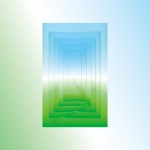
There are albums that you listen to, and albums that listen back. "Winds of Eternity" belongs to the latter category - a hushed conversation between Kenji Kihara and the elements surrounding him. Based in the sleepy coastal town of Hayama, Kihara doesn't just compose music; he cultivates it, like tending to a bonsai that sways gently with the sea breeze, dropping leaves in sync with cicada songs.
This short but expansive release on Constellation Tatsu unspools across just over twenty minutes, yet seems to stretch time like light through fog. You’re not so much invited to listen as you are quietly absorbed. "Midori" opens the album with soft ripples - both aquatic and melodic - a pastoral prelude whose green hues are almost synesthetic. Then, the title track arrives like a gentle gust through shoji screens: just enough tone to move you, just enough silence to still you.
Kihara’s approach isn’t ornamental. It’s elemental. "Mountain Pass" and "Lake Side" are not impressions of landscapes, but transcriptions of their breath. He records nature, but never as a tourist; he lets the environment imprint itself onto his synths, as if moss might grow directly onto an oscillator. There’s no drama here, no drops or climaxes. Just patient movement - like a sunbeam inching across a tatami mat.
But this isn’t just pastoral escapism. Pieces like "Night Driving" add a subtle tension, a motoric undertow beneath the stillness. There’s something a little uncanny about hearing so much calmness framed with such precision. The tape hiss itself becomes a kind of breathing: soft, textured, organic.
Kihara’s work invites comparison to the usual ambient pantheon - Yoshimura, Hatakeyama, Hakobune - but he’s not imitating, just inhabiting the same quiet plane. What sets "Winds of Eternity" apart is its miniaturist scale: nothing overstays, but everything lingers. Each track is a haiku rather than a novel - brief, but complete in its evocation.
You could call this environmental ambient, nature-scaping, or audio incense. Or you could simply say: "this is music that doesn't demand your attention, but rewards your surrender". If there's wind here, it's not the dramatic kind that knocks shutters loose - it's the eternal kind: the one that keeps the leaves rustling and the soul gently rearranged.
So pour some tea. Open the window. Let Kihara’s world wander into yours. Just be prepared: you might not notice the transformation until it’s already happened.
This short but expansive release on Constellation Tatsu unspools across just over twenty minutes, yet seems to stretch time like light through fog. You’re not so much invited to listen as you are quietly absorbed. "Midori" opens the album with soft ripples - both aquatic and melodic - a pastoral prelude whose green hues are almost synesthetic. Then, the title track arrives like a gentle gust through shoji screens: just enough tone to move you, just enough silence to still you.
Kihara’s approach isn’t ornamental. It’s elemental. "Mountain Pass" and "Lake Side" are not impressions of landscapes, but transcriptions of their breath. He records nature, but never as a tourist; he lets the environment imprint itself onto his synths, as if moss might grow directly onto an oscillator. There’s no drama here, no drops or climaxes. Just patient movement - like a sunbeam inching across a tatami mat.
But this isn’t just pastoral escapism. Pieces like "Night Driving" add a subtle tension, a motoric undertow beneath the stillness. There’s something a little uncanny about hearing so much calmness framed with such precision. The tape hiss itself becomes a kind of breathing: soft, textured, organic.
Kihara’s work invites comparison to the usual ambient pantheon - Yoshimura, Hatakeyama, Hakobune - but he’s not imitating, just inhabiting the same quiet plane. What sets "Winds of Eternity" apart is its miniaturist scale: nothing overstays, but everything lingers. Each track is a haiku rather than a novel - brief, but complete in its evocation.
You could call this environmental ambient, nature-scaping, or audio incense. Or you could simply say: "this is music that doesn't demand your attention, but rewards your surrender". If there's wind here, it's not the dramatic kind that knocks shutters loose - it's the eternal kind: the one that keeps the leaves rustling and the soul gently rearranged.
So pour some tea. Open the window. Let Kihara’s world wander into yours. Just be prepared: you might not notice the transformation until it’s already happened.
The Harp Players: Destruction

Artist: The Harp Players (@)
Title: Destruction
Format: Tape + Download
Label: Constellation Tatsu (@)
Rated:
Title: Destruction
Format: Tape + Download
Label: Constellation Tatsu (@)
Rated:
In "Destruction", Reuben Sawyer - under the evocative moniker The Harp Players - embarks on a lyrical excavation, combining unadorned vocals with drifting ambient textures to explore themes of collapse and renewal. If your heart has ever clenched at the ruin of something beloved, this trio of brooding, meditative songs will resonate deeply.
The record opens with “Some Place I Know”, a quietly defiant hymn to landscapes untouched by humanity’s rush. Gentle waves of synth and field recording blend with Sawyer’s voice - a voice plain yet earnest - asking us to remember permanence. It’s a reminder that even in creation, destruction sleeps nearby.
“The Last Spring” stretches nearly ten minutes, a slow-motion elegy for what once flourished. The arrangement unspools like vines reclaiming a ruined structure: ambient hums, soft pulses, and distant fragments of melody, all supporting Sawyer’s words as he meditates on endings and beginnings. It’s here that his interest in personal and ecological evaporation becomes palpable.
The centerpiece, “Who Is the Driver”, is a profound transformation. Inspired by Bill Fay’s existential musings, Sawyer flips the spiritual receiver: there is no sender in this apocalyptic dispatch, only us - the drivers of our fate. The music embraces a mystical darkness: droning bedrock with subtle digital fractures supporting Sawyer’s voice as if caught between a sermon and a lament. It poses a question that hangs in the air: “Do we steer toward oblivion, or something else?”
For fans of Bill Fay’s introspective folk, Tim Hecker’s glacial ambient, and Grouper’s ethereal melancholy, "Destruction" is fertile ground. But Sawyer isn’t copying; he’s weaving: voice and ambiance entwined, ideas of climate, consciousness, and purpose felt more than told.
There’s poetic irony at play. A record about collapse is itself fragile - tape hiss, digital glow, reverberant space - all feel impermanent. Yet that delicate construction gives it emotional heft. Sawyer’s shift into vocals is brave: he doesn’t hide behind abstraction but leans in with humility.
In a world that often idolizes creation without pause, "Destruction" speaks for the battered and the hopeful alike. It recognizes that to rebuild, we must first let some parts fall. And it’s there, in the aftermath, that Sawyer’s voice - a driver and witness - urges us to ask ourselves not just what dies, but what else might live.
The record opens with “Some Place I Know”, a quietly defiant hymn to landscapes untouched by humanity’s rush. Gentle waves of synth and field recording blend with Sawyer’s voice - a voice plain yet earnest - asking us to remember permanence. It’s a reminder that even in creation, destruction sleeps nearby.
“The Last Spring” stretches nearly ten minutes, a slow-motion elegy for what once flourished. The arrangement unspools like vines reclaiming a ruined structure: ambient hums, soft pulses, and distant fragments of melody, all supporting Sawyer’s words as he meditates on endings and beginnings. It’s here that his interest in personal and ecological evaporation becomes palpable.
The centerpiece, “Who Is the Driver”, is a profound transformation. Inspired by Bill Fay’s existential musings, Sawyer flips the spiritual receiver: there is no sender in this apocalyptic dispatch, only us - the drivers of our fate. The music embraces a mystical darkness: droning bedrock with subtle digital fractures supporting Sawyer’s voice as if caught between a sermon and a lament. It poses a question that hangs in the air: “Do we steer toward oblivion, or something else?”
For fans of Bill Fay’s introspective folk, Tim Hecker’s glacial ambient, and Grouper’s ethereal melancholy, "Destruction" is fertile ground. But Sawyer isn’t copying; he’s weaving: voice and ambiance entwined, ideas of climate, consciousness, and purpose felt more than told.
There’s poetic irony at play. A record about collapse is itself fragile - tape hiss, digital glow, reverberant space - all feel impermanent. Yet that delicate construction gives it emotional heft. Sawyer’s shift into vocals is brave: he doesn’t hide behind abstraction but leans in with humility.
In a world that often idolizes creation without pause, "Destruction" speaks for the battered and the hopeful alike. It recognizes that to rebuild, we must first let some parts fall. And it’s there, in the aftermath, that Sawyer’s voice - a driver and witness - urges us to ask ourselves not just what dies, but what else might live.
Mike Cooper: Eternal Equinox

Artist: Mike Cooper (@)
Title: Eternal Equinox
Format: Download Only (MP3 + Lossless)
Label: Room40 (@)
Rated:
Title: Eternal Equinox
Format: Download Only (MP3 + Lossless)
Label: Room40 (@)
Rated:
Mike Cooper’s "Eternal Equinox" feels like waking up to a sunrise inside your own mind - a delicate, meditative journey across ten miniatures for virtual pedal steel and environmental textures. Drawing inspiration from Kevin Good’s compositions via Matt Sargent’s resonant steel guitar, Cooper begins with minimalist melodic sketches that slowly accrue presence and depth. Through attentive listening, he lets textures bloom - ambient field recordings, subtle reverberations, and gentle processing - all guided by a surprisingly intimate palette.
It’s tender, patient music: pieces like “The Melody of Cicada” or “Solar Charge” flicker like fireflies, short yet rich, while richer moments such as “More Distant Thunder” and “The Samurai Sword Swallower” stretch into resonant territory, offering warmth without weight. This emotional economy echoes Cooper’s dedication of the album to late pedal steel innovator Susan Alcorn - a nod that shows he’s playing in a lineage that’s James Teng-DM¹: expanding the expressive range of a humble instrument.
Recorded in Valencia’s Steelworks studio and mastered by Lawrence English, the album sounds intimate but clear - no smothering reverb, no pretentious drone - just space enough for each note and field recording to breathe. This minimal approach feels thoughtful rather than sparse. It’s the sound of someone making music that sinks into your nerves, not hijacking your sensors.
In the context of ambient-modern-classical releases, "Eternal Equinox" stands out by being sincerely human without resorting to overt sentimentality. It refuses to occupy your full attention yet rewards you when you turn toward it - like eavesdropping on a domestic scene just on the edge of your awareness. Late-night windows, morning calm, or unplanned headphone moments - "Eternal Equinox" is sound as stillness and presence. It doesn't bombard the senses; it invites you to meet it halfway. If you believe ambient minimalism is a landscape rather than a label, Cooper just painted you a sunrise.
It’s tender, patient music: pieces like “The Melody of Cicada” or “Solar Charge” flicker like fireflies, short yet rich, while richer moments such as “More Distant Thunder” and “The Samurai Sword Swallower” stretch into resonant territory, offering warmth without weight. This emotional economy echoes Cooper’s dedication of the album to late pedal steel innovator Susan Alcorn - a nod that shows he’s playing in a lineage that’s James Teng-DM¹: expanding the expressive range of a humble instrument.
Recorded in Valencia’s Steelworks studio and mastered by Lawrence English, the album sounds intimate but clear - no smothering reverb, no pretentious drone - just space enough for each note and field recording to breathe. This minimal approach feels thoughtful rather than sparse. It’s the sound of someone making music that sinks into your nerves, not hijacking your sensors.
In the context of ambient-modern-classical releases, "Eternal Equinox" stands out by being sincerely human without resorting to overt sentimentality. It refuses to occupy your full attention yet rewards you when you turn toward it - like eavesdropping on a domestic scene just on the edge of your awareness. Late-night windows, morning calm, or unplanned headphone moments - "Eternal Equinox" is sound as stillness and presence. It doesn't bombard the senses; it invites you to meet it halfway. If you believe ambient minimalism is a landscape rather than a label, Cooper just painted you a sunrise.
Plasma D'arc: Ellipse
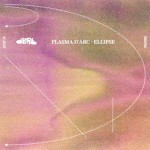
In their debut EP "Ellipse", Swiss duo Plasma D’arc - saxophonist NikolaJanGross and electronic producer GaspardGigon - forge a molten alloy of wind, machine, breath, and glitch. Recorded in March 2024 at LaMaisonMatrice in Crémines and released on tape, this six-track suite is a slow-motion lapse into metallic magma, ever-shifting yet rooted in Swiss craftsmanship.
Gross, hailing from projects like JunKnik and InuitPagoda, brings a raw, expressive voice through sax and bass clarinet, often curled in feedback and effected loops. His playing is not flashy but deeply textural, with guttural breaths and clicks anchoring each phrase in the corporeal. Meanwhile, Gigon - co-founder of the boundary-breaking label Sbire and known for his club and improvisational projects - lays down electronics that feel less like beats and more like tectonic plates shifting under gravity.
Across the six movements - "Hélice", "Phase Solide", "Maille Primitive", "Ligne Triple", "Onyx", "Flamme Plasma" - Plasma D’arc orchestrate a transformation: percussive tap-taps melt into sustained hums, squawks devolve into droning monoliths, and chanted vocal samples emerge like fossil echoes in this sonic stone.
What captivates is their shared sense of form. This is improvisation, yes, but guided by a sculptural patience: layers coalesce, diverge, then coalesce again. "Phase Solide", for example, feels like ice forming around a warm ember - cool rigidity containing inner glow. By contrast, "Flamme Plasma" ends the EP on a cheeky spark, a flickering ember refusing to go silent.
Gigon and Gross met in 2023, and their chemistry is immediate - machine and reed breath into each other, twisting time and matter into an elliptical vortex. The tape format intensifies the effect: hiss and saturation become features, not flaws - a reminder we’re listening to something handmade, raw, analog.
If you love sound that resists easy categorization - where jazz, noise, ambient, and glitch bleed into one another - "Ellipse" offers a bold portal. It doesn't want to be comforting; it wants you to listen with your spine, not your feet. And for a debut, it's a powerful statement: Plasma D’arc may be new, but their chemistry feels preordained.
Gross, hailing from projects like JunKnik and InuitPagoda, brings a raw, expressive voice through sax and bass clarinet, often curled in feedback and effected loops. His playing is not flashy but deeply textural, with guttural breaths and clicks anchoring each phrase in the corporeal. Meanwhile, Gigon - co-founder of the boundary-breaking label Sbire and known for his club and improvisational projects - lays down electronics that feel less like beats and more like tectonic plates shifting under gravity.
Across the six movements - "Hélice", "Phase Solide", "Maille Primitive", "Ligne Triple", "Onyx", "Flamme Plasma" - Plasma D’arc orchestrate a transformation: percussive tap-taps melt into sustained hums, squawks devolve into droning monoliths, and chanted vocal samples emerge like fossil echoes in this sonic stone.
What captivates is their shared sense of form. This is improvisation, yes, but guided by a sculptural patience: layers coalesce, diverge, then coalesce again. "Phase Solide", for example, feels like ice forming around a warm ember - cool rigidity containing inner glow. By contrast, "Flamme Plasma" ends the EP on a cheeky spark, a flickering ember refusing to go silent.
Gigon and Gross met in 2023, and their chemistry is immediate - machine and reed breath into each other, twisting time and matter into an elliptical vortex. The tape format intensifies the effect: hiss and saturation become features, not flaws - a reminder we’re listening to something handmade, raw, analog.
If you love sound that resists easy categorization - where jazz, noise, ambient, and glitch bleed into one another - "Ellipse" offers a bold portal. It doesn't want to be comforting; it wants you to listen with your spine, not your feet. And for a debut, it's a powerful statement: Plasma D’arc may be new, but their chemistry feels preordained.