
Kenji Kihara: Winds of Eternity
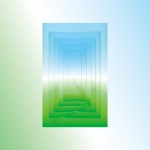
Artist: Kenji Kihara (@)
Title: Winds of Eternity
Format: Tape + Download
Label: Constellation Tatsu (@)
Rated:

Title: Winds of Eternity
Format: Tape + Download
Label: Constellation Tatsu (@)
Rated:
There are albums that you listen to, and albums that listen back. "Winds of Eternity" belongs to the latter category - a hushed conversation between Kenji Kihara and the elements surrounding him. Based in the sleepy coastal town of Hayama, Kihara doesn't just compose music; he cultivates it, like tending to a bonsai that sways gently with the sea breeze, dropping leaves in sync with cicada songs.
This short but expansive release on Constellation Tatsu unspools across just over twenty minutes, yet seems to stretch time like light through fog. You’re not so much invited to listen as you are quietly absorbed. "Midori" opens the album with soft ripples - both aquatic and melodic - a pastoral prelude whose green hues are almost synesthetic. Then, the title track arrives like a gentle gust through shoji screens: just enough tone to move you, just enough silence to still you.
Kihara’s approach isn’t ornamental. It’s elemental. "Mountain Pass" and "Lake Side" are not impressions of landscapes, but transcriptions of their breath. He records nature, but never as a tourist; he lets the environment imprint itself onto his synths, as if moss might grow directly onto an oscillator. There’s no drama here, no drops or climaxes. Just patient movement - like a sunbeam inching across a tatami mat.
But this isn’t just pastoral escapism. Pieces like "Night Driving" add a subtle tension, a motoric undertow beneath the stillness. There’s something a little uncanny about hearing so much calmness framed with such precision. The tape hiss itself becomes a kind of breathing: soft, textured, organic.
Kihara’s work invites comparison to the usual ambient pantheon - Yoshimura, Hatakeyama, Hakobune - but he’s not imitating, just inhabiting the same quiet plane. What sets "Winds of Eternity" apart is its miniaturist scale: nothing overstays, but everything lingers. Each track is a haiku rather than a novel - brief, but complete in its evocation.
You could call this environmental ambient, nature-scaping, or audio incense. Or you could simply say: "this is music that doesn't demand your attention, but rewards your surrender". If there's wind here, it's not the dramatic kind that knocks shutters loose - it's the eternal kind: the one that keeps the leaves rustling and the soul gently rearranged.
So pour some tea. Open the window. Let Kihara’s world wander into yours. Just be prepared: you might not notice the transformation until it’s already happened.
This short but expansive release on Constellation Tatsu unspools across just over twenty minutes, yet seems to stretch time like light through fog. You’re not so much invited to listen as you are quietly absorbed. "Midori" opens the album with soft ripples - both aquatic and melodic - a pastoral prelude whose green hues are almost synesthetic. Then, the title track arrives like a gentle gust through shoji screens: just enough tone to move you, just enough silence to still you.
Kihara’s approach isn’t ornamental. It’s elemental. "Mountain Pass" and "Lake Side" are not impressions of landscapes, but transcriptions of their breath. He records nature, but never as a tourist; he lets the environment imprint itself onto his synths, as if moss might grow directly onto an oscillator. There’s no drama here, no drops or climaxes. Just patient movement - like a sunbeam inching across a tatami mat.
But this isn’t just pastoral escapism. Pieces like "Night Driving" add a subtle tension, a motoric undertow beneath the stillness. There’s something a little uncanny about hearing so much calmness framed with such precision. The tape hiss itself becomes a kind of breathing: soft, textured, organic.
Kihara’s work invites comparison to the usual ambient pantheon - Yoshimura, Hatakeyama, Hakobune - but he’s not imitating, just inhabiting the same quiet plane. What sets "Winds of Eternity" apart is its miniaturist scale: nothing overstays, but everything lingers. Each track is a haiku rather than a novel - brief, but complete in its evocation.
You could call this environmental ambient, nature-scaping, or audio incense. Or you could simply say: "this is music that doesn't demand your attention, but rewards your surrender". If there's wind here, it's not the dramatic kind that knocks shutters loose - it's the eternal kind: the one that keeps the leaves rustling and the soul gently rearranged.
So pour some tea. Open the window. Let Kihara’s world wander into yours. Just be prepared: you might not notice the transformation until it’s already happened.
Comments
Stream
Browse by Genre
Industrial Music / Industrial Metal / Aggro Industrial / Electro Metal
Industrial Noise / Power Noise / Harsh Noise
Synth Pop / Electro Pop / Synth-Electronica
Techno / Trance / Goa / Drum'n'Bass / Jungle / Tribal / Trip-Hop
Ambient / Electronica / Ethereal / Dub / Soundscapes / Abstract
Experimental / Avantgarde / Weird & Wired / Glitch / Noise / Field Recording
Dark / Gothic / Wave / New Wave / Dark Wave / Industrial Gothic
New Music / Downtown / Avantgarde Jazz / New Classical / World