
Browse by Genre
Industrial Music / Industrial Metal / Aggro Industrial / Electro Metal
Industrial Noise / Power Noise / Harsh Noise
Synth Pop / Electro Pop / Synth-Electronica
Techno / Trance / Goa / Drum'n'Bass / Jungle / Tribal / Trip-Hop
Ambient / Electronica / Ethereal / Dub / Soundscapes / Abstract
Experimental / Avantgarde / Weird & Wired / Glitch / Noise / Field Recording
Dark / Gothic / Wave / New Wave / Dark Wave / Industrial Gothic
New Music / Downtown / Avantgarde Jazz / New Classical / World
Search Reviews
Music Reviews
Then Comes Silence: Boxed
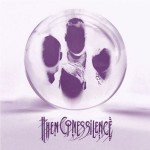
Artist: Then Comes Silence (@)
Title: Boxed
Format: Download Only (MP3 + Lossless)
Label: Metropolis (@)
Rated:

Title: Boxed
Format: Download Only (MP3 + Lossless)
Label: Metropolis (@)
Rated:
Ever wanted to peek into the bonus track vault without donating a kidney? "Boxed" is your ticket: the digital re-release of a seven-track treasure trove originally hiding in sold-out box sets from their 2022 album "Hunger". It’s post-punk goth with a Swedish chill - two Spanish ditties, two instrumental walk-ons, a remix, and an outtake - offering fans both nostalgia and novelty.
Very few EPs manage to feel exclusive and universal at once. "Boxed" knows its audience: hardcore Then Comes Silence followers. Instrumentals like "Spökenas Intåg" and "Skuggornas Intåg" could score a Scandinavian horror film you’ll never make - brooding, shadowy, understated cinematic ghoulishness. Then there’s the outtake "We Only Have So Long", which strips back the gothic veneer into an introspective synth-guitar ballad that, surprisingly, stirs without haunting.
Who knew goth post-punk sounded even more dramatic in Spanish? "Días y Años" and "Cebo" re-imagine their vast emotional landscapes through a new linguistic lens. The former collects longing and twilight in every verse; the latter pumps with rhythmic intensity, the metaphorical hook (“the bait lost its lure”) doubling as a poetic double-cross.
The "Blood Runs Cold (H Zombie Remix)" injects industrial electro haze that soundtracks late-night introspection. Meanwhile, "WLTN Unboxing" - an oddly playful instrumental - feels like a backstage pass rather than a song. It’s snug, low-key, a moment of off-stage intimacy amid the brooding of the rest of the EP.
Let’s be upfront: "Boxed" isn't trying to court new fans. It’s a curated packet for those who already own the map. Reviews are generally positive: fans appreciate the deeper insight into Then Comes Silence’s vault, while critics note it’s a release meant to tide listeners over between the band’s full-length cycles.
"Boxed" is not just b-sides and builder tracks - it’s a coherent satellite to Hunger, orbiting the same dark atmospherics while illuminating new corners of the band’s gothic-rock universe. It’s an insider’s delight, an off-menu tasting for fans who already loved Hunger and weren’t yet ready to say goodbye. For the rest of us: think of it as a midnight snack - rich, atmospheric, and just enough to whet the appetite for whatever comes next.
Perfect for darkwave enthusiasts, goth romantics, and anyone who wonders what extras lurk in the haunted attic of Swedish post-punk.
Very few EPs manage to feel exclusive and universal at once. "Boxed" knows its audience: hardcore Then Comes Silence followers. Instrumentals like "Spökenas Intåg" and "Skuggornas Intåg" could score a Scandinavian horror film you’ll never make - brooding, shadowy, understated cinematic ghoulishness. Then there’s the outtake "We Only Have So Long", which strips back the gothic veneer into an introspective synth-guitar ballad that, surprisingly, stirs without haunting.
Who knew goth post-punk sounded even more dramatic in Spanish? "Días y Años" and "Cebo" re-imagine their vast emotional landscapes through a new linguistic lens. The former collects longing and twilight in every verse; the latter pumps with rhythmic intensity, the metaphorical hook (“the bait lost its lure”) doubling as a poetic double-cross.
The "Blood Runs Cold (H Zombie Remix)" injects industrial electro haze that soundtracks late-night introspection. Meanwhile, "WLTN Unboxing" - an oddly playful instrumental - feels like a backstage pass rather than a song. It’s snug, low-key, a moment of off-stage intimacy amid the brooding of the rest of the EP.
Let’s be upfront: "Boxed" isn't trying to court new fans. It’s a curated packet for those who already own the map. Reviews are generally positive: fans appreciate the deeper insight into Then Comes Silence’s vault, while critics note it’s a release meant to tide listeners over between the band’s full-length cycles.
"Boxed" is not just b-sides and builder tracks - it’s a coherent satellite to Hunger, orbiting the same dark atmospherics while illuminating new corners of the band’s gothic-rock universe. It’s an insider’s delight, an off-menu tasting for fans who already loved Hunger and weren’t yet ready to say goodbye. For the rest of us: think of it as a midnight snack - rich, atmospheric, and just enough to whet the appetite for whatever comes next.
Perfect for darkwave enthusiasts, goth romantics, and anyone who wonders what extras lurk in the haunted attic of Swedish post-punk.
Thin Eater: s/t

From Gothenburg, Sweden, comes Thin Eater, and their brand new self-titled album. The band is Anders Calderon - lead vocals and keyboards, and Martin Claesson - guitar and keyboards. The album is 12 tracks of gothic/darkwave goodness in 46 minutes. The album opens with a nice, melancholy dark track titled "Misery" then shoots off into an old-school rocker full of 80s/90s energy called "Silently Quitting At the Speed of Light." Vocals are stereotypically gothy, owing a bit to Peter Murphy, Cruxshadows and London After Midnight, while not sounding much like them. Lots of flanging on Claesson's guitar, another gotrh hallmark. Song 3 - "Amphibian Sheep with 13 Heads (A Proposal)" has an alt-western sound. No drummer or percussion programmer was mentioned so I guess there is a "Dr. Avalanche" SOM style drum machine in use. While the main thrust of the band seems to be guitar-based, there is a healthy dose of electro injected, and it comes across quite nicely on "You Are A Star Now." The songs are varied enough on this album to make it interesting throughout, in spite of some similar sounding tracks. Thematically, this is typical black-clad vintage goth stuff - songs such as "The Landala Vampire," "Undead," and "Release The Children of the Night" tell you all you need to know about which side of the grave these guys are on. Funny though, they don't look very gothic, but sure sound it. I don't know how many artists are still doing this kind of music but I imagine not as may as ten or twenty years ago. There are a lot of good songs on this album and I'd be hard-pressed to pick a single, but if I had to, it would be the aforementioned "Silently Quitting At the Speed of Light." Its hook may not be as strong as its vibe, but it's still a really good song. They say the album was released on Leptura Records, but I can't find a website for the label so I guess it's self-released. Still, Thin Eater is definitely worth looking into.
Johannes Malfatti: Fragments

Artist: Johannes Malfatti (@)
Title: Fragments
Format: Download Only (MP3 + Lossless)
Label: Line (@)
Rated:
Title: Fragments
Format: Download Only (MP3 + Lossless)
Label: Line (@)
Rated:
Johannes Malfatti’s "Fragments" is a lesson in how to dissolve elegantly. Not just musically, but emotionally, texturally, molecularly. Composed for "The Day I Became a Cloud", a dance piece performed in front of Matisse’s great unfinished triptych, the album feels like a kindred spirit to those paintings: a work suspended in between form and evanescence, with absence becoming its most articulate gesture.
At first glance, it’s a simple offering - just a piano, some electronics, and a title that practically apologizes for its cohesion. But press play, and you’re drawn into a slow-breathing continuum where dissonance is more generous than harmony and decay isn’t defeat but a mode of listening. Each movement (I to IX, sliced across four tracks like a pie made of mist) traces a transformation so subtle it could pass for stillness - until you realize everything has changed.
The piece opens with a sharp, two-note dissonance - perhaps the musical equivalent of furrowed brows. It’s a jolt, but also an invitation. Malfatti doesn't so much resolve this motif as multiply it, bend it through time, let it bloom into other tensions, then blur it back into its spectral roots. If traditional compositions are about arrival, "Fragments" prefers recursion. Think of it as origami folding itself - slowly, ambiguously - until the crease becomes the shape.
The piano, while always recognizably itself, is subtly betrayed by its surroundings. Modular synths and digital effects worm their way in not with grandeur but with stealth, like shadows stretching as dusk falls. By the midpoint, the piano begins to sound haunted by itself. By the end, it’s barely there - just a presence hovering in the corner, like a memory that refuses to leave but won’t sit down either.
Conceptually, "Fragments" is obsessed with contradiction: dissonance and beauty, presence and erosion, acoustic and digital, gesture and ghost. It’s less interested in resolving these binaries than in proving they were never really separate. Transformation doesn’t arrive with a bang, but with a sigh - a slow evaporation of edges until the boundaries just forget themselves.
It helps to know that Malfatti has lived many sonic lives: as pianist, drummer, sound designer, composer for film, theatre, and art installations. He’s collaborated with names from Björk to Cat Power to contemporary choreographers and directors, and he treats sound less like a thing and more like a behavior. In "Fragments", this sensibility matures into a kind of auditory calligraphy - deliberate, slow, but emotionally exacting.
Where his 2023 organ-based work "In the Glow of Distant Fires" was grand, hovering, ecclesiastical in scope, "Fragments" is intimate, almost molecular. You can hear the dust on the keys, the breath between phrases. There’s an extreme close-up sensibility here, as if the music is whispering into the ear of silence.
A joke, if you like: What’s the difference between a piano and a modular synth?
In Malfatti’s hands - nothing but time.
"Fragments" is not ambient in the background sense; it demands your attention even as it barely raises its voice. It’s post-minimalism minus the ego, ambient minus the spa, Feldman minus the stubbornness. For those who admire Sakamoto’s late-period restraint or Jürg Frey’s airbrushed silences, Malfatti offers a work that is neither imitation nor homage, but a distinct whisper in the same room.
It’s the kind of album that asks very little - just that you meet it halfway, with patience, maybe some headphones, and a willingness to become uncertain. Because in Malfatti’s world, uncertainty isn’t a lack of information. It’s a form of grace.
At first glance, it’s a simple offering - just a piano, some electronics, and a title that practically apologizes for its cohesion. But press play, and you’re drawn into a slow-breathing continuum where dissonance is more generous than harmony and decay isn’t defeat but a mode of listening. Each movement (I to IX, sliced across four tracks like a pie made of mist) traces a transformation so subtle it could pass for stillness - until you realize everything has changed.
The piece opens with a sharp, two-note dissonance - perhaps the musical equivalent of furrowed brows. It’s a jolt, but also an invitation. Malfatti doesn't so much resolve this motif as multiply it, bend it through time, let it bloom into other tensions, then blur it back into its spectral roots. If traditional compositions are about arrival, "Fragments" prefers recursion. Think of it as origami folding itself - slowly, ambiguously - until the crease becomes the shape.
The piano, while always recognizably itself, is subtly betrayed by its surroundings. Modular synths and digital effects worm their way in not with grandeur but with stealth, like shadows stretching as dusk falls. By the midpoint, the piano begins to sound haunted by itself. By the end, it’s barely there - just a presence hovering in the corner, like a memory that refuses to leave but won’t sit down either.
Conceptually, "Fragments" is obsessed with contradiction: dissonance and beauty, presence and erosion, acoustic and digital, gesture and ghost. It’s less interested in resolving these binaries than in proving they were never really separate. Transformation doesn’t arrive with a bang, but with a sigh - a slow evaporation of edges until the boundaries just forget themselves.
It helps to know that Malfatti has lived many sonic lives: as pianist, drummer, sound designer, composer for film, theatre, and art installations. He’s collaborated with names from Björk to Cat Power to contemporary choreographers and directors, and he treats sound less like a thing and more like a behavior. In "Fragments", this sensibility matures into a kind of auditory calligraphy - deliberate, slow, but emotionally exacting.
Where his 2023 organ-based work "In the Glow of Distant Fires" was grand, hovering, ecclesiastical in scope, "Fragments" is intimate, almost molecular. You can hear the dust on the keys, the breath between phrases. There’s an extreme close-up sensibility here, as if the music is whispering into the ear of silence.
A joke, if you like: What’s the difference between a piano and a modular synth?
In Malfatti’s hands - nothing but time.
"Fragments" is not ambient in the background sense; it demands your attention even as it barely raises its voice. It’s post-minimalism minus the ego, ambient minus the spa, Feldman minus the stubbornness. For those who admire Sakamoto’s late-period restraint or Jürg Frey’s airbrushed silences, Malfatti offers a work that is neither imitation nor homage, but a distinct whisper in the same room.
It’s the kind of album that asks very little - just that you meet it halfway, with patience, maybe some headphones, and a willingness to become uncertain. Because in Malfatti’s world, uncertainty isn’t a lack of information. It’s a form of grace.
Matthew Mercer: lightdark
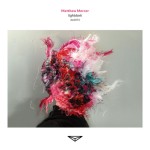
Artist: Matthew Mercer
Title: lightdark
Format: Download Only (MP3 + Lossless)
Label: Dragon's Eye Recordings (@)
Rated:
Title: lightdark
Format: Download Only (MP3 + Lossless)
Label: Dragon's Eye Recordings (@)
Rated:
If "Sub/Super" was the sound of time liquefied, "lightdark" is time fossilized - gently exhumed with tweezers, brushed of its oxide crust, and held up to the light to see what shadows it casts. Portland’s Matthew Mercer, longtime builder of both dancefloor pulses and ambient hushes, now turns inward toward the sediment layers of his teenage self - cassette tapes forgotten in drawers, humming quietly in their plastic tombs for three decades until someone remembered to press rewind.
But don’t expect lo-fi charm or retro kitsch. "lightdark" is no VHS-core indulgence. It’s what happens when you treat adolescent tape hiss like a sacred text - one to be rewritten, remixed, and respectfully mistranslated through decades of lived experience and newer, weirder software.
There’s a kind of anti-narrative at play here. Each track feels like a footprint that’s already half-erased by wind, a gesture that never quite finishes. "Elutriation, Essentialization, Estrangement" sets the tone (and the syllabic bar) with flickers of half-tones that hover just above recognition. These aren’t melodies so much as events - sonic apparitions that appear in the periphery and disappear when you turn to face them.
"Scalare" and "Velvet Meridian" hang like thoughts you almost had, while "Neon Spire" and "Tangerine Glass Orchid" flirt with the shimmer of classic ambient but dissolve before they can bloom into something obvious. "Silver Whisper" lives up to its name, tracing a fragile outline in dust and delay. You get the sense that Mercer isn’t composing so much as conversing - with younger versions of himself, with rusted machines, with silence that once meant something and now means something else entirely.
What’s impressive isn’t just the aesthetic restraint - though Mercer has that in abundance - but the conceptual coherence. He’s not simply cleaning up old jams from his youth. He’s interrogating them, editing them like diary entries written in another language. The original tapes become collaborators, sometimes resisting, sometimes revealing, but never entirely yielding. It’s as if Mercer’s past self is peeking through a keyhole, not entirely sure if he should come out and say hello.
Where many artists use archival material as a springboard for maximalism, "lightdark" chooses subtraction, erosion, erasure. The title is no gimmick: this really is music that flickers at the edge of legibility, half in light, half in shadow. It's ambient music for those who trust silence more than resolution. Every track feels like it ends in an ellipsis.
This is ambient not as background, but as archaeology. "lightdark" doesn’t just drift - it decays, reforms, and questions its own shape. It's slow, not in tempo but in intention. Mercer asks you not to listen hard, but to listen softly, the way you might remember a dream while brushing your teeth. And just as dreams morph in the remembering, these tracks shift each time you revisit them - more mirror than map.
There’s a strange warmth beneath the spectral textures, like a memory of something that might never have happened. Or did. Or could. "Alabaster Blaze" glows faintly, like a candle under ice. "Oath Contour", the closer, sounds like a promise half-kept and fully mourned. The whole album has a kind of beautiful futility to it, like trying to press a leaf back onto the tree it fell from.
"lightdark" is an ambient detour with nowhere to be. A record that doesn’t build toward climax or catharsis, but instead wanders through liminal interiors, humming to itself in a language forgotten before it was learned. It’s as if Mercer took a shoebox full of sonic fossils, dusted them off with reverence, and then sculpted something new out of their shadows.
This is music for archivists, dreamers, listeners who understand that even hiss has a history. Don’t expect answers. Just expect to feel strangely seen by a version of yourself you’d almost forgotten.
And if that sounds too poetic, don’t worry - the tapes understand.
But don’t expect lo-fi charm or retro kitsch. "lightdark" is no VHS-core indulgence. It’s what happens when you treat adolescent tape hiss like a sacred text - one to be rewritten, remixed, and respectfully mistranslated through decades of lived experience and newer, weirder software.
There’s a kind of anti-narrative at play here. Each track feels like a footprint that’s already half-erased by wind, a gesture that never quite finishes. "Elutriation, Essentialization, Estrangement" sets the tone (and the syllabic bar) with flickers of half-tones that hover just above recognition. These aren’t melodies so much as events - sonic apparitions that appear in the periphery and disappear when you turn to face them.
"Scalare" and "Velvet Meridian" hang like thoughts you almost had, while "Neon Spire" and "Tangerine Glass Orchid" flirt with the shimmer of classic ambient but dissolve before they can bloom into something obvious. "Silver Whisper" lives up to its name, tracing a fragile outline in dust and delay. You get the sense that Mercer isn’t composing so much as conversing - with younger versions of himself, with rusted machines, with silence that once meant something and now means something else entirely.
What’s impressive isn’t just the aesthetic restraint - though Mercer has that in abundance - but the conceptual coherence. He’s not simply cleaning up old jams from his youth. He’s interrogating them, editing them like diary entries written in another language. The original tapes become collaborators, sometimes resisting, sometimes revealing, but never entirely yielding. It’s as if Mercer’s past self is peeking through a keyhole, not entirely sure if he should come out and say hello.
Where many artists use archival material as a springboard for maximalism, "lightdark" chooses subtraction, erosion, erasure. The title is no gimmick: this really is music that flickers at the edge of legibility, half in light, half in shadow. It's ambient music for those who trust silence more than resolution. Every track feels like it ends in an ellipsis.
This is ambient not as background, but as archaeology. "lightdark" doesn’t just drift - it decays, reforms, and questions its own shape. It's slow, not in tempo but in intention. Mercer asks you not to listen hard, but to listen softly, the way you might remember a dream while brushing your teeth. And just as dreams morph in the remembering, these tracks shift each time you revisit them - more mirror than map.
There’s a strange warmth beneath the spectral textures, like a memory of something that might never have happened. Or did. Or could. "Alabaster Blaze" glows faintly, like a candle under ice. "Oath Contour", the closer, sounds like a promise half-kept and fully mourned. The whole album has a kind of beautiful futility to it, like trying to press a leaf back onto the tree it fell from.
"lightdark" is an ambient detour with nowhere to be. A record that doesn’t build toward climax or catharsis, but instead wanders through liminal interiors, humming to itself in a language forgotten before it was learned. It’s as if Mercer took a shoebox full of sonic fossils, dusted them off with reverence, and then sculpted something new out of their shadows.
This is music for archivists, dreamers, listeners who understand that even hiss has a history. Don’t expect answers. Just expect to feel strangely seen by a version of yourself you’d almost forgotten.
And if that sounds too poetic, don’t worry - the tapes understand.
Ammar 808: Club Tounsi

Some albums come in like polite dinner guests; "Club Tounsi" crashes through the back wall of your living room on a subwoofer-shaped camel, brandishing a darbuka in one hand and a Roland TR-8009 in the other. Sofyann Ben Youssef, a.k.a. AMMAR 808, returns to the motherland - not just geographically to Tunisia, but spiritually to the sonic DNA of his youth. The result is a record that blurs the lines between folklore and firmware, ghetto weddings and glitch aesthetics, handclaps and hardware.
This is not your uncle’s Mezoued. Or maybe it is, but now it's glowing under club strobes and carrying a USB stick full of ancient grief, bootleg Sufi wisdom, and turbocharged nostalgia.
From the moment opener "Douri Douri" kicks in, you realize this isn’t a polite ethnographic presentation. This is Tunisian folk turned into a cyborg dancehall. Mezoued, a genre historically disrespected by the cultural upper crust and loved by the working class, is reborn here in high resolution, loaded with distortion and dignity. It’s music that once lived in alleyways and wedding tents, now mainlining its way through modern circuitry with a kind of joyous vengeance.
Sofyann’s strategy isn’t reinvention for reinvention’s sake - it’s an act of sonic time-travel. On "Ah Yallila", hand drums tumble over themselves like they’re tripping down a spiral staircase of dub delay, while bagpipes (yes, bagpipes) somehow become the most urgent thing you’ve heard all day. And on "Aman Aman", Mariem Bettouhami’s voice floats over eerie synth textures like an auto-tuned ghost remembering a love it still resents you for. This is not remix culture - it’s memory recompiled.
There’s a particular rhythm here - Fezzani - that functions almost like a summoning circle. In Tunisia, it’s the sound that flips the switch at 3AM weddings when aunties become footwork champions and the bride's cousin starts levitating from the beat alone. AMMAR 808 wields it like a secret weapon: looping, layering, mutating it until it feels less like a beat and more like a ritual coded in binary.
But here’s the kicker: for all its techno-futurist leanings, "Club Tounsi" is oddly emotional. These songs are full of heartbreak, displacement, longing. They’re steeped in the blues of people who’ve been told their music is too raw, too loud, too improper. AMMAR 808 hears that dismissal - and turns it into a manifesto of reverb and resurrection.
Even the distortion feels political. The buzzes, the saturation, the insistence of repetition - these aren’t just production choices; they’re acts of defiance. They say: "we were here, we are still here, and you will dance to our stories whether you understand them or not".
"Club Tounsi" is not trying to be pan-Maghreb, pan-Oriental, or pan-anything. It is proudly, ferociously Tunisian. And yet, somehow, it speaks a universal language - the language of sweaty nights, of syncopated resistance, of grooves that outlast empires.
This isn’t a world music record; it’s a world building record. You don’t visit "Club Tounsi", you enter it, and it changes your gait. Your limbs start moving like they remember something your brain doesn’t. Maybe that’s the mezoued’s secret power: it talks to the ancestral rave buried deep inside your skeleton.
"Club Tounsi" is not just a club album, and not just a cultural reclamation project. It’s both - a bilingual love letter written in bass and bagpipes. It honors the noise of the margins, giving it the kind of maximalist treatment usually reserved for stadiums. If AMMAR 808 were a cartographer, this album would be his map of Tunis - not the city on postcards, but the one that pulses under the skin, all rhythm and rupture.
In short: come for the folklore, stay for the feedback. And bring water. It’s going to get sweaty in here.
This is not your uncle’s Mezoued. Or maybe it is, but now it's glowing under club strobes and carrying a USB stick full of ancient grief, bootleg Sufi wisdom, and turbocharged nostalgia.
From the moment opener "Douri Douri" kicks in, you realize this isn’t a polite ethnographic presentation. This is Tunisian folk turned into a cyborg dancehall. Mezoued, a genre historically disrespected by the cultural upper crust and loved by the working class, is reborn here in high resolution, loaded with distortion and dignity. It’s music that once lived in alleyways and wedding tents, now mainlining its way through modern circuitry with a kind of joyous vengeance.
Sofyann’s strategy isn’t reinvention for reinvention’s sake - it’s an act of sonic time-travel. On "Ah Yallila", hand drums tumble over themselves like they’re tripping down a spiral staircase of dub delay, while bagpipes (yes, bagpipes) somehow become the most urgent thing you’ve heard all day. And on "Aman Aman", Mariem Bettouhami’s voice floats over eerie synth textures like an auto-tuned ghost remembering a love it still resents you for. This is not remix culture - it’s memory recompiled.
There’s a particular rhythm here - Fezzani - that functions almost like a summoning circle. In Tunisia, it’s the sound that flips the switch at 3AM weddings when aunties become footwork champions and the bride's cousin starts levitating from the beat alone. AMMAR 808 wields it like a secret weapon: looping, layering, mutating it until it feels less like a beat and more like a ritual coded in binary.
But here’s the kicker: for all its techno-futurist leanings, "Club Tounsi" is oddly emotional. These songs are full of heartbreak, displacement, longing. They’re steeped in the blues of people who’ve been told their music is too raw, too loud, too improper. AMMAR 808 hears that dismissal - and turns it into a manifesto of reverb and resurrection.
Even the distortion feels political. The buzzes, the saturation, the insistence of repetition - these aren’t just production choices; they’re acts of defiance. They say: "we were here, we are still here, and you will dance to our stories whether you understand them or not".
"Club Tounsi" is not trying to be pan-Maghreb, pan-Oriental, or pan-anything. It is proudly, ferociously Tunisian. And yet, somehow, it speaks a universal language - the language of sweaty nights, of syncopated resistance, of grooves that outlast empires.
This isn’t a world music record; it’s a world building record. You don’t visit "Club Tounsi", you enter it, and it changes your gait. Your limbs start moving like they remember something your brain doesn’t. Maybe that’s the mezoued’s secret power: it talks to the ancestral rave buried deep inside your skeleton.
"Club Tounsi" is not just a club album, and not just a cultural reclamation project. It’s both - a bilingual love letter written in bass and bagpipes. It honors the noise of the margins, giving it the kind of maximalist treatment usually reserved for stadiums. If AMMAR 808 were a cartographer, this album would be his map of Tunis - not the city on postcards, but the one that pulses under the skin, all rhythm and rupture.
In short: come for the folklore, stay for the feedback. And bring water. It’s going to get sweaty in here.