
Friday, September 25, 2026
Browse by Genre
Industrial Music / Industrial Metal / Aggro Industrial / Electro Metal
Industrial Noise / Power Noise / Harsh Noise
Synth Pop / Electro Pop / Synth-Electronica
Techno / Trance / Goa / Drum'n'Bass / Jungle / Tribal / Trip-Hop
Ambient / Electronica / Ethereal / Dub / Soundscapes / Abstract
Experimental / Avantgarde / Weird & Wired / Glitch / Noise / Field Recording
Dark / Gothic / Wave / New Wave / Dark Wave / Industrial Gothic
New Music / Downtown / Avantgarde Jazz / New Classical / World
Search Reviews
Music Reviews
Aidan Baker: Adverse Camber
Artist: Aidan Baker (@)
Title: Adverse Camber
Format: CD & 12" + Download
Label: Owl Totem Recordings/Fonodroom (@)
Distributor: Fonodroom
Rated:

Title: Adverse Camber
Format: CD & 12" + Download
Label: Owl Totem Recordings/Fonodroom (@)
Distributor: Fonodroom
Rated:
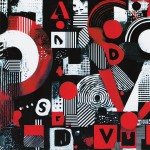
Longtime ambient/experimental guitarist Aidan Baker, from Toronto, Canada has been releasing music since 2000 and of the hundreds of albums he released on various labels, sad to say the only one I'm familiar with is 'Gathering Blue' (2009) on the now defunct Equation Records boutique label, primarily because I know the owner and had a CD (Chemistry Set - 'Experiments From The Lab', 2023) released on that label myself. 'Gathering Blue' was a good deal more calm, gentle and meditative than 'Adverse Camber,' and there was a little singing on it, albeit very much relegated to the background. This is not to say that either of these albums are indicative of Baker's oeuvre; one could spend months listening to his discography and come away with only a general sense of what Baker's music is all about.
'Adverse Camber' is five tracks in a little over 47 minutes, and as Baker describes it, "A return to simple solo guitar with heavy ambient sounds, combining drifting drones with noisy textures in attempt to encompass both the light and the dark at the same time." All sounds on the album were achieved via playing electric guitar, and with electronic processing of the same. "Petrol/Jasmin" employs some rapid finger-plucking obscured by electronics over a droning background, adding in some feedback as the track progresses, also echoey sliding fret noises. The feedback shifts in waves as the track nears its conclusion. "Coma" turns up the volume and intensity on the noise aspect, and anyone expecting anything akin to traditional ambient is likely to be put off before the track gets really interesting. Halfway through when the distortion subsides, a dream-like atmosphere emerges in thick, dense layers of ambient drone. How this is achieved with guitar is beyond me but suffice to say that it is remarkable.
"A Scent Like Oblivion" begins with harmonic picking that could be reminiscent of clockwork - like the inner working of a pocket watch. It is hypnotic and meditative up to the point where snarling, backwards feedback takes over and twists it into oblivion. "Everything Is Dark Until You Say Yes" seems to be the lightest, calmest track on the album, with various forms of strumming through electronic processing. 'Adverse Camber' is closed out by “Superelevation," the longest track on the album at 18:26. It begins with dark or grey ambient drones in shifting, echoed tones. This continues until about halfway through a more industrial type drone emerges, something you'd hear on certtain releases by Peter Andersson's Raison d'être. The industrial noise element increases and dominates the track for a while, re-emerging and subsiding like a monster being birthed from the primordial ooze. Before that phase is over, a single drone of light emerges from the firmament, and all is lifted back into the galactic cosmos.
This is a remarkable album that can blend experimental noise with ambient and not overshadow either. Experimental but stimulating, 'Adverse Camber' should have listeners searching out Aidan Baker's other releases for more, and there certainly are quite a few to choose from.
'Adverse Camber' is five tracks in a little over 47 minutes, and as Baker describes it, "A return to simple solo guitar with heavy ambient sounds, combining drifting drones with noisy textures in attempt to encompass both the light and the dark at the same time." All sounds on the album were achieved via playing electric guitar, and with electronic processing of the same. "Petrol/Jasmin" employs some rapid finger-plucking obscured by electronics over a droning background, adding in some feedback as the track progresses, also echoey sliding fret noises. The feedback shifts in waves as the track nears its conclusion. "Coma" turns up the volume and intensity on the noise aspect, and anyone expecting anything akin to traditional ambient is likely to be put off before the track gets really interesting. Halfway through when the distortion subsides, a dream-like atmosphere emerges in thick, dense layers of ambient drone. How this is achieved with guitar is beyond me but suffice to say that it is remarkable.
"A Scent Like Oblivion" begins with harmonic picking that could be reminiscent of clockwork - like the inner working of a pocket watch. It is hypnotic and meditative up to the point where snarling, backwards feedback takes over and twists it into oblivion. "Everything Is Dark Until You Say Yes" seems to be the lightest, calmest track on the album, with various forms of strumming through electronic processing. 'Adverse Camber' is closed out by “Superelevation," the longest track on the album at 18:26. It begins with dark or grey ambient drones in shifting, echoed tones. This continues until about halfway through a more industrial type drone emerges, something you'd hear on certtain releases by Peter Andersson's Raison d'être. The industrial noise element increases and dominates the track for a while, re-emerging and subsiding like a monster being birthed from the primordial ooze. Before that phase is over, a single drone of light emerges from the firmament, and all is lifted back into the galactic cosmos.
This is a remarkable album that can blend experimental noise with ambient and not overshadow either. Experimental but stimulating, 'Adverse Camber' should have listeners searching out Aidan Baker's other releases for more, and there certainly are quite a few to choose from.
Frankie Rose: Hila
Artist: Frankie Rose (@)
Title: Hila
Format: CD & 12" + Download
Label: Born Losers / Night School (@)
Rated:

Title: Hila
Format: CD & 12" + Download
Label: Born Losers / Night School (@)
Rated:
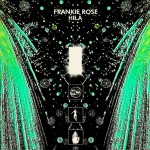
I get a lot of promo emails from PR agencies, bands, indie artists, labels, etc., etc. all fishing for reviews, of course. Many (maybe even most) are not worthwhile pursuing because either the music does not conform to Chain D.L.K.'s genre parameters or just isn't very good. Every once in a while, though, something slips through worth telling Chain D.L.K.'s readers about. Frankie Rose is just such a case. She's from Brooklyn, New York and has been around for years. She was an original member of Crystal Stilts, Dum Dum Girls, Vivian Girls and Beverly. 'Hila' seems to be Rose's sixth solo album, self-produced at her home studio featuring collaborations with drummer Justin Welch (Elastica/Lush). Other players on 'Hila' include: Ian Campbell and Chris Rager (guitars); Jeff Tobias and Matthew Friedlander (saxophones); and Jake Vest (bass). It's assumed that Frankie handled all the keyboard/synth work, because after all, this is synth-pop.
The album is 10 tracks of quality modern synth-pop, any my first impression is - Strawberry Switchblade meets the Cocteau Twins, sounding like both of them and yet neither. That description is nowhere near the sum total of 'Hila.' While she says that this is an album of loss, there also seems to be hope. It's an album of dichotomies - innocence vs. worldliness; light vs. darkness; the past vs. the future; sweetness against the bitter. The opener, "Olo" sounds like what Lush would be doing now if they were still together. "Can't Be Wrong" is one of those tunes that would fit comfortably on any Britpop radio station in the '80s or '90s. Frankie's vocals are just so perfect for this type of music- absolutely charming! In fact, the song construction, arrangement and recording leaves little to be desired. The commercial appeal is off the charts without sounding like whatever the flavor of the week is currently. While no particular track stands out above the rest (they're all good, really), a favorite of mine is "TV Star," reminiscent of the Cocteau's 'Blue Bell Knoll.' 'Hila' is an absolute winner and since Frankie is on tour NOW until September 26, you might be lucky enough to catch her live if you live in a major city between LA and New York. 'Hila' drops on September 18. Buy it. You won't regret it.
The album is 10 tracks of quality modern synth-pop, any my first impression is - Strawberry Switchblade meets the Cocteau Twins, sounding like both of them and yet neither. That description is nowhere near the sum total of 'Hila.' While she says that this is an album of loss, there also seems to be hope. It's an album of dichotomies - innocence vs. worldliness; light vs. darkness; the past vs. the future; sweetness against the bitter. The opener, "Olo" sounds like what Lush would be doing now if they were still together. "Can't Be Wrong" is one of those tunes that would fit comfortably on any Britpop radio station in the '80s or '90s. Frankie's vocals are just so perfect for this type of music- absolutely charming! In fact, the song construction, arrangement and recording leaves little to be desired. The commercial appeal is off the charts without sounding like whatever the flavor of the week is currently. While no particular track stands out above the rest (they're all good, really), a favorite of mine is "TV Star," reminiscent of the Cocteau's 'Blue Bell Knoll.' 'Hila' is an absolute winner and since Frankie is on tour NOW until September 26, you might be lucky enough to catch her live if you live in a major city between LA and New York. 'Hila' drops on September 18. Buy it. You won't regret it.
Meinschaft: Empire of Liberty

Artist: Meinschaft
Title: Empire of Liberty
Format: CD + Download
Label: Discriminate Audio (@)
Rated:
Title: Empire of Liberty
Format: CD + Download
Label: Discriminate Audio (@)
Rated:
Here's a group that's been around for a while, at lest since 2017. Comprised of East Tennesseans Evan Lipson and Evmh, 'Empire of Liberty' is Meinschaft's fourth full length album, and their first on a label I'm familiar with. Prior efforts by this outfit have been compared to Dead Can Dance, Coil, Scott Walker and Insane Clown Posse, but over the first few tracks I'm not hearing any of that. The opening number, "Freezing Rain," employs acoustic guitar and acoustic bass with mournful synth voice which is rather nice, but unlikely to reveal what you're in for.
"Lux Æterna, Part One" begins with a baritone choral voices, adding a sequenced synth line, some spoken word about destructive sunshine, then adding freefrom brass, and again the song changes before conclusion. "Lux Æterna, Part Two" offers some cool chord changes over intense beats, somewhat reminiscent of outfits like AIR, with a touch of Tuxedo Moon-style melancholy. So far this is all rather mellow compared to what I was expecting, and quite melodically musical. The weirdness doesn't really begin until the third track - "Gay Parade." It's a downtempo crawl with gravelly vocals - "I saw you at the gay parade, you were drinking a Gatorade..." ... utter silliness beneath a darkly furrowed brow. The song that follows, "French Erection," begins with buzzy sawtooth bass and Residents-style vocals with other percussive elements. It becomes rather disjunct when the acoustic guitar and watery elements enter towards the end.
"Event Horizon" is a nice old school synth instrumental that borrows the melody from Suzanne Vega's "Tom's Diner," in a child-like voice before it descends into chaos and noise, and then its back to the Vega melody again. "Biting the Hand" sounds like a stoned or drunken Jonah Hex, if he was fronting some industrial slowcore metal outfit. "Remember to Remember (You Must Die)" juxtaposes acoustic guitar with electronic effects and sad synth lines before a baritone vocal croons out a melody at the end. The familiar "Heart of Glass"/Wall of Voodoo-like electronic percussion pattern opens "Anacalypto," reminiscent more of the latter than the former, likely due to the stark, minimal guitar riff. "Pneumatic Waltz" is a quirky but genial synth instrumental. There is something familiar about "Wave Train" that I just can't put my finger on. It could be the simple treble melody, the moving bass lines, the fluid-echo slide guitar, the percussion./drum loops, the stolen background voices...I dunno...but it's interesting.
"Mother & Son" is an acoustic guitar-backed melancholy ballad that goes through a brief harsh section before ending placidly. "Haints & Sinners" is a spooky finger-poppin' back alley number with free jazz elements on the horn-side. I think there's a missed opportunity with this one as it doesn't really go anywhere until the end when it devolves into a hokey melody. Maybe that's the point. Last track (or next to last, depending on whether you sprung for the CD or not) is "The Fall," which starts out as a quiet Death In Juney kind of ballad before it zzz's out. Very nice! On the CD there's a hidden track called "For Francis Scott Key" which is part Star Mangled Banner and part chaos. As strange as many parts of this album are, there is almost as much that's rather normal, and I daresay, a bit sentimental, making this even a more eclectic listening experience.
It should be mentioned that Evan Lipson's previous project include Normal Love and Satanized, and also produced the synaesthetic internet radio show, Evcast with Evmh. Lipson has performed and/or recorded with artists such as Susan Alcom, Eugene Chadboure, Elliott Sharp, Col. Bruce Hamopton (of the Hampton Grease Band), Pauline Oliveros, and Mat Maneri, among others. 'Empire of Liberty' also features appearances by FKA ICE, Greg Kelly, Jonathan Moritz, Ben Bennett, Jack Wright, Mike Pride, and Brandon Seabrook. My guess is that if you like the Residents and Tuxedo Moon, or left-of-center electronica projects, you will probably enjoy this. CD limited to 250 copies.
Genesis P. Orridge with Pigface: The Howler: An English Breakfast
Artist: Genesis P. Orridge with Pigface (@)
Title: The Howler: An English Breakfast
Format: LP
Label: Overdrive/Invisible Records (@)
Rated:
Title: The Howler: An English Breakfast
Format: LP
Label: Overdrive/Invisible Records (@)
Rated:
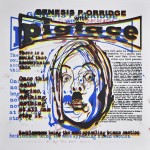
'The Howler: An English Breakfast' is a collaborative effort by Genesis P. Orridge and Martin Atkins' Pigface including Mick Harris, originally recorded 1996-1997. Although the one-sheet from the PR outfit that provided this album contains anecdotal material by Martin Atkins regarding circumstances surrounding this recording, I will not recount much of it here save for one paragraph, as much of it lacks relevance and just falls into the category of flavor text. "I first met Genesis," Atkins says, "at the Sharon Tate house in California. I was out there working with Skinny Puppy on what would become 'The Process' album, and I needed a day away from both them, and Rick Rubin's Shangri La studio. I stopped by the house to say hit to Trent- he wasn't there, but Gen was, along with Dr. Timothy Leary. Next thing I know Gen is part of Pigface, improvising on tracks we haven't even imagined yet. Six cassette machines onstage and a bag full of tapes. Magic."
Magic for some, maybe, but I think you need to be already a fan of Mr. Orridge and Pigface (perhaps more of the former than the latter) to really appreciate this album. The work is divided into four parts, all of them names "Howler" (1, 2, 3, and 4). It has been described as "a slow, treacherous dub with a booming bass and unidentified sonic attacks flitting about. Over the top of this is the daunting Genesis P-Orridge, reciting a tale of a debauched castle’s breakfast." That's not far off the mark. Instrumentally, there is more happening on nearly any Scorn album than on this. Obviously the ramblings of Genesis P. carry the concept over the rumblings of the music. Since Genesis P. Orridge passed away in 2020, this album is likely to become a collector's item, being one of his last released recordings, something Overdrive (Italy) and Invisible (U.S.) are capitalizing on with limited edition vinyl in a variety of colors and price points. I don't see any other available formats. Four stars for fans of Orridge and Pigface, three for everyone else.
Magic for some, maybe, but I think you need to be already a fan of Mr. Orridge and Pigface (perhaps more of the former than the latter) to really appreciate this album. The work is divided into four parts, all of them names "Howler" (1, 2, 3, and 4). It has been described as "a slow, treacherous dub with a booming bass and unidentified sonic attacks flitting about. Over the top of this is the daunting Genesis P-Orridge, reciting a tale of a debauched castle’s breakfast." That's not far off the mark. Instrumentally, there is more happening on nearly any Scorn album than on this. Obviously the ramblings of Genesis P. carry the concept over the rumblings of the music. Since Genesis P. Orridge passed away in 2020, this album is likely to become a collector's item, being one of his last released recordings, something Overdrive (Italy) and Invisible (U.S.) are capitalizing on with limited edition vinyl in a variety of colors and price points. I don't see any other available formats. Four stars for fans of Orridge and Pigface, three for everyone else.
hackedepicciotto: Lichtung

hackedepicciotto is of course Alexander Hacke from Einsturzende Neubauten and Danielle de Picciotto (Space Cowboys, Love Parade, Crime & The City Solution) and 'Lichtung' is the pair's latest album on the Mute label in the U.S. Past hackedepicciotto albums that I've reviewed here have always been interesting so I expect nothing less from 'Lichtung.' A cursory listen to the album gave me the impression the album is less experimental and more personal in nature. The softness of the opener (title track) seems to bear this out; it's an elegant, mystical piece that draws you into another world. "Vogelfrei," the instrumental that follows dispels any notion of frailty. "Wiederbelebung" has some neoclassical influences filtered through a distortion pedal with Black Forest vocals and a distinctly Teutonic cadence. "Ertedank" is kind of spookily psychedelic with industrial percussion and harmonious vocals in unison by both Alexander and Danielle, happening with frequency on several of the tracks, and especially noteworthy in "Zeitenwende," although both have their solo moments. I'm not sure this kind of folksy vocal technique completely resonates with me but I'm willing to give it time. By now you should have guessed by the titles that all the vocals are in Deutsche, but there are English lyrics translations on their Bandcamp site. "Draussen" is an instrumental that had me vaguely thinking of Dead Can Dance, and I'm coming to realize that I like the music more than the vocals overall. So far, this track really makes the album. There's only two more to go with "Einig," the first song I watched the video for, and on this one I really enjoyed the vocals, as well as the animated fantastic beasts that strutted across the screen. Clever! Lastly, there is "Der Marschall," a stately, but somewhat ominous neoclassical instrumental with a heaping helping of melancholy. You could easily use this track for a steampunk funeral procession. Although I'm not as enthralled with 'Lichtung' as by previous hackedepicciotto albums, there is still plenty of merit on it.