
Browse by Genre
Industrial Music / Industrial Metal / Aggro Industrial / Electro Metal
Industrial Noise / Power Noise / Harsh Noise
Synth Pop / Electro Pop / Synth-Electronica
Techno / Trance / Goa / Drum'n'Bass / Jungle / Tribal / Trip-Hop
Ambient / Electronica / Ethereal / Dub / Soundscapes / Abstract
Experimental / Avantgarde / Weird & Wired / Glitch / Noise / Field Recording
Dark / Gothic / Wave / New Wave / Dark Wave / Industrial Gothic
New Music / Downtown / Avantgarde Jazz / New Classical / World
Search Reviews
Music Reviews
R. Schappert: Hellherz
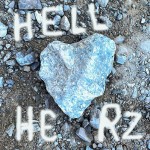

Roland Schappert has a habit of speaking about routes, distances, crossings. With "Hellherz", he seems less interested in mapping territory and more in throwing messages into the water and seeing what refuses to sink. It is a small digital release, three tracks only, but conceptually it behaves like a sealed letter addressed to anyone who has ever been held hostage by language.
Schappert’s project label, r-ecords, founded in 2022 with critic Joachim Ody, was initially framed around inner and outer travelling. The earlier "ROUTE" albums traced those coordinates through what Ody once described as an “organic digitality”. That phrase still applies. Schappert builds his synthesizer sounds from scratch, shaping each tone with an almost tactile attention, as if circuitry could develop a pulse. The bass is rarely decorative; it is structural, a warm axis around which rhythm and melody rotate.
"Waiting for Nothing" opens with restraint. The beat does not rush; it calibrates. There is a subtle tension between propulsion and suspension, as if forward motion were constantly reconsidered. Schappert’s rhythmic play is not bombastic. It prefers sidesteps. The promotional text mentions shifts between 3/4 and 4/4, hopping rather than marching, and that metaphor is apt. The grooves feel elastic. They bend, then recover.
The centerpiece, "Wrap Your Words", settles into a deep 138 BPM pulse. A rounded, almost comforting fundamental tone anchors the track, while crunchy bass figures weave through it like thick threads. Bell-shaped organ synths shimmer overhead, precise but never sterile. The vocal line, delivered via a revised AI voice, hovers between intimacy and distance. This is not a gimmick. The artificial timbre reinforces the lyrical theme: words that once trapped us are bottled and sent out to sea. The gesture is both romantic and faintly absurd. There is something oddly moving about entrusting emotional residue to a synthetic throat.
Schappert’s strength lies in balance. He works within electronic frameworks that could easily tilt toward cold minimalism or over-polished club functionality. Instead, he introduces small irregularities. Hissing textures, subdued humming, melodic fragments that refuse to resolve. The music invites movement but also reflection. You can dance to it, but you may find yourself thinking mid-step about what you are trying to release.
The title track, "Hellherz", closes the trio with a slightly darker hue. The warmth remains, yet there is an undercurrent of friction, as if the heart referenced in the title were glowing and smoldering at once. The bass line presses forward insistently, while upper layers sketch angular contours. It does not explode. It smolders.
Schappert’s biography speaks of border crossings between melos, sound, and rhythm. On "Hellherz", those borders are less about genre and more about interior states. Abstraction coexists with emotional accessibility. Clarity of structure meets associative imagery. The label’s ethos of creating sound spaces for memory and dream is evident here, though without drifting into ambient vagueness.
"Hellherz" is concise, deliberate, and modest in scale, but it carries Schappert’s signature: crafted synthesis, grounded bass architecture, and rhythms that prefer leaping to stomping. It does not shout for attention. It sends its bottle out and trusts that someone, somewhere, is willing to read what washes ashore.
Schappert’s project label, r-ecords, founded in 2022 with critic Joachim Ody, was initially framed around inner and outer travelling. The earlier "ROUTE" albums traced those coordinates through what Ody once described as an “organic digitality”. That phrase still applies. Schappert builds his synthesizer sounds from scratch, shaping each tone with an almost tactile attention, as if circuitry could develop a pulse. The bass is rarely decorative; it is structural, a warm axis around which rhythm and melody rotate.
"Waiting for Nothing" opens with restraint. The beat does not rush; it calibrates. There is a subtle tension between propulsion and suspension, as if forward motion were constantly reconsidered. Schappert’s rhythmic play is not bombastic. It prefers sidesteps. The promotional text mentions shifts between 3/4 and 4/4, hopping rather than marching, and that metaphor is apt. The grooves feel elastic. They bend, then recover.
The centerpiece, "Wrap Your Words", settles into a deep 138 BPM pulse. A rounded, almost comforting fundamental tone anchors the track, while crunchy bass figures weave through it like thick threads. Bell-shaped organ synths shimmer overhead, precise but never sterile. The vocal line, delivered via a revised AI voice, hovers between intimacy and distance. This is not a gimmick. The artificial timbre reinforces the lyrical theme: words that once trapped us are bottled and sent out to sea. The gesture is both romantic and faintly absurd. There is something oddly moving about entrusting emotional residue to a synthetic throat.
Schappert’s strength lies in balance. He works within electronic frameworks that could easily tilt toward cold minimalism or over-polished club functionality. Instead, he introduces small irregularities. Hissing textures, subdued humming, melodic fragments that refuse to resolve. The music invites movement but also reflection. You can dance to it, but you may find yourself thinking mid-step about what you are trying to release.
The title track, "Hellherz", closes the trio with a slightly darker hue. The warmth remains, yet there is an undercurrent of friction, as if the heart referenced in the title were glowing and smoldering at once. The bass line presses forward insistently, while upper layers sketch angular contours. It does not explode. It smolders.
Schappert’s biography speaks of border crossings between melos, sound, and rhythm. On "Hellherz", those borders are less about genre and more about interior states. Abstraction coexists with emotional accessibility. Clarity of structure meets associative imagery. The label’s ethos of creating sound spaces for memory and dream is evident here, though without drifting into ambient vagueness.
"Hellherz" is concise, deliberate, and modest in scale, but it carries Schappert’s signature: crafted synthesis, grounded bass architecture, and rhythms that prefer leaping to stomping. It does not shout for attention. It sends its bottle out and trusts that someone, somewhere, is willing to read what washes ashore.
Francis Gri: Lontano

There are albums that decorate a room. "Lontano" does not. It enters quietly, sits across from you, and starts telling a story about two girls who never met and yet somehow share the same tide. If you were hoping for background music, you took a wrong turn.
Francis Gri has always gravitated toward dissolution and atmosphere. Those familiar with "Svanire" and "Bruma" will recognize the terrain: fragile melodic fragments, suspended tonalities, an emotional palette that leans toward frost rather than fire. "Lontano" feels like a convergence of those earlier works, but stripped further down. This time, he recorded everything without a computer, during the evenings of 2025. That choice matters. There is an audible tactility here, a sense of hands on instruments rather than cursor on waveform. The sound breathes differently. It falters. It lingers.
The conceptual spine is stark: two broken souls, Sophie and Isabel, whose lives are shaped by violence, abandonment, shame, and the heavy pull of suicidal thought. The sea becomes both witness and accomplice. The narrative text accompanying the album unfolds in dense, almost feverish imagery: winter scratching at skin, lampposts weeping light, rooms filled with suffocated memories. It is not subtle. It does not aim to be.
Musically, "Respiro" opens like a held breath that refuses release. Sparse piano tones emerge from a bed of distant resonance, hovering between lament and lullaby. There is space everywhere. Silence is not empty here; it is oppressive, a pressure against the ribs. Gri understands restraint. He lets motifs appear only to dissolve them before they can settle into comfort.
The six-part suite "Due Onde" is the album’s tidal core. Each segment advances and retreats, as if tracing two parallel destinies that occasionally brush against one another. Part I introduces a fragile melodic line that feels almost naive, then gradually fractures it with ambient textures that resemble wind over water. By Part III and IV, the harmony darkens, lower registers thickening like clouds before a storm. There are passages where the piano seems half-destroyed, notes ringing as if struck in an abandoned hall. It is not virtuosity on display; it is vulnerability.
What prevents "Lontano" from collapsing under the weight of its subject is its insistence on tenderness. Even at its bleakest, there are moments where a chord opens like a window. In the narrative, a lost ring becomes a turning point, a message slipped into the machinery of despair. In the music, similar gestures occur: a subtle shift to major inflection, a faint harmonic lift, a breath between phrases that feels like mercy.
"Quiete" closes the album not with resolution, but with suspension. The final notes do not declare survival or tragedy. They simply fade, as if the ocean has decided to keep its answer. It is an ending that refuses spectacle.
There is a risk in marrying such explicit poetic narrative with instrumental composition. It can feel overwrought, or manipulative. Gri largely avoids this by allowing the music to suggest rather than illustrate. He does not score each scene like a film composer underlining emotion in red ink. Instead, he constructs an atmosphere in which those images can resonate. The text speaks in metaphors of snow, mirrors, and submerged bodies; the music replies with restraint and recurring motifs that feel like memories trying to surface.
"Lontano" is intimate, yes, but not confessional in a simplistic sense. It deals with suicide, abuse, and inherited trauma without sensationalism. The tragedy here is quiet, internal, almost geological. Pain accumulates in layers. The sea does not roar; it waits.
This is not an album for distracted listening. It asks patience. It asks stillness. It may even ask you to confront uncomfortable reflections. But within its melancholy architecture there is something steady: the idea that two isolated lives, even if separated by time or death, can recognize each other across distance. Lontano, far away, yet somehow aligned.
Not every listener will want to sit with that kind of intensity. Those who do will find a work that feels carved rather than assembled, shaped by evenings of solitude and a deliberate refusal of digital convenience. In a culture obsessed with immediacy, Francis Gri offers something slower, heavier, and quietly luminous.
Francis Gri has always gravitated toward dissolution and atmosphere. Those familiar with "Svanire" and "Bruma" will recognize the terrain: fragile melodic fragments, suspended tonalities, an emotional palette that leans toward frost rather than fire. "Lontano" feels like a convergence of those earlier works, but stripped further down. This time, he recorded everything without a computer, during the evenings of 2025. That choice matters. There is an audible tactility here, a sense of hands on instruments rather than cursor on waveform. The sound breathes differently. It falters. It lingers.
The conceptual spine is stark: two broken souls, Sophie and Isabel, whose lives are shaped by violence, abandonment, shame, and the heavy pull of suicidal thought. The sea becomes both witness and accomplice. The narrative text accompanying the album unfolds in dense, almost feverish imagery: winter scratching at skin, lampposts weeping light, rooms filled with suffocated memories. It is not subtle. It does not aim to be.
Musically, "Respiro" opens like a held breath that refuses release. Sparse piano tones emerge from a bed of distant resonance, hovering between lament and lullaby. There is space everywhere. Silence is not empty here; it is oppressive, a pressure against the ribs. Gri understands restraint. He lets motifs appear only to dissolve them before they can settle into comfort.
The six-part suite "Due Onde" is the album’s tidal core. Each segment advances and retreats, as if tracing two parallel destinies that occasionally brush against one another. Part I introduces a fragile melodic line that feels almost naive, then gradually fractures it with ambient textures that resemble wind over water. By Part III and IV, the harmony darkens, lower registers thickening like clouds before a storm. There are passages where the piano seems half-destroyed, notes ringing as if struck in an abandoned hall. It is not virtuosity on display; it is vulnerability.
What prevents "Lontano" from collapsing under the weight of its subject is its insistence on tenderness. Even at its bleakest, there are moments where a chord opens like a window. In the narrative, a lost ring becomes a turning point, a message slipped into the machinery of despair. In the music, similar gestures occur: a subtle shift to major inflection, a faint harmonic lift, a breath between phrases that feels like mercy.
"Quiete" closes the album not with resolution, but with suspension. The final notes do not declare survival or tragedy. They simply fade, as if the ocean has decided to keep its answer. It is an ending that refuses spectacle.
There is a risk in marrying such explicit poetic narrative with instrumental composition. It can feel overwrought, or manipulative. Gri largely avoids this by allowing the music to suggest rather than illustrate. He does not score each scene like a film composer underlining emotion in red ink. Instead, he constructs an atmosphere in which those images can resonate. The text speaks in metaphors of snow, mirrors, and submerged bodies; the music replies with restraint and recurring motifs that feel like memories trying to surface.
"Lontano" is intimate, yes, but not confessional in a simplistic sense. It deals with suicide, abuse, and inherited trauma without sensationalism. The tragedy here is quiet, internal, almost geological. Pain accumulates in layers. The sea does not roar; it waits.
This is not an album for distracted listening. It asks patience. It asks stillness. It may even ask you to confront uncomfortable reflections. But within its melancholy architecture there is something steady: the idea that two isolated lives, even if separated by time or death, can recognize each other across distance. Lontano, far away, yet somehow aligned.
Not every listener will want to sit with that kind of intensity. Those who do will find a work that feels carved rather than assembled, shaped by evenings of solitude and a deliberate refusal of digital convenience. In a culture obsessed with immediacy, Francis Gri offers something slower, heavier, and quietly luminous.
Müntzing/Wikström: Ping Pong Punktum

I have no idea how "Ping Pong Punktum" landed on my desk. It arrived late, too. Fashionably late, if we’re generous. The release came out at the end of 2020, in the thick of global paralysis, and somehow only now surfaces like a message in a bottle that took the scenic route. Fine. Some objects prefer to age a little before being handled.
This collaboration between Herman Müntzing and Qarin Wikström, joined visually by Jan Oksbøl Callesen, is not simply an album. It is a cassette paired with a book, consciously echoing those childhood read-along story sets where a discreet sound would signal the turn of a page. Except here, the story is abstract, the guidance unstable, and the intended age group apparently “whoever is still curious”. That alone narrows the field more than you’d think.
The title "Ping Pong Punktum" is not decorative. It describes the working method: an exchange of impulses between sound and image, between the two musicians and the visual artist, between intuition and response. Ideas bounce. Interpretations ricochet. Nothing settles for long. The music itself emerges from free improvisation, built with analogue electronics, keys, voice, and machines that feel less like tools and more like unpredictable collaborators.
Müntzing and Wikström have performed together for years, developing a dialogue that thrives on risk. Their interplay is committed to the present tense. They push dynamics toward edges without theatrics, allowing passages of near-silence to sit beside bursts of distortion or fractured melody. This is their first recorded document as a duo, which makes its tactile format feel even more intentional. A tape is not nostalgia here. It is a statement about materiality, about sound occupying space rather than floating frictionlessly in the cloud.
Wikström, now marking her fourteenth release on ILK, carries with her a long history in the European avant-garde. She has collaborated widely, yet retains a distinct signature: a willingness to let vulnerability and absurdity coexist. That sensibility runs through this project. Track titles such as "I Did Clean My Room, Probably" or "We Had Way Too Much Sugar That Day" flirt with humor, but the underlying textures are often darker. Created during a time of pandemic isolation, political instability, and climate anxiety, the work absorbs that atmosphere. There are shadows everywhere, but also flickers of mischievous Dada energy.
Musically, the pieces move like sketches drawn in unstable ink. "Modern Winter" carries a brittle chill; tones hover as if unsure whether to crystallize or dissolve. "Attract / Repel" plays with polarity, pulses edging toward rhythm before veering off course. "The Red That Froze to Death" suggests drama but delivers restraint, letting tension simmer rather than explode. Even the more playful titles, like "Frying Eggs, Solving Equations", resist obvious sonic illustration. The humor lies in the mismatch between expectation and outcome.
What binds the project is not melody or structure but translation. Sound becomes image; image becomes sound. The book does not illustrate the music, nor does the cassette simply soundtrack the visuals. Instead, they lean into each other, occasionally misaligning. That friction is the point. In an era obsessed with seamless integration, "Ping Pong Punktum" celebrates slight disorientation.
There is also something quietly radical about insisting on physical engagement. You listen, you turn the page, you hold the object. It asks for attention that cannot be swiped away. In 2020, that might have felt like a lifeline. In 2026, it feels like a reminder.
Late arrival or not, "Ping Pong Punktum" holds up as a document of exchange under pressure. It acknowledges darkness without surrendering to it. It allows absurdity to sit beside despair. And it trusts that curiosity, that rare and stubborn quality, is still enough to keep the conversation going.
This collaboration between Herman Müntzing and Qarin Wikström, joined visually by Jan Oksbøl Callesen, is not simply an album. It is a cassette paired with a book, consciously echoing those childhood read-along story sets where a discreet sound would signal the turn of a page. Except here, the story is abstract, the guidance unstable, and the intended age group apparently “whoever is still curious”. That alone narrows the field more than you’d think.
The title "Ping Pong Punktum" is not decorative. It describes the working method: an exchange of impulses between sound and image, between the two musicians and the visual artist, between intuition and response. Ideas bounce. Interpretations ricochet. Nothing settles for long. The music itself emerges from free improvisation, built with analogue electronics, keys, voice, and machines that feel less like tools and more like unpredictable collaborators.
Müntzing and Wikström have performed together for years, developing a dialogue that thrives on risk. Their interplay is committed to the present tense. They push dynamics toward edges without theatrics, allowing passages of near-silence to sit beside bursts of distortion or fractured melody. This is their first recorded document as a duo, which makes its tactile format feel even more intentional. A tape is not nostalgia here. It is a statement about materiality, about sound occupying space rather than floating frictionlessly in the cloud.
Wikström, now marking her fourteenth release on ILK, carries with her a long history in the European avant-garde. She has collaborated widely, yet retains a distinct signature: a willingness to let vulnerability and absurdity coexist. That sensibility runs through this project. Track titles such as "I Did Clean My Room, Probably" or "We Had Way Too Much Sugar That Day" flirt with humor, but the underlying textures are often darker. Created during a time of pandemic isolation, political instability, and climate anxiety, the work absorbs that atmosphere. There are shadows everywhere, but also flickers of mischievous Dada energy.
Musically, the pieces move like sketches drawn in unstable ink. "Modern Winter" carries a brittle chill; tones hover as if unsure whether to crystallize or dissolve. "Attract / Repel" plays with polarity, pulses edging toward rhythm before veering off course. "The Red That Froze to Death" suggests drama but delivers restraint, letting tension simmer rather than explode. Even the more playful titles, like "Frying Eggs, Solving Equations", resist obvious sonic illustration. The humor lies in the mismatch between expectation and outcome.
What binds the project is not melody or structure but translation. Sound becomes image; image becomes sound. The book does not illustrate the music, nor does the cassette simply soundtrack the visuals. Instead, they lean into each other, occasionally misaligning. That friction is the point. In an era obsessed with seamless integration, "Ping Pong Punktum" celebrates slight disorientation.
There is also something quietly radical about insisting on physical engagement. You listen, you turn the page, you hold the object. It asks for attention that cannot be swiped away. In 2020, that might have felt like a lifeline. In 2026, it feels like a reminder.
Late arrival or not, "Ping Pong Punktum" holds up as a document of exchange under pressure. It acknowledges darkness without surrendering to it. It allows absurdity to sit beside despair. And it trusts that curiosity, that rare and stubborn quality, is still enough to keep the conversation going.
Cindytalk: Sunset and Forever
Artist: Cindytalk
Title: Sunset and Forever
Format: 12" x 2 + Download
Label: The Helen Scarsdale Agency (@)
Rated:

Title: Sunset and Forever
Format: 12" x 2 + Download
Label: The Helen Scarsdale Agency (@)
Rated:
There are artists who age by polishing their legacy, and then there is Cindytalk, who seems to age by dissolving it and reassembling the fragments into stranger geometries. "Sunset and Forever" feels less like a late-career statement and more like another controlled implosion - beautiful, slow, and deliberate.
Fronted since the early 1980s by Scottish musician Cinder, Cindytalk has never treated genre as a home. The early records, "Camouflage Heart" and "In This World", dragged post-punk through a storm drain of industrial abrasion and devotional intensity. Cinder’s voice - already etched into 4AD mythology through early collaborations with This Mortal Coil and Cocteau Twins - floated above wreckage like a fragile annunciation. But even then, there was restlessness: the studio was not a place to document songs, but to erode them.
By the 2000s, that erosion turned granular. Laptop-based abstraction, digital fracture, releases for Editions Mego: the rock chassis was dismantled piece by piece, replaced by electroacoustic atmospheres and glitch-scarred textures. "Sunset and Forever", released by The Helen Scarsdale Agency, doesn’t abandon that evolution. It accepts it as sediment. Cinder’s own reflection that this work grows organically from the past feels accurate. The DNA is intact, but the organism has mutated again.
The album opens with "embers of last leaves", a near-twenty-minute invocation that moves like smoke refusing to disperse. Cyclical tones rise and fold into one another, forming something choral but not quite human. Cinder’s voice is present, though less as a protagonist and more as a spectral current threading through the electronics. It is devotional music stripped of any clear doctrine.
"eien no yyake" and "tower of the sun" introduce disturbances. Low-frequency thuds appear, but they refuse to behave like rhythm. They are interruptions, tectonic shifts beneath the surface. On "tower of the sun", these impacts feel almost architectural - columns of sound erected only to be destabilized by waves of distortion. There’s menace here, but it’s painterly, not theatrical.
"for those eyes, shadows of flowers" blooms in slow radiance. The piece suggests a kind of damaged luminosity, as if the light source were filtered through cracked glass. Comparisons to Fennesz or Holly Herndon might hover at the periphery for some listeners, perhaps even echoes of Lovesliescrushing’s engulfing density, but Cindytalk resists assimilation. The emotional temperature is different: less nostalgic, more liturgical.
The shorter interludes - "my sister the wind" and "invisible adventure" - act like apertures, brief clearings where the texture thins without becoming transparent. They prevent the double LP from collapsing under its own gravity. The pacing is deliberate, but never indulgent.
The closing "i see her in everything" mirrors the opener in scale and spiritual weight. Electronic tones accumulate into something resembling a cathedral choir, yet no single voice dominates. It is reverent without being sentimental, vast without posturing. If this is transcendence, it is one achieved through circuitry and corrosion rather than ascension.
Production-wise, the album is meticulous. Mastered by James Plotkin, it balances density with breathing room, allowing the low-end pressure and high-end shimmer to coexist without smothering each other. Chris Bigg’s cover design, a quiet nod to 4AD’s visual lineage, frames the work without trapping it in nostalgia.
Nothing sounds really resolved in "Sunset and Forever". The sacred and profane, beauty and abrasion, human and machine: none of these binaries win. They simply coexist, sometimes uneasily. Cinder’s career has been defined by this ongoing negotiation, by a willingness to let forms decay so that something less predictable can surface.
After more than four decades, Cindytalk still sounds like a project in motion. Not chasing relevance, not retreating into heritage, but continuing to test how much a sound can erode before it becomes light. "Sunset and Forever" does not offer comfort. It offers immersion. And if you stay with it long enough, you begin to suspect that disintegration, in the right hands, can be a kind of grace.
Fronted since the early 1980s by Scottish musician Cinder, Cindytalk has never treated genre as a home. The early records, "Camouflage Heart" and "In This World", dragged post-punk through a storm drain of industrial abrasion and devotional intensity. Cinder’s voice - already etched into 4AD mythology through early collaborations with This Mortal Coil and Cocteau Twins - floated above wreckage like a fragile annunciation. But even then, there was restlessness: the studio was not a place to document songs, but to erode them.
By the 2000s, that erosion turned granular. Laptop-based abstraction, digital fracture, releases for Editions Mego: the rock chassis was dismantled piece by piece, replaced by electroacoustic atmospheres and glitch-scarred textures. "Sunset and Forever", released by The Helen Scarsdale Agency, doesn’t abandon that evolution. It accepts it as sediment. Cinder’s own reflection that this work grows organically from the past feels accurate. The DNA is intact, but the organism has mutated again.
The album opens with "embers of last leaves", a near-twenty-minute invocation that moves like smoke refusing to disperse. Cyclical tones rise and fold into one another, forming something choral but not quite human. Cinder’s voice is present, though less as a protagonist and more as a spectral current threading through the electronics. It is devotional music stripped of any clear doctrine.
"eien no yyake" and "tower of the sun" introduce disturbances. Low-frequency thuds appear, but they refuse to behave like rhythm. They are interruptions, tectonic shifts beneath the surface. On "tower of the sun", these impacts feel almost architectural - columns of sound erected only to be destabilized by waves of distortion. There’s menace here, but it’s painterly, not theatrical.
"for those eyes, shadows of flowers" blooms in slow radiance. The piece suggests a kind of damaged luminosity, as if the light source were filtered through cracked glass. Comparisons to Fennesz or Holly Herndon might hover at the periphery for some listeners, perhaps even echoes of Lovesliescrushing’s engulfing density, but Cindytalk resists assimilation. The emotional temperature is different: less nostalgic, more liturgical.
The shorter interludes - "my sister the wind" and "invisible adventure" - act like apertures, brief clearings where the texture thins without becoming transparent. They prevent the double LP from collapsing under its own gravity. The pacing is deliberate, but never indulgent.
The closing "i see her in everything" mirrors the opener in scale and spiritual weight. Electronic tones accumulate into something resembling a cathedral choir, yet no single voice dominates. It is reverent without being sentimental, vast without posturing. If this is transcendence, it is one achieved through circuitry and corrosion rather than ascension.
Production-wise, the album is meticulous. Mastered by James Plotkin, it balances density with breathing room, allowing the low-end pressure and high-end shimmer to coexist without smothering each other. Chris Bigg’s cover design, a quiet nod to 4AD’s visual lineage, frames the work without trapping it in nostalgia.
Nothing sounds really resolved in "Sunset and Forever". The sacred and profane, beauty and abrasion, human and machine: none of these binaries win. They simply coexist, sometimes uneasily. Cinder’s career has been defined by this ongoing negotiation, by a willingness to let forms decay so that something less predictable can surface.
After more than four decades, Cindytalk still sounds like a project in motion. Not chasing relevance, not retreating into heritage, but continuing to test how much a sound can erode before it becomes light. "Sunset and Forever" does not offer comfort. It offers immersion. And if you stay with it long enough, you begin to suspect that disintegration, in the right hands, can be a kind of grace.
Cindytalk: That We Must Pass Through This Life
Some artists age into comfort. Cindytalk prefers erosion. Each release feels less like a statement and more like a weather system passing through the interior. "That We Must Pass Through This Life", issued digitally by LINE on January 16th, 2026, continues that slow abrasion.
Cinder’s trajectory has never been tidy. From the confrontational post-industrial beginnings of "Camouflage Heart" to the increasingly vaporous abstractions of the past decade, the project has moved steadily away from song and toward atmosphere. Reviews over the years have circled the same constellation of words: grief, suspension, drift, obliteration, tenderness under static. Yet this record feels less like drift and more like a deliberate narrowing. Four pieces, spare to the point of exposure, arranged as a poem by the mid-Heian writer Izumi Shikibu. A path through darkness, lit only intermittently.
The backstory is almost comically human. A planned piano compilation quietly sabotaged by reissue logistics. Dais Records intends to revisit earlier works, so those piano fragments could not simply migrate elsewhere. Instead of shelving the idea, Cinder threads ghostly keys into these new constructions. Petty frustration becomes aesthetic strategy. There is something bracing about that. Art born not from grand revelation but from administrative inconvenience.
The album unfolds in four movements that behave like states of consciousness. “I go out of the darkness” opens not with drama but with distance. Tone hovers. The piano appears as a memory rather than an instrument, half-buried in granular fog. If earlier Cindytalk could feel like emotional collapse rendered in distortion, this is closer to controlled dissociation. The noise is present, but it breathes.
“onto a path of darkness” tightens the field. High frequencies flicker like faulty wiring in an abandoned chapel. Silence becomes structural. Critics often describe Cindytalk’s work as immersive; here it is more confrontationally sparse. There is nowhere to hide. Every crackle sounds intentional, every low-end swell like a held breath.
The third piece, “lit only by a far off moon”, stretches past sixteen minutes and functions as the album’s gravitational center. It accumulates weight slowly, almost reluctantly. Piano tones surface and submerge, never resolving into melody. The emotional charge builds without theatrical release. Catharsis, when it comes, is subdued. No explosion. More like pressure equalizing in a sealed room.
“on the edge of the mountains” closes with a fragile equilibrium. The textures thin out until they resemble air passing through a structure rather than music performed within one. The sense of duality that Cinder speaks of is not simply light versus dark. It is intention versus accident, memory versus present tense, human touch versus digital decay.
Compared to 2023’s "When the Moon is a Thread", this record feels more skeletal. Reviews of that earlier release noted its gauzy expansiveness. Here the framework is exposed. The four-part structure reads almost liturgical, but the devotion is to process rather than doctrine. There is no transcendence promised, only passage.
The companion album "Sunset And Forever", recorded simultaneously for The Helen Scarsdale Agency, reportedly diverges through altered dynamics and detours. Two tributaries feeding the same body of water. This metaphor is apt. Cindytalk’s recent output behaves like an ongoing excavation of personal archives. Old hard drives opened, fragments retrieved, reshaped. Not nostalgia. More like sediment being disturbed.
I would say that "That We Must Pass Through This Life" doesn't definitely dramatize suffering. The title suggests inevitability, not spectacle. Passing through life is not framed as heroic or tragic. It simply is. The music mirrors that acceptance. Stark, yes. At times almost ascetic. But never inert.
There is a particular courage in making something this minimal in 2026, when attention spans are engineered to fracture. Four long tracks. No hooks. No concessions. Just carefully balanced instability. It demands time, and it gives back something subtle: a recalibration of listening itself.
Some will find it austere to the point of severity. Others will recognize the discipline required to strip sound to this degree without losing emotional charge. The piano fragments, born from logistical frustration, become quiet anchors in a sea of abstraction. Proof that even administrative obstacles can yield strange beauty.
Passing through darkness is not presented as metaphor here. It feels procedural. Step by step. Tone by tone. And somewhere in that slow traversal, the record suggests that illumination does not need to be bright to matter. A far off moon is enough.
Cinder’s trajectory has never been tidy. From the confrontational post-industrial beginnings of "Camouflage Heart" to the increasingly vaporous abstractions of the past decade, the project has moved steadily away from song and toward atmosphere. Reviews over the years have circled the same constellation of words: grief, suspension, drift, obliteration, tenderness under static. Yet this record feels less like drift and more like a deliberate narrowing. Four pieces, spare to the point of exposure, arranged as a poem by the mid-Heian writer Izumi Shikibu. A path through darkness, lit only intermittently.
The backstory is almost comically human. A planned piano compilation quietly sabotaged by reissue logistics. Dais Records intends to revisit earlier works, so those piano fragments could not simply migrate elsewhere. Instead of shelving the idea, Cinder threads ghostly keys into these new constructions. Petty frustration becomes aesthetic strategy. There is something bracing about that. Art born not from grand revelation but from administrative inconvenience.
The album unfolds in four movements that behave like states of consciousness. “I go out of the darkness” opens not with drama but with distance. Tone hovers. The piano appears as a memory rather than an instrument, half-buried in granular fog. If earlier Cindytalk could feel like emotional collapse rendered in distortion, this is closer to controlled dissociation. The noise is present, but it breathes.
“onto a path of darkness” tightens the field. High frequencies flicker like faulty wiring in an abandoned chapel. Silence becomes structural. Critics often describe Cindytalk’s work as immersive; here it is more confrontationally sparse. There is nowhere to hide. Every crackle sounds intentional, every low-end swell like a held breath.
The third piece, “lit only by a far off moon”, stretches past sixteen minutes and functions as the album’s gravitational center. It accumulates weight slowly, almost reluctantly. Piano tones surface and submerge, never resolving into melody. The emotional charge builds without theatrical release. Catharsis, when it comes, is subdued. No explosion. More like pressure equalizing in a sealed room.
“on the edge of the mountains” closes with a fragile equilibrium. The textures thin out until they resemble air passing through a structure rather than music performed within one. The sense of duality that Cinder speaks of is not simply light versus dark. It is intention versus accident, memory versus present tense, human touch versus digital decay.
Compared to 2023’s "When the Moon is a Thread", this record feels more skeletal. Reviews of that earlier release noted its gauzy expansiveness. Here the framework is exposed. The four-part structure reads almost liturgical, but the devotion is to process rather than doctrine. There is no transcendence promised, only passage.
The companion album "Sunset And Forever", recorded simultaneously for The Helen Scarsdale Agency, reportedly diverges through altered dynamics and detours. Two tributaries feeding the same body of water. This metaphor is apt. Cindytalk’s recent output behaves like an ongoing excavation of personal archives. Old hard drives opened, fragments retrieved, reshaped. Not nostalgia. More like sediment being disturbed.
I would say that "That We Must Pass Through This Life" doesn't definitely dramatize suffering. The title suggests inevitability, not spectacle. Passing through life is not framed as heroic or tragic. It simply is. The music mirrors that acceptance. Stark, yes. At times almost ascetic. But never inert.
There is a particular courage in making something this minimal in 2026, when attention spans are engineered to fracture. Four long tracks. No hooks. No concessions. Just carefully balanced instability. It demands time, and it gives back something subtle: a recalibration of listening itself.
Some will find it austere to the point of severity. Others will recognize the discipline required to strip sound to this degree without losing emotional charge. The piano fragments, born from logistical frustration, become quiet anchors in a sea of abstraction. Proof that even administrative obstacles can yield strange beauty.
Passing through darkness is not presented as metaphor here. It feels procedural. Step by step. Tone by tone. And somewhere in that slow traversal, the record suggests that illumination does not need to be bright to matter. A far off moon is enough.