
Cindytalk: That We Must Pass Through This Life
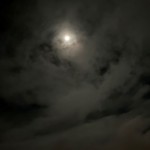


Some artists age into comfort. Cindytalk prefers erosion. Each release feels less like a statement and more like a weather system passing through the interior. "That We Must Pass Through This Life", issued digitally by LINE on January 16th, 2026, continues that slow abrasion.
Cinder’s trajectory has never been tidy. From the confrontational post-industrial beginnings of "Camouflage Heart" to the increasingly vaporous abstractions of the past decade, the project has moved steadily away from song and toward atmosphere. Reviews over the years have circled the same constellation of words: grief, suspension, drift, obliteration, tenderness under static. Yet this record feels less like drift and more like a deliberate narrowing. Four pieces, spare to the point of exposure, arranged as a poem by the mid-Heian writer Izumi Shikibu. A path through darkness, lit only intermittently.
The backstory is almost comically human. A planned piano compilation quietly sabotaged by reissue logistics. Dais Records intends to revisit earlier works, so those piano fragments could not simply migrate elsewhere. Instead of shelving the idea, Cinder threads ghostly keys into these new constructions. Petty frustration becomes aesthetic strategy. There is something bracing about that. Art born not from grand revelation but from administrative inconvenience.
The album unfolds in four movements that behave like states of consciousness. “I go out of the darkness” opens not with drama but with distance. Tone hovers. The piano appears as a memory rather than an instrument, half-buried in granular fog. If earlier Cindytalk could feel like emotional collapse rendered in distortion, this is closer to controlled dissociation. The noise is present, but it breathes.
“onto a path of darkness” tightens the field. High frequencies flicker like faulty wiring in an abandoned chapel. Silence becomes structural. Critics often describe Cindytalk’s work as immersive; here it is more confrontationally sparse. There is nowhere to hide. Every crackle sounds intentional, every low-end swell like a held breath.
The third piece, “lit only by a far off moon”, stretches past sixteen minutes and functions as the album’s gravitational center. It accumulates weight slowly, almost reluctantly. Piano tones surface and submerge, never resolving into melody. The emotional charge builds without theatrical release. Catharsis, when it comes, is subdued. No explosion. More like pressure equalizing in a sealed room.
“on the edge of the mountains” closes with a fragile equilibrium. The textures thin out until they resemble air passing through a structure rather than music performed within one. The sense of duality that Cinder speaks of is not simply light versus dark. It is intention versus accident, memory versus present tense, human touch versus digital decay.
Compared to 2023’s "When the Moon is a Thread", this record feels more skeletal. Reviews of that earlier release noted its gauzy expansiveness. Here the framework is exposed. The four-part structure reads almost liturgical, but the devotion is to process rather than doctrine. There is no transcendence promised, only passage.
The companion album "Sunset And Forever", recorded simultaneously for The Helen Scarsdale Agency, reportedly diverges through altered dynamics and detours. Two tributaries feeding the same body of water. This metaphor is apt. Cindytalk’s recent output behaves like an ongoing excavation of personal archives. Old hard drives opened, fragments retrieved, reshaped. Not nostalgia. More like sediment being disturbed.
I would say that "That We Must Pass Through This Life" doesn't definitely dramatize suffering. The title suggests inevitability, not spectacle. Passing through life is not framed as heroic or tragic. It simply is. The music mirrors that acceptance. Stark, yes. At times almost ascetic. But never inert.
There is a particular courage in making something this minimal in 2026, when attention spans are engineered to fracture. Four long tracks. No hooks. No concessions. Just carefully balanced instability. It demands time, and it gives back something subtle: a recalibration of listening itself.
Some will find it austere to the point of severity. Others will recognize the discipline required to strip sound to this degree without losing emotional charge. The piano fragments, born from logistical frustration, become quiet anchors in a sea of abstraction. Proof that even administrative obstacles can yield strange beauty.
Passing through darkness is not presented as metaphor here. It feels procedural. Step by step. Tone by tone. And somewhere in that slow traversal, the record suggests that illumination does not need to be bright to matter. A far off moon is enough.
Cinder’s trajectory has never been tidy. From the confrontational post-industrial beginnings of "Camouflage Heart" to the increasingly vaporous abstractions of the past decade, the project has moved steadily away from song and toward atmosphere. Reviews over the years have circled the same constellation of words: grief, suspension, drift, obliteration, tenderness under static. Yet this record feels less like drift and more like a deliberate narrowing. Four pieces, spare to the point of exposure, arranged as a poem by the mid-Heian writer Izumi Shikibu. A path through darkness, lit only intermittently.
The backstory is almost comically human. A planned piano compilation quietly sabotaged by reissue logistics. Dais Records intends to revisit earlier works, so those piano fragments could not simply migrate elsewhere. Instead of shelving the idea, Cinder threads ghostly keys into these new constructions. Petty frustration becomes aesthetic strategy. There is something bracing about that. Art born not from grand revelation but from administrative inconvenience.
The album unfolds in four movements that behave like states of consciousness. “I go out of the darkness” opens not with drama but with distance. Tone hovers. The piano appears as a memory rather than an instrument, half-buried in granular fog. If earlier Cindytalk could feel like emotional collapse rendered in distortion, this is closer to controlled dissociation. The noise is present, but it breathes.
“onto a path of darkness” tightens the field. High frequencies flicker like faulty wiring in an abandoned chapel. Silence becomes structural. Critics often describe Cindytalk’s work as immersive; here it is more confrontationally sparse. There is nowhere to hide. Every crackle sounds intentional, every low-end swell like a held breath.
The third piece, “lit only by a far off moon”, stretches past sixteen minutes and functions as the album’s gravitational center. It accumulates weight slowly, almost reluctantly. Piano tones surface and submerge, never resolving into melody. The emotional charge builds without theatrical release. Catharsis, when it comes, is subdued. No explosion. More like pressure equalizing in a sealed room.
“on the edge of the mountains” closes with a fragile equilibrium. The textures thin out until they resemble air passing through a structure rather than music performed within one. The sense of duality that Cinder speaks of is not simply light versus dark. It is intention versus accident, memory versus present tense, human touch versus digital decay.
Compared to 2023’s "When the Moon is a Thread", this record feels more skeletal. Reviews of that earlier release noted its gauzy expansiveness. Here the framework is exposed. The four-part structure reads almost liturgical, but the devotion is to process rather than doctrine. There is no transcendence promised, only passage.
The companion album "Sunset And Forever", recorded simultaneously for The Helen Scarsdale Agency, reportedly diverges through altered dynamics and detours. Two tributaries feeding the same body of water. This metaphor is apt. Cindytalk’s recent output behaves like an ongoing excavation of personal archives. Old hard drives opened, fragments retrieved, reshaped. Not nostalgia. More like sediment being disturbed.
I would say that "That We Must Pass Through This Life" doesn't definitely dramatize suffering. The title suggests inevitability, not spectacle. Passing through life is not framed as heroic or tragic. It simply is. The music mirrors that acceptance. Stark, yes. At times almost ascetic. But never inert.
There is a particular courage in making something this minimal in 2026, when attention spans are engineered to fracture. Four long tracks. No hooks. No concessions. Just carefully balanced instability. It demands time, and it gives back something subtle: a recalibration of listening itself.
Some will find it austere to the point of severity. Others will recognize the discipline required to strip sound to this degree without losing emotional charge. The piano fragments, born from logistical frustration, become quiet anchors in a sea of abstraction. Proof that even administrative obstacles can yield strange beauty.
Passing through darkness is not presented as metaphor here. It feels procedural. Step by step. Tone by tone. And somewhere in that slow traversal, the record suggests that illumination does not need to be bright to matter. A far off moon is enough.
Comments
Stream
Browse by Genre
Industrial Music / Industrial Metal / Aggro Industrial / Electro Metal
Industrial Noise / Power Noise / Harsh Noise
Synth Pop / Electro Pop / Synth-Electronica
Techno / Trance / Goa / Drum'n'Bass / Jungle / Tribal / Trip-Hop
Ambient / Electronica / Ethereal / Dub / Soundscapes / Abstract
Experimental / Avantgarde / Weird & Wired / Glitch / Noise / Field Recording
Dark / Gothic / Wave / New Wave / Dark Wave / Industrial Gothic
New Music / Downtown / Avantgarde Jazz / New Classical / World