
Browse by Genre
Industrial Music / Industrial Metal / Aggro Industrial / Electro Metal
Industrial Noise / Power Noise / Harsh Noise
Synth Pop / Electro Pop / Synth-Electronica
Techno / Trance / Goa / Drum'n'Bass / Jungle / Tribal / Trip-Hop
Ambient / Electronica / Ethereal / Dub / Soundscapes / Abstract
Experimental / Avantgarde / Weird & Wired / Glitch / Noise / Field Recording
Dark / Gothic / Wave / New Wave / Dark Wave / Industrial Gothic
New Music / Downtown / Avantgarde Jazz / New Classical / World
Search Reviews
Music Reviews
Dirk Serries: Zonal Disturbances III

Artist: Dirk Serries
Title: Zonal Disturbances III
Format: CD + Download
Label: Zoharum (http://zoharum.com/) (@)
Rated:

Title: Zonal Disturbances III
Format: CD + Download
Label: Zoharum (http://zoharum.com/) (@)
Rated:
There’s something quietly defiant about "Zonal Disturbances III". No manifesto, no explanatory fireworks - just four long slabs of sound, patiently unfolding, as if time itself had agreed to slow down and listen. Dirk Serries doesn’t announce his presence anymore; he occupies it. After nearly four decades of work, he no longer needs to prove that ambient music can be deep, difficult, or dangerous. He simply demonstrates it, again, with unnerving calm.
This third chapter in the "Zonal Disturbances" cycle continues Serries’ long-standing dialogue with the electric guitar - an instrument he persistently refuses to let behave like one. Here, the guitar is stretched, blurred, and coaxed into dense, hovering masses, less about notes than about pressure, friction, and duration. Recorded live in a single space, these pieces breathe with the slight imperfections of real time: micro-shifts, tiny tremors, the sense that the sound could tilt or collapse if stared at too hard. It doesn’t - but you feel the risk.
The four compositions, cryptically titled like fragments of a lost industrial inventory, are slow-moving yet never inert. Serries works with repetition, but not the soothing, loop-based repetition of background ambient. This is insistence. Chords pile up, hang, decay, and reassert themselves, forming clusters that feel geological rather than musical. Listening becomes less about following progression and more about inhabiting a zone - hence the title - where mood, texture, and endurance quietly conspire.
What keeps "Zonal Disturbances III" from slipping into abstraction-for-abstraction’s-sake is its emotional weight. There’s a somber gravity here, an undercurrent of unease that likely traces back to Serries’ roots in industrial and experimental music. This isn’t ambient as décor; it’s ambient as environment, occasionally hostile, occasionally consoling, often indifferent to your presence. The eeriness doesn’t jump out - it seeps in, like cold through walls you thought were insulated.
Serries’ career arc matters here. From his early days pushing noise and guitar-based experimentation, through various aliases and stylistic evolutions, he has consistently resisted the genre-policing instincts of the music industry. Ambient, in his hands, has never been about prettiness or passivity. It’s about tension held over long spans, about how minimal means can produce maximal psychological impact. If contemporary ambient discourse exists at all, it does so with his fingerprints somewhere on the page.
This installment doesn’t try to outdo its predecessors, nor does it function as a dramatic pivot. It deepens the cycle, widening its internal logic rather than breaking it open. If anything, it rewards familiarity: the more you’ve spent time in Serries’ world, the more these disturbances reveal their subtle internal weather.
"Zonal Disturbances III" isn’t a record you get so much as one you submit to. It doesn’t chase you; it waits. And if you’re willing to slow your pulse to match its pace, it offers a rare luxury in contemporary listening culture: the chance to disappear for an hour without being told what you’re supposed to find when you come back.
This third chapter in the "Zonal Disturbances" cycle continues Serries’ long-standing dialogue with the electric guitar - an instrument he persistently refuses to let behave like one. Here, the guitar is stretched, blurred, and coaxed into dense, hovering masses, less about notes than about pressure, friction, and duration. Recorded live in a single space, these pieces breathe with the slight imperfections of real time: micro-shifts, tiny tremors, the sense that the sound could tilt or collapse if stared at too hard. It doesn’t - but you feel the risk.
The four compositions, cryptically titled like fragments of a lost industrial inventory, are slow-moving yet never inert. Serries works with repetition, but not the soothing, loop-based repetition of background ambient. This is insistence. Chords pile up, hang, decay, and reassert themselves, forming clusters that feel geological rather than musical. Listening becomes less about following progression and more about inhabiting a zone - hence the title - where mood, texture, and endurance quietly conspire.
What keeps "Zonal Disturbances III" from slipping into abstraction-for-abstraction’s-sake is its emotional weight. There’s a somber gravity here, an undercurrent of unease that likely traces back to Serries’ roots in industrial and experimental music. This isn’t ambient as décor; it’s ambient as environment, occasionally hostile, occasionally consoling, often indifferent to your presence. The eeriness doesn’t jump out - it seeps in, like cold through walls you thought were insulated.
Serries’ career arc matters here. From his early days pushing noise and guitar-based experimentation, through various aliases and stylistic evolutions, he has consistently resisted the genre-policing instincts of the music industry. Ambient, in his hands, has never been about prettiness or passivity. It’s about tension held over long spans, about how minimal means can produce maximal psychological impact. If contemporary ambient discourse exists at all, it does so with his fingerprints somewhere on the page.
This installment doesn’t try to outdo its predecessors, nor does it function as a dramatic pivot. It deepens the cycle, widening its internal logic rather than breaking it open. If anything, it rewards familiarity: the more you’ve spent time in Serries’ world, the more these disturbances reveal their subtle internal weather.
"Zonal Disturbances III" isn’t a record you get so much as one you submit to. It doesn’t chase you; it waits. And if you’re willing to slow your pulse to match its pace, it offers a rare luxury in contemporary listening culture: the chance to disappear for an hour without being told what you’re supposed to find when you come back.
Gareth Davis & Scanner: Songlines
Artist: Gareth Davis & Scanner (@)
Title: Songlines
Format: LP
Label: Moving Furniture Records (@)
Rated:
Title: Songlines
Format: LP
Label: Moving Furniture Records (@)
Rated:
On paper, Songlines sounds like a meeting you’d expect to be tasteful, cerebral, and impeccably behaved. In practice, it’s something stranger and more human: a quiet tug-of-war between breath and circuitry, where neither side wins and that’s exactly the point.
Gareth Davis approaches the bass clarinet less as an instrument than as a bodily extension. You hear lungs working, air resisting, wood responding with a dark, pliable grain. His sound doesn’t announce itself; it seeps in, patient and unflashy, carrying the weight of a career that comfortably spans orchestral premieres, free improvisation, noise, and cross-disciplinary work. Davis has long been fluent in different musical dialects, and here he chooses to speak slowly, almost sotto voce, trusting nuance over drama.
Robin Rimbaud, a.k.a. Scanner, meets this with electronics that feel less designed than encountered. His textures hover, crackle, and dissolve like half-caught radio signals or memories that refuse to stay still. Decades into a practice that has ranged from surveillance-inflected sound art to ballet scores and permanent installations, Rimbaud still seems most interested in the in-between: the hiss behind the message, the system noise we’re trained to ignore. On Songlines, that sensibility doesn’t dominate - it listens.
The two long pieces, "Structure of Statements" and "Figurative Language", play a subtle conceptual joke. They promise clarity and rhetoric, but deliver ambiguity and drift. Themes don’t develop so much as wander. Electronics don’t accompany the clarinet; they sidle up next to it, occasionally brushing shoulders, occasionally stepping back into shadow. The music breathes, stalls, resumes - like thought itself, when it’s not being forced into productivity.
The idea of “songlines” - imagined routes, personal geographies stitched together from memory and movement - fits neatly without ever becoming illustrative. This isn’t travelogue music. It’s what remains after travel: blurred landmarks, distorted accents, impressions stripped of context but still emotionally charged. Places that may never have existed, yet feel oddly familiar.
What Songlines ultimately offers is resistance: to speed, to resolution, to the expectation that collaboration must result in synthesis. Davis and Rimbaud don’t merge their languages; they let them coexist, friction intact. The result is music that feels suspended between intention and accident, clarity and interference.
It won’t shout to be heard. It won’t explain itself. But spend time with it, and it quietly recalibrates your ears - reminding you that meaning often lives not in what’s said, but in how long we’re willing to listen.
Gareth Davis approaches the bass clarinet less as an instrument than as a bodily extension. You hear lungs working, air resisting, wood responding with a dark, pliable grain. His sound doesn’t announce itself; it seeps in, patient and unflashy, carrying the weight of a career that comfortably spans orchestral premieres, free improvisation, noise, and cross-disciplinary work. Davis has long been fluent in different musical dialects, and here he chooses to speak slowly, almost sotto voce, trusting nuance over drama.
Robin Rimbaud, a.k.a. Scanner, meets this with electronics that feel less designed than encountered. His textures hover, crackle, and dissolve like half-caught radio signals or memories that refuse to stay still. Decades into a practice that has ranged from surveillance-inflected sound art to ballet scores and permanent installations, Rimbaud still seems most interested in the in-between: the hiss behind the message, the system noise we’re trained to ignore. On Songlines, that sensibility doesn’t dominate - it listens.
The two long pieces, "Structure of Statements" and "Figurative Language", play a subtle conceptual joke. They promise clarity and rhetoric, but deliver ambiguity and drift. Themes don’t develop so much as wander. Electronics don’t accompany the clarinet; they sidle up next to it, occasionally brushing shoulders, occasionally stepping back into shadow. The music breathes, stalls, resumes - like thought itself, when it’s not being forced into productivity.
The idea of “songlines” - imagined routes, personal geographies stitched together from memory and movement - fits neatly without ever becoming illustrative. This isn’t travelogue music. It’s what remains after travel: blurred landmarks, distorted accents, impressions stripped of context but still emotionally charged. Places that may never have existed, yet feel oddly familiar.
What Songlines ultimately offers is resistance: to speed, to resolution, to the expectation that collaboration must result in synthesis. Davis and Rimbaud don’t merge their languages; they let them coexist, friction intact. The result is music that feels suspended between intention and accident, clarity and interference.
It won’t shout to be heard. It won’t explain itself. But spend time with it, and it quietly recalibrates your ears - reminding you that meaning often lives not in what’s said, but in how long we’re willing to listen.
Trond Kallevåg: Minnesota
Some albums feel like postcards. "Minnesota" feels like a bundle of letters found in an attic drawer: edges softened, handwriting slanted by time, the silence between words doing half the talking. Trond Kallevag’s fourth release for Hubro doesn’t narrate a journey so much as hover inside one - somewhere between the Norwegian coast and the American Midwest, between leaving and almost-returning.
Kallevag has made a quiet career out of listening to history without turning it into décor. Across "Bedehus & Hawaii", "Fengselsfugl", and "Amerikabaten", he’s treated migration, memory, and place as emotional weather systems rather than themes. "Minnesota" pushes this approach further, becoming his most cinematic work yet - not because it chases spectacle, but because it understands framing. Every sound here seems positioned with care, as if the music itself were choosing where to stand in the room.
The album’s core tension is geographical but also psychological. The west coast of Norway is present in the grain of the guitar, the patience of the pacing, the way melodies seem to emerge from mist rather than arrive fully formed. At the same time, there’s an unmistakable American pull: pedal steel lines that bend like horizons, slow-burning grooves that recall folk ballads and cinematic jazz without settling into pastiche. Think less genre fusion, more double exposure.
Kallevag is joined by an impeccable ensemble. Gard Nilssen’s drumming is restrained but alert, often suggesting motion rather than enforcing it; Mats Eilertsen’s bass grounds the music with a calm, narrative weight; Tuva Halse’s violin cuts through with a clear, human tone, occasionally sounding like a voice remembering something it never quite lived. Together, they play with remarkable generosity - no one rushes to fill space, because space is part of the composition.
Tracks like “Twins of Træna” and “The Boat Song” feel suspended between lullaby and departure hymn. “Pine Ridge” and “Edward Curtis Portraits”, inspired by Curtis’ photographs of Native Americans, add a more uneasy undertow - reminders that the American dream Kallevag gestures toward is inseparable from displacement and loss. Even when the music feels warm, it never fully relaxes. Longing, here, is not romanticized; it’s handled gently, like something fragile.
One of the album’s quiet triumphs is its production. Kallevag’s fondness for shaping material after the fact - adding subtle overdubs, nudging textures - never overwhelms the spontaneity of the performances. The record breathes. It moves forward, then looks back, then hesitates, as if unsure which direction deserves loyalty. That uncertainty becomes its emotional center.
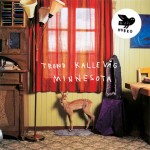
The cover image - Rune Johansen’s "Jeg var sa forbanna lykkelig" - captures this perfectly: happiness not as climax, but as a fleeting alignment of circumstances. In that sense, "Minnesota" isn’t a historical statement, even with its echoes of Norwegian emigration and the symbolic weight of its title. It’s a personal meditation on distance: between people, between places, between who we were and what we almost became.
There’s a gentle irony in how understated this album is, given the vast spaces it evokes. No grand gestures, no forced nostalgia - just careful listening and trust in small details. "Minnesota" doesn’t wave across the ocean. It waits, patient and open, knowing that some connections only reveal themselves when you stop trying to cross them.
Kallevag has made a quiet career out of listening to history without turning it into décor. Across "Bedehus & Hawaii", "Fengselsfugl", and "Amerikabaten", he’s treated migration, memory, and place as emotional weather systems rather than themes. "Minnesota" pushes this approach further, becoming his most cinematic work yet - not because it chases spectacle, but because it understands framing. Every sound here seems positioned with care, as if the music itself were choosing where to stand in the room.
The album’s core tension is geographical but also psychological. The west coast of Norway is present in the grain of the guitar, the patience of the pacing, the way melodies seem to emerge from mist rather than arrive fully formed. At the same time, there’s an unmistakable American pull: pedal steel lines that bend like horizons, slow-burning grooves that recall folk ballads and cinematic jazz without settling into pastiche. Think less genre fusion, more double exposure.
Kallevag is joined by an impeccable ensemble. Gard Nilssen’s drumming is restrained but alert, often suggesting motion rather than enforcing it; Mats Eilertsen’s bass grounds the music with a calm, narrative weight; Tuva Halse’s violin cuts through with a clear, human tone, occasionally sounding like a voice remembering something it never quite lived. Together, they play with remarkable generosity - no one rushes to fill space, because space is part of the composition.
Tracks like “Twins of Træna” and “The Boat Song” feel suspended between lullaby and departure hymn. “Pine Ridge” and “Edward Curtis Portraits”, inspired by Curtis’ photographs of Native Americans, add a more uneasy undertow - reminders that the American dream Kallevag gestures toward is inseparable from displacement and loss. Even when the music feels warm, it never fully relaxes. Longing, here, is not romanticized; it’s handled gently, like something fragile.
One of the album’s quiet triumphs is its production. Kallevag’s fondness for shaping material after the fact - adding subtle overdubs, nudging textures - never overwhelms the spontaneity of the performances. The record breathes. It moves forward, then looks back, then hesitates, as if unsure which direction deserves loyalty. That uncertainty becomes its emotional center.
The cover image - Rune Johansen’s "Jeg var sa forbanna lykkelig" - captures this perfectly: happiness not as climax, but as a fleeting alignment of circumstances. In that sense, "Minnesota" isn’t a historical statement, even with its echoes of Norwegian emigration and the symbolic weight of its title. It’s a personal meditation on distance: between people, between places, between who we were and what we almost became.
There’s a gentle irony in how understated this album is, given the vast spaces it evokes. No grand gestures, no forced nostalgia - just careful listening and trust in small details. "Minnesota" doesn’t wave across the ocean. It waits, patient and open, knowing that some connections only reveal themselves when you stop trying to cross them.
Keiji Haino & Reinhold Friedl: truly, slightly, overflowing, whereabout of good will
Artist: Keiji Haino & Reinhold Friedl
Title: truly, slightly, overflowing, whereabout of good will
Format: CD + Download
Label: Zeitkratzer (@)
Rated:

Title: truly, slightly, overflowing, whereabout of good will
Format: CD + Download
Label: Zeitkratzer (@)
Rated:
There’s a particular kind of silence that only appears when two radicals stop proving a point and start listening to each other. "truly, slightly, overflowing, whereabout of good will" lives exactly there: not in the clash of egos, not in the fireworks of extended technique, but in a tense, breathing proximity where piano and voice circle each other like wary animals that already know the outcome.
Keiji Haino needs no mythology anymore, yet it keeps accumulating around him like soot. For more than forty years he has treated rock, noise, blues, and free improvisation as raw materials to be broken open rather than genres to inhabit. Reinhold Friedl, on the other hand, comes from the long game of sound research: composer, pianist, and the restless engine behind zeitkratzer, a figure who has patiently dismantled the piano until it forgot it was ever a polite instrument. Their collaboration, ongoing for over a decade, is therefore not a meeting of opposites but a narrowing of focus. Strip away the ensemble, remove the historical scaffolding, and what remains is voice and keys - exposed, vulnerable, merciless.
Recorded in Berlin, the album unfolds as three long-form pieces that refuse the comfort of narrative arcs. The opening track reworks "strange fruits" not as homage or protest song, but as a slow molecular mutation. Haino’s voice does not interpret the melody; it interrogates it, pulling at its fibres until the song becomes a site of unease rather than recognition. Friedl’s piano answers not with chords but with space, friction, and low-pressure turbulence, behaving less like accompaniment and more like a shifting environment. The result is neither respectful nor iconoclastic - it’s something colder and more honest.
Across "wild harvest" and "true, slightly fly", the piano increasingly assumes orchestral weight. Friedl’s inside-piano techniques - developed over decades of physical intimacy with the instrument - turn wood, strings, and resonance into a breathing body. It sighs, rattles, and occasionally lashes out. Against this, Haino’s voice becomes a study in extremes: cavernous bass murmurs, sudden high-register ruptures, whispers that feel closer than speech. Microtonality here isn’t an academic exercise; it’s a physiological fact. The sounds land directly on the nervous system, bypassing interpretation.
What’s striking is how little “performance” there is in the conventional sense. This is not virtuosity as display. It’s endurance, attention, and risk. There are moments where everything seems on the verge of collapse, where the music hovers uncomfortably close to emptiness, and that’s precisely where its gravity lies. Good will, in this context, isn’t kindness - it’s the willingness to stay inside uncertainty without smoothing it out.
Mastered by Stephan Mathieu and recorded by Rabih Beaini, the sound is dry, intimate, and unforgiving. Every breath, scrape, and resonance matters. The packaging’s gold foil might suggest something precious, but the music itself resists fetishization. It doesn’t want admiration; it wants presence.
"truly, slightly, overflowing, whereabout of good will" is not an easy listen, nor does it pretend to be. It’s serious without being solemn, intense without theatrics, and deeply human in its refusal to resolve. This is what happens when two artists with nothing left to prove decide to speak quietly - and mean every word.
Keiji Haino needs no mythology anymore, yet it keeps accumulating around him like soot. For more than forty years he has treated rock, noise, blues, and free improvisation as raw materials to be broken open rather than genres to inhabit. Reinhold Friedl, on the other hand, comes from the long game of sound research: composer, pianist, and the restless engine behind zeitkratzer, a figure who has patiently dismantled the piano until it forgot it was ever a polite instrument. Their collaboration, ongoing for over a decade, is therefore not a meeting of opposites but a narrowing of focus. Strip away the ensemble, remove the historical scaffolding, and what remains is voice and keys - exposed, vulnerable, merciless.
Recorded in Berlin, the album unfolds as three long-form pieces that refuse the comfort of narrative arcs. The opening track reworks "strange fruits" not as homage or protest song, but as a slow molecular mutation. Haino’s voice does not interpret the melody; it interrogates it, pulling at its fibres until the song becomes a site of unease rather than recognition. Friedl’s piano answers not with chords but with space, friction, and low-pressure turbulence, behaving less like accompaniment and more like a shifting environment. The result is neither respectful nor iconoclastic - it’s something colder and more honest.
Across "wild harvest" and "true, slightly fly", the piano increasingly assumes orchestral weight. Friedl’s inside-piano techniques - developed over decades of physical intimacy with the instrument - turn wood, strings, and resonance into a breathing body. It sighs, rattles, and occasionally lashes out. Against this, Haino’s voice becomes a study in extremes: cavernous bass murmurs, sudden high-register ruptures, whispers that feel closer than speech. Microtonality here isn’t an academic exercise; it’s a physiological fact. The sounds land directly on the nervous system, bypassing interpretation.
What’s striking is how little “performance” there is in the conventional sense. This is not virtuosity as display. It’s endurance, attention, and risk. There are moments where everything seems on the verge of collapse, where the music hovers uncomfortably close to emptiness, and that’s precisely where its gravity lies. Good will, in this context, isn’t kindness - it’s the willingness to stay inside uncertainty without smoothing it out.
Mastered by Stephan Mathieu and recorded by Rabih Beaini, the sound is dry, intimate, and unforgiving. Every breath, scrape, and resonance matters. The packaging’s gold foil might suggest something precious, but the music itself resists fetishization. It doesn’t want admiration; it wants presence.
"truly, slightly, overflowing, whereabout of good will" is not an easy listen, nor does it pretend to be. It’s serious without being solemn, intense without theatrics, and deeply human in its refusal to resolve. This is what happens when two artists with nothing left to prove decide to speak quietly - and mean every word.
Kahil El'Zabar's Ethnic Heritage Ensemble: Let The Spirit Out, Live At "mu" London

Artist: Kahil El'Zabar's Ethnic Heritage Ensemble (@)
Title: Let The Spirit Out, Live At "mu" London
Format: CD & 12" + Download
Label: Spiritmuse Records (http://spiritmuserecords.com/) (@)
Rated:
Title: Let The Spirit Out, Live At "mu" London
Format: CD & 12" + Download
Label: Spiritmuse Records (http://spiritmuserecords.com/) (@)
Rated:
There are live albums, and then there are recordings that feel less like documents and more like evidence. "Let The Spirit Out, Live at “mu” London" belongs firmly to the second category: proof that music can still function as ritual without costumes, incense, or nostalgia - just bodies in a room, listening hard, breathing together.
Kahil El’Zabar has been doing this kind of work for so long that the word "legend" risks sounding inadequate, almost bureaucratic. For over five decades, he has treated rhythm as a social force rather than a stylistic choice, folding African diasporic traditions, jazz improvisation, spoken invocation, and communal energy into what he once described - accurately - as a spiritual groove. The Ethnic Heritage Ensemble, founded in 1974, was never meant to be a band in the conventional sense; it was conceived as a living vessel for Great Black Music, adaptable enough to carry history forward without embalming it.
This double LP captures two nights at "mu", an audiophile listening space in London chosen precisely because it resists the usual club dynamics. No background chatter, no bar clatter - just attention. El’Zabar composed new material specifically for this setting, alongside fresh arrangements of well-worn standards, not to modernize them but to reopen their pores. The idea is simple and demanding: put the music in front of an audience and let the presence of that audience reshape it in real time.
From the opening moments of “From Your Heart”, led by El’Zabar’s kalimba and his unmistakable vocal cadence, the music announces its intent. This is not performance as spectacle; it’s an invitation. The groove is deep but unforced, the pulse elastic rather than authoritarian. Corey Wilkes’ trumpet cuts through with clarity and warmth, Alex Harding’s baritone sax brings a grainy physicality, and Ishmael Ali’s cello adds an unexpected vertical depth - less string section, more resonant spine.
The reimagined classics are telling choices. “Footprints” doesn’t swing so much as it walks with purpose, carrying Wayne Shorter’s harmonic DNA into a more grounded, percussive terrain. “Summertime” sheds its seasonal melancholy and emerges as a slow, communal chant - less lullaby, more reminder. “Caravan”, often treated as an exotic postcard, becomes something heavier and earthbound, driven by layered rhythms that feel closer to procession than travelogue.
What makes this album work isn’t virtuosity - though there’s plenty - but intention. El’Zabar doesn’t solo over the ensemble; he conducts energy. His introductions and spoken passages might look superfluous on paper, but in context they function like breath marks, recalibrating the room. When the title track finally arrives, stretching close to fifteen minutes, it feels earned rather than climactic: a gradual unsealing, rhythm turning into affirmation.
There’s a subtle humor here too, the kind that comes from confidence. El’Zabar knows exactly what he’s doing, and he’s not afraid to say it out loud. The message - release, freedom, connection - could sound grandiose in lesser hands. Here, it lands because the music backs it up. The spirit isn’t preached; it’s exercised.
Recorded cleanly but without sterilization, the sound preserves the physicality of the event: the air moving, the audience listening, the ensemble responding. The artwork by Nep Sidhu completes the circle, framing the music as something ceremonial rather than archival.
"Let The Spirit Out" is not about escape from the world; it’s about re-entering it with sharper senses. It reminds us that spiritual jazz, at its best, isn’t a genre at all but a practice - one that insists music can still heal without pretending everything is fine. Jump and shout if you want. Or just sit still and let the rhythm do the work.
Kahil El’Zabar has been doing this kind of work for so long that the word "legend" risks sounding inadequate, almost bureaucratic. For over five decades, he has treated rhythm as a social force rather than a stylistic choice, folding African diasporic traditions, jazz improvisation, spoken invocation, and communal energy into what he once described - accurately - as a spiritual groove. The Ethnic Heritage Ensemble, founded in 1974, was never meant to be a band in the conventional sense; it was conceived as a living vessel for Great Black Music, adaptable enough to carry history forward without embalming it.
This double LP captures two nights at "mu", an audiophile listening space in London chosen precisely because it resists the usual club dynamics. No background chatter, no bar clatter - just attention. El’Zabar composed new material specifically for this setting, alongside fresh arrangements of well-worn standards, not to modernize them but to reopen their pores. The idea is simple and demanding: put the music in front of an audience and let the presence of that audience reshape it in real time.
From the opening moments of “From Your Heart”, led by El’Zabar’s kalimba and his unmistakable vocal cadence, the music announces its intent. This is not performance as spectacle; it’s an invitation. The groove is deep but unforced, the pulse elastic rather than authoritarian. Corey Wilkes’ trumpet cuts through with clarity and warmth, Alex Harding’s baritone sax brings a grainy physicality, and Ishmael Ali’s cello adds an unexpected vertical depth - less string section, more resonant spine.
The reimagined classics are telling choices. “Footprints” doesn’t swing so much as it walks with purpose, carrying Wayne Shorter’s harmonic DNA into a more grounded, percussive terrain. “Summertime” sheds its seasonal melancholy and emerges as a slow, communal chant - less lullaby, more reminder. “Caravan”, often treated as an exotic postcard, becomes something heavier and earthbound, driven by layered rhythms that feel closer to procession than travelogue.
What makes this album work isn’t virtuosity - though there’s plenty - but intention. El’Zabar doesn’t solo over the ensemble; he conducts energy. His introductions and spoken passages might look superfluous on paper, but in context they function like breath marks, recalibrating the room. When the title track finally arrives, stretching close to fifteen minutes, it feels earned rather than climactic: a gradual unsealing, rhythm turning into affirmation.
There’s a subtle humor here too, the kind that comes from confidence. El’Zabar knows exactly what he’s doing, and he’s not afraid to say it out loud. The message - release, freedom, connection - could sound grandiose in lesser hands. Here, it lands because the music backs it up. The spirit isn’t preached; it’s exercised.
Recorded cleanly but without sterilization, the sound preserves the physicality of the event: the air moving, the audience listening, the ensemble responding. The artwork by Nep Sidhu completes the circle, framing the music as something ceremonial rather than archival.
"Let The Spirit Out" is not about escape from the world; it’s about re-entering it with sharper senses. It reminds us that spiritual jazz, at its best, isn’t a genre at all but a practice - one that insists music can still heal without pretending everything is fine. Jump and shout if you want. Or just sit still and let the rhythm do the work.