
Browse by Genre
Industrial Music / Industrial Metal / Aggro Industrial / Electro Metal
Industrial Noise / Power Noise / Harsh Noise
Synth Pop / Electro Pop / Synth-Electronica
Techno / Trance / Goa / Drum'n'Bass / Jungle / Tribal / Trip-Hop
Ambient / Electronica / Ethereal / Dub / Soundscapes / Abstract
Experimental / Avantgarde / Weird & Wired / Glitch / Noise / Field Recording
Dark / Gothic / Wave / New Wave / Dark Wave / Industrial Gothic
New Music / Downtown / Avantgarde Jazz / New Classical / World
Search Reviews
Music Reviews
Marie Wilhelmine Anders: Fire (Remixes)
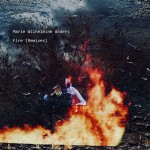
Artist: Marie Wilhelmine Anders
Title: Fire (Remixes)
Format: Download Only (MP3 + Lossless)
Label: Broque (@)
Rated:

Title: Fire (Remixes)
Format: Download Only (MP3 + Lossless)
Label: Broque (@)
Rated:
Marie Wilhelmine Anders has always seemed less interested in chasing genres than in dissolving them - slowly, elegantly, like a dream slipping through a sequencer. Her 2025 release "Fire (Remixes)", out on Broque, is a kind of retrospective telescope: a look back at the roaring drum & bass of the late ’90s refracted through Anders’ distinctly cinematic and architectonic sensibility. It’s not nostalgia - it’s something closer to archaeology with a pulse.
“Fire”, originally from her album "Travels", was already a shape-shifting thing: equal parts techno backbone, ambient fog, and DnB nervous system. Here, the track is given four new lives, each one inhabiting a different ghost of the genre’s golden age. The 2024 Original Mix sets the tone with Anders’ signature spaciousness: long arcs of synth, percussion like sparks in vacuum, a restrained but ever-present sense of propulsion.
Art Cuebik and Illuvia approach it with a gentler reverence - hovering between air and liquid, recalling the emotional luminosity of the LTJ Bukem school without ever falling into pastiche. Illuvia, in particular, pulls the track’s innards apart with patient care, turning the beat into a slow cascade of suspended particles. It’s the sound of a city seen from above at 3 a.m. - silent, glowing, alive.
Then come 88 Katanas and Offish, who drag “Fire” into darker alleys. Their versions wear their lineage proudly: the techstep grit, the metallic basslines, the post-industrial menace that Ed Rush and Optical once weaponized. But there’s something sly here too - Anders’ melodic DNA still lingers, softening the edges, refusing pure aggression.
Together, these five iterations make "Fire (Remixes)" feel like an essay on transformation: one idea spoken in multiple dialects of rhythm. Marie Wilhelmine Anders doesn’t just curate reinterpretations - she curates perspectives, building a bridge between emotional ambient abstraction and the kinetic intelligence of DnB.
It’s music for those who remember when the future was made of breakbeats, and for those who now realize it still is.
“Fire”, originally from her album "Travels", was already a shape-shifting thing: equal parts techno backbone, ambient fog, and DnB nervous system. Here, the track is given four new lives, each one inhabiting a different ghost of the genre’s golden age. The 2024 Original Mix sets the tone with Anders’ signature spaciousness: long arcs of synth, percussion like sparks in vacuum, a restrained but ever-present sense of propulsion.
Art Cuebik and Illuvia approach it with a gentler reverence - hovering between air and liquid, recalling the emotional luminosity of the LTJ Bukem school without ever falling into pastiche. Illuvia, in particular, pulls the track’s innards apart with patient care, turning the beat into a slow cascade of suspended particles. It’s the sound of a city seen from above at 3 a.m. - silent, glowing, alive.
Then come 88 Katanas and Offish, who drag “Fire” into darker alleys. Their versions wear their lineage proudly: the techstep grit, the metallic basslines, the post-industrial menace that Ed Rush and Optical once weaponized. But there’s something sly here too - Anders’ melodic DNA still lingers, softening the edges, refusing pure aggression.
Together, these five iterations make "Fire (Remixes)" feel like an essay on transformation: one idea spoken in multiple dialects of rhythm. Marie Wilhelmine Anders doesn’t just curate reinterpretations - she curates perspectives, building a bridge between emotional ambient abstraction and the kinetic intelligence of DnB.
It’s music for those who remember when the future was made of breakbeats, and for those who now realize it still is.
Orphax: Embraced Imperfections

There’s a peculiar kind of honesty in Sietse van Erve’s music - the kind that doesn’t try to hide its flaws but polishes them until they shimmer like bruised pearls. Embraced Imperfections, a double album collecting two long-form live performances from the early pandemic years, is exactly that: a meditation on the cracks that make things real, the beautiful noise of systems that refuse to be perfect.
Recorded during those strange, flattened months when “live” meant “livestreamed”, these performances - Embraced Imperfections I and II - now reappear in remastered form, stripped of their visual context but somehow even more intimate for it. Orphax doesn’t play to an audience so much as he plays into the air itself, sculpting time the way a potter shapes wet clay: slowly, repetitively, listening more than acting.
As always, his tools are minimal - synths, organs, effects - but the results feel vast. The first piece hovers like a foghorn caught between two valleys, drifting through overtones that seem to fold space rather than fill it. Notes are less “played” than allowed to occur; textures emerge, collide, and dissolve again, like geological processes compressed into forty minutes. By contrast, Embraced Imperfections II breathes with a looser pulse, an almost human fragility. The drones sway and ripple; they could be sighs or the murmur of some machine learning to dream.
If you’ve followed Orphax’s trajectory - from his early tracker experiments in the ’90s to his collaborations with Martijn Comes, Kenneth Kirschner, and Machinefabriek - you know his music lives in that liminal zone between science and sentiment. It’s microtonal, yes, but it’s also tender. It’s drone, but not drone-as-monolith; more like the slow growth of lichens on concrete, the patience of sound learning to become silence.
And then there’s the philosophy: van Erve has always been interested in mistakes - the tiny digital slips, the unstable harmonics, the hums that shouldn’t be there but are. Here, those imperfections become protagonists. The album’s title isn’t a slogan but a method. “Embraced”, because Orphax doesn’t correct them; he listens, leans in, lets them teach him something.
There’s an almost spiritual humour to that approach - a quiet resistance to the tyranny of quantized perfection. Listening to these long, breathing pieces feels like being gently reminded that life’s most moving moments rarely happen on the grid. Somewhere between the detuned organs, the gentle oscillations, and the absence of pulse, you realize you’ve stopped measuring time altogether.
At first, Embraced Imperfections feels like an endurance test for attention. Then, about ten minutes in, it turns into something else - a kind of emotional architecture. You can live in it for a while. You can let it reshape your inner acoustics.
To call it ambient would be too simple. To call it drone would be lazy. This is Orphax being Orphax - a craftsman of slowness, a curator of dissonance, a man who somehow makes broken tones sound whole again.
In an era obsessed with erasing noise and smoothing every edge, Embraced Imperfections feels radical: a sonic act of self-acceptance. It’s not music that asks for your attention - it waits until you forget to resist it.
Recorded during those strange, flattened months when “live” meant “livestreamed”, these performances - Embraced Imperfections I and II - now reappear in remastered form, stripped of their visual context but somehow even more intimate for it. Orphax doesn’t play to an audience so much as he plays into the air itself, sculpting time the way a potter shapes wet clay: slowly, repetitively, listening more than acting.
As always, his tools are minimal - synths, organs, effects - but the results feel vast. The first piece hovers like a foghorn caught between two valleys, drifting through overtones that seem to fold space rather than fill it. Notes are less “played” than allowed to occur; textures emerge, collide, and dissolve again, like geological processes compressed into forty minutes. By contrast, Embraced Imperfections II breathes with a looser pulse, an almost human fragility. The drones sway and ripple; they could be sighs or the murmur of some machine learning to dream.
If you’ve followed Orphax’s trajectory - from his early tracker experiments in the ’90s to his collaborations with Martijn Comes, Kenneth Kirschner, and Machinefabriek - you know his music lives in that liminal zone between science and sentiment. It’s microtonal, yes, but it’s also tender. It’s drone, but not drone-as-monolith; more like the slow growth of lichens on concrete, the patience of sound learning to become silence.
And then there’s the philosophy: van Erve has always been interested in mistakes - the tiny digital slips, the unstable harmonics, the hums that shouldn’t be there but are. Here, those imperfections become protagonists. The album’s title isn’t a slogan but a method. “Embraced”, because Orphax doesn’t correct them; he listens, leans in, lets them teach him something.
There’s an almost spiritual humour to that approach - a quiet resistance to the tyranny of quantized perfection. Listening to these long, breathing pieces feels like being gently reminded that life’s most moving moments rarely happen on the grid. Somewhere between the detuned organs, the gentle oscillations, and the absence of pulse, you realize you’ve stopped measuring time altogether.
At first, Embraced Imperfections feels like an endurance test for attention. Then, about ten minutes in, it turns into something else - a kind of emotional architecture. You can live in it for a while. You can let it reshape your inner acoustics.
To call it ambient would be too simple. To call it drone would be lazy. This is Orphax being Orphax - a craftsman of slowness, a curator of dissonance, a man who somehow makes broken tones sound whole again.
In an era obsessed with erasing noise and smoothing every edge, Embraced Imperfections feels radical: a sonic act of self-acceptance. It’s not music that asks for your attention - it waits until you forget to resist it.
Hvast: Chwasty Polskie
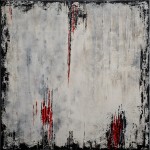
Artist: Hvast
Title: Chwasty Polskie
Format: CD + Download
Label: Zoharum (http://zoharum.com/) (@)
Rated:

Title: Chwasty Polskie
Format: CD + Download
Label: Zoharum (http://zoharum.com/) (@)
Rated:
There’s something poetic, almost mischievous, about naming an album after weeds. Chwasty Polskie - “Polish Weeds” - doesn’t romanticize the pastoral; it digs its nails into the soil, unearthing the stubborn, tangled roots of something raw and unrefined. Hvast, a trio forged from the ashes and amplifiers of Polish underground bands like So Slow, Czern, and Rigor Mortiss, sound like they’ve found a strange, electric spirituality in the compost heap of post-rock and dark ambient.
This isn’t the sterile beauty of modular synths or cinematic melancholy. It’s closer to a damp rehearsal room with moss creeping up the walls, the air thick with the smell of solder and decay. The five long pieces bloom and wilt like invasive flora - slow, deliberate, often hypnotic. The electronics of Michal Glowacki hum and pulse like photosynthesis caught on tape, while Arkadiusz Lerch’s drums drag time through the mud, letting it breathe and mutate. Grzegorz Chudzik’s bass isn’t just rhythm; it’s the hum of underground roots - constant, ominous, alive.
Guest musicians add splinters of light and air: Aleksandra Buda’s flute pierces through the low-end fog on “Wrotycz i Nawloc”, like a breeze disturbing stagnant water, while Bartek Lesniewski and Marcin Loks lend guitars that feel less like melodies and more like weather systems moving across the soundscape. Recorded in Buczkowice’s appropriately named Mustache Ministry Studio, the album has that peculiar Zoharum fingerprint - polished but organic, as if the mix itself were composted.
The real trick of Chwasty Polskie lies in its tone. It’s not trying to impress, or comfort, or even surprise. It grows. Slowly, stubbornly, beautifully - and occasionally, with a hint of menace. “Bielun” opens like a ritual drone, half meditative, half toxic bloom. “Lopian” feels heavier, its rhythm section a rusted pendulum, dragging fragments of krautrock into the mire. And “Oset”, the closing piece, is a kind of electric pilgrimage - patient, grinding, ecstatic in its restraint.
There’s an ecological undercurrent too - not in a didactic way, but in the album’s refusal to separate noise from nature. Everything here breathes and corrodes at the same time. If weeds are the planet’s quiet rebellion against human order, then Chwasty Polskie is that rebellion translated into sound: messy, resilient, oddly sacred.
If you were expecting the smooth sophistication of post-rock à la Sigur Rós, forget it. This is Poland, not Iceland - less glacier, more industrial wasteland blooming with wildflowers. Hvast remind us that the line between ugliness and beauty is just another human invention. The weeds don’t care, and neither do they.
This isn’t the sterile beauty of modular synths or cinematic melancholy. It’s closer to a damp rehearsal room with moss creeping up the walls, the air thick with the smell of solder and decay. The five long pieces bloom and wilt like invasive flora - slow, deliberate, often hypnotic. The electronics of Michal Glowacki hum and pulse like photosynthesis caught on tape, while Arkadiusz Lerch’s drums drag time through the mud, letting it breathe and mutate. Grzegorz Chudzik’s bass isn’t just rhythm; it’s the hum of underground roots - constant, ominous, alive.
Guest musicians add splinters of light and air: Aleksandra Buda’s flute pierces through the low-end fog on “Wrotycz i Nawloc”, like a breeze disturbing stagnant water, while Bartek Lesniewski and Marcin Loks lend guitars that feel less like melodies and more like weather systems moving across the soundscape. Recorded in Buczkowice’s appropriately named Mustache Ministry Studio, the album has that peculiar Zoharum fingerprint - polished but organic, as if the mix itself were composted.
The real trick of Chwasty Polskie lies in its tone. It’s not trying to impress, or comfort, or even surprise. It grows. Slowly, stubbornly, beautifully - and occasionally, with a hint of menace. “Bielun” opens like a ritual drone, half meditative, half toxic bloom. “Lopian” feels heavier, its rhythm section a rusted pendulum, dragging fragments of krautrock into the mire. And “Oset”, the closing piece, is a kind of electric pilgrimage - patient, grinding, ecstatic in its restraint.
There’s an ecological undercurrent too - not in a didactic way, but in the album’s refusal to separate noise from nature. Everything here breathes and corrodes at the same time. If weeds are the planet’s quiet rebellion against human order, then Chwasty Polskie is that rebellion translated into sound: messy, resilient, oddly sacred.
If you were expecting the smooth sophistication of post-rock à la Sigur Rós, forget it. This is Poland, not Iceland - less glacier, more industrial wasteland blooming with wildflowers. Hvast remind us that the line between ugliness and beauty is just another human invention. The weeds don’t care, and neither do they.
Scissorgun: Scream If You Wanna Go Faster
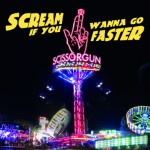
There’s something charmingly Mancunian about "Scream If You Wanna Go Faster" - an album that feels like it was recorded at 2 a.m. under a flickering streetlight, half-inspired by industrial ghosts, half by the smell of chip oil and rain. Scissorgun, the trio of Dave Clarkson, Alan Hempsall, and Adrian Ball, have been working this strange alchemy for nearly a decade: urban electronica with a conscience, texture-rich improvisation disguised as design, and humour hiding behind a wall of treated guitars and malfunctioning rhythms.
Improvisation remains their secret weapon. Clarkson and Hempsall, veterans of Triclops and Crispy Ambulance respectively, still treat composition as an accident that happens to people with instruments in their hands. Their sessions sound like eavesdropping on circuitry learning to dream - loops misfire, tones warp, and a synth suddenly mutters something that might be profound. “We play it first, then invent the reason later”, they’ve said elsewhere - which might be the most honest artistic manifesto Manchester’s produced since Factory’s heyday.
The album opens with "Seven Bells", which pulses like an emergency signal that forgot what it was warning us about, then moves through "Face Deflector" and "Fresh Hell", whose titles alone promise the black humour of post-Brexit Britain, a landscape where absurdity has become routine. "Fever Dream" slides into slower territory, a half-melted club memory dissolving under sodium lights, while "Gone Rogue" plays with dub shadows and broken tape motifs - like The Pop Group gone modular.
Scissorgun’s peculiar gift lies in finding melody in malfunction. "Late Nite Bento" sounds like a lost broadcast from a Tokyo back alley filtered through Northern drizzle, and "Bad As Bingo" is as ridiculous as it is glorious - a stomp for malfunctioning drum machines. By the time "Cubanos Nocturne" closes the record, we’re somewhere between a sound installation and a fever hallucination, all reverb, tape hiss, and strangely comforting decay.
There’s a political undertone here - soft, implied, and unpreachy, like the hum of discontent beneath a pub conversation. The band claim the title is “a soft attempt at social comment”, but it’s more than that: this is the sound of a culture accelerating toward absurdity, laughing and wincing in the same breath.
What keeps it from collapsing under its own concept is Scissorgun’s self-awareness - a knowing wink in the circuitry, a grin behind the noise. It’s urban music with the heart of improvisational jazz and the bones of post-industrial punk. In short: "Scream If You Wanna Go Faster" is what happens when machines start writing social satire and realise they, too, need a pint.
Improvisation remains their secret weapon. Clarkson and Hempsall, veterans of Triclops and Crispy Ambulance respectively, still treat composition as an accident that happens to people with instruments in their hands. Their sessions sound like eavesdropping on circuitry learning to dream - loops misfire, tones warp, and a synth suddenly mutters something that might be profound. “We play it first, then invent the reason later”, they’ve said elsewhere - which might be the most honest artistic manifesto Manchester’s produced since Factory’s heyday.
The album opens with "Seven Bells", which pulses like an emergency signal that forgot what it was warning us about, then moves through "Face Deflector" and "Fresh Hell", whose titles alone promise the black humour of post-Brexit Britain, a landscape where absurdity has become routine. "Fever Dream" slides into slower territory, a half-melted club memory dissolving under sodium lights, while "Gone Rogue" plays with dub shadows and broken tape motifs - like The Pop Group gone modular.
Scissorgun’s peculiar gift lies in finding melody in malfunction. "Late Nite Bento" sounds like a lost broadcast from a Tokyo back alley filtered through Northern drizzle, and "Bad As Bingo" is as ridiculous as it is glorious - a stomp for malfunctioning drum machines. By the time "Cubanos Nocturne" closes the record, we’re somewhere between a sound installation and a fever hallucination, all reverb, tape hiss, and strangely comforting decay.
There’s a political undertone here - soft, implied, and unpreachy, like the hum of discontent beneath a pub conversation. The band claim the title is “a soft attempt at social comment”, but it’s more than that: this is the sound of a culture accelerating toward absurdity, laughing and wincing in the same breath.
What keeps it from collapsing under its own concept is Scissorgun’s self-awareness - a knowing wink in the circuitry, a grin behind the noise. It’s urban music with the heart of improvisational jazz and the bones of post-industrial punk. In short: "Scream If You Wanna Go Faster" is what happens when machines start writing social satire and realise they, too, need a pint.
Sluta Leta: Drift Dekoder
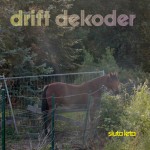
Sluta Leta’s return after a prolonged “digital hiatus” reads like a ghost story with a dance floor inserted. Thirty years after their chemo-electronic EPs and a decade and a half after their last significant statement, they have resurfaced on Cheap Records with "Drift Dekoder", a fractured dream of funk, broken rhythms, and icy vocal fragments. If one wanted a manifesto for how to re-emerge without nostalgia, this is it: beautifully strange, slyly ambitious, fond of missteps.
The Viennese electronic cult label Cheap - co-founded by Erdem Tunakan (among others) - has always backed visionary misfits. Sluta Leta’s presence there feels fitting: a band first heard on Lisa 94 back in 1998 is now speaking into 2025’s circuitry. After fading into virtual myth and a brief resurgence in 2020 with "Entrée Contrôle", Pieper, Bauer and Potuznik reconvene Sluta Leta as a patchwork collective: past members return, guests appear, and the lines between eras collapse.
From the opening "Prélude Gas", one senses tension - as if the air is just about to crack. "Tidsflayer" pulses with a determined glitch-funk, a motor rhythm that feels determined to destabilize itself. "Past in Reverse", with Gerhard Potuznik’s voice, glides across treated synthesizer shadows: voice as spectral anchor in a sea of drift. "Bjorn i FarklÄder" brings warm electronics and lean drum machine zeal; "First Order" leans into minimalism, letting silences speak. "Driftstopp" - as much concept as track name - halts the flow, inviting we listen to what’s left. "Moment Eternal" is the emotional core: a duet with Luise Nehl that glitters with tension. "Rymdpatrull" and the closing "Efterfest" and "Sodala" feel like after-hours fragments, pieces you overhear when the speakers are dying.
What gives "Drift Dekoder" its weight isn’t just sound design, but its relationships - between memory and advance, between imperfection and intention, between identity and access. The album’s very structure favors interruption over continuity; ideas do not always resolve, but that’s part of the point. The “drift decoder” is both metaphor and tool: a filter that tries to reassemble fragments from different technological epochs into something coherent enough to dance to, strange enough to recall dreams.
Sluta Leta have never sounded like they were trying to fit a genre. Rather, they sample their past selves, sabotage their own tropes, and invite you to wander their wreckage. "Drift Dekoder" is not a retro return - it’s a sideways jump, a reactivation of glitch-poetics for a new generation that’s never known smooth lines.
If you listen close, you hear the gap between then and now - and realize that it’s not a void but a room in which they’re still working.
The Viennese electronic cult label Cheap - co-founded by Erdem Tunakan (among others) - has always backed visionary misfits. Sluta Leta’s presence there feels fitting: a band first heard on Lisa 94 back in 1998 is now speaking into 2025’s circuitry. After fading into virtual myth and a brief resurgence in 2020 with "Entrée Contrôle", Pieper, Bauer and Potuznik reconvene Sluta Leta as a patchwork collective: past members return, guests appear, and the lines between eras collapse.
From the opening "Prélude Gas", one senses tension - as if the air is just about to crack. "Tidsflayer" pulses with a determined glitch-funk, a motor rhythm that feels determined to destabilize itself. "Past in Reverse", with Gerhard Potuznik’s voice, glides across treated synthesizer shadows: voice as spectral anchor in a sea of drift. "Bjorn i FarklÄder" brings warm electronics and lean drum machine zeal; "First Order" leans into minimalism, letting silences speak. "Driftstopp" - as much concept as track name - halts the flow, inviting we listen to what’s left. "Moment Eternal" is the emotional core: a duet with Luise Nehl that glitters with tension. "Rymdpatrull" and the closing "Efterfest" and "Sodala" feel like after-hours fragments, pieces you overhear when the speakers are dying.
What gives "Drift Dekoder" its weight isn’t just sound design, but its relationships - between memory and advance, between imperfection and intention, between identity and access. The album’s very structure favors interruption over continuity; ideas do not always resolve, but that’s part of the point. The “drift decoder” is both metaphor and tool: a filter that tries to reassemble fragments from different technological epochs into something coherent enough to dance to, strange enough to recall dreams.
Sluta Leta have never sounded like they were trying to fit a genre. Rather, they sample their past selves, sabotage their own tropes, and invite you to wander their wreckage. "Drift Dekoder" is not a retro return - it’s a sideways jump, a reactivation of glitch-poetics for a new generation that’s never known smooth lines.
If you listen close, you hear the gap between then and now - and realize that it’s not a void but a room in which they’re still working.