
Wednesday, June 10, 2026
Browse by Genre
Industrial Music / Industrial Metal / Aggro Industrial / Electro Metal
Industrial Noise / Power Noise / Harsh Noise
Synth Pop / Electro Pop / Synth-Electronica
Techno / Trance / Goa / Drum'n'Bass / Jungle / Tribal / Trip-Hop
Ambient / Electronica / Ethereal / Dub / Soundscapes / Abstract
Experimental / Avantgarde / Weird & Wired / Glitch / Noise / Field Recording
Dark / Gothic / Wave / New Wave / Dark Wave / Industrial Gothic
New Music / Downtown / Avantgarde Jazz / New Classical / World
Search Reviews
Music Reviews
VV.AA.: Sm?Snacks Vol. 2
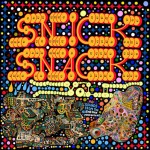
Artist: VV.AA.
Title: Sm?Snacks Vol. 2
Format: Download Only (MP3 + Lossless)
Label: Snick Snack Music (@)
Rated:


Title: Sm?Snacks Vol. 2
Format: Download Only (MP3 + Lossless)
Label: Snick Snack Music (@)
Rated:
The Norwegians have a way of making even the word “snack” sound philosophical. "SmåSnacks Vol. 2", the latest compilation from Snick Snack Music, is exactly that - a buffet of sonic finger food, full of odd flavors, unexpected pairings, and sly humour served on shimmering house beats. It’s the kind of record that could only come from a country where club music is treated less like a lifestyle accessory and more like a form of communal daydreaming.
The label calls this a celebration of Norway’s “vibrant” electronic scene, but “vibrant” doesn’t quite do it justice. It’s more like an electric fjord: currents colliding, temperatures shifting, bioluminescent grooves bubbling up from the depths. Returning figures like Ost & Kjex, Trulz & Robin, Sex Judas feat. Ricky, and Mungolian Jet Set remind you that the Scandinavian disco gene is still mutating beautifully. Their contributions feel seasoned - confident, eccentric, maybe slightly tipsy - while newer names like Djembe Tekno, Anders Hajem, and Helene Rickhard bring an exploratory freshness that keeps the compilation from becoming an exercise in nostalgia.
Opener Mungolian Jetset’s “Bleepers n Blobs (Original demo version)” is exactly what it sounds like: a mischievous collision of cosmic house and alien hiccups, a reminder that this duo could make a car alarm sound spiritual. Ost & Kjex’s “SickSnack (2025 Resnacked)” follows with their signature mix of sleaze and sophistication - like Giorgio Moroder trying to flirt in Norwegian. Henrik Villard and Anders Hajem go deeper, layering a classic deep-house pulse with something that feels more psychological than physical, while Sex Judas feat. Ricky contribute the compilation’s dirtiest hymn, “In the Silent Night”, a kind of sleazy nocturne for the enlightened sinner.
Then there’s Trulz & Robin, still the unsung wizards of Oslo techno, delivering a track that feels like warm circuitry breathing in sync with the listener. Helene Rickhard’s “Cycle 25” is a quiet highlight - all drifting particles and melancholic voltage - while Center of the Universe’s “Who put Acker Bilk on the guestlist?” wraps things up with tongue-in-cheek lounge surrealism, proving once again that Norwegian producers have the best sense of humour in electronic music (and the worst titles, in the best possible way).
What "SmåSnacks Vol. 2" really demonstrates is how Norwegian dance music continues to resist categorization. It’s neither Berlin’s severity nor London’s cynicism - it’s something softer, stranger, perhaps more cosmic in temperament. You can hear the jazz ghosts of Smalltown Supersound, the eccentric collage energy of Tellé Records, and the slow-motion disco legacy of Full Pupp, all refracted through this new, playful generation that seems more interested in curiosity than coolness.
It’s dance music for people who think too much and smile anyway. Each track feels like a small, self-contained universe - a snack, sure, but one that lingers, like the taste of salt on your lips after a swim in cold water. Norway’s electronic scene may be ever more confident, as the label puts it, but "SmåSnacks Vol. 2" suggests it’s also gloriously unconcerned with being taken too seriously. And that, in 2025, might be the most radical attitude of all.
The label calls this a celebration of Norway’s “vibrant” electronic scene, but “vibrant” doesn’t quite do it justice. It’s more like an electric fjord: currents colliding, temperatures shifting, bioluminescent grooves bubbling up from the depths. Returning figures like Ost & Kjex, Trulz & Robin, Sex Judas feat. Ricky, and Mungolian Jet Set remind you that the Scandinavian disco gene is still mutating beautifully. Their contributions feel seasoned - confident, eccentric, maybe slightly tipsy - while newer names like Djembe Tekno, Anders Hajem, and Helene Rickhard bring an exploratory freshness that keeps the compilation from becoming an exercise in nostalgia.
Opener Mungolian Jetset’s “Bleepers n Blobs (Original demo version)” is exactly what it sounds like: a mischievous collision of cosmic house and alien hiccups, a reminder that this duo could make a car alarm sound spiritual. Ost & Kjex’s “SickSnack (2025 Resnacked)” follows with their signature mix of sleaze and sophistication - like Giorgio Moroder trying to flirt in Norwegian. Henrik Villard and Anders Hajem go deeper, layering a classic deep-house pulse with something that feels more psychological than physical, while Sex Judas feat. Ricky contribute the compilation’s dirtiest hymn, “In the Silent Night”, a kind of sleazy nocturne for the enlightened sinner.
Then there’s Trulz & Robin, still the unsung wizards of Oslo techno, delivering a track that feels like warm circuitry breathing in sync with the listener. Helene Rickhard’s “Cycle 25” is a quiet highlight - all drifting particles and melancholic voltage - while Center of the Universe’s “Who put Acker Bilk on the guestlist?” wraps things up with tongue-in-cheek lounge surrealism, proving once again that Norwegian producers have the best sense of humour in electronic music (and the worst titles, in the best possible way).
What "SmåSnacks Vol. 2" really demonstrates is how Norwegian dance music continues to resist categorization. It’s neither Berlin’s severity nor London’s cynicism - it’s something softer, stranger, perhaps more cosmic in temperament. You can hear the jazz ghosts of Smalltown Supersound, the eccentric collage energy of Tellé Records, and the slow-motion disco legacy of Full Pupp, all refracted through this new, playful generation that seems more interested in curiosity than coolness.
It’s dance music for people who think too much and smile anyway. Each track feels like a small, self-contained universe - a snack, sure, but one that lingers, like the taste of salt on your lips after a swim in cold water. Norway’s electronic scene may be ever more confident, as the label puts it, but "SmåSnacks Vol. 2" suggests it’s also gloriously unconcerned with being taken too seriously. And that, in 2025, might be the most radical attitude of all.
The Worm: Pantilde
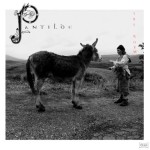
In Pantilde, The Worm slithers across the boundary between folk ritual and surrealist theatre, leaving a shimmering trail of cello dust and pagan laughter. Amy Lawrence’s Cornish alter ego – a trickster, a time traveller, a clown with a harp – has built an entire parallel world where myths still walk around in mud boots and gossip about eclipses. The record sounds both centuries old and strangely futuristic, as if Vashti Bunyan had been secretly collaborating with Delia Derbyshire in a damp stone cottage that hums when the wind turns east.
The Worm’s folk is not pastoral escapism but a form of living hallucination: harp strings and recorders form crooked ladders between melody and murmuring noise, while Lawrence’s voice moves between tenderness and eerie detachment, like a shepherd delivering cosmic news. Pantilde is built from small, fragile gestures – a breath, a bowed string, a phrase whispered as if it might dissolve – yet together they summon a vivid mythology. Songs like “Through Greeness” and “Portal” feel like spells written by someone who doesn’t quite believe in language anymore. “Heva’s Village” rises as a slow-motion lament for a place both invented and remembered, its vocal drones and cello tremors forming a landscape of sorrow and resolve. “Journey” might be the most affecting piece: part confession, part creation myth, a song that begins with a contorted voice and ends like dawn seen from underwater. It’s folk as séance, each sound a flicker of spirit projected through a cracked reel of memory.
The humour here is sly and subterranean. “The Clown is Free” skips through its own absurdity, proving that Lawrence understands how fragility and laughter share the same pulse. Even the brief interludes – “Gust”, “Path Tune” – sound like clues left behind by a trickster god who’s half serious, half prank. The lo-fi, handmade production gives everything a sense of domestic magic, the feeling of a ritual conducted with kitchen utensils and candle wax.
By the time “The Tower of the Eclipses” closes the record, we’ve been transported into a wyrd utopia that’s tender, ragged, and strangely luminous. It’s folk music that doesn’t pretend to restore the past but instead invents a future where myth is once again intimate, tactile, and slightly unhinged. Pantilde is an album of mud and stars, of portals and puddles – a testament to how strangeness can still sound holy when it’s sung with conviction. The Worm doesn’t revive folk tradition; it composts it, and from that humus grows something wilder, softer, and beautifully alive.
The Worm’s folk is not pastoral escapism but a form of living hallucination: harp strings and recorders form crooked ladders between melody and murmuring noise, while Lawrence’s voice moves between tenderness and eerie detachment, like a shepherd delivering cosmic news. Pantilde is built from small, fragile gestures – a breath, a bowed string, a phrase whispered as if it might dissolve – yet together they summon a vivid mythology. Songs like “Through Greeness” and “Portal” feel like spells written by someone who doesn’t quite believe in language anymore. “Heva’s Village” rises as a slow-motion lament for a place both invented and remembered, its vocal drones and cello tremors forming a landscape of sorrow and resolve. “Journey” might be the most affecting piece: part confession, part creation myth, a song that begins with a contorted voice and ends like dawn seen from underwater. It’s folk as séance, each sound a flicker of spirit projected through a cracked reel of memory.
The humour here is sly and subterranean. “The Clown is Free” skips through its own absurdity, proving that Lawrence understands how fragility and laughter share the same pulse. Even the brief interludes – “Gust”, “Path Tune” – sound like clues left behind by a trickster god who’s half serious, half prank. The lo-fi, handmade production gives everything a sense of domestic magic, the feeling of a ritual conducted with kitchen utensils and candle wax.
By the time “The Tower of the Eclipses” closes the record, we’ve been transported into a wyrd utopia that’s tender, ragged, and strangely luminous. It’s folk music that doesn’t pretend to restore the past but instead invents a future where myth is once again intimate, tactile, and slightly unhinged. Pantilde is an album of mud and stars, of portals and puddles – a testament to how strangeness can still sound holy when it’s sung with conviction. The Worm doesn’t revive folk tradition; it composts it, and from that humus grows something wilder, softer, and beautifully alive.
Jesus on Extasy: Between Despair and Disbelief
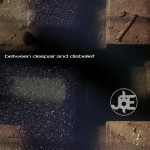
Artist: Jesus on Extasy (@)
Title: Between Despair and Disbelief
Format: LP
Label: Metropolis (@)
Rated:
Title: Between Despair and Disbelief
Format: LP
Label: Metropolis (@)
Rated:
After more than a decade in the shadows, Jesus on Extasy return not as resurrected saints of industrial rock, but as something colder, meaner, and far less forgiving. Between Despair and Disbelief sounds like a demolition crew sent to raze the ruins of early-2000s darkwave glamour, leaving behind a jagged skyline of distortion, bitterness, and synthetic adrenaline.
Dorian Deveraux - founder, vocalist, producer, and still a man who sings like he’s peeling his skin off for emphasis - has rebuilt the JoE machine for a world that has forgotten how to feel outrage without irony. This isn’t the slick cyber-industrial of their Holy Beauty or Beloved Enemy days; this is a surge of steel, sweat, and disdain. It’s as if all the heartbreak, stagnation, and social decay of the last decade have been crushed into a single dense, high-voltage core.
“Ghosts” opens the album with an anthem that feels like waking up mid-apocalypse - melodic, massive, but laced with grief. “Days Gone By” and “Soul Crusher” both punch with surgical precision, their riffs fused to sequencers like mechanical sinew. The production is taut, cinematic, and deliberately claustrophobic: you can almost hear the screws tightening as synths grind against guitars. Deveraux’s voice, still balancing venom and vulnerability, delivers lines that sound like last rites whispered through a vocoder.
“Somewhat Happy” is the black joke of the record - part breakup song, part end-times gospel. It’s emotional detritus packaged as empowerment, the soundtrack for realizing your lover might’ve been just another apocalypse. “Where Did We Go Wrong” and “Will It Ever Stop” double down on this tone: romantic despair refracted through neon nihilism, each chorus an implosion disguised as catharsis.
The title track, barely over a minute long, serves as a kind of sonic interstice - a hum of disillusionment before “The End of Everything” turns it into a final explosion. By then, JoE have said everything that needs to be said: that the club is on fire, the system’s broken, and somehow, perversely, the beat still goes on.
It’s tempting to treat Between Despair and Disbelief as nostalgia for a lost subculture, but that would be missing the point. This record doesn’t pine for the past - it repurposes its machinery as weaponry. Deveraux has built something contemporary and cruel, standing shoulder to shoulder with newer industrial acts like 3TEETH or Author & Punisher while still carrying the theatrical DNA of goth-metal’s decadent heyday.
There’s also a kind of humor embedded in the whole affair - the grim, knowing smile of someone who’s seen the digital dystopia arrive and decided to dance anyway. Jesus on Extasy, after all, were always too self-aware to play pure tragedy. They offer apocalypse as entertainment, heartbreak as design, faith as feedback loop.
If despair and disbelief are the coordinates, this album maps the space in between: a wasteland lit by LED strobes and sustained by noise. It’s not a comeback - it’s a reminder that some ghosts don’t fade. They just buy better amps.
Dorian Deveraux - founder, vocalist, producer, and still a man who sings like he’s peeling his skin off for emphasis - has rebuilt the JoE machine for a world that has forgotten how to feel outrage without irony. This isn’t the slick cyber-industrial of their Holy Beauty or Beloved Enemy days; this is a surge of steel, sweat, and disdain. It’s as if all the heartbreak, stagnation, and social decay of the last decade have been crushed into a single dense, high-voltage core.
“Ghosts” opens the album with an anthem that feels like waking up mid-apocalypse - melodic, massive, but laced with grief. “Days Gone By” and “Soul Crusher” both punch with surgical precision, their riffs fused to sequencers like mechanical sinew. The production is taut, cinematic, and deliberately claustrophobic: you can almost hear the screws tightening as synths grind against guitars. Deveraux’s voice, still balancing venom and vulnerability, delivers lines that sound like last rites whispered through a vocoder.
“Somewhat Happy” is the black joke of the record - part breakup song, part end-times gospel. It’s emotional detritus packaged as empowerment, the soundtrack for realizing your lover might’ve been just another apocalypse. “Where Did We Go Wrong” and “Will It Ever Stop” double down on this tone: romantic despair refracted through neon nihilism, each chorus an implosion disguised as catharsis.
The title track, barely over a minute long, serves as a kind of sonic interstice - a hum of disillusionment before “The End of Everything” turns it into a final explosion. By then, JoE have said everything that needs to be said: that the club is on fire, the system’s broken, and somehow, perversely, the beat still goes on.
It’s tempting to treat Between Despair and Disbelief as nostalgia for a lost subculture, but that would be missing the point. This record doesn’t pine for the past - it repurposes its machinery as weaponry. Deveraux has built something contemporary and cruel, standing shoulder to shoulder with newer industrial acts like 3TEETH or Author & Punisher while still carrying the theatrical DNA of goth-metal’s decadent heyday.
There’s also a kind of humor embedded in the whole affair - the grim, knowing smile of someone who’s seen the digital dystopia arrive and decided to dance anyway. Jesus on Extasy, after all, were always too self-aware to play pure tragedy. They offer apocalypse as entertainment, heartbreak as design, faith as feedback loop.
If despair and disbelief are the coordinates, this album maps the space in between: a wasteland lit by LED strobes and sustained by noise. It’s not a comeback - it’s a reminder that some ghosts don’t fade. They just buy better amps.
VV.AA.: Don Letts - The Rebel Dread @ ECHO BEACH

Artist: VV.AA. (@)
Title: Don Letts - The Rebel Dread @ ECHO BEACH
Format: CD & 12" + Download
Label: Echo Beach (@)
Rated:
Title: Don Letts - The Rebel Dread @ ECHO BEACH
Format: CD & 12" + Download
Label: Echo Beach (@)
Rated:
There are compilations that feel like party souvenirs, and then there are those that map the undercurrents of a culture. The Rebel Dread @ Echo Beach belongs squarely to the latter. Curated by Don Letts - filmmaker, DJ, punk-era mediator, and tireless cultural agitator - this is less a mixtape than a manifesto disguised as a groove.
Letts doesn’t compile music so much as he reorganizes the DNA of rebellion. His selection from Echo Beach’s three decades of dub mutations feels like a guided tour through parallel dimensions where punk met bass culture and refused to sober up. The set opens with Dubinator’s “Jam Hot Version”, which immediately drops you into that cavernous Echo Beach reverb-space - a place where delay units speak more eloquently than politicians.
By the time Martha and the Muffins’ “Echo Beach” gets the Lee Groves treatment, it’s not nostalgia - it’s a resurrection. The once-new-wave anthem is now a phantom broadcast, sliding between post-punk melancholy and sound system pressure. Dubxanne’s rework of “Running Up That Hill” and Dubby Stardust’s Space Oddity both confirm the label’s ongoing obsession: to translate pop mythology into dub mythology, turning familiar songs into unstable, echoing memory objects.
Of course, Letts can’t resist pulling in heavyweights: Dubblestandart, Dub Spencer & Trance Hill, RSD, Lee “Scratch” Perry - the pantheon of Echo Beach’s long affair with the idea of “dub as method, not genre”. The tracks stretch from Vienna to London to Kingston, united not by tempo or form but by attitude: a belief that the bassline is a political statement, and reverb is a way of thinking.
Letts’s own contribution, “One People”, works as a mission statement - punk idealism filtered through deep sound system pressure. It’s not about peace and love; it’s about survival through frequency.
What makes this compilation special isn’t just the lineup, but its coherence. Despite spanning decades, the sound feels continuous, as if Echo Beach has been secretly documenting the same never-ending session since the ’90s - a global conversation in slow motion, distorted by time but never silenced.
Listening to it, you realize that dub never really died, it just changed shape, learned new languages, infiltrated new circuits. The Rebel Dread @ Echo Beach is proof that it still thrives - sneaky, mutating, conspiratorial - in every corner where distortion meets intellect.
Echo Beach turned 30 with this release, but it sounds like it’s still 25 and plotting something.
Letts doesn’t compile music so much as he reorganizes the DNA of rebellion. His selection from Echo Beach’s three decades of dub mutations feels like a guided tour through parallel dimensions where punk met bass culture and refused to sober up. The set opens with Dubinator’s “Jam Hot Version”, which immediately drops you into that cavernous Echo Beach reverb-space - a place where delay units speak more eloquently than politicians.
By the time Martha and the Muffins’ “Echo Beach” gets the Lee Groves treatment, it’s not nostalgia - it’s a resurrection. The once-new-wave anthem is now a phantom broadcast, sliding between post-punk melancholy and sound system pressure. Dubxanne’s rework of “Running Up That Hill” and Dubby Stardust’s Space Oddity both confirm the label’s ongoing obsession: to translate pop mythology into dub mythology, turning familiar songs into unstable, echoing memory objects.
Of course, Letts can’t resist pulling in heavyweights: Dubblestandart, Dub Spencer & Trance Hill, RSD, Lee “Scratch” Perry - the pantheon of Echo Beach’s long affair with the idea of “dub as method, not genre”. The tracks stretch from Vienna to London to Kingston, united not by tempo or form but by attitude: a belief that the bassline is a political statement, and reverb is a way of thinking.
Letts’s own contribution, “One People”, works as a mission statement - punk idealism filtered through deep sound system pressure. It’s not about peace and love; it’s about survival through frequency.
What makes this compilation special isn’t just the lineup, but its coherence. Despite spanning decades, the sound feels continuous, as if Echo Beach has been secretly documenting the same never-ending session since the ’90s - a global conversation in slow motion, distorted by time but never silenced.
Listening to it, you realize that dub never really died, it just changed shape, learned new languages, infiltrated new circuits. The Rebel Dread @ Echo Beach is proof that it still thrives - sneaky, mutating, conspiratorial - in every corner where distortion meets intellect.
Echo Beach turned 30 with this release, but it sounds like it’s still 25 and plotting something.
KLOTZ WENZEL VETHAKE: Session VII-II-MMXXV
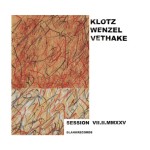
Artist: KLOTZ WENZEL VETHAKE
Title: Session VII-II-MMXXV
Format: Download Only (MP3 + Lossless)
Label: Blankrecords (@)
Rated:
Title: Session VII-II-MMXXV
Format: Download Only (MP3 + Lossless)
Label: Blankrecords (@)
Rated:
There are albums that want to seduce you, albums that want to educate you - and then there are albums like Session VII-II-MMXXV, which prefer to grab you by the inner ear and drag you, unblinking, into a vortex where jazz forgot its manners and noise learned to pray.
Berlin’s Klotz Wenzel Vethake don’t make songs so much as temporary zones of controlled implosion. The trio - Manuel Klotz (saxophone, loops), Karla Wenzel (bass, synths, and an unholy box of noises), and Tobias Vethake (electric cello, percussion) - continue their exploration of anti-form, anti-ego sound communion. This second release, recorded live on the 7th of February 2025, is both a documentation and an act of possession: a séance where the ghosts of Ornette Coleman, Cecil Taylor, and Caspar Brötzmann share the same cracked amplifier.
Part 1 begins in disarray, the kind of chaos that feels like it’s already halfway through an argument with itself. Klotz’s saxophone spits, gasps, and howls - not melody, but exhalation - while Wenzel’s bass grinds underneath, alternately grounding and antagonizing the others. Vethake’s electric cello threads through the maelstrom like an exposed nerve. The trio are not chasing harmony; they’re stalking tension. The result is less free jazz than free fall.
Part 2 could almost be described as minimal - but only if you think of minimalism as a smoldering ruin left after the last explosion. The textures stretch thin, like steel cables trembling in the air. Electronic interventions buzz faintly in the background, as if someone is tuning the city’s power grid. The interplay here is uncanny: nobody leads, nobody follows, yet everything moves with the inevitability of tectonic plates.
By the time Part 3 unfolds, you realize this music isn’t trying to reach catharsis - it’s trying to sustain ignition. The trio’s improvisation hovers on that dangerous edge where energy risks collapsing into entropy, but somehow never does. Each sound feels freshly minted, painfully alive.
There’s a rare sincerity in this chaos: Session VII-II-MMXXV doesn’t pretend to be difficult - it simply refuses to be anything else. Klotz Wenzel Vethake aren’t showing off technique or testing endurance; they’re testing the possibility of collective intuition in a time of atomized creation. You can almost hear them listening to each other, moment by moment, like climbers navigating a cliff face in thick fog.
If punk was once about rebellion and jazz about freedom, this trio fuses both impulses into something wilder and more fragile - an improvised architecture of empathy and dissonance. It’s Berlin distilled: no illusion of perfection, only the beautiful friction of coexistence.
Listening feels like standing inside a weather system made of breath, metal, and feedback. You don’t walk away humming it - you walk away slightly altered, as if your nervous system had been briefly rewired.
As Sun Ra once said (and the trio proudly echo), “The possible has been tried and failed. Now it’s time to try the impossible”.
That’s exactly what this record sounds like: the impossible, mid-flight, refusing to land.
Berlin’s Klotz Wenzel Vethake don’t make songs so much as temporary zones of controlled implosion. The trio - Manuel Klotz (saxophone, loops), Karla Wenzel (bass, synths, and an unholy box of noises), and Tobias Vethake (electric cello, percussion) - continue their exploration of anti-form, anti-ego sound communion. This second release, recorded live on the 7th of February 2025, is both a documentation and an act of possession: a séance where the ghosts of Ornette Coleman, Cecil Taylor, and Caspar Brötzmann share the same cracked amplifier.
Part 1 begins in disarray, the kind of chaos that feels like it’s already halfway through an argument with itself. Klotz’s saxophone spits, gasps, and howls - not melody, but exhalation - while Wenzel’s bass grinds underneath, alternately grounding and antagonizing the others. Vethake’s electric cello threads through the maelstrom like an exposed nerve. The trio are not chasing harmony; they’re stalking tension. The result is less free jazz than free fall.
Part 2 could almost be described as minimal - but only if you think of minimalism as a smoldering ruin left after the last explosion. The textures stretch thin, like steel cables trembling in the air. Electronic interventions buzz faintly in the background, as if someone is tuning the city’s power grid. The interplay here is uncanny: nobody leads, nobody follows, yet everything moves with the inevitability of tectonic plates.
By the time Part 3 unfolds, you realize this music isn’t trying to reach catharsis - it’s trying to sustain ignition. The trio’s improvisation hovers on that dangerous edge where energy risks collapsing into entropy, but somehow never does. Each sound feels freshly minted, painfully alive.
There’s a rare sincerity in this chaos: Session VII-II-MMXXV doesn’t pretend to be difficult - it simply refuses to be anything else. Klotz Wenzel Vethake aren’t showing off technique or testing endurance; they’re testing the possibility of collective intuition in a time of atomized creation. You can almost hear them listening to each other, moment by moment, like climbers navigating a cliff face in thick fog.
If punk was once about rebellion and jazz about freedom, this trio fuses both impulses into something wilder and more fragile - an improvised architecture of empathy and dissonance. It’s Berlin distilled: no illusion of perfection, only the beautiful friction of coexistence.
Listening feels like standing inside a weather system made of breath, metal, and feedback. You don’t walk away humming it - you walk away slightly altered, as if your nervous system had been briefly rewired.
As Sun Ra once said (and the trio proudly echo), “The possible has been tried and failed. Now it’s time to try the impossible”.
That’s exactly what this record sounds like: the impossible, mid-flight, refusing to land.