
Browse by Genre
Industrial Music / Industrial Metal / Aggro Industrial / Electro Metal
Industrial Noise / Power Noise / Harsh Noise
Synth Pop / Electro Pop / Synth-Electronica
Techno / Trance / Goa / Drum'n'Bass / Jungle / Tribal / Trip-Hop
Ambient / Electronica / Ethereal / Dub / Soundscapes / Abstract
Experimental / Avantgarde / Weird & Wired / Glitch / Noise / Field Recording
Dark / Gothic / Wave / New Wave / Dark Wave / Industrial Gothic
New Music / Downtown / Avantgarde Jazz / New Classical / World
Search Reviews
Music Reviews
Kenneth Lien & Center of the Universe: Norwegian Electronic Folk Music

Artist: Kenneth Lien & Center of the Universe (@)
Title: Norwegian Electronic Folk Music
Format: CD + Download
Label: Heilo Records (@)
Rated:

Title: Norwegian Electronic Folk Music
Format: CD + Download
Label: Heilo Records (@)
Rated:
There’s a moment in "Norwegian Electronic Folk Music" when the munnharpe twangs like a techno bassline and the 909 kicks answer it, as if the two had been secret pen pals for centuries. That’s the kind of sly historical revisionism Kenneth Lien and Center of the Universe excel at: not rewriting tradition, but inserting a USB cable into it.
Lien, the folk purist with a black-metal past, and Jørgen Skjulstad (alias Center of the Universe), the eternal cosmic prankster of the Oslo underground, approach Norwegian heritage like kids discovering an ancient instrument that - surprise! - has a MIDI port. Their partnership is not ironic, though irony hovers at the edges like fog on a fjord. It’s affectionate mischief, a dance between bones and wires, past and bass.
The record plays out like a rave in a barn that’s somehow also a stave church. “Fanitullen” opens with the devil fiddling at 120 BPM, “Røysekatten” is a sly creature that could sneak onto a John Talabot setlist, and “Pillarguri” sounds like folk ghosts learning to two-step to acid house. The munnharpe and hardanger fiddle converse fluently with the TB-303 and the Roland 909, and their dialogue never feels forced-more like a reunion after a very long misunderstanding.
The genius of the album is that it doesn’t fetishize either tradition or technology. Instead, it treats both as living vocabularies. The springar becomes syncopated IDM, the gangar turns cosmic, and in “Håvards Sorg”-the most touching track here-melancholy stretches out across a shimmering electronic plain. Lien’s folk phrasing carries centuries of dance and grief, but the production gives it wings.
And yes, it’s fun - more fun than its concept should logically allow. Lien and Skjulstad make you believe that halling dancers might someday stomp in time to breakbeats under strobes, that electro-halling could be a real genre, and that maybe, just maybe, Norwegian folklore was always waiting for someone to plug it in.
If "Snu hver stein" felt like the duo were excavating something ancient, "Norwegian Electronic Folk Music" is them resurrecting it - alive, glowing, and just slightly tipsy on voltage. A love letter written in both runes and binary.
Lien, the folk purist with a black-metal past, and Jørgen Skjulstad (alias Center of the Universe), the eternal cosmic prankster of the Oslo underground, approach Norwegian heritage like kids discovering an ancient instrument that - surprise! - has a MIDI port. Their partnership is not ironic, though irony hovers at the edges like fog on a fjord. It’s affectionate mischief, a dance between bones and wires, past and bass.
The record plays out like a rave in a barn that’s somehow also a stave church. “Fanitullen” opens with the devil fiddling at 120 BPM, “Røysekatten” is a sly creature that could sneak onto a John Talabot setlist, and “Pillarguri” sounds like folk ghosts learning to two-step to acid house. The munnharpe and hardanger fiddle converse fluently with the TB-303 and the Roland 909, and their dialogue never feels forced-more like a reunion after a very long misunderstanding.
The genius of the album is that it doesn’t fetishize either tradition or technology. Instead, it treats both as living vocabularies. The springar becomes syncopated IDM, the gangar turns cosmic, and in “Håvards Sorg”-the most touching track here-melancholy stretches out across a shimmering electronic plain. Lien’s folk phrasing carries centuries of dance and grief, but the production gives it wings.
And yes, it’s fun - more fun than its concept should logically allow. Lien and Skjulstad make you believe that halling dancers might someday stomp in time to breakbeats under strobes, that electro-halling could be a real genre, and that maybe, just maybe, Norwegian folklore was always waiting for someone to plug it in.
If "Snu hver stein" felt like the duo were excavating something ancient, "Norwegian Electronic Folk Music" is them resurrecting it - alive, glowing, and just slightly tipsy on voltage. A love letter written in both runes and binary.
Johan Agebj?rn: Southern Forest

Artist: Johan Agebj?rn (@)
Title: Southern Forest
Format: Tape + Download
Label: Constellation Tatsu (@)
Rated:

Title: Southern Forest
Format: Tape + Download
Label: Constellation Tatsu (@)
Rated:
There’s something both serene and faintly mischievous about Johan Agebjörn’s "Southern Forest", as if a set of vintage synths had wandered off into the Swedish woods and decided to form a commune. Agebjörn - forever oscillating between the neon cityscapes of his work with Sally Shapiro and the mossy hush of his ambient alter ego - returns after a decade-long hiatus with a record that feels like a quiet conversation between electricity and soil.
This is his first solo album of new material since "Notes" (2015), but Agebjörn has never really disappeared - he’s just been busy building bridges between synthpop and spirituality, Italo disco and introspection. "Southern Forest", released by Constellation Tatsu (that Californian temple of cosmic calm), gathers a constellation of collaborators - Dr. Atmo, Cate Brooks, NINA, Miranda Magdalena, Mikael Ögren - and turns them into voices in the same vast, mist-filled canopy.
The album moves with a sense of patient discovery. “Where Earth and Heaven Meet” feels like sunrise seen through dew-covered branches; “Little Fluffy Clouds”, featuring NINA, nods gently to ambient pop’s dreamier side, like The Orb filtered through northern melancholy. When Mikael Ögren appears on “Their Shadows”, it’s as though a forgotten church organ has been repurposed for meditation. And “By Lake Ruidh”, co-crafted with Dr. Atmo, glides like fog over still water-an exquisite piece of slow-motion hypnosis.
Agebjörn’s sound design is deceptively simple: analog synths breathe, pads unfurl like ferns, and soft pulses replace percussion. Yet underneath the restraint lies an emotional topography shaped by both human tenderness and environmental awe. His melodies never rush; they emerge like memories returning after years of silence. "Southern Forest" isn’t merely pastoral - it’s reflective of the modern human condition: longing for stillness, but forever wired.
Compared to his earlier ambient releases like "Mossebo" or "The Mountain Lake", this record feels more distilled, less cinematic, more intimate. It’s as if Agebjörn has turned the camera inward. There’s beauty here, yes, but also resignation: a gentle acceptance that time and nature move on, with or without us. “Closure”, the final track, sounds exactly like its title - a slow exhale, a curtain falling in slow motion.
You could call "Southern Forest" Agebjörn’s answer to Gigi Masin’s "Calypso" or Suzanne Ciani’s more meditative work - a space where melody and mood meet under the sign of empathy. But to do so would flatten its quiet eccentricity. This is not just ambient music; it’s a rewilding of the synthesizer.
In the end, the forest wins. The machines fall silent, the air hums, and what remains is the feeling of having listened to something both artificial and alive-a rare balance, a rare peace.
This is his first solo album of new material since "Notes" (2015), but Agebjörn has never really disappeared - he’s just been busy building bridges between synthpop and spirituality, Italo disco and introspection. "Southern Forest", released by Constellation Tatsu (that Californian temple of cosmic calm), gathers a constellation of collaborators - Dr. Atmo, Cate Brooks, NINA, Miranda Magdalena, Mikael Ögren - and turns them into voices in the same vast, mist-filled canopy.
The album moves with a sense of patient discovery. “Where Earth and Heaven Meet” feels like sunrise seen through dew-covered branches; “Little Fluffy Clouds”, featuring NINA, nods gently to ambient pop’s dreamier side, like The Orb filtered through northern melancholy. When Mikael Ögren appears on “Their Shadows”, it’s as though a forgotten church organ has been repurposed for meditation. And “By Lake Ruidh”, co-crafted with Dr. Atmo, glides like fog over still water-an exquisite piece of slow-motion hypnosis.
Agebjörn’s sound design is deceptively simple: analog synths breathe, pads unfurl like ferns, and soft pulses replace percussion. Yet underneath the restraint lies an emotional topography shaped by both human tenderness and environmental awe. His melodies never rush; they emerge like memories returning after years of silence. "Southern Forest" isn’t merely pastoral - it’s reflective of the modern human condition: longing for stillness, but forever wired.
Compared to his earlier ambient releases like "Mossebo" or "The Mountain Lake", this record feels more distilled, less cinematic, more intimate. It’s as if Agebjörn has turned the camera inward. There’s beauty here, yes, but also resignation: a gentle acceptance that time and nature move on, with or without us. “Closure”, the final track, sounds exactly like its title - a slow exhale, a curtain falling in slow motion.
You could call "Southern Forest" Agebjörn’s answer to Gigi Masin’s "Calypso" or Suzanne Ciani’s more meditative work - a space where melody and mood meet under the sign of empathy. But to do so would flatten its quiet eccentricity. This is not just ambient music; it’s a rewilding of the synthesizer.
In the end, the forest wins. The machines fall silent, the air hums, and what remains is the feeling of having listened to something both artificial and alive-a rare balance, a rare peace.
FRAG: FRAG Deconstructed Genetic Transmission
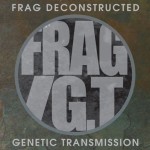
Somewhere between reverence and desecration, Stephen h Burroughs lights a ritual fire over the ashes of Genetic Transmission. Under his alias FRAG, he doesn’t remix or reinterpret the Polish project’s noise - he vivisects it. With surgical perversity and monastic focus, he turns Tomasz Twardawa’s dense sonic matter into a kind of industrial archaeology, scraping corrosion off frequencies until only the ghosts of circuits remain.
Burroughs, known from the iron age of Head of David and the fevered exorcisms of Tunnels of h, has long been obsessed with noise as a vessel of faith - or at least obsession disguised as faith. In FRAG Deconstructed Genetic Transmission, he behaves less like a producer and more like an anatomist of entropy. Each piece (five long, disquieting slabs of sound) moves like a body being remembered - stretched, cracked, reduced to pure vibration. What was once noise becomes language again, though one written in the syntax of decay.
The deconstruction is total. You can almost hear Burroughs in dialogue with Twardawa’s ghost, trading static for silence, tension for surrender. Track “03”, at nearly 23 minutes, feels like standing in a cathedral built of detuned machinery - a mechanical requiem, humming its own demise. Yet even in this ruin, there’s beauty: not the beauty of symmetry, but of persistence, of something still trying to breathe through its wires.
If early industrial was the sound of cities eroding, this is the echo of the ruins dreaming of electricity. FRAG doesn’t modernize Genetic Transmission - he translates it into a new language of corrosion. It’s as if the tape hiss of the past were dissolving into dust and light, whispering: "this is not resurrection - it’s decomposition made sacred".
A demanding, fascinating, and perversely meditative record. Noise as memento mori. Silence as confession.
Burroughs, known from the iron age of Head of David and the fevered exorcisms of Tunnels of h, has long been obsessed with noise as a vessel of faith - or at least obsession disguised as faith. In FRAG Deconstructed Genetic Transmission, he behaves less like a producer and more like an anatomist of entropy. Each piece (five long, disquieting slabs of sound) moves like a body being remembered - stretched, cracked, reduced to pure vibration. What was once noise becomes language again, though one written in the syntax of decay.
The deconstruction is total. You can almost hear Burroughs in dialogue with Twardawa’s ghost, trading static for silence, tension for surrender. Track “03”, at nearly 23 minutes, feels like standing in a cathedral built of detuned machinery - a mechanical requiem, humming its own demise. Yet even in this ruin, there’s beauty: not the beauty of symmetry, but of persistence, of something still trying to breathe through its wires.
If early industrial was the sound of cities eroding, this is the echo of the ruins dreaming of electricity. FRAG doesn’t modernize Genetic Transmission - he translates it into a new language of corrosion. It’s as if the tape hiss of the past were dissolving into dust and light, whispering: "this is not resurrection - it’s decomposition made sacred".
A demanding, fascinating, and perversely meditative record. Noise as memento mori. Silence as confession.
VV.AA.: Nested

There’s something beautifully absurd about a compilation like "Nested". It doesn’t so much unfold as it does twitch, hum, and purr inside its own sonic burrow. You can almost imagine the whole thing taking place in a dismantled television, inhabited by tiny creatures who’ve mistaken its circuitry for a new ecosystem. It’s not a party, not a sermon - more like a small, secret life observed through the keyhole of malfunctioning electronics.
Vonconflon, with its second release, has assembled an improbable cast: Tomutonttu’s snowblind kaleidoscopia, Rimarimba’s droll minimalism, Kevin Micka’s self-playing instruments, and Günter Schlienz’s patient synthesizer meditations all coexist like species evolved under different gravitational rules. Alexander Ross, whose contributions thread through the collection like short bursts of surreal collage, seems to function as a trickster presence - gluing, ungluing, re-gluing. There’s theatre, too: Manoir Molle’s "Campagne" sounds like a miniature stage play staged inside a transistor, and Ksenija Sundejeva’s "Take Up Space (ONE)" compresses dream-pop melancholy into a fragile sigh.
What’s remarkable is how these disparate organisms find a common pulse without ever agreeing on tempo or temperature. Each piece feels handcrafted but alien, intimate yet distant - the way nature documentaries feel when narrated by a machine. The sound is at once organic and cybernetic, like wind whistling through broken plastic or rain falling on a motherboard.
"Nested" could be described as an anthology of unfinished metamorphoses: eleven experiments that never quite resolve, and perhaps aren’t meant to. They hum in their nests, dreaming of radio waves, power surges, and the scent of real grass. It’s a compilation that rewards curiosity over comfort, wonder over resolution - a reminder that even inside the most synthetic habitats, something stubbornly alive continues to move, blink, and sing.
Vonconflon, with its second release, has assembled an improbable cast: Tomutonttu’s snowblind kaleidoscopia, Rimarimba’s droll minimalism, Kevin Micka’s self-playing instruments, and Günter Schlienz’s patient synthesizer meditations all coexist like species evolved under different gravitational rules. Alexander Ross, whose contributions thread through the collection like short bursts of surreal collage, seems to function as a trickster presence - gluing, ungluing, re-gluing. There’s theatre, too: Manoir Molle’s "Campagne" sounds like a miniature stage play staged inside a transistor, and Ksenija Sundejeva’s "Take Up Space (ONE)" compresses dream-pop melancholy into a fragile sigh.
What’s remarkable is how these disparate organisms find a common pulse without ever agreeing on tempo or temperature. Each piece feels handcrafted but alien, intimate yet distant - the way nature documentaries feel when narrated by a machine. The sound is at once organic and cybernetic, like wind whistling through broken plastic or rain falling on a motherboard.
"Nested" could be described as an anthology of unfinished metamorphoses: eleven experiments that never quite resolve, and perhaps aren’t meant to. They hum in their nests, dreaming of radio waves, power surges, and the scent of real grass. It’s a compilation that rewards curiosity over comfort, wonder over resolution - a reminder that even inside the most synthetic habitats, something stubbornly alive continues to move, blink, and sing.
Quentin Hiatus: Royal Notes Mixtape
Artist: Quentin Hiatus (@)
Title: Royal Notes Mixtape
Format: USB Flash Drive
Label: 1 More Thing (@)
Rated:
Title: Royal Notes Mixtape
Format: USB Flash Drive
Label: 1 More Thing (@)
Rated:
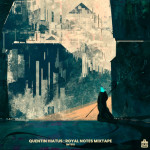
Quentin Hiatus has always been a mischievous figure in the world of bass music - the kind of producer who doesn’t so much break genre rules as pretend he never heard of them in the first place. "Royal Notes Mixtape", released via "1 More Thing", is another beautiful act of rebellion: a purple, USB-stuffed Trojan horse of rhythm and emotion, equal parts philosophy, rave archaeology, and cosmic joke. It’s music that makes you laugh, think, and throw your body into weird angles - sometimes all within the same bar.
Hiatus (real name Quentin Hiatus, because why complicate perfection) is an American producer who’s spent years threading the unstable line between drum & bass, footwork, halftime, and the more vaporous side of electronic soul. He’s collaborated with the likes of Thomas B, released on labels that treat BPMs like astrology, and cultivated a sound that’s as introspective as it is unhinged. "Royal Notes" takes all that and runs it through a prism - or maybe a kaleidoscope on speed.
The opener, “Metacooler”, feels like an interdimensional jazz jam where someone accidentally left the Amen break looping in the corner. “Hold The Energy” is a statement of intent - not so much an invitation as a commandment, a sort of rave sermon about persistence and faith in groove. And “Space Jazz Festival”? That’s not a metaphor. It’s exactly what it sounds like: a transmission from a dancefloor orbiting Neptune, where Sun Ra is playing back-to-back with DJ Rashad and the drinks are made of plasma.
What’s fascinating is how "emotionally literate" this record is beneath its glitching surface. Hiatus doesn’t hide behind production tricks; he uses them to express a kind of ecstatic confusion - the feeling of being human in a digital age that keeps refreshing faster than you can breathe. “Ignore Them” could be a diss track to cynicism itself, while “Rave To The Grave” ends things like a benediction for every tired soul who’s ever danced through heartbreak at 170 BPM.
The mixtape format suits him perfectly. It’s not an “album” in the classical sense - it’s more like a "sonic travelogue", a notebook scribbled in basslines and broken rhythms, each track an unfinished thought too alive to sit still. Even the physical release feels symbolic: a purple cassette and a USB key - analog nostalgia and digital pragmatism shaking hands.
There’s also a sly humor running through it all, as if Quentin knows he’s making serious music about "not taking things too seriously". He seems to wink through the compression: "yeah, the world’s a mess - now let’s dance in the debris".
In the end, "Royal Notes Mixtape" isn’t just a collage of styles - it’s a mood, a worldview. It says: embrace the contradictions, keep your head in the bass and your heart in the stars, and never forget that even chaos can have perfect timing.
Hiatus (real name Quentin Hiatus, because why complicate perfection) is an American producer who’s spent years threading the unstable line between drum & bass, footwork, halftime, and the more vaporous side of electronic soul. He’s collaborated with the likes of Thomas B, released on labels that treat BPMs like astrology, and cultivated a sound that’s as introspective as it is unhinged. "Royal Notes" takes all that and runs it through a prism - or maybe a kaleidoscope on speed.
The opener, “Metacooler”, feels like an interdimensional jazz jam where someone accidentally left the Amen break looping in the corner. “Hold The Energy” is a statement of intent - not so much an invitation as a commandment, a sort of rave sermon about persistence and faith in groove. And “Space Jazz Festival”? That’s not a metaphor. It’s exactly what it sounds like: a transmission from a dancefloor orbiting Neptune, where Sun Ra is playing back-to-back with DJ Rashad and the drinks are made of plasma.
What’s fascinating is how "emotionally literate" this record is beneath its glitching surface. Hiatus doesn’t hide behind production tricks; he uses them to express a kind of ecstatic confusion - the feeling of being human in a digital age that keeps refreshing faster than you can breathe. “Ignore Them” could be a diss track to cynicism itself, while “Rave To The Grave” ends things like a benediction for every tired soul who’s ever danced through heartbreak at 170 BPM.
The mixtape format suits him perfectly. It’s not an “album” in the classical sense - it’s more like a "sonic travelogue", a notebook scribbled in basslines and broken rhythms, each track an unfinished thought too alive to sit still. Even the physical release feels symbolic: a purple cassette and a USB key - analog nostalgia and digital pragmatism shaking hands.
There’s also a sly humor running through it all, as if Quentin knows he’s making serious music about "not taking things too seriously". He seems to wink through the compression: "yeah, the world’s a mess - now let’s dance in the debris".
In the end, "Royal Notes Mixtape" isn’t just a collage of styles - it’s a mood, a worldview. It says: embrace the contradictions, keep your head in the bass and your heart in the stars, and never forget that even chaos can have perfect timing.