
Browse by Genre
Industrial Music / Industrial Metal / Aggro Industrial / Electro Metal
Industrial Noise / Power Noise / Harsh Noise
Synth Pop / Electro Pop / Synth-Electronica
Techno / Trance / Goa / Drum'n'Bass / Jungle / Tribal / Trip-Hop
Ambient / Electronica / Ethereal / Dub / Soundscapes / Abstract
Experimental / Avantgarde / Weird & Wired / Glitch / Noise / Field Recording
Dark / Gothic / Wave / New Wave / Dark Wave / Industrial Gothic
New Music / Downtown / Avantgarde Jazz / New Classical / World
Search Reviews
Music Reviews
Phenomenal World: Same

Artist: Phenomenal World (@)
Title: Same
Format: LP
Label: Rock Is Hell Records (http://www.rockishell.com/) (@)
Rated:

Title: Same
Format: LP
Label: Rock Is Hell Records (http://www.rockishell.com/) (@)
Rated:
There’s a particular Viennese alchemy that happens when musicians who’ve spent decades dismantling categories decide, at long last, to make a band. Not an ensemble, not a project, not a conceptual framework - just a band. Phenomenal World is that rare thing: the sound of three highly individual artists remembering how to play together, like a jazz-punk power trio formed on the event horizon of a black hole.
Their debut, "Same", is anything but. It’s six tracks of joyous demolition, cut in the analog underbelly of Vienna, where Michael Fischer (feedback saxophone, voice), Didi Kern (drums, feral intuition), and Philipp Quehenberger (keyboards, cosmic grime) fuse into something simultaneously ancient and futuristic. Think Sun Ra teleporting into an underground squat during a noise night curated by Captain Beefheart’s ghost.
Let’s start with the opener, “wallshaker” - a name that doesn’t lie. Kern’s drumming is pure tectonics: tight, muscular, and just unhinged enough to remind you he once played with Fuckhead. Fischer’s feedback sax doesn’t so much "solo" as "interfere" - it’s the ghost in the circuitry, a living pulse of electricity that can moan, argue, or kiss the amps into feedback bliss. Quehenberger, ever the alchemist, lays down synth lines that seem to mutate mid-bar, equal parts cabaret nightmare and cosmic gospel.
“bliberdiblub” is their dadaist moment - a brief, glitchy hallucination, like Monk trapped in a pinball machine. Then comes “prime head”, an eleven-minute monster that feels like a ritual gone delightfully wrong: the kind of track where time stops being a measurement and turns into a material. It’s free jazz without the apologetic jazz part, electronic music without the computer, punk that’s somehow patient.
By the time “the void” arrives, you realize the trio isn’t chasing chaos - they’re orchestrating it. Fischer’s vocal interventions sound like transmissions from a dying radio satellite; Kern and Quehenberger circle around him like two planets refusing to collapse into each other. “blood falls” oozes menace and beauty in equal measure, while closer “torn to pieces” is exactly that: an unraveling, a celebration of fragmentation as freedom.
There’s something very Austrian about "Same": a kind of irony that runs so deep it loops back into sincerity. Fischer’s academic rigor meets Kern’s instinctive wit and Quehenberger’s unclassifiable electronics - and out of it comes a noise that feels philosophical but never sterile. It’s physical thought, sculpted in feedback and sweat.
The record sits somewhere between free improvisation, no wave, and alien funk, yet it refuses to settle. It’s too weird for jazz, too smart for rock, too human for noise. And that’s the point - it doesn’t imitate a “phenomenal world”, it creates one: unstable, glorious, and alive with contradictions.
To call this fusion would be to insult it. "Same" is not fusion - it’s fission. It explodes categories into particles of ecstatic sound.
Their debut, "Same", is anything but. It’s six tracks of joyous demolition, cut in the analog underbelly of Vienna, where Michael Fischer (feedback saxophone, voice), Didi Kern (drums, feral intuition), and Philipp Quehenberger (keyboards, cosmic grime) fuse into something simultaneously ancient and futuristic. Think Sun Ra teleporting into an underground squat during a noise night curated by Captain Beefheart’s ghost.
Let’s start with the opener, “wallshaker” - a name that doesn’t lie. Kern’s drumming is pure tectonics: tight, muscular, and just unhinged enough to remind you he once played with Fuckhead. Fischer’s feedback sax doesn’t so much "solo" as "interfere" - it’s the ghost in the circuitry, a living pulse of electricity that can moan, argue, or kiss the amps into feedback bliss. Quehenberger, ever the alchemist, lays down synth lines that seem to mutate mid-bar, equal parts cabaret nightmare and cosmic gospel.
“bliberdiblub” is their dadaist moment - a brief, glitchy hallucination, like Monk trapped in a pinball machine. Then comes “prime head”, an eleven-minute monster that feels like a ritual gone delightfully wrong: the kind of track where time stops being a measurement and turns into a material. It’s free jazz without the apologetic jazz part, electronic music without the computer, punk that’s somehow patient.
By the time “the void” arrives, you realize the trio isn’t chasing chaos - they’re orchestrating it. Fischer’s vocal interventions sound like transmissions from a dying radio satellite; Kern and Quehenberger circle around him like two planets refusing to collapse into each other. “blood falls” oozes menace and beauty in equal measure, while closer “torn to pieces” is exactly that: an unraveling, a celebration of fragmentation as freedom.
There’s something very Austrian about "Same": a kind of irony that runs so deep it loops back into sincerity. Fischer’s academic rigor meets Kern’s instinctive wit and Quehenberger’s unclassifiable electronics - and out of it comes a noise that feels philosophical but never sterile. It’s physical thought, sculpted in feedback and sweat.
The record sits somewhere between free improvisation, no wave, and alien funk, yet it refuses to settle. It’s too weird for jazz, too smart for rock, too human for noise. And that’s the point - it doesn’t imitate a “phenomenal world”, it creates one: unstable, glorious, and alive with contradictions.
To call this fusion would be to insult it. "Same" is not fusion - it’s fission. It explodes categories into particles of ecstatic sound.
HRV: Actually Not A Lifeparty
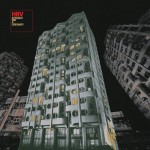
The title lies beautifully. Or maybe it tells the truth too literally. Actually Not A Lifeparty sounds like a rejection, but the body of the record contradicts it with rhythm, voltage, and pulse. HRV - the Polish producer who here revisits a decade shadowed by depression - turns his private collapse into a form of propulsion. The result: something between therapy and EBM séance.
“Actually Not” opens like a hesitant entrance onto a dancefloor no one asked for - beats that twitch rather than groove, basslines that crawl up the spine like static memory. It’s not joyous, but it moves, insistently, like a body refusing to lie still.
“A12” sharpens the edges: electro patterns compress and release in hypnotic cycles, a reminder that control can coexist with chaos. HRV’s production is clean but wounded, every hi-hat and synth stab carrying the trace of something brittle underneath.
“Lifeparty”, the title track, sounds almost celebratory until you listen closely - its rhythm too tight, too self-conscious, as if joy itself were under surveillance. It’s the kind of song you could dance to while thinking about the futility of dancing - which is, admittedly, the best kind.
The final track, “Actually Not (Pray)”, loosens the tension, substituting release for resignation. There’s rhythm still, but slower, like a heart after an argument - tired, but beating.
What HRV achieves here is paradoxical: music of despair that’s bodily, tactile, even seductive. Where many explore darkness by retreating into drones, he faces it through movement - four tracks that translate psychological weight into kinetic ritual.
It’s not a lifeparty, no. But it’s what happens after the lights go out and the body, stubbornly, keeps swaying.
“Actually Not” opens like a hesitant entrance onto a dancefloor no one asked for - beats that twitch rather than groove, basslines that crawl up the spine like static memory. It’s not joyous, but it moves, insistently, like a body refusing to lie still.
“A12” sharpens the edges: electro patterns compress and release in hypnotic cycles, a reminder that control can coexist with chaos. HRV’s production is clean but wounded, every hi-hat and synth stab carrying the trace of something brittle underneath.
“Lifeparty”, the title track, sounds almost celebratory until you listen closely - its rhythm too tight, too self-conscious, as if joy itself were under surveillance. It’s the kind of song you could dance to while thinking about the futility of dancing - which is, admittedly, the best kind.
The final track, “Actually Not (Pray)”, loosens the tension, substituting release for resignation. There’s rhythm still, but slower, like a heart after an argument - tired, but beating.
What HRV achieves here is paradoxical: music of despair that’s bodily, tactile, even seductive. Where many explore darkness by retreating into drones, he faces it through movement - four tracks that translate psychological weight into kinetic ritual.
It’s not a lifeparty, no. But it’s what happens after the lights go out and the body, stubbornly, keeps swaying.
Spyros Polychronopoulos + Yorgos Dimitriadis: Nearfield
Artist: Spyros Polychronopoulos + Yorgos Dimitriadis (@)
Title: Nearfield
Format: Download Only (MP3 + Lossless)
Label: Room40 (@)
Rated:

Title: Nearfield
Format: Download Only (MP3 + Lossless)
Label: Room40 (@)
Rated:
"Nearfield" begins like a held breath that refuses to be exhaled. It’s a collaboration between two seasoned navigators of resonance - Spyros Polychronopoulos, the Athens-born composer and electronic artist known for his intricate work with signal instability and spatial perception, and Yorgos Dimitriadis, a percussionist and improviser whose career in Berlin’s experimental scene has been built on the tension between gesture and decay. What they’ve created together is less a record than a suspended vibration - an architecture of sound built so close to the ear it feels like the air itself is whispering back.
The project’s title is telling. In acoustic terms, the “near field” is where the sound has not yet dispersed - where it’s raw, immediate, almost tactile. Polychronopoulos and Dimitriadis use this zone as both metaphor and method. Every tone feels captured in the act of becoming; every percussive pulse is a trace of presence, a brief collision between breath, skin, and current. The result is a kind of microscopic music, more about proximity than projection - sound not performed to the listener, but around and inside them.
“Nearfield Pt.1” opens with a granular shimmer that could be electricity or the inside of a seashell. Percussion drifts in like loose debris - brushed metal, half-erased rhythm, a pulse that refuses to settle into time. It’s music that behaves more like weather than structure. By the middle section (“Pt.3”), the record has narrowed into something beautifully claustrophobic - a low-frequency meditation on pressure and patience. You don’t listen to it so much as inhabit it, like sitting in a darkened studio while machines breathe in the corners.
There’s a ghost of humor, too - that dry, procedural kind that experimental musicians sometimes carry like a badge. You can almost sense them smirking, as if saying: "We built an entire universe out of air-conditioning noise and brushed cymbals - and somehow it worked". What’s remarkable, though, is how emotional "Nearfield" becomes without ever raising its voice. Beneath its austere surfaces, it hides a strangely human core - two people negotiating presence through listening, measuring the distance between silence and sound, self and other. Polychronopoulos speaks of “revealing what was already there,” and that’s exactly how it feels: not composition as construction, but as excavation.
The record closes with “Nearfield Pt.5”, a slow dissolve where tone and texture merge until you can’t tell whether you’re hearing electronics, percussion, or the echo of your own pulse. It’s a perfect ending - a fade that doesn’t so much disappear as integrate itself into your own listening body.
In a world addicted to maximalism, "Nearfield" is radical in its restraint. It’s about attention - about the act of being so close to a sound that it stops being external. It’s what happens when two artists, after a decade of parallel lives, finally meet and realize that the shortest distance between them is not space, but vibration.
The project’s title is telling. In acoustic terms, the “near field” is where the sound has not yet dispersed - where it’s raw, immediate, almost tactile. Polychronopoulos and Dimitriadis use this zone as both metaphor and method. Every tone feels captured in the act of becoming; every percussive pulse is a trace of presence, a brief collision between breath, skin, and current. The result is a kind of microscopic music, more about proximity than projection - sound not performed to the listener, but around and inside them.
“Nearfield Pt.1” opens with a granular shimmer that could be electricity or the inside of a seashell. Percussion drifts in like loose debris - brushed metal, half-erased rhythm, a pulse that refuses to settle into time. It’s music that behaves more like weather than structure. By the middle section (“Pt.3”), the record has narrowed into something beautifully claustrophobic - a low-frequency meditation on pressure and patience. You don’t listen to it so much as inhabit it, like sitting in a darkened studio while machines breathe in the corners.
There’s a ghost of humor, too - that dry, procedural kind that experimental musicians sometimes carry like a badge. You can almost sense them smirking, as if saying: "We built an entire universe out of air-conditioning noise and brushed cymbals - and somehow it worked". What’s remarkable, though, is how emotional "Nearfield" becomes without ever raising its voice. Beneath its austere surfaces, it hides a strangely human core - two people negotiating presence through listening, measuring the distance between silence and sound, self and other. Polychronopoulos speaks of “revealing what was already there,” and that’s exactly how it feels: not composition as construction, but as excavation.
The record closes with “Nearfield Pt.5”, a slow dissolve where tone and texture merge until you can’t tell whether you’re hearing electronics, percussion, or the echo of your own pulse. It’s a perfect ending - a fade that doesn’t so much disappear as integrate itself into your own listening body.
In a world addicted to maximalism, "Nearfield" is radical in its restraint. It’s about attention - about the act of being so close to a sound that it stops being external. It’s what happens when two artists, after a decade of parallel lives, finally meet and realize that the shortest distance between them is not space, but vibration.
Lawrence English: WhiteOut

Lawrence English’s "WhiteOut" arrives like a postcard from the end of the world - but one sent fifteen years too late, after the ice has already started to remember what water feels like. The Australian sound artist, who has long specialized in turning environmental perception into a kind of trembling metaphysics, revisits his 2010 field recordings from Antarctica, reanimating them through the fragile prism of time and ecological grief.
This isn’t a travelogue. It’s an exhalation - or maybe an apology. The CD comes with a book, as if to remind us that words are sometimes necessary when sound alone can’t contain the weight of what it’s trying to say. And what "WhiteOut" says is simple, brutal, and oddly tender: we came, we recorded, we melted things.
English has always been fascinated by the collision of the human and the elemental - how perception collapses when faced with enormity. Here, his microphones become witnesses, not tools: they tremble beside glaciers, catch the subtle panic of ice giving way, and even record the absurd comedy of survival - a blubber-less mammal in -2°C waters, stared down by a curious leopard seal. It’s the kind of image that would be funny if it didn’t feel like a parable for our species.
Musically, "WhiteOut" inhabits the ghostly zone between documentation and composition. “Hercules” opens the album with a mechanical murmur, as though the earth were clearing its throat. “A Prayer” feels like a brief moment of reverence before the storm, while “Thaw” - deceptively gentle - shivers with the quiet violence of change. In “The Collapse”, one can almost hear time imploding: distant rumbles, static gusts, and the low growl of something ancient giving up its shape.
Yet the record is not without beauty. “Esperanza Glimmers” and “The Outside From Within” shimmer with a fragile luminosity, as if the ice itself were humming back. There’s melody in the melt, a strange harmonic logic in the ruin. English doesn’t compose around nature here; he composes with it - or more precisely, lets it speak through him.
Listening to "WhiteOut" feels like standing in the middle of a blizzard of memory - you lose sense of orientation, but gain an understanding of scale. It’s not a human-centered album; it’s an album that humbles you out of your humanness. Every sound carries both wonder and warning.
At the end, “Towards An End Of Season” unravels like a slow fade into silence - or extinction. It’s not clear which. But in that ambiguity lies the album’s power: the recognition that beauty and disappearance can share the same frequency.
So yes, "WhiteOut" is a field recording project, an ecological lament, and a spiritual document all at once. It’s also a love letter to impermanence, written in the language of wind and water. English has given us not a soundtrack to Antarctica, but a requiem for our illusions about it.
This isn’t a travelogue. It’s an exhalation - or maybe an apology. The CD comes with a book, as if to remind us that words are sometimes necessary when sound alone can’t contain the weight of what it’s trying to say. And what "WhiteOut" says is simple, brutal, and oddly tender: we came, we recorded, we melted things.
English has always been fascinated by the collision of the human and the elemental - how perception collapses when faced with enormity. Here, his microphones become witnesses, not tools: they tremble beside glaciers, catch the subtle panic of ice giving way, and even record the absurd comedy of survival - a blubber-less mammal in -2°C waters, stared down by a curious leopard seal. It’s the kind of image that would be funny if it didn’t feel like a parable for our species.
Musically, "WhiteOut" inhabits the ghostly zone between documentation and composition. “Hercules” opens the album with a mechanical murmur, as though the earth were clearing its throat. “A Prayer” feels like a brief moment of reverence before the storm, while “Thaw” - deceptively gentle - shivers with the quiet violence of change. In “The Collapse”, one can almost hear time imploding: distant rumbles, static gusts, and the low growl of something ancient giving up its shape.
Yet the record is not without beauty. “Esperanza Glimmers” and “The Outside From Within” shimmer with a fragile luminosity, as if the ice itself were humming back. There’s melody in the melt, a strange harmonic logic in the ruin. English doesn’t compose around nature here; he composes with it - or more precisely, lets it speak through him.
Listening to "WhiteOut" feels like standing in the middle of a blizzard of memory - you lose sense of orientation, but gain an understanding of scale. It’s not a human-centered album; it’s an album that humbles you out of your humanness. Every sound carries both wonder and warning.
At the end, “Towards An End Of Season” unravels like a slow fade into silence - or extinction. It’s not clear which. But in that ambiguity lies the album’s power: the recognition that beauty and disappearance can share the same frequency.
So yes, "WhiteOut" is a field recording project, an ecological lament, and a spiritual document all at once. It’s also a love letter to impermanence, written in the language of wind and water. English has given us not a soundtrack to Antarctica, but a requiem for our illusions about it.
Poor Isa + Evan Parker / Ingar Zach: s/t

Artist: Poor Isa + Evan Parker / Ingar Zach (@)
Title: s/t
Format: LP
Label: Aspen Edities (@)
Rated:
Title: s/t
Format: LP
Label: Aspen Edities (@)
Rated:
There’s something quietly miraculous about this self-titled Poor Isa + Evan Parker / Ingar Zach - a record that sounds less like four musicians performing together and more like a slow, collective act of listening. You could call it a collaboration, but that word feels too social, too crowded. What happens here is more like shared solitude: four distinct sensibilities circling a silence and learning how to breathe inside it.
The Belgian duo Poor Isa (Ruben Machtelinckx and Frederik Leroux) have always worked with restraint as both method and philosophy - their prepared banjos and woodblocks tracing sound as if they were chiseling ice, not playing instruments. Their previous records floated between stillness and pulse, hinting at a kind of ascetic joy. Here, that aesthetic deepens and fractures: they invite Evan Parker, the titan of European free improvisation, and Ingar Zach, master of percussive resonance, to step into their miniature universe - and remarkably, neither of them trample the garden.
Parker, whose soprano saxophone can usually turn air into hurricane, moves like a shadow here, trading density for grain. His lines flicker and hover, ghostly and deliberate, like breath condensed on glass. Zach, ever the sculptor of vibration, gives the record a subterranean pulse - his gran cassa rumbling not as rhythm but as weather.
What’s astonishing is the balance: these four musicians - each with a history of commanding sonic presence - dissolve ego into texture. “Clearing” feels like a dawn where every sound negotiates its right to exist; “Hewn” stretches into a slow ritual of erosion, each gesture scraping at the edge of audibility. Even the track titles read like verbs of process rather than products - "Ply", "Hewn", "Clearing" - as if the music itself were documenting an act of making rather than made-ness.
There’s a kind of dry humor, too, if you listen for it - a playfulness in how banjo strings are muted into near-silence, how Parker’s saxophone occasionally bursts in like a polite interruption from another world. It’s the sound of four people not taking the idea of “serious music” too seriously - but treating sound itself as sacred.
At times, the album recalls the early ECM aesthetic of distance and space, but with more splinters, more air between the notes. It’s chamber music for a room that doesn’t exist - a liminal zone where wood vibrates like metal, and silence carries its own melodic contour.
In a world where collaboration often means collision, Poor Isa + Evan Parker / Ingar Zach offers something rarer: integration without compromise. It’s music that unfolds like careful conversation between strangers who have already understood each other, wordlessly.
And perhaps that’s the real beauty of this record - it’s not about showing what these artists *can* do, but about what they’re willing to leave undone.
The Belgian duo Poor Isa (Ruben Machtelinckx and Frederik Leroux) have always worked with restraint as both method and philosophy - their prepared banjos and woodblocks tracing sound as if they were chiseling ice, not playing instruments. Their previous records floated between stillness and pulse, hinting at a kind of ascetic joy. Here, that aesthetic deepens and fractures: they invite Evan Parker, the titan of European free improvisation, and Ingar Zach, master of percussive resonance, to step into their miniature universe - and remarkably, neither of them trample the garden.
Parker, whose soprano saxophone can usually turn air into hurricane, moves like a shadow here, trading density for grain. His lines flicker and hover, ghostly and deliberate, like breath condensed on glass. Zach, ever the sculptor of vibration, gives the record a subterranean pulse - his gran cassa rumbling not as rhythm but as weather.
What’s astonishing is the balance: these four musicians - each with a history of commanding sonic presence - dissolve ego into texture. “Clearing” feels like a dawn where every sound negotiates its right to exist; “Hewn” stretches into a slow ritual of erosion, each gesture scraping at the edge of audibility. Even the track titles read like verbs of process rather than products - "Ply", "Hewn", "Clearing" - as if the music itself were documenting an act of making rather than made-ness.
There’s a kind of dry humor, too, if you listen for it - a playfulness in how banjo strings are muted into near-silence, how Parker’s saxophone occasionally bursts in like a polite interruption from another world. It’s the sound of four people not taking the idea of “serious music” too seriously - but treating sound itself as sacred.
At times, the album recalls the early ECM aesthetic of distance and space, but with more splinters, more air between the notes. It’s chamber music for a room that doesn’t exist - a liminal zone where wood vibrates like metal, and silence carries its own melodic contour.
In a world where collaboration often means collision, Poor Isa + Evan Parker / Ingar Zach offers something rarer: integration without compromise. It’s music that unfolds like careful conversation between strangers who have already understood each other, wordlessly.
And perhaps that’s the real beauty of this record - it’s not about showing what these artists *can* do, but about what they’re willing to leave undone.