
Browse by Genre
Industrial Music / Industrial Metal / Aggro Industrial / Electro Metal
Industrial Noise / Power Noise / Harsh Noise
Synth Pop / Electro Pop / Synth-Electronica
Techno / Trance / Goa / Drum'n'Bass / Jungle / Tribal / Trip-Hop
Ambient / Electronica / Ethereal / Dub / Soundscapes / Abstract
Experimental / Avantgarde / Weird & Wired / Glitch / Noise / Field Recording
Dark / Gothic / Wave / New Wave / Dark Wave / Industrial Gothic
New Music / Downtown / Avantgarde Jazz / New Classical / World
Search Reviews
Music Reviews
Ben Frost: Steelwound (20th Anniversary Edition)
Twenty years on, "Steelwound" still feels less like an album and more like a natural disaster unfolding in slow motion - a landslide of resonance, a storm of dust motes suspended in cathedral reverb. In 2003, Ben Frost had stripped his arsenal down to the guitar, a deliberate act of self-denial that paradoxically opened infinite doors. Locked away by Johanna’s Beach on the Great Ocean Road, he recorded like a monk obsessed with feedback and erosion, turning a Fender Twin into a geological instrument, summoning not riffs but landscapes. What emerged was "Steelwound": a record that taught ambient music how to smolder.
Listening now, with two decades of hindsight and Frost’s later catalog looming over it, you hear both the innocence of the experiment and the seeds of menace that would define him. “Swarm” doesn’t so much begin as seep, a low tide of shimmer spreading across the floor. “...I Lay My Ear to Furious Latin” seems almost amused with its own title, a nine-minute gravitational field where drones stretch like melted stained glass. “You, Me and the End of Everything” is exactly what it promises: an apocalypse disguised as a lullaby, the collapse of a skyline viewed through a fogged-up window. The title track, “Steel Wound”, aches with metallic reverberations, as if the guitar has become a wounded engine, coughing smoke in a cavern. By the time we arrive at “And I Watched You Breathe”, the record feels like a vigil - intimate and terrifying, the sound of breath magnified until it resembles the ocean itself.
What makes "Steelwound" remarkable is not merely its textural richness but its refusal to resolve. Each piece hovers in suspension, neither climaxing nor dissipating, a meditation on tension as much as on sound. It’s the sonic equivalent of staring at a cliff face long enough to realize it’s staring back. Compared to the operatic violence of Frost’s later works ("By the Throat", "Aurora"), this album is austere, almost monkish - but its restraint is its power. It hums with the terror of possibility, the knowledge that silence is never empty, only waiting to break.
The 20th anniversary edition, issued by Room40, is less a nostalgic artifact than a reminder of where Frost’s obsessions first crystallized. Saturation, density, volume-as-matter: the obsidian foundations of his music are all here, embryonic but unmistakable. To revisit it now is to encounter the moment when Frost ceased to be a dabbler in digital bricolage and became, instead, a geologist of sound, chiseling his own strata into the bedrock of drone and ambient.
In the end, "Steelwound" is not about the guitar, or even about music - it’s about endurance. About holding a note long enough that it stops being a note and becomes weather. About the thin line between tenderness and catastrophe. It’s the wound itself, still open after twenty years, still humming, still beautiful.
Listening now, with two decades of hindsight and Frost’s later catalog looming over it, you hear both the innocence of the experiment and the seeds of menace that would define him. “Swarm” doesn’t so much begin as seep, a low tide of shimmer spreading across the floor. “...I Lay My Ear to Furious Latin” seems almost amused with its own title, a nine-minute gravitational field where drones stretch like melted stained glass. “You, Me and the End of Everything” is exactly what it promises: an apocalypse disguised as a lullaby, the collapse of a skyline viewed through a fogged-up window. The title track, “Steel Wound”, aches with metallic reverberations, as if the guitar has become a wounded engine, coughing smoke in a cavern. By the time we arrive at “And I Watched You Breathe”, the record feels like a vigil - intimate and terrifying, the sound of breath magnified until it resembles the ocean itself.
What makes "Steelwound" remarkable is not merely its textural richness but its refusal to resolve. Each piece hovers in suspension, neither climaxing nor dissipating, a meditation on tension as much as on sound. It’s the sonic equivalent of staring at a cliff face long enough to realize it’s staring back. Compared to the operatic violence of Frost’s later works ("By the Throat", "Aurora"), this album is austere, almost monkish - but its restraint is its power. It hums with the terror of possibility, the knowledge that silence is never empty, only waiting to break.
The 20th anniversary edition, issued by Room40, is less a nostalgic artifact than a reminder of where Frost’s obsessions first crystallized. Saturation, density, volume-as-matter: the obsidian foundations of his music are all here, embryonic but unmistakable. To revisit it now is to encounter the moment when Frost ceased to be a dabbler in digital bricolage and became, instead, a geologist of sound, chiseling his own strata into the bedrock of drone and ambient.
In the end, "Steelwound" is not about the guitar, or even about music - it’s about endurance. About holding a note long enough that it stops being a note and becomes weather. About the thin line between tenderness and catastrophe. It’s the wound itself, still open after twenty years, still humming, still beautiful.
Bruno Duplant & Judith Wegmann: Univers Parall?les ? Des Nuits et Des Jours

Artist: Bruno Duplant & Judith Wegmann (@)
Title: Univers Parall?les ? Des Nuits et Des Jours
Format: CD + Download
Label: Moving Furniture Records (@)
Rated:

Title: Univers Parall?les ? Des Nuits et Des Jours
Format: CD + Download
Label: Moving Furniture Records (@)
Rated:
Bruno Duplant and Judith Wegmann’s "Univers Parallèles – Des Nuits et Des Jours" feels less like an album and more like stepping into an architecture made of resonance, a white cube in which sound etches invisible geometries. Duplant, the French composer who has long explored the phantom territories between presence and absence, here meets the precision and depth of Swiss pianist Judith Wegmann, whose artistry has often circled around the elastic nature of time. Together they do not merely perform but suspend time, stretch it into filaments, and invite us to walk through their parallel universes like travelers navigating a hall of transparent mirrors.
Wegmann’s piano, crystalline yet vulnerable, seems to measure out the days: notes falling like fragments of sunlit dust motes, patterns turning in slow motion, vanishing just as they are grasped. Duplant’s electronic interventions breathe as nights do: shadowy, grainy, spectral. Their interplay is not contrast so much as a shifting overlay, where each timbre refracts the other until distinctions dissolve. This is not “dialogue” in the conversational sense but more like two gravitational bodies tugging at one another across an orbit, bending trajectories without ever fully colliding.
What’s striking here is how the piece balances fragility and inevitability. The music hovers at the edge of disintegration - threads stretched thin, silences yawning wide - yet it holds, delicately, as though by faith alone. It embodies Duplant’s fascination with fictions, with ghosts that are more tangible than facts, while resonating with Wegmann’s devotion to the mysteries of time, its transience and its weight. The result is something like a sonic Sandback sculpture: lines of tone drawn in air, invisible until you walk among them and feel your perspective shift.
Listening to its forty-two uninterrupted minutes is a kind of slow surrender. You stop waiting for climax, you stop chasing narrative, and instead inhabit the fragile now - those parallel days and nights, where being and non-being overlap. It’s beautiful, in that peculiar way beauty often is: just out of reach, fragile as chalk dust, certain to vanish the moment you try to hold it.
Wegmann’s piano, crystalline yet vulnerable, seems to measure out the days: notes falling like fragments of sunlit dust motes, patterns turning in slow motion, vanishing just as they are grasped. Duplant’s electronic interventions breathe as nights do: shadowy, grainy, spectral. Their interplay is not contrast so much as a shifting overlay, where each timbre refracts the other until distinctions dissolve. This is not “dialogue” in the conversational sense but more like two gravitational bodies tugging at one another across an orbit, bending trajectories without ever fully colliding.
What’s striking here is how the piece balances fragility and inevitability. The music hovers at the edge of disintegration - threads stretched thin, silences yawning wide - yet it holds, delicately, as though by faith alone. It embodies Duplant’s fascination with fictions, with ghosts that are more tangible than facts, while resonating with Wegmann’s devotion to the mysteries of time, its transience and its weight. The result is something like a sonic Sandback sculpture: lines of tone drawn in air, invisible until you walk among them and feel your perspective shift.
Listening to its forty-two uninterrupted minutes is a kind of slow surrender. You stop waiting for climax, you stop chasing narrative, and instead inhabit the fragile now - those parallel days and nights, where being and non-being overlap. It’s beautiful, in that peculiar way beauty often is: just out of reach, fragile as chalk dust, certain to vanish the moment you try to hold it.
Tinn Parrow & Co / Laurence Bond Miller: My Gymnasium Museum
Artist: Tinn Parrow & Co / Laurence Bond Miller
Title: My Gymnasium Museum
Format: Download Only (MP3 + Lossless)
Label: Cuneiform (http://www.cuneiformrecords.com/) (@)
Rated:
Title: My Gymnasium Museum
Format: Download Only (MP3 + Lossless)
Label: Cuneiform (http://www.cuneiformrecords.com/) (@)
Rated:
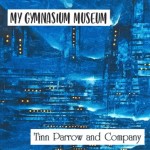
Laurence Bond Miller has never been one to color inside the lines, and "My Gymnasium Museum", his debut under the resurrected banner of Tinn Parrow and Company, is less an album than a sprawling funhouse of ideas - part collage, part parade, part dream diary scrawled in instruments rather than ink. Across twenty-two tracks he reopens doors left ajar in the early ’70s with his horn-heavy Clapfold Platune, while simultaneously polishing fresh gems cut in his multi-track workshop between 2022 and 2024. The result is maximalist in scope, mischievous in tone, and endlessly curious about how disparate sonic toys might behave if left unsupervised.
Miller, of course, is no newcomer. His lineage stretches through Ann Arbor’s underground like an eccentric family tree - brother to Roger (Mission of Burma, Birdsongs of the Mesozoic) and Ben (Destroy All Monsters), a veteran of Empool, The Fourth World Quartet, and countless other projects with names as wild as the music itself. What distinguishes this new venture, though, is the sheer carnival of timbres he orchestrates: clarinets and cornets rub shoulders with theremin, bagpipe chanter, Ebow guitar, and something called a “mosquito guitar”. One moment we’re marching alongside a Dada brass band seemingly lost on the way to Babylon Berlin; the next, we’re tumbling into a kitchen of collapsing percussion and accordion sighs. The record rarely lingers on one idea long enough for comfort, preferring instead to yank the rug with a wink, offering “Pancake Heaven” after “Library Paste”, or a Lennon–McCartney reimagining sitting happily between dadaist inventions.
There’s a sly humor coursing through these tracks - an irreverence toward solemn notions of art music. Yet the humor doesn’t trivialize; rather, it animates the project with a sense of fearless play. Miller treats genres like building blocks in a child’s gymnasium, stacking them into improbable towers and knocking them over just to see how they scatter. The “museum” of the title feels apt: each piece a peculiar exhibit, some shimmering with nostalgia, others veering into surrealist performance. But unlike most museums, here you’re encouraged to touch everything, blow into the horns, twang the odd strings, get lost in the hall of mirrors.
Listening through, one senses an artist who never stopped being the eighteen-year-old drafting hallucinogenic notation for friends in a marching band that couldn’t march straight. Decades on, Miller has only gained the patience and skill to frame that chaos with precision. "My Gymnasium Museum" is both archive and prophecy, a wild anthology that refuses to stay still, that dares listeners to abandon linearity and embrace abundance. It is, in short, Laurence Bond Miller’s creative mind turned inside out: messy, exuberant, and deeply alive.
Miller, of course, is no newcomer. His lineage stretches through Ann Arbor’s underground like an eccentric family tree - brother to Roger (Mission of Burma, Birdsongs of the Mesozoic) and Ben (Destroy All Monsters), a veteran of Empool, The Fourth World Quartet, and countless other projects with names as wild as the music itself. What distinguishes this new venture, though, is the sheer carnival of timbres he orchestrates: clarinets and cornets rub shoulders with theremin, bagpipe chanter, Ebow guitar, and something called a “mosquito guitar”. One moment we’re marching alongside a Dada brass band seemingly lost on the way to Babylon Berlin; the next, we’re tumbling into a kitchen of collapsing percussion and accordion sighs. The record rarely lingers on one idea long enough for comfort, preferring instead to yank the rug with a wink, offering “Pancake Heaven” after “Library Paste”, or a Lennon–McCartney reimagining sitting happily between dadaist inventions.
There’s a sly humor coursing through these tracks - an irreverence toward solemn notions of art music. Yet the humor doesn’t trivialize; rather, it animates the project with a sense of fearless play. Miller treats genres like building blocks in a child’s gymnasium, stacking them into improbable towers and knocking them over just to see how they scatter. The “museum” of the title feels apt: each piece a peculiar exhibit, some shimmering with nostalgia, others veering into surrealist performance. But unlike most museums, here you’re encouraged to touch everything, blow into the horns, twang the odd strings, get lost in the hall of mirrors.
Listening through, one senses an artist who never stopped being the eighteen-year-old drafting hallucinogenic notation for friends in a marching band that couldn’t march straight. Decades on, Miller has only gained the patience and skill to frame that chaos with precision. "My Gymnasium Museum" is both archive and prophecy, a wild anthology that refuses to stay still, that dares listeners to abandon linearity and embrace abundance. It is, in short, Laurence Bond Miller’s creative mind turned inside out: messy, exuberant, and deeply alive.
Miriodor: Live 97

Miriodor have always thrived in the margins, stitching together music that refuses to sit still: too jagged for folk, too mischievous for chamber, too kaleidoscopic for straight-ahead rock. "Live 97" captures them at a turning point, standing on the tightrope between eras, balancing the end of one partnership and the beginning of another, while juggling all the madness of their fourth studio album, "Elastic Juggling", in front of a Quebec City audience.
This isn’t simply a document of a band playing its latest material on stage. It’s more like watching acrobats rebuild the circus tent mid-performance. Pieces that on record already leaned toward the surreal - knife throwers, motorcycle-riding bears, fortune tellers - here sprout extra limbs, veer into longer detours, or collapse and reassemble in unpredictable forms. “Bal Con” unfurls with a sharp elegance that quickly curdles into zigzag rhythms; “Mme X” is still spooky and sly but delivered with extra theatrical weight; “Le Terrible Naufrage Du Petit Navire” sounds less like a shipwreck than a ship gleefully choosing to capsize.
Part of the thrill lies in the lineup itself. Sabin Hudon’s final dances with the group’s reeds weave in and out of Bernard Falaise’s freshly sharpened guitar lines, while Pascal Globensky and Rémi Leclerc keep everything both taut and slightly off-kilter, as if the rhythm section were grinning at some inside joke. Stéphanie Simard’s violin brings an edge of nervous lyricism, and Nicolas Masino anchors the whole contraption with bass and additional keys. It’s a sextet that sounds like a dozen players in a funhouse mirror.
There’s also something oddly poignant about hearing Miriodor in 1997 from the vantage point of 2025. The circus they built then was a counter-spectacle, a rebuttal to rock’s solemnity and prog’s tendency to drown in its own gravitas. What they offered instead was artful chaos, wit, and daredevil precision - a reminder that progressive music could be serious without being self-serious, and absurd without being throwaway.
So "Live 97" is not just a long-lost artifact for collectors. It’s a snapshot of risk-taking energy, of a group willing to stumble for the sake of surprise, of a band whose sense of play was as sharp as their musicianship. Listening now, you can almost smell the sawdust and greasepaint, hear the juggling clubs clattering to the floor, and see the audience - half bemused, half delighted - caught in the spell of Miriodor’s delirious, demented big top.
This isn’t simply a document of a band playing its latest material on stage. It’s more like watching acrobats rebuild the circus tent mid-performance. Pieces that on record already leaned toward the surreal - knife throwers, motorcycle-riding bears, fortune tellers - here sprout extra limbs, veer into longer detours, or collapse and reassemble in unpredictable forms. “Bal Con” unfurls with a sharp elegance that quickly curdles into zigzag rhythms; “Mme X” is still spooky and sly but delivered with extra theatrical weight; “Le Terrible Naufrage Du Petit Navire” sounds less like a shipwreck than a ship gleefully choosing to capsize.
Part of the thrill lies in the lineup itself. Sabin Hudon’s final dances with the group’s reeds weave in and out of Bernard Falaise’s freshly sharpened guitar lines, while Pascal Globensky and Rémi Leclerc keep everything both taut and slightly off-kilter, as if the rhythm section were grinning at some inside joke. Stéphanie Simard’s violin brings an edge of nervous lyricism, and Nicolas Masino anchors the whole contraption with bass and additional keys. It’s a sextet that sounds like a dozen players in a funhouse mirror.
There’s also something oddly poignant about hearing Miriodor in 1997 from the vantage point of 2025. The circus they built then was a counter-spectacle, a rebuttal to rock’s solemnity and prog’s tendency to drown in its own gravitas. What they offered instead was artful chaos, wit, and daredevil precision - a reminder that progressive music could be serious without being self-serious, and absurd without being throwaway.
So "Live 97" is not just a long-lost artifact for collectors. It’s a snapshot of risk-taking energy, of a group willing to stumble for the sake of surprise, of a band whose sense of play was as sharp as their musicianship. Listening now, you can almost smell the sawdust and greasepaint, hear the juggling clubs clattering to the floor, and see the audience - half bemused, half delighted - caught in the spell of Miriodor’s delirious, demented big top.
Erik Griswold: Next Level Avoidance

Artist: Erik Griswold (@)
Title: Next Level Avoidance
Format: Download Only (MP3 + Lossless)
Label: Room40 (@)
Rated:

Title: Next Level Avoidance
Format: Download Only (MP3 + Lossless)
Label: Room40 (@)
Rated:
Something in "Next Level Avoidance" feels like the small cigars of memory burning down in dark corners. Erik Griswold returns under the house, speaking to his ancient piano as one might to an old friend grown silent, asking: "do we still have untold stories between us?". He answers not in speeches but in the tremor of brass bolts and the whisper of prepared strings, allowing silence to be as articulate as sound.
Griswold, originally from San Diego and now rooted in the Australian scene, has long trod the boundary between the acoustic and the uncanny. He’s collaborated widely - ensembles, experimental ensembles, intermedia projects - and in "Next Level Avoidance" he uses that history as substrate rather than spectacle. Here the gesture is intimate: a vintage 1885 Lipp & Sohn piano, prepared with bolts, paper, rubber, breathing beside an analogue synthesizer. Two C414 microphones stand vigil, catching every quiver, every microscopic crack in decay.
In "Next Level Avoidance", the album’s tracks feel like rooms in a haunted house: each door opens on a different haunt. The title track draws a veil across the threshold - the piano speaks in fragmentary elegies, the synth hovers like distant lamplight. "Wild West" sputters with tension, dusted by electronic flickers; "Wake Up" is a blink, an interstice, a small heartbeat in silence. "Ghost in the Middle" places the specter squarely between what is remembered and what is lost; "Reverse with Piano Chords" inverts expectation, letting quiet become disruption. "Uncertainty" is a tremor, wavering in doubt, "Poly Cascade" a quicksilver droplet slipping downward, "Colours of Summer" lets synth bloom like late light, "Ghost of Ravel" pulls classical shadow into new space, and "X-Mode" closes with a looped echo that may or may not be hopeful.
Listening is like watching dusk fall slowly in a narrow chapel: the light recedes, the walls lean inward, and what remains is resonance. Griswold doesn’t push crescendo so much as he pulls you toward stillness. There are no grand climaxes; what effects there are feel inevitable, like time folded back on itself. The prepared piano sounds hybrid - breath, metallic hum, soft scratch - and the synth is not an alien appendage but a vocal ghost speaking back to the piano’s body.
What’s compelling is how avoidance becomes a form of insistence. The album, though titled thus, doesn’t evade - it lingers, probes, draws close. In that tension, you feel both weariness and care. Some reviewers detect a muted exhaustion, a sense that Griswold is chasing the last embers of creative energy. True, the pacing is slow, the gestures minimal; yet in those minimalisms lie the experiments: how to coax emotional contour from microtonal shifts, how to let absence speak.
This is not an album that grabs you by the lapels. It slips in like a confession in the dark. You may have to lean closer, wait for your ears to adjust. But if you let it, it becomes a companion in quiet hours, a landscape of breath and shadow, a conversation between aging wood and electric ghost. "Next Level Avoidance" is not a show of virtuosity - it’s an act of listening, of patience.
Griswold, originally from San Diego and now rooted in the Australian scene, has long trod the boundary between the acoustic and the uncanny. He’s collaborated widely - ensembles, experimental ensembles, intermedia projects - and in "Next Level Avoidance" he uses that history as substrate rather than spectacle. Here the gesture is intimate: a vintage 1885 Lipp & Sohn piano, prepared with bolts, paper, rubber, breathing beside an analogue synthesizer. Two C414 microphones stand vigil, catching every quiver, every microscopic crack in decay.
In "Next Level Avoidance", the album’s tracks feel like rooms in a haunted house: each door opens on a different haunt. The title track draws a veil across the threshold - the piano speaks in fragmentary elegies, the synth hovers like distant lamplight. "Wild West" sputters with tension, dusted by electronic flickers; "Wake Up" is a blink, an interstice, a small heartbeat in silence. "Ghost in the Middle" places the specter squarely between what is remembered and what is lost; "Reverse with Piano Chords" inverts expectation, letting quiet become disruption. "Uncertainty" is a tremor, wavering in doubt, "Poly Cascade" a quicksilver droplet slipping downward, "Colours of Summer" lets synth bloom like late light, "Ghost of Ravel" pulls classical shadow into new space, and "X-Mode" closes with a looped echo that may or may not be hopeful.
Listening is like watching dusk fall slowly in a narrow chapel: the light recedes, the walls lean inward, and what remains is resonance. Griswold doesn’t push crescendo so much as he pulls you toward stillness. There are no grand climaxes; what effects there are feel inevitable, like time folded back on itself. The prepared piano sounds hybrid - breath, metallic hum, soft scratch - and the synth is not an alien appendage but a vocal ghost speaking back to the piano’s body.
What’s compelling is how avoidance becomes a form of insistence. The album, though titled thus, doesn’t evade - it lingers, probes, draws close. In that tension, you feel both weariness and care. Some reviewers detect a muted exhaustion, a sense that Griswold is chasing the last embers of creative energy. True, the pacing is slow, the gestures minimal; yet in those minimalisms lie the experiments: how to coax emotional contour from microtonal shifts, how to let absence speak.
This is not an album that grabs you by the lapels. It slips in like a confession in the dark. You may have to lean closer, wait for your ears to adjust. But if you let it, it becomes a companion in quiet hours, a landscape of breath and shadow, a conversation between aging wood and electric ghost. "Next Level Avoidance" is not a show of virtuosity - it’s an act of listening, of patience.