
Browse by Genre
Industrial Music / Industrial Metal / Aggro Industrial / Electro Metal
Industrial Noise / Power Noise / Harsh Noise
Synth Pop / Electro Pop / Synth-Electronica
Techno / Trance / Goa / Drum'n'Bass / Jungle / Tribal / Trip-Hop
Ambient / Electronica / Ethereal / Dub / Soundscapes / Abstract
Experimental / Avantgarde / Weird & Wired / Glitch / Noise / Field Recording
Dark / Gothic / Wave / New Wave / Dark Wave / Industrial Gothic
New Music / Downtown / Avantgarde Jazz / New Classical / World
Search Reviews
Music Reviews
Erik Griswold: Next Level Avoidance

Artist: Erik Griswold (@)
Title: Next Level Avoidance
Format: Download Only (MP3 + Lossless)
Label: Room40 (@)
Rated:

Title: Next Level Avoidance
Format: Download Only (MP3 + Lossless)
Label: Room40 (@)
Rated:
Something in "Next Level Avoidance" feels like the small cigars of memory burning down in dark corners. Erik Griswold returns under the house, speaking to his ancient piano as one might to an old friend grown silent, asking: "do we still have untold stories between us?". He answers not in speeches but in the tremor of brass bolts and the whisper of prepared strings, allowing silence to be as articulate as sound.
Griswold, originally from San Diego and now rooted in the Australian scene, has long trod the boundary between the acoustic and the uncanny. He’s collaborated widely - ensembles, experimental ensembles, intermedia projects - and in "Next Level Avoidance" he uses that history as substrate rather than spectacle. Here the gesture is intimate: a vintage 1885 Lipp & Sohn piano, prepared with bolts, paper, rubber, breathing beside an analogue synthesizer. Two C414 microphones stand vigil, catching every quiver, every microscopic crack in decay.
In "Next Level Avoidance", the album’s tracks feel like rooms in a haunted house: each door opens on a different haunt. The title track draws a veil across the threshold - the piano speaks in fragmentary elegies, the synth hovers like distant lamplight. "Wild West" sputters with tension, dusted by electronic flickers; "Wake Up" is a blink, an interstice, a small heartbeat in silence. "Ghost in the Middle" places the specter squarely between what is remembered and what is lost; "Reverse with Piano Chords" inverts expectation, letting quiet become disruption. "Uncertainty" is a tremor, wavering in doubt, "Poly Cascade" a quicksilver droplet slipping downward, "Colours of Summer" lets synth bloom like late light, "Ghost of Ravel" pulls classical shadow into new space, and "X-Mode" closes with a looped echo that may or may not be hopeful.
Listening is like watching dusk fall slowly in a narrow chapel: the light recedes, the walls lean inward, and what remains is resonance. Griswold doesn’t push crescendo so much as he pulls you toward stillness. There are no grand climaxes; what effects there are feel inevitable, like time folded back on itself. The prepared piano sounds hybrid - breath, metallic hum, soft scratch - and the synth is not an alien appendage but a vocal ghost speaking back to the piano’s body.
What’s compelling is how avoidance becomes a form of insistence. The album, though titled thus, doesn’t evade - it lingers, probes, draws close. In that tension, you feel both weariness and care. Some reviewers detect a muted exhaustion, a sense that Griswold is chasing the last embers of creative energy. True, the pacing is slow, the gestures minimal; yet in those minimalisms lie the experiments: how to coax emotional contour from microtonal shifts, how to let absence speak.
This is not an album that grabs you by the lapels. It slips in like a confession in the dark. You may have to lean closer, wait for your ears to adjust. But if you let it, it becomes a companion in quiet hours, a landscape of breath and shadow, a conversation between aging wood and electric ghost. "Next Level Avoidance" is not a show of virtuosity - it’s an act of listening, of patience.
Griswold, originally from San Diego and now rooted in the Australian scene, has long trod the boundary between the acoustic and the uncanny. He’s collaborated widely - ensembles, experimental ensembles, intermedia projects - and in "Next Level Avoidance" he uses that history as substrate rather than spectacle. Here the gesture is intimate: a vintage 1885 Lipp & Sohn piano, prepared with bolts, paper, rubber, breathing beside an analogue synthesizer. Two C414 microphones stand vigil, catching every quiver, every microscopic crack in decay.
In "Next Level Avoidance", the album’s tracks feel like rooms in a haunted house: each door opens on a different haunt. The title track draws a veil across the threshold - the piano speaks in fragmentary elegies, the synth hovers like distant lamplight. "Wild West" sputters with tension, dusted by electronic flickers; "Wake Up" is a blink, an interstice, a small heartbeat in silence. "Ghost in the Middle" places the specter squarely between what is remembered and what is lost; "Reverse with Piano Chords" inverts expectation, letting quiet become disruption. "Uncertainty" is a tremor, wavering in doubt, "Poly Cascade" a quicksilver droplet slipping downward, "Colours of Summer" lets synth bloom like late light, "Ghost of Ravel" pulls classical shadow into new space, and "X-Mode" closes with a looped echo that may or may not be hopeful.
Listening is like watching dusk fall slowly in a narrow chapel: the light recedes, the walls lean inward, and what remains is resonance. Griswold doesn’t push crescendo so much as he pulls you toward stillness. There are no grand climaxes; what effects there are feel inevitable, like time folded back on itself. The prepared piano sounds hybrid - breath, metallic hum, soft scratch - and the synth is not an alien appendage but a vocal ghost speaking back to the piano’s body.
What’s compelling is how avoidance becomes a form of insistence. The album, though titled thus, doesn’t evade - it lingers, probes, draws close. In that tension, you feel both weariness and care. Some reviewers detect a muted exhaustion, a sense that Griswold is chasing the last embers of creative energy. True, the pacing is slow, the gestures minimal; yet in those minimalisms lie the experiments: how to coax emotional contour from microtonal shifts, how to let absence speak.
This is not an album that grabs you by the lapels. It slips in like a confession in the dark. You may have to lean closer, wait for your ears to adjust. But if you let it, it becomes a companion in quiet hours, a landscape of breath and shadow, a conversation between aging wood and electric ghost. "Next Level Avoidance" is not a show of virtuosity - it’s an act of listening, of patience.
David Lee Myers: Terrenus
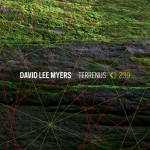
David Lee Myers has been called many things - pioneer of feedback music, sonic cartographer, stubborn alchemist of electronics - but with "Terrenus" he plants his machines firmly in the soil. If so much electronic sound gazes longingly at the stars, Myers insists on digging his fingernails into mud and moss, coaxing voices from tangled root systems. The nine pieces here feel less like tracks and more like field reports from a landscape that doesn’t exist, a kind of imaginary ecology built out of loops, delays, and self-fed circuits that breathe like compost piles alive with hidden organisms.
Unlike the piercing shrieks or metallic chatter often associated with feedback, the textures in "Terrenus" flow with a strange softness, like fog rolling over a river delta. Feedback is here less a scream than a system of weather: drifting cloud, sudden squall, sunlight scattering across wet stone. The beauty lies in its indeterminacy - processors turning back on themselves until they generate their own small climates, cycles of decay and regrowth audible in real time. Myers has long been fascinated with these recursive architectures, from his work as Arcane Device through collaborations with titans like Asmus Tietchens and Tod Dockstader, but "Terrenus" is perhaps his most grounded exploration, committed to evoking earth rather than ether.
There’s also a sly humor in calling this earth music. For all its groundedness, it never pretends to be naturalistic - there are no birds, no waterfalls, no literal imitation. Instead, it’s as if Myers is saying: here is geology reimagined by machines, here is soil filtered through delay units, here is the shimmer of lichen captured in a feedback loop. Each track feels like a hand-drawn map without compass or legend, guiding us not toward destinations but through atmospheres - uncertain borders, shifting terrain, a sense of wandering where the ground itself hums back at you.
In the end, "Terrenus" reminds us that the earth is not silent. It buzzes, it resonates, it feeds back upon itself. Myers simply builds the circuits that let us hear it. If we tend to imagine electronics as cold and detached, here they feel damp, fertile, full of breath. These are not machines speaking from the void - they are roots talking to rocks, voltage entwined with loam. And if the journey feels at times bewildering, well, so does walking through fog until the landscape itself begins to hum.
Unlike the piercing shrieks or metallic chatter often associated with feedback, the textures in "Terrenus" flow with a strange softness, like fog rolling over a river delta. Feedback is here less a scream than a system of weather: drifting cloud, sudden squall, sunlight scattering across wet stone. The beauty lies in its indeterminacy - processors turning back on themselves until they generate their own small climates, cycles of decay and regrowth audible in real time. Myers has long been fascinated with these recursive architectures, from his work as Arcane Device through collaborations with titans like Asmus Tietchens and Tod Dockstader, but "Terrenus" is perhaps his most grounded exploration, committed to evoking earth rather than ether.
There’s also a sly humor in calling this earth music. For all its groundedness, it never pretends to be naturalistic - there are no birds, no waterfalls, no literal imitation. Instead, it’s as if Myers is saying: here is geology reimagined by machines, here is soil filtered through delay units, here is the shimmer of lichen captured in a feedback loop. Each track feels like a hand-drawn map without compass or legend, guiding us not toward destinations but through atmospheres - uncertain borders, shifting terrain, a sense of wandering where the ground itself hums back at you.
In the end, "Terrenus" reminds us that the earth is not silent. It buzzes, it resonates, it feeds back upon itself. Myers simply builds the circuits that let us hear it. If we tend to imagine electronics as cold and detached, here they feel damp, fertile, full of breath. These are not machines speaking from the void - they are roots talking to rocks, voltage entwined with loam. And if the journey feels at times bewildering, well, so does walking through fog until the landscape itself begins to hum.
Poison Gauchiste: Musique Pour Enfiler Des Perles
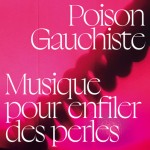
Artist: Poison Gauchiste (@)
Title: Musique Pour Enfiler Des Perles
Format: Download Only (MP3 + Lossless)
Label: Paradise Children (@)
Rated:

Title: Musique Pour Enfiler Des Perles
Format: Download Only (MP3 + Lossless)
Label: Paradise Children (@)
Rated:
Poison Gauchiste’s "Musique Pour Enfiler Des Perles" arrives like a small vessel bobbing in both daylight and dusk. Eric Labbé, trading his DJ-activist coat for this alias, invites us into a liminal space: not fully dancefloor, not fully thought piece - but a territory in between, where influences bleed into one another and moods slip sideways.
He has walked many paths before this moment: a drummer tracing jazz stick flickers, an electroclash provocateur in a duo, a key hand in Paris nights. Now, under the name that winks at political irony (“gauchiste” turned poisonous), Labbé lets all his affinities roam: krautrock’s motor, Italo’s shimmer, afrobeat’s pulse, minimalism’s lean patience. The EP feels like a garden where every plant competes and colludes.
Opening with "Légumes Farcis", we sense a playful mischief. Arpeggios circle like vines, synths twist like exotic blooms, and there are petals of sound that seem to purr in the ears (the story of the dog Mylo responding to a particular synth is only the most literal clue that the piece lives beyond human hearing). It feels light, but already slightly off–balance, as if the soil beneath the garden is shifting.
Then "L’Amour, La Danse, La Révolution" steps in - a mission statement in three names. It carries in its danceable line a suppressed defiance: love, dance, revolution. The electro flavor edges toward nostalgia, but not in a sentimental way - more as a reference, a wink to early-2000s electro, filtered through today’s introspection. In quiet corners of the mix, odd blips and background detritus hover: memories, afterthoughts, ambient residue.
With "Sept Petits Pas Vers Nulle Part", the EP tilts into subtle asymmetry. The motif in seven counts slips against binary backing, creating a gentle friction: predictability unsettled. It is elegant disobedience, like a waltz stepping out of frame. In that slipping you perceive more than the notes: you feel the tension between structure and drift, between reason and misstep.
At the heart sits "Le Junkie Du Cosmos". Its title evokes addiction, cosmos, salvation. Labbé almost confesses: this is a love affair with altered states and with the stars, with weightlessness and with subversion. The fact that the track became a rescue (via mixing, editing) suggests that art here is survival. When it works, it hovers: heavy yet airy, cosmic yet intimate. It is the sonic middle of the journey, the point you carry forward, wounded and wonder-struck.
Then the EP concludes with "Bergerie", a return to ground. Acoustic guitar, pizzicato strings, dubby washes: this is the landscape after the trip. It breathes of sunlit calm and quiet oceans. At ~100 BPM, it is not hurried; it lingers over late afternoon horizons, as if the dance ended and now one watches shadows lengthen and light fade.
What "Musique Pour Enfiler Des Perles" does best is blur. It resists being pigeonholed. It tempts you to move, but also to stop and listen. The EP is full of internal paradoxes: movement and suspension, color and shade, exuberance and introspection. Some moments risk falling into sweet background, but often the oddities - those off-beat motifs, the tucked-away synth oddments - pull you back in.
If the title suggests pearls to be threaded, then here the threading is tentative: beads of sound strung, sometimes awkwardly, sometimes luminous, sometimes just a bit loose. But the looseness is part of its charm: the gesture matters at least as much as the string.
In sum: "Musique Pour Enfiler Des Perles" is a small, strange gem - not exactly a club weapon, more like a lantern for twilight hours. It asks you to wander beside it, to tilt your head, to lean into small oddities. It may not seduce everyone, but for those willing to walk its garden, the surprise is in the petals and thorns alike.
He has walked many paths before this moment: a drummer tracing jazz stick flickers, an electroclash provocateur in a duo, a key hand in Paris nights. Now, under the name that winks at political irony (“gauchiste” turned poisonous), Labbé lets all his affinities roam: krautrock’s motor, Italo’s shimmer, afrobeat’s pulse, minimalism’s lean patience. The EP feels like a garden where every plant competes and colludes.
Opening with "Légumes Farcis", we sense a playful mischief. Arpeggios circle like vines, synths twist like exotic blooms, and there are petals of sound that seem to purr in the ears (the story of the dog Mylo responding to a particular synth is only the most literal clue that the piece lives beyond human hearing). It feels light, but already slightly off–balance, as if the soil beneath the garden is shifting.
Then "L’Amour, La Danse, La Révolution" steps in - a mission statement in three names. It carries in its danceable line a suppressed defiance: love, dance, revolution. The electro flavor edges toward nostalgia, but not in a sentimental way - more as a reference, a wink to early-2000s electro, filtered through today’s introspection. In quiet corners of the mix, odd blips and background detritus hover: memories, afterthoughts, ambient residue.
With "Sept Petits Pas Vers Nulle Part", the EP tilts into subtle asymmetry. The motif in seven counts slips against binary backing, creating a gentle friction: predictability unsettled. It is elegant disobedience, like a waltz stepping out of frame. In that slipping you perceive more than the notes: you feel the tension between structure and drift, between reason and misstep.
At the heart sits "Le Junkie Du Cosmos". Its title evokes addiction, cosmos, salvation. Labbé almost confesses: this is a love affair with altered states and with the stars, with weightlessness and with subversion. The fact that the track became a rescue (via mixing, editing) suggests that art here is survival. When it works, it hovers: heavy yet airy, cosmic yet intimate. It is the sonic middle of the journey, the point you carry forward, wounded and wonder-struck.
Then the EP concludes with "Bergerie", a return to ground. Acoustic guitar, pizzicato strings, dubby washes: this is the landscape after the trip. It breathes of sunlit calm and quiet oceans. At ~100 BPM, it is not hurried; it lingers over late afternoon horizons, as if the dance ended and now one watches shadows lengthen and light fade.
What "Musique Pour Enfiler Des Perles" does best is blur. It resists being pigeonholed. It tempts you to move, but also to stop and listen. The EP is full of internal paradoxes: movement and suspension, color and shade, exuberance and introspection. Some moments risk falling into sweet background, but often the oddities - those off-beat motifs, the tucked-away synth oddments - pull you back in.
If the title suggests pearls to be threaded, then here the threading is tentative: beads of sound strung, sometimes awkwardly, sometimes luminous, sometimes just a bit loose. But the looseness is part of its charm: the gesture matters at least as much as the string.
In sum: "Musique Pour Enfiler Des Perles" is a small, strange gem - not exactly a club weapon, more like a lantern for twilight hours. It asks you to wander beside it, to tilt your head, to lean into small oddities. It may not seduce everyone, but for those willing to walk its garden, the surprise is in the petals and thorns alike.
Of Norway: Serenade for Alcohol

Artist: Of Norway
Title: Serenade for Alcohol
Format: Download Only (MP3 + Lossless)
Label: badabing.diskos
Rated:
Title: Serenade for Alcohol
Format: Download Only (MP3 + Lossless)
Label: badabing.diskos
Rated:
Three glasses deep, the room begins to breathe in neon.
"L’Intemporelle" walks in first - charming, ageless, with a bassline smile and hands full of light. She doesn’t speak, just pulls you toward the dancefloor, where time itself seems to slip off its watch and spin around your ankles.
Then comes the night proper, the "Serenade for Alcohol". It’s not a hymn and not a warning, but a crooked love song - one that leans too close, whispering promises into your ear before stumbling into laughter. The synths stretch like blurred streetlights seen through tears or champagne bubbles, and you can’t tell whether you’re dissolving into joy or just into yourself.
By the time you reach "Afters at Serge’s", dawn has begun its slow negotiation. The beats are softer now, coated in psychedelic glitter, like smoke curling lazily above a table littered with half-empty glasses and the ghosts of stories no one quite remembers. Comforting voices hum like friends you’ll never meet again, yet somehow you already miss them.
This isn’t just a “weekend package”. It’s the anatomy of excess: the sparkle, the stumble, the afterglow. A triptych painted with both glowstick ink and hangover gray. Of Norway aren’t moralizing; they’re simply showing you the room, the bottle, the laughter, the silence that follows.
Raise your glass, or don’t. Either way, the serenade will play.
"L’Intemporelle" walks in first - charming, ageless, with a bassline smile and hands full of light. She doesn’t speak, just pulls you toward the dancefloor, where time itself seems to slip off its watch and spin around your ankles.
Then comes the night proper, the "Serenade for Alcohol". It’s not a hymn and not a warning, but a crooked love song - one that leans too close, whispering promises into your ear before stumbling into laughter. The synths stretch like blurred streetlights seen through tears or champagne bubbles, and you can’t tell whether you’re dissolving into joy or just into yourself.
By the time you reach "Afters at Serge’s", dawn has begun its slow negotiation. The beats are softer now, coated in psychedelic glitter, like smoke curling lazily above a table littered with half-empty glasses and the ghosts of stories no one quite remembers. Comforting voices hum like friends you’ll never meet again, yet somehow you already miss them.
This isn’t just a “weekend package”. It’s the anatomy of excess: the sparkle, the stumble, the afterglow. A triptych painted with both glowstick ink and hangover gray. Of Norway aren’t moralizing; they’re simply showing you the room, the bottle, the laughter, the silence that follows.
Raise your glass, or don’t. Either way, the serenade will play.
Cadlag: Tensor
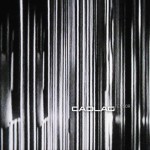
Cadlag’s new album "Tensor" (Pharmafabrik, 2025) arrives like an earthquake that has learned the art of patience. This Slovenian collective has always resisted easy classification, living at the crossroads where drone and noise collide with the rigor of hardcore and the abyss of experimental electronics. Their very name, borrowed from mathematical functions that leap discontinuously, feels like a key: the music is about thresholds, about edges where stability crumbles and something unexpected bursts through.
What makes "Tensor" remarkable is the way it transforms space itself into an instrument. These nine tracks were recorded in resonant environments - a cathedral, a World War I cavern, mining shafts, disused industrial sites. The walls, floors, and ceilings do not merely reflect sound; they conspire with it, amplifying menace, deepening silence, smearing distortion until it becomes physical. A bowed note on the electric upright bass lingers not because of delay pedals but because stone and air decide to hold onto it. The environment is not background but co-author.
The opening track, “Tensor”, sets the mood like an invocation: solemn, cavernous, dread-laden, a kind of slow procession through invisible architecture. “Matrix” compresses that intensity into just over three minutes, clinical yet suffocating, while “Legionela” swells like an infection spreading through tissue, layers multiplying until you feel overwhelmed. Shorter fragments like “Kompakte” act like violent breaths - quick stabs of noise between long drones - while the eleven-minute “Ampula” is the gravitational heart of the record, drawing the listener into a slow, corrosive spiral that seems endless. The closing “Cavern” dissolves into reverberations, a final descent into echo where sound collapses into itself.
This music is not friendly, not melodic, and certainly not casual. There are no lyrics to decode, no hooks to whistle afterward, only textures, densities, and silences that demand attention. Yet within its extremity lies a strange clarity. Cadlag do not throw noise at the listener indiscriminately; they sculpt it, balancing chaos with restraint, aggression with emptiness. The dynamics are key: moments of near-stasis make the violent eruptions even more crushing. Listening is exhausting, but not in vain - it feels like wandering through tunnels where every echo carries a warning, and every vibration tells you the structure might give way.
Of course, "Tensor" will not appeal to everyone. Play it in the wrong context - say, at brunch - and you’ll probably lose all your guests. Its emotional palette is narrow, focused almost exclusively on tension, dread, and oppressive weight. But for those who are willing to immerse themselves, the record becomes more than music; it is an acoustic ritual, a confrontation with space, decay, and resonance.
In the end, "Tensor" is a dark monument built from sound and reverberation. It is not a wall of noise but a cathedral of discontinuities, a meditation carved into the frequencies of stone and steel. To hear it properly is to feel your bones vibrate, to recognize that silence is as violent as distortion, and to accept that beauty sometimes comes dressed as collapse.
What makes "Tensor" remarkable is the way it transforms space itself into an instrument. These nine tracks were recorded in resonant environments - a cathedral, a World War I cavern, mining shafts, disused industrial sites. The walls, floors, and ceilings do not merely reflect sound; they conspire with it, amplifying menace, deepening silence, smearing distortion until it becomes physical. A bowed note on the electric upright bass lingers not because of delay pedals but because stone and air decide to hold onto it. The environment is not background but co-author.
The opening track, “Tensor”, sets the mood like an invocation: solemn, cavernous, dread-laden, a kind of slow procession through invisible architecture. “Matrix” compresses that intensity into just over three minutes, clinical yet suffocating, while “Legionela” swells like an infection spreading through tissue, layers multiplying until you feel overwhelmed. Shorter fragments like “Kompakte” act like violent breaths - quick stabs of noise between long drones - while the eleven-minute “Ampula” is the gravitational heart of the record, drawing the listener into a slow, corrosive spiral that seems endless. The closing “Cavern” dissolves into reverberations, a final descent into echo where sound collapses into itself.
This music is not friendly, not melodic, and certainly not casual. There are no lyrics to decode, no hooks to whistle afterward, only textures, densities, and silences that demand attention. Yet within its extremity lies a strange clarity. Cadlag do not throw noise at the listener indiscriminately; they sculpt it, balancing chaos with restraint, aggression with emptiness. The dynamics are key: moments of near-stasis make the violent eruptions even more crushing. Listening is exhausting, but not in vain - it feels like wandering through tunnels where every echo carries a warning, and every vibration tells you the structure might give way.
Of course, "Tensor" will not appeal to everyone. Play it in the wrong context - say, at brunch - and you’ll probably lose all your guests. Its emotional palette is narrow, focused almost exclusively on tension, dread, and oppressive weight. But for those who are willing to immerse themselves, the record becomes more than music; it is an acoustic ritual, a confrontation with space, decay, and resonance.
In the end, "Tensor" is a dark monument built from sound and reverberation. It is not a wall of noise but a cathedral of discontinuities, a meditation carved into the frequencies of stone and steel. To hear it properly is to feel your bones vibrate, to recognize that silence is as violent as distortion, and to accept that beauty sometimes comes dressed as collapse.